

Red light & Eye Health
Looking into red light can enhance eyesight, reverse retinal degenaration & improve visual acquity in a 'lazy eye.'
- Thread -
Looking into red light can enhance eyesight, reverse retinal degenaration & improve visual acquity in a 'lazy eye.'
- Thread -
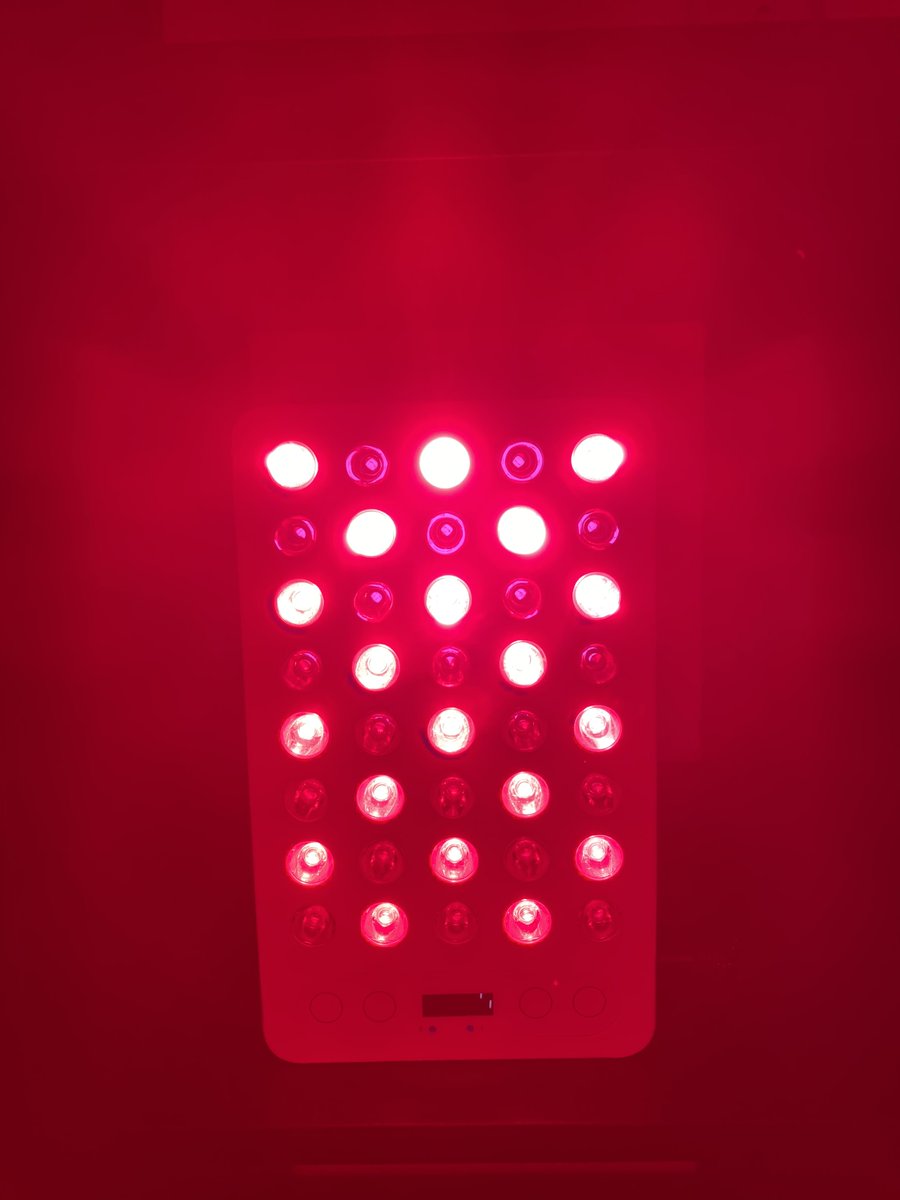
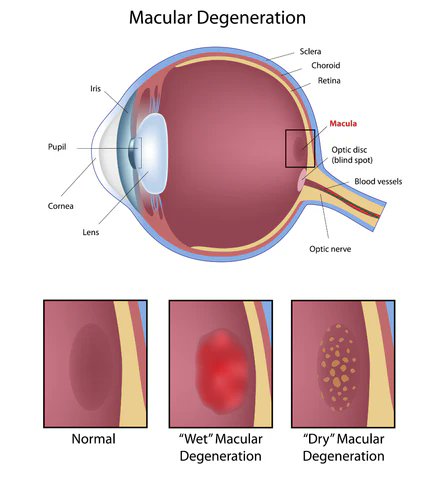
Red Light has a wavelength ranging from 600nm-700nm and infrared light ranging from 700nm-1400nm in length on the electromagnetic spectrum.
These wavelengths are able to pierce directly through your body tissues (skin/organs/bones)
These wavelengths are able to pierce directly through your body tissues (skin/organs/bones)
This thread is about Red Light Therapy (RLT) also referred to as Photobiomodulation (PBM) or Low Level Light Therapy (LLLT).
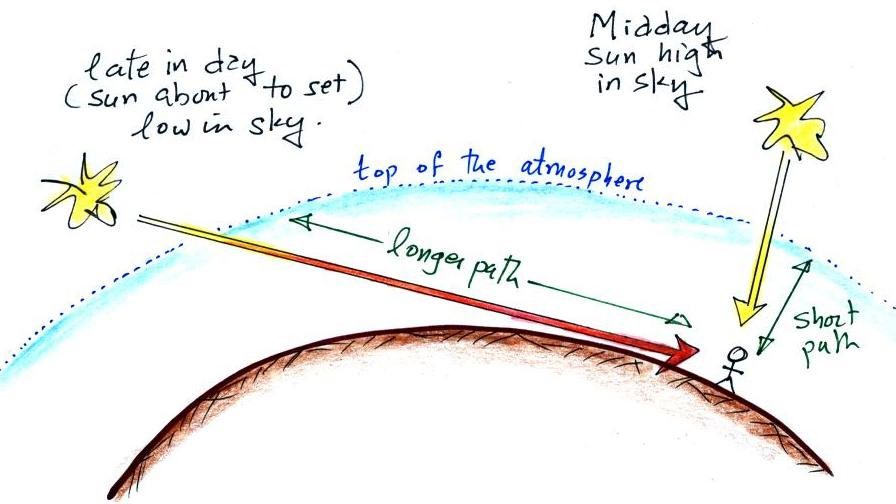
During sunrise, the low angle that sunlight enters the Earth's atmosphere causes blue light to diffuse while red light remains intact and more penetrating.
This means that sunrise is optimal for red light absorption.
This means that sunrise is optimal for red light absorption.
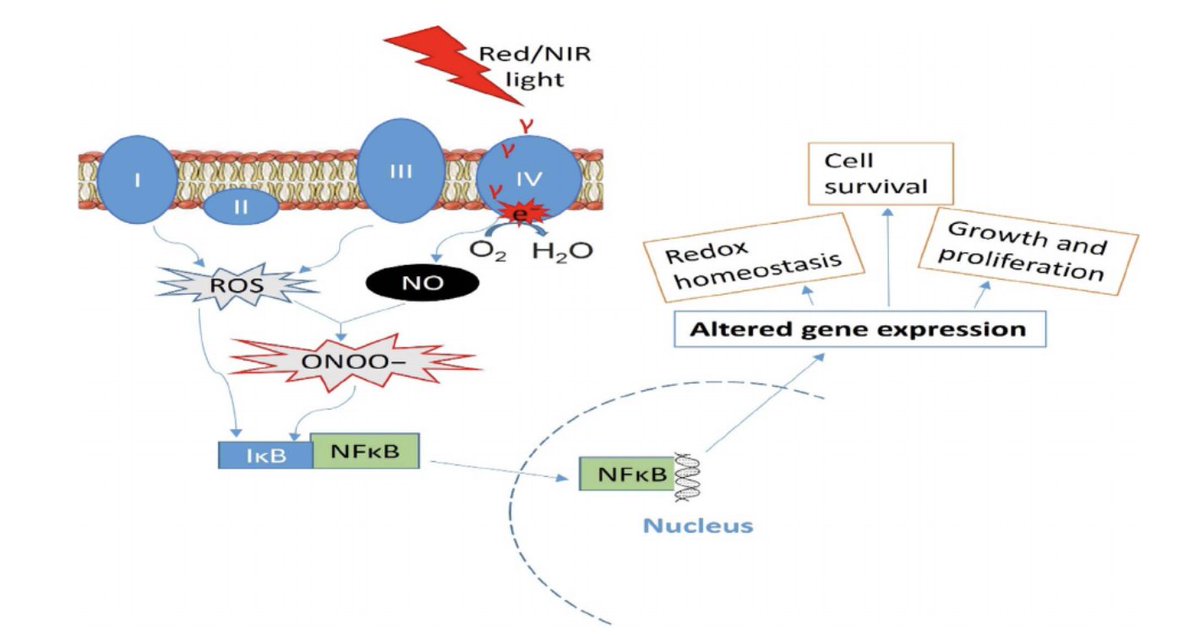
The upregulation of ROS or RNS by red/NIR light triggers the translocation of the transcription factor NFĸB to the nucleus, enabling NFĸB to alter gene expression and other genes whose roles are in anti-oxidation.
No adverse effects were observed in these published studies.
The findings suggest that red/NIR light therapy is safe and effective as a non-invasive treatment for retinal neurodegeneration.
researchgate.net
The findings suggest that red/NIR light therapy is safe and effective as a non-invasive treatment for retinal neurodegeneration.
researchgate.net

EYESIGHT
A recent study found that deep red light exposure in the morning improved vision by 17%.
sciencedaily.com
A recent study found that deep red light exposure in the morning improved vision by 17%.
sciencedaily.com

AGE-RELATED MACULAR DEGENERATION
A 2018 study found Red Light improved the visual acuity in most patients with Age-related macular degeneration (AMD) (93,9%).
AMD is the most common eye disorder in people over 50.
researchgate.net
A 2018 study found Red Light improved the visual acuity in most patients with Age-related macular degeneration (AMD) (93,9%).
AMD is the most common eye disorder in people over 50.
researchgate.net

"In patients with wet AMD, edema and bleeding improved. The improved vision was maintained for 3-36 mo after treatment."
pubmed.ncbi.nlm.nih.gov
pubmed.ncbi.nlm.nih.gov

DIABETIC RETINOPATHY
Diabetic retinopathy (DR) is caused by high blood sugar due to diabetes.
Over time, having too much sugar in your blood can damage your retina — the part of your eye that detects light and sends signals to your brain through the optic nerve.
Diabetic retinopathy (DR) is caused by high blood sugar due to diabetes.
Over time, having too much sugar in your blood can damage your retina — the part of your eye that detects light and sends signals to your brain through the optic nerve.
Treating only 1 eye for 80 sec. twice daily for 2 to 9 months (the other eye serving as control not receiving treatment).
A 20% decrease in macular thickness in the treated eyes was found.
The untreated eye saw an 3% increase in macular thickness.
ncbi.nlm.nih.gov
A 20% decrease in macular thickness in the treated eyes was found.
The untreated eye saw an 3% increase in macular thickness.
ncbi.nlm.nih.gov

"Daily administration of PBM for 8 months significantly inhibited the increase in vascular permeability and capillary degeneration that is characteristic of DR. Moreover, PBM protected against the reduction in visual function that is caused by diabetes."
ncbi.nlm.nih.gov
ncbi.nlm.nih.gov

LLLT significantly improved visual acuity in 95% of eyes with cataracts and 97% of eyes without cataracts.
The prevalence of metamorphopsia, scotoma, and dyschromatopsia was reduced.
pubmed.ncbi.nlm.nih.gov
The prevalence of metamorphopsia, scotoma, and dyschromatopsia was reduced.
pubmed.ncbi.nlm.nih.gov
RETINITIS PIGMENTOSA
"LLLT was shown to improve and maintain vision in a patient with retinitis pigmentosa (RP), and may thereby have contributed to slowing down blindness."
pubmed.ncbi.nlm.nih.gov
"LLLT was shown to improve and maintain vision in a patient with retinitis pigmentosa (RP), and may thereby have contributed to slowing down blindness."
pubmed.ncbi.nlm.nih.gov

RETINAL NEURODEGENERATION
"Wavelengths of light in the red to NIR region of the electromagnetic spectrum are optimal for the photostimulation of mitochondria as a treatment for neurodegeneration in the retina."
sciencedirect.com
"Wavelengths of light in the red to NIR region of the electromagnetic spectrum are optimal for the photostimulation of mitochondria as a treatment for neurodegeneration in the retina."
sciencedirect.com
Differential effects of 670 and 830 nm red near infrared irradiation therapy: a comparative study of optic nerve injury, retinal degeneration, traumatic brain and spinal cord injury.
ncbi.nlm.nih.gov
ncbi.nlm.nih.gov

AMBLYOPIA (Lazy eye)
Amblyopia, also called lazy eye, is a disorder of sight in which the brain fails to fully process input from one eye and over time favors the other eye.
Amblyopia is the most common cause of decreased vision in a single eye among children and younger adults
Amblyopia, also called lazy eye, is a disorder of sight in which the brain fails to fully process input from one eye and over time favors the other eye.
Amblyopia is the most common cause of decreased vision in a single eye among children and younger adults
Visual acuity improved in ∼90% of the eyes treated with LLLT, increasing by three or more lines in 56.2% and 53.6% of the eyes with amblyopia.
LLLT led to a significant improvement in visual acuity in patients with amblyopia caused by ametropia or strabismus.
LLLT led to a significant improvement in visual acuity in patients with amblyopia caused by ametropia or strabismus.


More in depth info on Red Light:
x.com
x.com
Thanks for reading, I hope you've found value in this thread.
That is it, for now.
That is it, for now.
Loading suggestions...