
Business
Finance
Management
manufacturing
Financials
Food Industry
Company Overview
Chemicals
Risks
Oleochemicals
Palm Oil value chain
Business Segments

Pioneering oleochemicals in India
Fine Organics Limited 🧑🔬⚗️🧪
#fineorganics
Like and retweet for better reach !
Topics covered:
1. Company overview
2. Management
3. Oleochemicals
4. Palm Oil value chain
5. Business Segments
6. Financials
7. Risks
Fine Organics Limited 🧑🔬⚗️🧪
#fineorganics
Like and retweet for better reach !
Topics covered:
1. Company overview
2. Management
3. Oleochemicals
4. Palm Oil value chain
5. Business Segments
6. Financials
7. Risks
1. Company overview:
Fine Organics commenced operations in 1970 and is the pioneer in oleochemical-based additives in India. The Company has developed a range of 450+ specialty additives, which successfully find their place in foods, plastics, cosmetics, coatings and other key
Fine Organics commenced operations in 1970 and is the pioneer in oleochemical-based additives in India. The Company has developed a range of 450+ specialty additives, which successfully find their place in foods, plastics, cosmetics, coatings and other key

applications in several industries. The company derives 45% of its revenues domestically and 55% from exports.
2. Management:
i) Prakash Kamat – Executive Director and Chairman : He holds a M. Sc. Tech- Master of Science & Tech (Oils) from Institute of Chemical Technology.
2. Management:
i) Prakash Kamat – Executive Director and Chairman : He holds a M. Sc. Tech- Master of Science & Tech (Oils) from Institute of Chemical Technology.
He has been associated with the group since inception and has experience in product development, process technology and R&D.
ii) Mukesh Shah – Managing Director
He holds a Bachelor’s degree in Science. He has been with the company since 1973 and has played a key role
ii) Mukesh Shah – Managing Director
He holds a Bachelor’s degree in Science. He has been with the company since 1973 and has played a key role
in establishing quality control and marketing
iii) Jayen Shah – Executive Director and CEO
He holds a Master’s degree in Science. He has been with the company since 1986 and has was instrumental in creating a strong vendor-partner network.
iii) Jayen Shah – Executive Director and CEO
He holds a Master’s degree in Science. He has been with the company since 1986 and has was instrumental in creating a strong vendor-partner network.
3. Oleochemicals:
Oleochemicals are chemical compounds derived from natural fats and oils that can be used as raw materials or as supplemental materials in a variety of industries. Oleochemicals can be used as a substitute for petroleum-based products known as petrochemicals.
Oleochemicals are chemical compounds derived from natural fats and oils that can be used as raw materials or as supplemental materials in a variety of industries. Oleochemicals can be used as a substitute for petroleum-based products known as petrochemicals.
Oleochemicals are used in a wide range of industries including personal care, cosmetics, coatings, adhesives, elastomers and sealants, household and industrial cleaning, lubricants, grease and metalworking, food, pharmaceuticals and nutraceuticals.
4. Palm Oil Value Chain:
The 2 main raw materials used by the company are crude palm oil(CPO) and crude palm kernel oil(CPKO). Oil palm is a perennial tree crop. Fresh fruit bunches (FFBs) are milled into 20% crude palm oil (CPO), 2-3% crude palm kernel oil (CPKO) and
The 2 main raw materials used by the company are crude palm oil(CPO) and crude palm kernel oil(CPKO). Oil palm is a perennial tree crop. Fresh fruit bunches (FFBs) are milled into 20% crude palm oil (CPO), 2-3% crude palm kernel oil (CPKO) and

2-3% palm kernel meal. CPO is extracted from the fibrous mesocarp whereas CPKO is extracted from the kernel. After extraction, the next step is refining the product. A portion of the refining business makes biofuels, but the major part of refining palm oil is for
other applications. About 75% of processed palm oil is used for food products, such as cooking oil, margarines, and ingredients in a wide range of processed foods like sauces, chocolate, ice-cream, and hazelnut chocolate paste.
Palm oil is also processed in non-food products for the home and personal care industry (detergents, soap, cosmetics) and industrial inputs (oleochemicals, pharmaceutical industry).
5. Business segments:
The company makes additives for various end user industries like foods, plastics, cosmetics, pharma, rubber, textiles, paints, inks and other specialty products. They also have a joint venture with Zeelandia, a Netherlands based firm to manufacture and
The company makes additives for various end user industries like foods, plastics, cosmetics, pharma, rubber, textiles, paints, inks and other specialty products. They also have a joint venture with Zeelandia, a Netherlands based firm to manufacture and

market an innovative range of baking and patisserie ingredients
6. Financials:
Revenue growth – 9.2%/9.8%/11.6% (1 yr/3yr/5yr CAGR)
Operating Profit Margin – 13.5%/19.9%/20.5% (2021/2020/2019)
ROCE – 18.6%/27.5%/34.3% (2021/2020/2019)
6. Financials:
Revenue growth – 9.2%/9.8%/11.6% (1 yr/3yr/5yr CAGR)
Operating Profit Margin – 13.5%/19.9%/20.5% (2021/2020/2019)
ROCE – 18.6%/27.5%/34.3% (2021/2020/2019)

7. Risks:
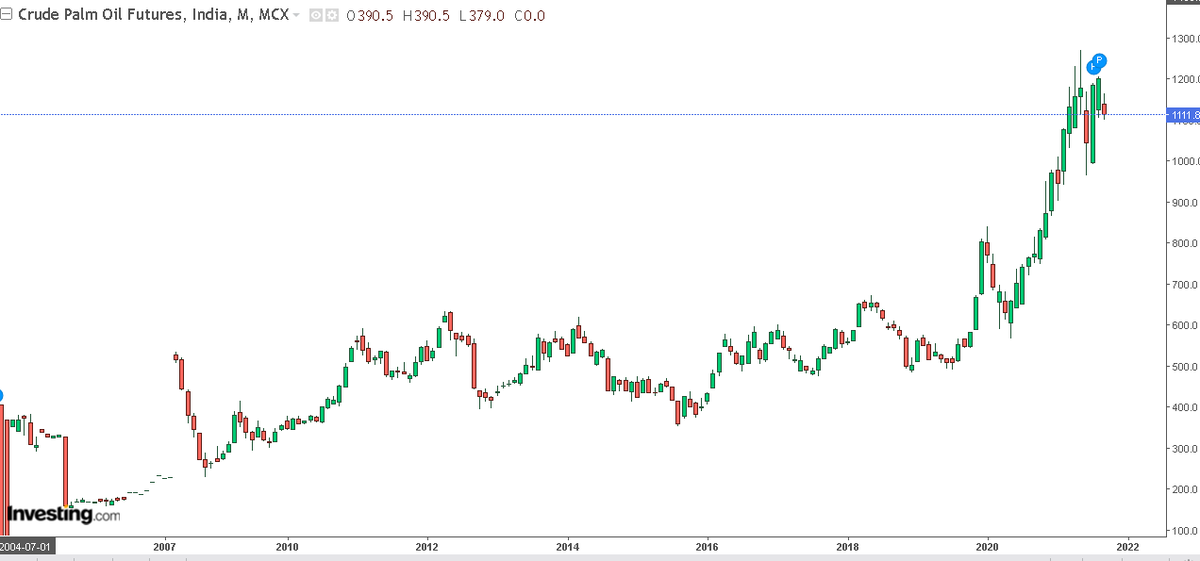
The raw materials of the company are very dependent on the prices of palm oil whose prices fluctuate due to global demand and supply. Due to this, the gross margins of the company are very volatile.
The raw materials of the company are very dependent on the prices of palm oil whose prices fluctuate due to global demand and supply. Due to this, the gross margins of the company are very volatile.
Loading suggestions...