

1/ In the last 2 wks, #MedEdMethodsMonday reviewed benefits of #BedsideRounds, categorized challenges to teaching @ the bedside, & highlighted several strategies for facilitating learners.
This wk focuses on strategies to overcome patient-related barriers to bedside rounds.
This wk focuses on strategies to overcome patient-related barriers to bedside rounds.
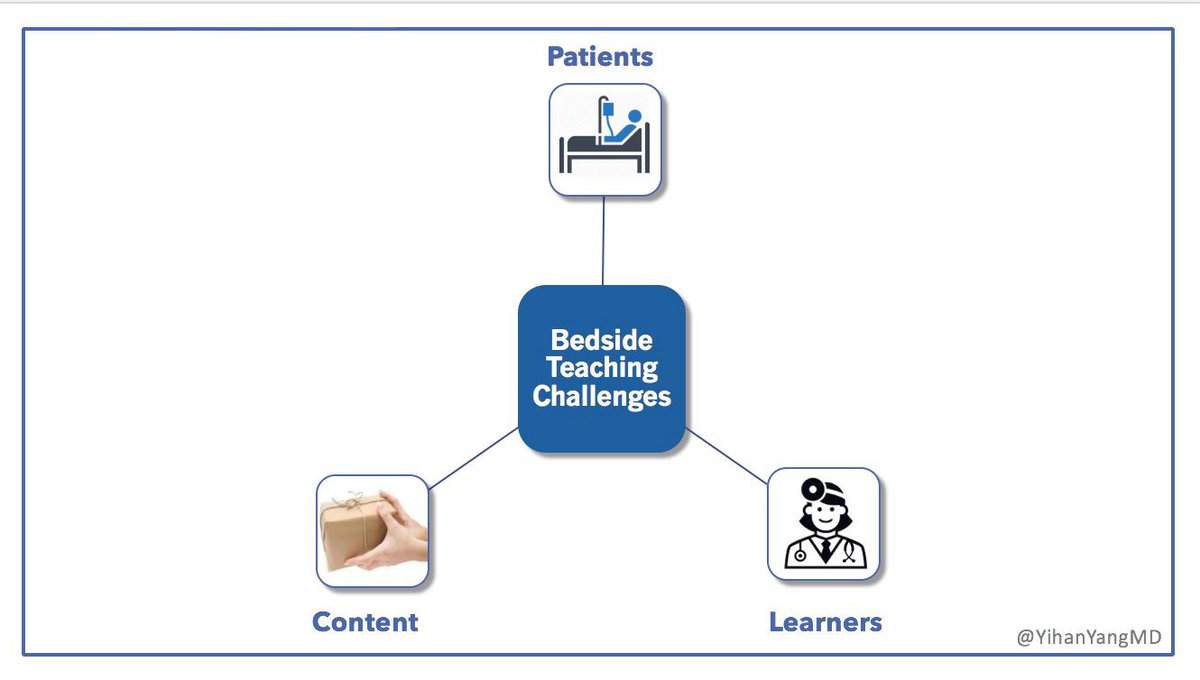
2/ One of the goals of #BedsideRounds is to engage/include pts in their care. But what if pts:
-have sensitive medical issues
-are in pain
-don’t understand medical jargon
-don’t want to feel like “guinea pigs”
-are confrontational, upset, or “difficult” to engage
-have sensitive medical issues
-are in pain
-don’t understand medical jargon
-don’t want to feel like “guinea pigs”
-are confrontational, upset, or “difficult” to engage
3/ Today’s #MedEdMethodsMonday #MedThread addresses:
1. Pt privacy concerns
2. Minimizing pt discomfort & maximizing engagement
3. Including the “difficult” pt
W/ help from #MedTwitter. #MedEd #MedEdPearls #FacDev #Tweetorial @MedTweetorials
1. Pt privacy concerns
2. Minimizing pt discomfort & maximizing engagement
3. Including the “difficult” pt
W/ help from #MedTwitter. #MedEd #MedEdPearls #FacDev #Tweetorial @MedTweetorials
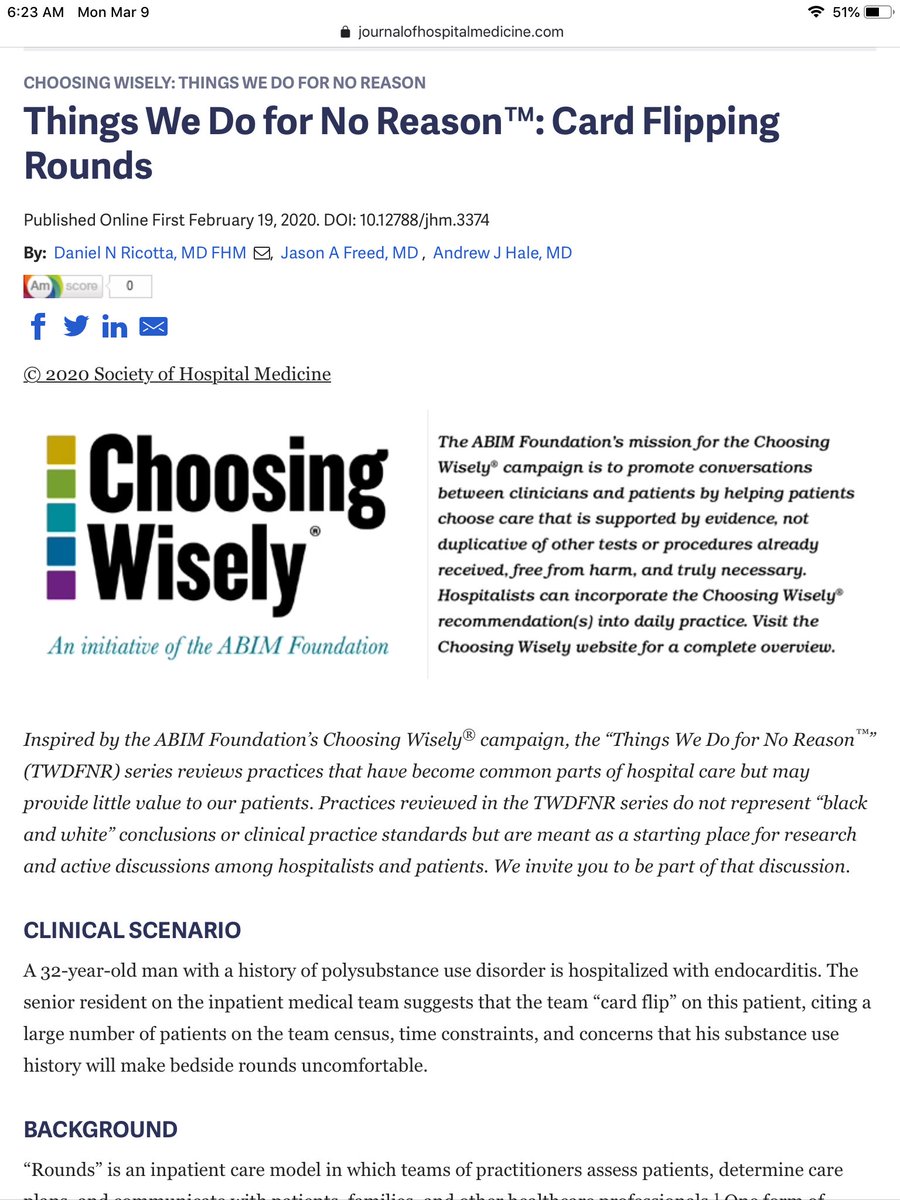
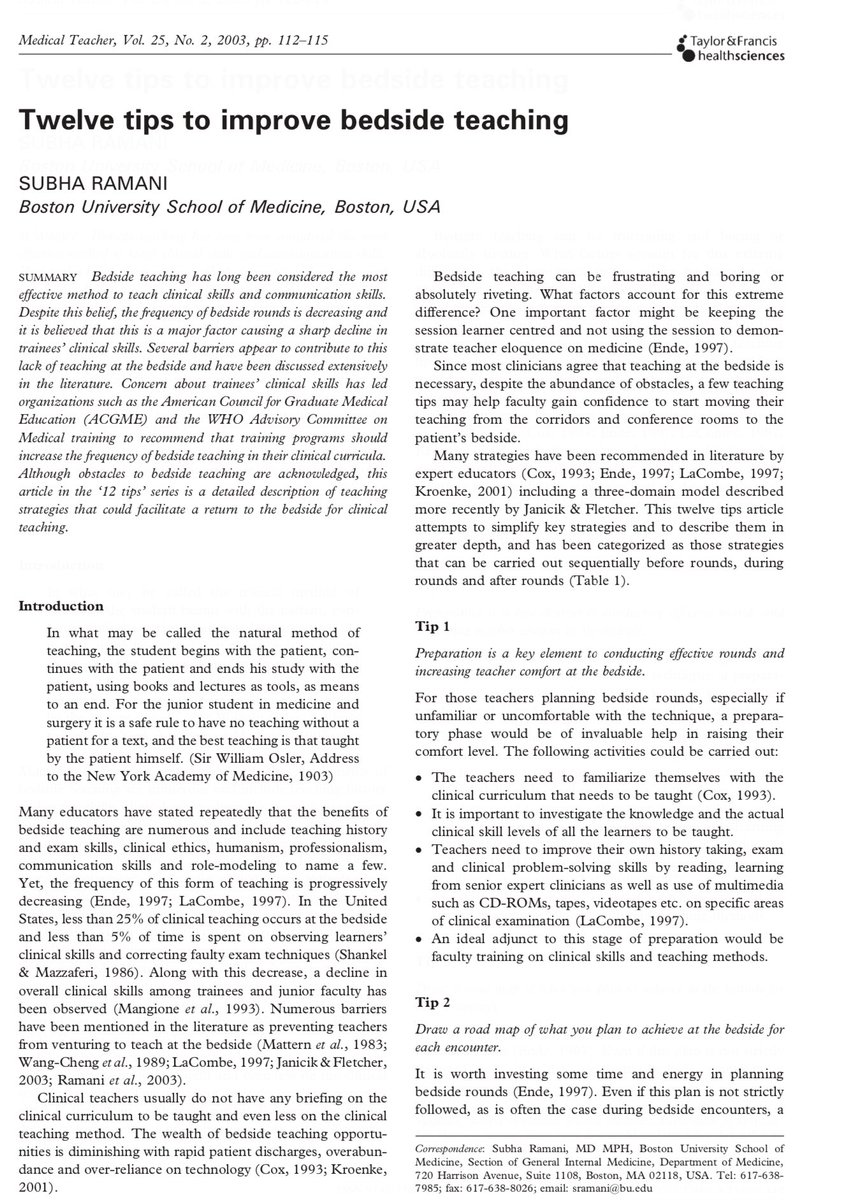
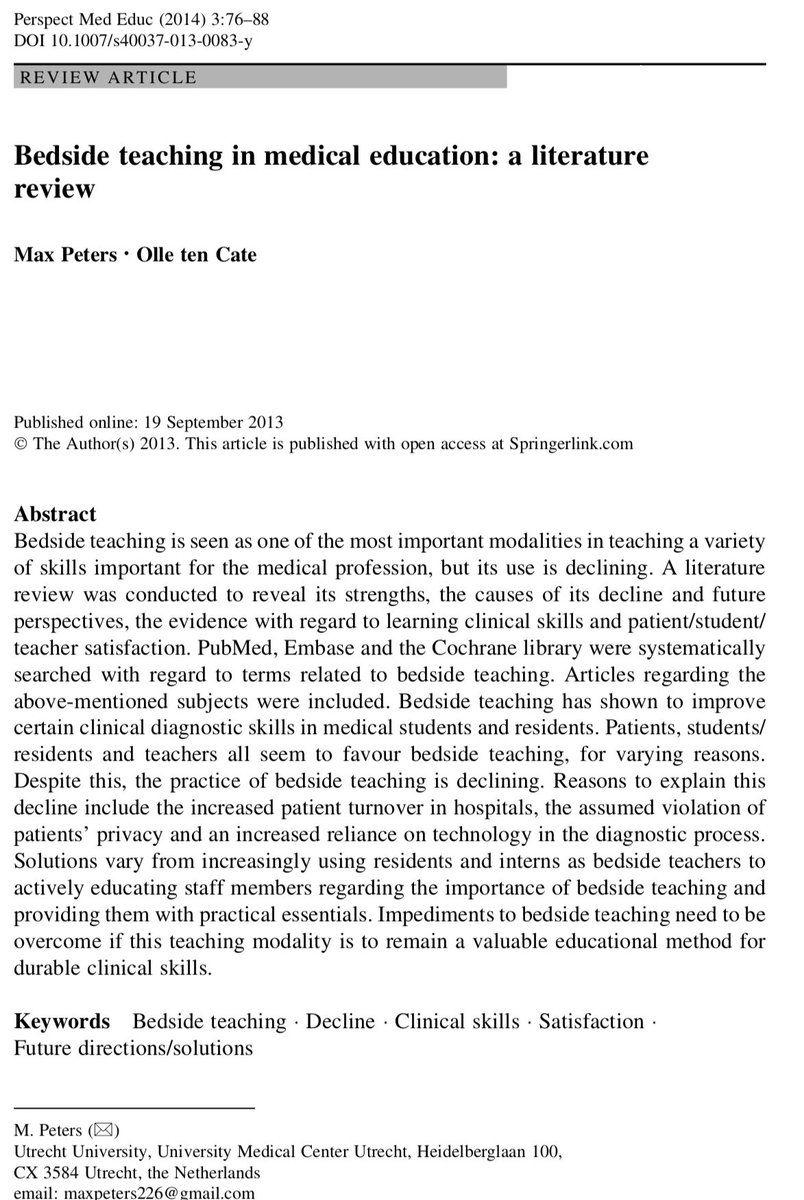
4/ Patient Privacy - Discussing aspects of pt health that society traditionally stigmatized is a valid concern, but shouldn’t keep us from rounding in the room.
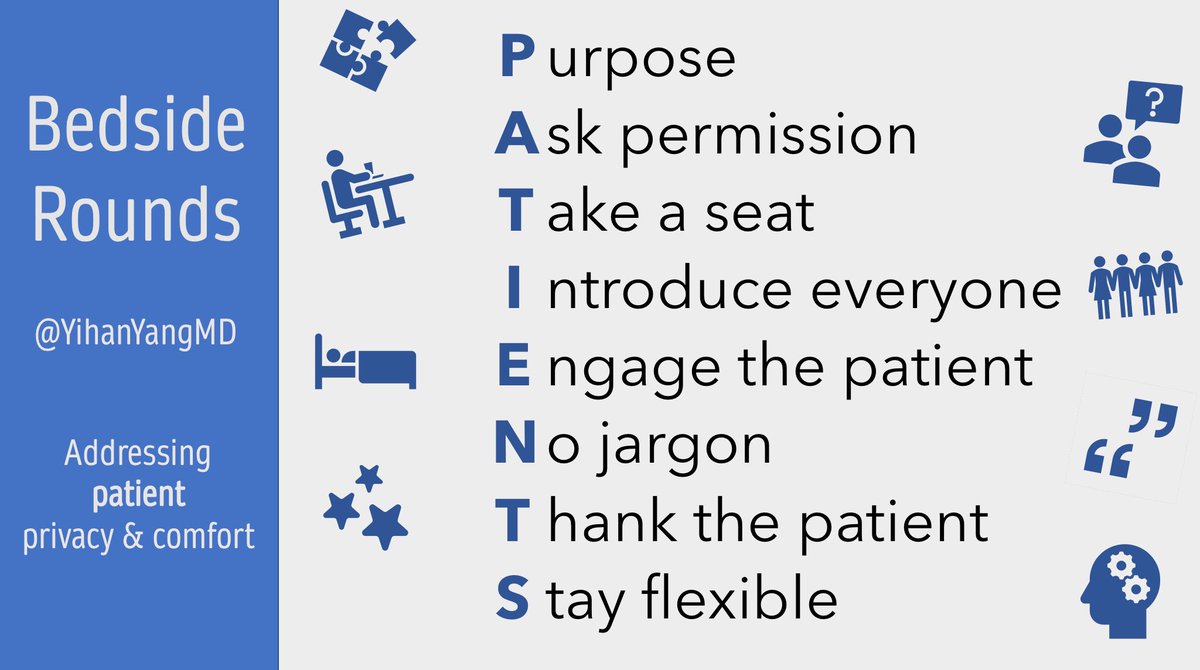
I worked out this PATIENTS mnemonic that helps address privacy and comfort concerns. Details following...
I worked out this PATIENTS mnemonic that helps address privacy and comfort concerns. Details following...
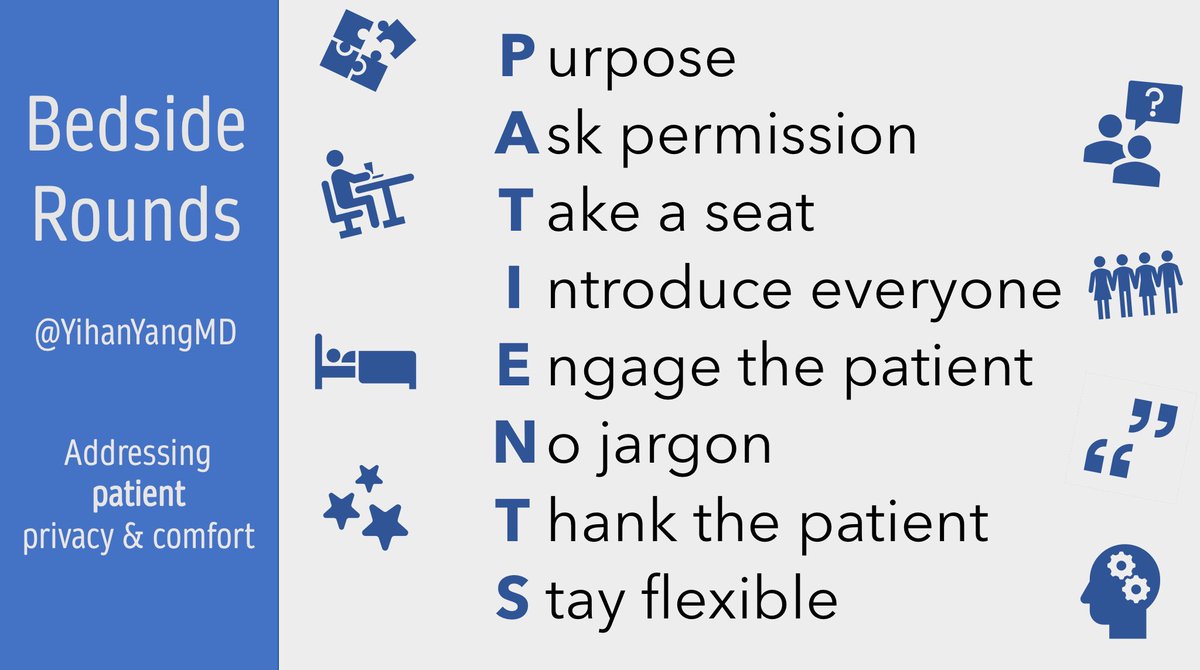
5/ Patients- Purpose
-“This is an opportunity for us to update you & get every1 on the team on the same page”
-Set expectations for duration w/ pts & that your learners ARE still learning
-For 1-off bedside sessions, emphasize educational purpose of session & avoid long ddx list
-“This is an opportunity for us to update you & get every1 on the team on the same page”
-Set expectations for duration w/ pts & that your learners ARE still learning
-For 1-off bedside sessions, emphasize educational purpose of session & avoid long ddx list

6/ pAtients- Ask Permission
After explaining to pt WHY you are bedside rounding, ask permission for the team to present pt’s health information @ the bedside, particularly if pt has a roommate.
After explaining to pt WHY you are bedside rounding, ask permission for the team to present pt’s health information @ the bedside, particularly if pt has a roommate.

7/ pAtients- Ask Permission
Clarify if the pt wishes for any health information to NOT be discussed in front of roommates or families. This is for HIPAA. Otherwise I tell pts all members of the team will be familiar with their medical history even if not presented at bedside.
Clarify if the pt wishes for any health information to NOT be discussed in front of roommates or families. This is for HIPAA. Otherwise I tell pts all members of the team will be familiar with their medical history even if not presented at bedside.

8/ paTients- Take a Seat
Insure the presenter is seated. Talking @ eye level reduces power differential, improves pt perception of provider communication skills & time spent @ bedside
@JHospMedicine piece by @SusanMerel @AndrewW2000 et al from @UW_HospMed journalofhospitalmedicine.com
Insure the presenter is seated. Talking @ eye level reduces power differential, improves pt perception of provider communication skills & time spent @ bedside
@JHospMedicine piece by @SusanMerel @AndrewW2000 et al from @UW_HospMed journalofhospitalmedicine.com
9/ patIents - Introduce the Team
This is a simple one:
-Introduce each team member, their role in pt care, & who the primary “face” of the team is going to be
-Introduce the pt! Including a non-medical fact about the pt humanizes the encounter
This is a simple one:
-Introduce each team member, their role in pt care, & who the primary “face” of the team is going to be
-Introduce the pt! Including a non-medical fact about the pt humanizes the encounter

10/ patiEnts- Engage the patient
-Present TO the pt using “you” rather than “he/she” language
-Presenter intermittently confirms statements of the HPI with the pt
-Show pts labs and imaging
-Ask for pts opinions about medical decisions
-Make time for ?s
-Get teachback
-Present TO the pt using “you” rather than “he/she” language
-Presenter intermittently confirms statements of the HPI with the pt
-Show pts labs and imaging
-Ask for pts opinions about medical decisions
-Make time for ?s
-Get teachback
11/ patieNts- No Jargon
Avoid medicalese while presenting. For learners (students & interns) working on communicating A&P, transition to formal presentation by saying, “I’m going to update the team with some shop talk, but we will summarize everything for you at the end.”
Avoid medicalese while presenting. For learners (students & interns) working on communicating A&P, transition to formal presentation by saying, “I’m going to update the team with some shop talk, but we will summarize everything for you at the end.”
12/ patienTs- Thank the Patient
Provide a genuine, encouraging closure that helps patients feel like a valued member of the rounding experience. I find pts love hearing, “Thank you for helping me teach!”
Provide a genuine, encouraging closure that helps patients feel like a valued member of the rounding experience. I find pts love hearing, “Thank you for helping me teach!”

13/ patientS - Stay flexible
Pts can be unpredictable
-Be observant and avoid pushing your teaching agenda if the pt looks uncomfortable
-Teaching exam? Don’t ask learners to repeat painful maneuvers. Have them practice on each other instead or even on you
Pts can be unpredictable
-Be observant and avoid pushing your teaching agenda if the pt looks uncomfortable
-Teaching exam? Don’t ask learners to repeat painful maneuvers. Have them practice on each other instead or even on you

14/ What about the pts who are talkative & tangential? Delirious? Angry or confrontational? Welcome these pts as perfect opportunities to model patient-centered communication skills for learners: the gentle redirection, NURSing the emotions, de-escalating a tense moment, etc.

15/ And remember, studies show that most pts PREFER interactions with medical teams who bedside round compared to walk rounds/card-flipping rounds
See article by Max Peters and @olletencate drive.google.com
See article by Max Peters and @olletencate drive.google.com
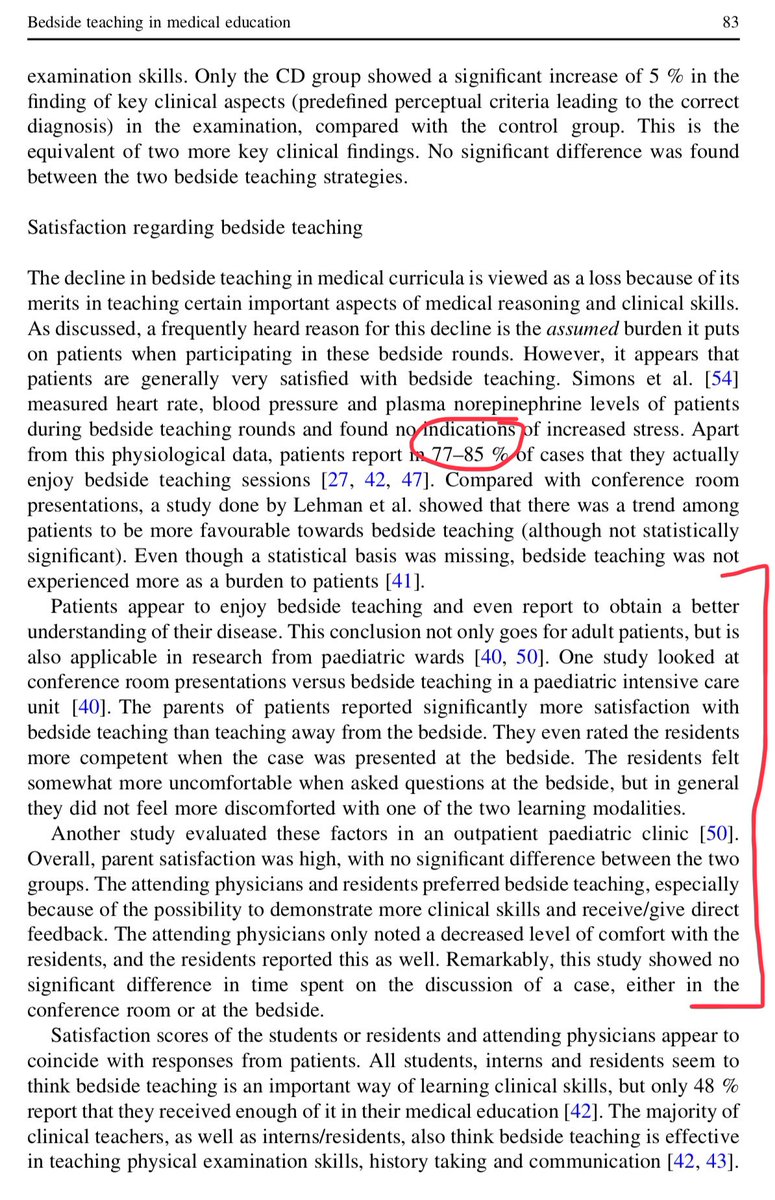
16/ We’ve reviewed several strategies to engage pts while respecting their privacy & maximizing comfort during bedside rounds
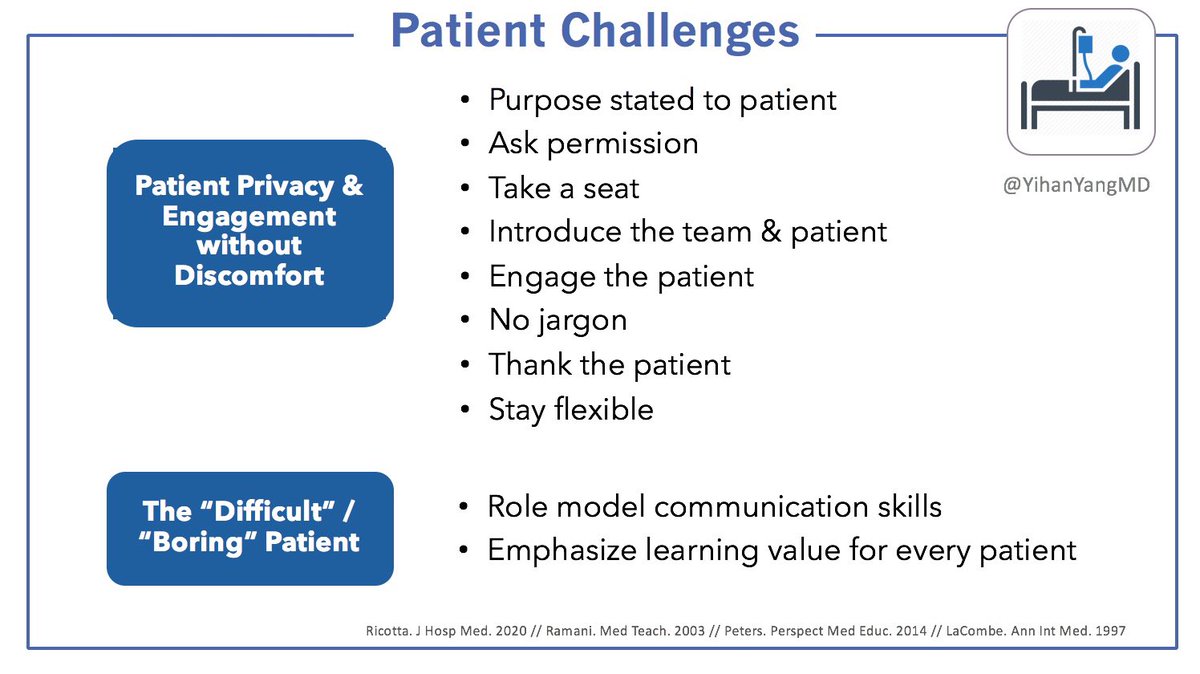
End/ Did you pick up any new strategies that will help you and the team feel more confident with engaging patients for bedside rounding?
#Medtwitter, pls share any strategies that I missed!
@DanielRicottaMD @gradydoctor @JenniferSpicer4 @michellebr00ks @thilanMD @sostfeldjohns @StephenHolt7 @abcmsankey @sargsyanz @ypc_chiefs @YaleIM_Chiefs @GIMaPreceptor @SubhaRamani @aoglasser @AliceTangMD @JustinJWChoi
@DanielRicottaMD @gradydoctor @JenniferSpicer4 @michellebr00ks @thilanMD @sostfeldjohns @StephenHolt7 @abcmsankey @sargsyanz @ypc_chiefs @YaleIM_Chiefs @GIMaPreceptor @SubhaRamani @aoglasser @AliceTangMD @JustinJWChoi
Loading suggestions...