

Rapid atrial fibrillation is common in the ICU.
How do you decide whether Afib is driving hypotension or simply an innocent bystander?
A 🧵
(1/x) x.com
How do you decide whether Afib is driving hypotension or simply an innocent bystander?
A 🧵
(1/x) x.com
(2/x) Atrial Fibrillation is one of the most common complications for ICU patients.
The big question that comes up --> is atrial fibrillation the cause of the hypotension or simply a bystander resulting from some other cause of shock.
Here's how I approach this 👇 x.com
The big question that comes up --> is atrial fibrillation the cause of the hypotension or simply a bystander resulting from some other cause of shock.
Here's how I approach this 👇 x.com
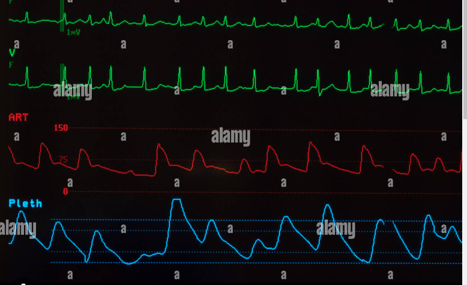
(3/x) As a general rule to start with, in a hypotensive patient with atrial fibrillation, the rapid atrial fibrillation is likely a secondary phenomenon and not causing hypotension.
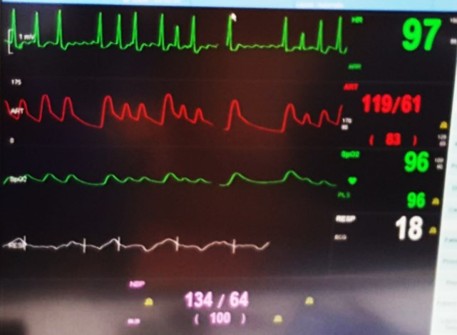
(4/x) With that said, like almost everything in medicine, the impact of rapid atrial fibrillation on hemodynamics is not binary.
There are some patients where rapid AF is either:
1) the primary driver of hypotension or
2) a contributor to hypoperfusion.
The following situations are when I suspect Afib is the driver of hypotension 👇
There are some patients where rapid AF is either:
1) the primary driver of hypotension or
2) a contributor to hypoperfusion.
The following situations are when I suspect Afib is the driver of hypotension 👇

(5/x) Afib is much more likely to be the cause (or important) contributor to hypotension when there is:
1. Valvular disease (Aortic or Mitral Stenosis)
2. Pulmonary Hypertension/RV failure
3. Diastolic dysfunction
In all these scenarios, the loss of atrial kick and/or tachycardia has an exaggerated hemodynamic impact.
For example, a 25 year old with rapid AFib and no baseline cardiomyopathy is likely going to tolerate HRs in the 140s or 150s without issue.
A 85 year old with severe AS who flips into Afib might have hemodynamic collapse from a heart rate of 140.
1. Valvular disease (Aortic or Mitral Stenosis)
2. Pulmonary Hypertension/RV failure
3. Diastolic dysfunction
In all these scenarios, the loss of atrial kick and/or tachycardia has an exaggerated hemodynamic impact.
For example, a 25 year old with rapid AFib and no baseline cardiomyopathy is likely going to tolerate HRs in the 140s or 150s without issue.
A 85 year old with severe AS who flips into Afib might have hemodynamic collapse from a heart rate of 140.

(6/x) Here are some general rules to determine whether AFib is the cause of hypotension or just a bystander.
- Heart rates less than 130 are unlikely to be the sole cause of hypotension.
- If there is a clear other cause of systemic hypotension, AFib is more likely a bystander
This arterial line also tells you that the AFib is not driving hypotension --> see next post for how 👇
- Heart rates less than 130 are unlikely to be the sole cause of hypotension.
- If there is a clear other cause of systemic hypotension, AFib is more likely a bystander
This arterial line also tells you that the AFib is not driving hypotension --> see next post for how 👇
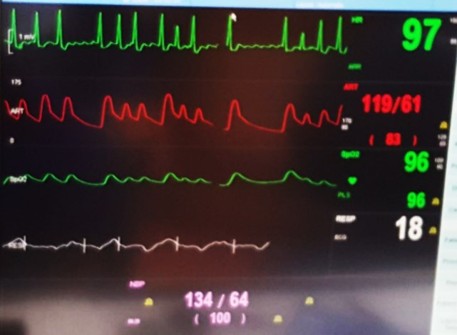
(7/x) One often overlooked tool to determine the hemodynamic impact of rapid Afib - an arterial line.
If there are periods where the ECG shows rapid ventricular response but the arterial line does not show corresponding pulsatility, this means that the rapidity of the Afib is likely impacting hemodynamics.
In this case, there are only ~13 heart beats in this strip for 33 ECG beats - thus only ~ 1 in 3 cardiac cycles result in ejection.
Here, Afib is almost certainly either a contributor or perhaps even sole driver of hypotension.
Also notice the narrow pulse pressure, another indicator of low stroke volume.
If there are periods where the ECG shows rapid ventricular response but the arterial line does not show corresponding pulsatility, this means that the rapidity of the Afib is likely impacting hemodynamics.
In this case, there are only ~13 heart beats in this strip for 33 ECG beats - thus only ~ 1 in 3 cardiac cycles result in ejection.
Here, Afib is almost certainly either a contributor or perhaps even sole driver of hypotension.
Also notice the narrow pulse pressure, another indicator of low stroke volume.

(8/x) Treatment of Rapid Afib will depend on the chronicity, comorbidities, and also the urgency of treatment.
Often, temporizing measures like Amiodarone (or beta-blockers) in the ICU will prevent the need for electrical cardioversion.
Some cases where Afib is the cause of hypotension (particularly in cardiac patients with valvular disease), jumping towards electrical cardioversion sooner might be required.
Note: before giving IV beta-blockers of CCB, have a look at the heart. If you beta-block ventricular failure you can have severe hypotension.
Often, temporizing measures like Amiodarone (or beta-blockers) in the ICU will prevent the need for electrical cardioversion.
Some cases where Afib is the cause of hypotension (particularly in cardiac patients with valvular disease), jumping towards electrical cardioversion sooner might be required.
Note: before giving IV beta-blockers of CCB, have a look at the heart. If you beta-block ventricular failure you can have severe hypotension.

(9/x) What other rapid AFib pearls are there in the ICU?
@rudyunni @CardioCrit @CardioNerds @zacksinger26 @john_basmaji @nickmmark @ThinkingCC @katiewiskar @KiranRikhraj
@rudyunni @CardioCrit @CardioNerds @zacksinger26 @john_basmaji @nickmmark @ThinkingCC @katiewiskar @KiranRikhraj
Loading suggestions...