

When you need to, will you cut the neck? 🔪
Here's how I stay prepared to perform HALO ( high-acuity low opportunity) procedures in the ICU.
A 🧵 on preparing for high stakes yet rare clinical events.
(1/6) x.com
Here's how I stay prepared to perform HALO ( high-acuity low opportunity) procedures in the ICU.
A 🧵 on preparing for high stakes yet rare clinical events.
(1/6) x.com

(2/6) As an intensivist, there are certain skills and procedures we perform daily or weekly basis: arterial lines, central lines, chest tubes, intubations etc.
These skills are well practiced.
But how do you stay on top of the skills that we are required to perform once a year?
Or once a decade?
Here's my strategy for deliberate practice and reflection for HALO procedures (high acuity low opportunity)
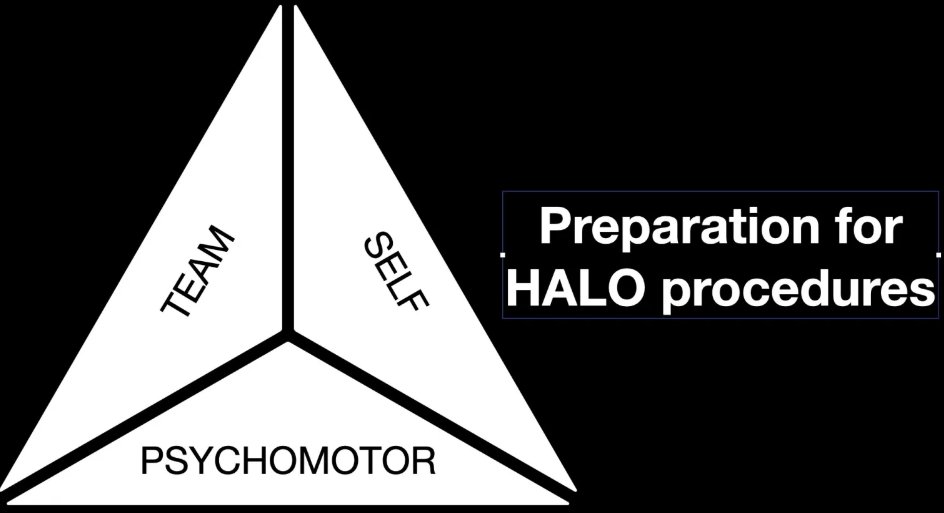
I think of these procedures in 3 parts (credit to #stemlyns)
Psychomotor - skills required
Self - head space
Team - ensuring your team is ready to help/perform the procedure
Psychomotor and Self are discussed here. For the best way to prepare your team this involves multi-disciplinary discussions among your team.
Credit to @stemlyns and shoutout to their great blog: stemlynsblog.org
These skills are well practiced.
But how do you stay on top of the skills that we are required to perform once a year?
Or once a decade?
Here's my strategy for deliberate practice and reflection for HALO procedures (high acuity low opportunity)
I think of these procedures in 3 parts (credit to #stemlyns)
Psychomotor - skills required
Self - head space
Team - ensuring your team is ready to help/perform the procedure
Psychomotor and Self are discussed here. For the best way to prepare your team this involves multi-disciplinary discussions among your team.
Credit to @stemlyns and shoutout to their great blog: stemlynsblog.org
(3/6) It first starts with making a list of HALO (high acuity low opportunity) procedures you might encounter in your practice setting.
For me, those are:
1. Surgical Airways
2. Blakemore Tubes
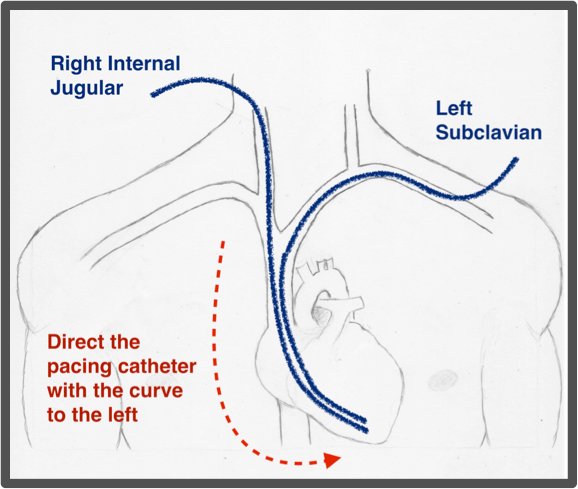
3. Transvenous Pacemakers
4. Bronchial Blockers
5. Emergency Re-sterontomy
These aren't procedures we do every month (or every year!) and there is a risk of skill decay in between rare occurrences.
The first step is to make a list of HALO procedures relevant to your practice setting and specialty.
For me, those are:
1. Surgical Airways
2. Blakemore Tubes
3. Transvenous Pacemakers
4. Bronchial Blockers
5. Emergency Re-sterontomy
These aren't procedures we do every month (or every year!) and there is a risk of skill decay in between rare occurrences.
The first step is to make a list of HALO procedures relevant to your practice setting and specialty.
(4/6) Next, set a frequency that you will review these procedures.
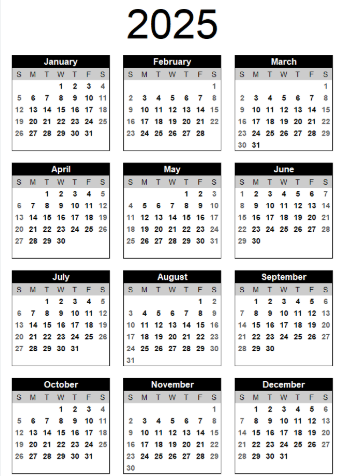
For me, I schedule an hour into my calendar in advance every 3 months.
This seems to work well for me, but I have heard of people doing more frequently or less. x.com
For me, I schedule an hour into my calendar in advance every 3 months.
This seems to work well for me, but I have heard of people doing more frequently or less. x.com
(5/6) During that 1 hour period, for each procedure I:
1. Watch a Youtube/educational video on each procedure
2. Visualize the scenario for why I would do each procedure (e.g. picture the massive hemoptysis on bronch or the severe desaturation during intubation attempt)
3. Visualize each step of the procedure in my mind 2 times
There are probably even more high fidelity ways (e.g. using simple simulators (e.g. for crics) or doing sim) but this works well for a busy schedule.
1. Watch a Youtube/educational video on each procedure
2. Visualize the scenario for why I would do each procedure (e.g. picture the massive hemoptysis on bronch or the severe desaturation during intubation attempt)
3. Visualize each step of the procedure in my mind 2 times
There are probably even more high fidelity ways (e.g. using simple simulators (e.g. for crics) or doing sim) but this works well for a busy schedule.

(6/6) I am sure some of the simulation and resuscitation experts out there have even better approaches.
How do we stay on top of these HALO (high acuity low opportunity) procedures so we can do them when the time matters and save a life?
@Anikoul @ewwalser @cliffreid @emcrit @EmCritDr @CriticalCareNow @EMCases @EMNerd_ @ThinkingCC @kyliebaker888 @AG_EM33
How do we stay on top of these HALO (high acuity low opportunity) procedures so we can do them when the time matters and save a life?
@Anikoul @ewwalser @cliffreid @emcrit @EmCritDr @CriticalCareNow @EMCases @EMNerd_ @ThinkingCC @kyliebaker888 @AG_EM33
Loading suggestions...