

This is part 2 of the Market Strategy 2025 by ICICI Direct research! A 🧵.
What are the themes for this decade?
In this thread we will be covering
🔸Capex
🔸Power
🔸Renewables
🔸Power T&D
🔸Defence
🔸Green Hydrogen
🔸Real estate
🔸Banks
🔸Housing Finance
🔸Auto
🔸Steel
🔸Hospitals
🩷 & 🔄 for better reach!
(1/n)
What are the themes for this decade?
In this thread we will be covering
🔸Capex
🔸Power
🔸Renewables
🔸Power T&D
🔸Defence
🔸Green Hydrogen
🔸Real estate
🔸Banks
🔸Housing Finance
🔸Auto
🔸Steel
🔸Hospitals
🩷 & 🔄 for better reach!
(1/n)

Capex: To be back on track post elections impact
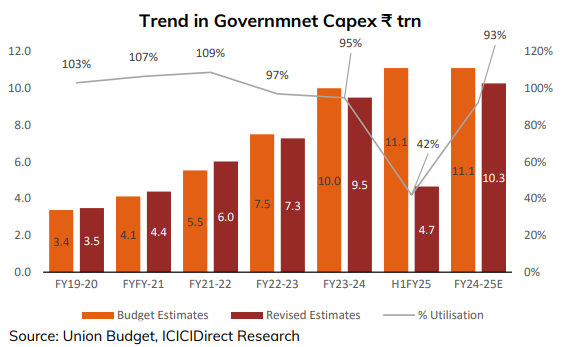
🔸H1FY25 saw subdued capex trends, but activity has significantly picked up since September 2024.
🔸The government is on track to achieve 93% of its ambitious ₹10.3 lakh crore capex target for FY25.
🔸A similar pattern was observed during the 2019-20 election cycle, where capex slowed during polling but rebounded strongly afterward.
🔸A repeat of this trend is anticipated in H2FY25/CY25, supported by post-election stability.
(2/n)
🔸H1FY25 saw subdued capex trends, but activity has significantly picked up since September 2024.
🔸The government is on track to achieve 93% of its ambitious ₹10.3 lakh crore capex target for FY25.
🔸A similar pattern was observed during the 2019-20 election cycle, where capex slowed during polling but rebounded strongly afterward.
🔸A repeat of this trend is anticipated in H2FY25/CY25, supported by post-election stability.
(2/n)
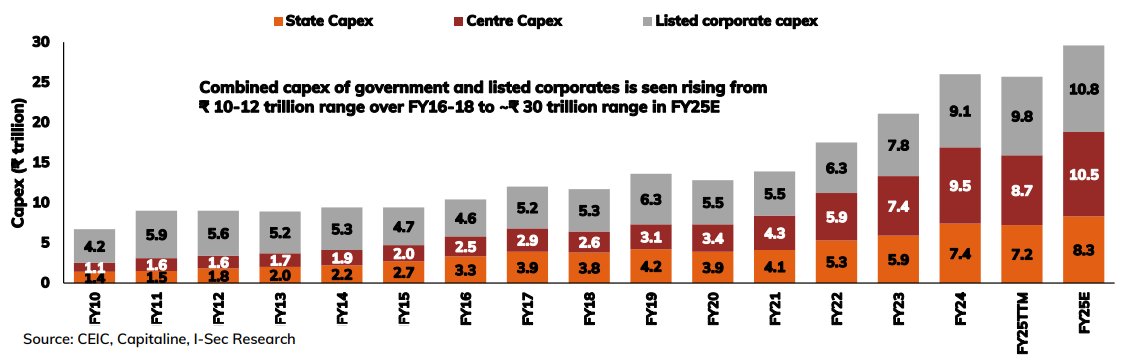
🔸Listed corporate capex is estimated at ₹ 10.8 trillion. Corporate capex continues to rise despite challenges (19% YoY) in FY25E driven by old-economy sectors (energy, metals, utilities, telecom, auto, industrials etc.).
🔸While corporate capex is growing, it remains at a two-decade low relative to central government capex, which stands at ₹10.5 trillion (11% YoY growth) for FY25E.
🔸The ratio of listed corporate capex to central government capex was at its peak (~5x) in FY09, indicating significant untapped potential for corporate capex resurgence.
(3/n)
🔸While corporate capex is growing, it remains at a two-decade low relative to central government capex, which stands at ₹10.5 trillion (11% YoY growth) for FY25E.
🔸The ratio of listed corporate capex to central government capex was at its peak (~5x) in FY09, indicating significant untapped potential for corporate capex resurgence.
(3/n)
Power: Decadal capex momentum across value chain
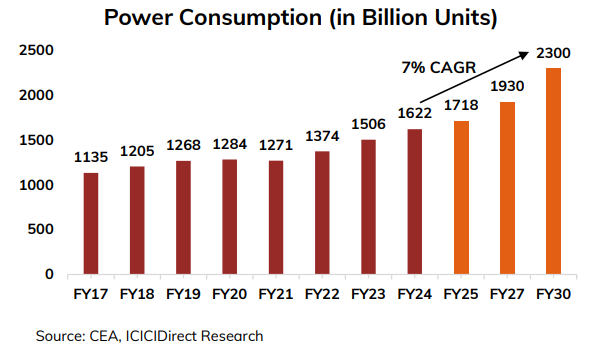
🔸India's power demand is expected to grow at 7% annually from FY24 to FY30.
🔸Renewable energy capacity will grow at 21% annually, while thermal energy will grow at 6% annually.
🔸This includes adding 125 GW of renewable energy to support the green hydrogen ecosystem.
🔸By FY30, renewables' share in India's energy mix is set to rise from 41% (FY23) to 61%.
🔸Achieving this will need a ₹30 lakh crore investment, with government utilities focusing on thermal and renewables and the private sector primarily on renewables.
(4/n)
🔸India's power demand is expected to grow at 7% annually from FY24 to FY30.
🔸Renewable energy capacity will grow at 21% annually, while thermal energy will grow at 6% annually.
🔸This includes adding 125 GW of renewable energy to support the green hydrogen ecosystem.
🔸By FY30, renewables' share in India's energy mix is set to rise from 41% (FY23) to 61%.
🔸Achieving this will need a ₹30 lakh crore investment, with government utilities focusing on thermal and renewables and the private sector primarily on renewables.
(4/n)
Power T&D– Strong focus of National Electricity Plan
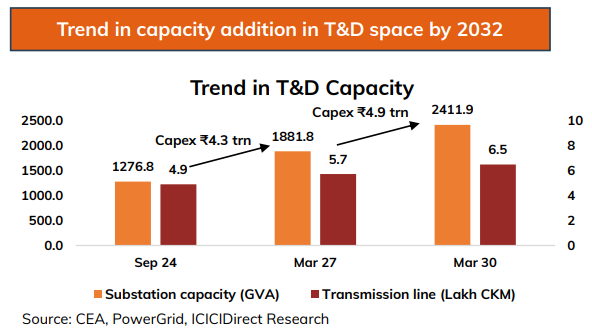
🔸The Ministry of Power has finalized the National Electricity Plan (NEP) for Central and State transmission systems, involving a massive investment of ₹9.15 lakh crore.
🔸The plan aims to address growing energy needs, targeting a peak demand of 458 GW by 2032.
Key upgrades include
🔸Transmission network capacity expansion from 4.9 lakh km to 6.5 lakh km.
🔸Transformer capacity increase from 1,277 GVA to 2,412 GVA (11.2% CAGR).
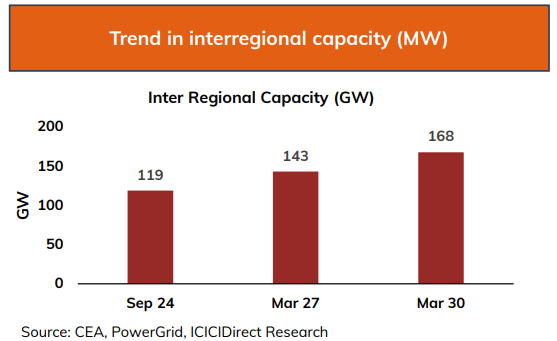
🔸Inter-region electricity transfer capacity rising from 119 GW to 168 GW.
Beneficiaries of asset additions
🔸Powergrid: Higher capex under the TBCB framework.
🔸KEC International & Kalpataru Projects: EPC work for transmission lines and substations.
🔸ABB: Substation equipment and transformers.
(5/n)
🔸The Ministry of Power has finalized the National Electricity Plan (NEP) for Central and State transmission systems, involving a massive investment of ₹9.15 lakh crore.
🔸The plan aims to address growing energy needs, targeting a peak demand of 458 GW by 2032.
Key upgrades include
🔸Transmission network capacity expansion from 4.9 lakh km to 6.5 lakh km.
🔸Transformer capacity increase from 1,277 GVA to 2,412 GVA (11.2% CAGR).
🔸Inter-region electricity transfer capacity rising from 119 GW to 168 GW.
Beneficiaries of asset additions
🔸Powergrid: Higher capex under the TBCB framework.
🔸KEC International & Kalpataru Projects: EPC work for transmission lines and substations.
🔸ABB: Substation equipment and transformers.
(5/n)
Defence Sector – A decade of transformation through indigenization
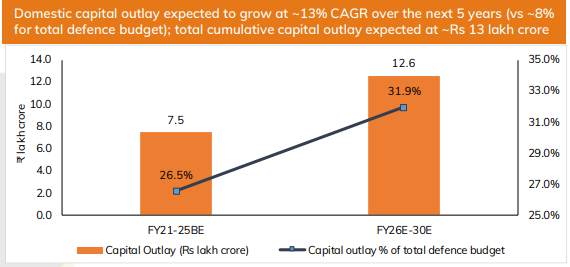
🔸Total capital outlay for defense is expected at ₹12-13 lakh crore over FY26-30.
🔸The domestic procurement budget has grown at a 15% CAGR over FY20-25, compared to total capital outlay growth of 9% CAGR. Domestic procurement now makes up 75% of the defense capital outlay, up from 58% in FY20.
🔸Contracts worth ₹8-10 lakh crore are expected to be awarded to domestic defense companies in the next 5-7 years, reflecting robust tendering and awarding activities.
🔸By FY29, the government targets:
- Annual defense production of ₹3 lakh crore (~19% CAGR).
- Defense exports of ₹50,000 crore (~19% CAGR).
🔸Policy reforms aim to boost indigenization, integrating private players, MSMEs, and start-ups into the defense supply chain.
🔸Defense electronics are projected to grow to 35-40% of total production (from the current 25-30%) due to the rising demand for modernized platforms.
(6/n)
🔸Total capital outlay for defense is expected at ₹12-13 lakh crore over FY26-30.
🔸The domestic procurement budget has grown at a 15% CAGR over FY20-25, compared to total capital outlay growth of 9% CAGR. Domestic procurement now makes up 75% of the defense capital outlay, up from 58% in FY20.
🔸Contracts worth ₹8-10 lakh crore are expected to be awarded to domestic defense companies in the next 5-7 years, reflecting robust tendering and awarding activities.
🔸By FY29, the government targets:
- Annual defense production of ₹3 lakh crore (~19% CAGR).
- Defense exports of ₹50,000 crore (~19% CAGR).
🔸Policy reforms aim to boost indigenization, integrating private players, MSMEs, and start-ups into the defense supply chain.
🔸Defense electronics are projected to grow to 35-40% of total production (from the current 25-30%) due to the rising demand for modernized platforms.
(6/n)
Green Hydrogen – India aiming for significant global share, presents huge opportunity
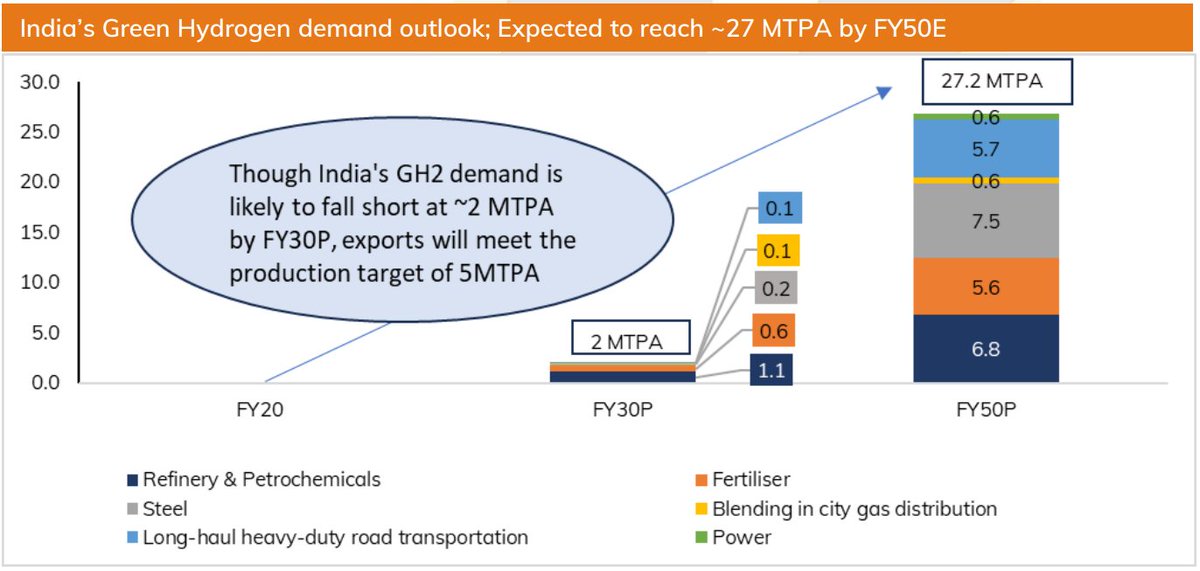
🔸Global hydrogen demand is expected to reach 150 MTPA by 2030, with 51 MTPA met through green hydrogen (GH2).
🔸In India, domestic green hydrogen demand is projected at 2 MTPA by FY30, below the National Green Hydrogen Mission's (NGHM) target of 5 MTPA, primarily due to high production costs.
🔸Green hydrogen costs (LCOH) are approximately 1.75x higher than grey hydrogen and 1.5x higher than brown hydrogen, hindering adoption.
🔸Economic viability depends on
- 35%-40% reduction in electrolyzer prices.
- 12%-14% improvement in efficiency.
- Continued policy support.
🔸Export markets will play a critical role in achieving India’s 5 MTPA GH2 production target, with countries like the EU, Japan, Singapore, and South Korea expressing interest in GH2 imports for decarbonization.
🔸Capex opportunity of ~₹10 lakh crore by 2030 across the GH2 value chain
- ₹4.5 lakh crore for renewable power.
- ₹4 lakh crore for ammonia production.
- ₹2 lakh crore for electrolyzers.
🔸LCOH of GH2 is expected to fall further from USD 1.6/kg by FY30, driven by reductions in renewable power and electrolyzer costs.
(7/n)
🔸Global hydrogen demand is expected to reach 150 MTPA by 2030, with 51 MTPA met through green hydrogen (GH2).
🔸In India, domestic green hydrogen demand is projected at 2 MTPA by FY30, below the National Green Hydrogen Mission's (NGHM) target of 5 MTPA, primarily due to high production costs.
🔸Green hydrogen costs (LCOH) are approximately 1.75x higher than grey hydrogen and 1.5x higher than brown hydrogen, hindering adoption.
🔸Economic viability depends on
- 35%-40% reduction in electrolyzer prices.
- 12%-14% improvement in efficiency.
- Continued policy support.
🔸Export markets will play a critical role in achieving India’s 5 MTPA GH2 production target, with countries like the EU, Japan, Singapore, and South Korea expressing interest in GH2 imports for decarbonization.
🔸Capex opportunity of ~₹10 lakh crore by 2030 across the GH2 value chain
- ₹4.5 lakh crore for renewable power.
- ₹4 lakh crore for ammonia production.
- ₹2 lakh crore for electrolyzers.
🔸LCOH of GH2 is expected to fall further from USD 1.6/kg by FY30, driven by reductions in renewable power and electrolyzer costs.
(7/n)
Real Estate – Bigger players to sustain growth
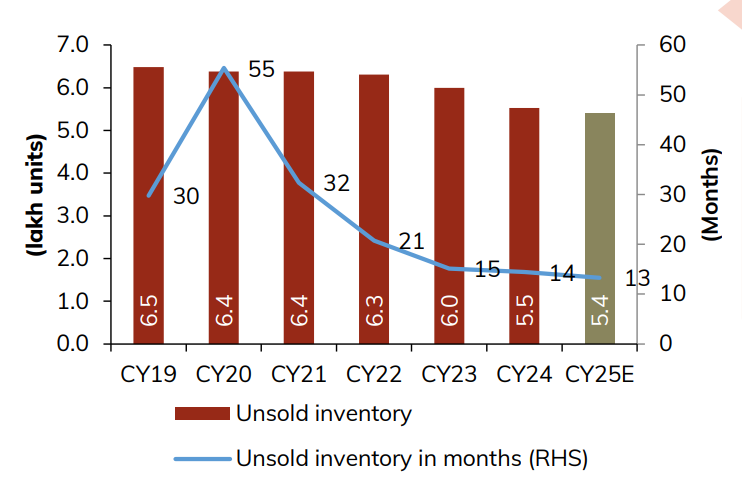
🔸The real estate sector saw 16% growth, reaching a sales value of ₹5.7 lakh crore, driven by price hikes and higher luxury home sales, leading to a 30% increase in realizations.
🔸Sales of homes priced above ₹4 crore grew by 37.8% YoY (CBRE data). This trend is expected to continue in 2025, fueled by rising economic confidence and a growing number of HNIs and UHNIs.
🔸Top 11 listed real estate players plan to launch ~253 mn sq ft over the next few years, with ~57 mn sq ft launched in H1FY25, indicating high supply in the upcoming quarters.
🔸Prices have increased 40-50% over 2-3 years, which may moderate demand.
🔸Growth will likely favor large players with strong balance sheets and a focus on luxury offerings.
(8/n)
🔸The real estate sector saw 16% growth, reaching a sales value of ₹5.7 lakh crore, driven by price hikes and higher luxury home sales, leading to a 30% increase in realizations.
🔸Sales of homes priced above ₹4 crore grew by 37.8% YoY (CBRE data). This trend is expected to continue in 2025, fueled by rising economic confidence and a growing number of HNIs and UHNIs.
🔸Top 11 listed real estate players plan to launch ~253 mn sq ft over the next few years, with ~57 mn sq ft launched in H1FY25, indicating high supply in the upcoming quarters.
🔸Prices have increased 40-50% over 2-3 years, which may moderate demand.
🔸Growth will likely favor large players with strong balance sheets and a focus on luxury offerings.
(8/n)
Banks: Corporate lending to steer growth from hereon
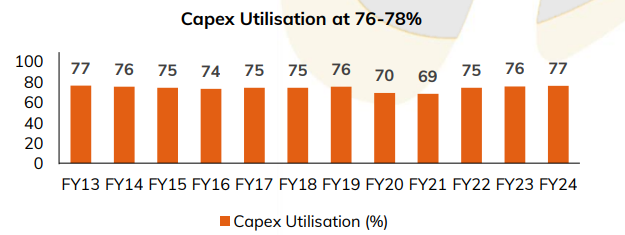
🔸Historically, private capex has outpaced government capex, but in the last 6-7 years, private capex has fallen to levels similar to government capex.
🔸With capacity utilization at 76-78%, a revival in private capex is anticipated.
🔸This revival is expected to drive corporate lending, becoming a key growth driver for advances, while the retail segment is likely to maintain steady growth.
(9/n)
🔸Historically, private capex has outpaced government capex, but in the last 6-7 years, private capex has fallen to levels similar to government capex.
🔸With capacity utilization at 76-78%, a revival in private capex is anticipated.
🔸This revival is expected to drive corporate lending, becoming a key growth driver for advances, while the retail segment is likely to maintain steady growth.
(9/n)
Housing Finance: Beneficiary with relative resilience
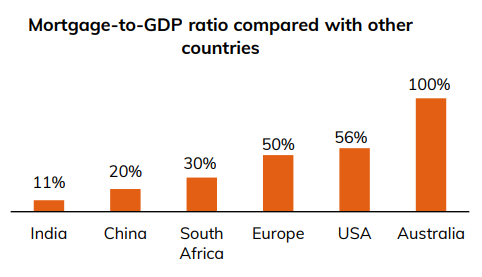
🔸India's mortgage penetration is currently lower than other emerging economies.
🔸Factors like rising per capita income, favourable demographics, and government initiatives are expected to fuel mortgage growth.
🔸The rising mortgage-to-GDP ratio indicates improved penetration, showcasing long-term growth potential for the sector.
(10/n)
🔸India's mortgage penetration is currently lower than other emerging economies.
🔸Factors like rising per capita income, favourable demographics, and government initiatives are expected to fuel mortgage growth.
🔸The rising mortgage-to-GDP ratio indicates improved penetration, showcasing long-term growth potential for the sector.
(10/n)
Auto Industry - Premiumization to drive value growth
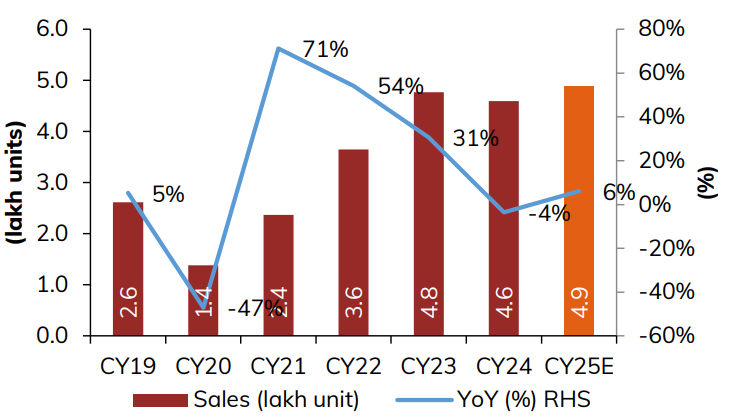
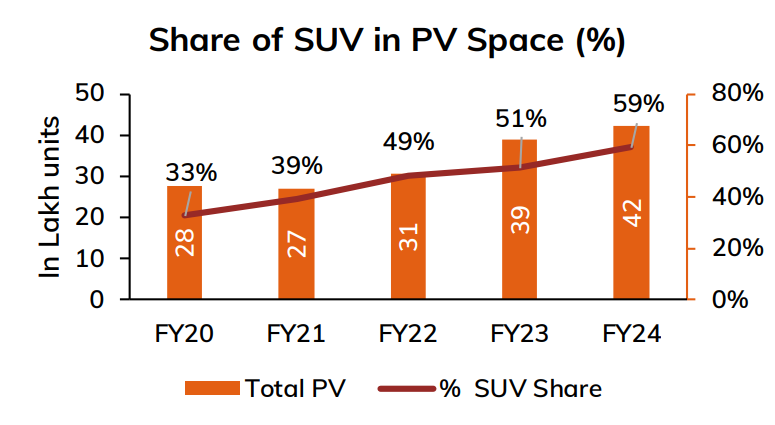
🔸Domestic auto volumes have rebounded strongly, with PV sales surpassing all-time highs in FY23 and expected to grow modestly. Other segments are likely to peak by FY26-27.
🔸Consumers now prefer performance, technology, and safety-oriented vehicles, supported by higher disposable incomes.
🔸Over the last 5 years, 30+ SUVs were launched compared to only 4 hatchbacks and 3 sedans. SUV volumes grew at a CAGR of 22%, significantly outpacing the industry growth of 5%.
🔸There's a notable increase in features like sunroofs, automatic transmissions, and alloy wheels, reflecting a shift in consumer preferences.
(11/n)
🔸Domestic auto volumes have rebounded strongly, with PV sales surpassing all-time highs in FY23 and expected to grow modestly. Other segments are likely to peak by FY26-27.
🔸Consumers now prefer performance, technology, and safety-oriented vehicles, supported by higher disposable incomes.
🔸Over the last 5 years, 30+ SUVs were launched compared to only 4 hatchbacks and 3 sedans. SUV volumes grew at a CAGR of 22%, significantly outpacing the industry growth of 5%.
🔸There's a notable increase in features like sunroofs, automatic transmissions, and alloy wheels, reflecting a shift in consumer preferences.
(11/n)
Steel: Higher Import Duty to offer a much-needed relief!
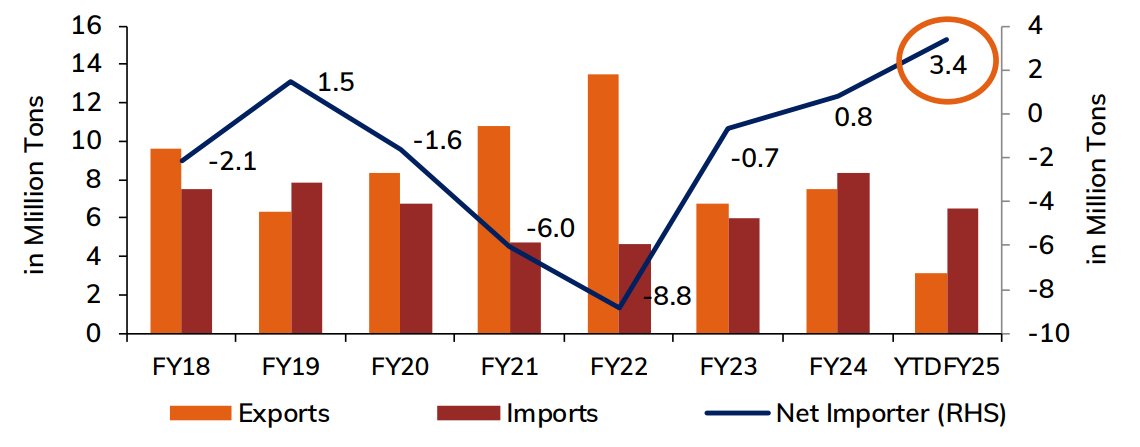
🔸Steel imports have reached 8 year's high of 6.5 million tonne (MT) turning India a net importer of 3.4 MT in Apr-Nov’24
(12/n)
🔸Steel imports have reached 8 year's high of 6.5 million tonne (MT) turning India a net importer of 3.4 MT in Apr-Nov’24
(12/n)
Hospitals- Riding on improving macros besides premiumization theme
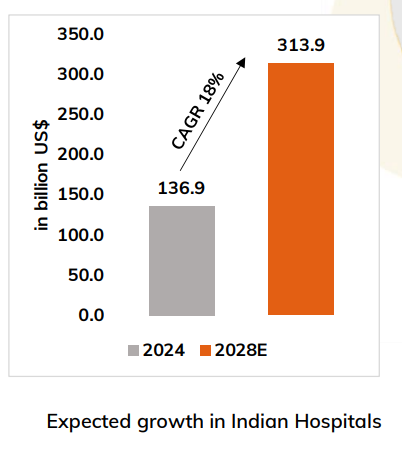
🔸The hospitals sector is projected to grow at a CAGR of ~18% from 2024-28, reaching $314 billion, driven by rising incomes, lifestyle changes, and improved diagnostics and insurance coverage.
🔸With existing capacities nearing saturation, hospitals plan to add 42% more beds over the next 3-4 years, led by 11 major players.
🔸A transition from communicable to non-communicable diseases is driving demand for high-end procedures and advanced treatments.
🔸Growth in radiology diagnostics supports early detection of critical diseases, leading to timely hospitalization.
🔸Accelerated adoption of health insurance post-COVID and rising awareness for quality treatment are key growth drivers.
(13/n)
🔸The hospitals sector is projected to grow at a CAGR of ~18% from 2024-28, reaching $314 billion, driven by rising incomes, lifestyle changes, and improved diagnostics and insurance coverage.
🔸With existing capacities nearing saturation, hospitals plan to add 42% more beds over the next 3-4 years, led by 11 major players.
🔸A transition from communicable to non-communicable diseases is driving demand for high-end procedures and advanced treatments.
🔸Growth in radiology diagnostics supports early detection of critical diseases, leading to timely hospitalization.
🔸Accelerated adoption of health insurance post-COVID and rising awareness for quality treatment are key growth drivers.
(13/n)
Loading suggestions...