

Justice (Retd) Rohinton Nariman will shortly deliver the inaugural lecture of the Ahmadi Foundation on the topic “Secularism and the Indian Constitution.” A book on former CJI AM Ahmadi titled ‘The Fearless Judge’ will be launched at the event. x.com
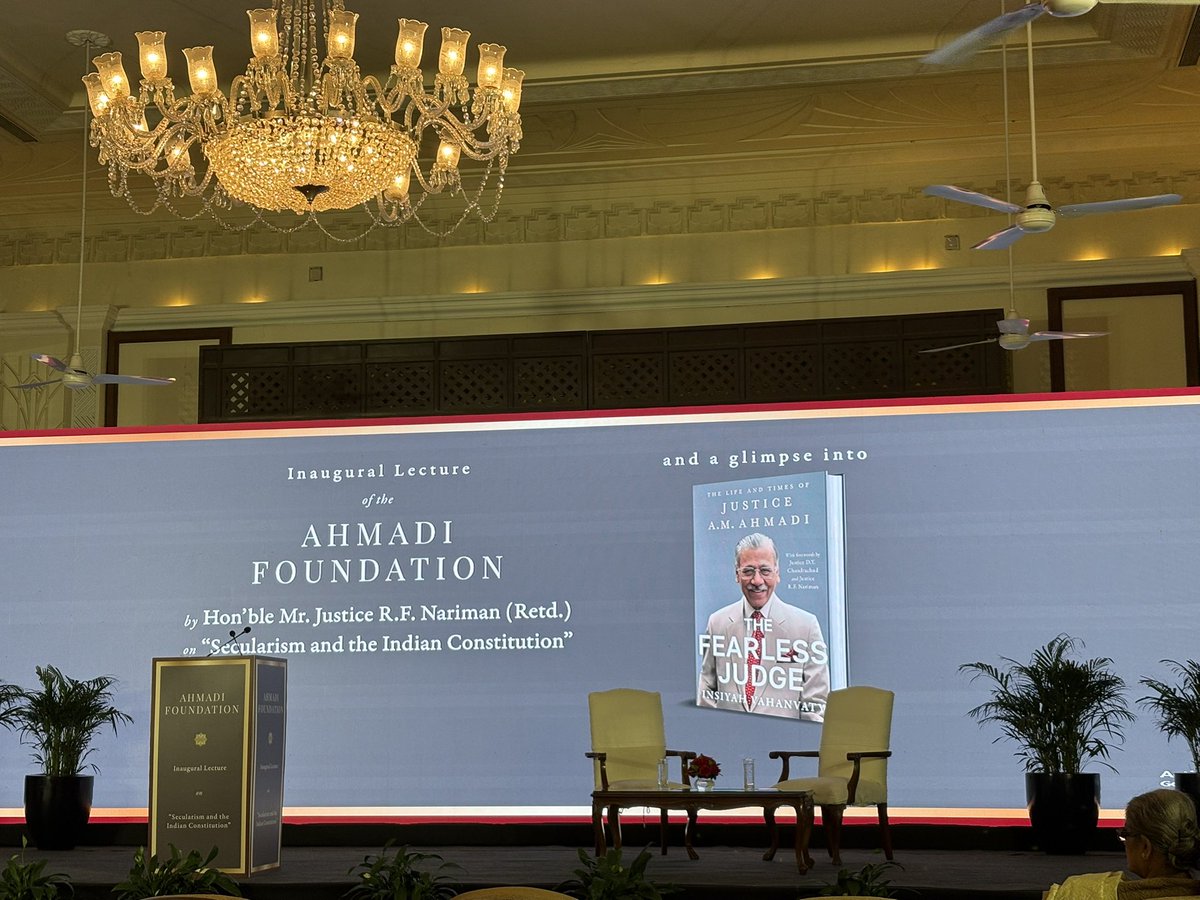
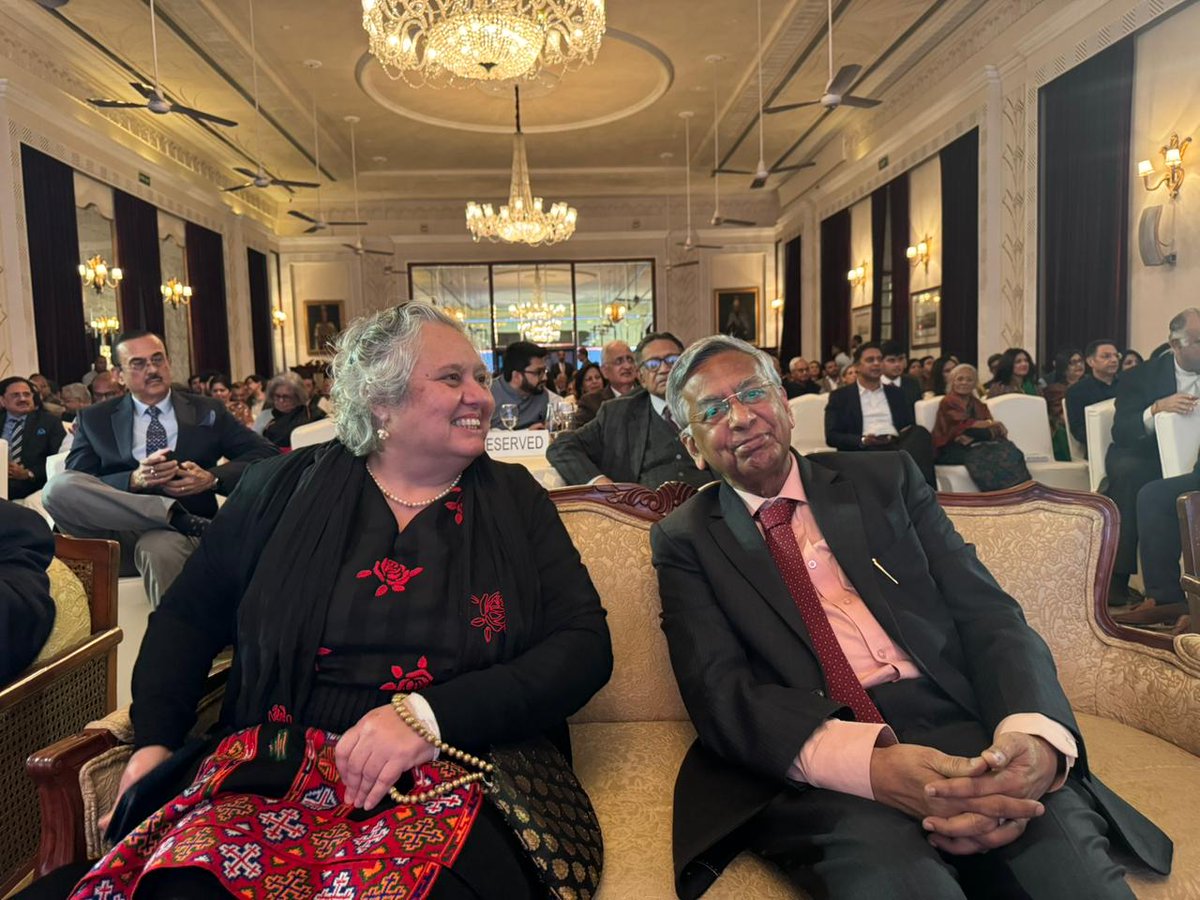
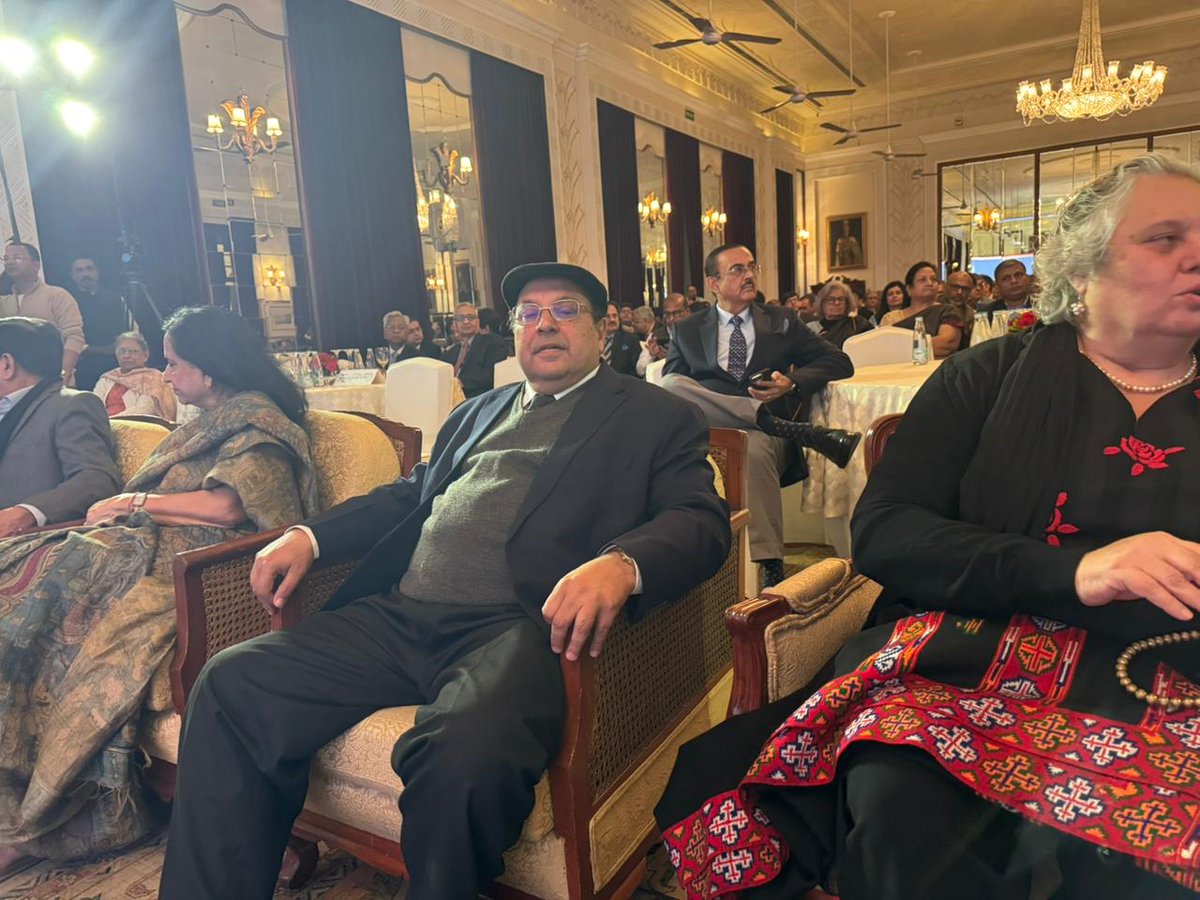
Justice Nariman's address begins.
He says "Secularism was a subject close to Justice Ahmadi's heart. Indian tradition of secularim goes back 2200 years. Emperors Ashoka and Akbar embodied secularism. This is a very diverse country with very diverse people"
He says "Secularism was a subject close to Justice Ahmadi's heart. Indian tradition of secularim goes back 2200 years. Emperors Ashoka and Akbar embodied secularism. This is a very diverse country with very diverse people"
Justice Nariman, speaking of US constitution and says how the jurisprudence on secularism evolved with the concept of 'wall between church and State'.
Justice Nariman: When it comes to us, even though we had the Government of India Act in 1935. It said nothing whatsoever on religious freedom. Our constitution started completely on a clean slate. The word 'secular' was added in 42nd amendment. Where do we find secularism in our constitution and what does it mean?
Justice Nariman: The first thing that we are told is 'State shall not discriminate', second thing is citizens cannot discriminate on grounds of religion, third is the individual right to practice any religion. Going to one, we have Article 15(1), this is the widest. When you come to individuals discriminating against other individuals, you come to 15(2), this is very important.
Justice Nariman: This spans over to admission to private educational institutions. Private institutions cannot discriminate when they receive aid from the government. Article 25 is one of the most elaborate articles in the constitution. In great detail, our founding fathers did a balancing act. First thing 25 tells you is all persons are equally entitled to profess, practice and propagate.
Justice Nariman: Profess means you can actually wear a religious badge, this is explicitly recognised in our Constitution. The second is practice, it is the ritual form of religion, practice is in every facet of the firm. The third is propagate, it was meant to assuage to Indian Christian community.
Justice Nariman: Propagate is an appeal to someone to change his faith. We have very few case laws on this. If religious conversions are on fraudulent grounds, that can easily be interdicted under the first statement. The word propagate would clearly mean right to spread ones faith by legitimate means.
Justice Nariman explains the scope of the restriction of Article 25 on the grounds of public order, morality and health. He traces the origin of how Sati was abolished in the country.
Justice Nariman speaks of the Dawoodi Borah ex-communication case. "That dissenting judgment seems to suggest that you cannot by using social welfare and religion change a religion."
Justice Nariman: Article 26 deals with religious denomination as opposed to the individual's right and their right to maintain and administer their institution. Article 27 tells us that nobody is bound to pay taxes if it is collected only for a religious purpose. 28 (1) and (3) speak of educational institutions run wholly out of state funds. Article 28 (3) gives an individual a right to recuse from attending an event if they are not from a religious denomination.
Justice Nariman: Having given you the four limbs of secularism from our fundamental rights. There is an important thing in fundamental duties which were added in 42nd amendment. Fundamental duty under 51 is essentially harmony will prevail by brotherhood. The article says we are all the children of a composite culture that we must respct.
Justice Nariman: How does it all work well on ground? Not well. Take the Babri Masjid case, the Supreme Court speaks in different voices. The entire thing begins with a clarion call by VHP. This gets followed by L.K.Advani's Rath Yatra. Seeing this, the places of worship act was enacted. Despite this we all know what happened.
Justice Nariman: The government of India did 2 things. The Liberhan commission, the a board to determine if there was a Hindu temple under the mosque. In 1994, a 9 judge bench held that secularism is a part of the basic structure and dismissal of 3 BJP governments by the president was valid owing to violence.
Justice Nariman: The government of India did 2 things. The Liberhan commission, the a board to determine if there was a Hindu temple under the mosque. In 1994, a 9 judge bench held that secularism is a part of the basic structure and dismissal of 3 BJP governments by the president was valid owing to violence.
Justice Nariman: In the same year, in Ismail Farooqui, the Supreme Court on the 'The Acquisition of Certain Area at Ayodhya Act, 1993' , the court split up the sections of the act, even though they could not do so. They bifurcated and legislated themselves and came to the conclusion that central government could vest something in a trust. Another aspect of 7(2) of the act was that status quo of the act will be maintained. The minority took exception to 7(2) of the act was in the teeth of secularism.
Justice Nariman: You had this 3-2 split where secularism came under a clout. As soon as the mosque was broken down 2 FIRs were registered. One against the Kar Sevaks and one against senior BJP leaders. Until it came to me in 2017, nothing had taken place with these two FIRs for 25 years,
Justice Nariman: When all this came up to us, we put back everything under Article 142. What I said was, you transfer the Rae Bareli proceedings in Lucknow and have one special judge trying this matter day to day and the judge will not be transferred and all this must be completed in two years.
Justice Nariman: The Special Judge applied to us again after 2 years, what was known to us was he was due to retire. We made an order saying he will not retire until it goes to judgment. He retired in 3.5 years and became a Lokayukta, this is the state of affairs in this country.
Justice Nariman speaks of per curiam judgment in the Ayodhya case. He says "Obviously this case was so earth shaking that the court felt that the country deserves a per curiam judgment."
Justice Nariman speaks of the history of Ram Janmabhoomi case. "What is important to note is the historical claim was only qua the outer courtyard and not the inner courtyard. An ASI report is gone into in great detail by Supreme Court judgment. They find artefacts belonging to 9 periods. Post Gupta period, you find a circular shrine, the shrine is said to probably Shaivate. After another 3-4 centuries, you finally have this huge structure, the court said this was probably a temple and probably a Hindu temple. The court found that there was no Ram temple beneath. With this the court proceeded to decide the suit."
Justice Nariman: Secularism was not given its due at all in these judgment. But there is a very important silver lining in all this, that is the Places of Worship Act. It was brought in 1991. It was brought in not to counter historical wrongs. We find today that there are suits after suits filed all over the place like hydra heads. The only way to counter this is by applying 5 pages in Ayodhya judgment and having it read in every district court.
Justice Nariman: If this act were to be applied as written in Ayodhya judgment itself, it will easily cauterise all these 'hydra heads' popping up today.
Justice Nariman quotes Justice Chinappa Reddy and ends the lecture.
Justice Nariman quotes Justice Chinappa Reddy and ends the lecture.
Senior Advocate and Rajya Sabha MP Dr. Abhishek Manu Singhvi now addresses the gathering.
Singhvi: To be asked to speak after Justice Nariman, is the greatest disservice Huzefa Ahmadi could have done. Its like tasting water after heavy wine.
Singhvi: I worked closely with former CJI Ahmadi while working on a report to institutionalise ADR, I was the youngest lawyer in the panel. It was our report that led to the statutory encapsulation of a menu card of ADR.
Singhvi speaks of his experiences while on the panel in his early 30s and how former CJI Ahmadi was always open to listening to the opinion even from the youngest member of the panel.
He says "The sad footnote of this is, the actual report by our group seems to have vanished into thin air."
He says "The sad footnote of this is, the actual report by our group seems to have vanished into thin air."
Singhvi: CJI Ahmadi was deeply saddened by the disappearance of this report.
Singhvi now speaks of former CJI Ahmadi's judgment in General Vaidya assassination case.
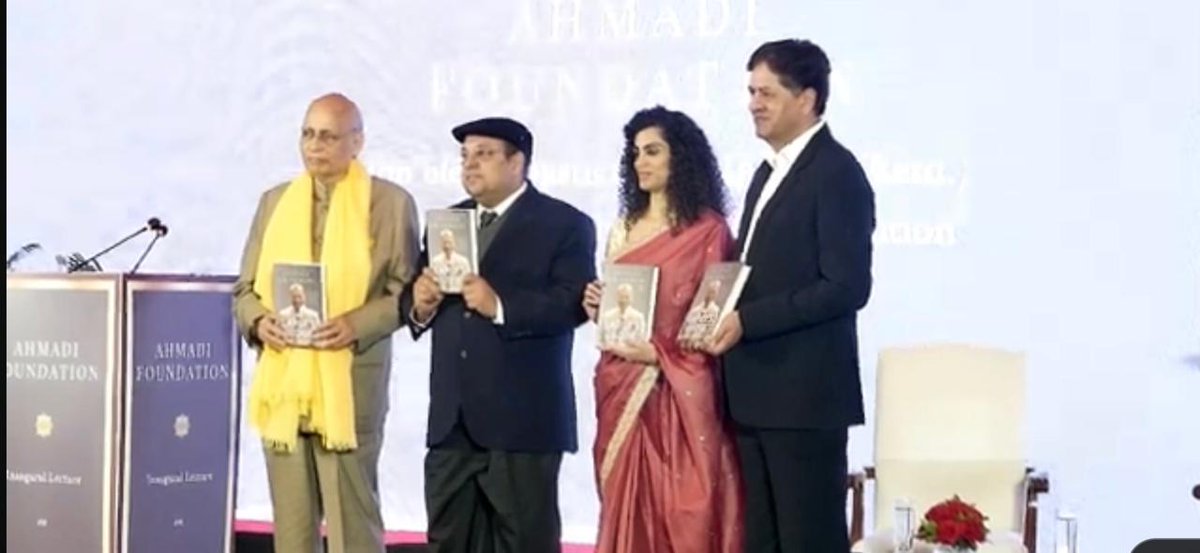
(L to R) Singhvi, Justice Nariman, Insiya Vahanvati (Justice Ahmadi's granddaughter and author) and journalist Vikram Chandra launching the book. x.com
Loading suggestions...