

Manchester United were flawlessly coached from a tactical perspective against Crystal Palace.
This was one of the very first times Erik ten Hag's team controlled the game with AND without the ball to the same level as City & Arsenal.
It shows Erik ten Hag CAN succeed..
THREAD!
This was one of the very first times Erik ten Hag's team controlled the game with AND without the ball to the same level as City & Arsenal.
It shows Erik ten Hag CAN succeed..
THREAD!
One of the biggest issues Erik ten Hag's Manchester United have faced from a tactical perspective has been their lack of positional discipline in possession.
So often we see players popping up all over the park and rotating, but too much of that breeds unfamiliarity and chaos.
So often we see players popping up all over the park and rotating, but too much of that breeds unfamiliarity and chaos.
Against Palace, however, United were the opposite of ill-disciplined positionally.
Their structure was excellent as they consistently attacked in a 3-2-5 shape.
Mazraoui tucked inside to form a back 3, Dalot inverted into midfield, & Eriksen + Bruno were high between the lines.
Their structure was excellent as they consistently attacked in a 3-2-5 shape.
Mazraoui tucked inside to form a back 3, Dalot inverted into midfield, & Eriksen + Bruno were high between the lines.
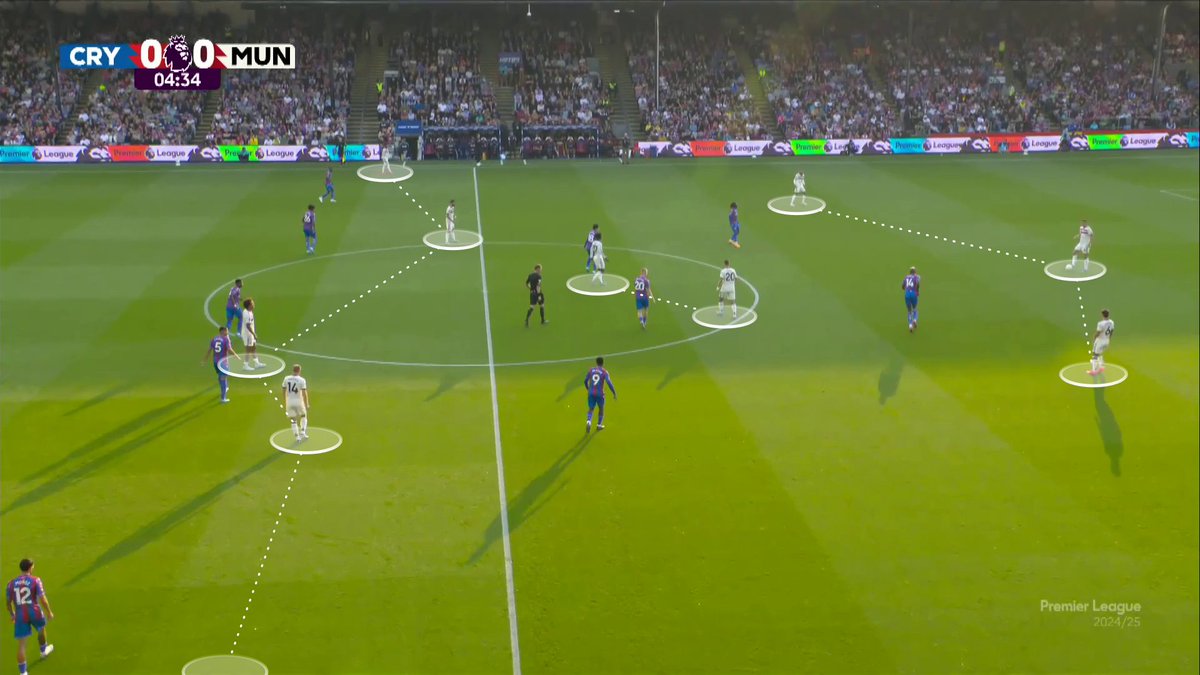
We see this structure a lot nowadays, but it is the subtle coaching details within it that matter as opposed to simply occupying key zones.
Ten Hag's usage of his fullbacks in defence and in midfield allowed them to consistently attack with Amad and Garnacho holding the width.
Ten Hag's usage of his fullbacks in defence and in midfield allowed them to consistently attack with Amad and Garnacho holding the width.
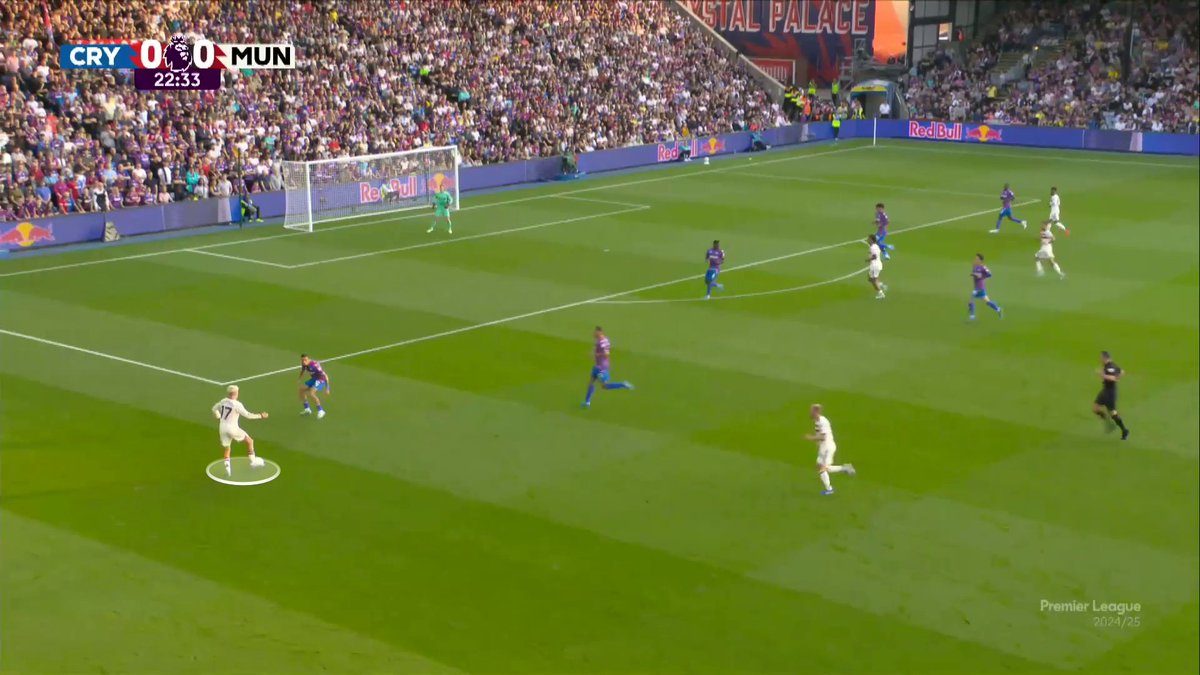
So often we see the 3-2-5 used with a fullback in the last line of attack.
This can work if the ball is dominated and the opposition are consistently pinned back, but the dynamics are often suboptimal because the fullback has to travel high and can often lack 1v1 qualities.
This can work if the ball is dominated and the opposition are consistently pinned back, but the dynamics are often suboptimal because the fullback has to travel high and can often lack 1v1 qualities.
Instead, with natural wide players on the flank, United held consistent width with players optimally suited to those positions whilst maintaining a consistent threat on the turnover.
There were also lots of positional rotations, albeit within the confines of specific zones..
There were also lots of positional rotations, albeit within the confines of specific zones..
See, positional rotation is essential, but the occupation of key spaces must remain.
So often United rotate positionally and overcomplicate their in-possession game with the likes of Casemiro running into depth, centre backs inverting, Onana stepping out to make a back 3, etc.
So often United rotate positionally and overcomplicate their in-possession game with the likes of Casemiro running into depth, centre backs inverting, Onana stepping out to make a back 3, etc.
Against Palace, United's rotations were a lot more sensible.
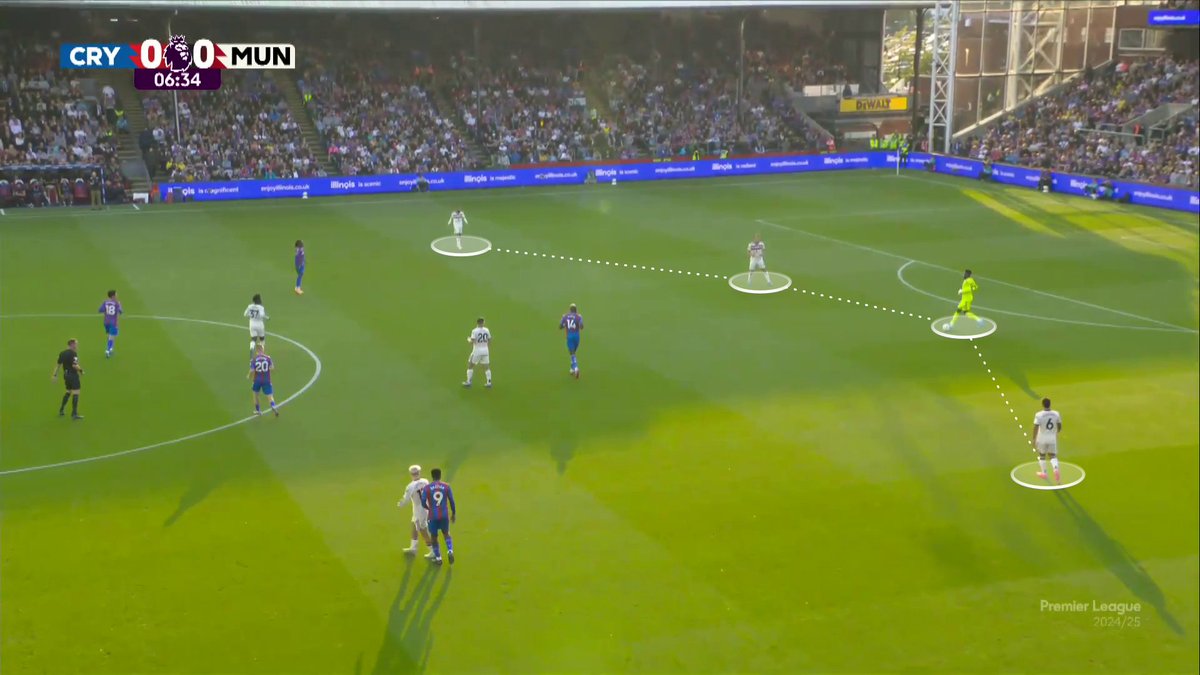
When Palace were more aggressive with their pressure, Onana split the defenders to make a back 4.
It allowed Mazraoui and Martinez to spread out which disengaged Nketiah & Eze whilst creating a central 2v1 vs Mateta.
When Palace were more aggressive with their pressure, Onana split the defenders to make a back 4.
It allowed Mazraoui and Martinez to spread out which disengaged Nketiah & Eze whilst creating a central 2v1 vs Mateta.
Higher up the pitch, United had clear patterns to prevent Palace from getting effective pressure on the ball.
Glasner's team were set up in a 5-2-3 which matches up well with the 3-2-5.
The idea was for the wide players (Nketiah & Eze) to trigger the press on the outside CB's.
Glasner's team were set up in a 5-2-3 which matches up well with the 3-2-5.
The idea was for the wide players (Nketiah & Eze) to trigger the press on the outside CB's.
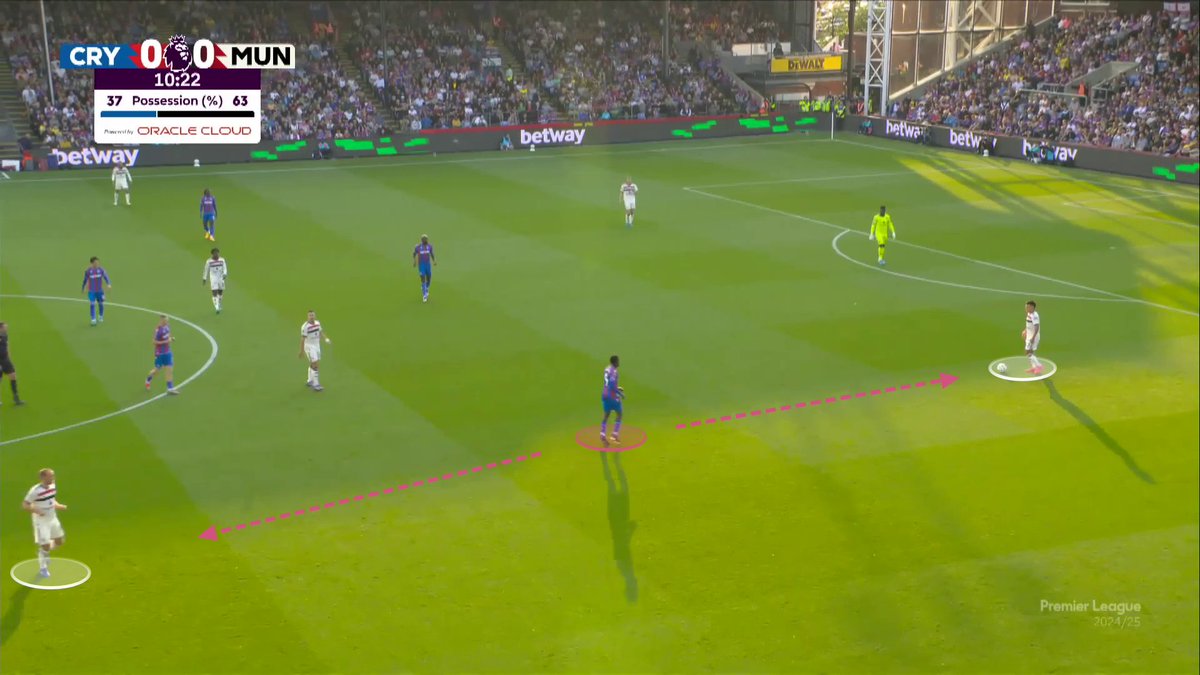
Nketiah and Eze had to block passing lanes into United's #8's before arcing their runs to press the outside centre backs.
Ten Hag exploited that by tasking Eriksen to drop deep into the left half space which either left Martinez with time and space or Eriksen free out wide..
🔝
Ten Hag exploited that by tasking Eriksen to drop deep into the left half space which either left Martinez with time and space or Eriksen free out wide..
🔝
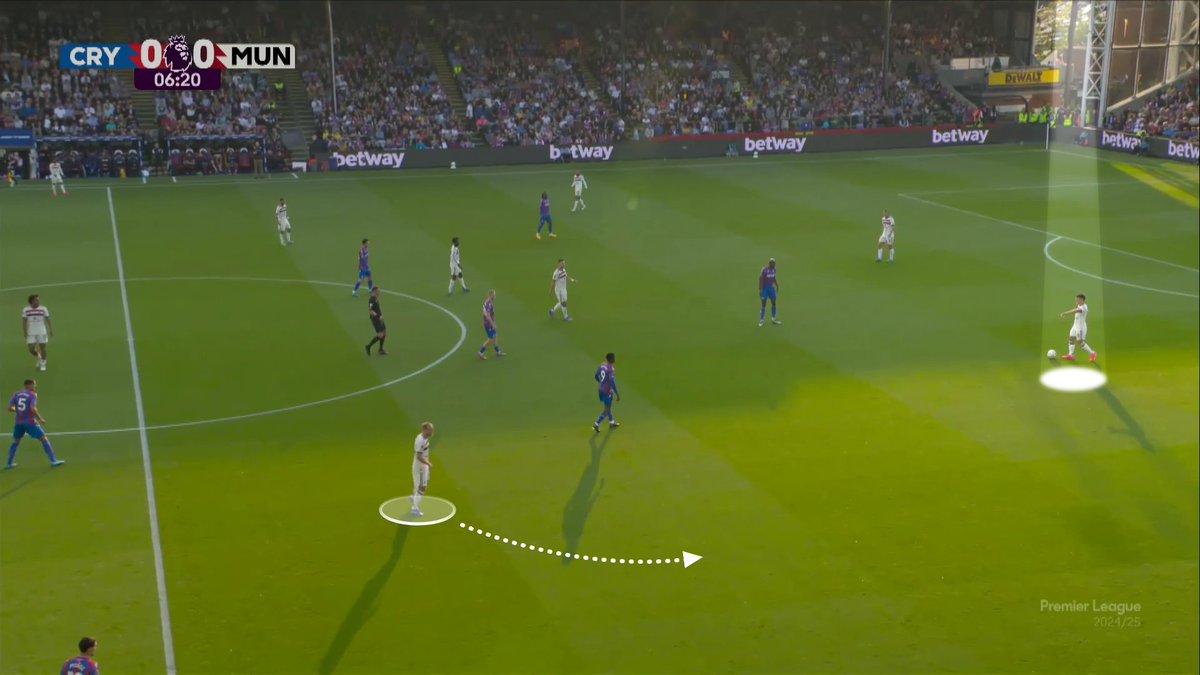
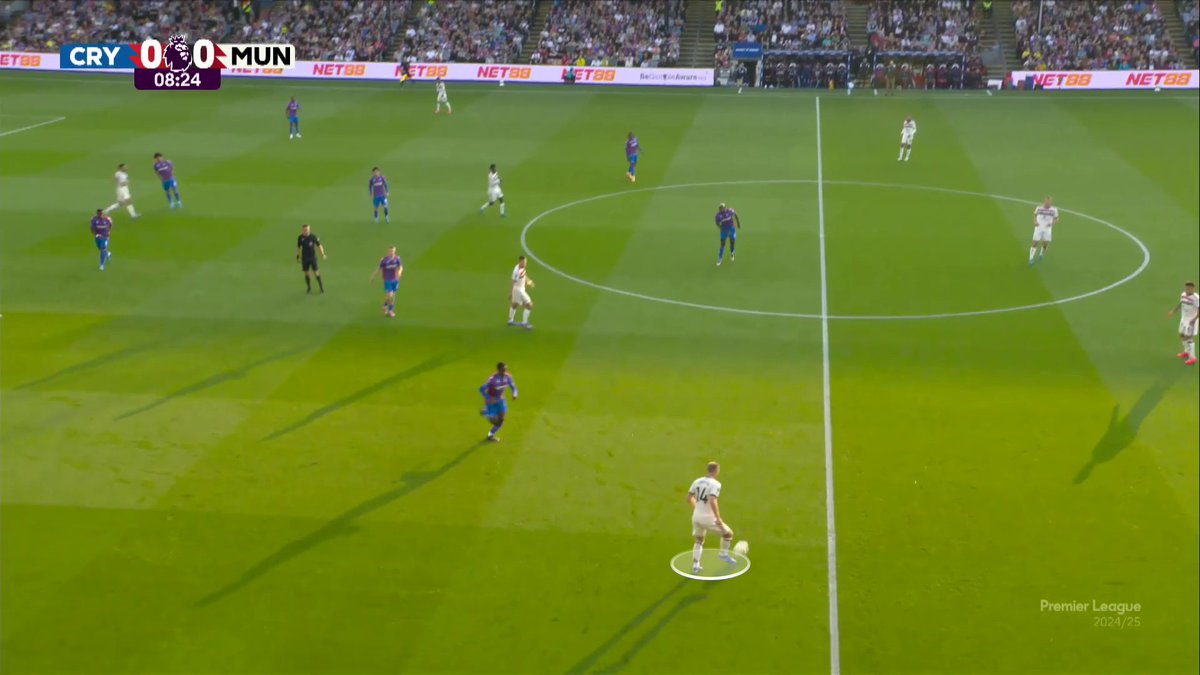
Eriksen dropping deep overloaded Palace's press, but it also resulted in United having one less player in attack, but this is where Zirkzee's link-play and profile became invaluable.
Eriksen's dropping movements was the trigger for Zirkzee to drop and Garnacho to run in behind..
Eriksen's dropping movements was the trigger for Zirkzee to drop and Garnacho to run in behind..
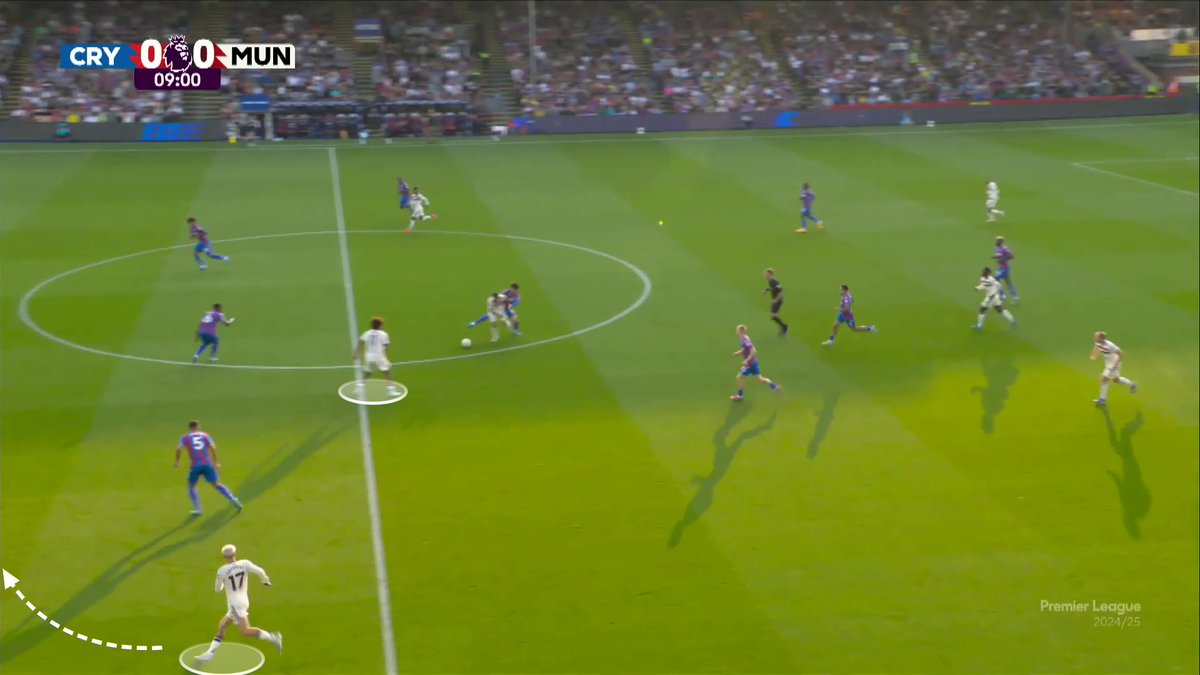
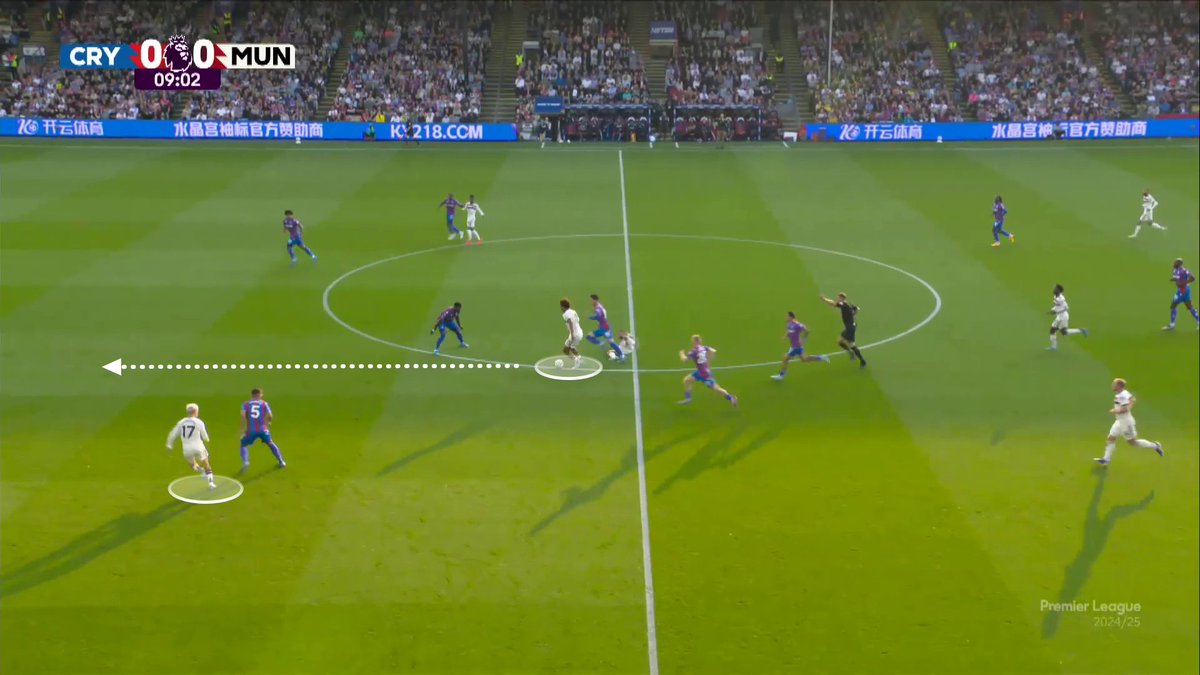
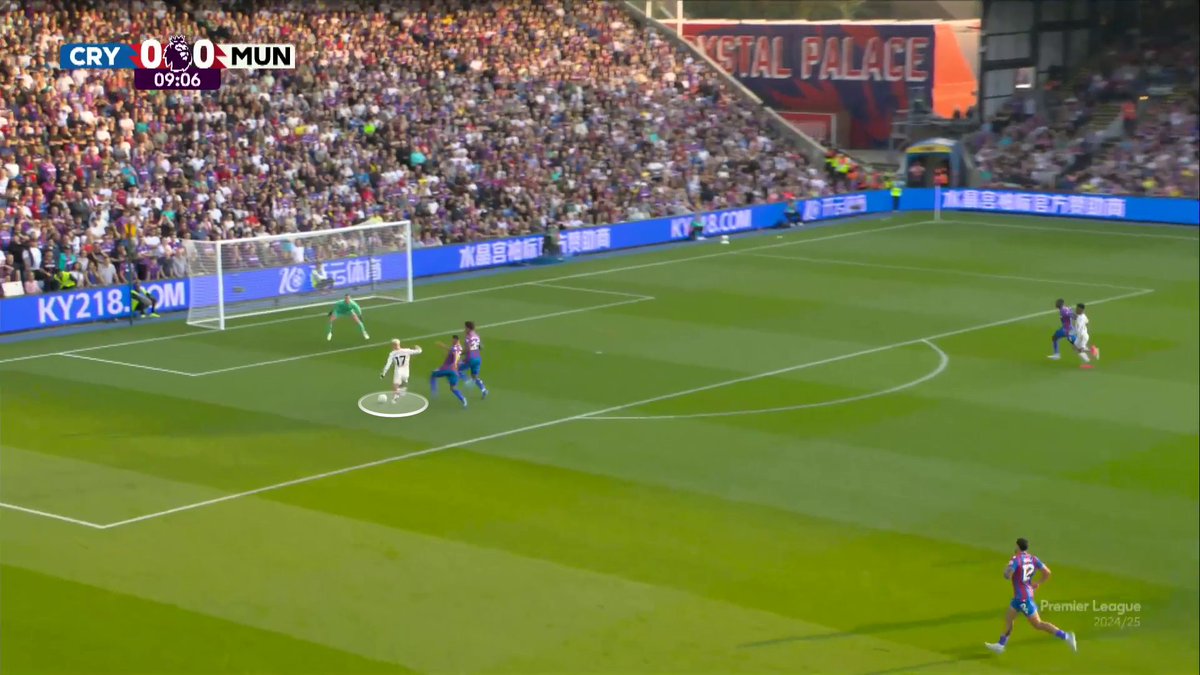
In other moments, Dalot interchanged positionally with Eriksen who dropped into midfield to influence proceedings.
This, my friends, is positional fluidity within the confines of specific zones.
All of the best teams play this way.
It nearly resulted in two Garnacho goals.
This, my friends, is positional fluidity within the confines of specific zones.
All of the best teams play this way.
It nearly resulted in two Garnacho goals.
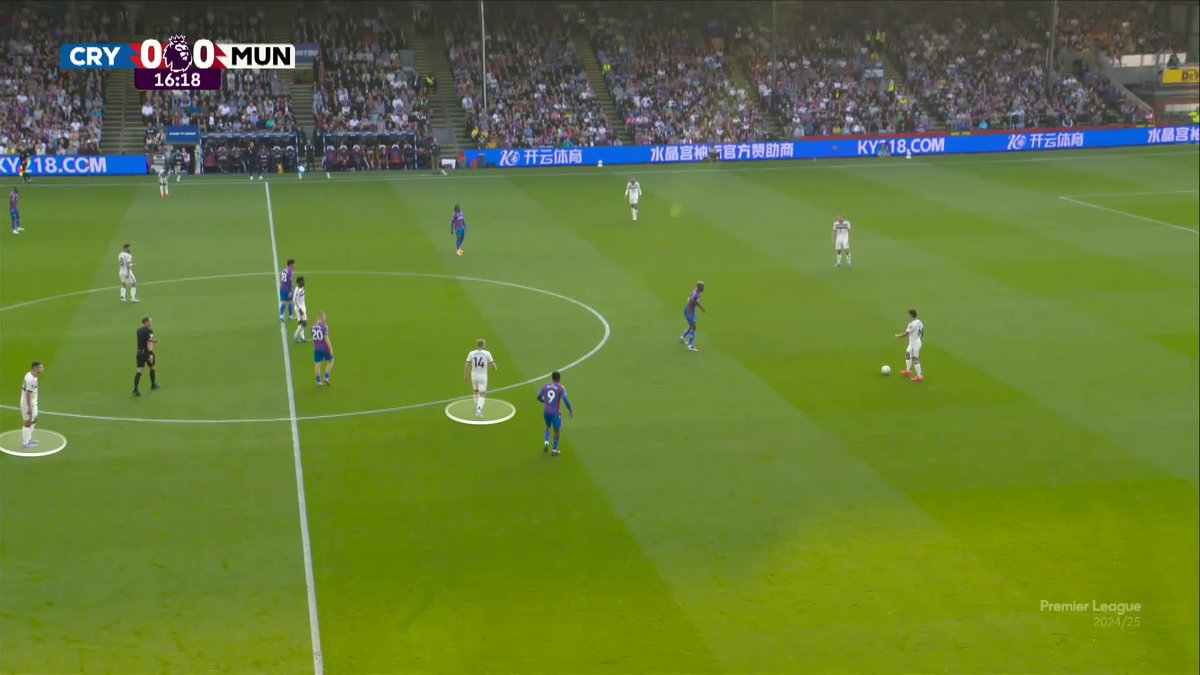
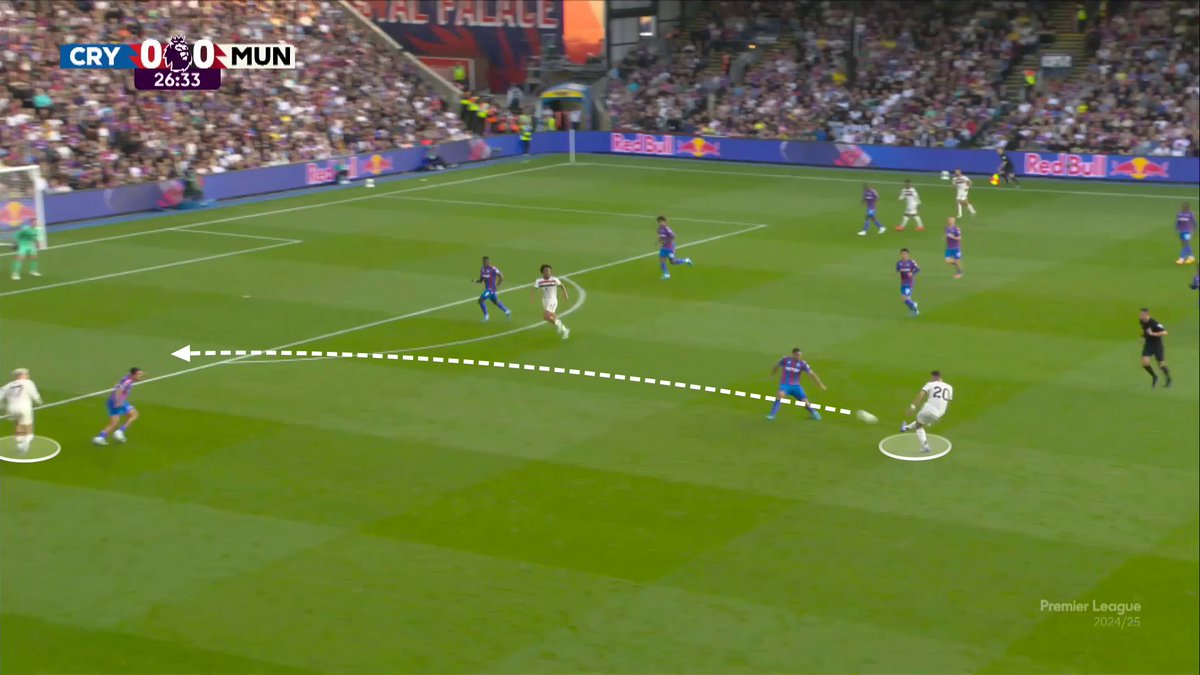
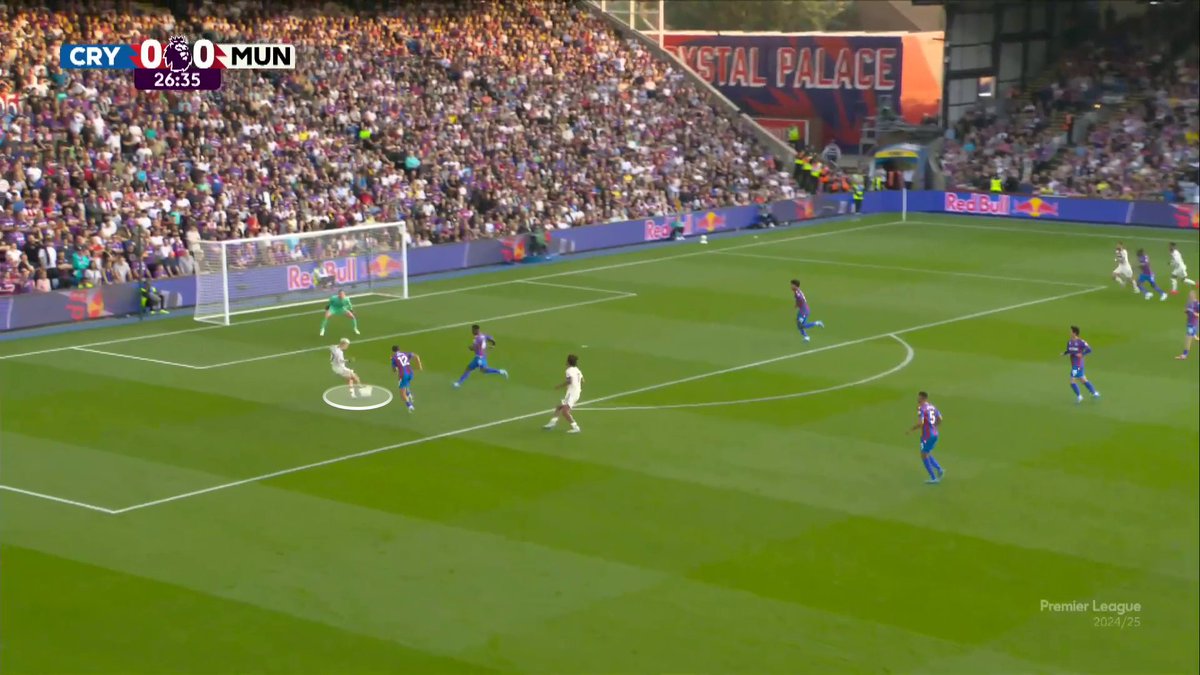
United were also well set tactically to exploit Palace's press when Glasner's team were more aggressive and 'jumped'.
In this moment, Eze blocks the passing lane into Fernandes with Richards jumping into midfield onto Bruno which allows Eze to release onto Mazraoui.
In this moment, Eze blocks the passing lane into Fernandes with Richards jumping into midfield onto Bruno which allows Eze to release onto Mazraoui.
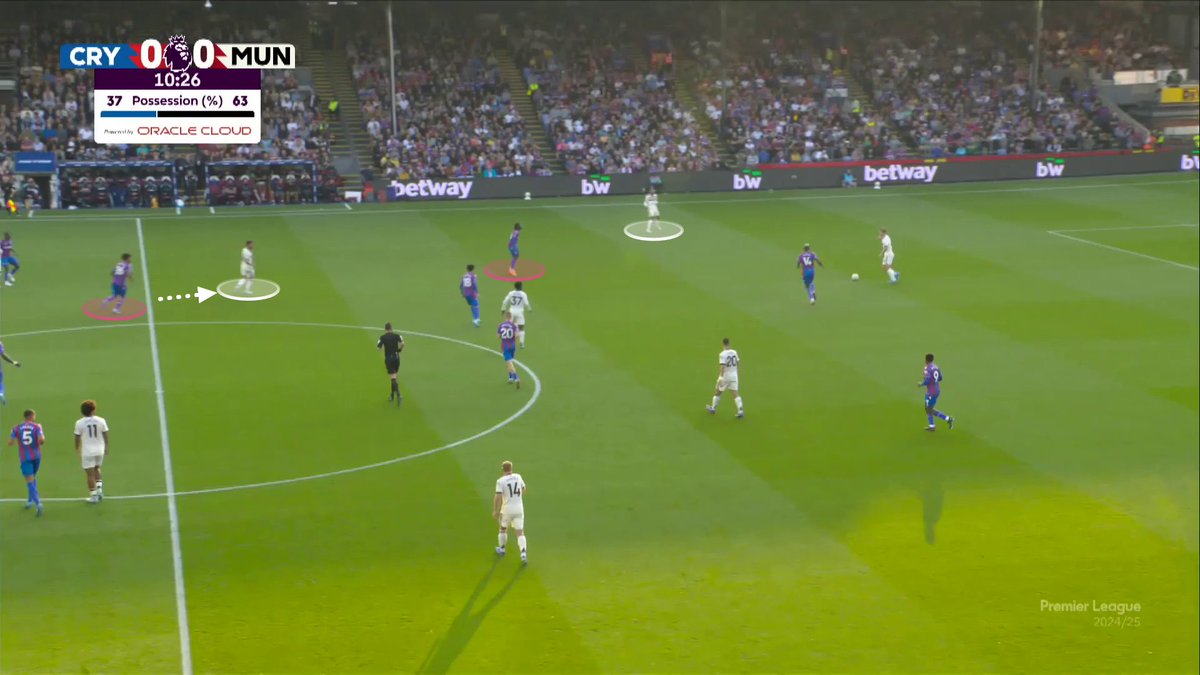
Palace's outside centre back jumping was the cue for Diallo to run in behind into the vacated space.
Balls into the channel in these types of moments were common for United.
Ten Hag set the team up to exploit Palace in front of their block, in between the block, and behind it..
Balls into the channel in these types of moments were common for United.
Ten Hag set the team up to exploit Palace in front of their block, in between the block, and behind it..
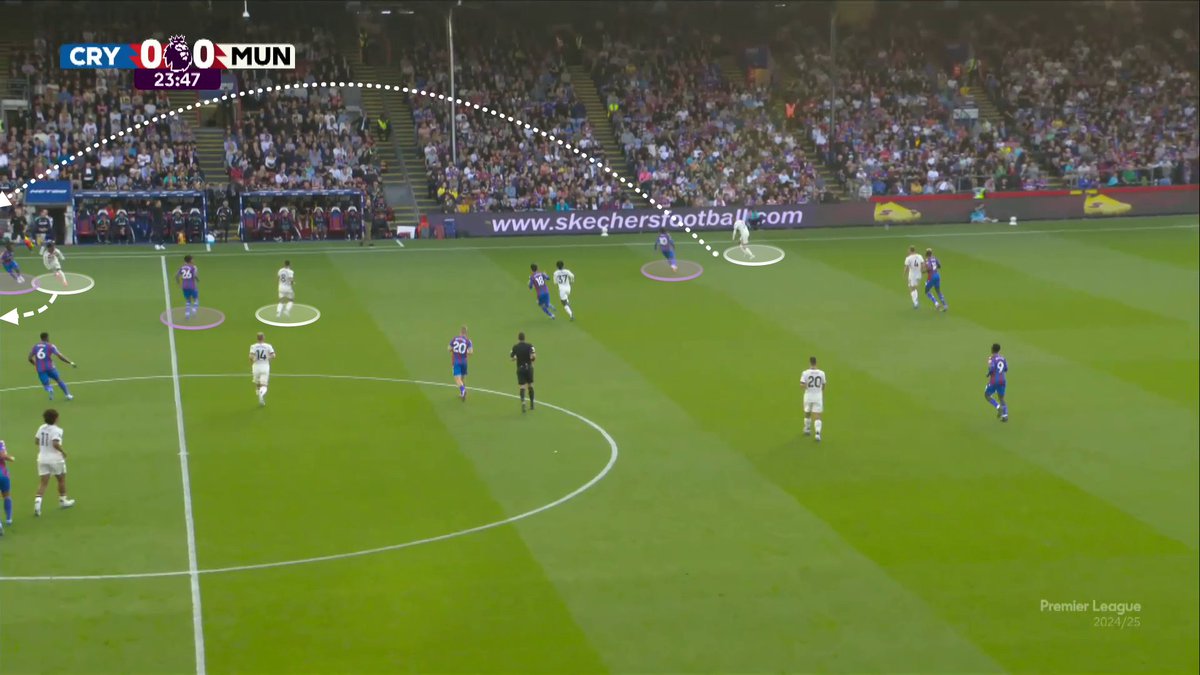
As a byproduct of being so well-set tactically, United consistently sustained pressure.
In these moments they attacked with reliable width, consistent numbers attacking the box, and necessary support on the side to combine or circulate.
The goal threat was constant.
In these moments they attacked with reliable width, consistent numbers attacking the box, and necessary support on the side to combine or circulate.
The goal threat was constant.
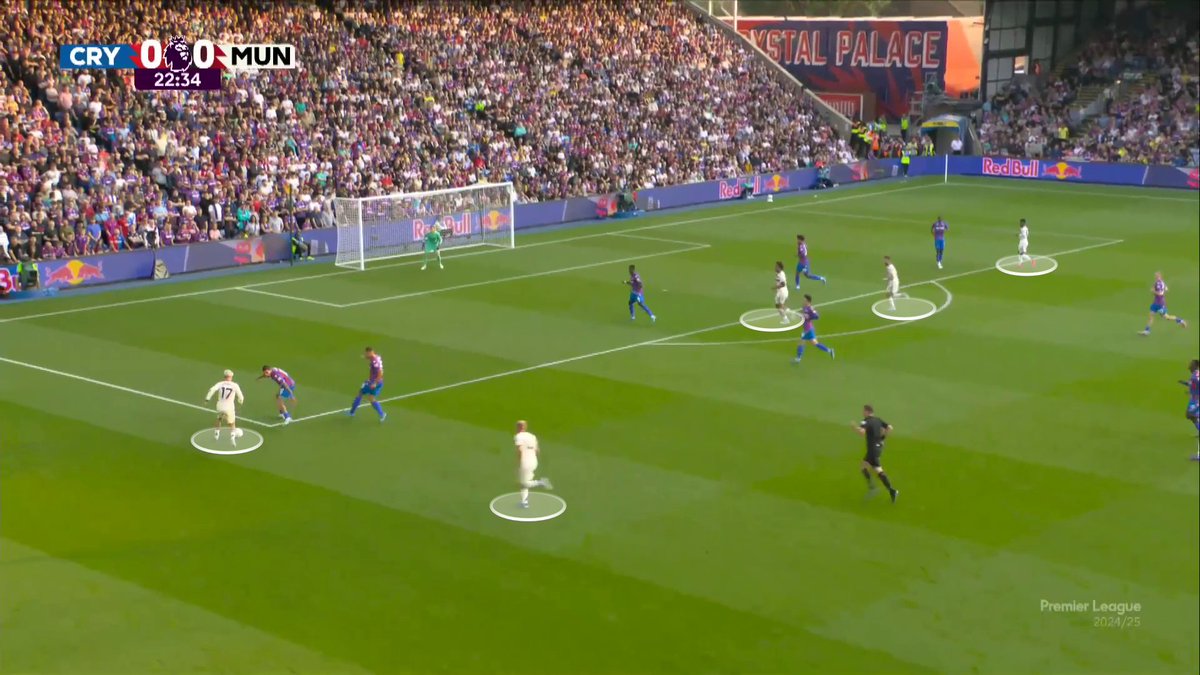
What is arguably MOST impressive about United's performance, though, is the compactness they had in the counter-press.
So often we have heard of Erik ten Hag's team having an 'empty' midfield and a subpar pressing structure, but that was the opposite against Crystal Palace..
So often we have heard of Erik ten Hag's team having an 'empty' midfield and a subpar pressing structure, but that was the opposite against Crystal Palace..
Once play broke down in the final third, Mainoo and Dalot were consistently present to pick up second balls and to prevent the team from being easily counter-attacked.
Then, as a consequence of the close proximity created in the 3-2-5, United could instantly attack with quality.
Then, as a consequence of the close proximity created in the 3-2-5, United could instantly attack with quality.
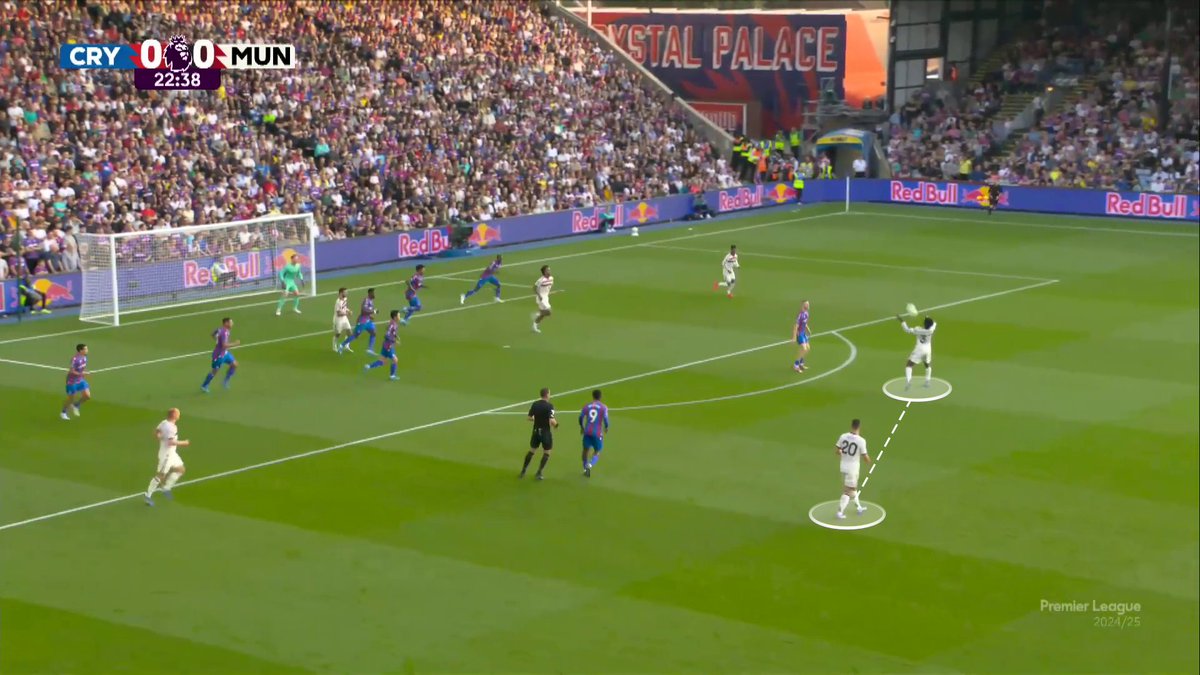
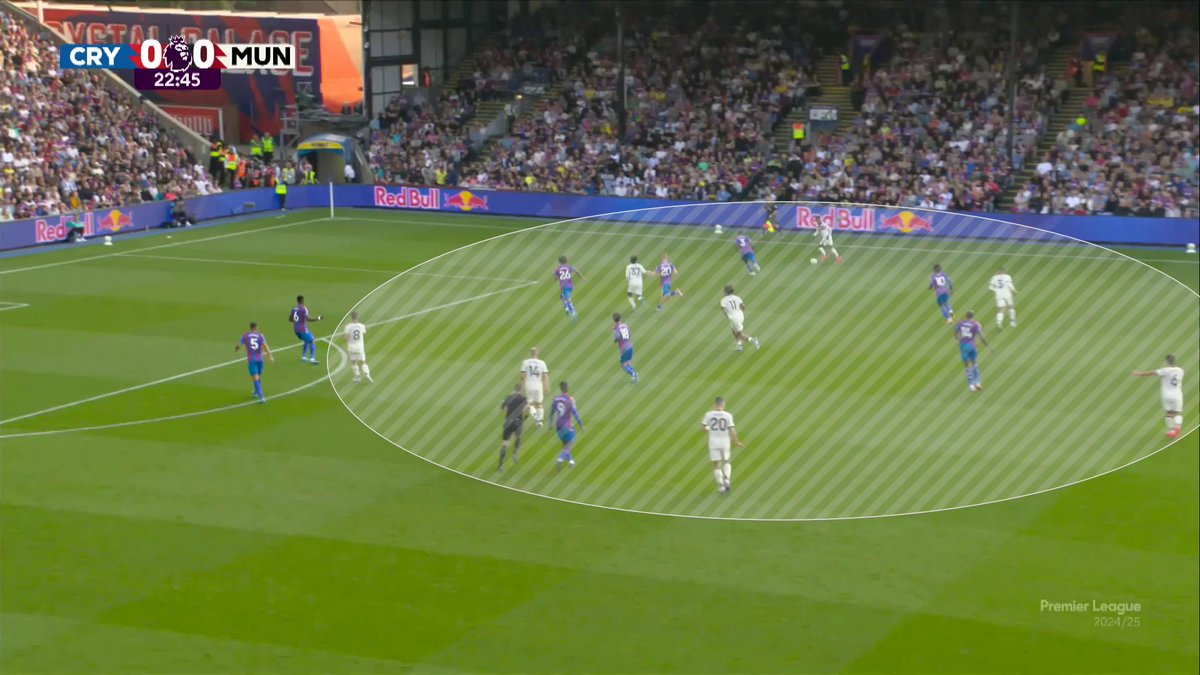
Then, in settled defensive moments, United pressed in zonal-turned-man-to-man fashion.
They matched up with Palace's 4-2-4 build with Bruno dropping onto the #6, Amad inverted onto the centre back, Mazraoui backing up the press, and De Ligt managing Eze out wide.
They matched up with Palace's 4-2-4 build with Bruno dropping onto the #6, Amad inverted onto the centre back, Mazraoui backing up the press, and De Ligt managing Eze out wide.
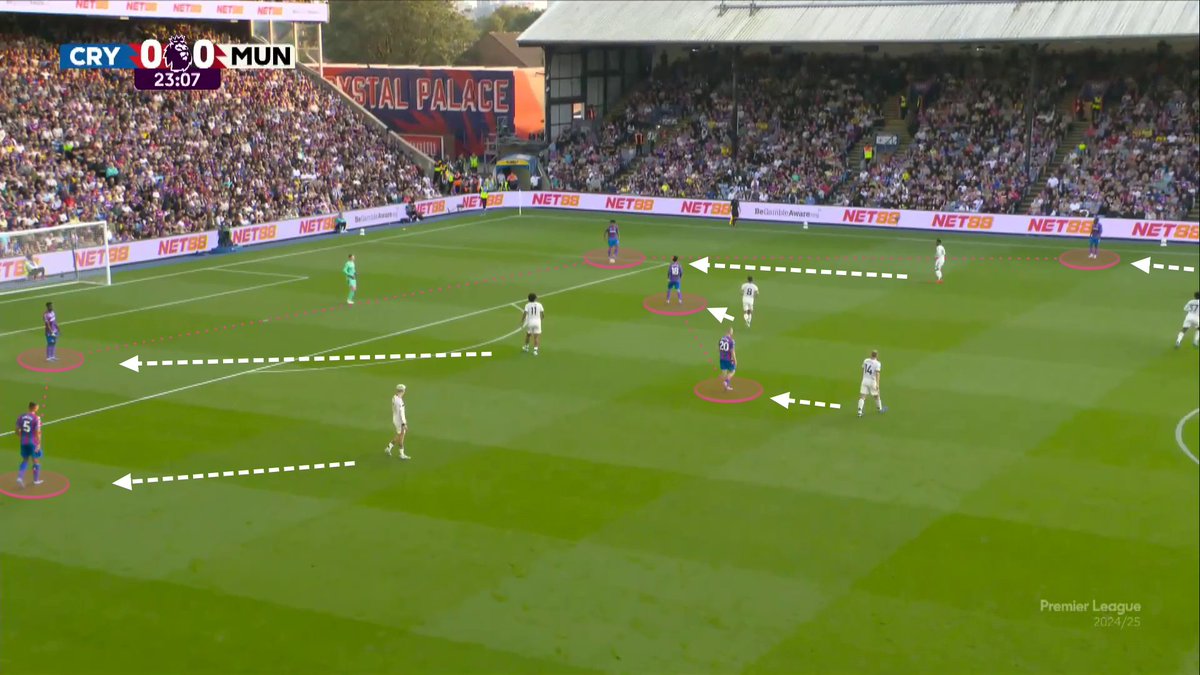
With Palace wanting to play out from the back, it often forced them long in uncontrolled fashion and although United were man-to-man with Palace in the last line (which opened up a mismatch between Mateta and Lisandro), United disrupted Palace's direct play at the source.
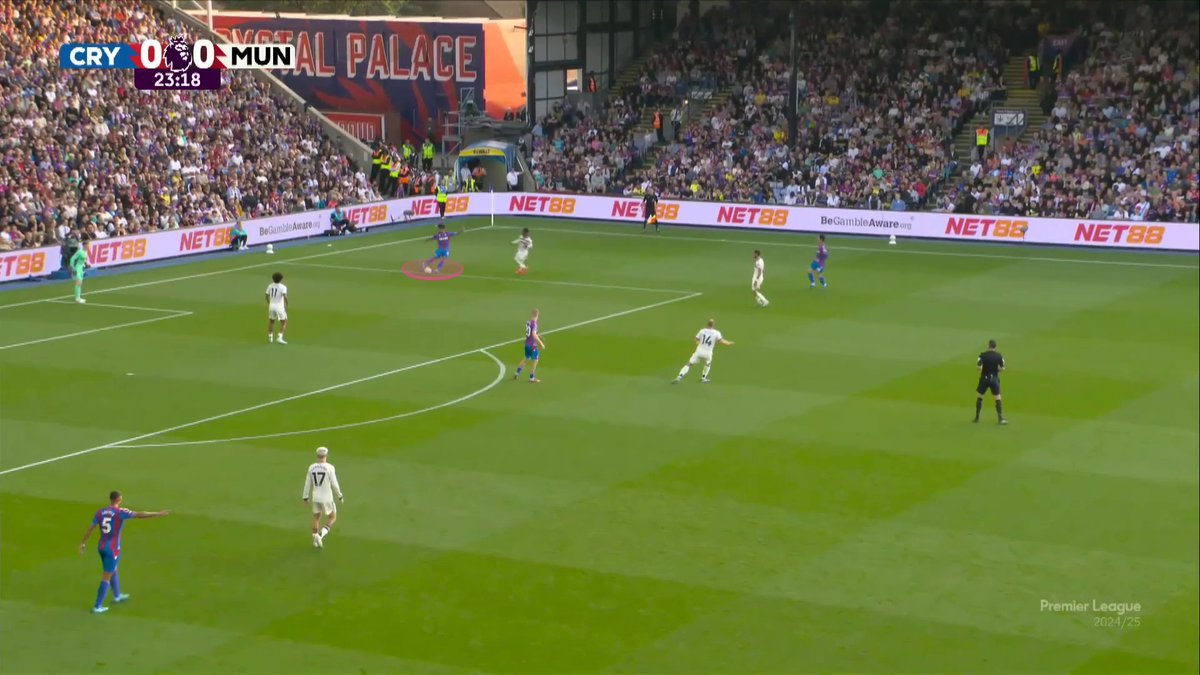
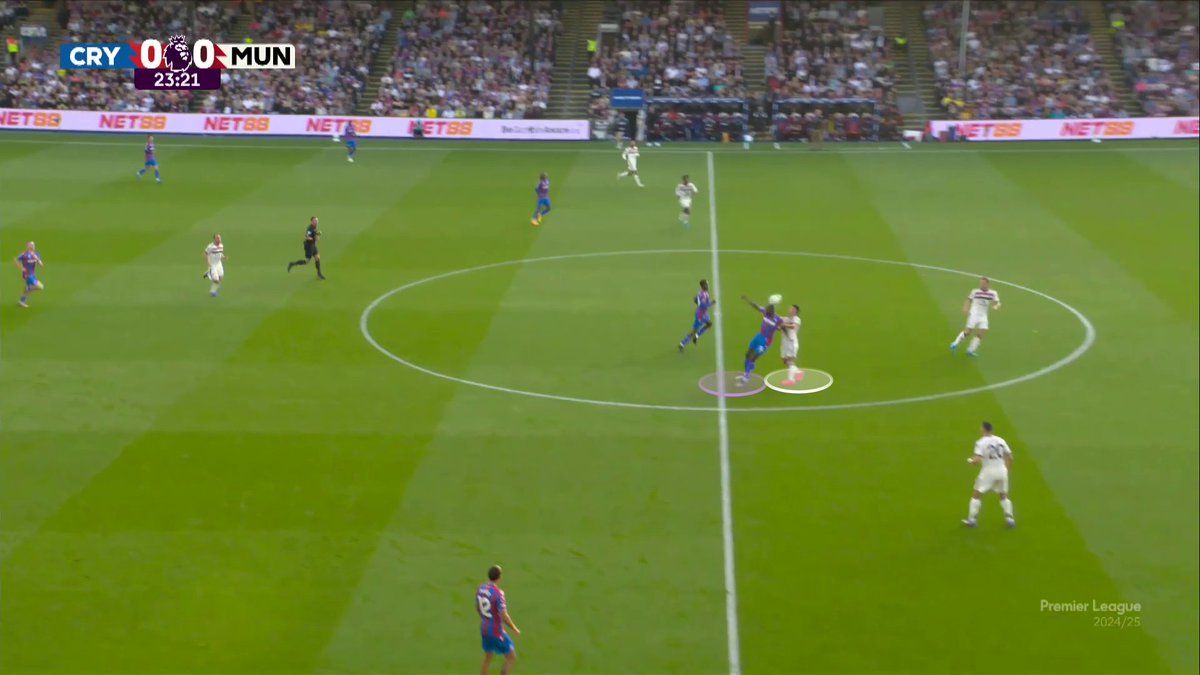
However, when Palace did hold possession higher up the pitch, United were similarly well drilled tactically to deal with it.
They pressed from within a 4-4-2 before transitioning into a man-to-man press with the wingers inverted, Bruno on the #6, & Mainoo creating a 5v5 deeper.
They pressed from within a 4-4-2 before transitioning into a man-to-man press with the wingers inverted, Bruno on the #6, & Mainoo creating a 5v5 deeper.

If I wrote this thread about Arsenal or Manchester City I would be referring to it as 'elite tactics'.
More tactical performances like this and ten Hag can succeed at Manchester United.
It was a complete change in terms of quality with and without the ball.
United had CONTROL!
More tactical performances like this and ten Hag can succeed at Manchester United.
It was a complete change in terms of quality with and without the ball.
United had CONTROL!
Loading suggestions...