

In 2020, PM Modi was sad that China holds 31% of the semiconductor market that could hit the $1 trillion mark
But India holds just ~1%
So he set out to team up with the US & Singapore to challenge China’s dominance
THREAD: How India will become a semiconductor giant🧵
But India holds just ~1%
So he set out to team up with the US & Singapore to challenge China’s dominance
THREAD: How India will become a semiconductor giant🧵
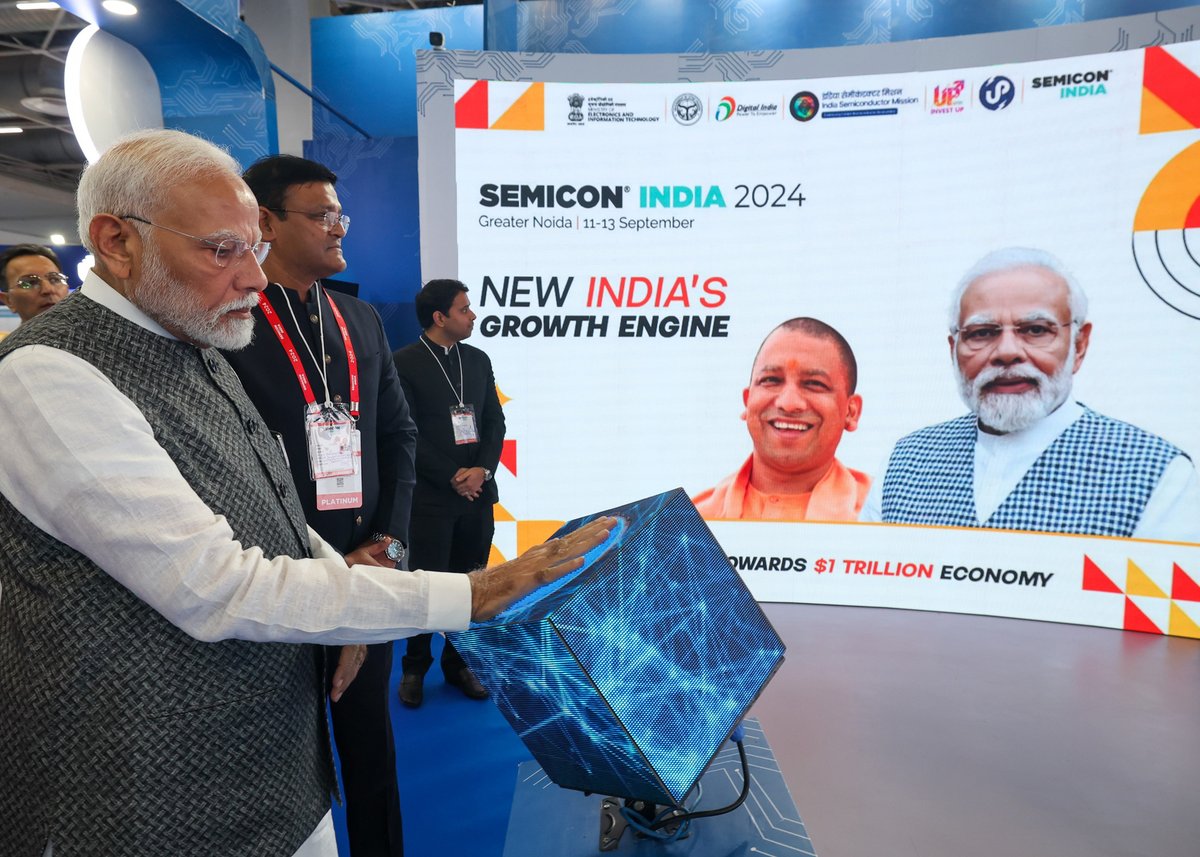
In the 20th century, engines were the driving force of innovation.
Almost everything that had some kind of innovation required engines.
And as the century has turned, another such force has emerged — semiconductor chips.
Almost everything that had some kind of innovation required engines.
And as the century has turned, another such force has emerged — semiconductor chips.
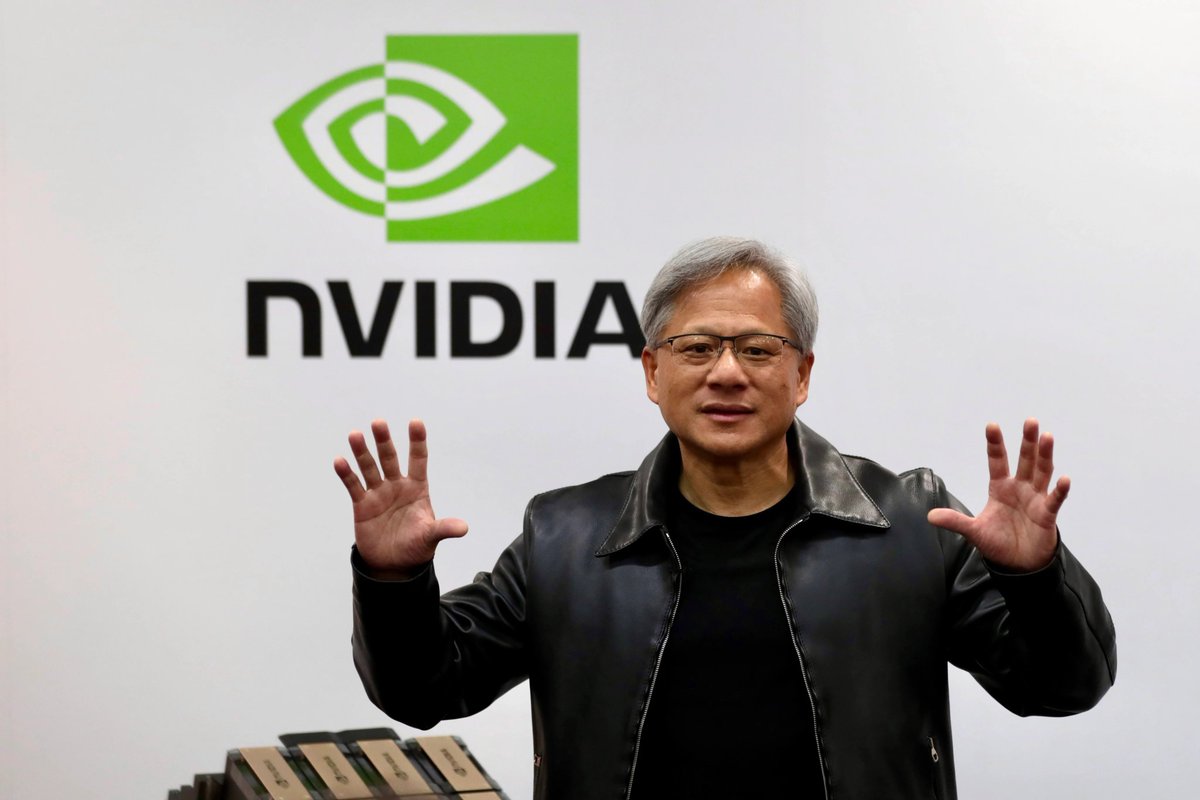
In a highly digital and technologically advanced world, chips are virtually everywhere
— from smartphones & computers to EVs & even solar panels.
Today, the global semiconductor industry is worth $611 Bn,
But India has a hold of only ~1% of this.
— from smartphones & computers to EVs & even solar panels.
Today, the global semiconductor industry is worth $611 Bn,
But India has a hold of only ~1% of this.
If a $5 trillion economy is our goal, now is the time to tap into this opportunity.
So how is India going to achieve this?
And why are we lagging behind despite being the world's 5th largest economy?
To understand this, we must understand 3 sectors of the semiconductor market:
So how is India going to achieve this?
And why are we lagging behind despite being the world's 5th largest economy?
To understand this, we must understand 3 sectors of the semiconductor market:
1️⃣ 𝗗𝗲𝘀𝗶𝗴𝗻𝗶𝗻𝗴
The US has a complete monopoly in designing the chips with its cutting-edge technology and R&D.
But guess who designs this tech in the US?
— It’s the Indians!
India currently accounts for 20% of global semiconductor design talent!
The US has a complete monopoly in designing the chips with its cutting-edge technology and R&D.
But guess who designs this tech in the US?
— It’s the Indians!
India currently accounts for 20% of global semiconductor design talent!
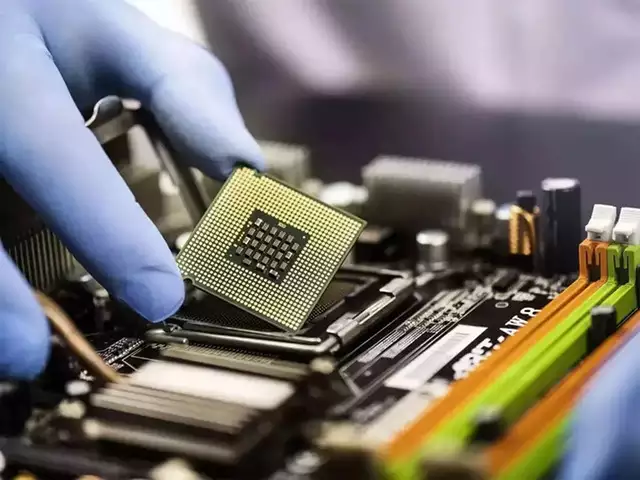
But there’s no point of having this talent if we can’t figure out ways to design the chips domestically.
So to support tech advancement within India, the government has established a research fund worth $12.1 billion under the Anusandhan National Research Foundation.
So to support tech advancement within India, the government has established a research fund worth $12.1 billion under the Anusandhan National Research Foundation.
PM Modi has even discussed plans to create a workforce of 85,000 skilled professionals, including technicians, engineers, and R&D experts, who will be industry-ready in the coming years.

2️⃣ 𝗠𝗮𝗻𝘂𝗳𝗮𝗰𝘁𝘂𝗿𝗶𝗻𝗴
As for manufacturing, Taiwan, Japan & China are the most important hubs and have the best manufacturing units complete with heavy machinery and state-of-the-art infra.
As for manufacturing, Taiwan, Japan & China are the most important hubs and have the best manufacturing units complete with heavy machinery and state-of-the-art infra.
Taiwan, particularly through the Taiwan Semiconductor Manufacturing Company (TSMC), produces approximately 90% of the world’s leading-edge semiconductors used in critical technologies such as AI and quantum computing.

TSMC's ability to manufacture chips at advanced nodes is unmatched, making Taiwan an indispensable player in the supply chain.
If India wants to replicate that, we must focus on setting up manufacturing units.
Currently, India has 4 manufacturing units & 3 are in the pipeline.
If India wants to replicate that, we must focus on setting up manufacturing units.
Currently, India has 4 manufacturing units & 3 are in the pipeline.

3️⃣ 𝗔𝘀𝘀𝗲𝗺𝗯𝗹𝗶𝗻𝗴
Finally, when it comes to the assembly of semiconductor chips in devices, China is unbeatable.
It has several large factories dedicated to this delicate process.
The Indian government has taken steps to promote assembly within India too.
Finally, when it comes to the assembly of semiconductor chips in devices, China is unbeatable.
It has several large factories dedicated to this delicate process.
The Indian government has taken steps to promote assembly within India too.
In fact, India has rapidly changed from being a major importer of mobile phones to becoming the world's 2nd largest producer & exporter.
The assembly of semiconductor chips domestically has been a major contributor to that.
The assembly of semiconductor chips domestically has been a major contributor to that.
See, Taiwan & China lead the semiconductor space but such a monopoly is scary to other countries as it will provide Taiwan & China unchecked geopolitical leverage.
And the US and other countries would never want that.
And the US and other countries would never want that.
So currently, both foreign & domestic investors are pouring in huge sums of money to help develop India’s semiconductor space.
It's a golden period for India to capitalize on these investments & build a robust semiconductor ecosystem in the country.
It's a golden period for India to capitalize on these investments & build a robust semiconductor ecosystem in the country.
Listen to what PM Modi envisions for the Indian semiconductor industry.

But that’s not going to be easy at all.
Major challenges are present
—the technical know-how of manufacturing chips is extremely intensive and India must catch up to the fast-paced industry sooner.
To solve this, we are partnering with major global players & forging alliances:
Major challenges are present
—the technical know-how of manufacturing chips is extremely intensive and India must catch up to the fast-paced industry sooner.
To solve this, we are partnering with major global players & forging alliances:
1️⃣ US Global Chip Alliance
India has entered the chip alliance w/ the US to obtain proprietary hardware tech & create a friendlier supply chain
2️⃣ Partnering w/ Singapore
Singapore constitutes 10% of the global semiconductor output & is helping India build manufacturing units
India has entered the chip alliance w/ the US to obtain proprietary hardware tech & create a friendlier supply chain
2️⃣ Partnering w/ Singapore
Singapore constitutes 10% of the global semiconductor output & is helping India build manufacturing units
Private players are also advancing rapidly in this space:
1. Taiwan’s Foxconn is partnering with the Vedanta group to set up a firm in Gujarat and execute their project worth $19.5 Bn.
1. Taiwan’s Foxconn is partnering with the Vedanta group to set up a firm in Gujarat and execute their project worth $19.5 Bn.
2. Elon Musk has recently signed a deal with Tata Electronics to acquire semiconductor chips for Tesla’s operations.
3. India-based SaaS MNC Zoho has also recently announced its plans to launch a commercial semiconductor manufacturing unit in Tamil Nadu.
3. India-based SaaS MNC Zoho has also recently announced its plans to launch a commercial semiconductor manufacturing unit in Tamil Nadu.

But still, the question prevails
— Why India? 🤔
See, the #1 reason why everyone is bullish on the Indian semiconductor market is the major initiatives taken by the govt. to develop the space.
— Why India? 🤔
See, the #1 reason why everyone is bullish on the Indian semiconductor market is the major initiatives taken by the govt. to develop the space.
In 2022, the govt. launched the Indian Semiconductor Mission (ISM).
It is providing up to 50% cost assistance to companies manufacturing semiconductors in India.
Even in the budget 2024-25, India has raised the allocation for the Semicon India Program to ₹6,903 crore.
It is providing up to 50% cost assistance to companies manufacturing semiconductors in India.
Even in the budget 2024-25, India has raised the allocation for the Semicon India Program to ₹6,903 crore.
The semiconductor deals with Japan, Singapore, & the US further strengthen India’s efforts towards 100% manufacturing of semiconductor chips domestically.
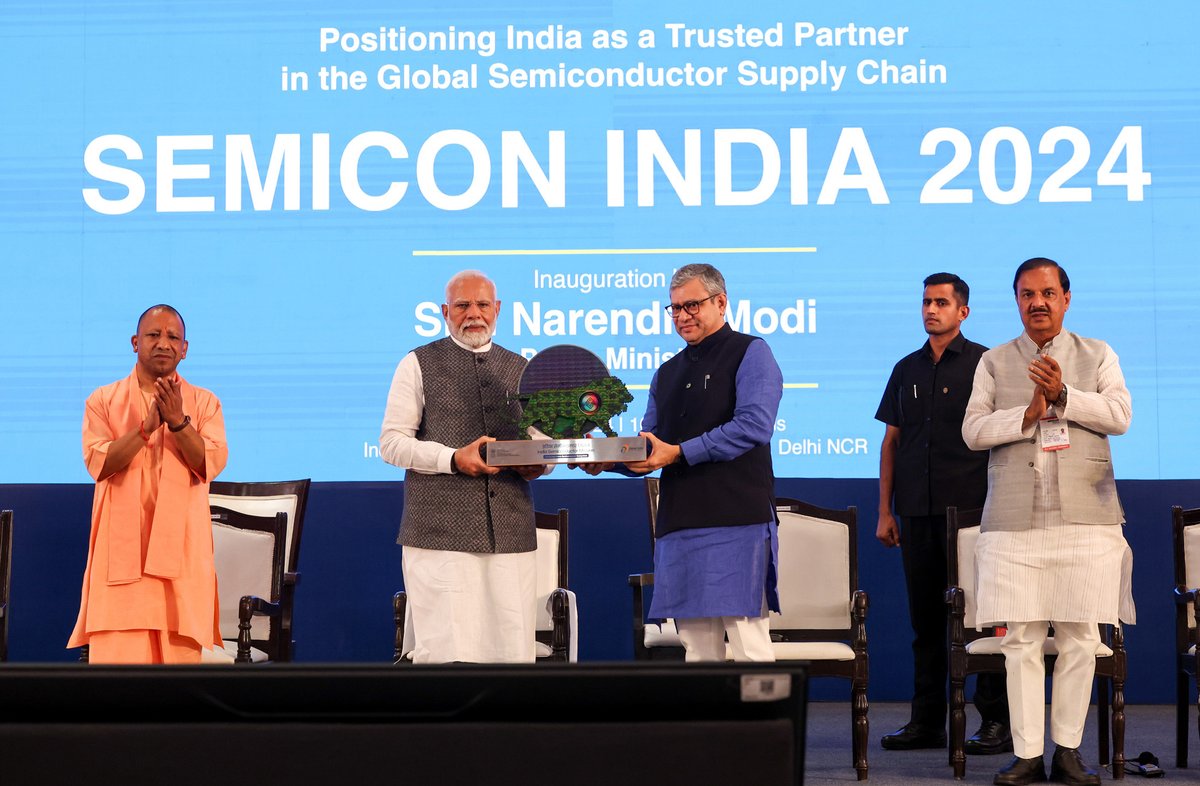
In SEMICON 2024, PM Modi addressed investors to emphasize India’s emergence as a global semiconductor powerhouse.
In SEMICON 2024, PM Modi addressed investors to emphasize India’s emergence as a global semiconductor powerhouse.
Another reason why the Indian semiconductor industry has become important is our substantial cost advantage.
Compared to developed countries, labor costs in India are lower.
This means cheaper production, particularly in labor-intensive processes like assembly & testing.
Compared to developed countries, labor costs in India are lower.
This means cheaper production, particularly in labor-intensive processes like assembly & testing.
The costs are further reduced due to India’s proximity to key semiconductor markets in Asia, Europe & the Middle East.
Reduced transportation expenses & shortened lead times play a crucial role in generating cost savings for semiconductor manufacturers operating in India.
Reduced transportation expenses & shortened lead times play a crucial role in generating cost savings for semiconductor manufacturers operating in India.
Moreover, the Indian semiconductor market is growing at a crazy pace.
In 2022, it was valued at $26.3 bn, which increased to $34.4 bn the next year
Though India’s semiconductor imports are still very high, the country has shown significant increase in exporting chips worldwide.
In 2022, it was valued at $26.3 bn, which increased to $34.4 bn the next year
Though India’s semiconductor imports are still very high, the country has shown significant increase in exporting chips worldwide.
In 2022, India’s semiconductor exports were valued at ~$520 million, compared to just $210 in 2017.
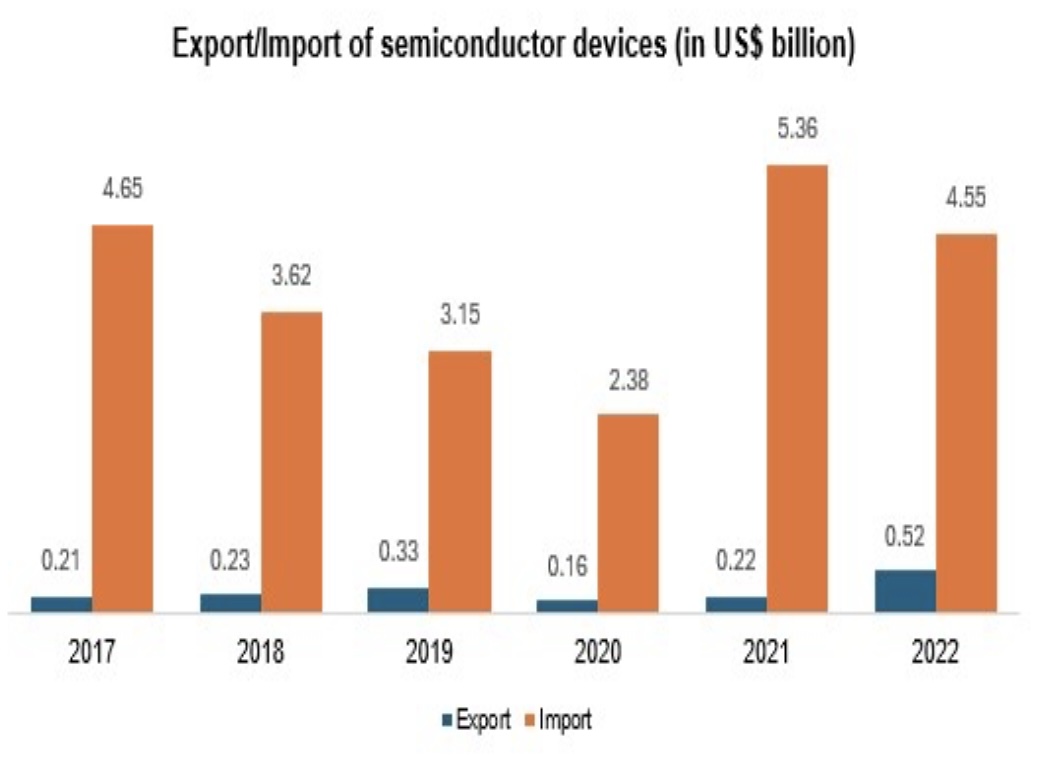
In the next 8 years, the semiconductor space in India is expected to hit the $100 bn mark, growing at a CAGR of 26.3%!
So, it is not a matter of ‘if’ India will become a leader in the semiconductor industry, it is just a matter of ‘how soon’!
So, it is not a matter of ‘if’ India will become a leader in the semiconductor industry, it is just a matter of ‘how soon’!
If you liked this read, do RePost🔄 the 1st post and follow us @FinFloww for such reads every Monday, Wednesday and Friday!
Get our WhatsApp newsletter: whatsapp.com

Subscribe to WHAT THE FLOWW?, our weekly email newsletter where we dive deeper into such concepts: soshals.app

Loading suggestions...