

1/N
The story of Ganesha’s birth is a profound allegory and a masterpiece of iconography that encapsulates the journey of self-realization. This thread attempts to shed some light on that.
The story of Ganesha’s birth is a profound allegory and a masterpiece of iconography that encapsulates the journey of self-realization. This thread attempts to shed some light on that.

2/N
The story of Ganesha's birth is primarily found in several important Puranas including Shiva Purana, Skanda Purana, Padma Purana & Brahmanda Purana.
The story of Ganesha's birth is primarily found in several important Puranas including Shiva Purana, Skanda Purana, Padma Purana & Brahmanda Purana.

3/N
While some details of the narrative vary in these Puranas, the essence of the story is the same. Below I am providing a quick outline from Shiva Purana for your reference
While some details of the narrative vary in these Puranas, the essence of the story is the same. Below I am providing a quick outline from Shiva Purana for your reference

4/N
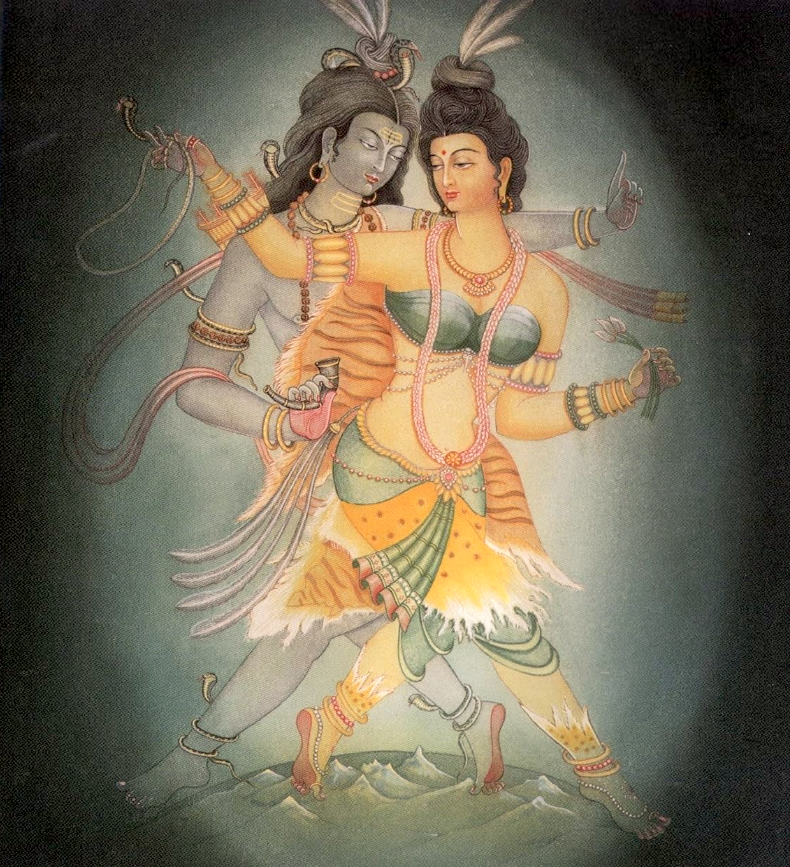
The birth of Ganesha is deeply symbolic of the interplay of divine forces within the cosmos, particularly focusing on the dynamics of Shiva (pure consciousness) and Shakti (creative, dynamic energy).
The birth of Ganesha is deeply symbolic of the interplay of divine forces within the cosmos, particularly focusing on the dynamics of Shiva (pure consciousness) and Shakti (creative, dynamic energy).
5/N
Tantra views the material world and the body as sacred, seeking not to transcend them but to transform and harness these energies for spiritual evolution.
Tantra views the material world and the body as sacred, seeking not to transcend them but to transform and harness these energies for spiritual evolution.

6/N
Tantra embraces the physical, energetic, and mental realms as expressions of the divine, and Ganesha’s story becomes a rich allegory for spiritual awakening and mastery over both the material and spiritual worlds.
Tantra embraces the physical, energetic, and mental realms as expressions of the divine, and Ganesha’s story becomes a rich allegory for spiritual awakening and mastery over both the material and spiritual worlds.

7/N
Shiva represents the pure Consciousness, the unchanging, eternal essence of the universe.
Shiva represents the pure Consciousness, the unchanging, eternal essence of the universe.

8/N
Behind this manifested universe lies the truth of a singular, eternal Consciousness - one self that pervades all things. Shiva represents that pure Consciousness - the unchanging essence of Reality.
Behind this manifested universe lies the truth of a singular, eternal Consciousness - one self that pervades all things. Shiva represents that pure Consciousness - the unchanging essence of Reality.

9/N
While all beings are united in this one Self, they are separated by a fragmented individual consciousness, unaware of their true essence and reality within the mind, life, and body.
While all beings are united in this one Self, they are separated by a fragmented individual consciousness, unaware of their true essence and reality within the mind, life, and body.

10/N
Shakti represents creative energy, the dynamic force that manifests the world of forms and multiplicity. The union of Shiva and Shakti is the fundamental principle in Tantra, symbolizing the unity of consciousness and energy within both the cosmos and the individual.
Shakti represents creative energy, the dynamic force that manifests the world of forms and multiplicity. The union of Shiva and Shakti is the fundamental principle in Tantra, symbolizing the unity of consciousness and energy within both the cosmos and the individual.

11/N
In the story, Parvati is Shakti. She is inseparable from Shiva. They are always in oneness with each other.
In the story, Parvati is Shakti. She is inseparable from Shiva. They are always in oneness with each other.

12/N
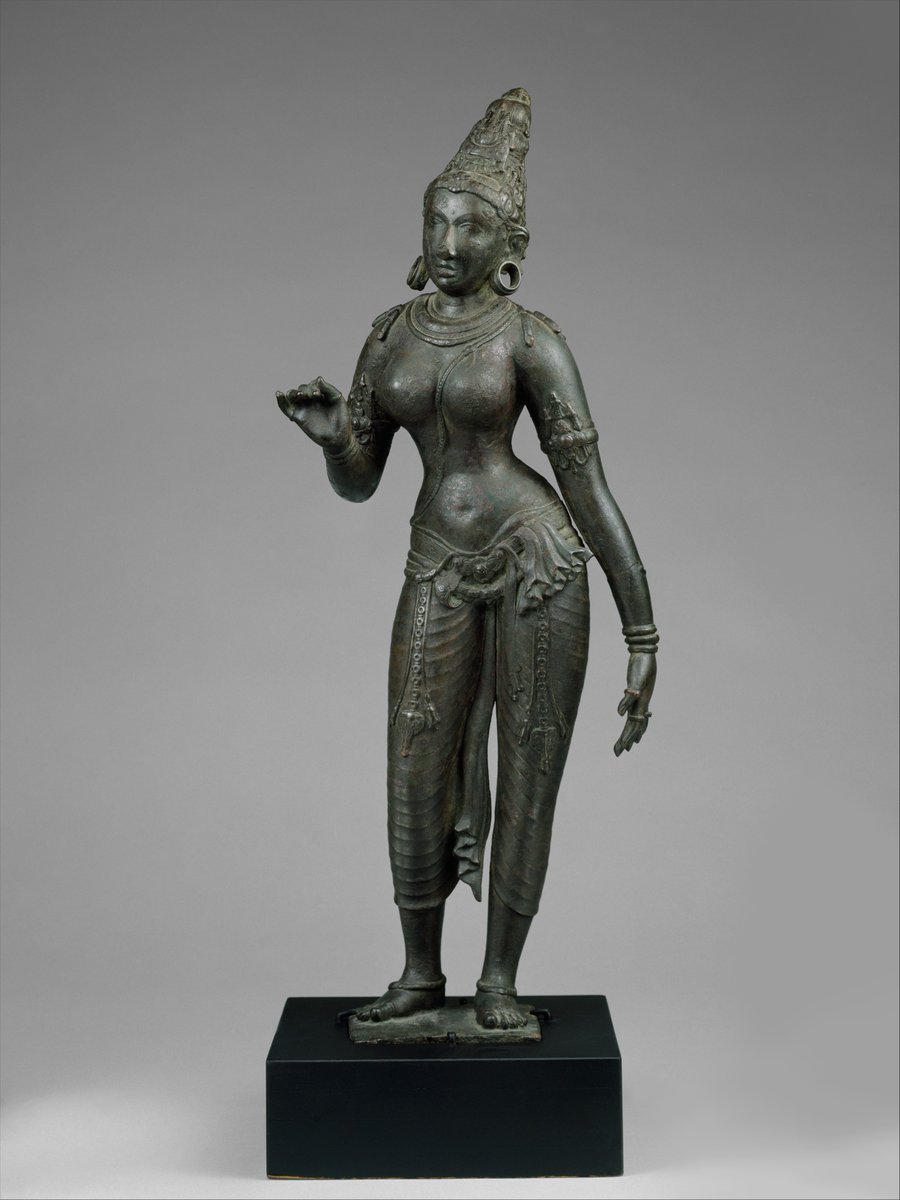
Parvati is the dynamic aspect of Consciousness. She is the architect of manifestation. She is Mahashakti & moves in infinite flows.
Parvati is the dynamic aspect of Consciousness. She is the architect of manifestation. She is Mahashakti & moves in infinite flows.

13/N
Parvati organizes, restructures, elevates, and carries the essence of the all-powerful Self down to the subcellular structure. She is the divine mother and holds the key to Brahma-Jnana or Self-Realization
Parvati organizes, restructures, elevates, and carries the essence of the all-powerful Self down to the subcellular structure. She is the divine mother and holds the key to Brahma-Jnana or Self-Realization

14/N
The story starts when Parvati has a desire to take a bath.The bath here holds multiple layers of symbolic meaning, particularly in relation to the cleansing and balancing of energy before the manifestation of spiritual power.
The story starts when Parvati has a desire to take a bath.The bath here holds multiple layers of symbolic meaning, particularly in relation to the cleansing and balancing of energy before the manifestation of spiritual power.
15/N
Water represents the flow of Prana (life force) through the energy channels. Parvati’s shower before Ganesha’s creation symbolizes the harmonious flow of energy needed for creative manifestation.
Water represents the flow of Prana (life force) through the energy channels. Parvati’s shower before Ganesha’s creation symbolizes the harmonious flow of energy needed for creative manifestation.

16/N
Just as water flows smoothly and effortlessly, spiritual energy must flow unobstructed through the chakras to bring about transformation. The bath, in this case, represents the preparation of Shakti’s energy, aligning it for the act of manifestation.
Just as water flows smoothly and effortlessly, spiritual energy must flow unobstructed through the chakras to bring about transformation. The bath, in this case, represents the preparation of Shakti’s energy, aligning it for the act of manifestation.
17/N
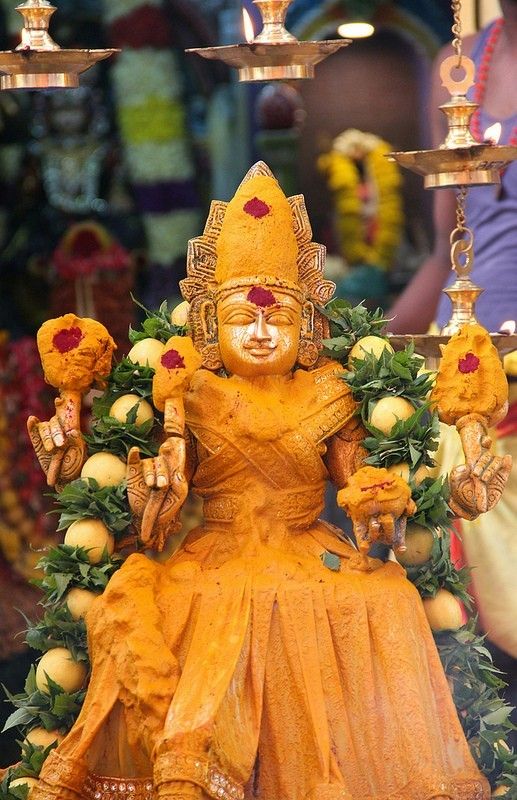
Parvati manifested Ganesha with the paste she applied on herself before taking her bath. The base of that paste is Turmeric - an important root in Hinduism.
Parvati manifested Ganesha with the paste she applied on herself before taking her bath. The base of that paste is Turmeric - an important root in Hinduism.

18/N
Turmeric is associated with its antibacterial properties, but also stands for spiritual cleansing and healing - making it a sacred substance in both rituals and daily life.
Turmeric is associated with its antibacterial properties, but also stands for spiritual cleansing and healing - making it a sacred substance in both rituals and daily life.

19/N
Turmeric is a Manifestation of Shakti’s Creative Power. With its vibrant yellow-gold color, it represents the transformative energy of Shakti and her ability to manifest the world from her own divine essence.
Turmeric is a Manifestation of Shakti’s Creative Power. With its vibrant yellow-gold color, it represents the transformative energy of Shakti and her ability to manifest the world from her own divine essence.
20/N
By creating Ganesha from the Turmeric paste she used on her body, Parvati demonstrates the self-generative power of Shakti, the creative force behind all of existence.
By creating Ganesha from the Turmeric paste she used on her body, Parvati demonstrates the self-generative power of Shakti, the creative force behind all of existence.

21/N
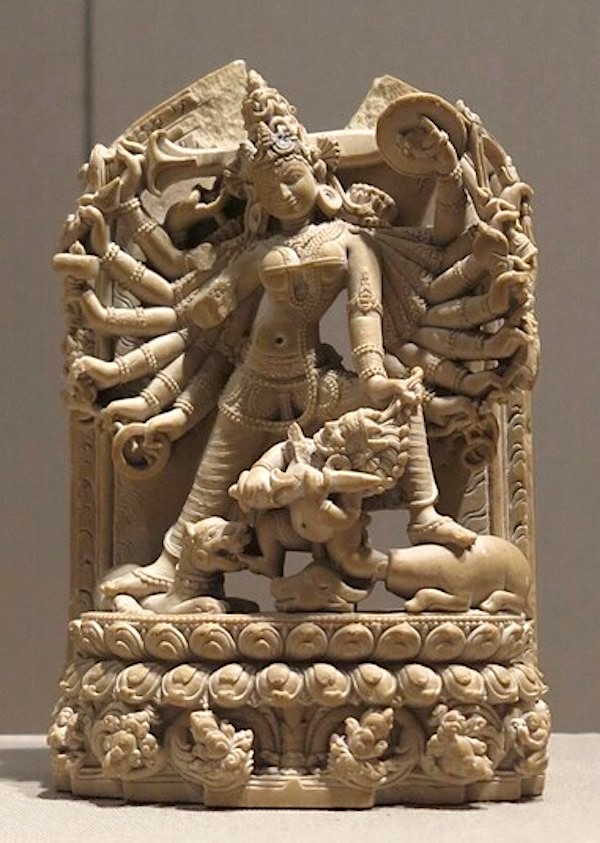
Ganesha, born from this small amount of turmeric paste, symbolizes how even the tiniest part of divine energy contains the power to manifest the greatest form and reality
Ganesha, born from this small amount of turmeric paste, symbolizes how even the tiniest part of divine energy contains the power to manifest the greatest form and reality
22/N
Now, remember Ganesha was manifested when Shiva was not at home. In other words, the pure Consciousness was not actively present in its "native" place
Now, remember Ganesha was manifested when Shiva was not at home. In other words, the pure Consciousness was not actively present in its "native" place

23/N
Ganesha, being created solely by Parvati without any input from Shiva, represents the independent creative capacity of Shakti. Ganesha is a manifestation of her energy and, by extension, the energy of the entire universe.
Ganesha, being created solely by Parvati without any input from Shiva, represents the independent creative capacity of Shakti. Ganesha is a manifestation of her energy and, by extension, the energy of the entire universe.

24/N
This act of creation signifies the power of Kundalini Shakti, the primal energy that resides within all beings and has the potential to create and transform. It is the awakening of the latent spiritual energy within each one of us.
This act of creation signifies the power of Kundalini Shakti, the primal energy that resides within all beings and has the potential to create and transform. It is the awakening of the latent spiritual energy within each one of us.

25/N
Ganesha’s birth is symbolic of the rising of the Kundalini energy, which lies dormant at the base of the spine and, when awakened, rises through the chakras, bringing spiritual awakening and transformation. (continues below..)
Ganesha’s birth is symbolic of the rising of the Kundalini energy, which lies dormant at the base of the spine and, when awakened, rises through the chakras, bringing spiritual awakening and transformation. (continues below..)

26/N
Parvati places Ganesha at the door to guard her while she bathes. Ganesha is entrusted with guarding the inner sanctum, symbolizing the sacred inner space of consciousness
Parvati places Ganesha at the door to guard her while she bathes. Ganesha is entrusted with guarding the inner sanctum, symbolizing the sacred inner space of consciousness

27/N
Ganesha, standing as a guardian, can be seen as a symbol of the Muladhara chakra, the root chakra located at the base of the spine. Muladhara chakra is the seat of Kundalini energy.
Ganesha, standing as a guardian, can be seen as a symbol of the Muladhara chakra, the root chakra located at the base of the spine. Muladhara chakra is the seat of Kundalini energy.

28/N
Before one can embark on the journey of spiritual awakening, the energies must be properly aligned and grounded. Ganesha’s guardianship of Parvati’s space symbolizes the need for grounding in the Muladhara chakra before the ascent of spiritual energy can begin.
Before one can embark on the journey of spiritual awakening, the energies must be properly aligned and grounded. Ganesha’s guardianship of Parvati’s space symbolizes the need for grounding in the Muladhara chakra before the ascent of spiritual energy can begin.

29/N
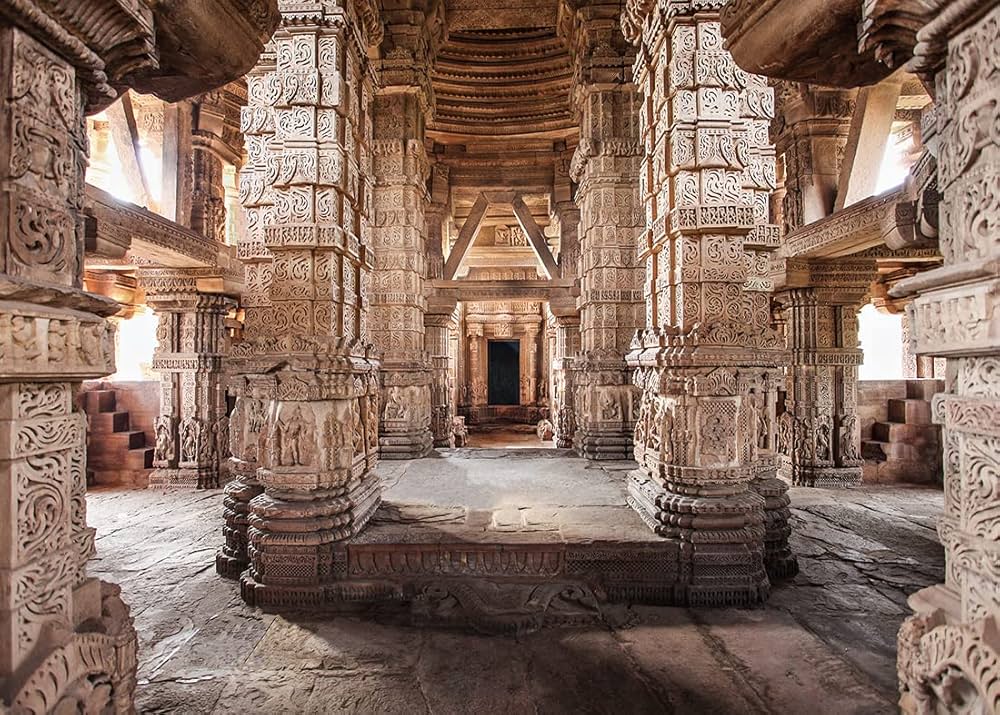
When Shiva (pure consciousness) returns, Ganesha, unaware of Shiva’s true identity, blocks his entry.
When Shiva (pure consciousness) returns, Ganesha, unaware of Shiva’s true identity, blocks his entry.
30/N
This conflict between Ganesha (Shakti’s manifestation) and Shiva (pure Consciousness) represents the initial resistance between the latent consciousness in the individual soul and pure Consciousness
This conflict between Ganesha (Shakti’s manifestation) and Shiva (pure Consciousness) represents the initial resistance between the latent consciousness in the individual soul and pure Consciousness

31/N
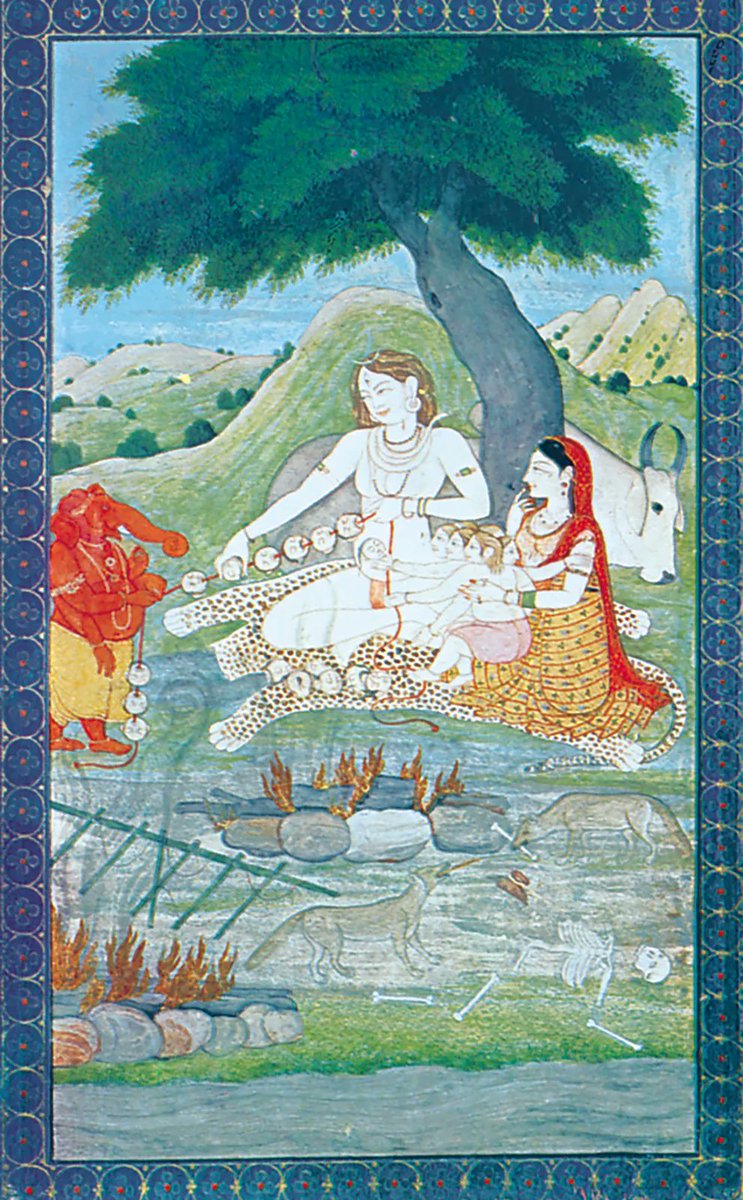
In this moment, Ganesha, representing the material world, stands in opposition to Shiva, reflecting the illusion of separation that arises from ego-consciousness.
In this moment, Ganesha, representing the material world, stands in opposition to Shiva, reflecting the illusion of separation that arises from ego-consciousness.
32/N
The conflict between Ganesha and Shiva is symbolic of the inner struggle that occurs when spiritual awakening begins. The ego (Ahamkara) resists the dissolving of boundaries between the self and the divine.
The conflict between Ganesha and Shiva is symbolic of the inner struggle that occurs when spiritual awakening begins. The ego (Ahamkara) resists the dissolving of boundaries between the self and the divine.

33/N
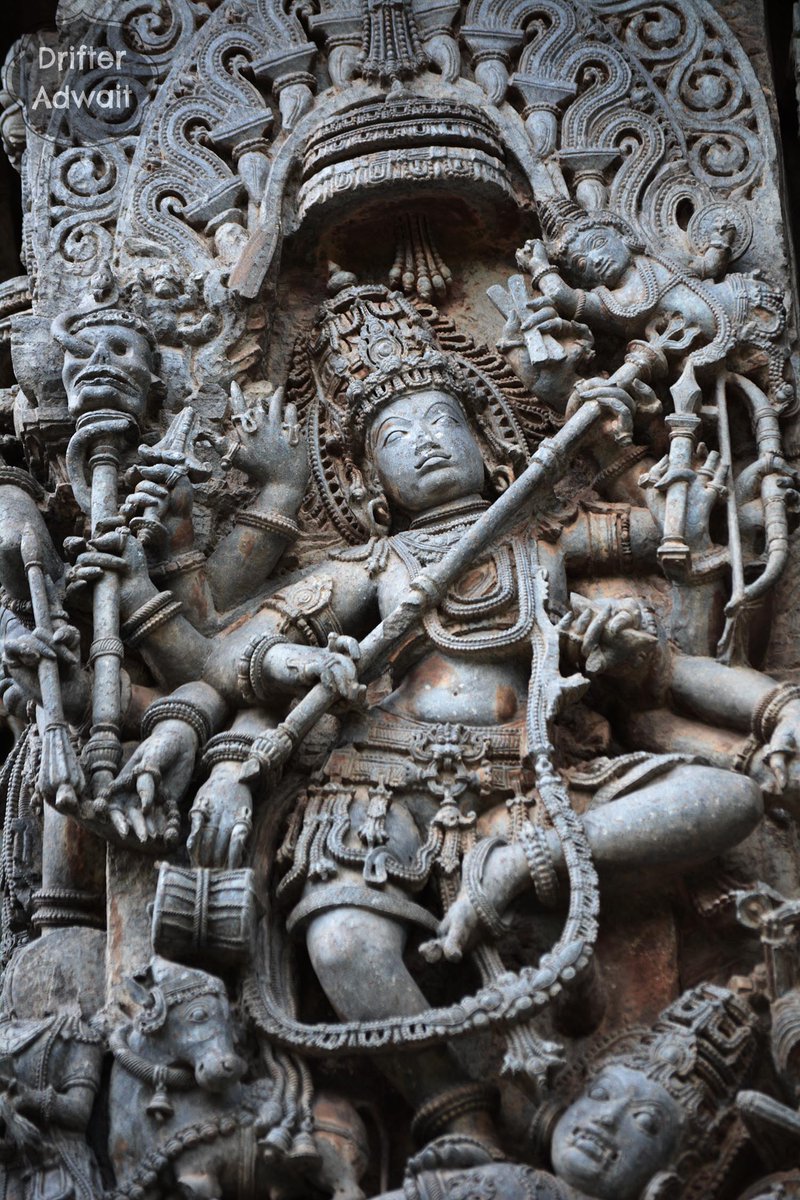
This great tension between Shiva and Ganesha reflects the turbulent evolutionary process that occurs within the body and mind. In the early stages of spiritual awakening, there is often tremendous resistance to the merging of consciousness and energy.
This great tension between Shiva and Ganesha reflects the turbulent evolutionary process that occurs within the body and mind. In the early stages of spiritual awakening, there is often tremendous resistance to the merging of consciousness and energy.
34/N
This conflict must be resolved for spiritual evolution to proceed, just as Ganesha’s blocking of Shiva must be overcome for the divine union to occur.
This conflict must be resolved for spiritual evolution to proceed, just as Ganesha’s blocking of Shiva must be overcome for the divine union to occur.

35/N
Shiva’s beheading of Ganesha symbolizes the destruction of the ego and the limited self, which is necessary for spiritual transformation.
Shiva’s beheading of Ganesha symbolizes the destruction of the ego and the limited self, which is necessary for spiritual transformation.

36/N
This beheading is not a punishment but an essential step in the process of inner purification and awakening.
This beheading is not a punishment but an essential step in the process of inner purification and awakening.
37/N
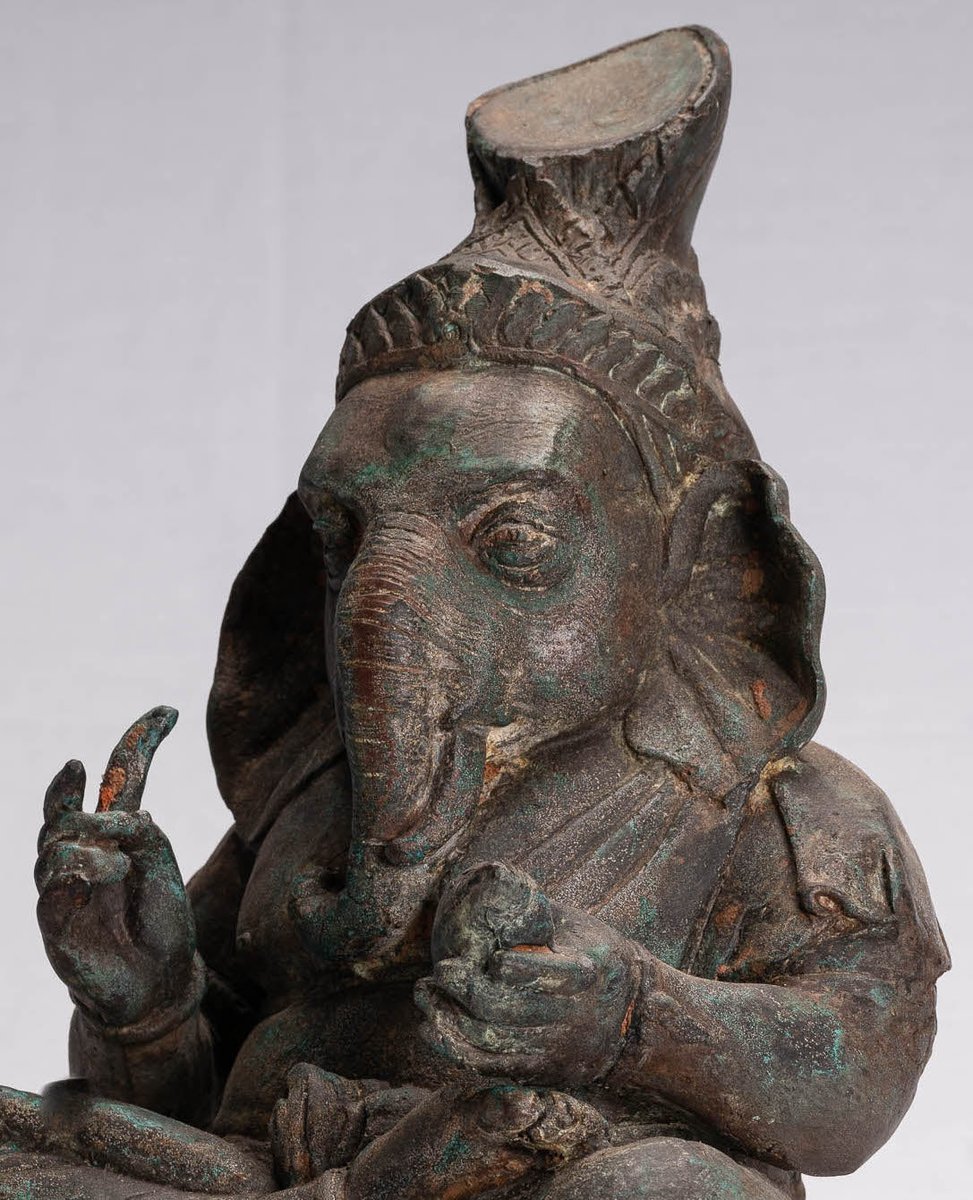
The ego must be transcended to achieve the ultimate spiritual liberation. Ganesha’s beheading represents the dissolution of the ego, allowing for the deeper connection with divine consciousness (Shiva).
The ego must be transcended to achieve the ultimate spiritual liberation. Ganesha’s beheading represents the dissolution of the ego, allowing for the deeper connection with divine consciousness (Shiva).

38/N
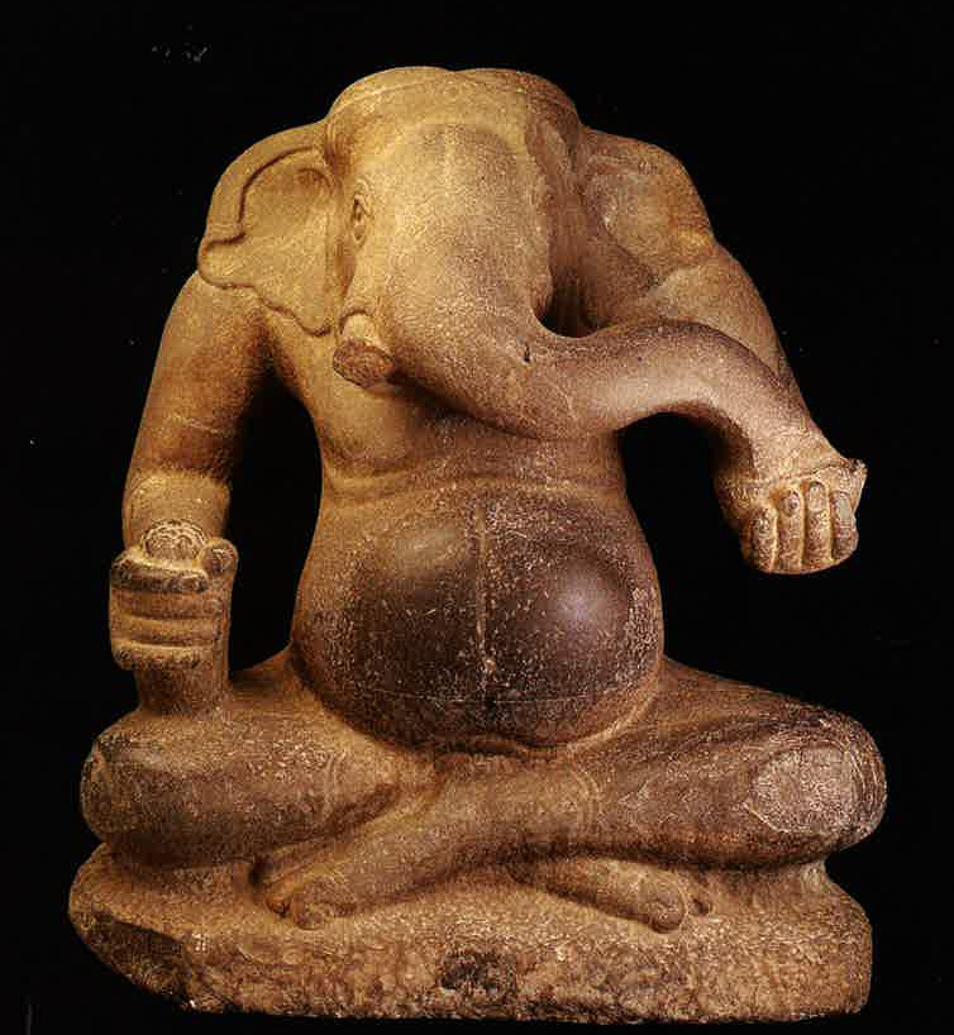
The removal of Ganesha’s human head symbolizes the release from the illusion of limited, small individuality and submerging into universal consciousness. The beheading is also the awakening of Kundalini energy through the dissolution of ego-based consciousness.
The removal of Ganesha’s human head symbolizes the release from the illusion of limited, small individuality and submerging into universal consciousness. The beheading is also the awakening of Kundalini energy through the dissolution of ego-based consciousness.
39/N
As Kundalini rises through the chakras, the attachments to the material world and ego must be shed, much like Ganesha losing his human head.
As Kundalini rises through the chakras, the attachments to the material world and ego must be shed, much like Ganesha losing his human head.

40/N
After realizing his “mistake”, Shiva replaces Ganesha’s head with that of an elephant, a revered and wise animal. This transformation is crucial in Hindu symbolism, as it represents the rebirth of consciousness after the dissolution of the ego.
After realizing his “mistake”, Shiva replaces Ganesha’s head with that of an elephant, a revered and wise animal. This transformation is crucial in Hindu symbolism, as it represents the rebirth of consciousness after the dissolution of the ego.

41/N
The elephant head represents divine intuition, which arises after the dissolution of the ego. This transformation symbolizes the integration of divine intuition into the material world, where one can now act with great clarity & insight.
The elephant head represents divine intuition, which arises after the dissolution of the ego. This transformation symbolizes the integration of divine intuition into the material world, where one can now act with great clarity & insight.

42/N
In the manifested world, we live and experience duality - where pairs of opposites like good and bad, pleasure and pain become our mechanisms to experience reality.
In the manifested world, we live and experience duality - where pairs of opposites like good and bad, pleasure and pain become our mechanisms to experience reality.

43/N
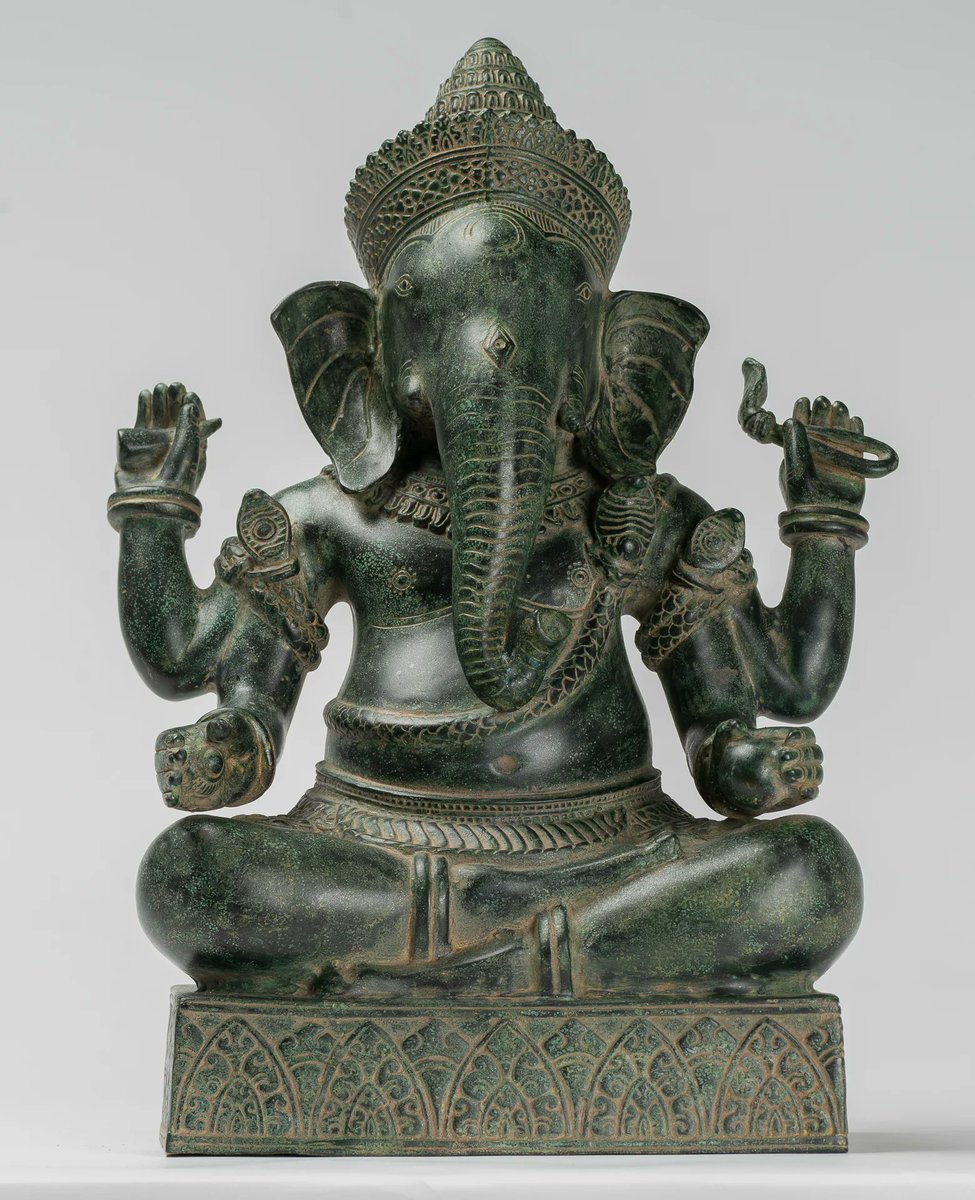
Ganesha’s broken tusk is a symbol of breaking free from the dualities of the material world. Spiritual progress involves transcending the polarities of existence and realizing the underlying unity of all things.
Ganesha’s broken tusk is a symbol of breaking free from the dualities of the material world. Spiritual progress involves transcending the polarities of existence and realizing the underlying unity of all things.
44/N
Ganesha’s intact tusk represents non-duality, the one true reality - Brahman projecting itself in million manifestations via Maya.
Ganesha’s intact tusk represents non-duality, the one true reality - Brahman projecting itself in million manifestations via Maya.

45/N
Ganesha’s trunk, a prominent feature of his form, is often depicted tilting to one side. The tilt of Ganesha’s trunk is a powerful representation of the control and direction of prana (life force)
Ganesha’s trunk, a prominent feature of his form, is often depicted tilting to one side. The tilt of Ganesha’s trunk is a powerful representation of the control and direction of prana (life force)
46/N
The direction in which Ganesha’s trunk tilts is also significant in terms of focus and concentration. In Tantric imagery, the trunk can tilt to the left or right, each side symbolizing different energies:
The direction in which Ganesha’s trunk tilts is also significant in terms of focus and concentration. In Tantric imagery, the trunk can tilt to the left or right, each side symbolizing different energies:

47/N
A leftward tilt (Ida) of the trunk signifies that Ganesha is attuned to lunar, introspective, and meditative energies. It reflects the inward journey of self-realization, representing calmness, intuition, and spiritual contemplation.
A leftward tilt (Ida) of the trunk signifies that Ganesha is attuned to lunar, introspective, and meditative energies. It reflects the inward journey of self-realization, representing calmness, intuition, and spiritual contemplation.

48/N
A rightward tilt (Pingala) signifies that Ganesha is aligned with solar, active, & outward-focused energies. This orientation is associated with the external world, action, and the manifestation of spiritual energy in the material realm.
A rightward tilt (Pingala) signifies that Ganesha is aligned with solar, active, & outward-focused energies. This orientation is associated with the external world, action, and the manifestation of spiritual energy in the material realm.

49/N
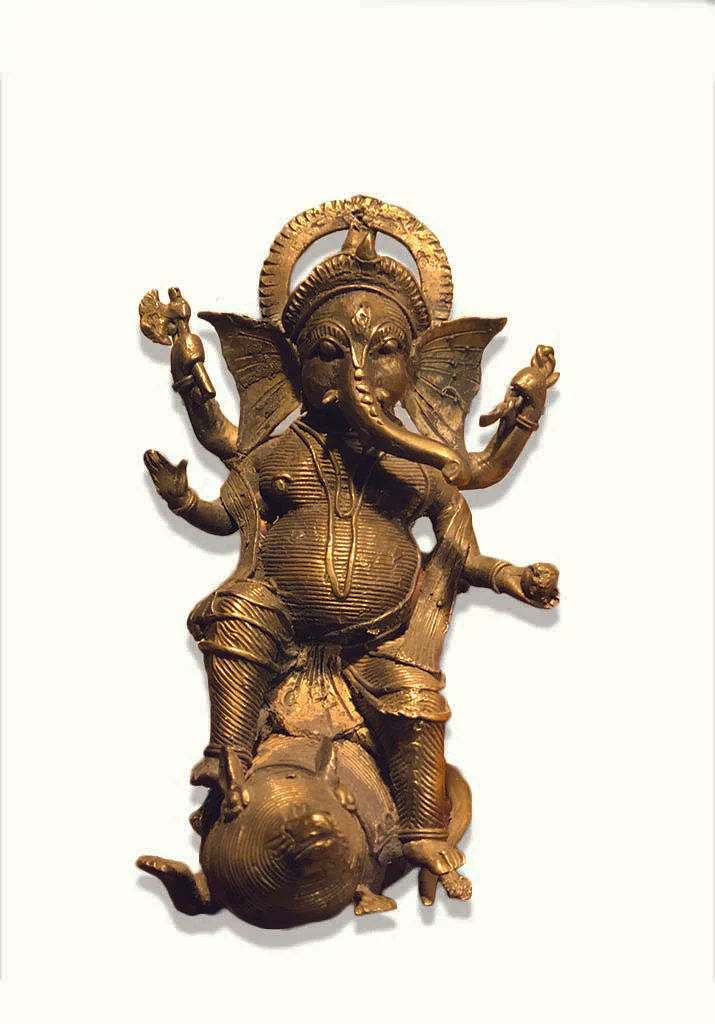
Ganesha’s vehicle, the mouse, embodies both the untamed nature of the untrained mind and the profound potential of a disciplined mind.
Ganesha’s vehicle, the mouse, embodies both the untamed nature of the untrained mind and the profound potential of a disciplined mind.

50/N
As a representation of the restless and often chaotic mind, the mouse symbolizes the myriad distractions and desires that can scatter one's focus and hinder spiritual progress.
As a representation of the restless and often chaotic mind, the mouse symbolizes the myriad distractions and desires that can scatter one's focus and hinder spiritual progress.

51/N
However, when the mind is trained and disciplined, it mirrors the mouse's remarkable agility and adaptability.
However, when the mind is trained and disciplined, it mirrors the mouse's remarkable agility and adaptability.

52/N
Just as the mouse navigates obstacles with precision, a trained mind can adeptly maneuver through life's challenges and uncover deeper spiritual truths.
Just as the mouse navigates obstacles with precision, a trained mind can adeptly maneuver through life's challenges and uncover deeper spiritual truths.
53/N
Thus, the mouse illustrates the transformative journey from mental turbulence to enlightened clarity, highlighting the power of a focused and controlled mind in realizing the true Self.
Thus, the mouse illustrates the transformative journey from mental turbulence to enlightened clarity, highlighting the power of a focused and controlled mind in realizing the true Self.
54/N
Ganesha’s Parashu (axe) represents the power to cut through the bonds of attachment and ignorance. It signifies the ability to sever the ties of desire and ego, helping devotees overcome obstacles.
Ganesha’s Parashu (axe) represents the power to cut through the bonds of attachment and ignorance. It signifies the ability to sever the ties of desire and ego, helping devotees overcome obstacles.

55/N
Ganesha’s Pasha (noose) represents the self-induced ignorance which prevents us from realizing that we are one with the universal consciousness.
Ganesha’s Pasha (noose) represents the self-induced ignorance which prevents us from realizing that we are one with the universal consciousness.

56/N
It is only through understanding the true nature of the Pati (Shiva, consciousness - Ganesha’s father) that the Pashu (the embodied being) can get over this ignorance. That’s why Consciousness is also called Pashupati.
It is only through understanding the true nature of the Pati (Shiva, consciousness - Ganesha’s father) that the Pashu (the embodied being) can get over this ignorance. That’s why Consciousness is also called Pashupati.
57/N
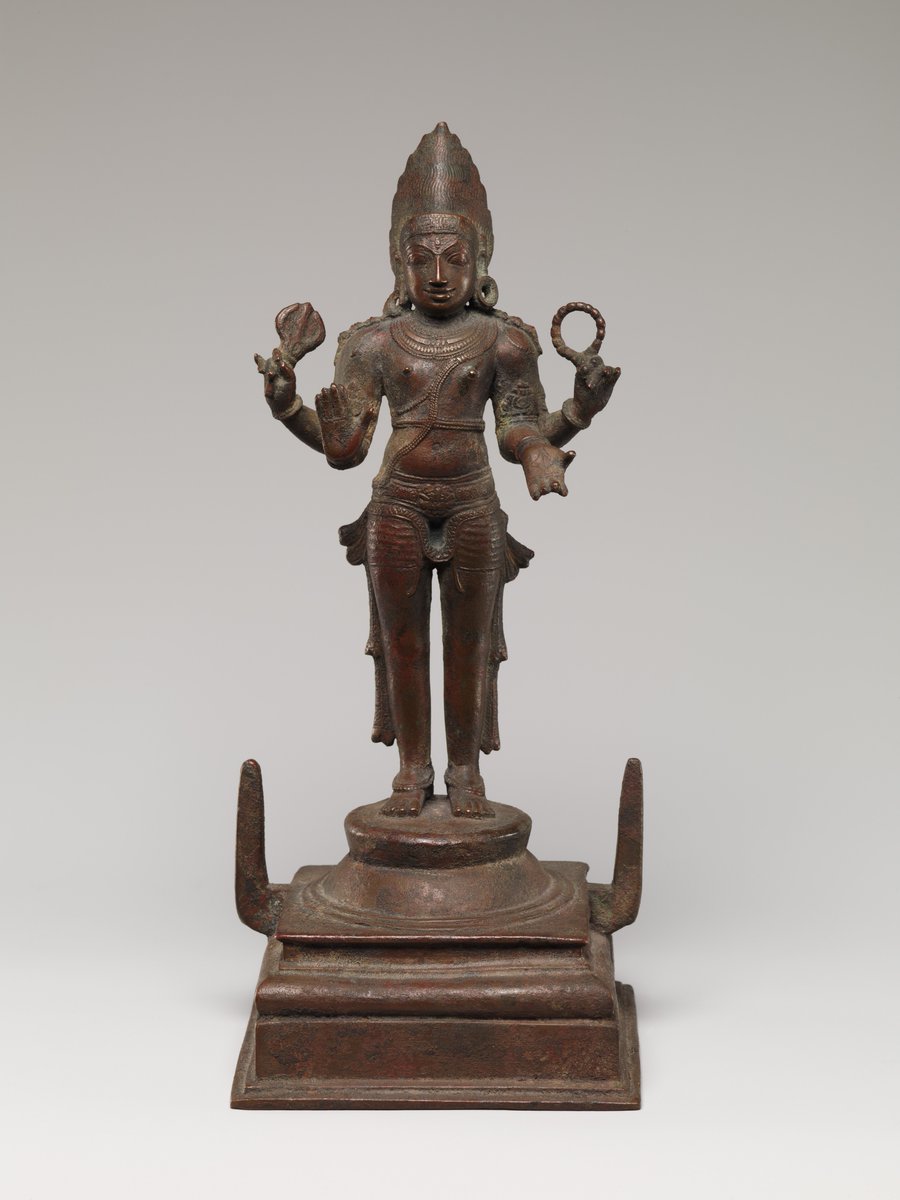
Vighnaharta Ganesha in all his supreme forms is here to remind us that amidst the apparent chaos and obstacles of life, lies a unified divine essence that guides us towards wisdom, adaptability, and ultimate Self-realization.
Vighnaharta Ganesha in all his supreme forms is here to remind us that amidst the apparent chaos and obstacles of life, lies a unified divine essence that guides us towards wisdom, adaptability, and ultimate Self-realization.

Loading suggestions...