

🌍 Economics has a vital role to play in rising to the climate change challenge.
Read @mica_spangled on the economic impacts and potential solutions of climate change.
buff.ly
#ChartOfTheDay 🧵
Read @mica_spangled on the economic impacts and potential solutions of climate change.
buff.ly
#ChartOfTheDay 🧵
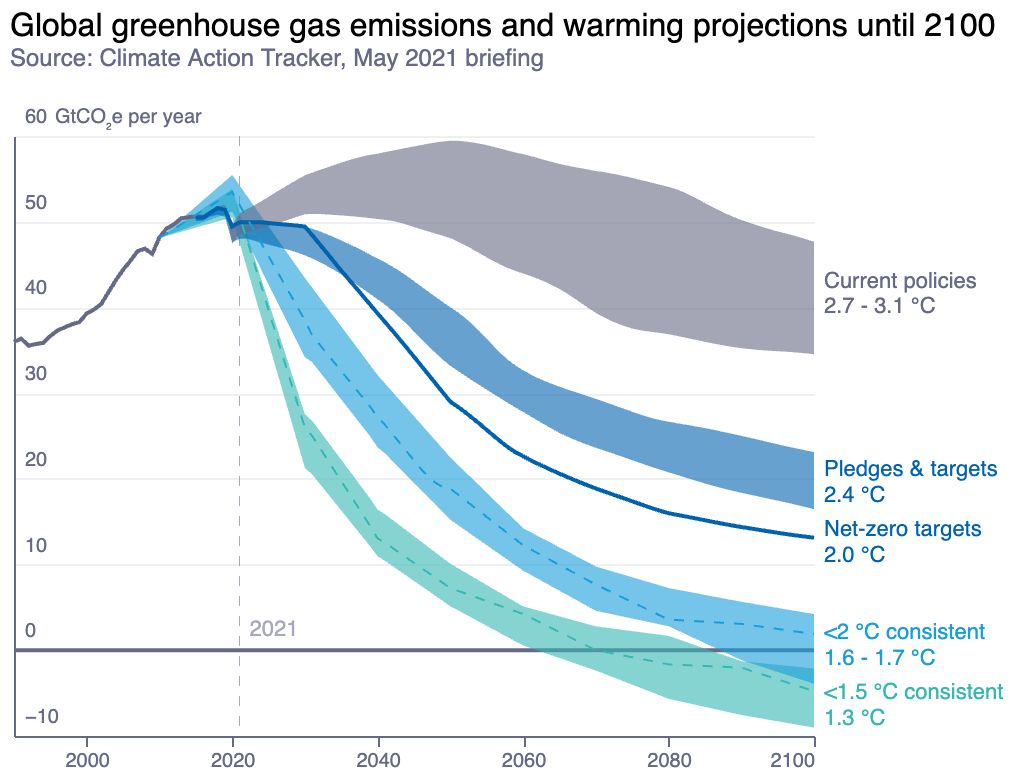

Poor households in rural areas are particularly vulnerable to the effects of climate change. Wildfires, cyclones, droughts and floods can ruin agricultural production, directly hurting rural livelihoods (Carleton and Hsiang, 2016). Further, the consensus among scientists is that the predicted increase in the number of hot days every year will occur in countries in the tropics, where most rural poor reside, and damage crop growth.
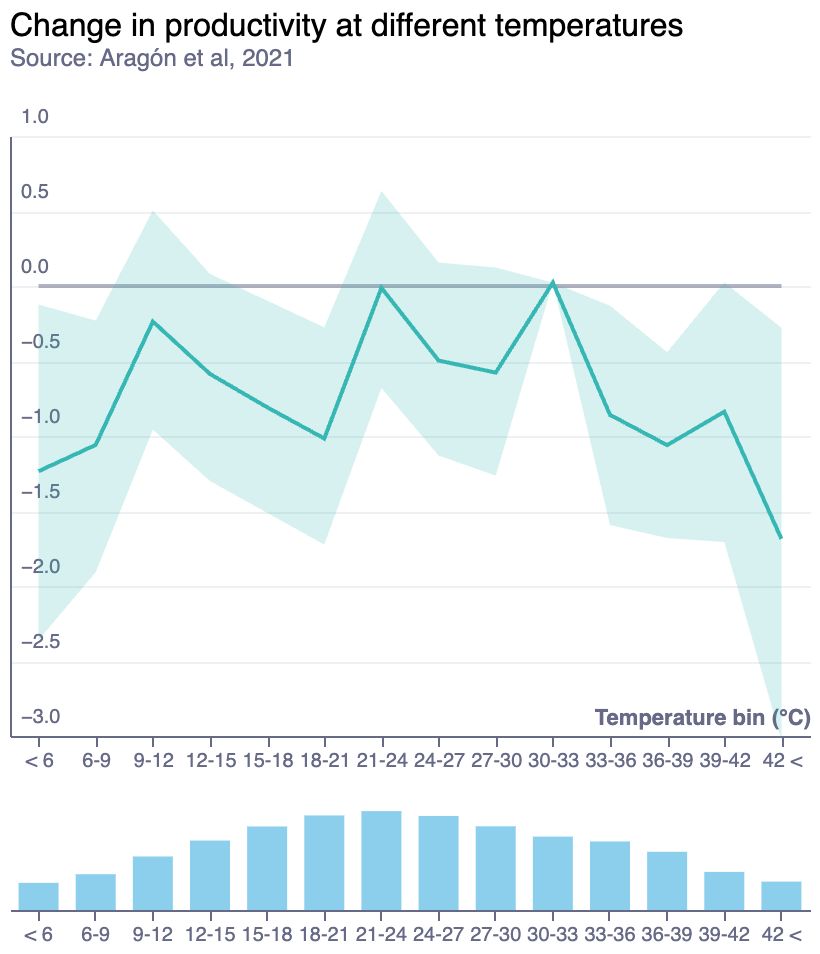
Because of larger temperature-driven reductions in GDP per capita in the poorest countries, it is estimated that the ratio between the top and bottom income deciles is likely to be 25% larger today than it would have been in the absence of experienced global warming (Diffenbaugh and Burke, 2019).

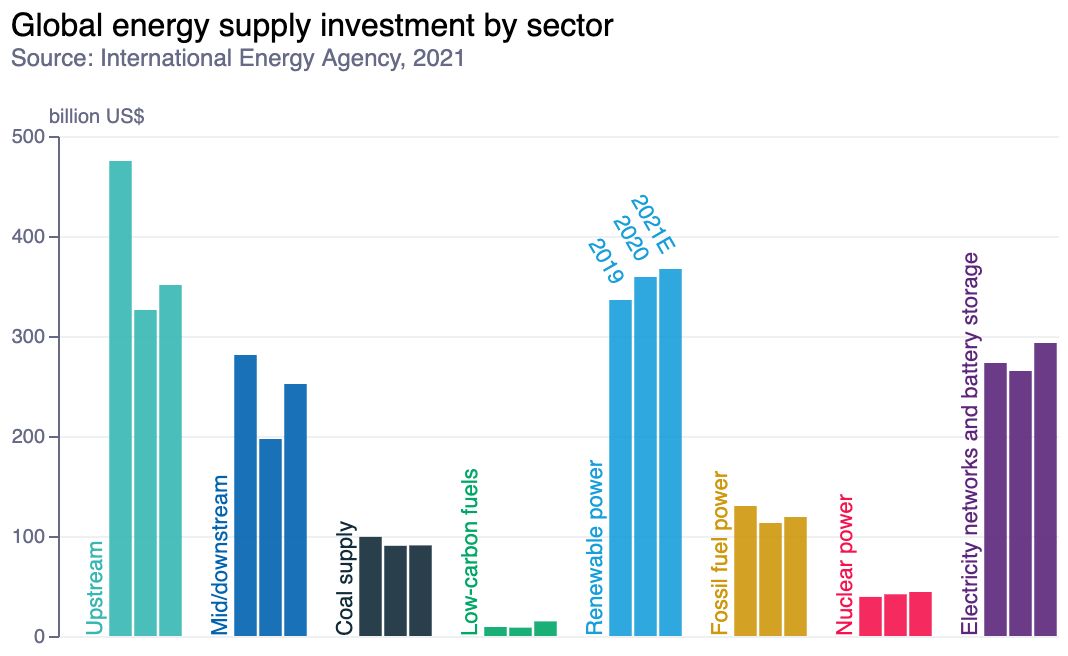
Most progress towards a low-carbon economy to date has been thanks to reductions in coal from energy production, and the final pact agreed at COP26 should ensure even greater reductions. The International Energy Agency estimates that ‘Renewables will overtake coal to become the largest source of electricity generation worldwide in 2025’, and the world now invests more in renewable power generation (excluding nuclear and hydro) than in oil, gas and coal generation combined.
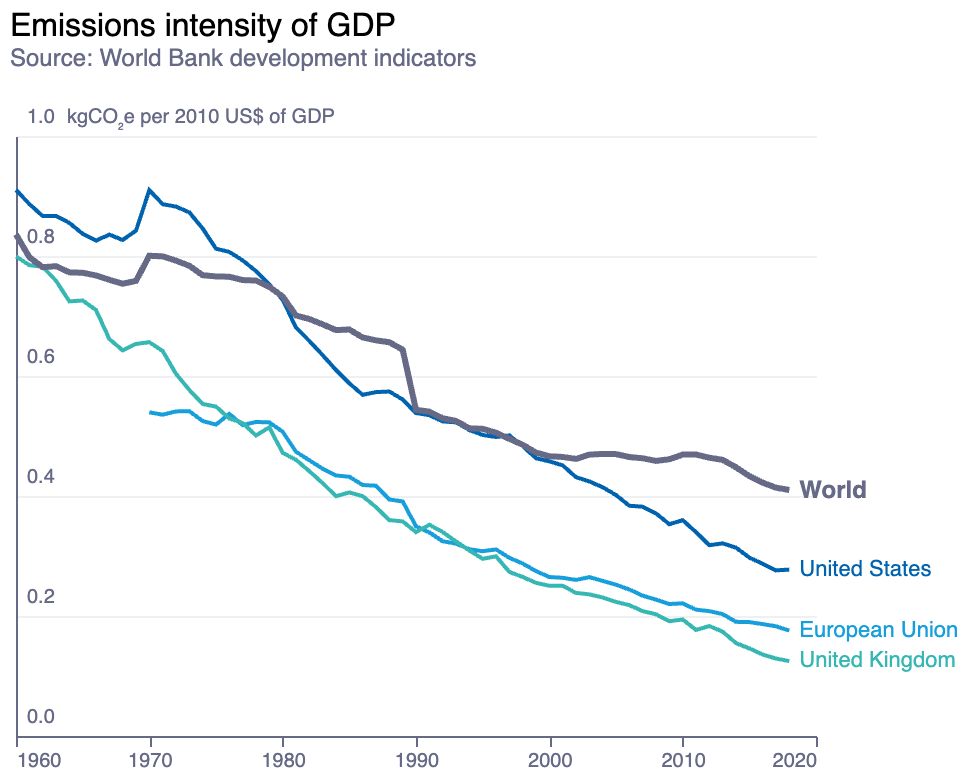
The global economy has become far more carbon efficient in the past half century, cutting emissions per dollar of GDP from about 800 grammes of carbon dioxide per dollar (gCO2/$) in 1960 to a little more than 400 gCO2/$ today, a decline of almost 50%. Total emissions, however, have risen and escalated climate change; global carbon emissions are more than three times higher today than they were in 1965.
Economics has a vital role to play in rising to the climate change challenge. It highlights the urgency of action by evaluating the costs of climate change and the future costs of inaction. It can help to ensure that good targets are backed up by good actions by assessing the effectiveness of both mitigation and adaptation efforts. It is key to a just transition, joining up the dots between environmental and social spheres of policy to find fair and synergistic solutions.
Loading suggestions...