

A 🧵on management of HYPERCALCEMIA.
First a question
If you give iv phosphates in hypercalcemia, calcium will chelate with phosphate and get deposited in organs and can cause widespread organ dysfunction.
Then how will you treat hypophosphatemia in hypercalcemia❓️
Read on👇
First a question
If you give iv phosphates in hypercalcemia, calcium will chelate with phosphate and get deposited in organs and can cause widespread organ dysfunction.
Then how will you treat hypophosphatemia in hypercalcemia❓️
Read on👇
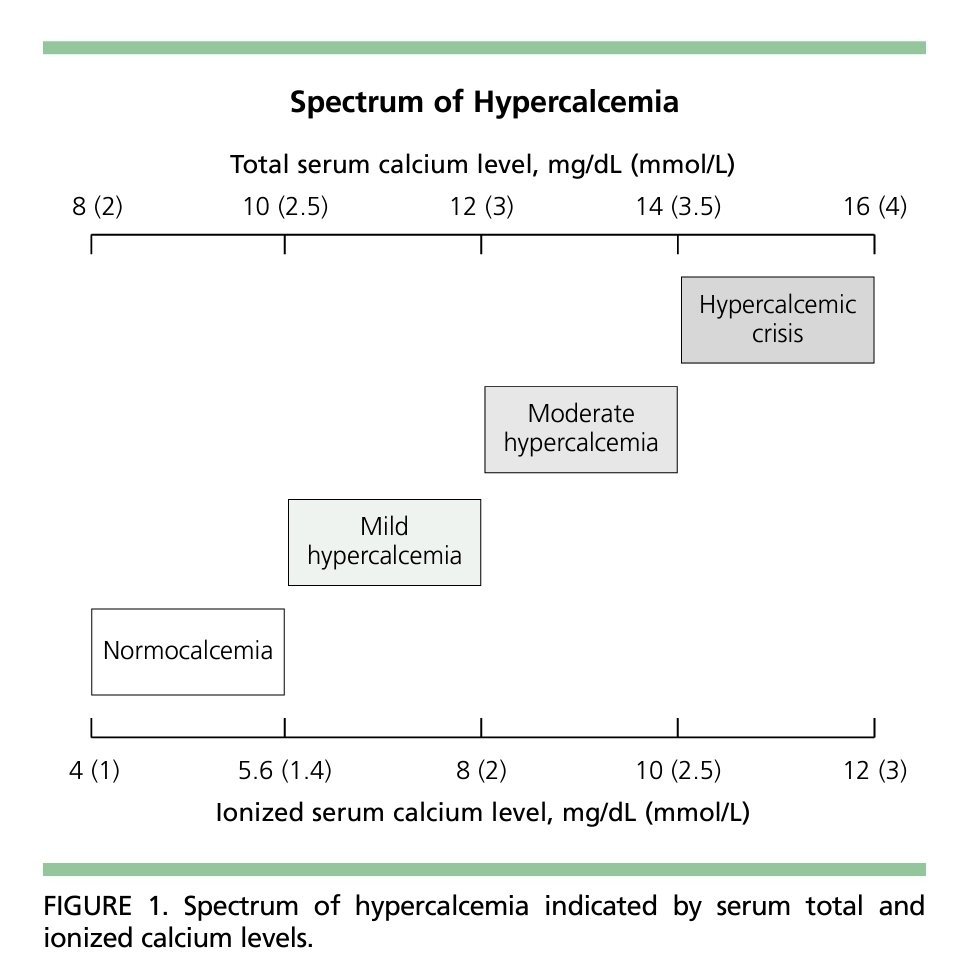
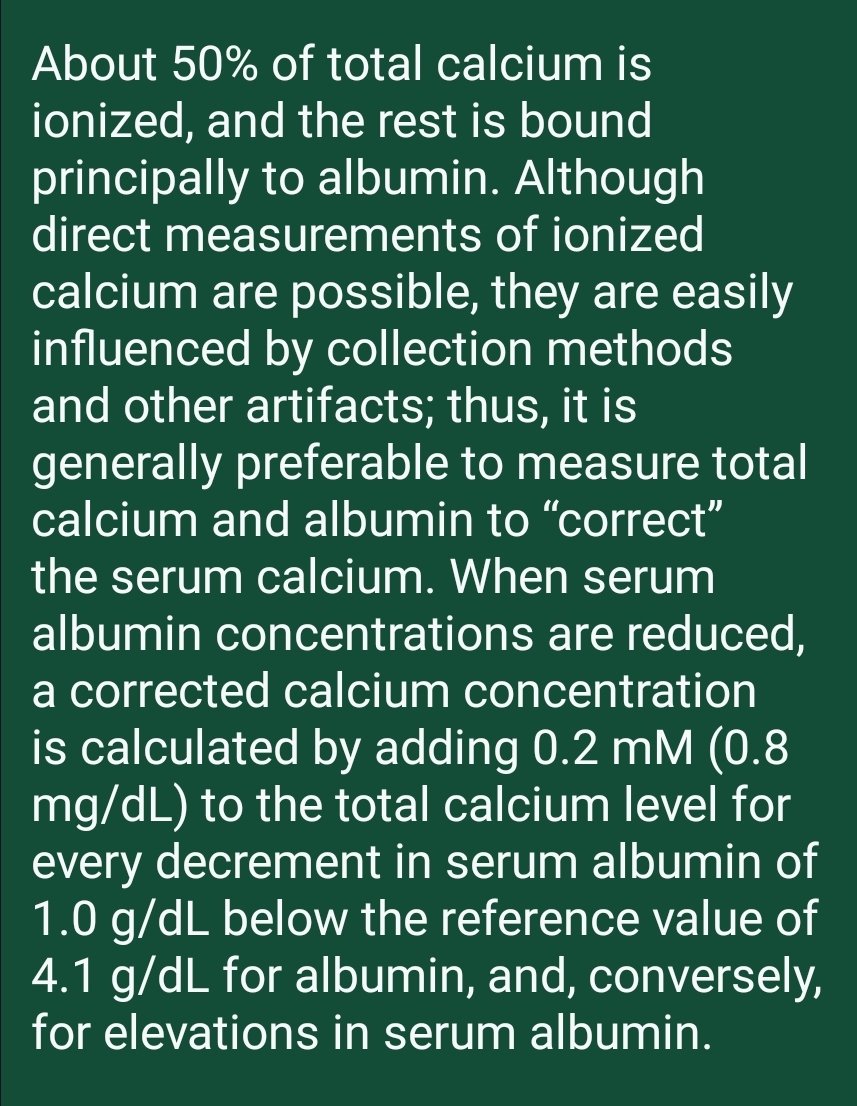
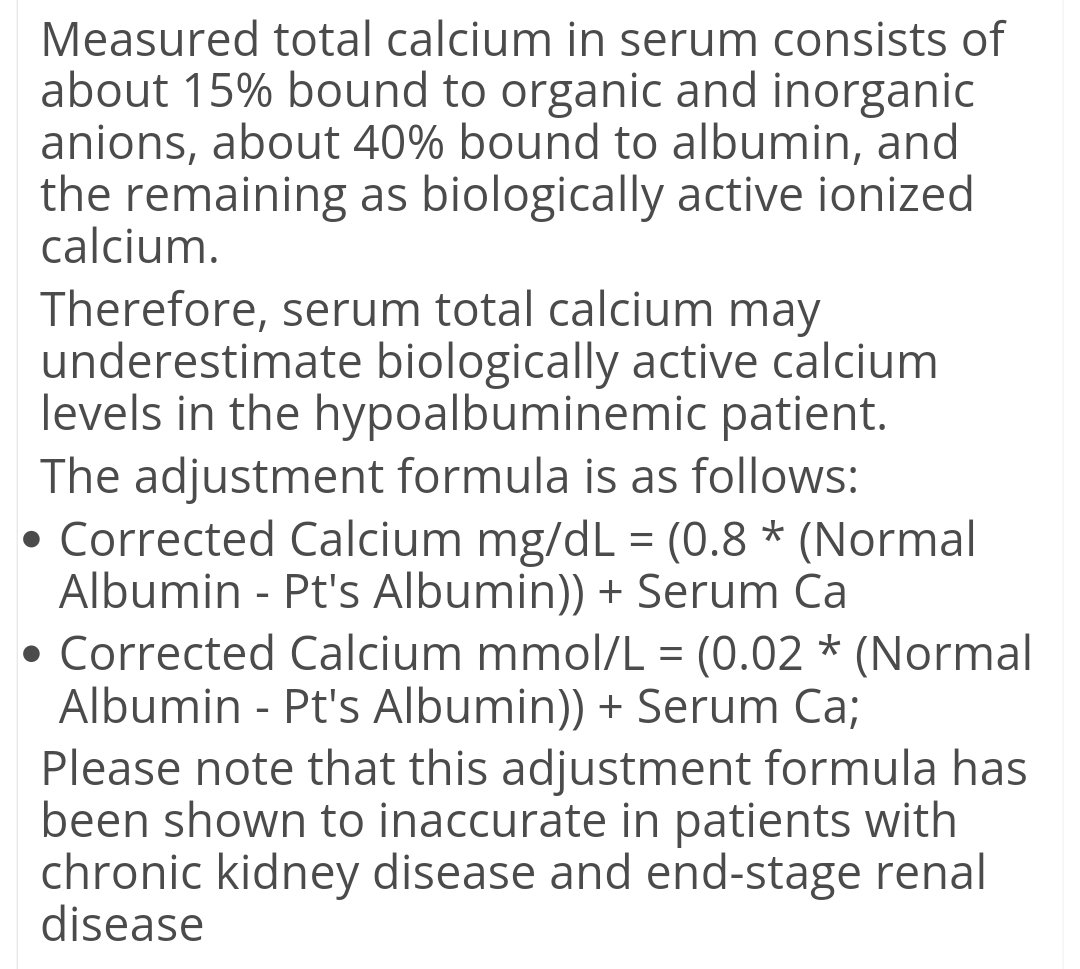
Calcium Correction for Hypo/hyperalbuminemia should be done for the following reasons.
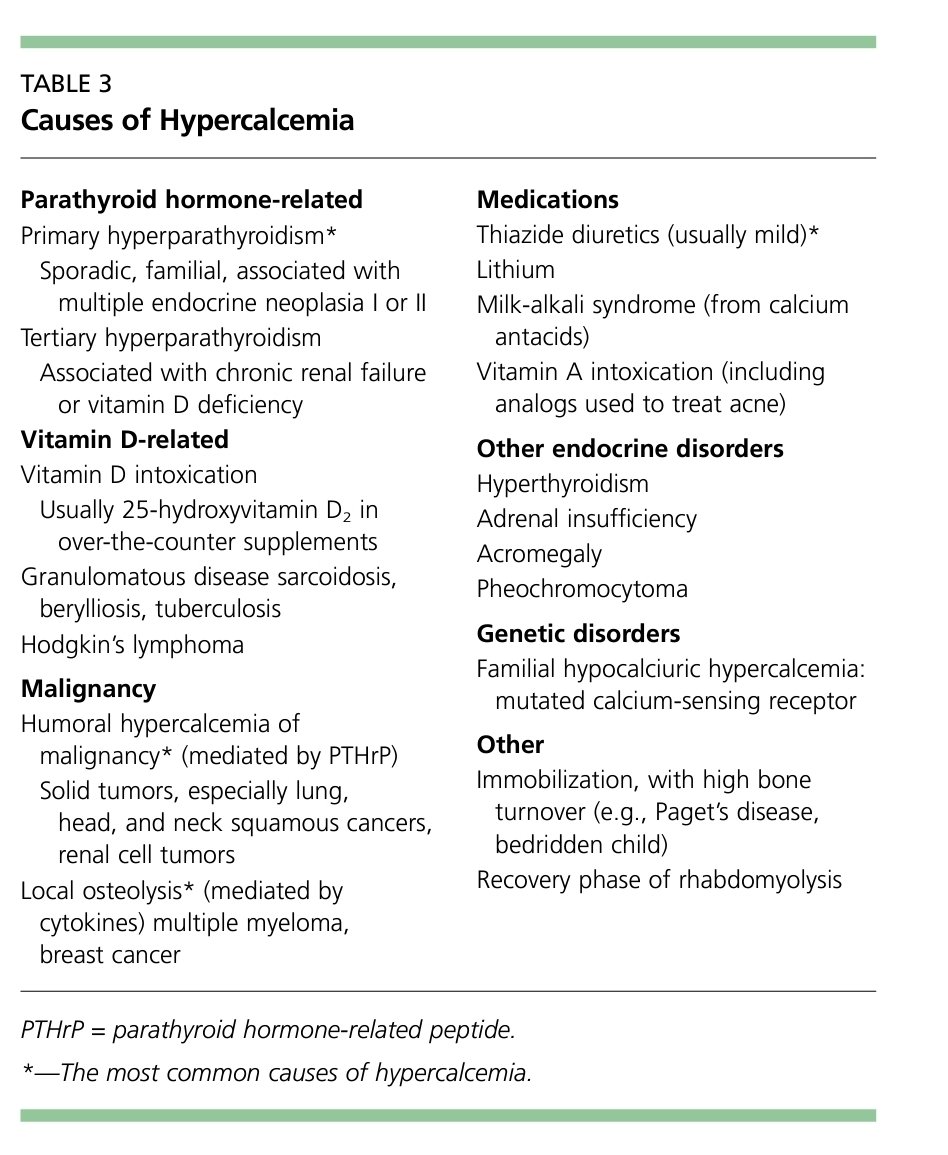
Main mechanisms causing hypercalcemia
⬆️PTH secretion resulting in
⬆️S Ca
⬆️U Ca
⬇️PO4
⬆️PTHrP secretion resulting in
⬆️S Ca
⬇️PTH
⬆️UCa
⬇️PO4
⬆️Calcitriol by effects of Lymphomas and granulomatous diseases ( TB, Sarcoidosis etc)
Causes of hypercalcemia👇
⬆️PTH secretion resulting in
⬆️S Ca
⬆️U Ca
⬇️PO4
⬆️PTHrP secretion resulting in
⬆️S Ca
⬇️PTH
⬆️UCa
⬇️PO4
⬆️Calcitriol by effects of Lymphomas and granulomatous diseases ( TB, Sarcoidosis etc)
Causes of hypercalcemia👇
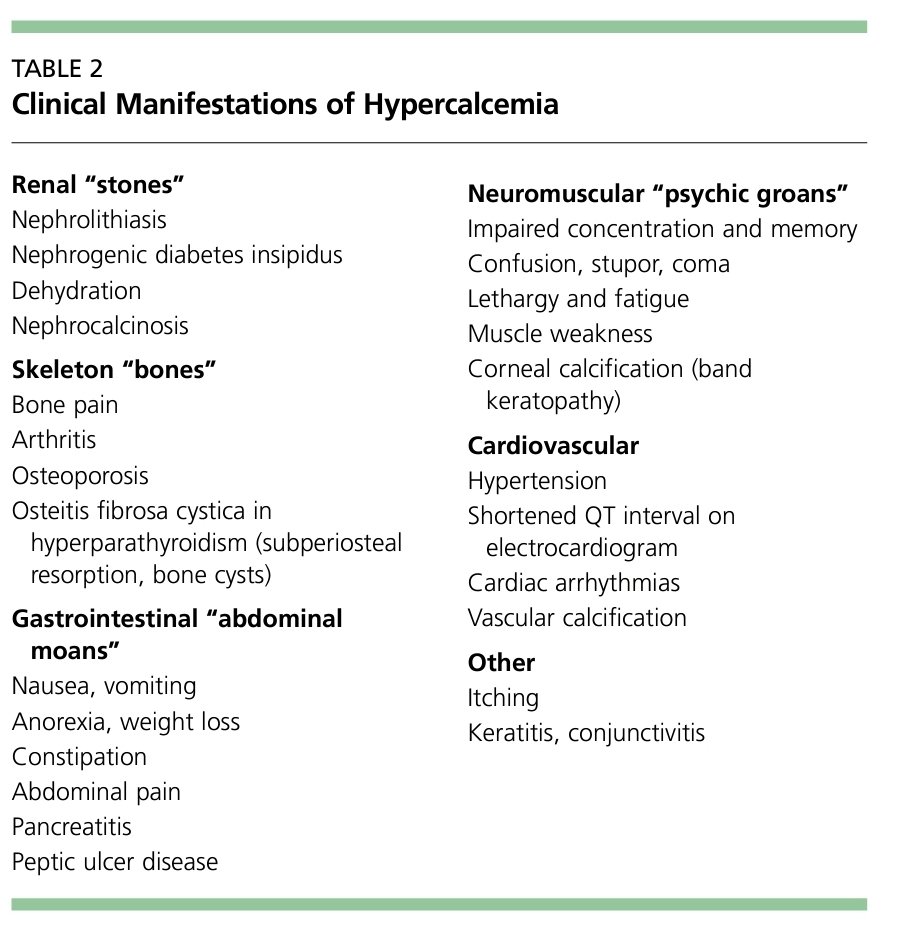
Symptoms depend on the degree of hypercalcemia.
Only manifestations in mild hypocalcemia are subtle neuropsychiatric symptoms( trouble concentrating, personality changes, depression) or sometimes are asymptomatic.
Moderate to severe hypercalcemia can be life-threatening.
Only manifestations in mild hypocalcemia are subtle neuropsychiatric symptoms( trouble concentrating, personality changes, depression) or sometimes are asymptomatic.
Moderate to severe hypercalcemia can be life-threatening.
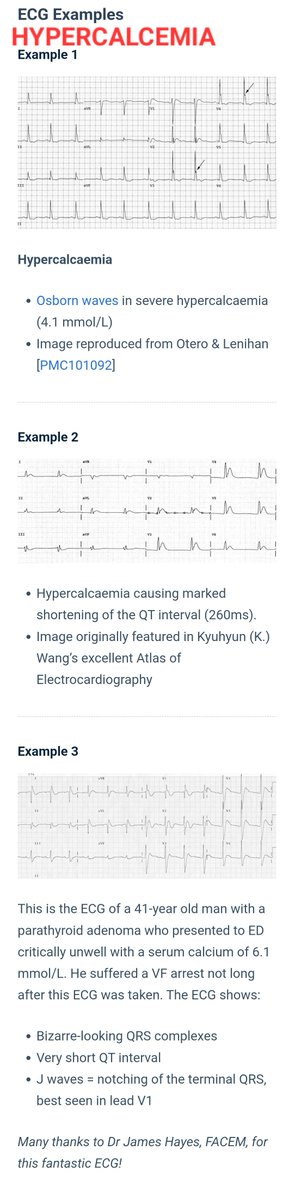
Hypercalcemia can result in significant electrocardiographic changes, including bradycardia, atrioventricular (AV) block, and short QT interval.
These can lead to fatal arrhythmias.
Changes in serum calcium can be monitored by following the QT interval.
From @LITFLblog
These can lead to fatal arrhythmias.
Changes in serum calcium can be monitored by following the QT interval.
From @LITFLblog
Symptomatic hypercalcemia is an emergency.
The diagnosis is often picked up in the ER by ABG showing hypercalcemia and ECG showing short QTc in a background of suggestive history.
The diagnosis is often picked up in the ER by ABG showing hypercalcemia and ECG showing short QTc in a background of suggestive history.
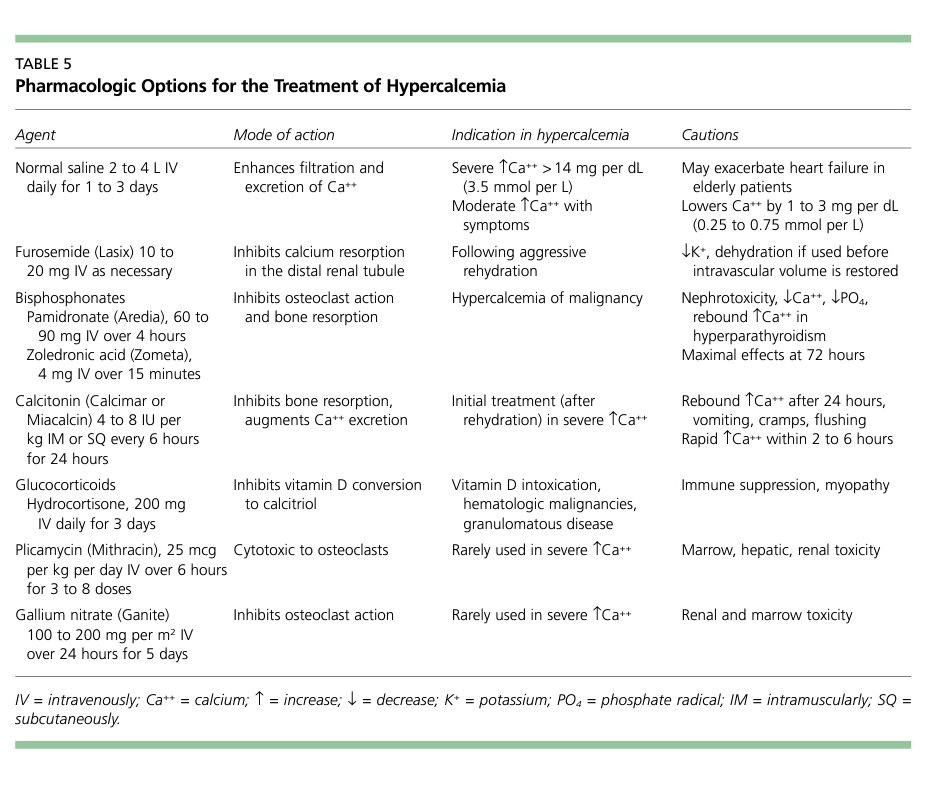
Patients with calcium levels greater than 14 mg per dL (3.5 mmol per L) or symptomatic patients with levels greater than 12 mg per dL (3 mmol per L) should be immediately and aggressively treated.
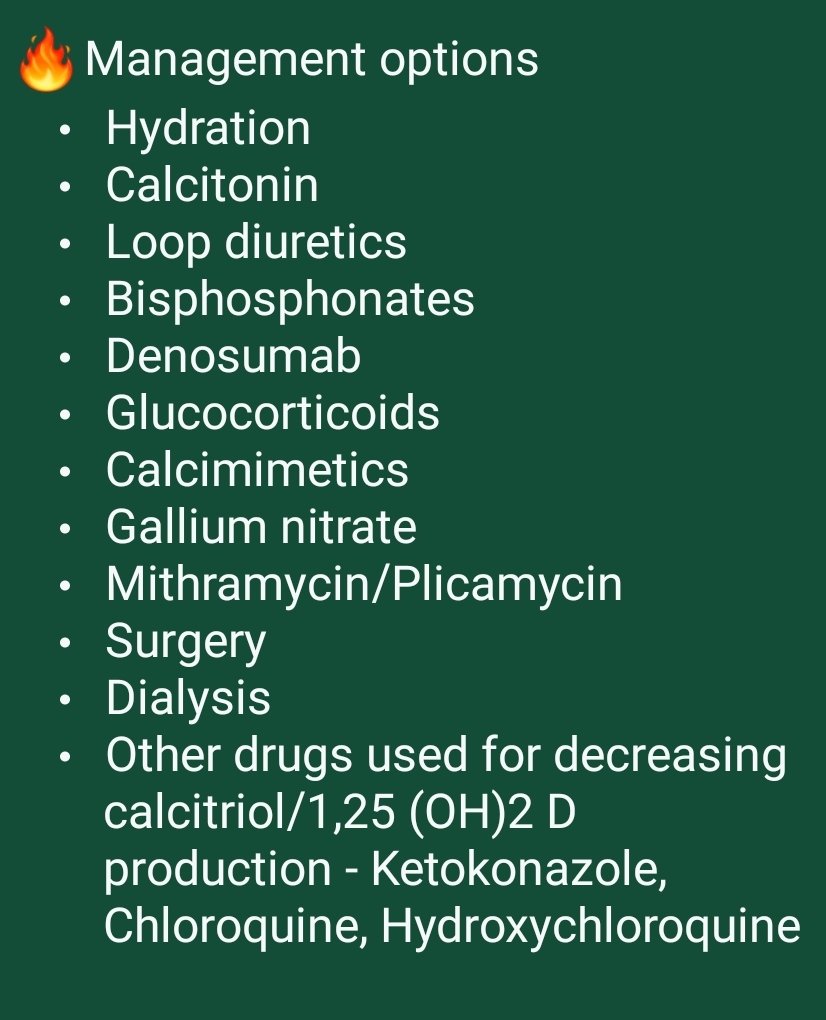
Hydration is the primary intervention.
Loop diuretics can be used with caution.
Hydration is the primary intervention.
Loop diuretics can be used with caution.
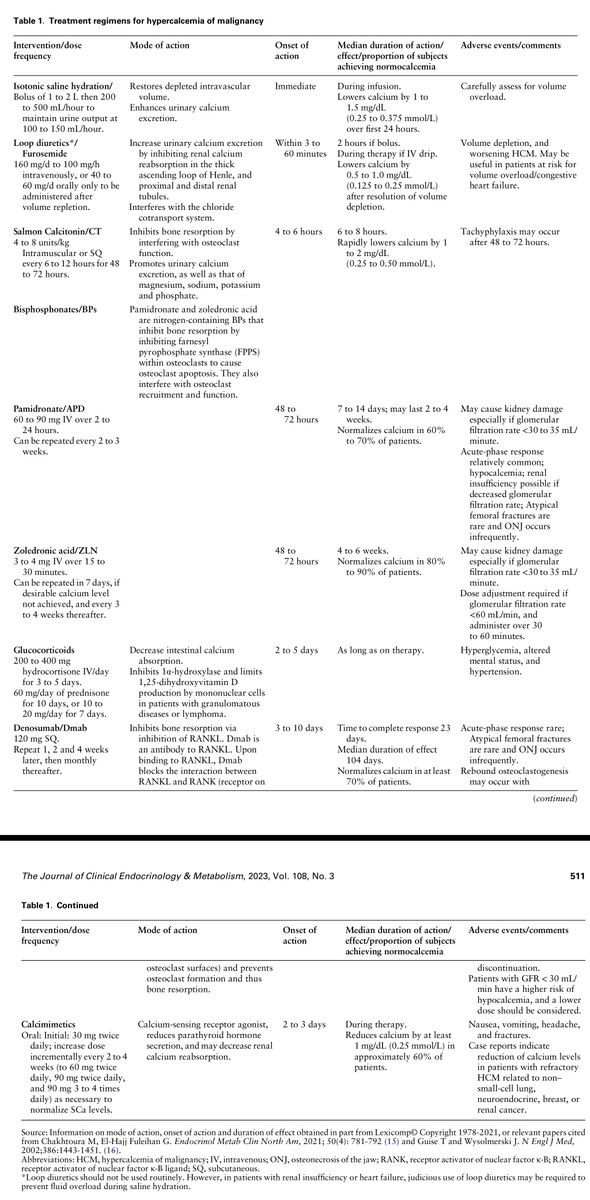
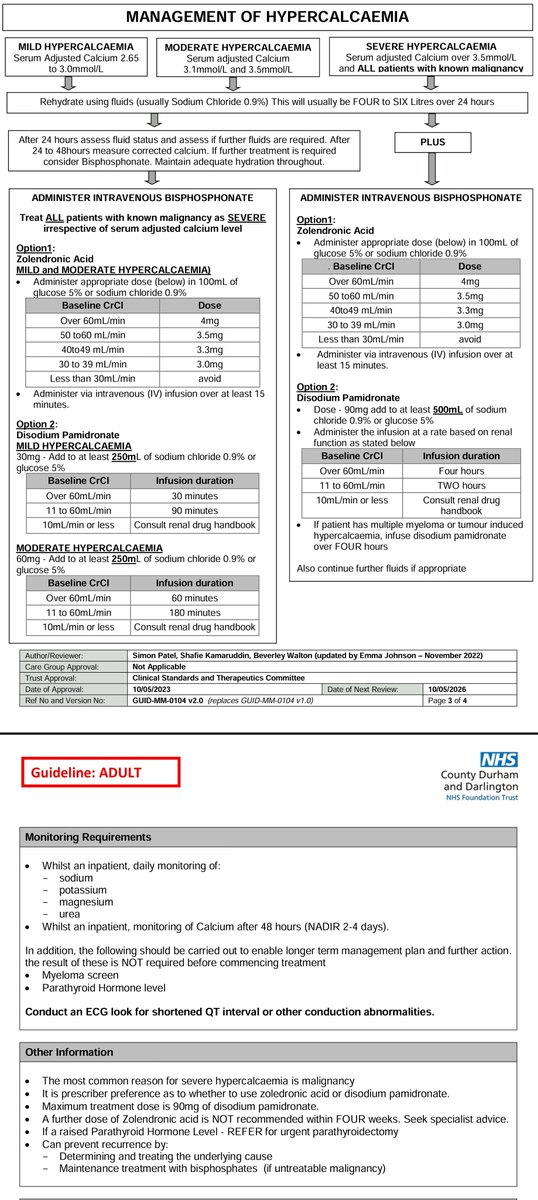
In hypercalcemia mediated by vitamin D and in hematologic malignancies (e.g., myeloma,lymphoma), glucocorticoids are the first line of therapy after fluids.
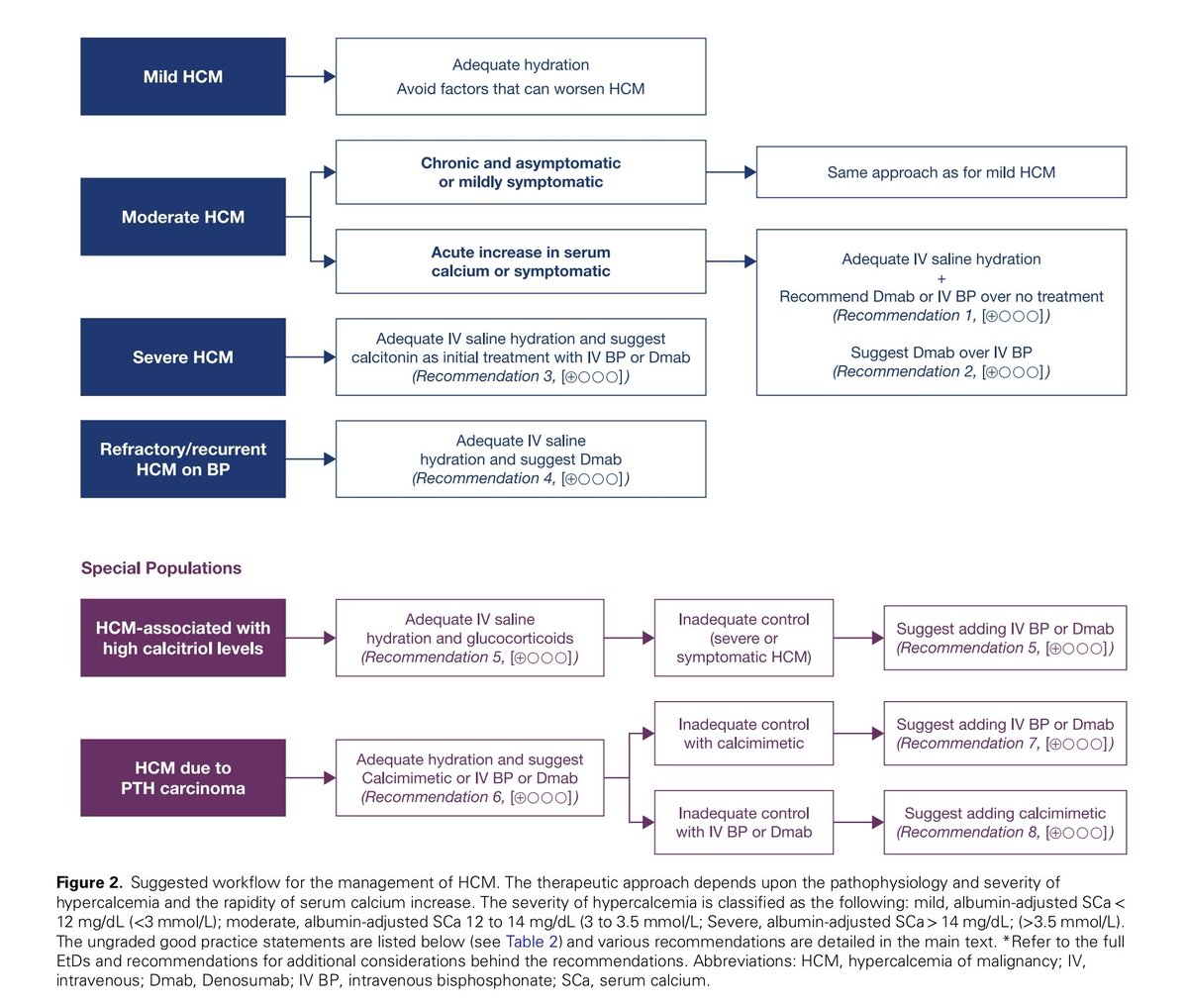
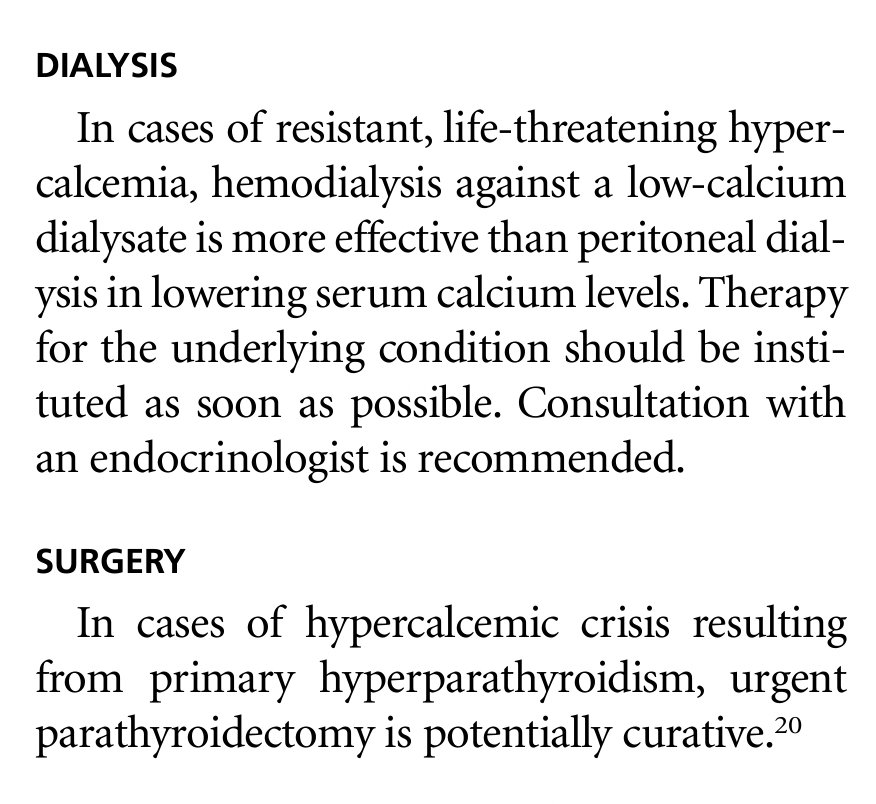
Recommendations and upgraded statements pertaining to management 👇
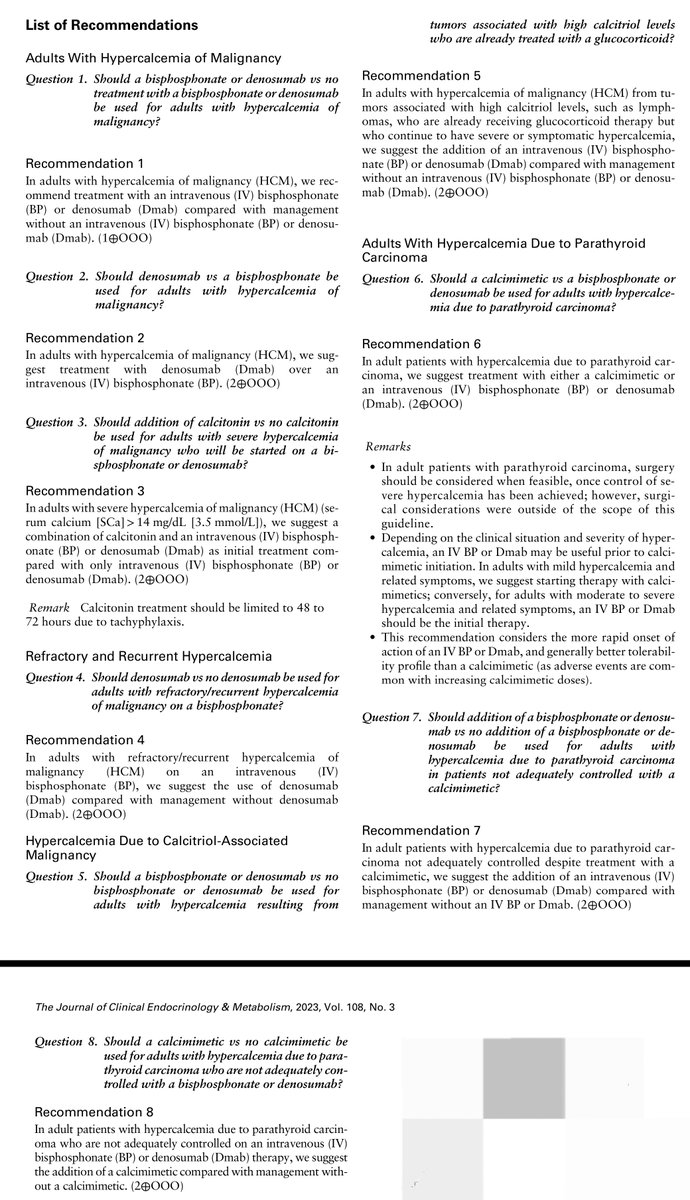
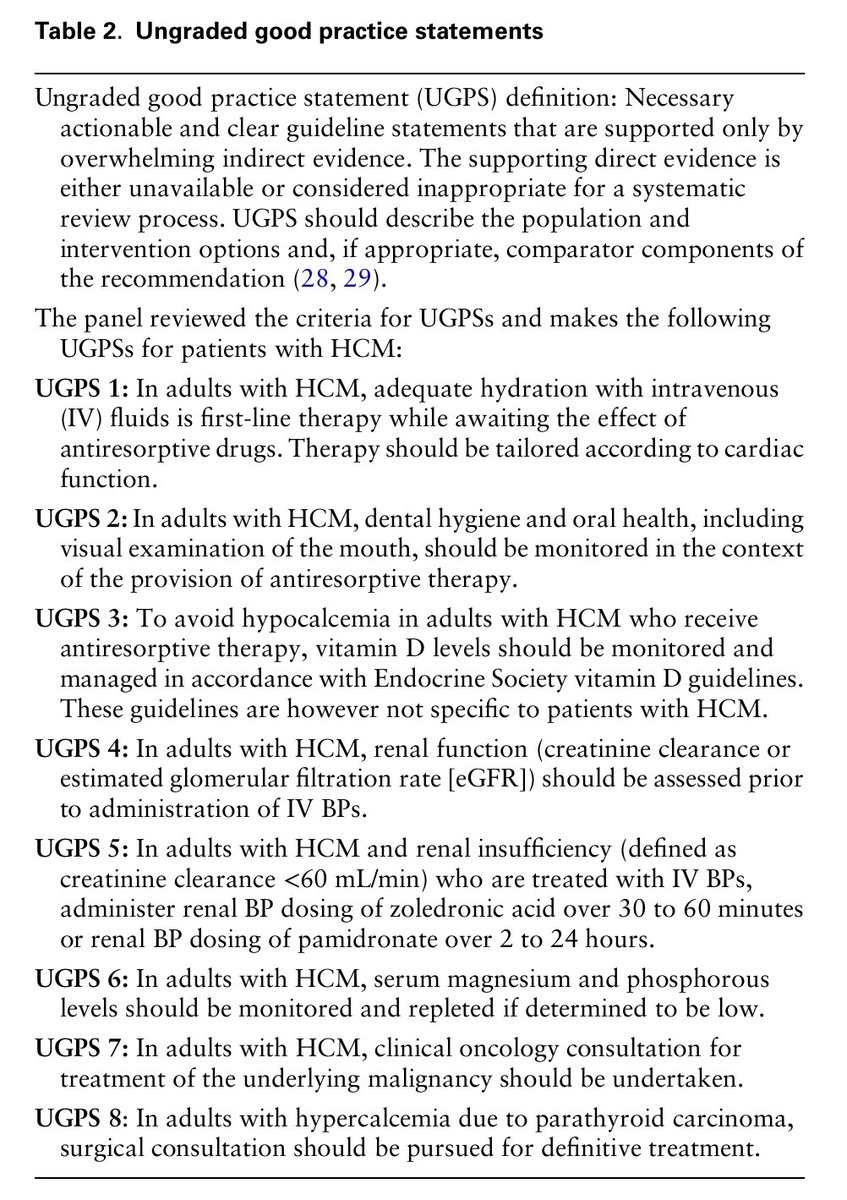
Go through these👇


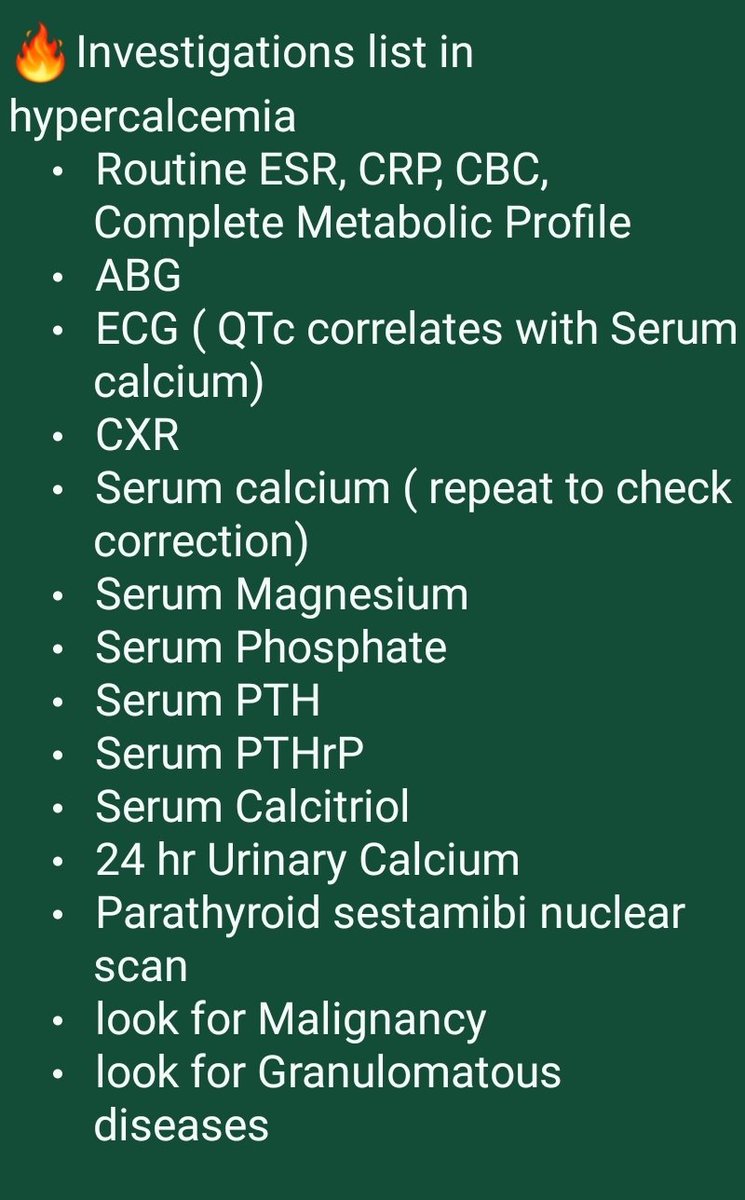
Evaluation for the cause of hypercalcemia 👇
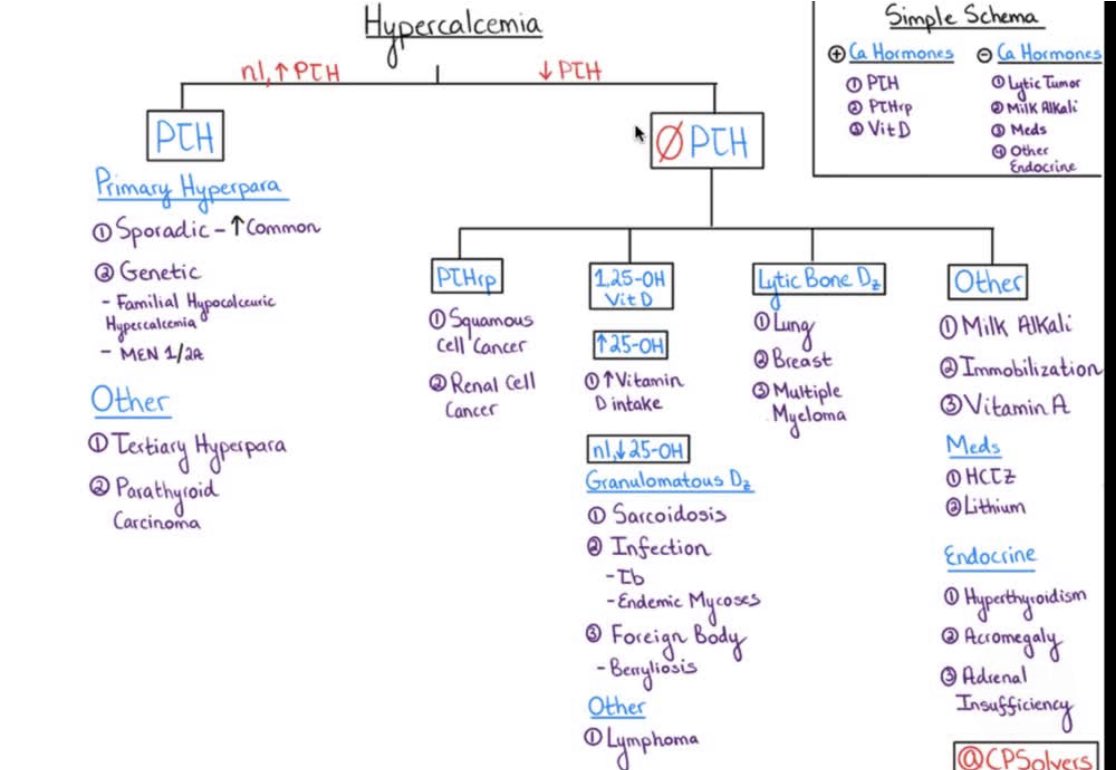
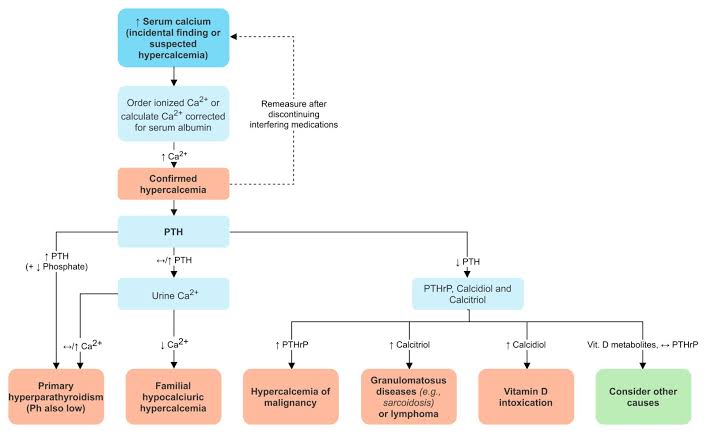
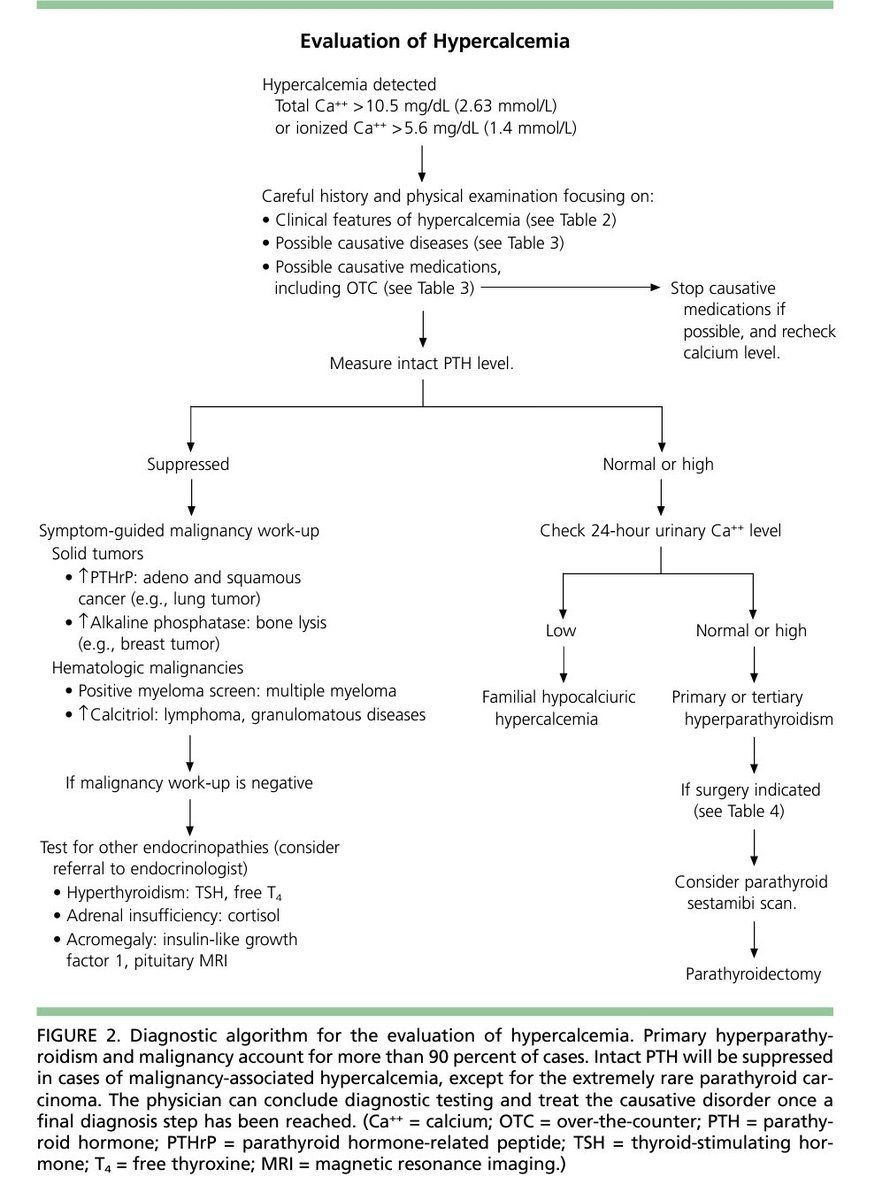
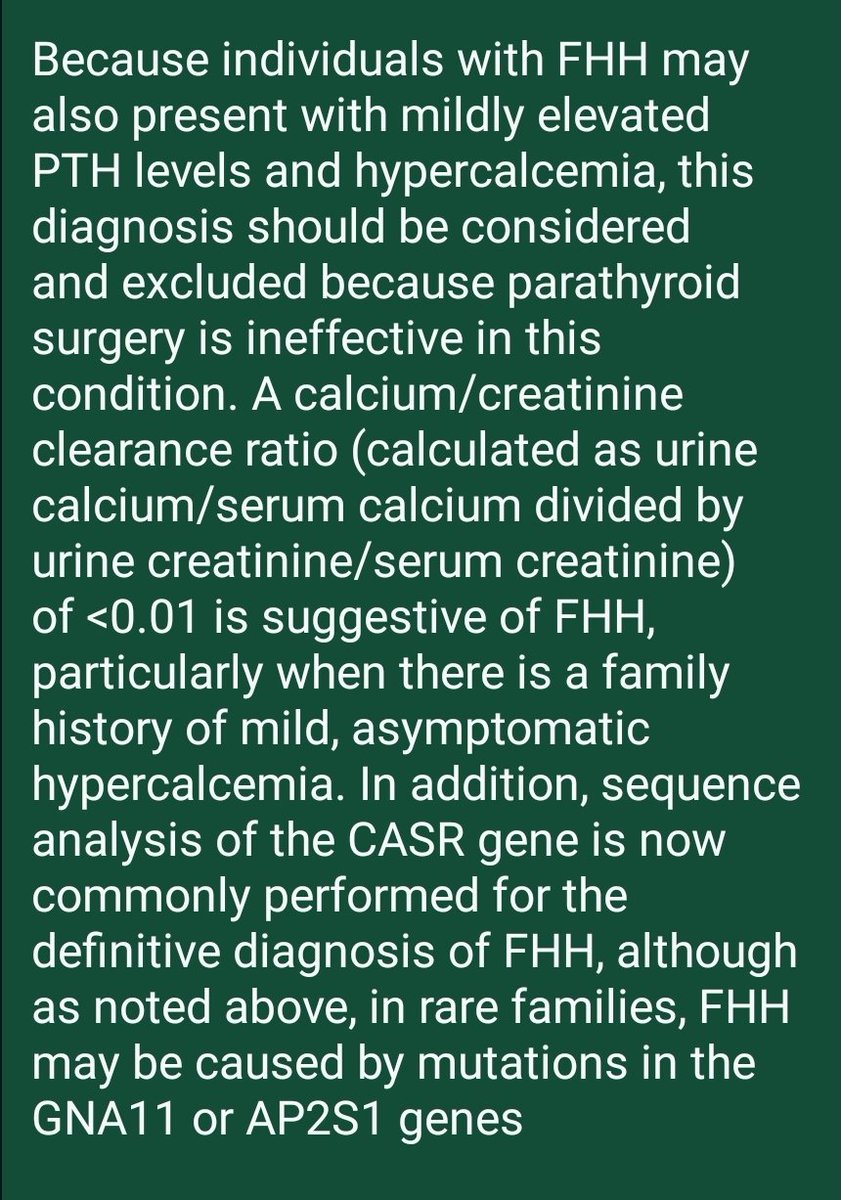
Serum PTH can be normal or borderline high in Familial Hypocalciuric Hypercalcemia (FHH)
In a nutshell
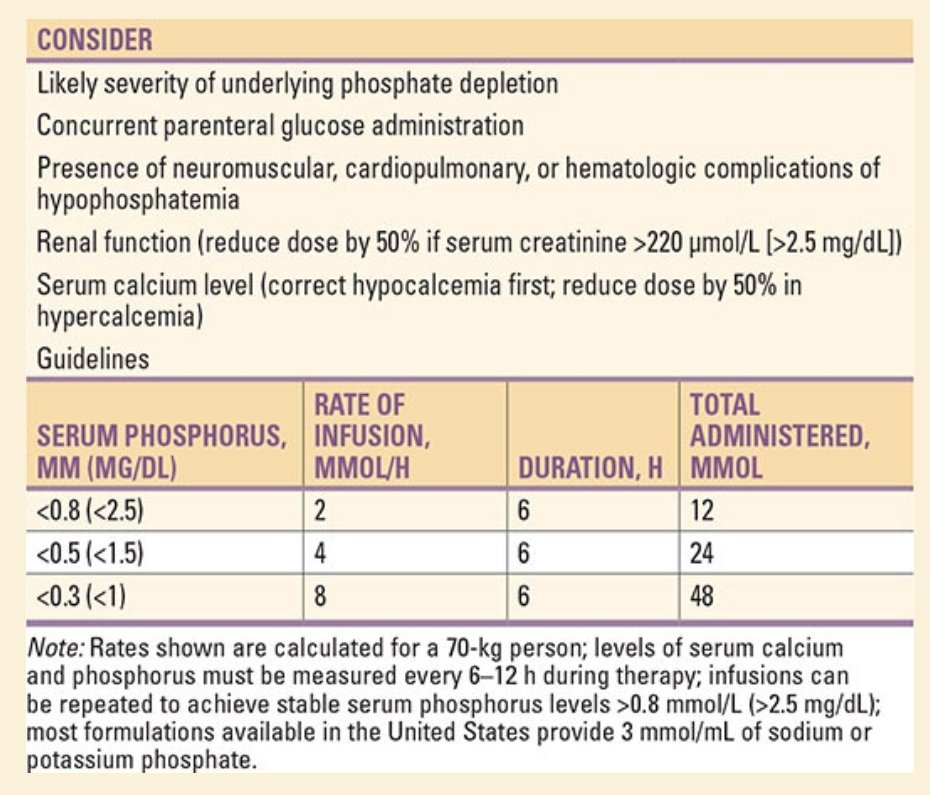
Now going back to original question
Phosphate correction in hypercalcemia 👇
Phosphate correction in hypercalcemia 👇
References

References
1. Harrison's Principles of Internal
Medicine, 21ed
2. Treatment of Hypercalcemia of
Malignancy in Adults: An
Endocrine Society Clinical Practice
Guideline
doi.org
3. NHS , Guideline for the
management of
HYPERCALCAEMIA in adults
1. Harrison's Principles of Internal
Medicine, 21ed
2. Treatment of Hypercalcemia of
Malignancy in Adults: An
Endocrine Society Clinical Practice
Guideline
doi.org
3. NHS , Guideline for the
management of
HYPERCALCAEMIA in adults

4. A Practical Approach to
Hypercalcemia
aafp.org
5. Treatment of hypercalcaemia of
malignancy in adults
sciencedirect.com
Hypercalcemia
aafp.org
5. Treatment of hypercalcaemia of
malignancy in adults
sciencedirect.com
Loading suggestions...