

SEIZURE SEMIOLOGY #TWEETORIAL
#Epilepsy #Seizure #NeuroX
🧵1/ What is a bilateral asymmetric (BA) tonic seizure?
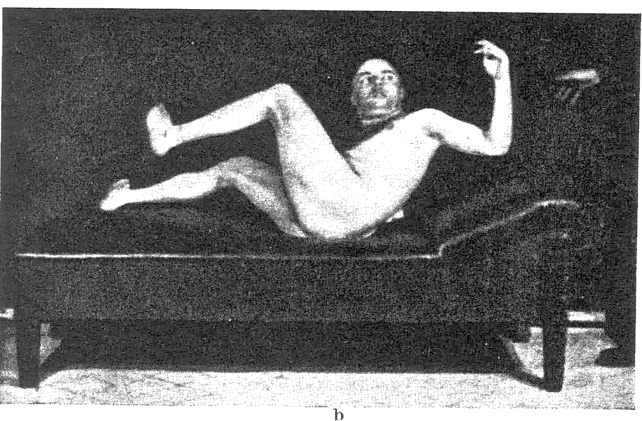
These are brief (10-40s) seizures characterized by abrupt bilateral but asymmetrical tonic posturing of extremities, usually with preserved awareness.
#Epilepsy #Seizure #NeuroX
🧵1/ What is a bilateral asymmetric (BA) tonic seizure?
These are brief (10-40s) seizures characterized by abrupt bilateral but asymmetrical tonic posturing of extremities, usually with preserved awareness.
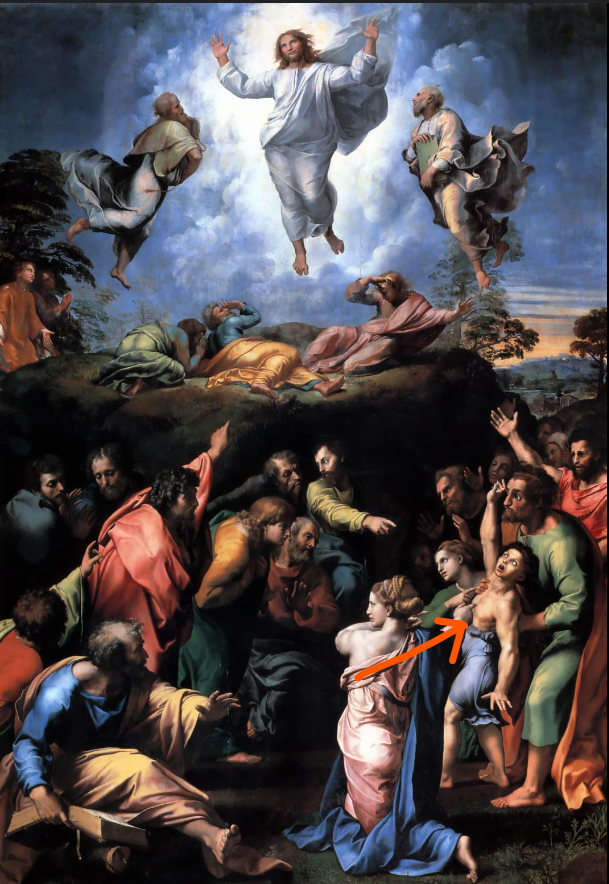
2/ The typical posture consists of abduction and elevation at shoulders with some flexion at elbows. The lower limbs can also be involved with abduction at hips with knees extended or partially flexed.
3/ The seizure may be preceded by a somatosensory aura of tingling or numbness in the head or body. There may be associated vocalization, however, speech arrest is more common.
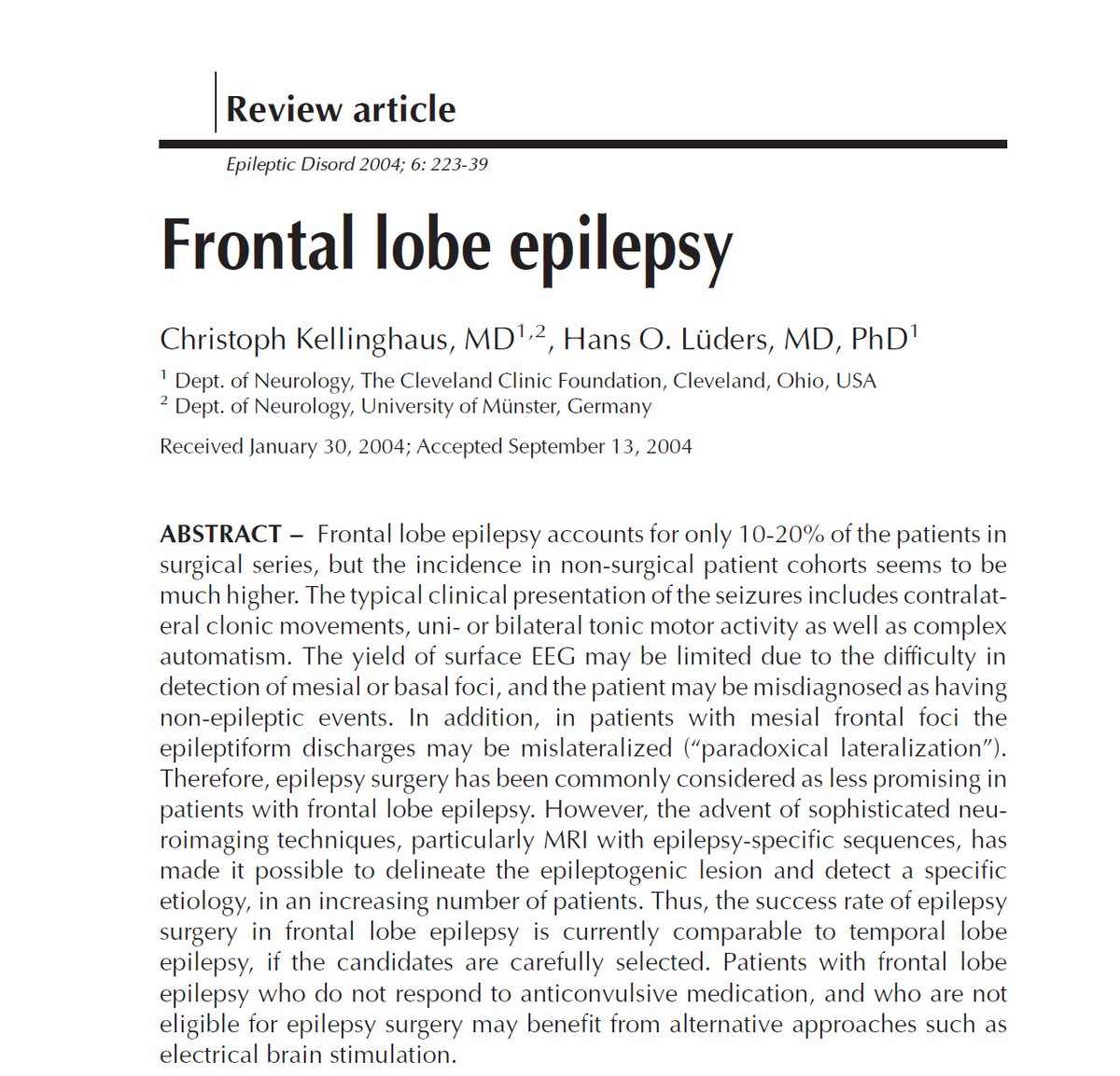
4/ There may be associated head deviation, usually contralateral to the seizure-onset zone but it may be ipsilateral as well. Even though there is associated speech arrest, patients usually retain awareness and memory of the seizure and postictal confusion is rare.
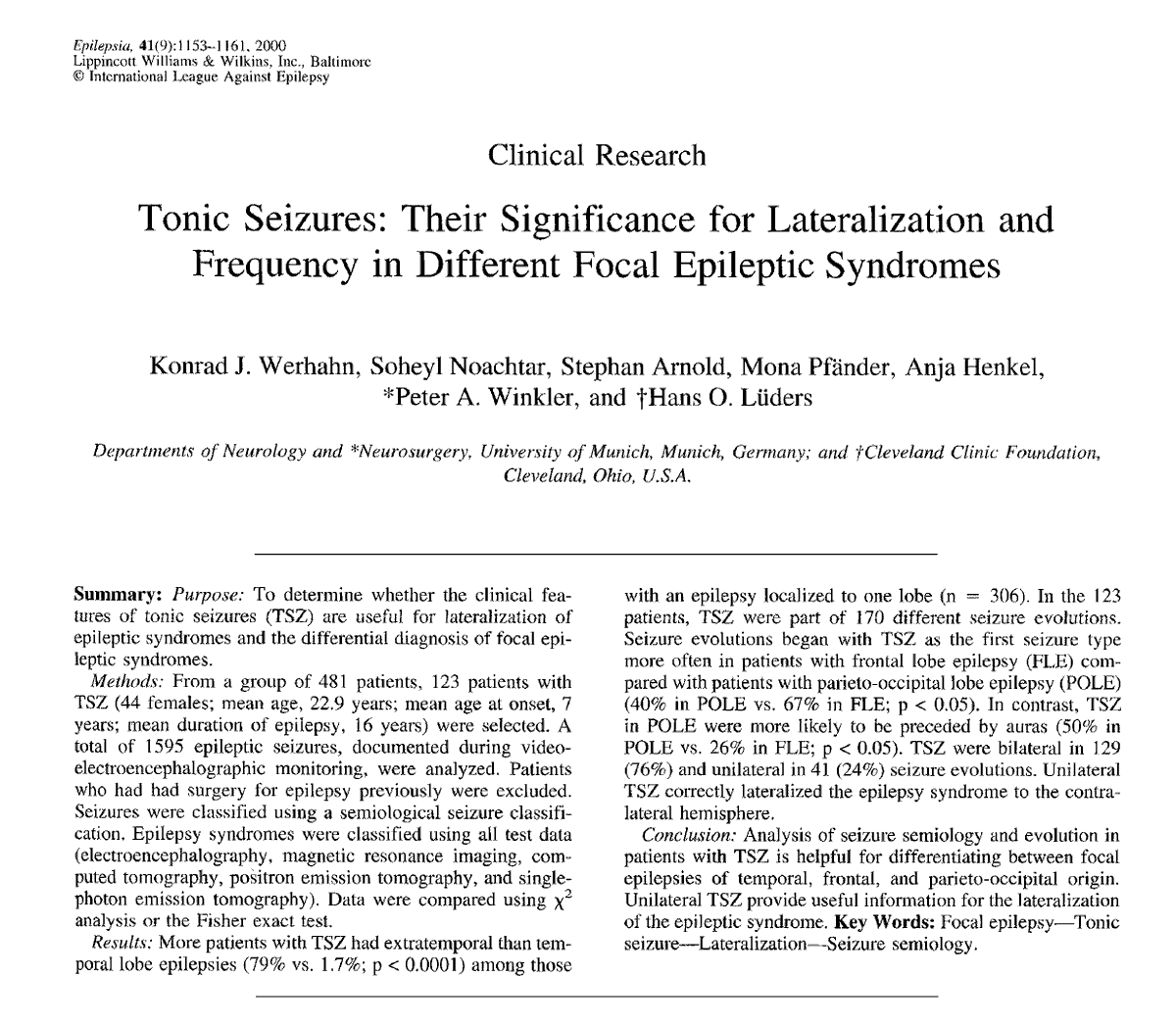
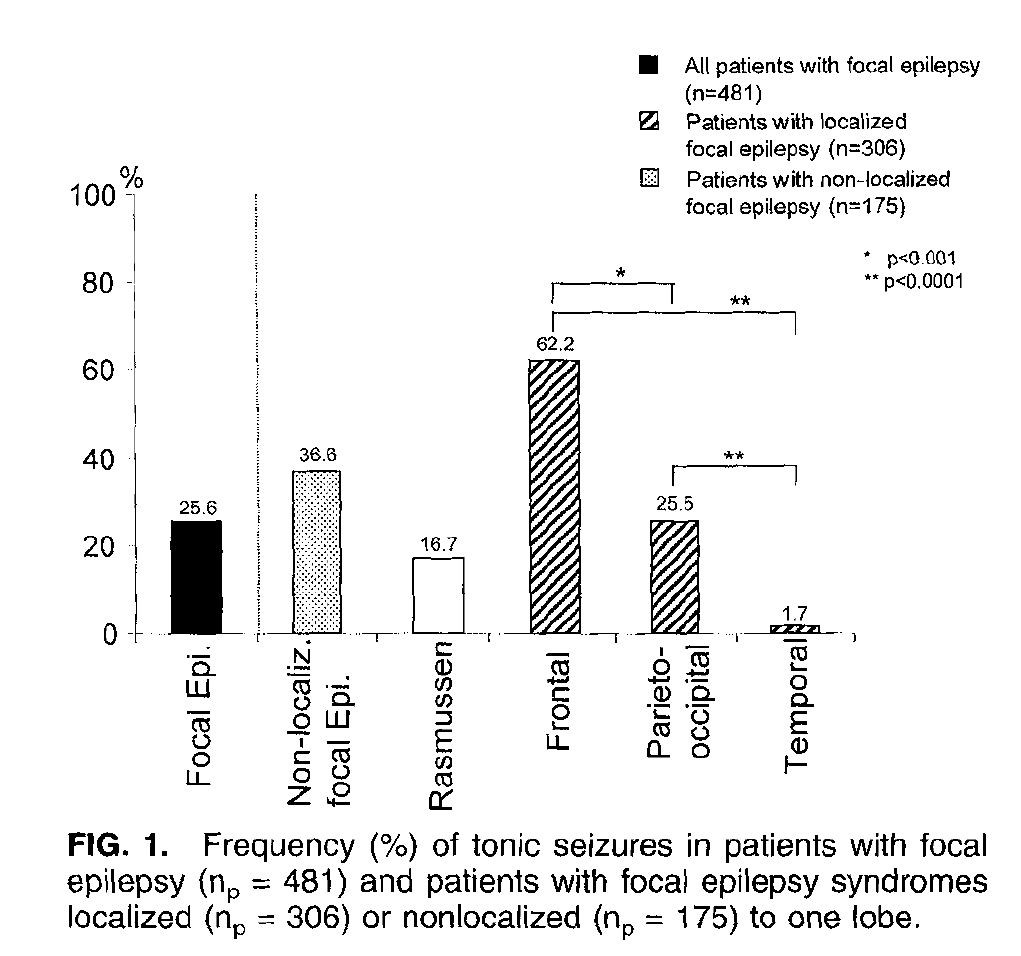
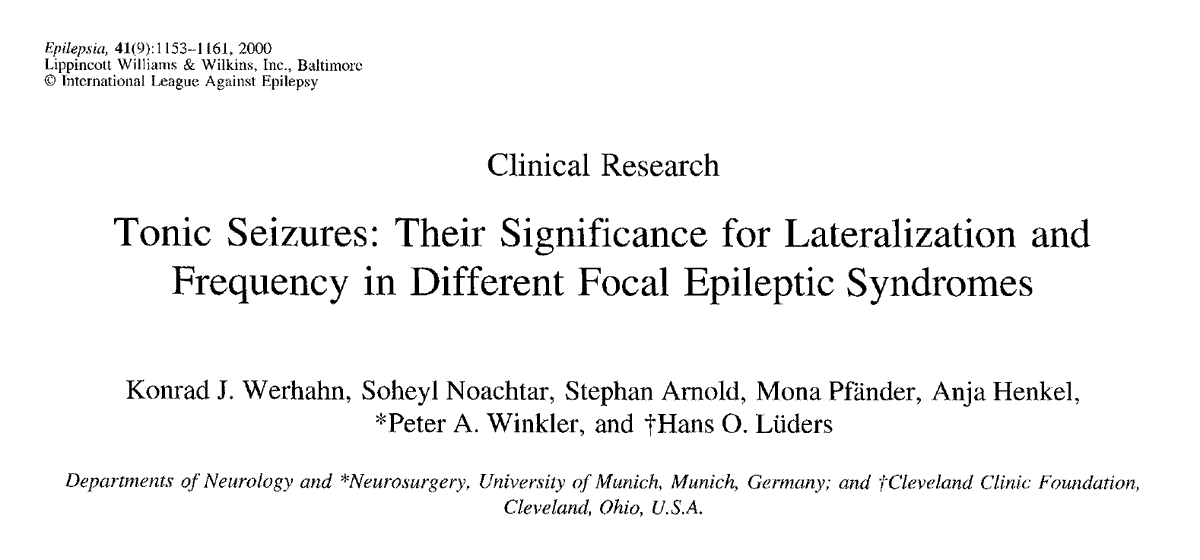
5/ As opposed to generalized tonic seizures, unilateral and bilateral asymmetric tonic seizures are more likely to be associated with focal epilepsies. Overall, these are more common in extra-temporal than temporal lobe epilepsies (79% v 1.7%, p<0.0001).
6/ The symptomatogenic zone of the bilateral asymmetric tonic seizure is the SSMA (Supplementary sensory-motor area), located on the mesial surface of the superior frontal gyrus and the paracentral lobule, immediately anterior to the leg representation of primary motor area.
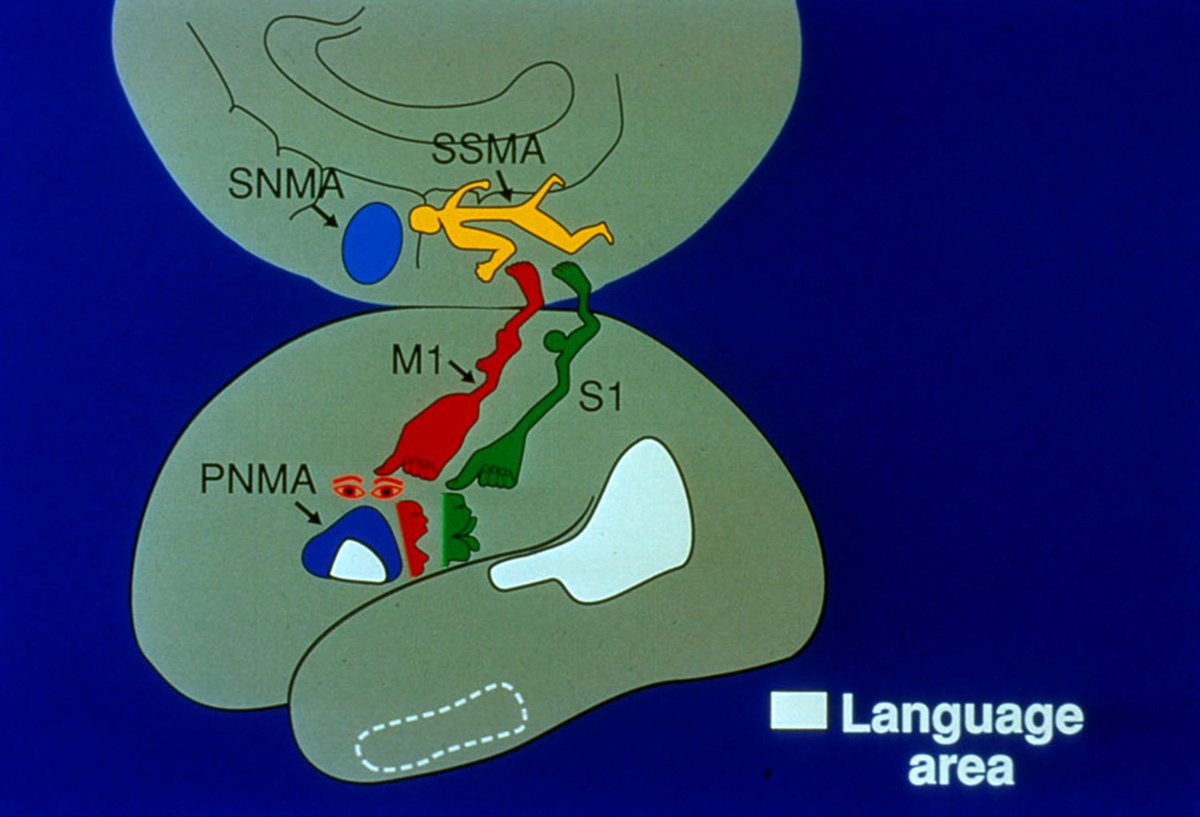
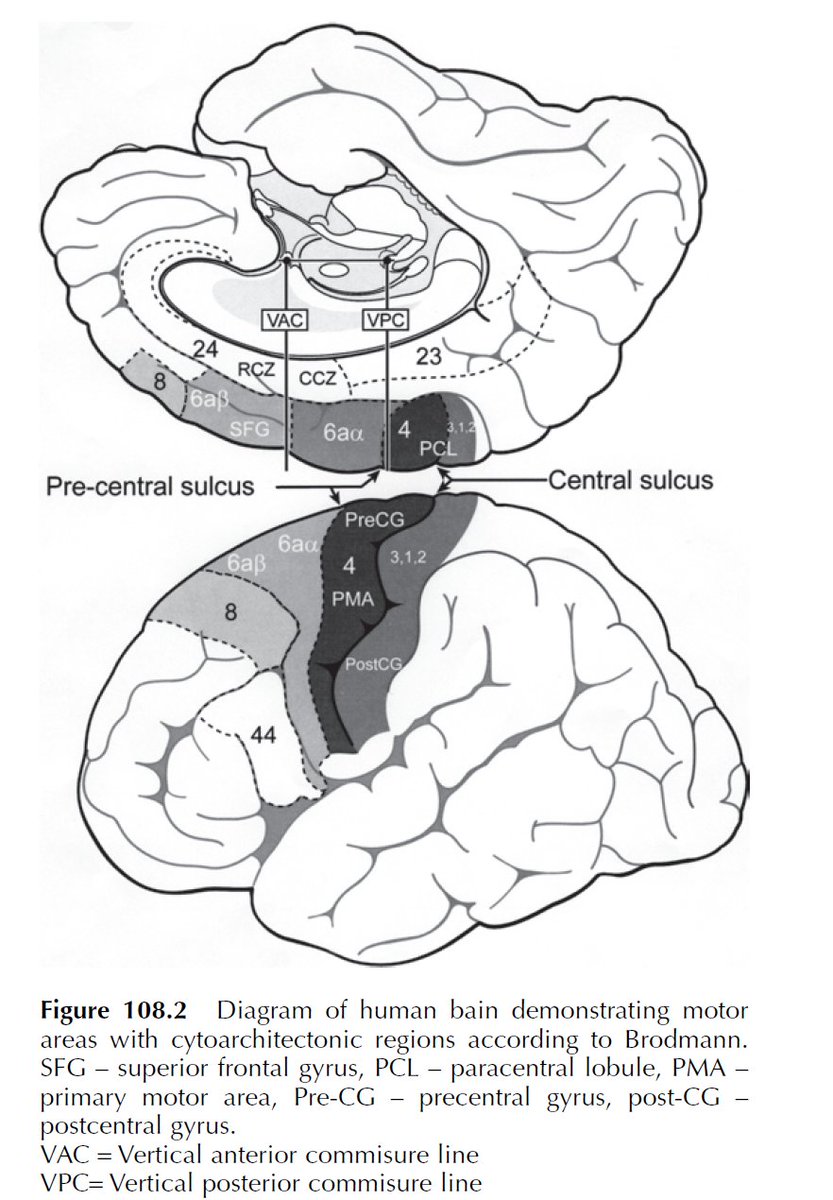
7/ From a cytoarchitectural point of view, SSMA occupies the mesial portion of Brodmann area 6 and it is mainly agranular cortex like M1. The precentral sulcus roughly separates SSMA from M1 foot area. SSMA mainly exists between VPC and VAC lines.

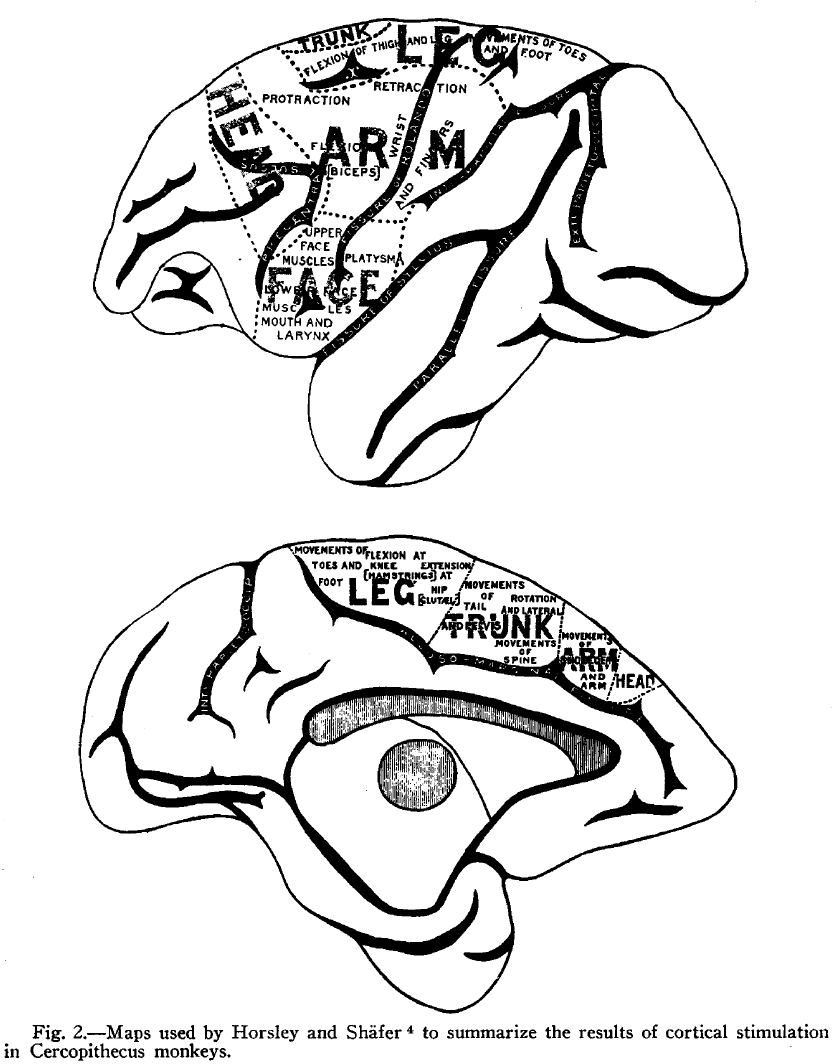
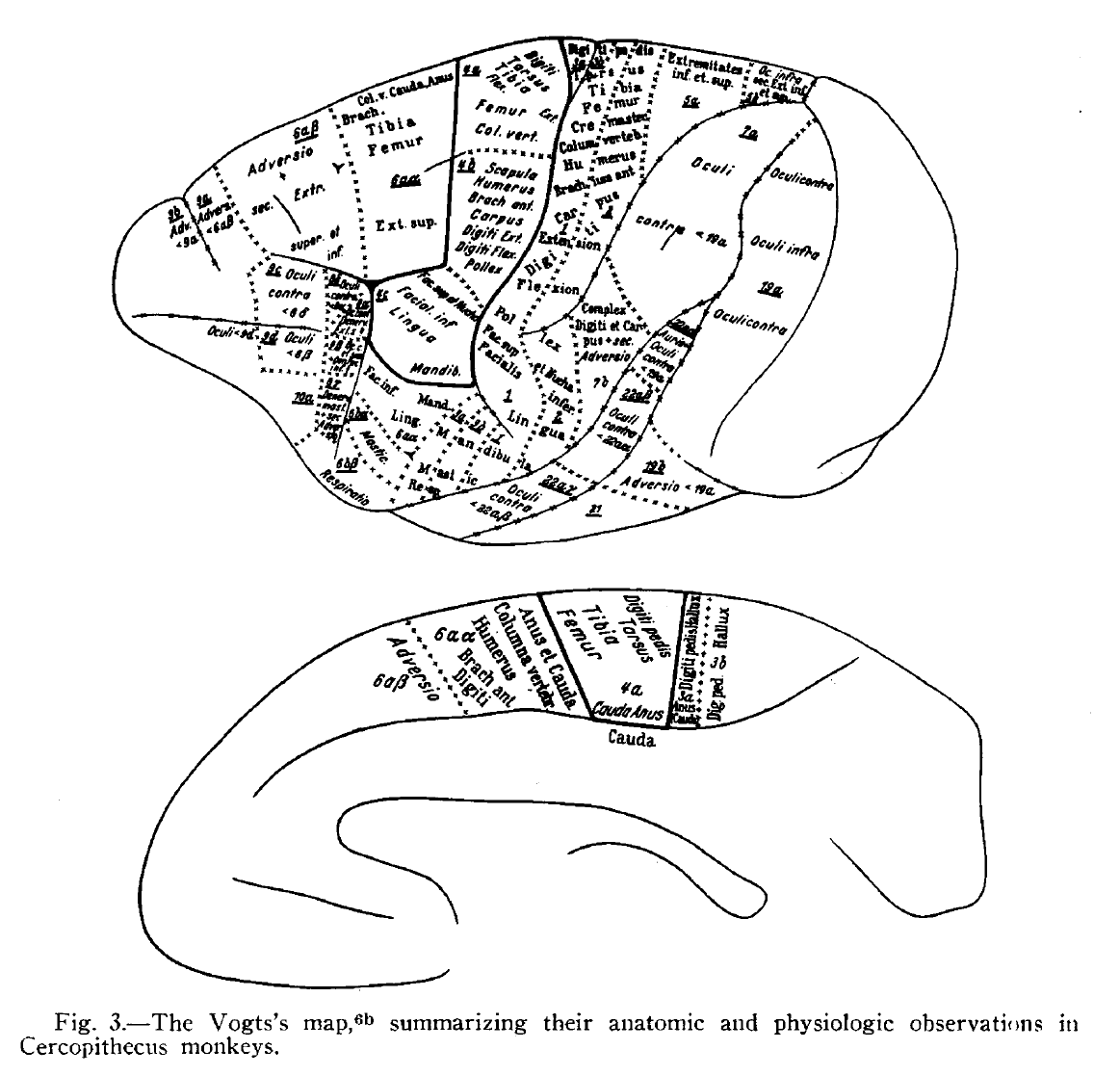
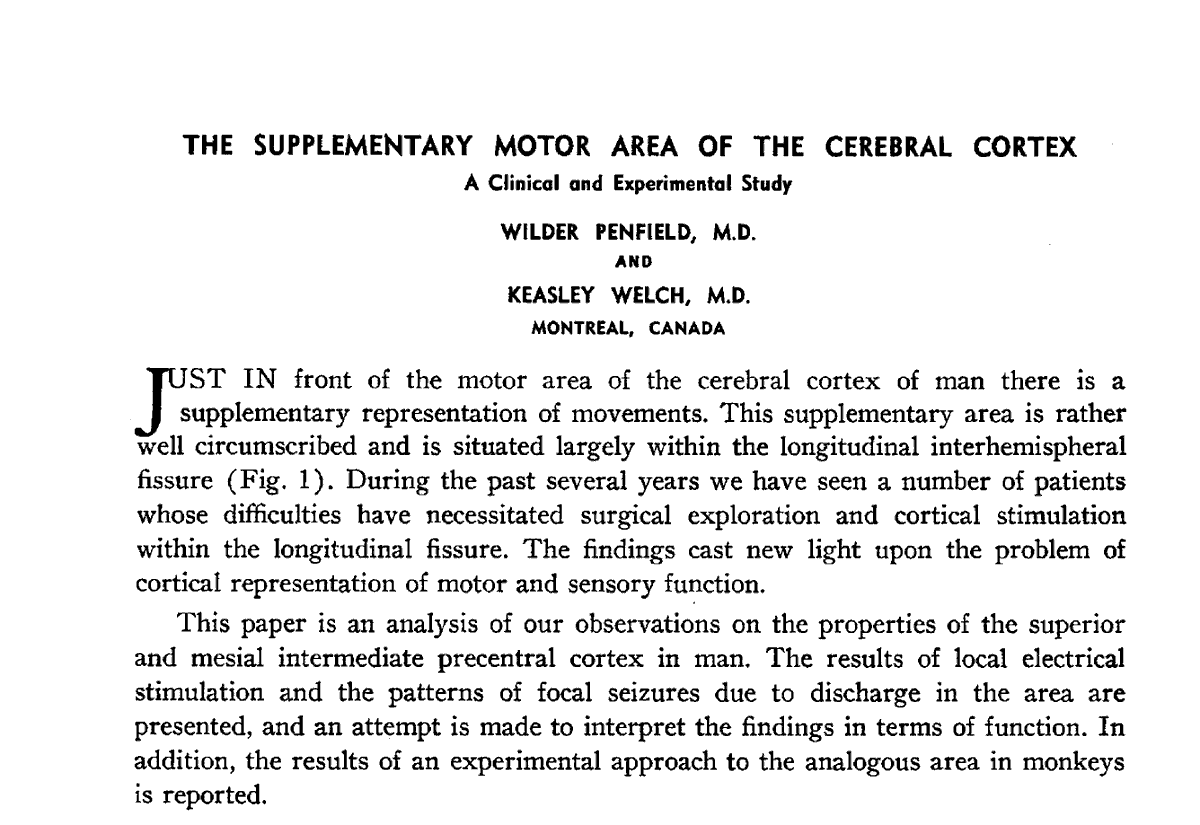
8/ Some of the earliest non-human primate stimulation data demonstrating the presence of SSMA was done by H. Munk, Horsley & Schaefer and Vogt & Vogt. This was then significantly expanded upon by Wilder Penfield.
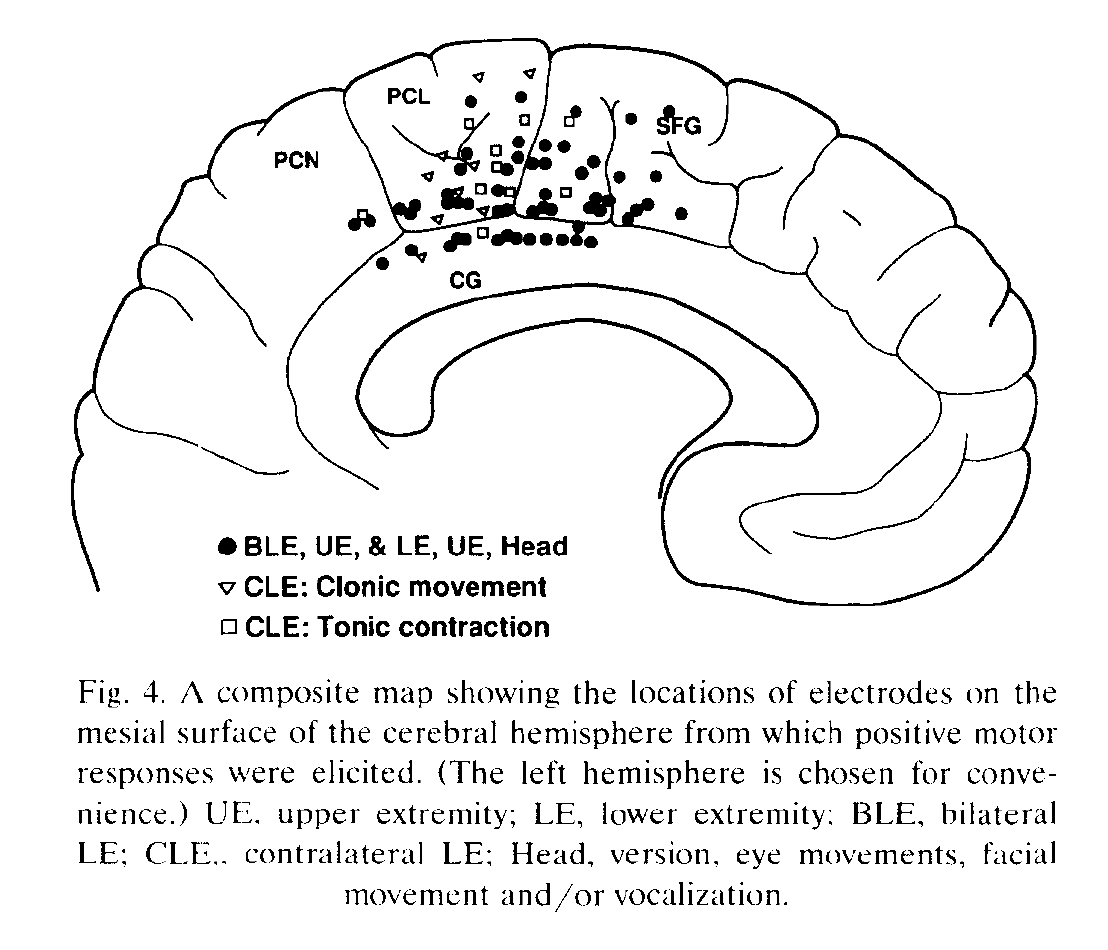
9/ A detailed extra-operative stimulation study via subdural grids by Lim, et al. delineated the somatotopic organization of primary motor area (PMA) and SMA responses on the mesial surface.
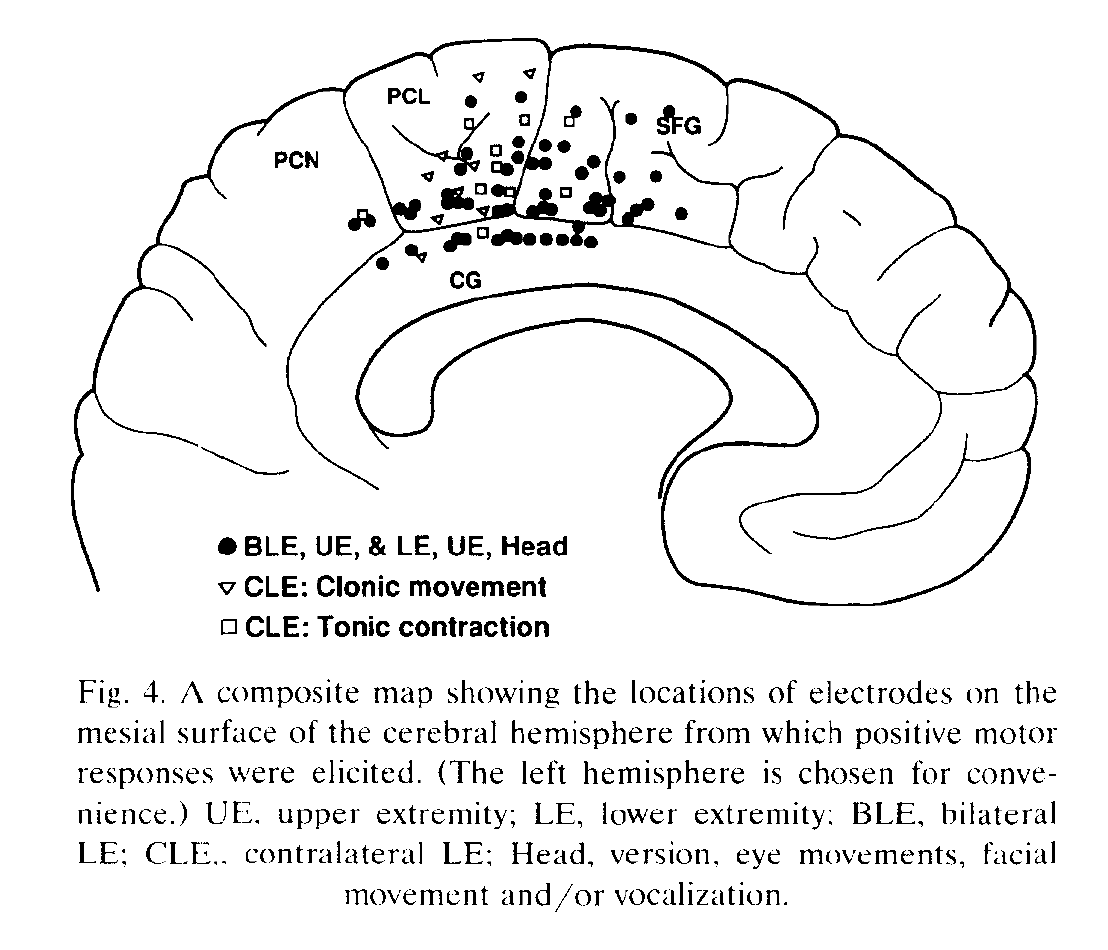
10/ The SSMA has a distinct homunculus with the lower extremity being posterior (abutting the M1 leg area), followed by upper extremity and head representation (supplementary eye field) more anterior.
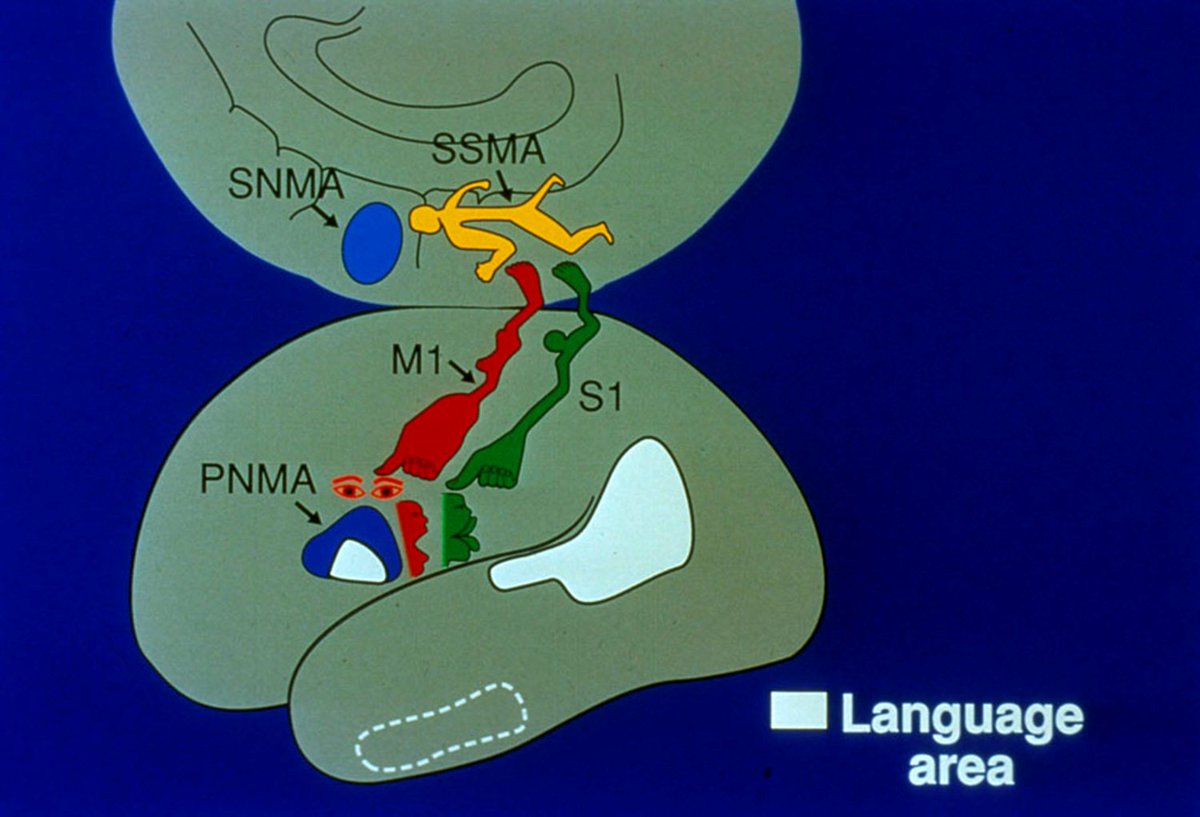
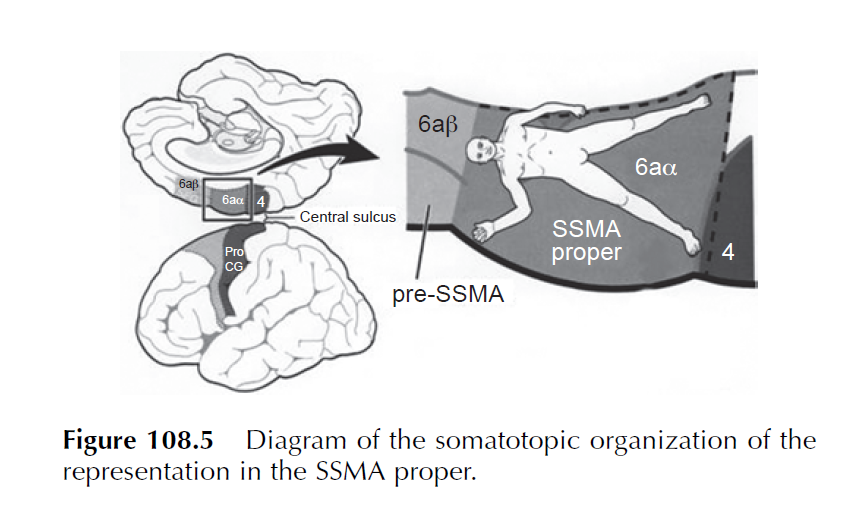
11/ Elicited responses include tonic contraction of contralateral leg (proximal and distal) posteriorly and contralateral leg/arm or bilateral responses more anteriorly on the mesial superior frontal gyrus as shown in the diagram above.
12/ Although the symptomatogenic zone of BA tonic seizures is the SSMA, the epileptogenic zone (EZ) can be within the SSMA or adjacent areas in the mesial frontal, basal frontal, cingulate and mesial parietal regions.
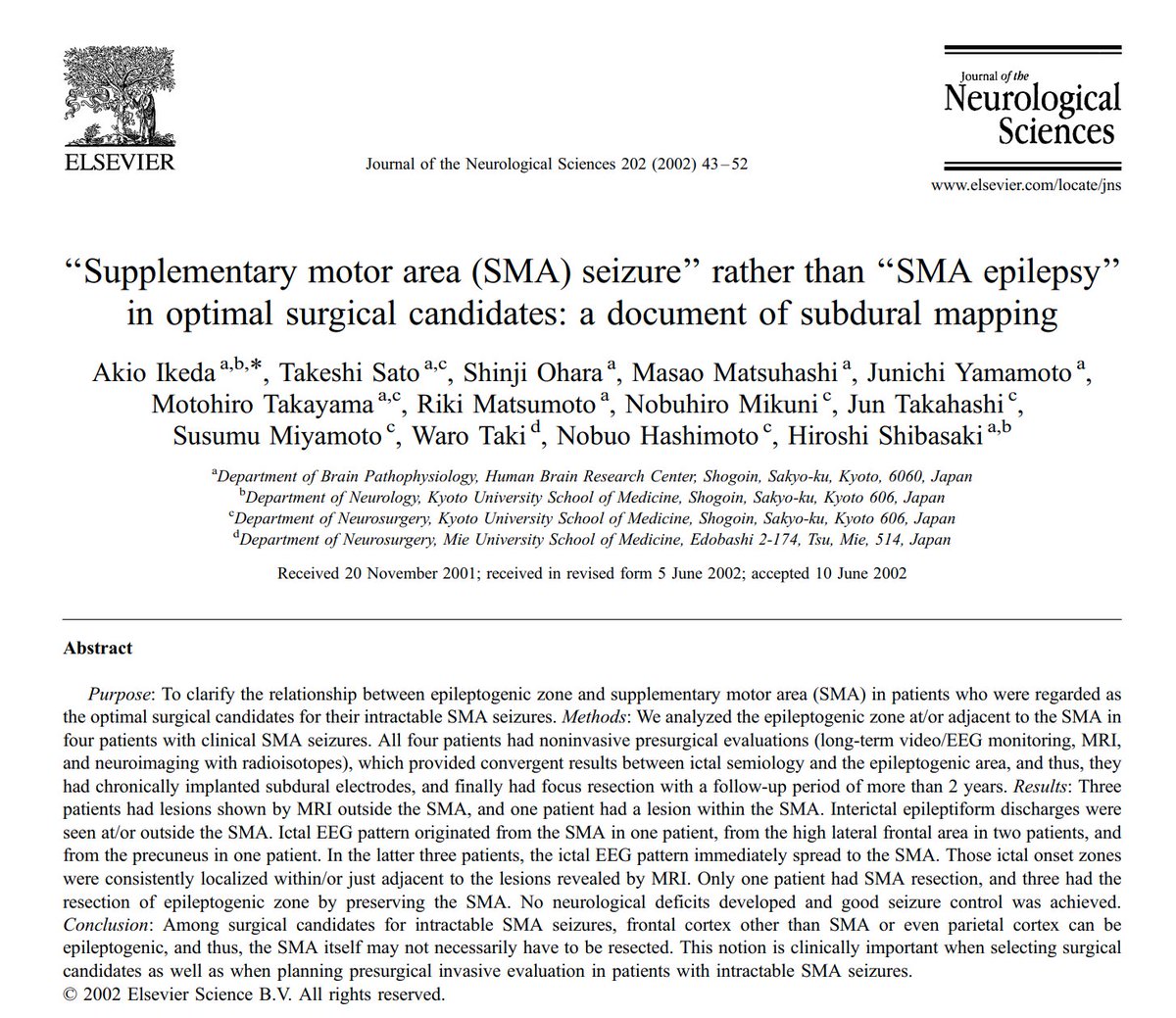
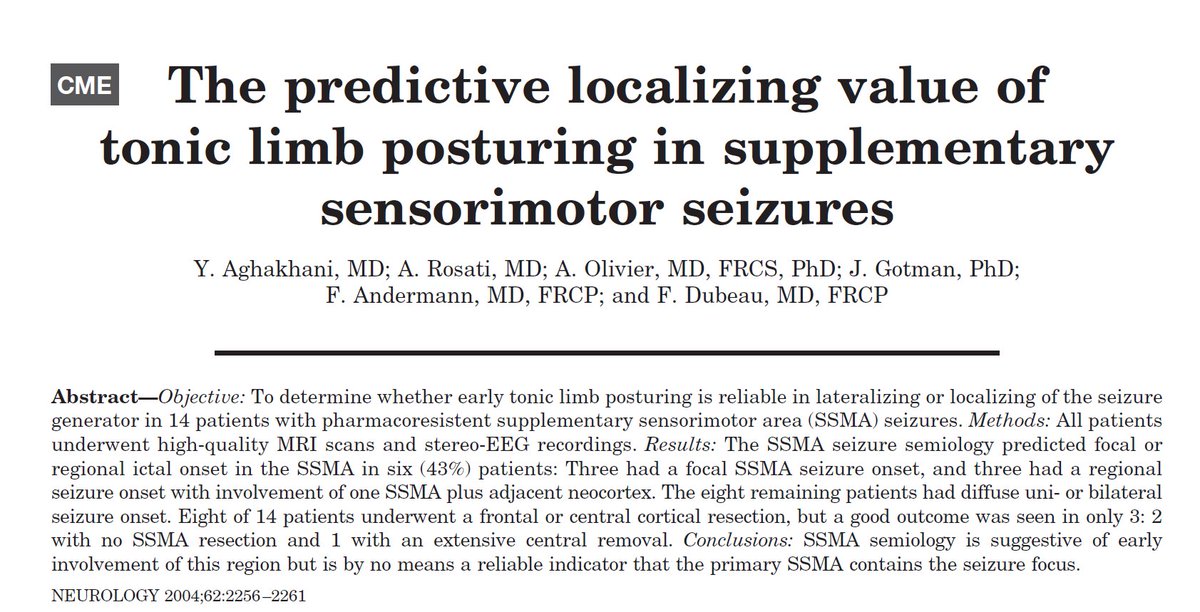
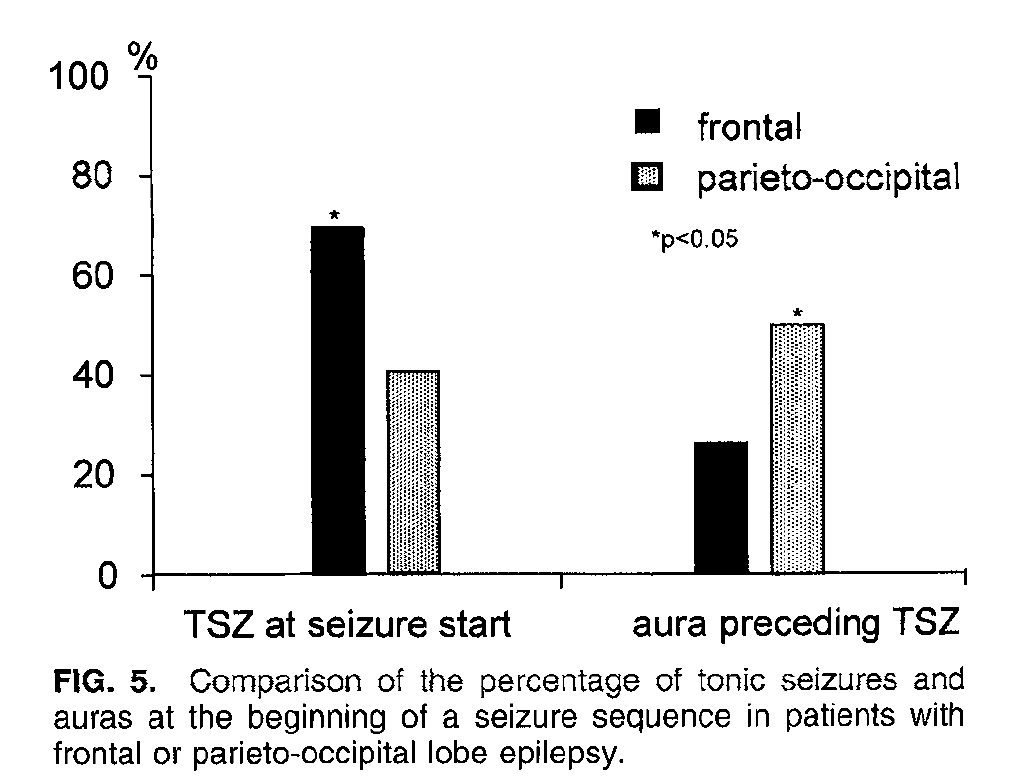
13/ If the tonic seizure is the earliest component of the overall semiology, the EZ is more likely to be frontal (67% v 40%, p<0.05). However, if it is preceded by an aura, extra-frontal onset is more likely.
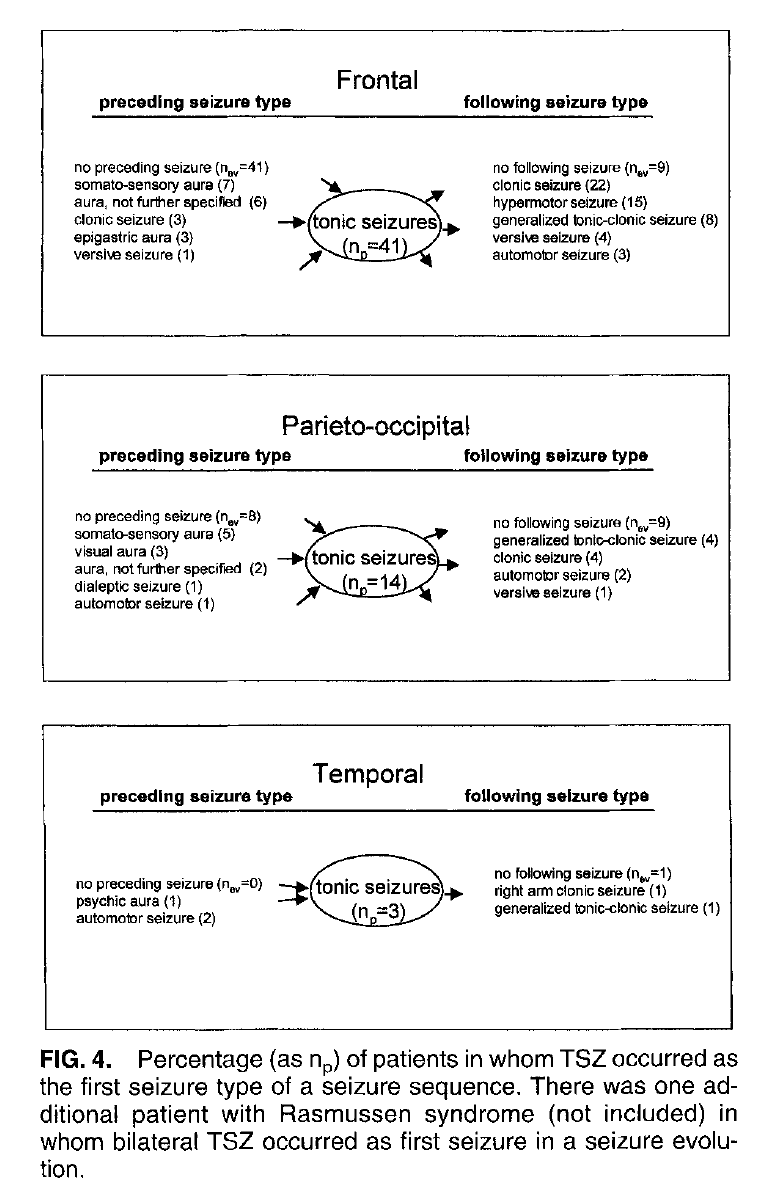
14/ Conclusion- BA asymmetric tonic seizures consist of abrupt & brief tonic contraction of arms/legs with retained awareness +/- speech arrest. Symptomatogenic zone is SSMA, however, EZ may be extra-SSMA depending on overall semiology, although, frontal lobe is the most common.
Loading suggestions...