

A fascinating paper was recently published in @natureMedicine that sheds some light on a 60 year medical mystery: What causes SPACE ANEMIA?
A 🧵 about SPACE ANEMIA & why it might matter for people in terrestrial ICUs too! #SpaceMedicine
1/
A 🧵 about SPACE ANEMIA & why it might matter for people in terrestrial ICUs too! #SpaceMedicine
1/
First off what *is* space anemia?
Since the early days of the space program, a 15-20% decrease in red blood cell mass (RBCM) was noted among returning astronauts. This was initially termed “astronaut anemia” (though it clearly effects cosmonauts too)
pubmed.ncbi.nlm.nih.gov
2/
Since the early days of the space program, a 15-20% decrease in red blood cell mass (RBCM) was noted among returning astronauts. This was initially termed “astronaut anemia” (though it clearly effects cosmonauts too)
pubmed.ncbi.nlm.nih.gov
2/
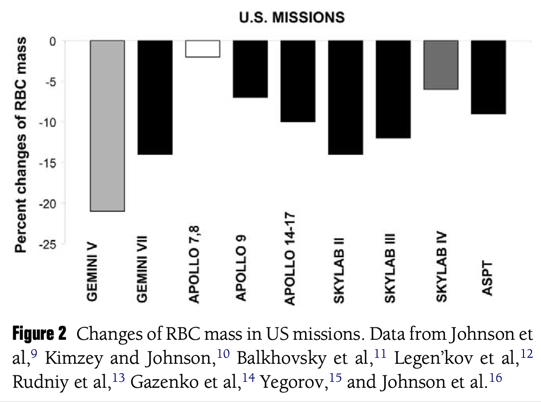
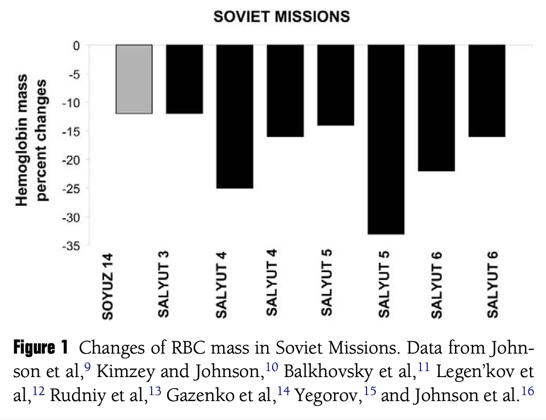
The US saw a 2-21% drop in RBC mass, the Russians saw a 12-33% drop.
This is a significant drop and could pose a problem on long missions. Imagine losing a 1/3 of your CaO2!
Thus a lot of experiments were done over the years to better understand space anemia.
3/
This is a significant drop and could pose a problem on long missions. Imagine losing a 1/3 of your CaO2!
Thus a lot of experiments were done over the years to better understand space anemia.
3/
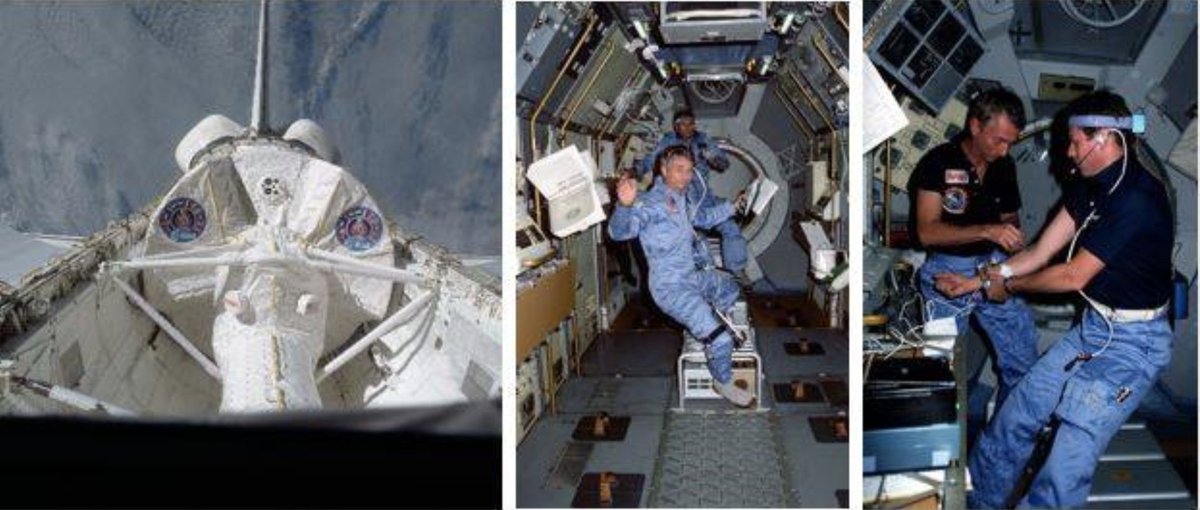
Experiments performed on orbit (such as these blood draws on Spacelab/STS-9 in 1983) revealed a decrease in RBC mass & blood volume.
After returning to earth, astronauts blood volume expands back to normal causing an apparent drop in hemoglobin concentration.
4/
After returning to earth, astronauts blood volume expands back to normal causing an apparent drop in hemoglobin concentration.
4/
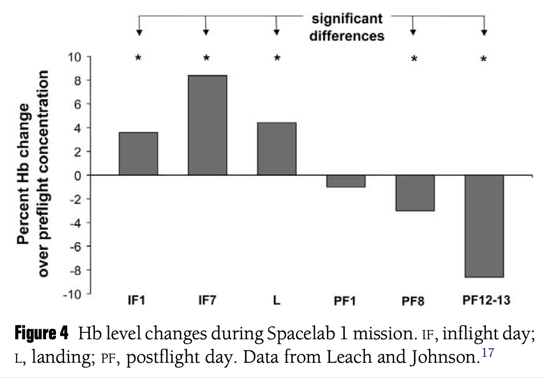
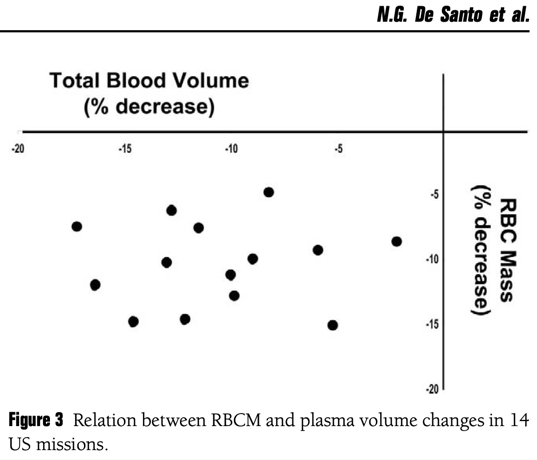
Because humans walk upright, normally most of our blood volume is below the level of the heart. But in microgravity there are significant fluid shifts cephalad.
It was hypothesized that these shifts might alter hematopeosis in space.
5/
It was hypothesized that these shifts might alter hematopeosis in space.
5/
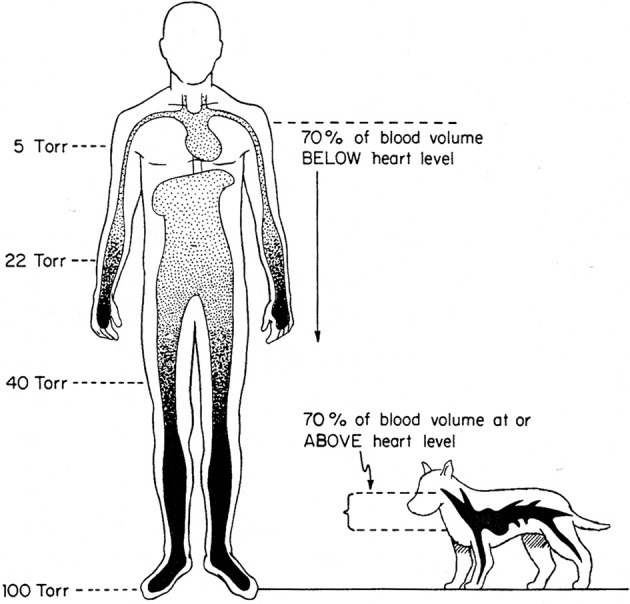
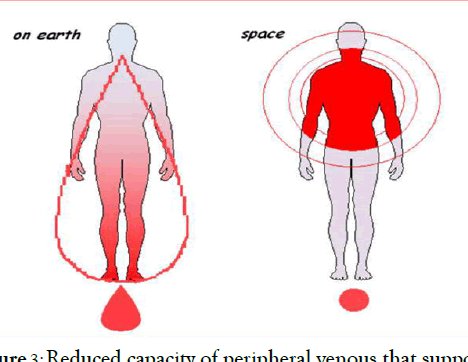
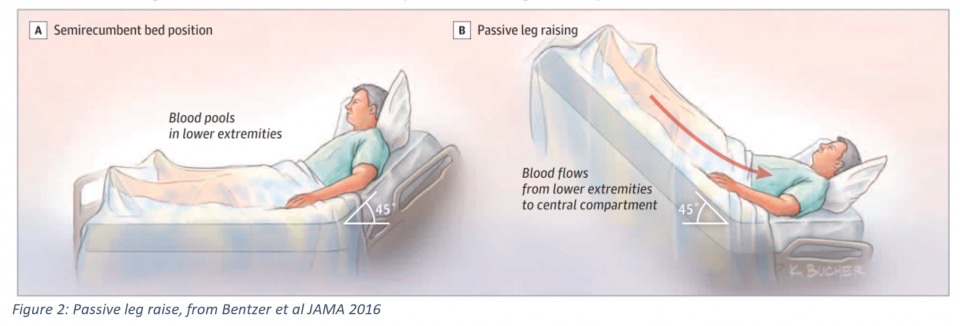
The cephalad fluid shift increases preload and augments cardiac output.
(This is exactly analagous to a passive leg raise maneuver on earth!)
More CO improves O2 delivery and thus might cause decreased EPO signaling.
Could this explain space anemia?
ncbi.nlm.nih.gov
6/
(This is exactly analagous to a passive leg raise maneuver on earth!)
More CO improves O2 delivery and thus might cause decreased EPO signaling.
Could this explain space anemia?
ncbi.nlm.nih.gov
6/
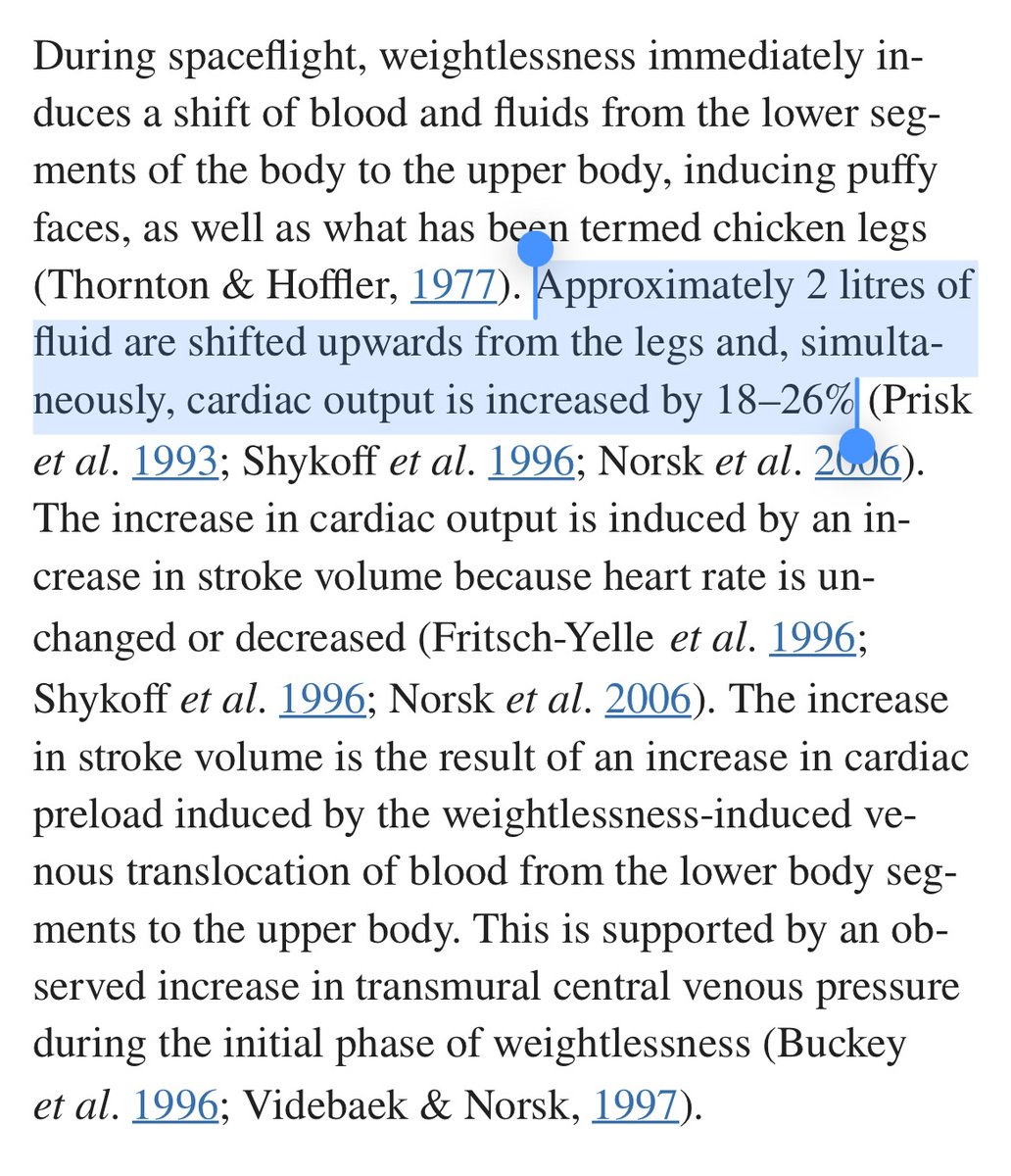

But longer missions showed that there is more to space anemia than transient fluid shifts & a decrease in RBC production.
Normally (on Earth), the body creates and destructs approximately 2 million RBCs every second. Does microgravity disrupt this delicate equilibrium?
7/
Normally (on Earth), the body creates and destructs approximately 2 million RBCs every second. Does microgravity disrupt this delicate equilibrium?
7/
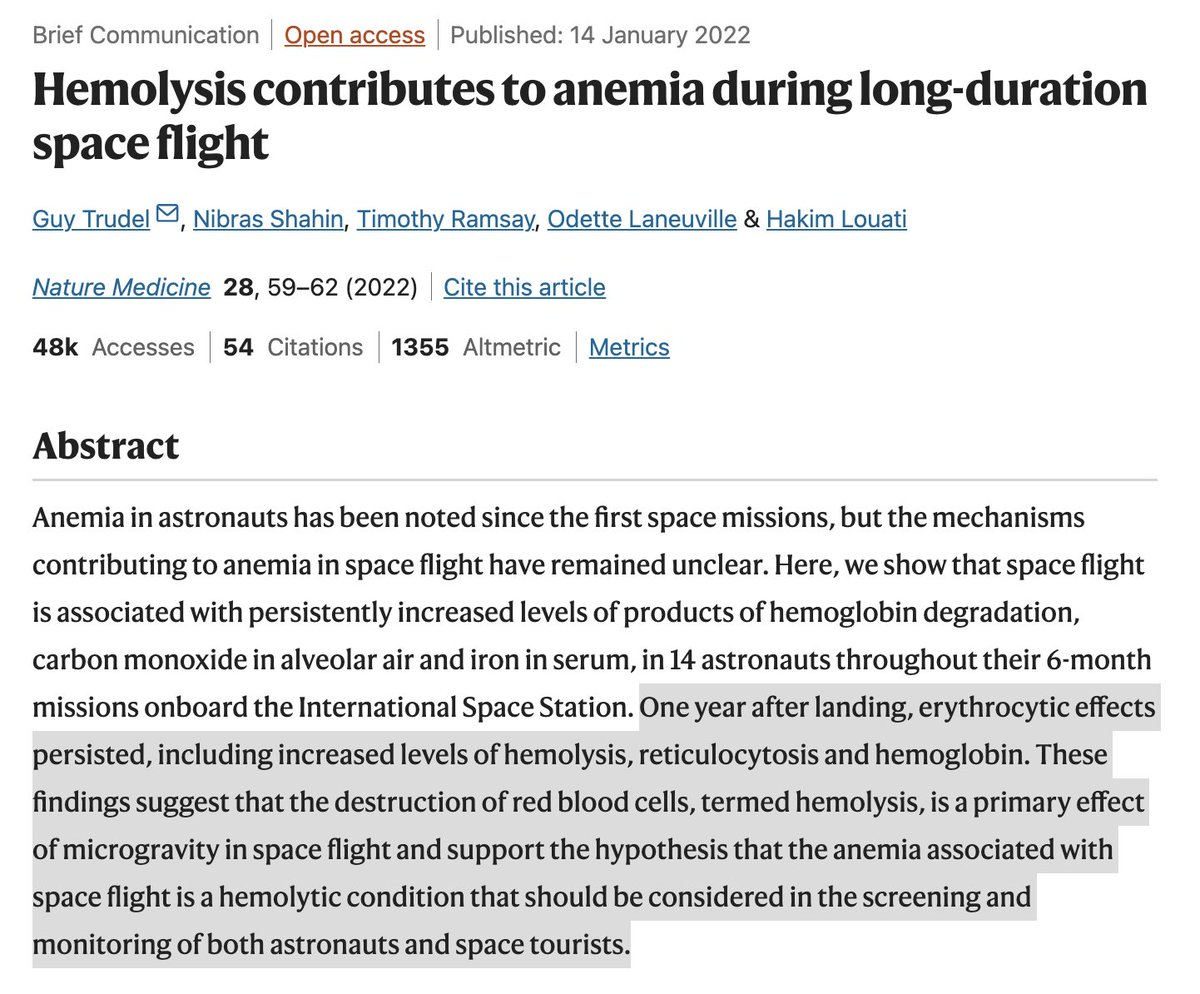
This brings us to the current @naturemedicine paper:
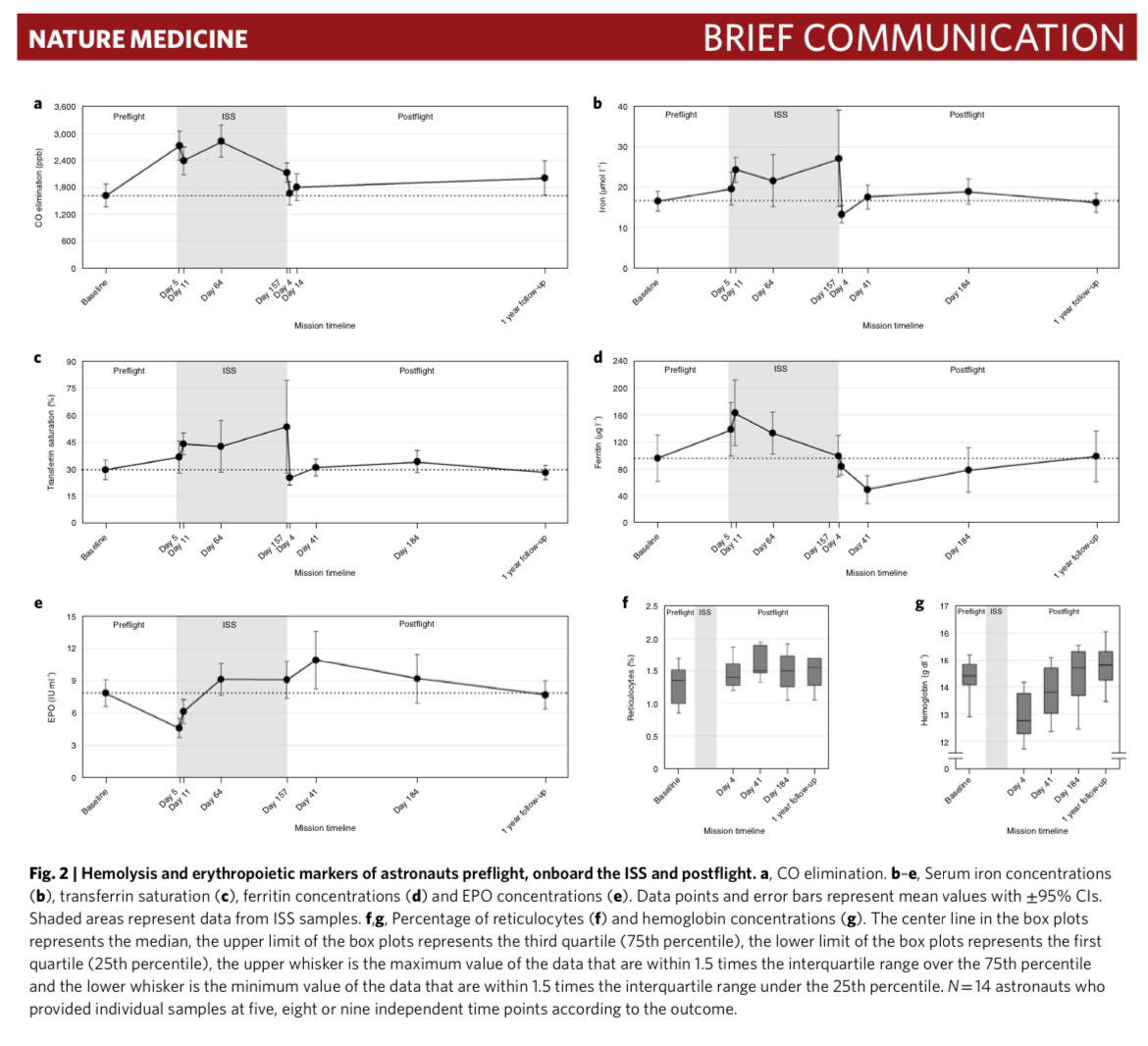
The authors studied 14 astronauts undergoing long duration missions on the ISS found evidence of hemolysis as the cause of space anemia.
nature.com
8/
The authors studied 14 astronauts undergoing long duration missions on the ISS found evidence of hemolysis as the cause of space anemia.
nature.com
8/

The authors found evidence that RBC mass fell due to hemolysis & that this drop in hemoglobin was persistent over long duration space missions.
9/
9/
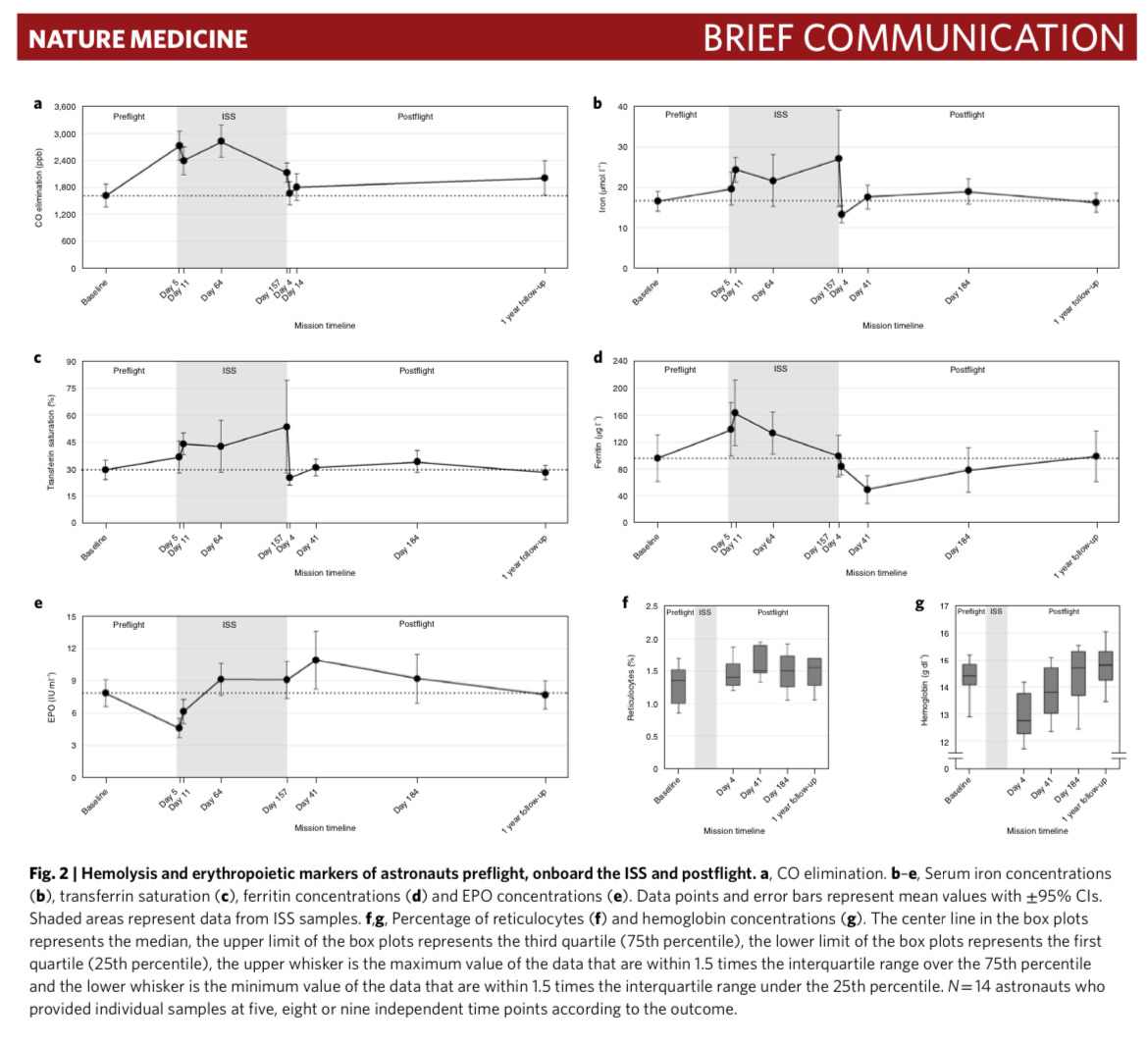
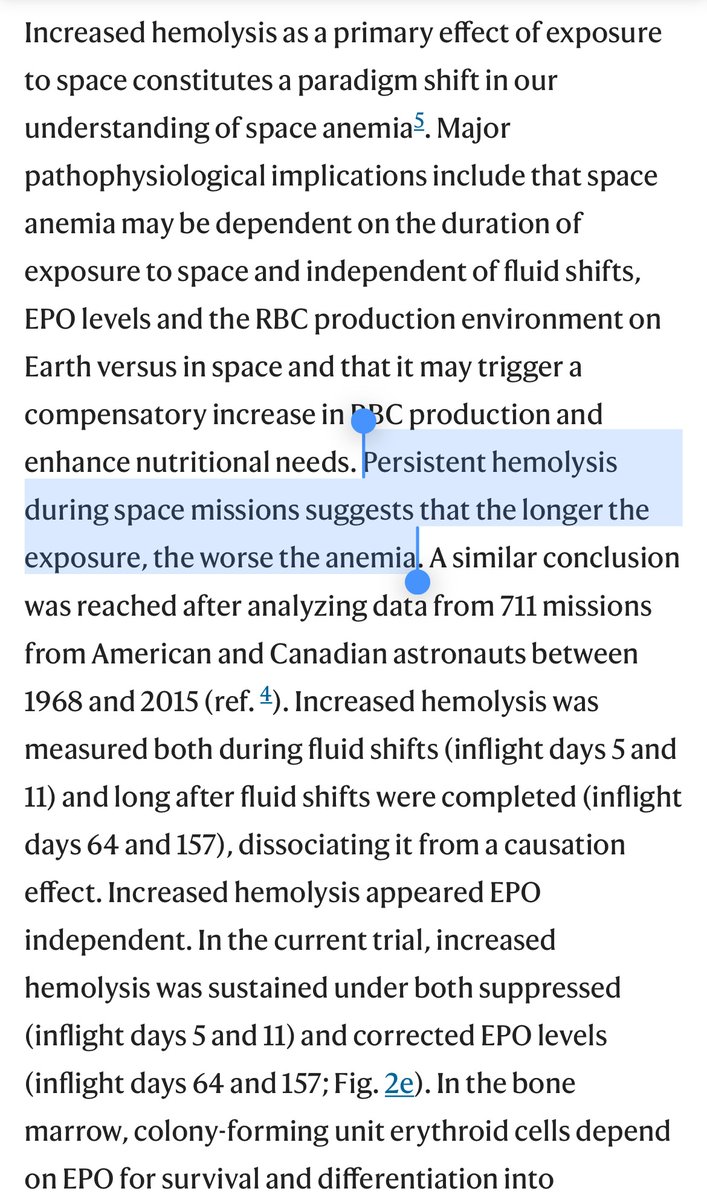
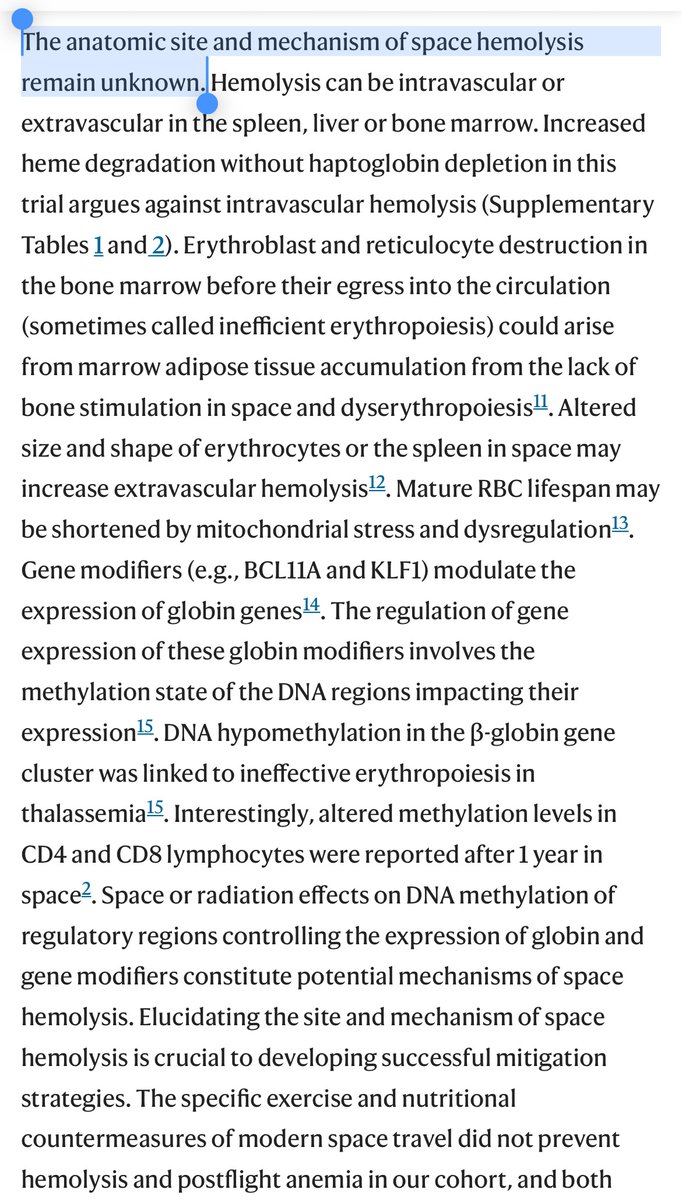
🩸 Neocytolysis is the selective destruction of newly produced circulating RBCs to reduce excess hemoglobin.
🏔️ It occurs when acclimatized people descend from altitude (it also removes RBCs containing fetal hemoglobin after birth.)
👩🚀 It may also occur in space.
10/
🏔️ It occurs when acclimatized people descend from altitude (it also removes RBCs containing fetal hemoglobin after birth.)
👩🚀 It may also occur in space.
10/
The authors speculate that the drop in EPO may cause hemolysis via neocytolysis. This might explain how the fall in EPO leads to hemolysis in astronautes in microgravity. (this is a bit unproven/controversial)
onlinelibrary.wiley.com
11/
onlinelibrary.wiley.com
11/
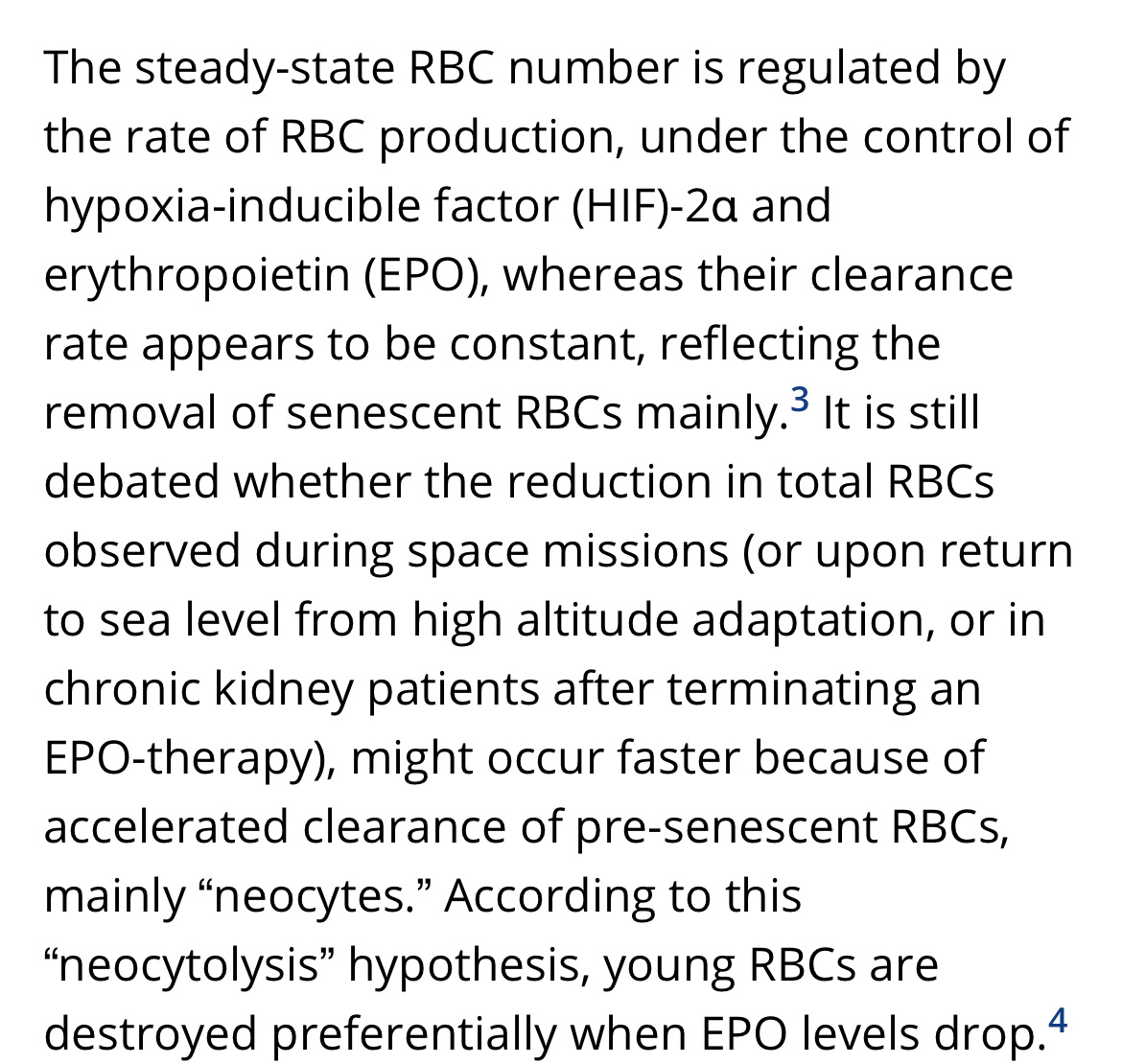
Another theory is that the the lack of gravity alters signaling in bones. Increased marrow adipose has been observed in animal models of microgravity.
(This is harder to study as astronauts aren’t exactly lining up for bone marrow biopsies on orbit!)
12/
(This is harder to study as astronauts aren’t exactly lining up for bone marrow biopsies on orbit!)
12/
Interestingly volunteers who were assigned to 60 days of head-down bedrest - as a surrogate for weightlessness - also experienced hemolysis, albeit to a lesser degree than Astronauts.
Could this be a common mechanism?
nature.com
13/
Could this be a common mechanism?
nature.com
13/
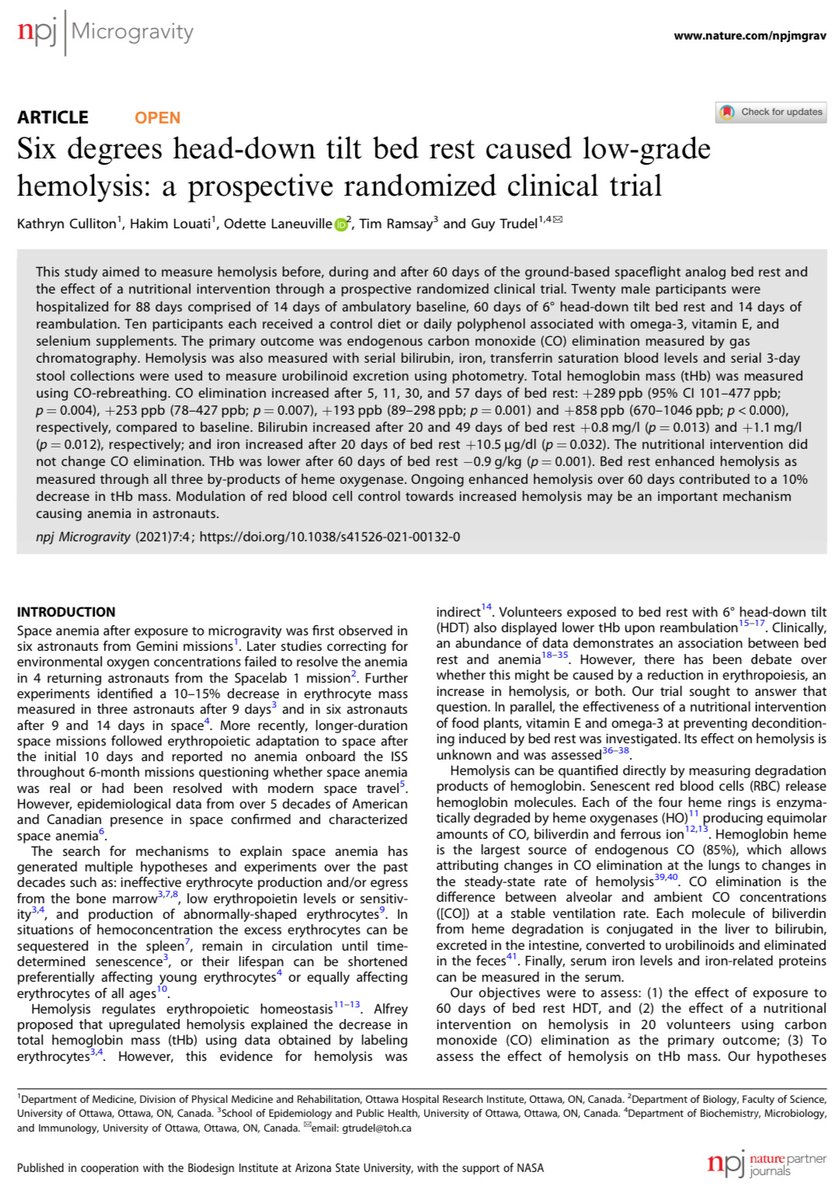
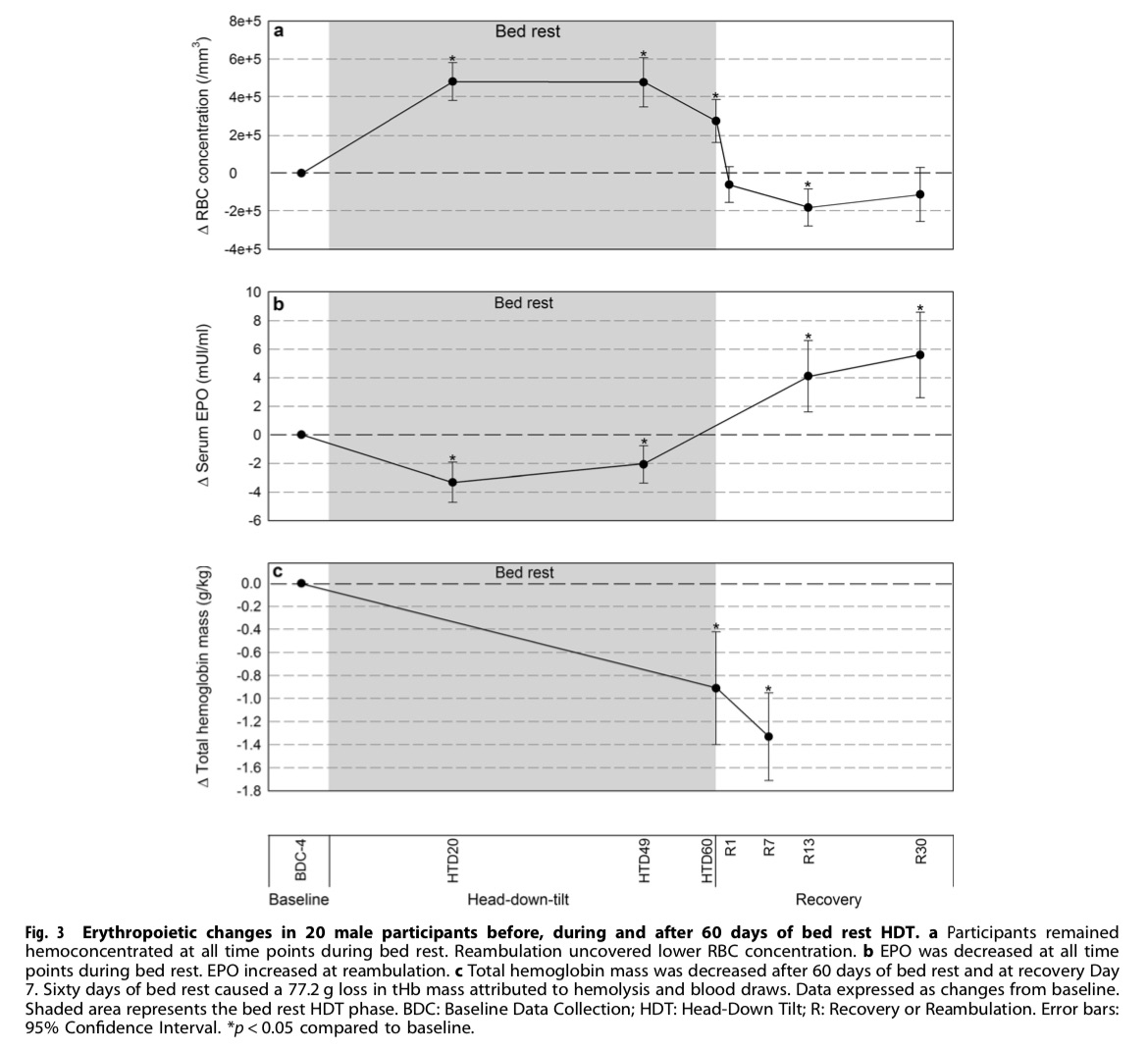

This observation may be relevant to the anemia we see in people in the ICU who are bed bound due to critical illness.
If so, reduced anemia may be yet another benefit of ICU mobility!
14/
If so, reduced anemia may be yet another benefit of ICU mobility!
14/
Whatever the exact mechanism of hemolysis in astronauts, SPACE ANEMIA is an important area of research as we contemplate longer duration space missions, such as to lunar bases and Mars.
Understanding may also yield dividends in preventing anemia in ICU patients on Earth!
15/15
Understanding may also yield dividends in preventing anemia in ICU patients on Earth!
15/15
جاري تحميل الاقتراحات...