

Today's 49th anniversary of #Emergency1975 imposed on June, 25 by PM Indira Gandhi with order issued by the Pres Fakhruddin under Article 352 Article 370 of Constitutional Rights, trampling upon civil & political rights is called the Black Day of democracy.
+
1/n
+
1/n
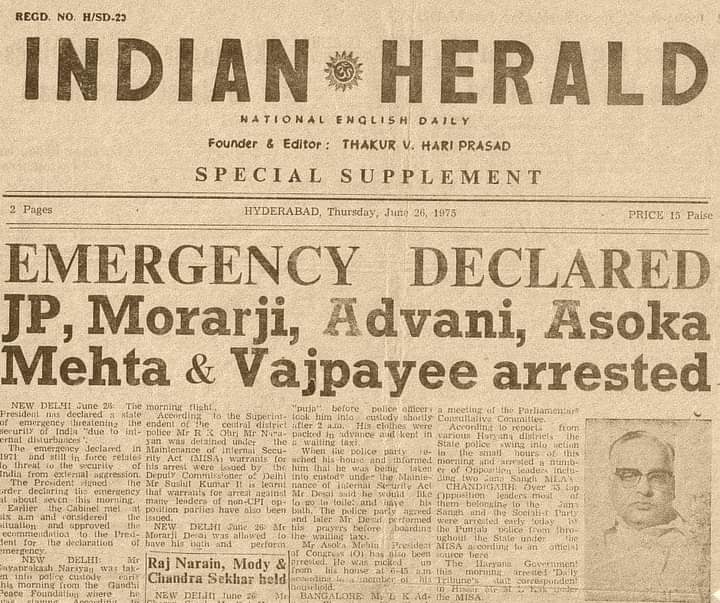

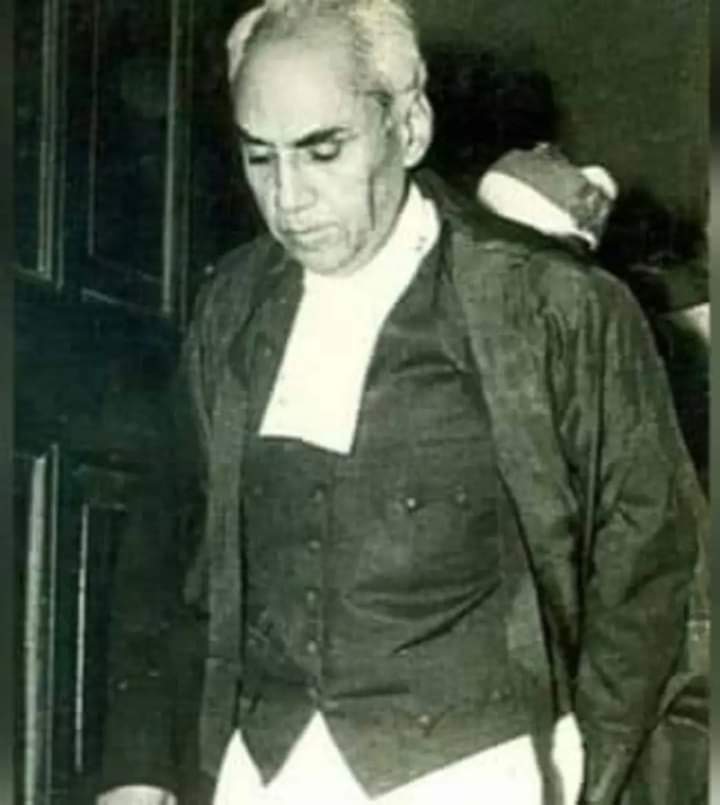
Indira Gandhi's lust for power led to #Emergency1975
On June 12, 1975, Allahabad HC and Justice Jagmohan lal Sinha in his landmark and historical judgement found her guilty of electoral malpractice, guilty of misuse of the government machinery during her election campaign.
+
On June 12, 1975, Allahabad HC and Justice Jagmohan lal Sinha in his landmark and historical judgement found her guilty of electoral malpractice, guilty of misuse of the government machinery during her election campaign.
+
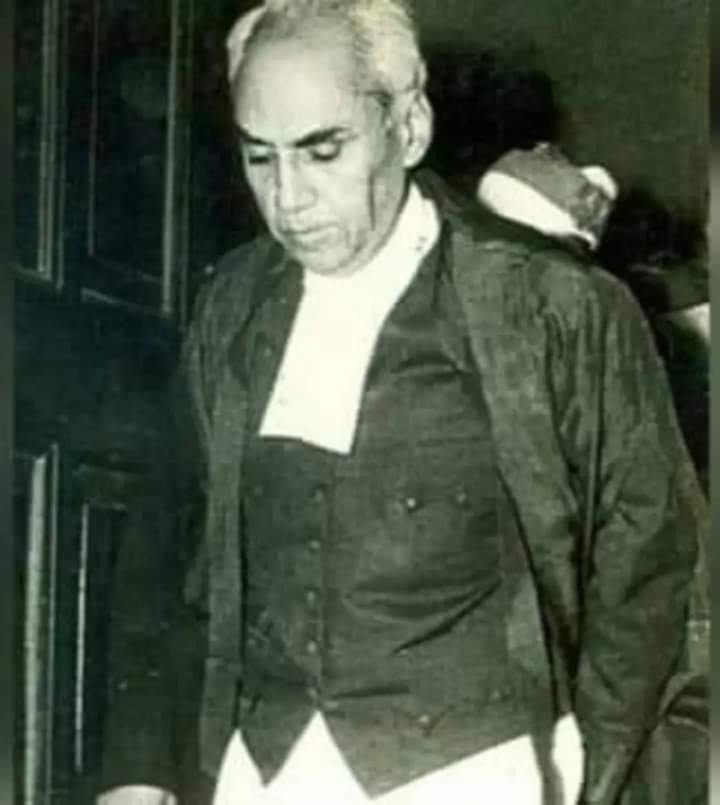
Declared her election void; barring and Disqualified her from contesting elections for next 6 years.
Allahabad High Court declared Gandhi’s election to Parliament as null and void, but she was given a span of 20 days to appeal to the Supreme Court.
+
Allahabad High Court declared Gandhi’s election to Parliament as null and void, but she was given a span of 20 days to appeal to the Supreme Court.
+
On June 24, the Supreme Court put a conditional stay on the High Court order: Gandhi could attend Parliament, but would not be allowed to vote unless the court pronounced on her appeal.
Certain events in 1974 and 1975, Gujarat's Navnirman Andolan Motivated JP movement and
+
Certain events in 1974 and 1975, Gujarat's Navnirman Andolan Motivated JP movement and
+
then George Fernandez halted and striked at Railway. Meanwhile Raj Narayan filed a petition in HC. A day after the SC judgment, an ordinance was drafted declaring a state of internal emergency. In her letter to the President requesting the declaration of Emergency, Gandhi wrote,
“Information has reached us that indicate imminent danger to the security of India.” a huge railway strike, agitations at many places, the defeat of the Congress in Gujarat and, under the dynamic leadership of Jayaprakash Narayan who stood for total revolution, a large scale
+
+
agitation in Bihar. These incidents and the threat of a week-long satyagraha from 25 June 1975 were followed by the devasting court order of 25 June declaring her election invalid, though on trivial grounds, followed by the verdict of the Supreme Court that she
+
+
could continue as Prime Minister without her right to vote in the Parliament must have been crushing for her.
As P.N. Dhar, head of Indira Gandhi's Secretariat has noted that it appeared that she was thinking of resigning, but the Congress defeat in Gujarat also might have
+
As P.N. Dhar, head of Indira Gandhi's Secretariat has noted that it appeared that she was thinking of resigning, but the Congress defeat in Gujarat also might have
+
deterred her from ordering fresh elections. Then there was the influence of her dominating son Sanjay. Moreover, the agitation for her resignation, growing in momentum, was on the point of asking the police and the army not to obey orders.
+
+
This was the last straw on the camel's neck, which luckily for her provided her the opportunity to invoke the constitutional provision for the imposition of internal emergency, and the strategy employed by her to make the pliable President, already obliged to her,
to sign the declaration at 11.45 p.m. on 25 June, and her securing the approval first of the cabinet and then of the Parliament only speaks of her quality of getting things done.
But the fundamental question of why she decided to declare the Emergency remains open.
+
But the fundamental question of why she decided to declare the Emergency remains open.
+
Probably her father would not
have done it, and if she had resigned just after the High Court verdict and dissolved the Parliament, she might have returned to power with a comfortable, if not a thumping majority. .
The two actions that Indira Gandhi took,
+
have done it, and if she had resigned just after the High Court verdict and dissolved the Parliament, she might have returned to power with a comfortable, if not a thumping majority. .
The two actions that Indira Gandhi took,
+
even before the Emergency was approved by the Cabinet, were the arrests of all the important leaders of the opposition, including
Jayaprakash Narayan and Morarji Desai under Maintenance of Internal Security Act (MISA) and the stoppage of most newspapers from publication
+
Jayaprakash Narayan and Morarji Desai under Maintenance of Internal Security Act (MISA) and the stoppage of most newspapers from publication
+
or circulation by cutting off the electric supply, followed by a regular code for press censorship.
The Parliament, in which her party had more than two-thirds majority was summoned to amend the constitution.
As immediate follow-up measures Presidential orders suspended the
+
The Parliament, in which her party had more than two-thirds majority was summoned to amend the constitution.
As immediate follow-up measures Presidential orders suspended the
+
right of detained persons to move any court and that no reasons were to be given for arrests under MISA. A number of arrests of journalists, academicians and persons from other walks of life, including 30 MPs continued to be made during the Emergency under MISA.
+
+
A number of foreign correspondents were expelled and a few organizations like RSS and Anand Marg were banned. On the legal front, the Parliament approved the Emergency and the electoral laws were amended to nullify the court orders regarding Indira Gandhi and gave her immunity
+
+
from civil and criminal proceedings in future.
The Emergency continued under the umbrella of stern press censorship and further arrests of other leaders and thousands of common people. Rather belatedly, a chapter on Fundamental Duties was added to the Constitution to the
+
The Emergency continued under the umbrella of stern press censorship and further arrests of other leaders and thousands of common people. Rather belatedly, a chapter on Fundamental Duties was added to the Constitution to the
+
detriment of Fundamental Rights, and no court could accept any objection to these changes. Protests of various distinguished individuals and organizations, which kept coming, were ignored.
The judiciary was 'committed' and the bureaucracy servile,
+
The judiciary was 'committed' and the bureaucracy servile,
+
signing blank warrants of arrest or writing notes o files according to the dictates of the higher-ups'.
The Emergency had fully seeped into the life of the nation.
(a) The facts of the imprisonment of a number important politician and common people making,
+
The Emergency had fully seeped into the life of the nation.
(a) The facts of the imprisonment of a number important politician and common people making,
+
a total of over one lakh.
(b) Treatment of prisoners in jails: Even VVIP's and VIP's treated as below:
(i) Some like Morarji Desai and Jayaprakash Narayan kept in solitary confinement.
(ii) Mrinal Gore kept in the company of two women - a leper and a lunatic
+
(b) Treatment of prisoners in jails: Even VVIP's and VIP's treated as below:
(i) Some like Morarji Desai and Jayaprakash Narayan kept in solitary confinement.
(ii) Mrinal Gore kept in the company of two women - a leper and a lunatic
+
- and with common toilet facilities.
(iii) Lawrence Fernandes, the brother of George Fernandes, one of the important leaders of the agitation gone underground, made to suffer continuing torture and humiliating behaviour.
(iv) Jayaprakash Narayan released with damaged kidneys
+
(iii) Lawrence Fernandes, the brother of George Fernandes, one of the important leaders of the agitation gone underground, made to suffer continuing torture and humiliating behaviour.
(iv) Jayaprakash Narayan released with damaged kidneys
+
Meteoric rise of Sanjay, to authority as an extra-constitutional source of power with his own caucus and feared and highly respected even by many senior politicians. Indira's apparent fondness for and fear of him.
Reported to have allegedly slapped her six times in a row.
+
Reported to have allegedly slapped her six times in a row.
+
His mother sometimes nicknamed as the 'Empress of India' desiring to see him as her dynastic successor. His personal-finance-raising programme of launching Maruti Ltd., a parent company for other subsidiaries supplying clandestinely imported and junk material at high prices.
+
+
His Four-Point Programme out of which two creating a great furore:
(i) the so-called City Beautification Programme causing large-scale bull-dozing of slums etc..
one instance of which, the operation at
Turkman Gate, hotly denied in his Island of Truth' by Jagmohan,
+
(i) the so-called City Beautification Programme causing large-scale bull-dozing of slums etc..
one instance of which, the operation at
Turkman Gate, hotly denied in his Island of Truth' by Jagmohan,
+
the then Chief of the
Delhi Development Authority. who was blamed for it.
(ii) Sterilization programme with the laudable objective of population control implemented with unimaginable ruthlessness and barbarity making the Emergency an object of anger and hatred.
+
Delhi Development Authority. who was blamed for it.
(ii) Sterilization programme with the laudable objective of population control implemented with unimaginable ruthlessness and barbarity making the Emergency an object of anger and hatred.
+
The protestors against the Emergency included University teachers, certain English newspapers like Indian Express and Statesman, a large number of newspapers,
films, etc. of regional languages. A number of foreigncorrespondents like Mark Tully of BBC were all expelled.
+
films, etc. of regional languages. A number of foreigncorrespondents like Mark Tully of BBC were all expelled.
+
Many renowned foreign individuals and bodies in England and USA and two international organizations, Amnesty International and Socialist International were also critics of it.
The only important bodies which supported thebEmergency were the Communist Party of India (CPI) and
+
The only important bodies which supported thebEmergency were the Communist Party of India (CPI) and
+
the World Peace Council of the then Soviet Union.
It is not that the Emergency was only a dark devil. It had to its credit a few positive achievements also. In its early days the Emergency created a climate of satisfaction among the people, for they had no longer to bear
+
It is not that the Emergency was only a dark devil. It had to its credit a few positive achievements also. In its early days the Emergency created a climate of satisfaction among the people, for they had no longer to bear
+
the travails of strikes and agitations. Their daily lives became peaceful and somewhat less expensive, for the prices of essential commodities showed a downward trend. Strict punctuality in offices, trains and buses became the order of the day.
+
+
Tax- evasion and smuggling declined almost dramatically. Due to raids and subsequent arrests black-marketing also came down.
Sanjay's four-point programme inspired the people, though, as we have noticed, two of these points were later to stoke the fire of the anger of the
+
Sanjay's four-point programme inspired the people, though, as we have noticed, two of these points were later to stoke the fire of the anger of the
+
people. But for the time
being the Emergency was widely welcomed even in a part of the foreign press. The atmosphere of the country seemed for a while to be pervaded by a sense of discipline and the artist M.F. Husain celebrated it by projecting Indira in a painting as
+
being the Emergency was widely welcomed even in a part of the foreign press. The atmosphere of the country seemed for a while to be pervaded by a sense of discipline and the artist M.F. Husain celebrated it by projecting Indira in a painting as
+
Goddess Durga riding a tiger.
But the grim reality of the Emergency was soon unmasked, holding out ominous warnings for the future.
Only a few loyalists' in the country like the CPI and a majority of the Congress members continued to support it.
+
But the grim reality of the Emergency was soon unmasked, holding out ominous warnings for the future.
Only a few loyalists' in the country like the CPI and a majority of the Congress members continued to support it.
+
as did the friendly communist powers and a few African countries. It is probable that wide resentment and discontentment of the Indian people did not penetrate sufficiently the thick screen of media censorship to sound a bell of alarm in the highest corridors of power.
+
+
The sycophants might only have spoken what Indira Gandhi
wanted to hear and kept her in the dark about the excess of the Emergency and the depth of the feelings of the people aroused by them. Moreover, after two postponements of the elections, she might have desired to
+
wanted to hear and kept her in the dark about the excess of the Emergency and the depth of the feelings of the people aroused by them. Moreover, after two postponements of the elections, she might have desired to
+
legitimatize her rule
thorough a General Election and silence her critics abroad.
Or was it, to give her decision to hold the elections a more favourable interpretation, that in the depths of the temple of her sub-conscious, had a veiled little shrine of love for democracy.
+
thorough a General Election and silence her critics abroad.
Or was it, to give her decision to hold the elections a more favourable interpretation, that in the depths of the temple of her sub-conscious, had a veiled little shrine of love for democracy.
+
Whatever be the
cause or a compound of causes, Indira Gandhi, perhaps for the first time, courageously turned down Sanjay's advice, released all political prisoners and ordered General Elections, which were held in March 1977 leading to the stunningly ignominious defeat of
+
cause or a compound of causes, Indira Gandhi, perhaps for the first time, courageously turned down Sanjay's advice, released all political prisoners and ordered General Elections, which were held in March 1977 leading to the stunningly ignominious defeat of
+
Indira Gandhi and the rout of the Congress, sounding loud and clear the doom of the Emergency, hopefully for all times to come.
Very few of the vast number of journalists and other writers on the Emergency, if any, seem to have praised Indira Gandhi for what she did not do.
+
Very few of the vast number of journalists and other writers on the Emergency, if any, seem to have praised Indira Gandhi for what she did not do.
+
As a true democrat she made no attempt to use the huge number of servile bureaucrats and police officials to rig the elections, even in
her own constituency. Sick of all this rigmarole, was she knowingly committing political hararkiri? Or did she think of rigging the election
+
her own constituency. Sick of all this rigmarole, was she knowingly committing political hararkiri? Or did she think of rigging the election
+
but gave up the idea? Whatever be the reason, but in any case she deserves full marks for it.
The Emergency ended with a bang which soon enough dwindled into a whimper. The oath taken by the new cabinet, with Morarji Desai as the Prime Minister, at Mahatma Gandhi's samadhi,
+
The Emergency ended with a bang which soon enough dwindled into a whimper. The oath taken by the new cabinet, with Morarji Desai as the Prime Minister, at Mahatma Gandhi's samadhi,
+
the proceedings of the
celebrated Shah Commission to inquire into the excesses of the Emergency period, the unfortunate thoughtless, and hence extremely brief, arrest of Indira Gandhi - all ultimately came to nought. The parties forming the new government,
+
celebrated Shah Commission to inquire into the excesses of the Emergency period, the unfortunate thoughtless, and hence extremely brief, arrest of Indira Gandhi - all ultimately came to nought. The parties forming the new government,
+
with their different objectives, declared or otherwise, failed to see eye to eye.
The masses, were not amused, and in the next General Elections, which had to be. held prematurely in 1980, Indira Gandhi returned to power. chastened, sober and dignified.
+
The masses, were not amused, and in the next General Elections, which had to be. held prematurely in 1980, Indira Gandhi returned to power. chastened, sober and dignified.
+
And with the intervention of destiny Sanjay too was finally removed from the scene a few months later. The person who ruled as a dictator for only about three years and had been roundly defeated was neither imprisoned, nor executed nor expelled. She was honourably seated
+
+
on the throne again. This could happen only in a dynamic and vibrant democracy like India.
In this connection one can recall
what JP wrote to Indira Gandhi, "Madam, Don't equate yourself with this great nation. India is immortal, you are not." But this is precisely what
+
In this connection one can recall
what JP wrote to Indira Gandhi, "Madam, Don't equate yourself with this great nation. India is immortal, you are not." But this is precisely what
+
she seems to have forgotten.
It would be equally interesting to note what Justice Jag Mohan Sinha, who had pronounced the famous judgement on 25 June 1975 unseating Mrs. Gandhi, has to
say about it now. He calls Emergency as "the blackest period of post-independence India".
+
It would be equally interesting to note what Justice Jag Mohan Sinha, who had pronounced the famous judgement on 25 June 1975 unseating Mrs. Gandhi, has to
say about it now. He calls Emergency as "the blackest period of post-independence India".
+
She led the country to chaos, arrested political opponents, and censored the press.
The Prevention Publication of Objectionable Matter Act, 1976 was passed, empowering District Magistrates to barge into offices of news papers and seize the press on mere suspicion of
+
The Prevention Publication of Objectionable Matter Act, 1976 was passed, empowering District Magistrates to barge into offices of news papers and seize the press on mere suspicion of
+
publication of objectionable news.
Dark days for Indian press
BJP govt when came into power in 1977 appointed the commission on 28 May 1977 under Section 3 of the Commissions of Inquiry Act, 1952. The commission was to report by 31 December 1977, but was later given
+
Dark days for Indian press
BJP govt when came into power in 1977 appointed the commission on 28 May 1977 under Section 3 of the Commissions of Inquiry Act, 1952. The commission was to report by 31 December 1977, but was later given
+
an extension to 30 June 1978.
Shah Commission was a commission of inquiry appointed by Government of India in 1977 to inquire into all the excesses committed in the Indian Emergency (1975 - 77). It was headed by Justice J.C. Shah, a former chief Justice of India.
+
Shah Commission was a commission of inquiry appointed by Government of India in 1977 to inquire into all the excesses committed in the Indian Emergency (1975 - 77). It was headed by Justice J.C. Shah, a former chief Justice of India.
+
On 23 January 1977 Gandhi called elections for March and released all political prisoners. Pranab Mukherjee was secretly facilitated for helping Sanjay for arresting high profile political opponents. In the elections held on 16-20 March 1977 Gandhi's Congress Party suffered a
+
+
massive defeat at the hands of the Janata Party, which took office on 24 March 1977.
The government appointed the commission on 28 May 1977 under Section 3 of the Commissions of Inquiry Act, 1952. The commission was to report by 31 December 1977, but was later given an
+
The government appointed the commission on 28 May 1977 under Section 3 of the Commissions of Inquiry Act, 1952. The commission was to report by 31 December 1977, but was later given an
+
extension to 30 June 1978.
In May 1978, after the second interim report of the commission had been issued, some leaders of the Janata party began demanding that special courts be set up to ensure speedy trial of cases related to the emergency.
+
In May 1978, after the second interim report of the commission had been issued, some leaders of the Janata party began demanding that special courts be set up to ensure speedy trial of cases related to the emergency.
+
Parliament eventually passed an act establishing two special courts on 8 May 1979. However, it was too late. The government fell on 16 July 1979. After Indira Gandhi returned to power in January 1980 the Supreme Court found that the special courts were not legally constituted,
+
+
so no trials were conducted Several of the officials indicted by the Shah commission went on to successful careers
Indira Gandhi attempted to recall copies of the report wherever possible However, suppression was not successful. Some people had the copies of the Report.
+
Indira Gandhi attempted to recall copies of the report wherever possible However, suppression was not successful. Some people had the copies of the Report.
+
The Commission submitted 3 reports namely the First Interim Report, the Second Interim Report and the Third Interim and Final Report.
The darkest day of Indian democracy will never be forgotten.
Tributes to all those who stood up against her draconian dictatorship &
+
The darkest day of Indian democracy will never be forgotten.
Tributes to all those who stood up against her draconian dictatorship &
+
fought to uphold democracy & liberty!
Loading suggestions...