

June 22, 1897
The Chapekar brothers assasination of W.C.Rand in Pune, proves to be a turning point in the history of Indian freedom struggle, as it sparked off the flames of revolution in Maharashtra and beyond.
The Chapekar brothers assasination of W.C.Rand in Pune, proves to be a turning point in the history of Indian freedom struggle, as it sparked off the flames of revolution in Maharashtra and beyond.
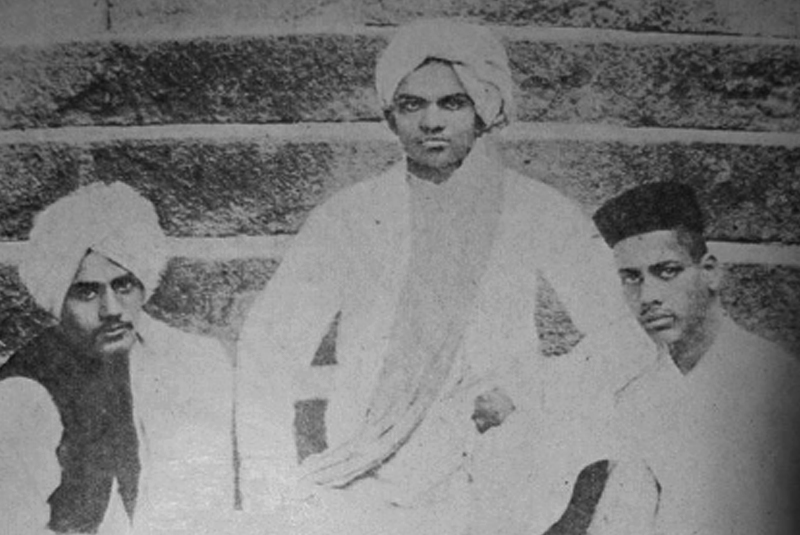
The Chapekar brothers hailed from Chapa, one of the small hamlets adjoining to Chinchwad, which in a way explains their surname too. The eldest Damodar, was born in 1868, to Dwarka and Hari in a large joint family of twenty that included his parents, aunts, uncles and above all his grandfather, Vinayak, the patriarch. The other two brothers were Balakrishna and Vasudeo.
Though born into relative prosperity, the huge family would fall on hard days, mainly due to Vinayak’s rather unsuccessful business ventures. Damodar had memories of the trip he had made to Varanasi, with his grandfather, and taking a dip in the holy Ganga.
His father Hari, had learnt Sanskrit, and was prepared to take up the profession of a Kirtankar, people who usually made their living singing Kirtans, travelling from place to place.
His father Hari, had learnt Sanskrit, and was prepared to take up the profession of a Kirtankar, people who usually made their living singing Kirtans, travelling from place to place.
However taking up the profession of a Kirtankar was looked down upon with disdain then. Hari’s brothers too refused to accompany him, and soon the once large joint family began to disintegrate.
However his rather sloppy way of dressing, his inability to get on with others meant, he really could not make good use of his talents, and ended up begging on the streets. Hari’s mother and father soon died, and he himself was poverty stricken now.
However his rather sloppy way of dressing, his inability to get on with others meant, he really could not make good use of his talents, and ended up begging on the streets. Hari’s mother and father soon died, and he himself was poverty stricken now.
For Hari Vinayak Chapekar, the only way to make a living now, was by singing kirtanas. With no professional musicians as accompaniment, he began to train his sons, Damodar, Balakrishna and Vasudev to play the instruments.
The brothers had no formal education, but learnt a lot travelling from place to place, performing in the durbars of princes and assemblies of eminent scholars. Hari Vinayak himself is credited with writing the Satyanarayana Katha in Marathi.
The brothers had no formal education, but learnt a lot travelling from place to place, performing in the durbars of princes and assemblies of eminent scholars. Hari Vinayak himself is credited with writing the Satyanarayana Katha in Marathi.
The brothers life however would be turned upside down by the end of 1896. Or rather specifically the first half of 1897. Plague had struck Pune somewhere in the end of 1896, by January 1897, it had spread like an epidemic in the city.
By February itself around 657 people died of, those who could surive deserted the city. The bustling, once former capital of the Peshwas had now turned into a ghost city, with one half of it’s inhabitants dead, and another half running away to save their own lives.
By February itself around 657 people died of, those who could surive deserted the city. The bustling, once former capital of the Peshwas had now turned into a ghost city, with one half of it’s inhabitants dead, and another half running away to save their own lives.
By March 1897, the Government decided to combat the plague, and prevent it from spreading. An ICS officer W.C.Rand was put in charge of a special comittee, that would oversee Pune City, the suburbs and the cantonment area.
Orders were given not to offend religious sensitivites, examine Muslim or upper caste Hindu women, and not to enter the private quarters of any home.
Orders were given not to offend religious sensitivites, examine Muslim or upper caste Hindu women, and not to enter the private quarters of any home.
And this is where the British lost it effectively. Not following the instructions, the officers began to adopt harsh measures to combat the epidemic. Officers barged into private homes, to literally pull out the infected patients from their beds.
Most families would not even allow outsiders into their kitchens, and here were the officers barging into the private quarters, grabbing the infected patients, sometimes forcibly out of their beds.
Most families would not even allow outsiders into their kitchens, and here were the officers barging into the private quarters, grabbing the infected patients, sometimes forcibly out of their beds.
Infected patients were segregated from families, forcibly, personal possesions in homes were destroyed to prevent further spreading of epidemic. Funerals were not allowed, until all deaths were registered, the head of the family had to ensure this was done.
It was basically a case of good intentions, poor execution, where sensitivity and care was needed, the Government treated it like a military operation.
It was basically a case of good intentions, poor execution, where sensitivity and care was needed, the Government treated it like a military operation.
The infected patients needed proper care, but they were often treated like common criminals. What is worse, any one disobeying the draconian orders, were liable to criminal prosecution.
The Government employed military tactics, treating it like a war, where a human, healing touch was needed. The entire operation went on to till May 1897, 2000 odd people were dead by the end of it, Pune was devastated in more ways than one.
The Government employed military tactics, treating it like a war, where a human, healing touch was needed. The entire operation went on to till May 1897, 2000 odd people were dead by the end of it, Pune was devastated in more ways than one.
While Rand claimed that care was taken to ensure, the feelings and traditions of people, were not hurt, the feedback coming out indicated the opposite. The ordinary people of Pune were furious at the behaviour of the officers, their utter disregard for their sensitivites.
Intimidating innocent people, barging into their private quarters without permission, taking away valuable possesions, in effect most of the British officers behaved like low life bullies.
In Rashtra Peth locality, some of the residents, beat up the British officers in anger.
In Rashtra Peth locality, some of the residents, beat up the British officers in anger.
Noted lawyer, dramatist Narasimha Chintan Kelkar slammed the high handed,arrogant approach of the British officers by which they rode rough shod over the feelings of the local residents.
Bal Gangadhar Tilak, was outright critical of a sullen tyrant like Rand, being put in charge of the operation, claiming he had no idea of the sensitivities of the natives, and this was not a war either.
His contemporary Gokhale, was equally vociferous in his criticsm, alleging that the British officers behaved no better than medieval invaders with the citizens of Pune.
Bal Gangadhar Tilak, was outright critical of a sullen tyrant like Rand, being put in charge of the operation, claiming he had no idea of the sensitivities of the natives, and this was not a war either.
His contemporary Gokhale, was equally vociferous in his criticsm, alleging that the British officers behaved no better than medieval invaders with the citizens of Pune.
The ham handed, sledge hammer way in which Rand handled the entire operation had turned out to be a fiasco. It just alienated the people even more, and the anger against the British Raj that was on slow burn, was now turning into a fire.
June 22, 1897
The celebrations of the Diamond Jubilee of Queen Victoria’s rule, were going on in full swing. Not a particularly wise thing to do, considering the anger against the British Raj then.
On one side, plague, famine had devastated the country, and on the other side, this kind of vulgar celebrations of opulence, was like rubbing salt into the wound. And added to it the high handed behavior of the British officers during the plague made it worse.
The celebrations of the Diamond Jubilee of Queen Victoria’s rule, were going on in full swing. Not a particularly wise thing to do, considering the anger against the British Raj then.
On one side, plague, famine had devastated the country, and on the other side, this kind of vulgar celebrations of opulence, was like rubbing salt into the wound. And added to it the high handed behavior of the British officers during the plague made it worse.
Most of the British and European officers were at the Government House in Pune for celebrations. Damodar, the eldest of the lot, felt this was the best time to strike, considering the who’s who of the British elite, would be there, most of all their target Rand.
Along with his brother Balakrishna, he choose a spot near the Ganesh Khind Road, to fire the shots. They hid their rather heavy weapons under a rock to avoid suspicion. The sun had set, the shadows were lengthening, on one side, the Government House was in a festive mood.
Along with his brother Balakrishna, he choose a spot near the Ganesh Khind Road, to fire the shots. They hid their rather heavy weapons under a rock to avoid suspicion. The sun had set, the shadows were lengthening, on one side, the Government House was in a festive mood.
In sharp contrast, stood the two brothers their faces pensive and grim, covered by the darkness, fists clenched. Both of them held their breath waiting to pounce on their quarry.The deathly silence outside was in sharp contrast to the gaiety and festivities in the building.
At around 7:30 PM, the horse drawn carriage could be seen, coming. Damodar’s breath quickened, the grip around the sword became even tighter. The quarry was in the carriage, the man they despised, Rand, seated cozily in it, blissfully unaware of the danger.
As the carriage made it’s way to the yellow bungalow, Damodar ran behind it now. Covering long strides, fist clenched tightly around the sword. He chased the carriage, stalking it from behind.
As the carriage made it’s way to the yellow bungalow, Damodar ran behind it now. Covering long strides, fist clenched tightly around the sword. He chased the carriage, stalking it from behind.
As the carriage turned around, the corner, he yelled out to his brother “Gondya Ala Re”, a signal to act. Damodar raised the flap of the carriage, and fired, the shots hit, Rand straight in the chest.
Balakrishna who had caught up by now, fired a couple more at one of the occupants, whom he suspected to be discussing with Rand. The hapless occupant sitting near Rand, was his military escort, Lt Ayerst, who died right on the spot, as the bullets penetrated his skull.
Balakrishna who had caught up by now, fired a couple more at one of the occupants, whom he suspected to be discussing with Rand. The hapless occupant sitting near Rand, was his military escort, Lt Ayerst, who died right on the spot, as the bullets penetrated his skull.
A grievously bleeding and unconscious Rand, was taken to the Sassoon Hospital where he would pass away on July 3rd. The police soon launched a manhunt, and aided by the Dravid brothers, Damodar Hari was traced out and arrested.
In an October 1897 statement, Damodar openly claimed that he was seeking revenge for what he believed were desecration of their holy palaces. He had no qualms whatsoever over what he did, and his statement was taken as a confession.
In an October 1897 statement, Damodar openly claimed that he was seeking revenge for what he believed were desecration of their holy palaces. He had no qualms whatsoever over what he did, and his statement was taken as a confession.
Charged under Section 302., Damodar was hanged on 18 April, 1898, the noose falling around his neck, as his body went limp. Almost a year later in January 1899, Balakrishna Hari, was finally caught by the police, after he managed to evade them for a long time, betrayed by a close friend of his.
The youngest of the lot, Vasudeo meanwhile shot the Dravid brothers on the streets of Pune, along with this friends Mahadev Vinayak Ranade and Khando Vishnu Sathe. On the same evening of February 1899, the trio also tried to assasinate the chief police constable Rama Pandu.
However the attempt was aborted, and the trio was caught. After a trial, the brothers and Ranade were found guilty and ordered to be hanged. Sathe being a juvenile was given 10 years of Rigorous Imprisonment.
And one by one they climbed on to the scaffold, proud and defiant, as the noose tightened around their necks.
Vasudev on May 8, 1899, Ranade on May 10, 1899 and finally Balakrishna on May 12, 1899. The voices fell silent, but the thoughts would fire a generation.
Vasudev on May 8, 1899, Ranade on May 10, 1899 and finally Balakrishna on May 12, 1899. The voices fell silent, but the thoughts would fire a generation.
The assasination of Rand by the Chapekar Brothers, fired up the revolutionary flame in Maharashtra. Tilak prominently covered it in Kesari, and one of those who plunged headlong into the movement was Vinayak Damodar Savarkar. The brothers would be an inspiration for a whole generation of revolutionaries in Maharashtra.
On this date when the Chapekar Brothers fired the shots against Rand that ignited the revolution and proved to be a turning point, #Naman and salute to the heroes for their sacrifice.
#LestWeForget
#LestWeForget
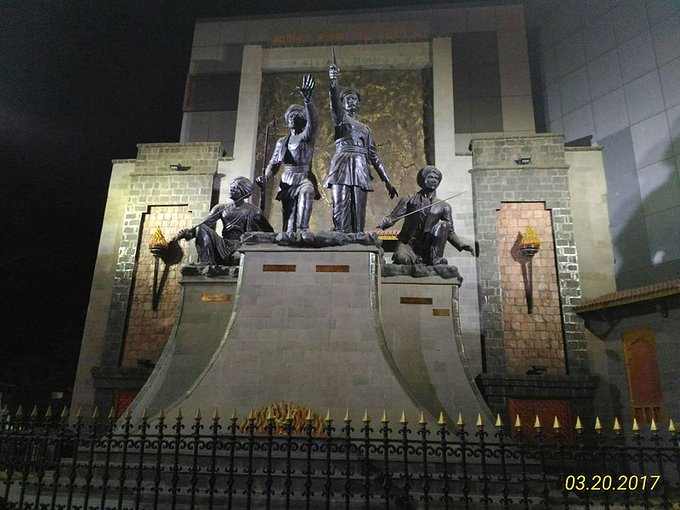
One movie that is worth a watch is 22 June, 1897 directed by Nachiket Patwardhan, and written along with Shankar Nag. Has an excellent cast drawn from Marathi theater, with Sadashiv Amrapurkar playing the role of Tilak.
youtube.com
youtube.com
Also Gondya Ala Re, a web series from Zee, on the Chapekar Brothers.
youtube.com
youtube.com
My article and podcast on the Chapekar Brothers, do check out and share.
historyunderyourfeet.wordpress.com
podcasters.spotify.com
historyunderyourfeet.wordpress.com
podcasters.spotify.com

podcasters.spotify.com/pod/show/ratna…
June 22, 1897- Chapekar Brothers by History Under Your Feet
The assasination of Rand by the Chapekar Brothers in Pune, on June 22, 1897 ignited the revolutionar...

historyunderyourfeet.wordpress.com/2019/06/22/jun…
June 22, 1897- Chapekar Brothers
Chinchwad now an upcoming residential, and commercial suburb, was a small, dusty village, during the...
Loading suggestions...