

Cybersecurity Beginners/Enthusiasts/Professionals pick any of this abbreviations and educate us on it 👇
*CIA - Confidentiality, Integrity, Availability
*IDS - Intrusion Detection System
*IPS - Intrusion Prevention System
*WAF - Web Application Firewall
*PII - Personal Identifiable Information
*DoS - Denial of Service
*DDoS - Distributed Denial of Service
*DNS - Domain Name System
*ZTA - Zero Trust Architecture
*NAT - Network Address Translation
*CTF - Capture the Flag
*ACL - Access Control List
*CDN - Content Delivery Network
*CVE - Common Vulnerabilities and Exposures
*RAT - Remote Access Trojan
*APT - Advanced Persistent Threat
*ATP - Advanced Threat Protection
*SSO - Single Sign-on
*URL - Uniform Resource Locator
*TLS - Transport Layer Security
*ARP - Address Resolution Protocol
*RDP - Remote Desktop Protocol
*FTP - File Transfer Protocol
*SFTP - Secure File Transfer Protocol
*HTTP - Hypertext Transfer Protocol
*HTTPS - Hypertext Transfer Protocol Secure
*LDAP - Lightweight Directory Access Protocol
*MFA - Multi-factor Authentication
*IAM - Identity and Access Management
*SIEM - Security Information and Event Management
*SAM - Security Account Manager
*MDM - Mobile Device Management
*XXS - Cross Site Scripting
*XSRF - Cross Site Request Forgery
*DRaaS - Disaster Recovery as a Service
*DLP - Data Loss Prevention
*TCP - Transmission Control Protocol
*SNMP - Simple Network Management Protocol
*L2TP - Layer 2 Tunneling Protocol
*SOC - Security Operations Center
*EDR - Endpoint Detection and Response
*MDR - Managed Detection and Response
*KMS - Key Management Service
*TOR - The Onion Router
*UEBA - User and Entity Behavior Analytics
*UEFI - Unified Extensible Firmware Interface
*RFI - Remote File Inclusion
*SSID - Service Set Identifier
*LAN - Local Area Network
*WAN - Wide Area Network
*VLAN - Virtual Local Area Network
*PGP - Pretty Good Privacy
*MiTM - Man in the Middle Attack
*CA - Certificate Authority
*MAC - Mandatory Access Control
*PUA - Potential Unwanted Application
*ECDH - Elliptic Curve Deffie-Hellman
*BYOD - Bring Your Own Device
*GDPR - General Data Protection Regulation
*ADFS - Active Directory Federation Service
*EPP - Endpoint Protection Platform
*DMARC - Domain Based Message Authentication, Reporting and Conformance
*UAC - User Account Control
*CLI - Command Line Interface
*CIA - Confidentiality, Integrity, Availability
*IDS - Intrusion Detection System
*IPS - Intrusion Prevention System
*WAF - Web Application Firewall
*PII - Personal Identifiable Information
*DoS - Denial of Service
*DDoS - Distributed Denial of Service
*DNS - Domain Name System
*ZTA - Zero Trust Architecture
*NAT - Network Address Translation
*CTF - Capture the Flag
*ACL - Access Control List
*CDN - Content Delivery Network
*CVE - Common Vulnerabilities and Exposures
*RAT - Remote Access Trojan
*APT - Advanced Persistent Threat
*ATP - Advanced Threat Protection
*SSO - Single Sign-on
*URL - Uniform Resource Locator
*TLS - Transport Layer Security
*ARP - Address Resolution Protocol
*RDP - Remote Desktop Protocol
*FTP - File Transfer Protocol
*SFTP - Secure File Transfer Protocol
*HTTP - Hypertext Transfer Protocol
*HTTPS - Hypertext Transfer Protocol Secure
*LDAP - Lightweight Directory Access Protocol
*MFA - Multi-factor Authentication
*IAM - Identity and Access Management
*SIEM - Security Information and Event Management
*SAM - Security Account Manager
*MDM - Mobile Device Management
*XXS - Cross Site Scripting
*XSRF - Cross Site Request Forgery
*DRaaS - Disaster Recovery as a Service
*DLP - Data Loss Prevention
*TCP - Transmission Control Protocol
*SNMP - Simple Network Management Protocol
*L2TP - Layer 2 Tunneling Protocol
*SOC - Security Operations Center
*EDR - Endpoint Detection and Response
*MDR - Managed Detection and Response
*KMS - Key Management Service
*TOR - The Onion Router
*UEBA - User and Entity Behavior Analytics
*UEFI - Unified Extensible Firmware Interface
*RFI - Remote File Inclusion
*SSID - Service Set Identifier
*LAN - Local Area Network
*WAN - Wide Area Network
*VLAN - Virtual Local Area Network
*PGP - Pretty Good Privacy
*MiTM - Man in the Middle Attack
*CA - Certificate Authority
*MAC - Mandatory Access Control
*PUA - Potential Unwanted Application
*ECDH - Elliptic Curve Deffie-Hellman
*BYOD - Bring Your Own Device
*GDPR - General Data Protection Regulation
*ADFS - Active Directory Federation Service
*EPP - Endpoint Protection Platform
*DMARC - Domain Based Message Authentication, Reporting and Conformance
*UAC - User Account Control
*CLI - Command Line Interface
CIA TRIAD?
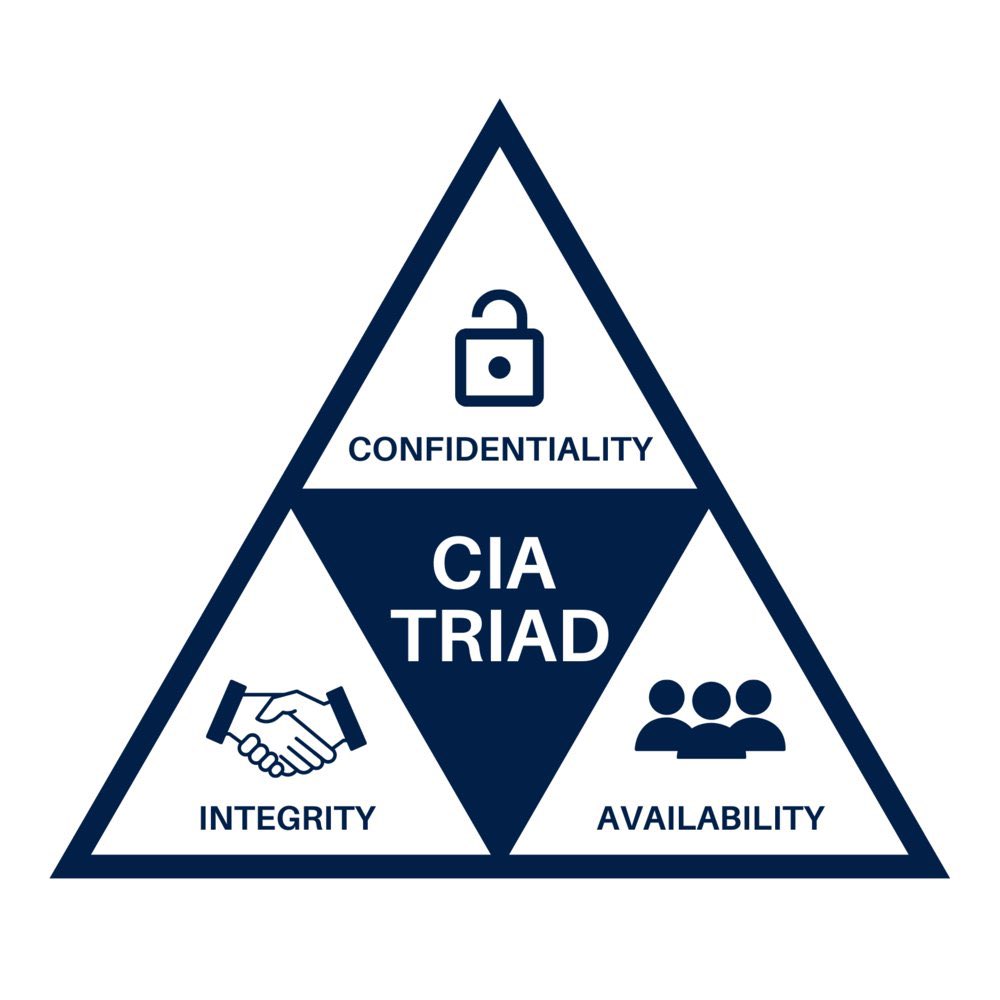
The CIA Triad, which stands for Confidentiality, Integrity, and Availability, is a fundamental concept in information security that outlines the three core principles that guide the protection of data and information systems. These principles are crucial for maintaining the security and reliability of digital assets.
Here's a brief explanation of each component:
>Confidentiality:
Confidentiality refers to the assurance that information is only accessible to authorized individuals or systems. It involves protecting sensitive data from unauthorized access, disclosure, or theft. Measures like encryption, access controls, and user authentication help maintain confidentiality by ensuring that only those with proper authorization can view or handle confidential information.
>Integrity:
Integrity ensures that data remains accurate, consistent, and unaltered during storage, transmission, or processing. This principle focuses on preventing unauthorized modifications or tampering with data. Integrity controls such as data validation, checksums, and digital signatures help detect and prevent data corruption or unauthorized changes.
>Availability:
Availability ensures that information and systems are accessible and functional when needed by authorized users. This principle aims to prevent disruptions or downtime due to system failures, cyberattacks, or other incidents. Availability measures include redundancy, disaster recovery planning, and fault tolerance to ensure that services and data are consistently available.
The CIA Triad serves as a foundation for designing security strategies and implementing security controls. It helps individuals and organizations strike a balance between protecting sensitive information, maintaining data accuracy, and ensuring continuous access to resources.
The CIA Triad, which stands for Confidentiality, Integrity, and Availability, is a fundamental concept in information security that outlines the three core principles that guide the protection of data and information systems. These principles are crucial for maintaining the security and reliability of digital assets.
Here's a brief explanation of each component:
>Confidentiality:
Confidentiality refers to the assurance that information is only accessible to authorized individuals or systems. It involves protecting sensitive data from unauthorized access, disclosure, or theft. Measures like encryption, access controls, and user authentication help maintain confidentiality by ensuring that only those with proper authorization can view or handle confidential information.
>Integrity:
Integrity ensures that data remains accurate, consistent, and unaltered during storage, transmission, or processing. This principle focuses on preventing unauthorized modifications or tampering with data. Integrity controls such as data validation, checksums, and digital signatures help detect and prevent data corruption or unauthorized changes.
>Availability:
Availability ensures that information and systems are accessible and functional when needed by authorized users. This principle aims to prevent disruptions or downtime due to system failures, cyberattacks, or other incidents. Availability measures include redundancy, disaster recovery planning, and fault tolerance to ensure that services and data are consistently available.
The CIA Triad serves as a foundation for designing security strategies and implementing security controls. It helps individuals and organizations strike a balance between protecting sensitive information, maintaining data accuracy, and ensuring continuous access to resources.
Loading suggestions...