
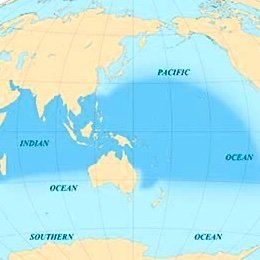
1) A map showing possible deployment sites of the #USArmy Typhon missile system in Okinawa, Guam & the #Philippines & missile ranges.
The map also shows #PLA bases.
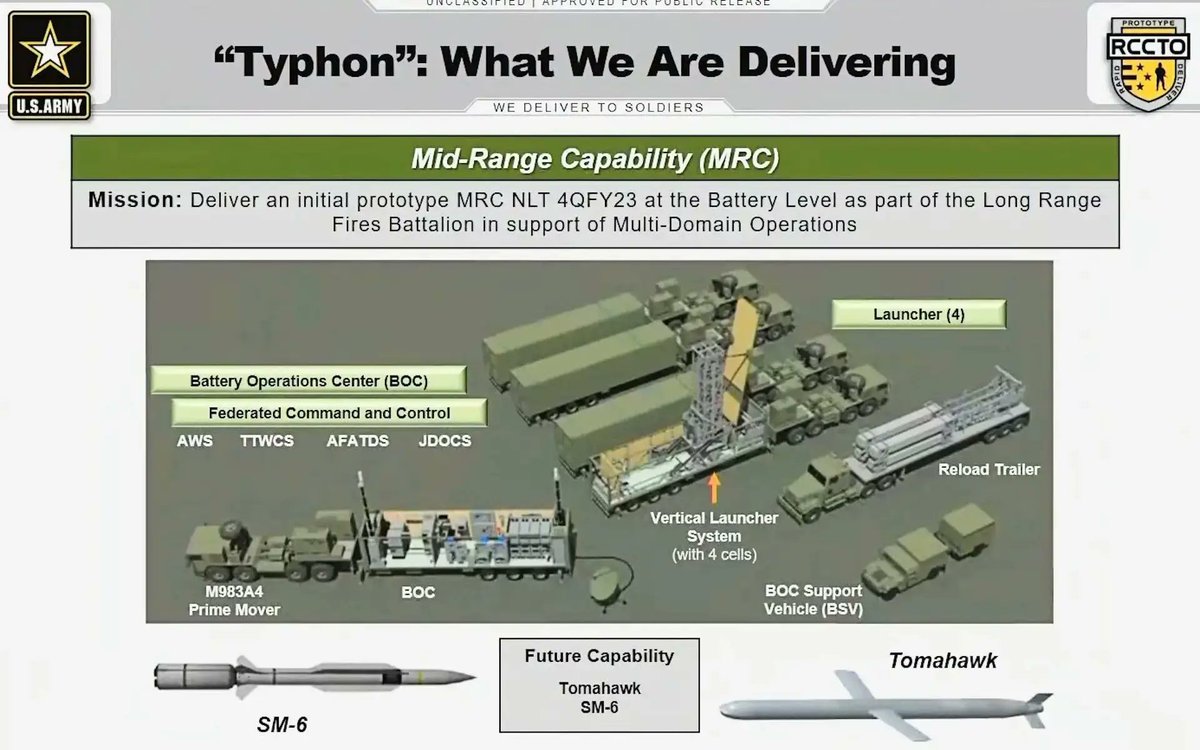
The Typhon system can launch medium-range Tomahawk land attack missiles and SM-6 air defense missiles.
This plan to deploy these missile system was recently announced by the commander of the US Army in the Pacific, Charles Flynn.
The map also shows #PLA bases.
The Typhon system can launch medium-range Tomahawk land attack missiles and SM-6 air defense missiles.
This plan to deploy these missile system was recently announced by the commander of the US Army in the Pacific, Charles Flynn.

2) #USArmy Deploys Typhon Missile System To The #Philippines
The Typhon system can fire Tomahawk & SM-6 missiles. Tomahawks to attack land targets & SM-6 missiles for air defense.
This is very significant, this system has a lot of teeth.
Typhon system infographic ⬇️
The Typhon system can fire Tomahawk & SM-6 missiles. Tomahawks to attack land targets & SM-6 missiles for air defense.
This is very significant, this system has a lot of teeth.
Typhon system infographic ⬇️
3) #USArmy Deploys Typhon Missile System To #Philippines
The Typhon system can fire Tomahawk & SM-6 missiles. Tomahawks to attack land targets & SM-6 missiles for air defense.
The Army’s Typhon system, which can fire Tomahawk and SM-6 missiles, is in the Philippines for its inaugural Indo-Pacific deployment.
The U.S. Army has sent elements of its newest ground-based missile system, called Typhon, overseas for the first time to take part in an exercise in the Philippines. Typhon can fire Tomahawk cruise missiles and SM-6 multi-purpose missiles, the latter of which will, at least at first for the Army's needs, work in a quasi-ballistic missile land attack mode.
Typhon's arrival sends a blaring signal at Beijing and throughout the region. It is a glimpse of what's to come as the service works through plans to permanently base these systems in China's backyard.
The U.S. Army has sent elements of its newest ground-based missile system, called Typhon, overseas for the first time to take part in an exercise in the Philippines.
Typhon can fire Tomahawk cruise missiles and SM-6 multi-purpose missiles, the latter of which will, at least at first for the Army's needs, work in a quasi-ballistic missile land attack mode.
Typhon's arrival sends signals throughout the region, especially toward China, and is a glimpse of what could come as the service works through plans for more permanent basing of these systems in the Western Pacific.
Earlier today, U.S. Army Pacific (USARPAC) announced the arrival of at least a portion of a Typhon system, also known as the Mid-Range Capability (MRC), in the Philippines where it participated in Exercise Salaknib 24.
The system, which touched down in the Western Pacific nation back on April 7, belongs to Battery C, 5th Battalion, 3rd Field Artillery Regiment, which is part of the Long Range Fires Battalion assigned to the 1st Multi-Domain Task Force (MDTF) at Joint Base Lewis-McChord in Washington State.
A complete Typhon battery consists of four launchers, a trailer-based mobile command post, and other ancillary vehicles and equipment, according to information the Army has previously released. Multiple C-17A sorites would be required to move a single Typhon battery.
“This is a significant step in our partnership with the Philippines, our oldest treaty ally in the region. We’re grateful to our partners in the Armed Forces of the Philippines and we’re excited to expand our security cooperation as we bring this new capability to Luzon," Army Brig. Gen. Bernard Harrington, head of the 1st MDTF, said in a statement. "
This creates several new collaboration opportunities for our bilateral training and readiness, we look forward to growing together." As noted, the Tyhon system can be used to fire Tomahawk cruise missiles, current generation versions of which have land attack and anti-ship capabilities, as well as SM-6 missiles.
As integrated on Typhon, the SM-6 is intended to be employed primarily against targets ashore and at sea essentially as a short-range ballistic missile.
The Army has also described it in the past as a "strategic" weapon system that would be used against higher-value targets like air defense assets and command and control nodes.
SM-6 was originally designed as a sea-launched surface-to-air weapon and has demonstrated capabilities against various aerial threats, including ballistic missiles and novel hypersonic weapons in the terminal phases of their flights. U.S. Navy warships can also employ SM-6s against surface targets.
With Tomahawk, Typhon offers the Army a way to hold targets on land and at sea at risk anywhere within a bubble stretching roughly 1,000 miles in any direction from where it is deployed.
Being able to also fire SM-6s, even just as surface-to-surface weapons, would offer additional capabilities and flexibility. From the middle of Northern Luzon, Typhon has more than enough range to reach the southeastern corner of mainland China, as well as Hainan Island with its key naval and other bases.
Chinese man-made outposts across the South China Sea would also be within range. This latter point has an additional degree of immediate significance given the current tensions between Beijing and Manila over control of the Scarborough Shoal, which lies to the west of Luzon.
twz.com
The Typhon system can fire Tomahawk & SM-6 missiles. Tomahawks to attack land targets & SM-6 missiles for air defense.
The Army’s Typhon system, which can fire Tomahawk and SM-6 missiles, is in the Philippines for its inaugural Indo-Pacific deployment.
The U.S. Army has sent elements of its newest ground-based missile system, called Typhon, overseas for the first time to take part in an exercise in the Philippines. Typhon can fire Tomahawk cruise missiles and SM-6 multi-purpose missiles, the latter of which will, at least at first for the Army's needs, work in a quasi-ballistic missile land attack mode.
Typhon's arrival sends a blaring signal at Beijing and throughout the region. It is a glimpse of what's to come as the service works through plans to permanently base these systems in China's backyard.
The U.S. Army has sent elements of its newest ground-based missile system, called Typhon, overseas for the first time to take part in an exercise in the Philippines.
Typhon can fire Tomahawk cruise missiles and SM-6 multi-purpose missiles, the latter of which will, at least at first for the Army's needs, work in a quasi-ballistic missile land attack mode.
Typhon's arrival sends signals throughout the region, especially toward China, and is a glimpse of what could come as the service works through plans for more permanent basing of these systems in the Western Pacific.
Earlier today, U.S. Army Pacific (USARPAC) announced the arrival of at least a portion of a Typhon system, also known as the Mid-Range Capability (MRC), in the Philippines where it participated in Exercise Salaknib 24.
The system, which touched down in the Western Pacific nation back on April 7, belongs to Battery C, 5th Battalion, 3rd Field Artillery Regiment, which is part of the Long Range Fires Battalion assigned to the 1st Multi-Domain Task Force (MDTF) at Joint Base Lewis-McChord in Washington State.
A complete Typhon battery consists of four launchers, a trailer-based mobile command post, and other ancillary vehicles and equipment, according to information the Army has previously released. Multiple C-17A sorites would be required to move a single Typhon battery.
“This is a significant step in our partnership with the Philippines, our oldest treaty ally in the region. We’re grateful to our partners in the Armed Forces of the Philippines and we’re excited to expand our security cooperation as we bring this new capability to Luzon," Army Brig. Gen. Bernard Harrington, head of the 1st MDTF, said in a statement. "
This creates several new collaboration opportunities for our bilateral training and readiness, we look forward to growing together." As noted, the Tyhon system can be used to fire Tomahawk cruise missiles, current generation versions of which have land attack and anti-ship capabilities, as well as SM-6 missiles.
As integrated on Typhon, the SM-6 is intended to be employed primarily against targets ashore and at sea essentially as a short-range ballistic missile.
The Army has also described it in the past as a "strategic" weapon system that would be used against higher-value targets like air defense assets and command and control nodes.
SM-6 was originally designed as a sea-launched surface-to-air weapon and has demonstrated capabilities against various aerial threats, including ballistic missiles and novel hypersonic weapons in the terminal phases of their flights. U.S. Navy warships can also employ SM-6s against surface targets.
With Tomahawk, Typhon offers the Army a way to hold targets on land and at sea at risk anywhere within a bubble stretching roughly 1,000 miles in any direction from where it is deployed.
Being able to also fire SM-6s, even just as surface-to-surface weapons, would offer additional capabilities and flexibility. From the middle of Northern Luzon, Typhon has more than enough range to reach the southeastern corner of mainland China, as well as Hainan Island with its key naval and other bases.
Chinese man-made outposts across the South China Sea would also be within range. This latter point has an additional degree of immediate significance given the current tensions between Beijing and Manila over control of the Scarborough Shoal, which lies to the west of Luzon.
twz.com

Loading suggestions...