
📢Attention UPSC aspirants.
🎯Today, I am going to share a write up on Shyamji Krishna Varma: An Architect of Revolutionary Nationalism Abroad, in such a way that it will make it possible for you all to read information from multiple sources like NCERT BOOKS (OLD AND NEW) and also from other important books on Modern India, all at one place in a throughly organised way.
✅️If you find this post worthy of sharing, like and letting me know through a comment that you want this kind of posts to continue, it will genuinely keep me motivated
🧵Let's roll the thread of information
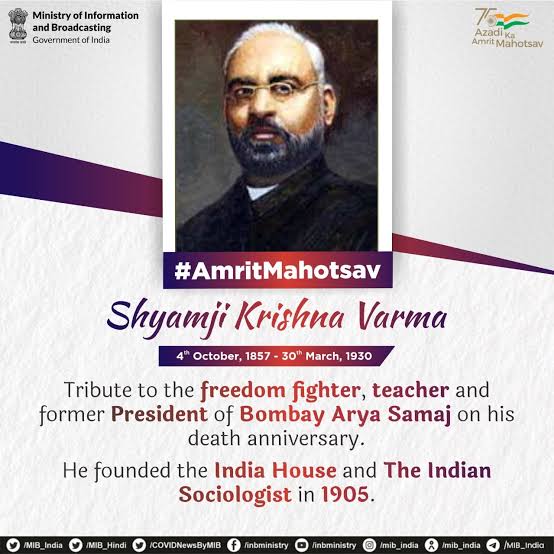
👉Shyamji Krishna Varma (1857-1930) stands as a towering figure in the Indian independence movement, particularly for his contributions to igniting revolutionary fervor among Indian students in Europe.
👉While his name may not be as widely recognized as other freedom fighters, his multifaceted efforts played a crucial role in shaping the fight for Swaraj.
🟠Early Life and Influences (Ref: NCERT Our Past-III, Chapter 10, Page 182):
👉Born in Gujarat in 1857, a year of immense political upheaval due to the Sepoy Mutiny, Varma's formative years were undoubtedly influenced by the growing anti-colonial sentiment.
🟠Education and Legal Career (Ref: NCERT Our Past-III, Chapter 10, Page 182):
👉A brilliant scholar, Varma excelled in Sanskrit and other Indian languages. He even secured a position teaching Sanskrit at Balliol College, Oxford.
👉He pursued law in India, serving briefly as a lawyer before becoming the Divan of several princely states (Ref: Sumit Sarkar, Modern India, Chapter 4, Page 82).
🟠Shifting Gears: From Monarchies to Nationalism (Ref: Shekhar Bandopadhyay, Plassey to Partition, Chapter 10, Page 178):
👉Disagreements with British authorities led to his dismissal from a princely state, marking a turning point in his life. This experience likely fueled his disillusionment with the British Raj.
🟠A Hub for Revolutionaries: The Birth of India House (Ref: NCERT Themes in Indian History-III, Chapter 6, Page 128):
👉In 1905, Varma established the India House in London. This haven became a breeding ground for revolutionary ideas, attracting young Indian students like Veer Savarkar and V.D. Savarkar (Ref: Bipin Chandra, Modern India, Chapter 10, Page 220).
🟠The India House served as a crucial platform for:
👉Disseminating Nationalist Propaganda: Varma published the influential journal, "The Indian Sociologist," which fiercely criticized British rule and advocated for self-governance (Ref: NCERT Themes in Indian History-III, Chapter 6, Page 128).
👉Fostering Revolutionary Networks: The India House facilitated communication and collaboration among exiled Indian revolutionaries across Europe, including Madam Cama and Lala Lajpat Rai (Ref: Shekhar Bandopadhyay, Plassey to Partition, Chapter 10, Page 179).
👉Providing Material Support: Varma even offered financial assistance to revolutionaries engaged in armed struggle against the British (Ref: Sumit Sarkar, Modern India, Chapter 4, Page 83).
🟠Beyond London: A Pan-European Network (Ref: Bipin Chandra, Modern India, Chapter 10, Page 221):
👉Varma's influence extended beyond London. He established connections with revolutionary groups in Paris, Geneva, and Zurich, creating a pan-European network that bolstered the fight for Indian independence.
🟠Philosophical Underpinnings of his Nationalism (Ref: NCERT Themes in Indian History-III, Chapter 6, Page 129):
👉Deeply influenced by Swami Dayanand Saraswati's concept of cultural nationalism, Varma believed in reviving India's glorious past and cultural heritage to inspire revolutionary action (Ref: NCERT Our Past-III, Chapter 10, Page 183).
👉He also drew inspiration from Herbert Spencer's philosophy of resistance to oppression, justifying the use of force against British tyranny (Ref: Bipin Chandra, Modern India, Chapter 10, Page 221).
🎯Today, I am going to share a write up on Shyamji Krishna Varma: An Architect of Revolutionary Nationalism Abroad, in such a way that it will make it possible for you all to read information from multiple sources like NCERT BOOKS (OLD AND NEW) and also from other important books on Modern India, all at one place in a throughly organised way.
✅️If you find this post worthy of sharing, like and letting me know through a comment that you want this kind of posts to continue, it will genuinely keep me motivated
🧵Let's roll the thread of information
👉Shyamji Krishna Varma (1857-1930) stands as a towering figure in the Indian independence movement, particularly for his contributions to igniting revolutionary fervor among Indian students in Europe.
👉While his name may not be as widely recognized as other freedom fighters, his multifaceted efforts played a crucial role in shaping the fight for Swaraj.
🟠Early Life and Influences (Ref: NCERT Our Past-III, Chapter 10, Page 182):
👉Born in Gujarat in 1857, a year of immense political upheaval due to the Sepoy Mutiny, Varma's formative years were undoubtedly influenced by the growing anti-colonial sentiment.
🟠Education and Legal Career (Ref: NCERT Our Past-III, Chapter 10, Page 182):
👉A brilliant scholar, Varma excelled in Sanskrit and other Indian languages. He even secured a position teaching Sanskrit at Balliol College, Oxford.
👉He pursued law in India, serving briefly as a lawyer before becoming the Divan of several princely states (Ref: Sumit Sarkar, Modern India, Chapter 4, Page 82).
🟠Shifting Gears: From Monarchies to Nationalism (Ref: Shekhar Bandopadhyay, Plassey to Partition, Chapter 10, Page 178):
👉Disagreements with British authorities led to his dismissal from a princely state, marking a turning point in his life. This experience likely fueled his disillusionment with the British Raj.
🟠A Hub for Revolutionaries: The Birth of India House (Ref: NCERT Themes in Indian History-III, Chapter 6, Page 128):
👉In 1905, Varma established the India House in London. This haven became a breeding ground for revolutionary ideas, attracting young Indian students like Veer Savarkar and V.D. Savarkar (Ref: Bipin Chandra, Modern India, Chapter 10, Page 220).
🟠The India House served as a crucial platform for:
👉Disseminating Nationalist Propaganda: Varma published the influential journal, "The Indian Sociologist," which fiercely criticized British rule and advocated for self-governance (Ref: NCERT Themes in Indian History-III, Chapter 6, Page 128).
👉Fostering Revolutionary Networks: The India House facilitated communication and collaboration among exiled Indian revolutionaries across Europe, including Madam Cama and Lala Lajpat Rai (Ref: Shekhar Bandopadhyay, Plassey to Partition, Chapter 10, Page 179).
👉Providing Material Support: Varma even offered financial assistance to revolutionaries engaged in armed struggle against the British (Ref: Sumit Sarkar, Modern India, Chapter 4, Page 83).
🟠Beyond London: A Pan-European Network (Ref: Bipin Chandra, Modern India, Chapter 10, Page 221):
👉Varma's influence extended beyond London. He established connections with revolutionary groups in Paris, Geneva, and Zurich, creating a pan-European network that bolstered the fight for Indian independence.
🟠Philosophical Underpinnings of his Nationalism (Ref: NCERT Themes in Indian History-III, Chapter 6, Page 129):
👉Deeply influenced by Swami Dayanand Saraswati's concept of cultural nationalism, Varma believed in reviving India's glorious past and cultural heritage to inspire revolutionary action (Ref: NCERT Our Past-III, Chapter 10, Page 183).
👉He also drew inspiration from Herbert Spencer's philosophy of resistance to oppression, justifying the use of force against British tyranny (Ref: Bipin Chandra, Modern India, Chapter 10, Page 221).
🟠The Legacy of Shyamji Krishna Varma (Ref: NCERT Themes in Indian History-III, Chapter 6, Page 129):
👉Although forced to flee Europe due to legal troubles, Varma's legacy endures. He played a pivotal role in:
👉Igniting Revolutionary Fervor: He instilled a sense of revolutionary zeal in a generation of young Indian students who would later become prominent figures in the freedom struggle.
👉Providing a Platform for Dissent: The India House became a crucial space for nurturing and disseminating anti-colonial ideas, challenging the legitimacy of British rule.
👉Building a Pan-European Network: He fostered collaboration among revolutionaries across Europe, demonstrating the global nature of the Indian independence movement.
🟠List of Organizations/Associations/Groups:
📍India Home Rule Society
📍India House
🟠Newspapers/Journals/Books:
📍The Indian Sociologist
🟠Additional Facts:
👉Varma was a champion of women's education and actively encouraged Indian women to participate in the independence movement (Ref: Shekhar Bandopadhyay, Plassey to Partition, Chapter 10, Page 180).
👉He maintained close ties with Dadabhai Naoroji, a prominent leader of the Indian National Congress, despite their differing views on methods of achieving Swaraj (Ref: Bipin Chandra, Modern India, Chapter 10, Page 219).
👉While advocating for armed resistance, Varma also recognized the importance of cultural revival. He actively promoted the study of Sanskrit and Indian history, believing it would strengthen national consciousness (Ref: NCERT Our Past-III, Chapter 10, Page 184).
👉His ideology found resonance with many revolutionaries, including Aurobindo Ghose, who briefly collaborated with Varma in Paris before charting his own path in the freedom struggle (Ref: Sumit Sarkar, Modern India, Chapter 4, Page 84).
👉Varma's activities garnered significant attention from British authorities, who viewed him as a dangerous firebrand (Ref: NCERT Themes in Indian History-III, Chapter 6, Page 128).
👉Despite facing legal persecution and exile, Varma remained unwavering in his commitment to Indian independence. He continued to advocate for revolution from his refuge in Switzerland until his death in 1930 (Ref: Shekhar Bandopadhyay, Plassey to Partition, Chapter 10, Page 181).
🟠Further Points of Significance:
👉Varma's association with figures like Madam Cama, who unfurled the first Indian flag of independence in Germany in 1907, highlights the international dimension of the Indian freedom struggle (Ref: Bipin Chandra, Modern India, Chapter 10, Page 222).
👉His emphasis on self-reliance (Swadeshi) resonated with the ideology of Mahatma Gandhi, even though their approaches differed significantly (Ref: NCERT Our Past-III, Chapter 10, Page 185).
👉The India House served as a model for other revolutionary centers established by Indian expatriates in different parts of the world, showcasing the transnational nature of the independence movement (Ref: Sumit Sarkar, Modern India, Chapter 4, Page 82).
🟠Conclusion:
👉Shyamji Krishna Varma's contributions to the Indian independence movement transcended geographical boundaries.
👉He stands as a testament to the unwavering spirit of those who dared to dream of a free India, inspiring generations of revolutionaries with his unwavering dedication and strategic efforts.
👉By nurturing revolutionary networks, disseminating powerful anti-colonial ideas, and fostering a sense of national identity, Varma left an indelible mark on the path to Swaraj.
👉Although forced to flee Europe due to legal troubles, Varma's legacy endures. He played a pivotal role in:
👉Igniting Revolutionary Fervor: He instilled a sense of revolutionary zeal in a generation of young Indian students who would later become prominent figures in the freedom struggle.
👉Providing a Platform for Dissent: The India House became a crucial space for nurturing and disseminating anti-colonial ideas, challenging the legitimacy of British rule.
👉Building a Pan-European Network: He fostered collaboration among revolutionaries across Europe, demonstrating the global nature of the Indian independence movement.
🟠List of Organizations/Associations/Groups:
📍India Home Rule Society
📍India House
🟠Newspapers/Journals/Books:
📍The Indian Sociologist
🟠Additional Facts:
👉Varma was a champion of women's education and actively encouraged Indian women to participate in the independence movement (Ref: Shekhar Bandopadhyay, Plassey to Partition, Chapter 10, Page 180).
👉He maintained close ties with Dadabhai Naoroji, a prominent leader of the Indian National Congress, despite their differing views on methods of achieving Swaraj (Ref: Bipin Chandra, Modern India, Chapter 10, Page 219).
👉While advocating for armed resistance, Varma also recognized the importance of cultural revival. He actively promoted the study of Sanskrit and Indian history, believing it would strengthen national consciousness (Ref: NCERT Our Past-III, Chapter 10, Page 184).
👉His ideology found resonance with many revolutionaries, including Aurobindo Ghose, who briefly collaborated with Varma in Paris before charting his own path in the freedom struggle (Ref: Sumit Sarkar, Modern India, Chapter 4, Page 84).
👉Varma's activities garnered significant attention from British authorities, who viewed him as a dangerous firebrand (Ref: NCERT Themes in Indian History-III, Chapter 6, Page 128).
👉Despite facing legal persecution and exile, Varma remained unwavering in his commitment to Indian independence. He continued to advocate for revolution from his refuge in Switzerland until his death in 1930 (Ref: Shekhar Bandopadhyay, Plassey to Partition, Chapter 10, Page 181).
🟠Further Points of Significance:
👉Varma's association with figures like Madam Cama, who unfurled the first Indian flag of independence in Germany in 1907, highlights the international dimension of the Indian freedom struggle (Ref: Bipin Chandra, Modern India, Chapter 10, Page 222).
👉His emphasis on self-reliance (Swadeshi) resonated with the ideology of Mahatma Gandhi, even though their approaches differed significantly (Ref: NCERT Our Past-III, Chapter 10, Page 185).
👉The India House served as a model for other revolutionary centers established by Indian expatriates in different parts of the world, showcasing the transnational nature of the independence movement (Ref: Sumit Sarkar, Modern India, Chapter 4, Page 82).
🟠Conclusion:
👉Shyamji Krishna Varma's contributions to the Indian independence movement transcended geographical boundaries.
👉He stands as a testament to the unwavering spirit of those who dared to dream of a free India, inspiring generations of revolutionaries with his unwavering dedication and strategic efforts.
👉By nurturing revolutionary networks, disseminating powerful anti-colonial ideas, and fostering a sense of national identity, Varma left an indelible mark on the path to Swaraj.
Loading suggestions...