

I just read about a study I can’t stop thinking about…
Introverts are more effective leaders (according to Harvard):
Introverts are more effective leaders (according to Harvard):
Conventional wisdom says extroverts make the best leaders. They are:
• Decisive
• Outgoing
• Dominant
They’re favored in hiring decisions and are seen as more effective leadership figures.
And 65% of corporate executives think introversion is a barrier to leadership.
• Decisive
• Outgoing
• Dominant
They’re favored in hiring decisions and are seen as more effective leadership figures.
And 65% of corporate executives think introversion is a barrier to leadership.

Look at the upper echelons of organizations and the bias is clear:
50% of the general population are extroverted - but 60% of top-level executives show high levels of extroversion.
Is conventional wisdom correct?
A study from Harvard says otherwise…
50% of the general population are extroverted - but 60% of top-level executives show high levels of extroversion.
Is conventional wisdom correct?
A study from Harvard says otherwise…

Quiet power exists in introverted leaders.
And in certain situations, introverts make the better boss.
Here’s why:
And in certain situations, introverts make the better boss.
Here’s why:

Extroverts have important strengths.
But they also often want to be the center of attention and dominate discussions.
And when workers are proactive and vocal, they can easily feel threatened.
But they also often want to be the center of attention and dominate discussions.
And when workers are proactive and vocal, they can easily feel threatened.
By contrast, introverts listen more carefully and are more open to suggestions.
This is especially true in dynamic, unpredictable environments.
In short, they’re more effective when the going gets tough and the way ahead is unclear.
This is especially true in dynamic, unpredictable environments.
In short, they’re more effective when the going gets tough and the way ahead is unclear.
And when introverts lead proactive teams, the results are clear as day.
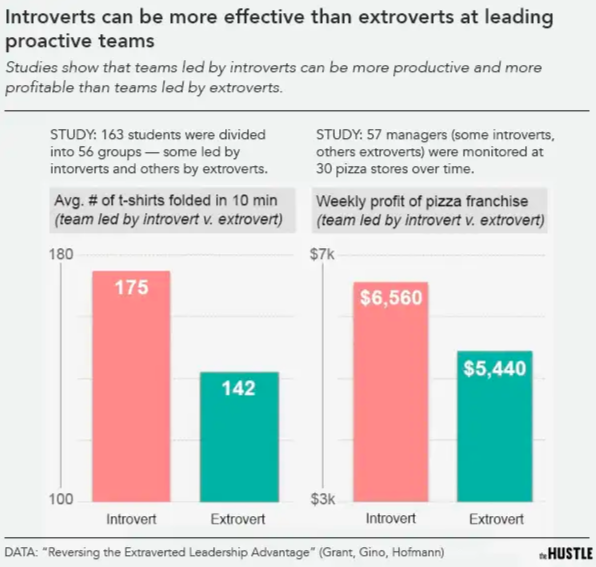
The science backs it up.
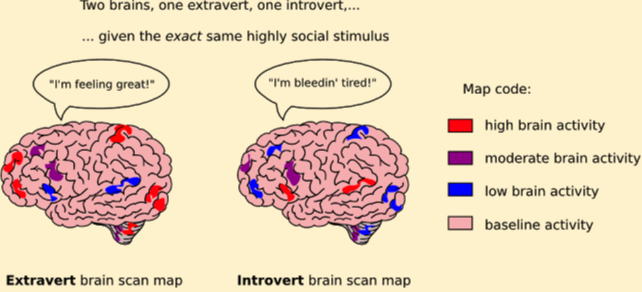
Brain studies show physical differences between extroverts and introverts.
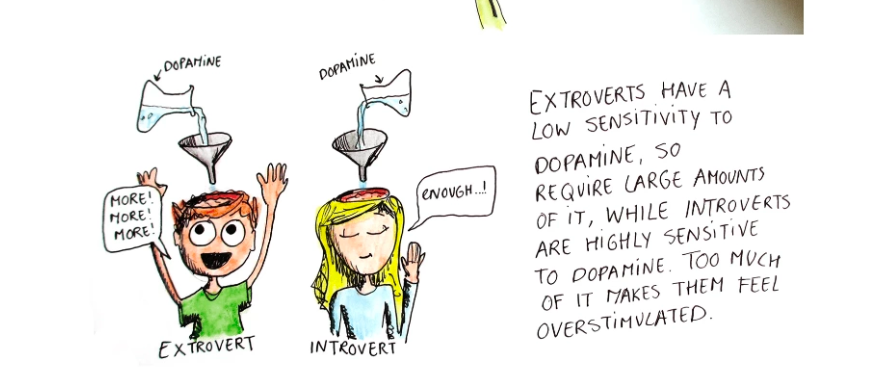
Extroverts have a more active dopamine reward system, driving them towards external stimulation.
Introverts are geared towards areas linked to internal thought and reflection.
Brain studies show physical differences between extroverts and introverts.
Extroverts have a more active dopamine reward system, driving them towards external stimulation.
Introverts are geared towards areas linked to internal thought and reflection.
But societal understanding needs to catch up with our advancing scientific knowledge.
It’s about time we bust these myths about quiet people:
It’s about time we bust these myths about quiet people:
Introversion ≠ Shyness
Introverts crave rich 1-on-1 conversations.
But they need to retreat to solo sanctuaries occasionally to recharge in peace.
Understand this rhythm and help introverts find their flow state.
Introversion is about energy sources, not social anxiety.
Introverts crave rich 1-on-1 conversations.
But they need to retreat to solo sanctuaries occasionally to recharge in peace.
Understand this rhythm and help introverts find their flow state.
Introversion is about energy sources, not social anxiety.
Introverts Are Always Quiet
Just because they do not dominate the conversation does not mean they have nothing to contribute.
Introverts speak when it’s meaningful.
Quietness isn’t a lack of insight or opinions.
Just because they do not dominate the conversation does not mean they have nothing to contribute.
Introverts speak when it’s meaningful.
Quietness isn’t a lack of insight or opinions.
Distaste For Chatter ≠ Disliking People
Introverts love connecting deeply in small groups.
But prolonged exposure to large crowds drains their energy.
Recharge. Return. Thrive.
Introverts love connecting deeply in small groups.
But prolonged exposure to large crowds drains their energy.
Recharge. Return. Thrive.
Introverts Can’t Lead Effectively
65% of executives overlook introverts’ immense leadership gifts:
• Strategic thinking
• 1-on-1 relationship building
• Fostering trust and psychological safety
Many introverts are deep, strategic visionaries.
65% of executives overlook introverts’ immense leadership gifts:
• Strategic thinking
• 1-on-1 relationship building
• Fostering trust and psychological safety
Many introverts are deep, strategic visionaries.
The future needs all types of leaders. Each plays a vital part.
If you are an introvert, embrace your strategic advantage.
Here’s how:
If you are an introvert, embrace your strategic advantage.
Here’s how:
Conduct An Energy Audit
Look after your energy. You can't pour from an empty cup.
Take the time to reflect on what gives you energy, and what takes away from it.
Balance social bursts with self-reflection.
Without recharging, even the brightest bulbs burn out.
Look after your energy. You can't pour from an empty cup.
Take the time to reflect on what gives you energy, and what takes away from it.
Balance social bursts with self-reflection.
Without recharging, even the brightest bulbs burn out.

Leverage Your Listening
Use this superpower to understand others deeply and assess team dynamics.
Your innate ability to focus can unlock hidden details and interpersonal truths.
Use this superpower to understand others deeply and assess team dynamics.
Your innate ability to focus can unlock hidden details and interpersonal truths.
Give Opportunities
If you recognize introverts within your team, empower them.
Provide tasks that play to their strengths and give them the space to shine at their own pace.
If you recognize introverts within your team, empower them.
Provide tasks that play to their strengths and give them the space to shine at their own pace.
We need to expand how we define great leadership.
No more limiting by only seeing the outspoken extrovert's strengths.
Make space for the outliers.
No more limiting by only seeing the outspoken extrovert's strengths.
Make space for the outliers.

"Soft" skills distinguish outstanding leaders:
• Listening
• Vulnerability
• Collaboration
• Cultural awareness
These strengths often live in introverts.
• Listening
• Vulnerability
• Collaboration
• Cultural awareness
These strengths often live in introverts.
The world needs all types of voices.
So for all the introverts out there, lead in your own unique way.
Authenticity is magnetic.
Attract allies by being unapologetically you.
So for all the introverts out there, lead in your own unique way.
Authenticity is magnetic.
Attract allies by being unapologetically you.

P.S. If you like proven systems, you'll love my weekly newsletter (it's free).
1 actionable tip to grow your online business.
Bonus: You’ll receive my Vision Board System (worth $249) for free.
Join 107,000+ subscribers here:
founderos.com
1 actionable tip to grow your online business.
Bonus: You’ll receive my Vision Board System (worth $249) for free.
Join 107,000+ subscribers here:
founderos.com

Loading suggestions...