

Hydrogen Cryogenic Tank: Green aircraft in 2050.
#INOXINDIA (CMP-1240) - Great Future Ahead on Cryogenic Solution.
Given that 2% of global CO2 emissions come from aviation, and that CO2 emissions from aircraft have increased by 10% between 2014 and 2017, it is time to react and go green. The global energy transition is happening now. By 2050, aircraft will have to cut their CO2 emissions by 50%. The solution? Hydrogen, already being considered for ships and trucks, is an alternative solution for the production and storage of energy. But how can hydrogen be stored in an aircraft?
Hydrogen: the key to the future for our aircraft Flying “green” while respecting the environment is the ambition of aircraft manufacturers by 2050. This will be possible thanks to electric rather than propelled aircraft. However, fitting batteries onto a aircraft due to their weight is inconceivable. Indeed, adding batteries to an aircraft would make it 20 times heavier. The solution: generate electricity on site. But how do you generate electricity in the air?
In aeronautics, hydrogen will therefore be considered as an intermediate energy source to produce electricity. This process will be part of a virtuous circle since hydrogen will be produced from “green” electricity, itself produced from solar panels and wind power.
How to store hydrogen in an aircraft?
Storing it at room temperature and pressure is nonsense since it would take up too much space. Two options are therefore possible: either storing it under pressure in the gaseous state either cooling it to -252.85°C, its liquefaction temperature.
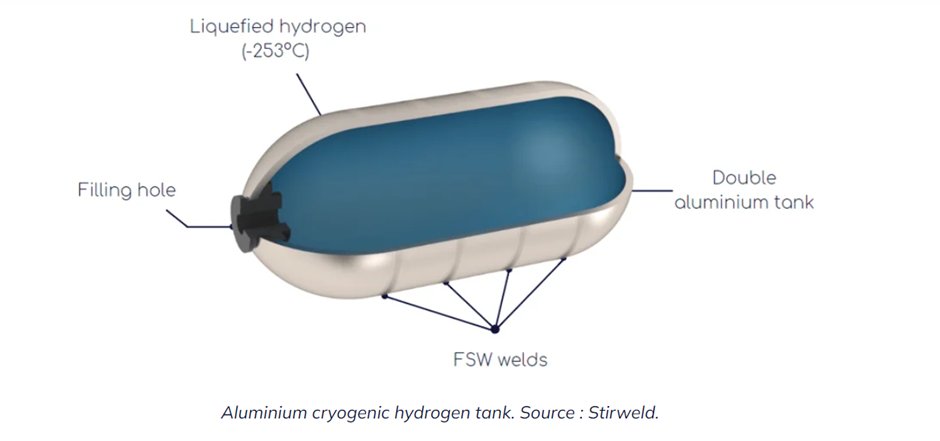
The optimal option is to liquefy it at a temperature lower than -253°C. In this case, the cryogenic tank is subjected to lower pressure as a liquid is less compressible than a gas. At the moment, this cryogenic temperature storage solution is used in the space sector, for hydrogen tanks, rocket fuel, and is being strongly considered in the aeronautics world. This solution is preferred to the pressurized tank for reasons of space and safety. Indeed, the density of liquid H2 is much higher than that of pressurized gas, making it possible to store the same quantity of hydrogen in a reduced volume. Moreover, this avoids the use of high pressures (700 bar) and the risks inherent in this solution.
#INOXINDIA (CMP-1240) - Great Future Ahead on Cryogenic Solution.
Given that 2% of global CO2 emissions come from aviation, and that CO2 emissions from aircraft have increased by 10% between 2014 and 2017, it is time to react and go green. The global energy transition is happening now. By 2050, aircraft will have to cut their CO2 emissions by 50%. The solution? Hydrogen, already being considered for ships and trucks, is an alternative solution for the production and storage of energy. But how can hydrogen be stored in an aircraft?
Hydrogen: the key to the future for our aircraft Flying “green” while respecting the environment is the ambition of aircraft manufacturers by 2050. This will be possible thanks to electric rather than propelled aircraft. However, fitting batteries onto a aircraft due to their weight is inconceivable. Indeed, adding batteries to an aircraft would make it 20 times heavier. The solution: generate electricity on site. But how do you generate electricity in the air?
In aeronautics, hydrogen will therefore be considered as an intermediate energy source to produce electricity. This process will be part of a virtuous circle since hydrogen will be produced from “green” electricity, itself produced from solar panels and wind power.
How to store hydrogen in an aircraft?
Storing it at room temperature and pressure is nonsense since it would take up too much space. Two options are therefore possible: either storing it under pressure in the gaseous state either cooling it to -252.85°C, its liquefaction temperature.
The optimal option is to liquefy it at a temperature lower than -253°C. In this case, the cryogenic tank is subjected to lower pressure as a liquid is less compressible than a gas. At the moment, this cryogenic temperature storage solution is used in the space sector, for hydrogen tanks, rocket fuel, and is being strongly considered in the aeronautics world. This solution is preferred to the pressurized tank for reasons of space and safety. Indeed, the density of liquid H2 is much higher than that of pressurized gas, making it possible to store the same quantity of hydrogen in a reduced volume. Moreover, this avoids the use of high pressures (700 bar) and the risks inherent in this solution.
Produce Electricity from Hydrogen:
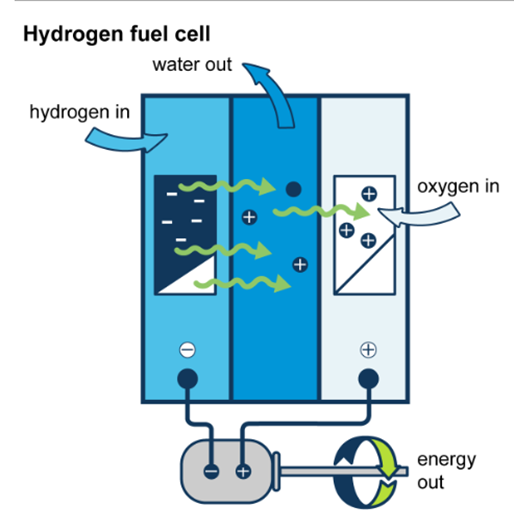
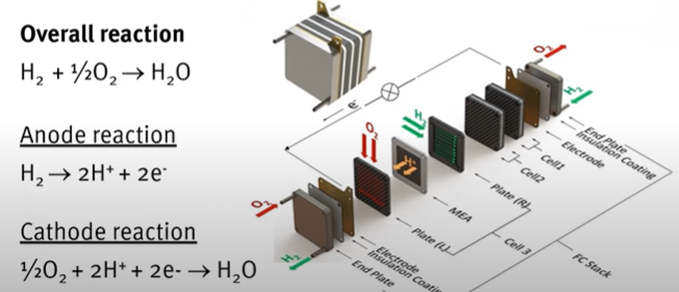
Hydrogen fuel cells produce electricity by combining hydrogen and oxygen atoms. The hydrogen reacts with oxygen across an electrochemical cell— similar to a battery—to produce electricity, water, and small amounts of heat. ZERO CARBON.
Most Effective Fuel Cell is – Low Temperature Proton Exchange Membrane Fuel Cell (PEMFC).
Note: Not BUY/SELL/HOLD Reco for INOX CVA
Hydrogen fuel cells produce electricity by combining hydrogen and oxygen atoms. The hydrogen reacts with oxygen across an electrochemical cell— similar to a battery—to produce electricity, water, and small amounts of heat. ZERO CARBON.
Most Effective Fuel Cell is – Low Temperature Proton Exchange Membrane Fuel Cell (PEMFC).
Note: Not BUY/SELL/HOLD Reco for INOX CVA
Loading suggestions...