

Several Indian states have claimed that they have not been receiving their fair share as per the present scheme of tax devolution
But What is Tax Devolution?
Let’s Explore from #UPSC Prelims - 2024 Standpoint
Solve PYQ in the last
A Thread 🧵
But What is Tax Devolution?
Let’s Explore from #UPSC Prelims - 2024 Standpoint
Solve PYQ in the last
A Thread 🧵

What is Tax Devolution?
- Tax Devolution is the process of distributing tax revenues between the central government and the state governments
- It is a constitutional mechanism designed to allocate the proceeds of certain taxes among the Union and the states fairly and equitably
- Article 280(3)(a) of the Constitution of India mandates this process
- The Finance Commission (FC) is responsible for making recommendations regarding the division of the net proceeds of taxes between the Union and the states. This is a key aspect of fiscal federalism in India
- Tax Devolution is the process of distributing tax revenues between the central government and the state governments
- It is a constitutional mechanism designed to allocate the proceeds of certain taxes among the Union and the states fairly and equitably
- Article 280(3)(a) of the Constitution of India mandates this process
- The Finance Commission (FC) is responsible for making recommendations regarding the division of the net proceeds of taxes between the Union and the states. This is a key aspect of fiscal federalism in India
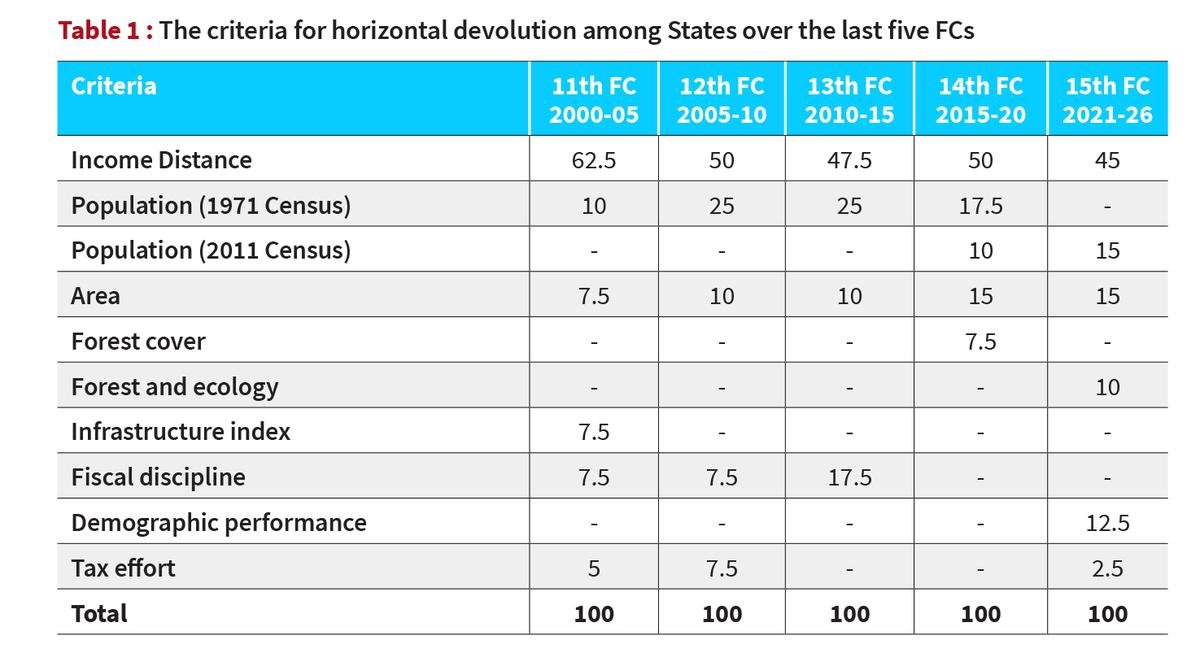
Criteria for Devolution Among States:
- Currently, the share of States from the divisible pool (vertical devolution) stands at 41% as per the recommendation of the 15th FC
- Currently, the share of States from the divisible pool (vertical devolution) stands at 41% as per the recommendation of the 15th FC
Why is Tax Devolution Important?
- It ensures equitable distribution of national resources
- It empowers states to meet their unique needs and priorities
- It promotes fiscal discipline and efficiency at the state level
How is the Devolution Percentage Determined?
- The Finance Commission, a constitutional body, recommends the percentage of tax devolution
- Factors considered include population, income distance, area, forest cover, and more
- It ensures equitable distribution of national resources
- It empowers states to meet their unique needs and priorities
- It promotes fiscal discipline and efficiency at the state level
How is the Devolution Percentage Determined?
- The Finance Commission, a constitutional body, recommends the percentage of tax devolution
- Factors considered include population, income distance, area, forest cover, and more
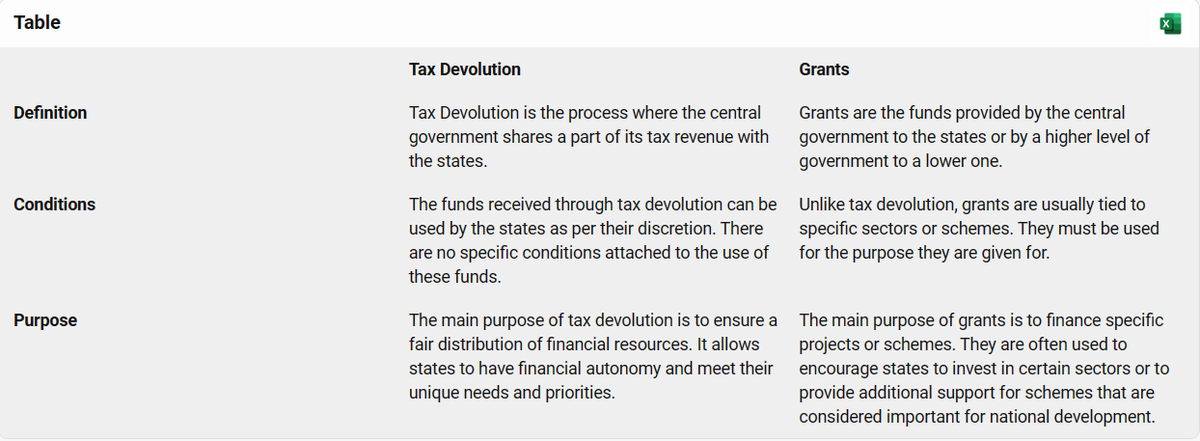
Tax Devolution vs. Grants
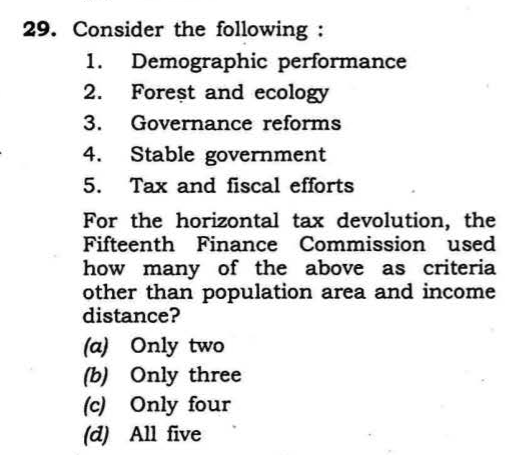
PREVIOUS YEAR QUESTION:
UPSC Prelims - 2023
UPSC Prelims - 2023
Like this thread? follow for more such unique but important topics from UPSC Prelims - 2024 Standpoint @ayusshsanghi
Loading suggestions...