

In 2014, PM Modi was sad that India is highly dependent on Bangladesh & Nepal for our Jute needs
Despite being the largest producer of Jute in the world
So, he is hell bent on destroying Bangladesh’s monopoly in Jute
THREAD: How India is planning to become a Jute superpower 🧵
Despite being the largest producer of Jute in the world
So, he is hell bent on destroying Bangladesh’s monopoly in Jute
THREAD: How India is planning to become a Jute superpower 🧵
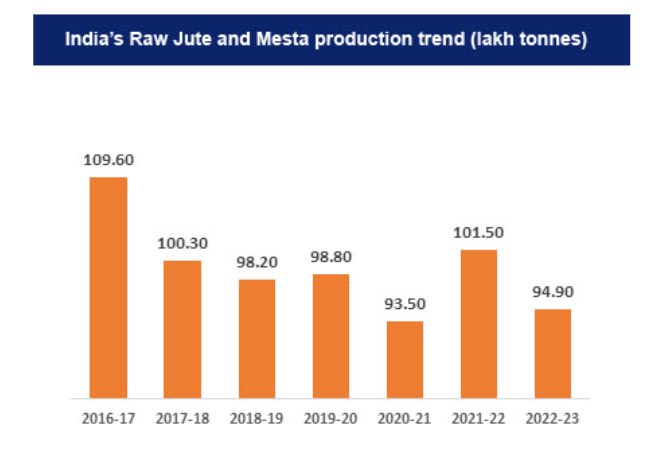
In 2022-23, India produced 94.90 lakh tonnes of Raw Jute & Mesta, which are nearly identical crops.
Additionally, the country produced 384.1 lakh tonnes of finished jute products, accounting for 75% of the global production.
Additionally, the country produced 384.1 lakh tonnes of finished jute products, accounting for 75% of the global production.
Approx 90% of this production was utilized to meet domestic demands within India.
Now we need to understand that jute cultivation in the Indian subcontinent dates back to ancient times.
"The golden fiber" emerged as a major cash crop during the British colonial period in India.
Now we need to understand that jute cultivation in the Indian subcontinent dates back to ancient times.
"The golden fiber" emerged as a major cash crop during the British colonial period in India.
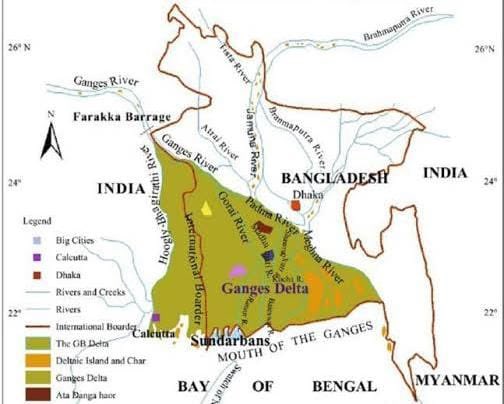
The fertile soil and favorable climate of the Ganges delta were ideal for jute cultivation.
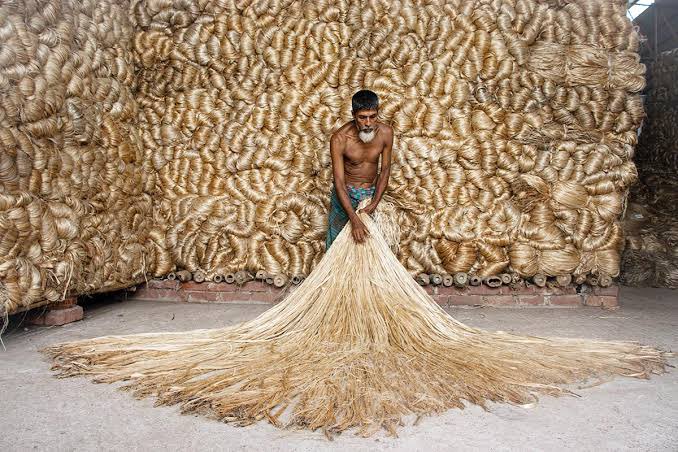
Jute fibers are naturally strong, durable, and versatile
— making them more suitable for containing and transporting heavy or bulky industrial materials.
Jute fibers are naturally strong, durable, and versatile
— making them more suitable for containing and transporting heavy or bulky industrial materials.
Britishers recognized this potential of jute, declared it a valuable commodity, & promoted its cultivation on a large scale.
And with the advent of industrialization in the 19th century, jute mills were established in East & West Bengal, for the processing of raw jute.
And with the advent of industrialization in the 19th century, jute mills were established in East & West Bengal, for the processing of raw jute.
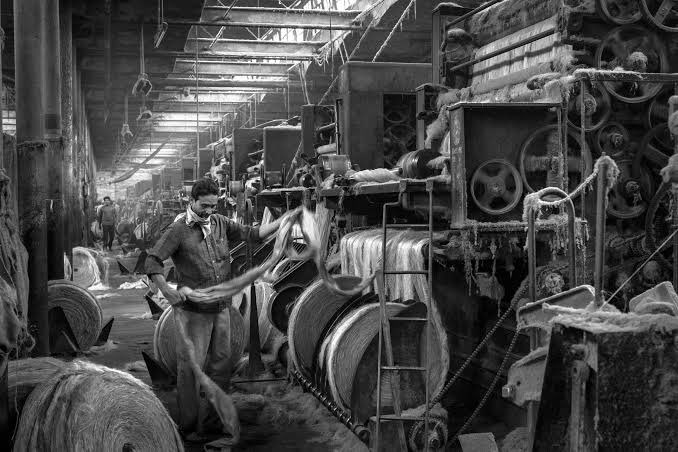
Indian jute industry has faced many challenges since the beginning of the 20th century.
Our major threat has emerged from our neighbor, Bangladesh, in many ways:
1️⃣ Partition
East Bengal, later known as East Pakistan & then as Bangladesh, inherited a significant portion
Our major threat has emerged from our neighbor, Bangladesh, in many ways:
1️⃣ Partition
East Bengal, later known as East Pakistan & then as Bangladesh, inherited a significant portion
— of the already established Jute industry, including major jute mills & most of the productive area under cultivation.
2️⃣ Superior Quality Product
Bangladesh has better agro-climatic conditions as it receives heavier rainfall than India, which is more suitable for RETTING.
2️⃣ Superior Quality Product
Bangladesh has better agro-climatic conditions as it receives heavier rainfall than India, which is more suitable for RETTING.
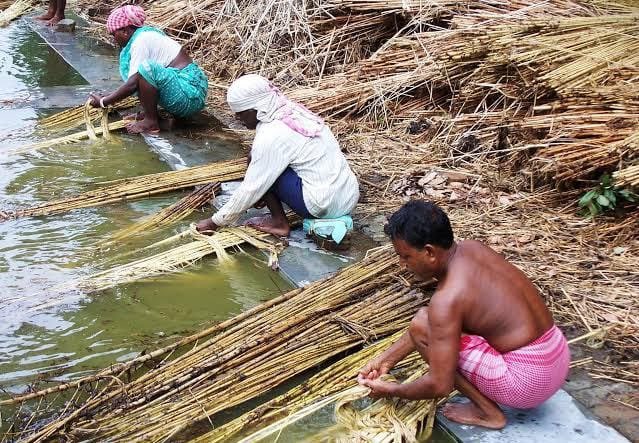
It’s a process in which raw jute stems are submerged in the water to separate the loosened fibers from the jute stalk.
Good quality of water and right temperature is essential for this process as it directly impacts the quality of jute fibers.
Good quality of water and right temperature is essential for this process as it directly impacts the quality of jute fibers.
3️⃣ Low Cost of Production
Bangladesh has successfully lowered its production cost by specializing in jute production & processing.
Better infrastructure, tech adoption & skilled labour are some additional factors which brought down its manufacturing cost.
Bangladesh has successfully lowered its production cost by specializing in jute production & processing.
Better infrastructure, tech adoption & skilled labour are some additional factors which brought down its manufacturing cost.
Now, superior quality of raw jute combined with products at a much lesser price is the reason why Bangladesh is the export leader in the world
— and exports an average $1 billion worth of jute every year.
— and exports an average $1 billion worth of jute every year.
Now, besides facing heightened competition in the global market, our nation’s jute industry has been confronting numerous other challenges:
👉 Obsolete Tech
Many of our jute mills have been suffering from outdated machinery and inefficient production processes.
👉 Obsolete Tech
Many of our jute mills have been suffering from outdated machinery and inefficient production processes.
👉 Adoption of Substitutes
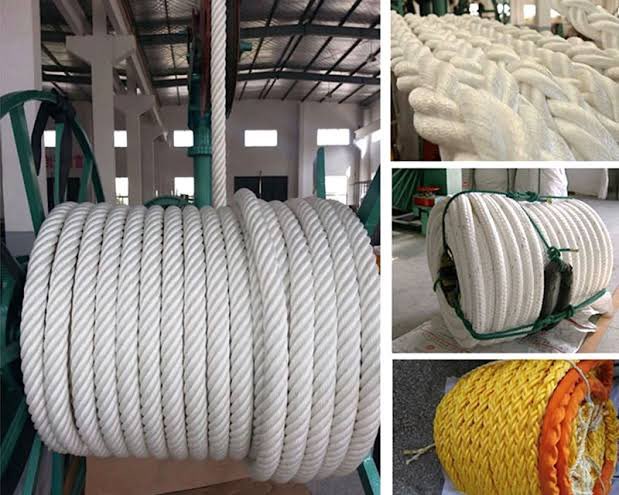
It majorly happened after the development and widespread adoption of synthetic substitutes like polypropylene and nylon.
Over time, these materials became more appealing to the consumers
It majorly happened after the development and widespread adoption of synthetic substitutes like polypropylene and nylon.
Over time, these materials became more appealing to the consumers
— as they offered numerous advantages like increased durability & water resistance at a much lower cost.
Due to this reason, in 2022-23 our production reduced from 1080 lakh tonnes in the previous year to just 384.1 lakh tonnes!
Due to this reason, in 2022-23 our production reduced from 1080 lakh tonnes in the previous year to just 384.1 lakh tonnes!
Despite the challenges, the government of India is undertaking significant measures because:
Firstly, numerous livelihoods depends on this industry.
It supports more than 40 lakh farm families and provides daily bread & butter to more than 5 lakh industrial workers.
Firstly, numerous livelihoods depends on this industry.
It supports more than 40 lakh farm families and provides daily bread & butter to more than 5 lakh industrial workers.
They have low wages, lack of job security, and limited access to basic amenities like clean water & sanitation facilities.
Secondly, jute industry has a lot of potential due to the global shift towards sustainable practices.
Secondly, jute industry has a lot of potential due to the global shift towards sustainable practices.
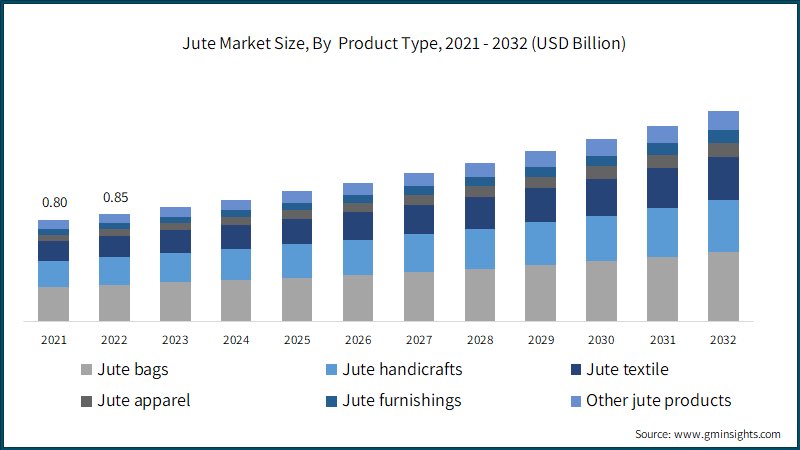
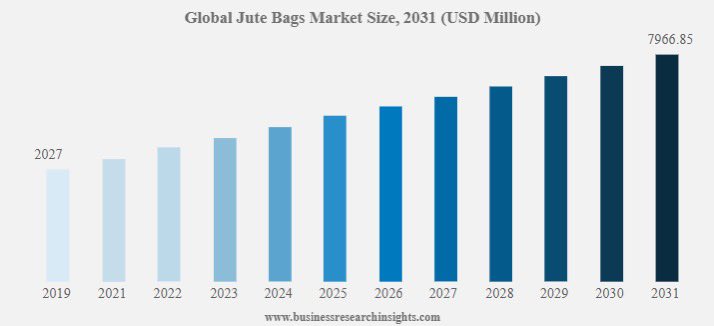
The global jute market is projected to expand fourfold by 2031!
More countries are adopting Jute sacks and other jute products.
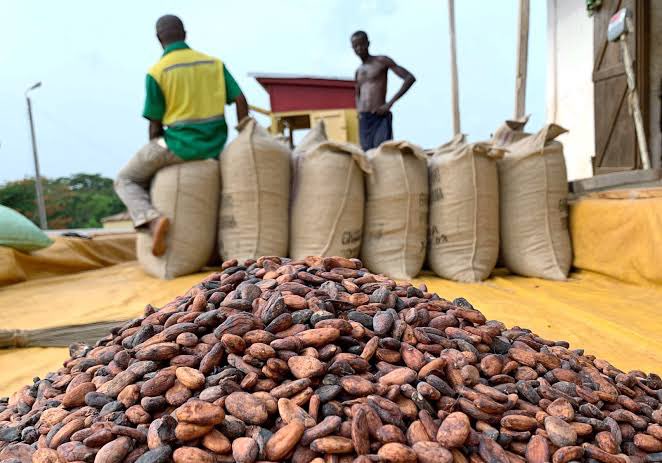
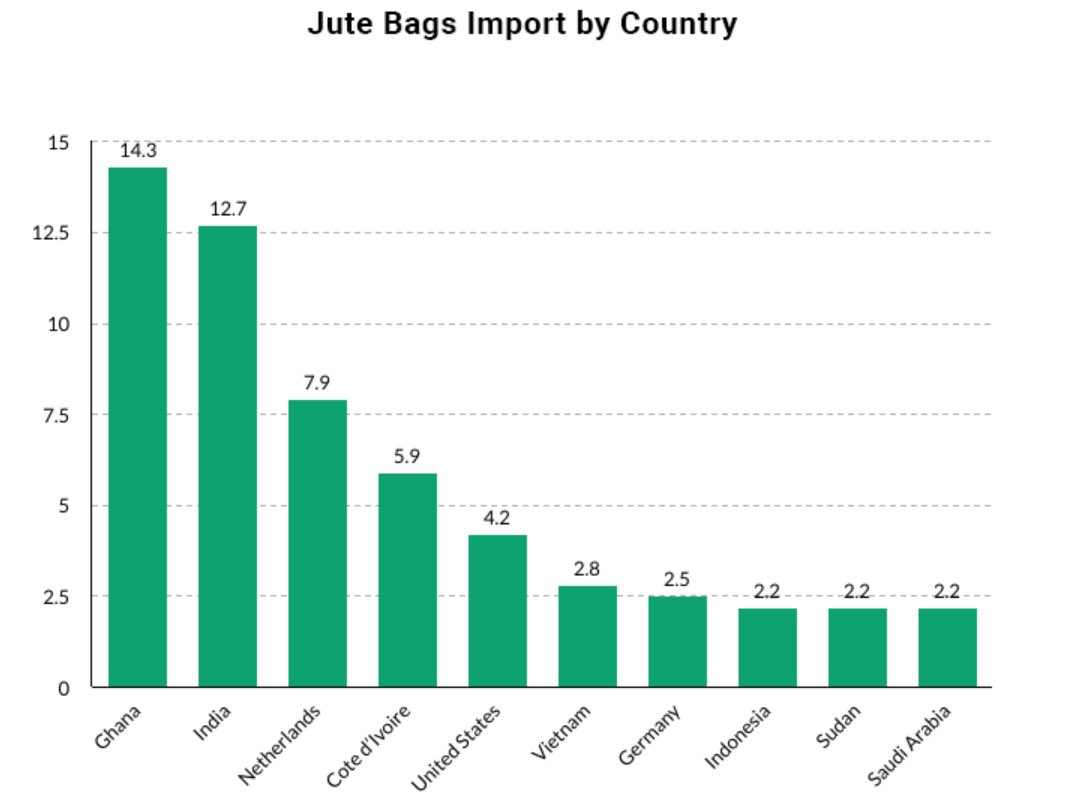
Countries like Ghana, whose economy is dependent on Cocoa harvesting and production, are importing more jute sacks for storage and transportation.
More countries are adopting Jute sacks and other jute products.
Countries like Ghana, whose economy is dependent on Cocoa harvesting and production, are importing more jute sacks for storage and transportation.
Now, let’s take a look at the measures:
A) In 2021, Ministry of Textiles announced an Umbrella Scheme of National Jute Board for Development & Promotion of Jute Sector
— National Jute Development Program (NJDP) with a total outlay of ₹485 Cr for implementation during 2021-26.
A) In 2021, Ministry of Textiles announced an Umbrella Scheme of National Jute Board for Development & Promotion of Jute Sector
— National Jute Development Program (NJDP) with a total outlay of ₹485 Cr for implementation during 2021-26.
It has various sub-schemes like:
1️⃣ Jute Raw Material Bank (JRMB)
This scheme was devised to ensure the continuous supply and sale of raw materials.
JRMB directly sources raw materials from certified jute mills and manufacturers at cost-effective rates.
1️⃣ Jute Raw Material Bank (JRMB)
This scheme was devised to ensure the continuous supply and sale of raw materials.
JRMB directly sources raw materials from certified jute mills and manufacturers at cost-effective rates.
2️⃣ Product Diversification Scheme
Goal of this scheme is to identify unique jute-based products with high potential.
This scheme invites proposals from various organizations including IITs and NIDs.
Goal of this scheme is to identify unique jute-based products with high potential.
This scheme invites proposals from various organizations including IITs and NIDs.

3️⃣ Capital Subsidy for Acquisition of Plants and Machinery (CSAPM) for Jute Diversified Products (JDPs)
The CSAPM scheme offers a 30% incentive on the cost of eligible machinery/equipment acquired and installed for modernization and/or upgrading to MSME JDP units.
The CSAPM scheme offers a 30% incentive on the cost of eligible machinery/equipment acquired and installed for modernization and/or upgrading to MSME JDP units.
4️⃣ Scholarship scheme for girl children of workers of Jute Mills/MSME JDP Units
Under this scheme, girl children of workers of jute mills are provided with a scholarship of
- ₹5,000 for secondary education, and
- ₹10,000 for higher Secondary education.
Under this scheme, girl children of workers of jute mills are provided with a scholarship of
- ₹5,000 for secondary education, and
- ₹10,000 for higher Secondary education.
5️⃣ Market Development & Promotion scheme (MDPS)
The MDPS scheme aims to develop & expand markets for jute products domestically & internationally.
It provides platforms for selling, marketing. & promoting jute products to various stakeholders,
The MDPS scheme aims to develop & expand markets for jute products domestically & internationally.
It provides platforms for selling, marketing. & promoting jute products to various stakeholders,
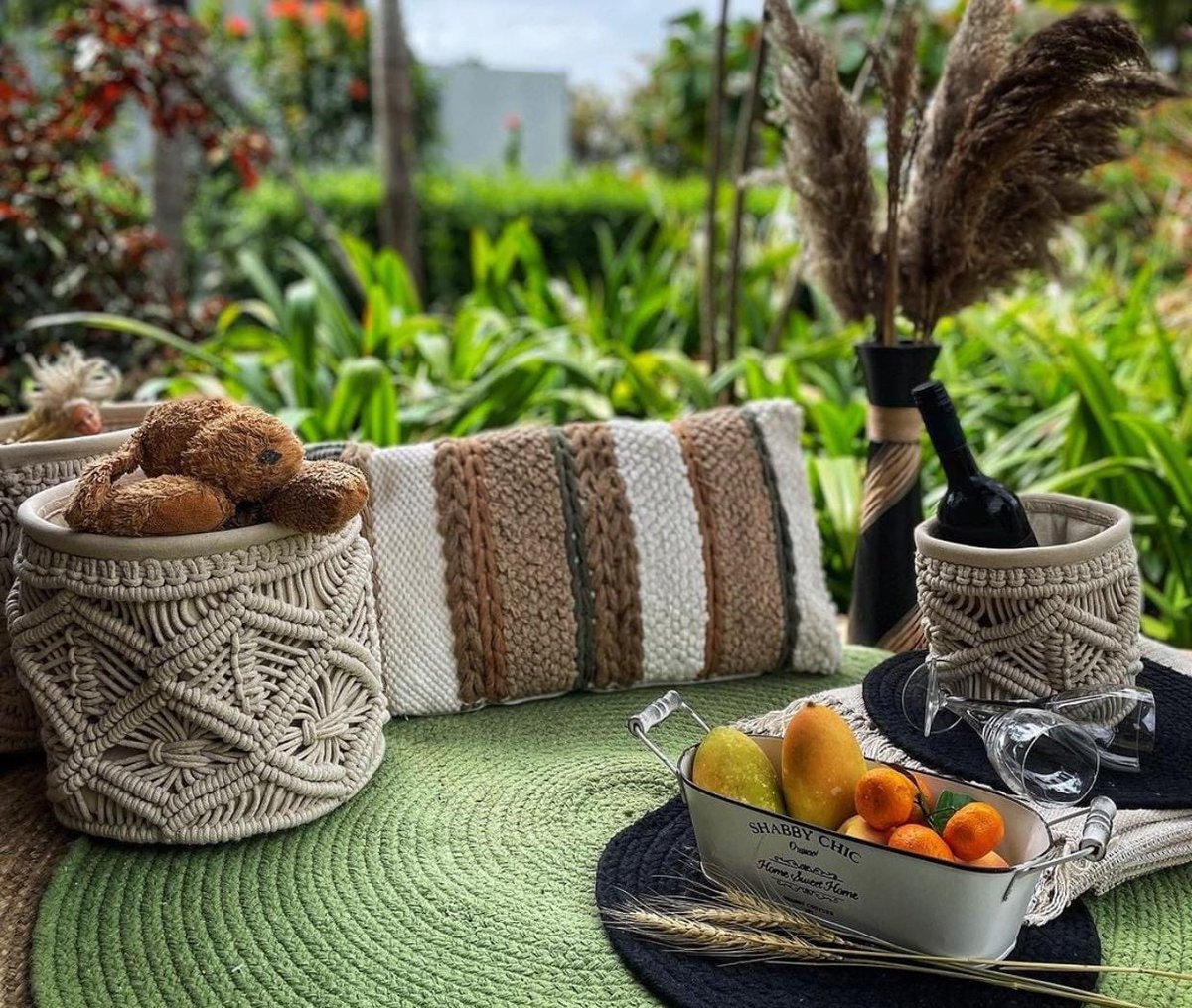
— including artisans, entrepreneurs, & millers.
B) Imposition of Anti-Dumping Duties
Dumping is when a country or company sells a product to another country at a price below its domestic market value.
This can hurt the profits of local businesses in the importing country.
B) Imposition of Anti-Dumping Duties
Dumping is when a country or company sells a product to another country at a price below its domestic market value.
This can hurt the profits of local businesses in the importing country.
And so, in 2017, India imposed anti-dumping duties ranging from ranging from $19 to $352 on certain jute products being imported from Bangladesh & Nepal for a 5-yr period.
But despite this, there is continued dumping of these products, so it got extended for another 5 yrs.
But despite this, there is continued dumping of these products, so it got extended for another 5 yrs.
C) Increase in MSP
The MSP of raw jute has been increased to ₹5050/quintal in 2023-24 from ₹4750/quintal in 2022-23.
It ensures a minimum of 50% as a margin of profit for jute growers.
The MSP of raw jute has been increased to ₹5050/quintal in 2023-24 from ₹4750/quintal in 2022-23.
It ensures a minimum of 50% as a margin of profit for jute growers.
Loading suggestions...