

Are restrictions to FDI in the 1987 charter passé? youtu.be #AmendThePHcharter @SenatePH @sonnyangara #philippines #reformPH
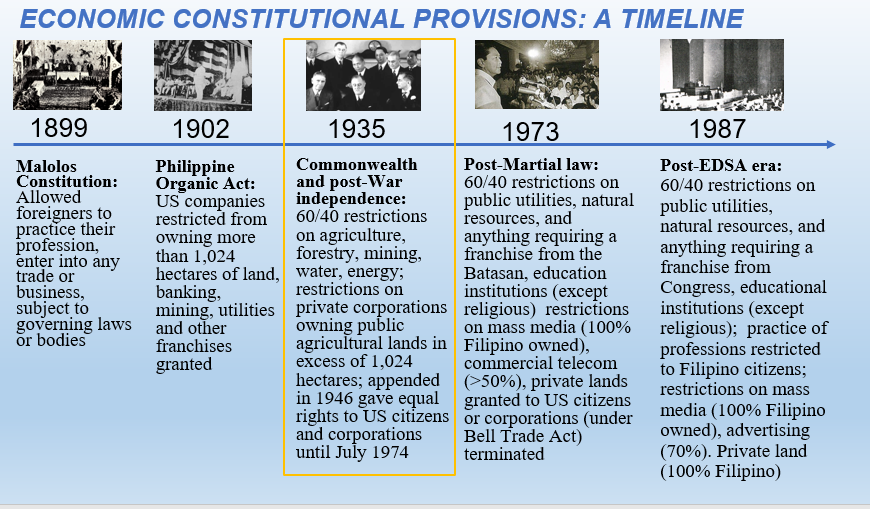
The 1899 #Malolos constitution did not contain restrictions to foreign participation in our economy. By a strange twist of fate, it was the US annexation of the #Philippines that caused these restrictions on foreign ownership to be inserted in the Philippine Organic Act of 1902.
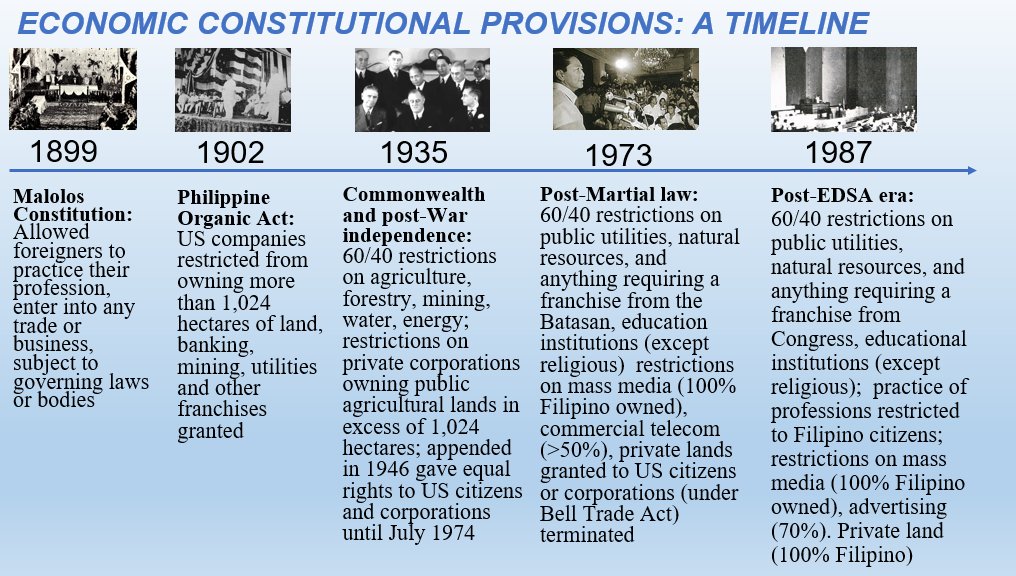
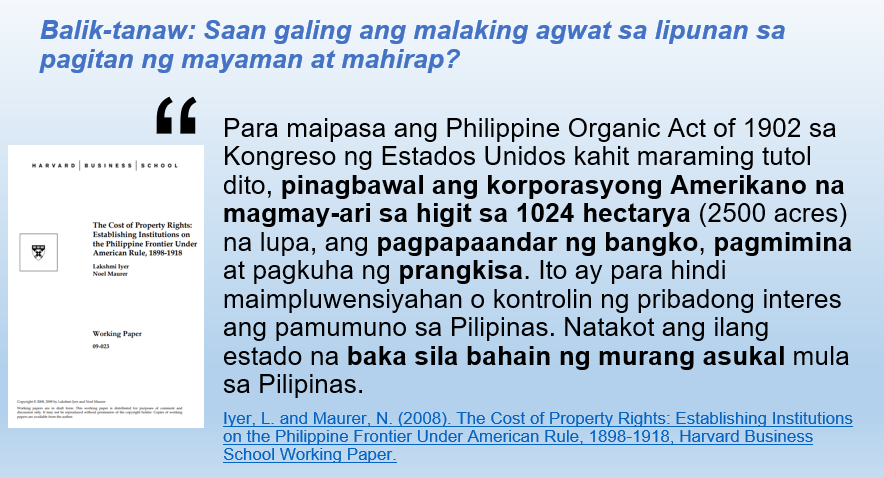
As a concession to Democratic house members from the South, fearful that cheaper goods, like sugar from PH would flood US markets, American citizens and corporations were prevented from holding vast tracks of land, mining, banking, and utility franchises
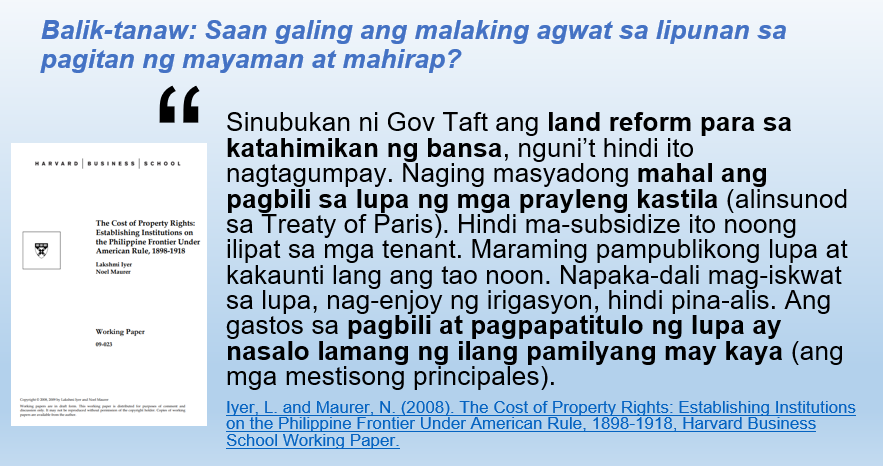
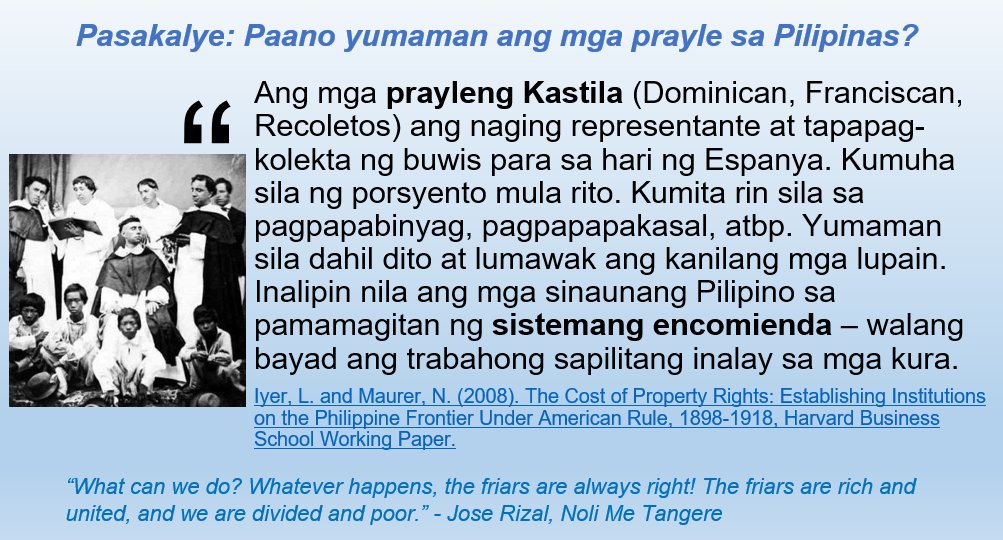
The US sought to appease PH revolutionaries by offering them land. But, the treaty of Paris required the US to compensate the Spanish friars for the lands that the katipuneros had occupied. This made the cost of owning these productive assets unaffordable for most beneficiaries.
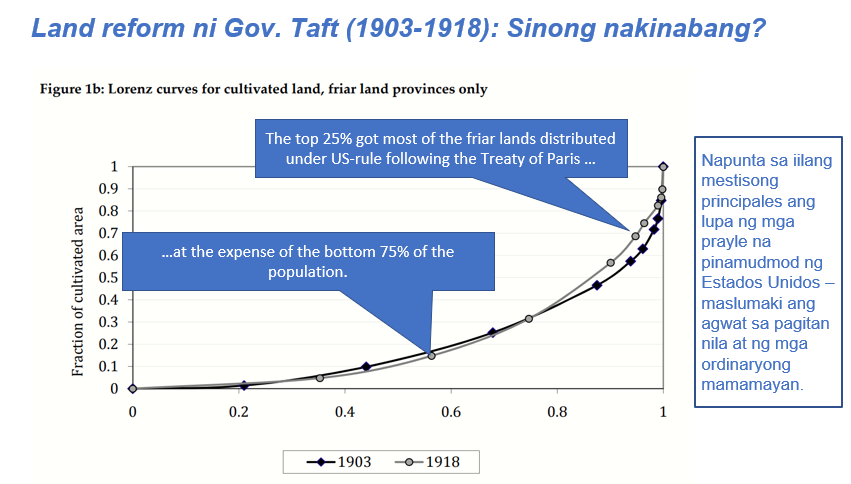
As a result, land ownership became concentrated in a wealthy class of local principales, more concentrated among the top quartile compared to the Spanish era, as shown by this chart.
The Spanish friars from the religious orders administered the Philippine colony on behalf of the Spanish Crown. They got to own most of the productive lands and used the system of encomienda a form of slave labour to till them. #Gomburza
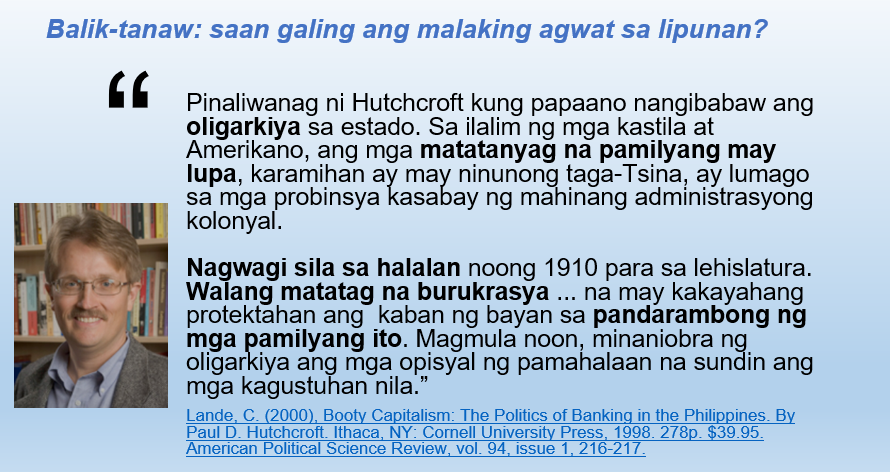
From concentration of assets to consolidation of power in the Philippine Assembly of 1910. ANU Prof Hutchcroft notes that local elites gained national prominence, from where they awarded franchises to their cronies and captured regulatory agencies through their appointive power.
The 1935 Commonwealth cemented this thu the 60/40 ownership rule in favor of Filipinos. What started as a strange quirk caused by US domestic politics, led to a permanent fixture, w/ the exception of US citizens & corporations after WW2, a condition for granting our independence
Though considered a stain on our national sovereignty, the parity rights granted to US investors, led to rapid growth in the 50s, through trade and monetary policies that biased the importation of capital and intermediary goods for production, over consumer goods #goldenage
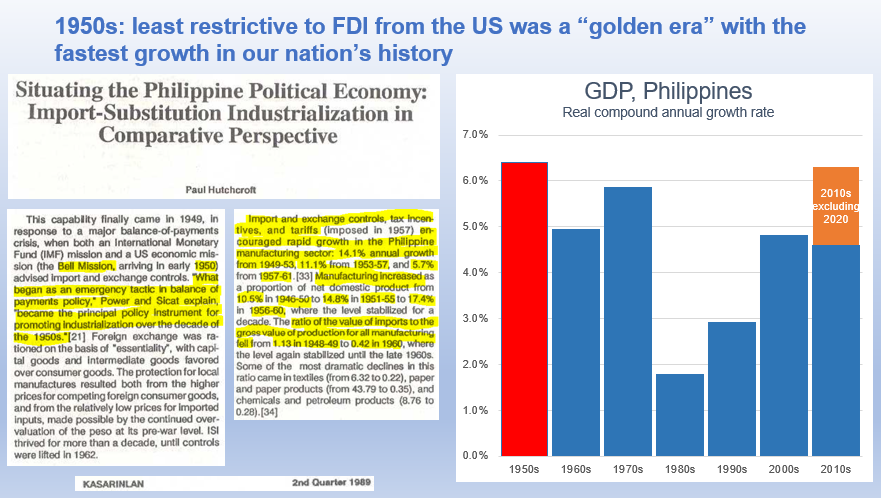
The Filipino First policy gave preferential treatment to locals in using import quotas. Local businesses misused these quotas to import finished goods, leading to weaker growth, triggering a foreign currency crunch which devalued the peso and led to slower growth in the 60s
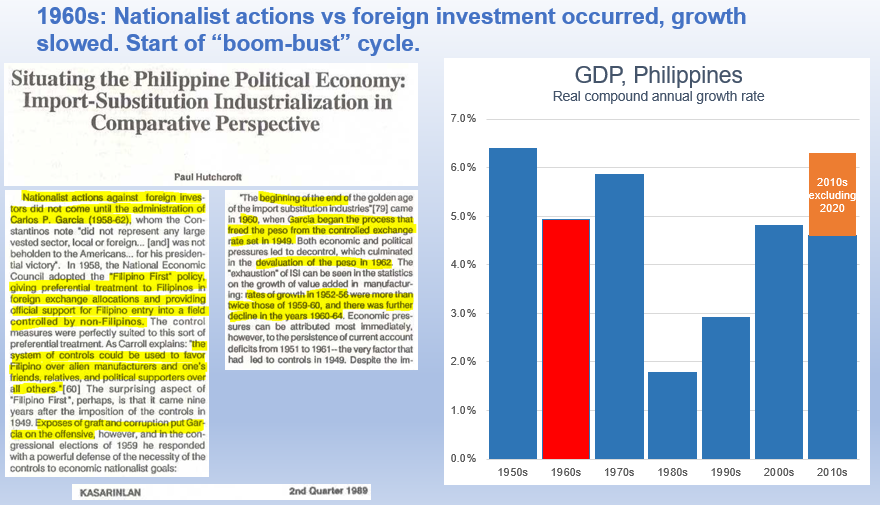
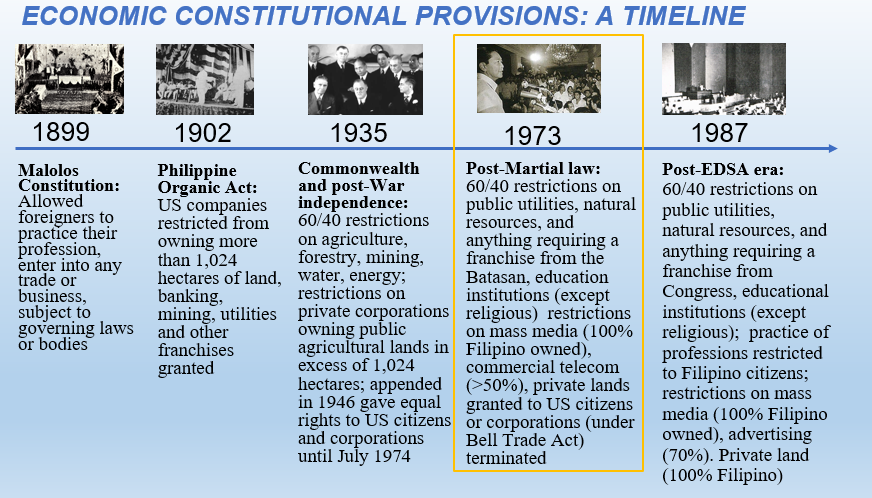
Social unrest led to the 1971 con-con where more restrictions to FDI were introduced, demonstrating that we had not learned the lessons from the debacle of the Filipino First policy. US parity rights enacted in '46 lapsed by '74. No more restraints to the nationalist agenda
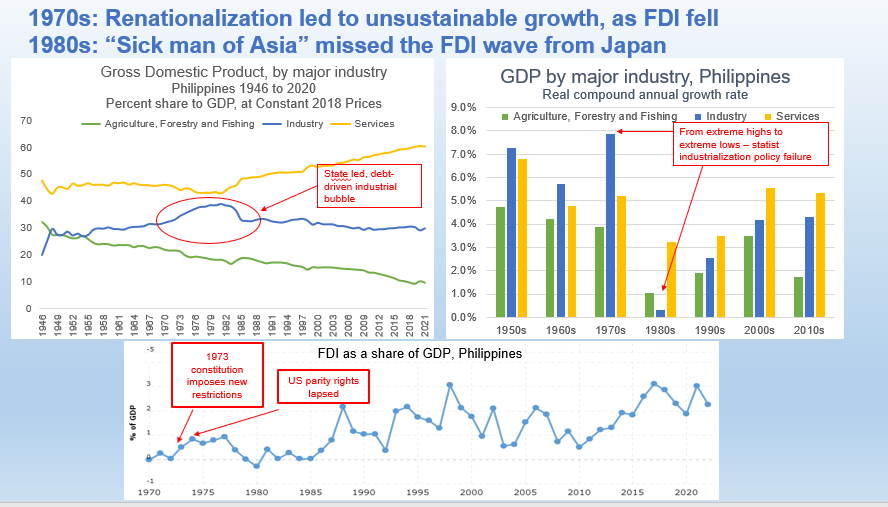
In the 1970s the state took the lead in industrialization, relying on debt to finance it. This created a bubble that became unsustainable. The change in regulation led to a fall of FDI in the late 70s and contributed to economic collapse in the 80s and tepid growth in the 90s.
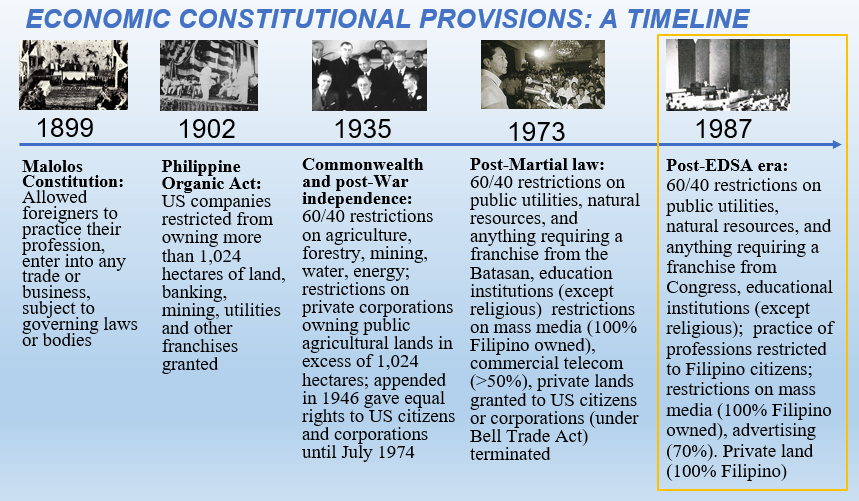
Contributing to this malaise, the sectors subjected to foreign restrictions were expanded further in the 1987 constitution.
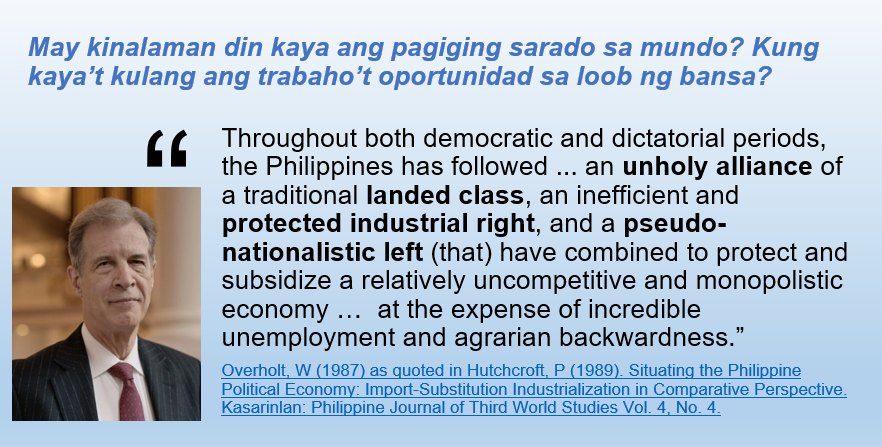
This led Dr Overholt of Stanford to comment that regardless of regime, the PH is constrained by an unholy alliance of entrenched interests both from the left and the right.
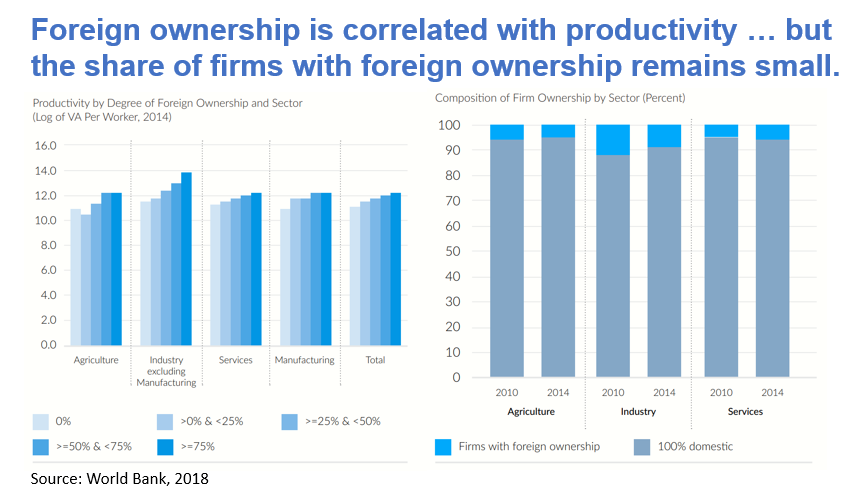
WB notes that foreign ownership is correlated with labor productivity and higher wages. This is not only due to foreign capital, but transfer of know how.
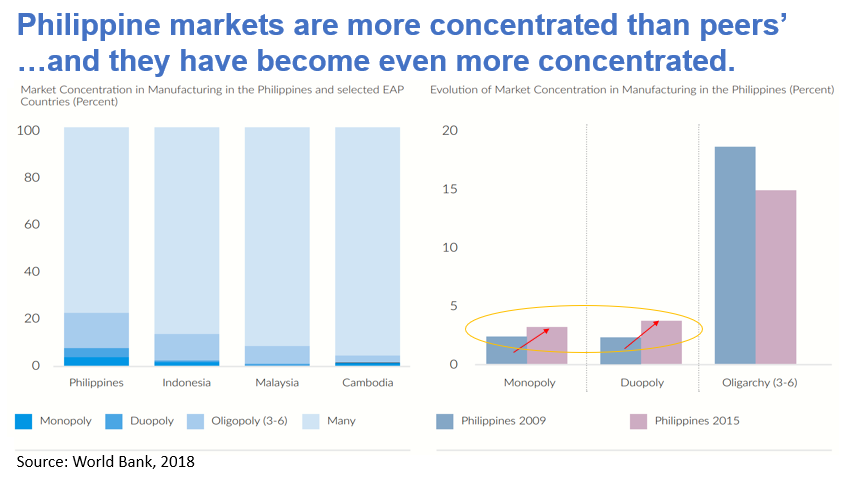
WB notes that economic concentration in PH is higher compared to our neighbors, particularly in manufacturing, despite 100% FDI being permitted. Does it have anything to do with energy which is a key driver of manufacturer’s overheads was subject to 60/40 until recently?
PH is rated highly restrictive to FDI by the OECD. Even if one argues these restrictions don’t pose a real hurdle to most sectors in our economy, the rest of the world beg to differ. It sends the wrong signal to potential investors.
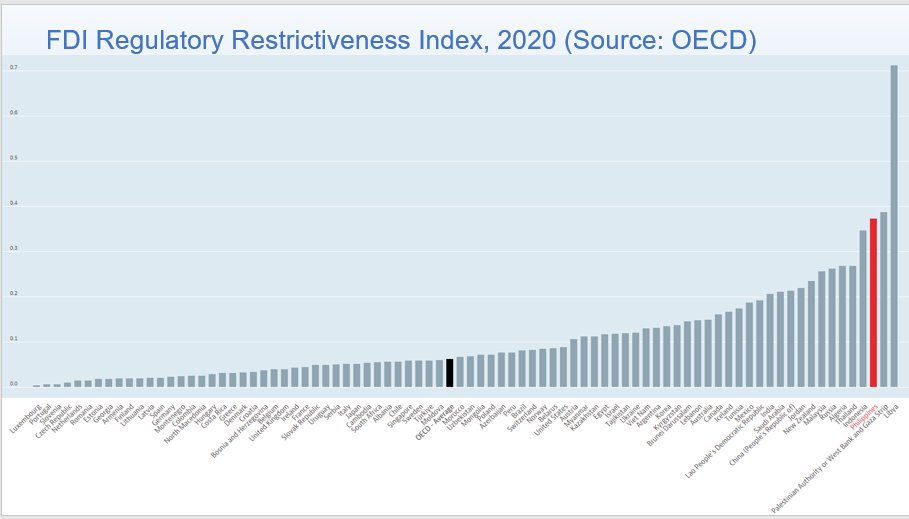
We continue to see the results of this restrictiveness in our inability to attract FDI. The PH is unique in our region, comprised of former colonies or occupied countries for having these restrictions hard coded in its constitution.
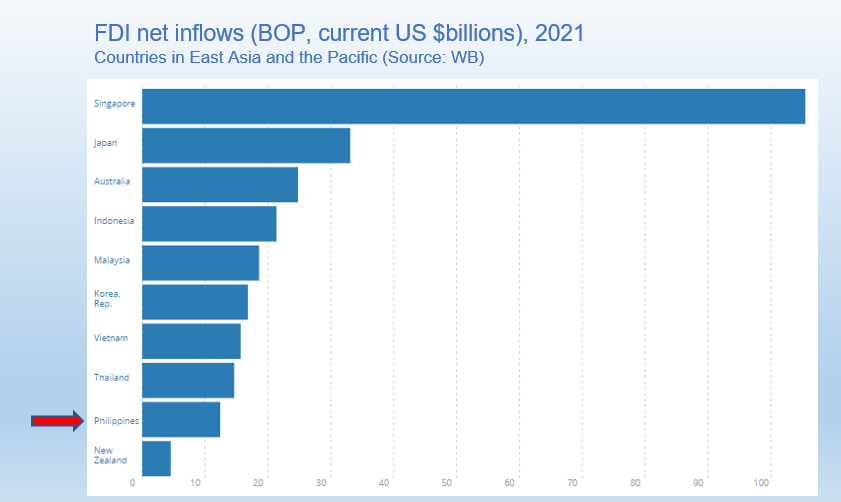
As a result, we’ve been overtaken by our ASEAN neighbours
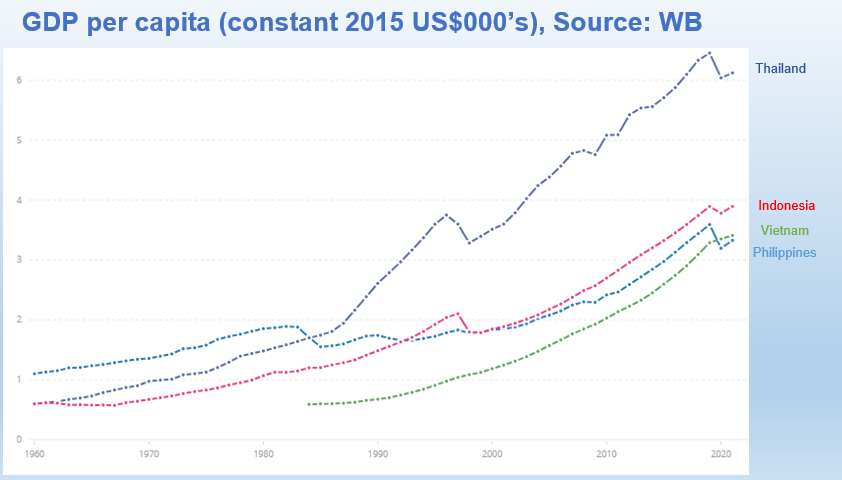
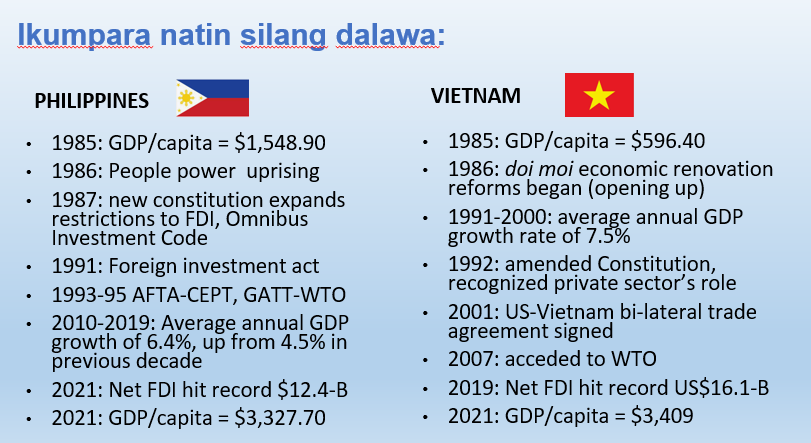
Vietnam is but the latest to overtake us. In 1985 our average per capita income was 3x theirs. Due to their opening up via the doi moi reforms of 1986, they grew much faster, while we were increasing our restrictions in our 87 charter. 35 years later, they have overtaken us.
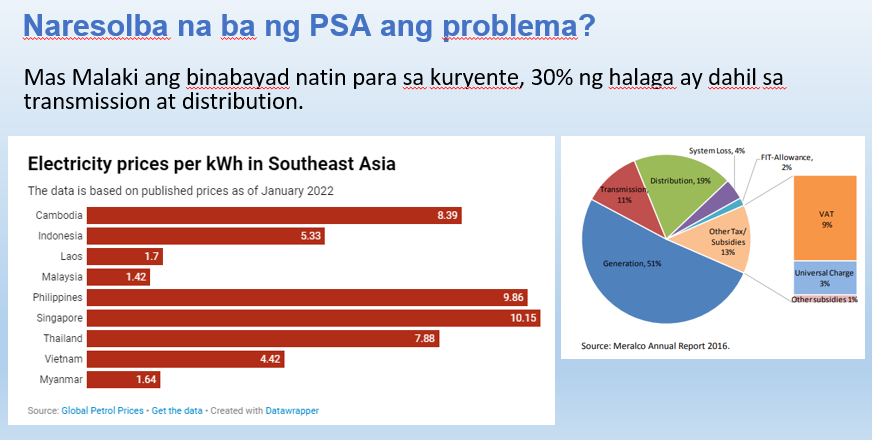
After removing electricity generation from 60/40 rule thru PSA, The problem is the state of our electricity grid and the lack of connectivity for commercial S&W projects which are in remote places. Distribution is still subject to 60/40.
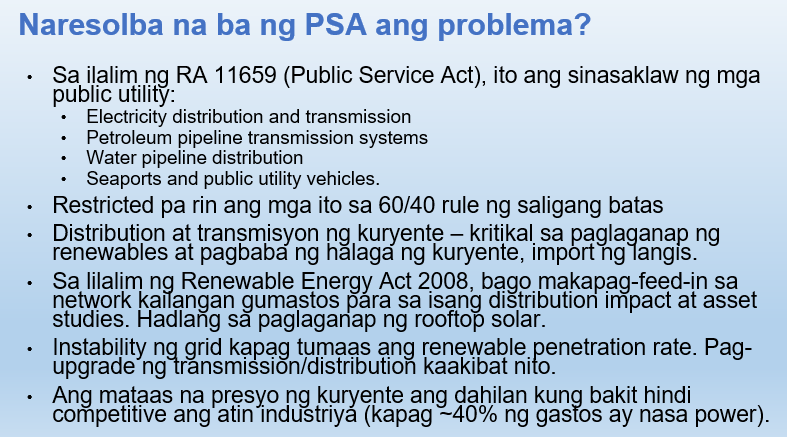
Our energy intensive industries are not able to thrive as a result to attract investment. Local wages are eaten away by higher energy bills, highest in the region. 30% of which comes from power distribution.
Loading suggestions...