
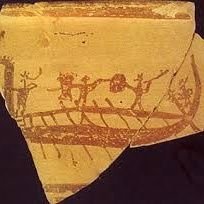
1/ In the archives of Linear B' tablets appear many unknown theonyms -along with known deities of historical times-, some of which have a clear Indo-European origin. These deities appear mainly on the mainland, while some also appear simultaneously in Crete.
#Diwija #Mycenaeans
#Diwija #Mycenaeans
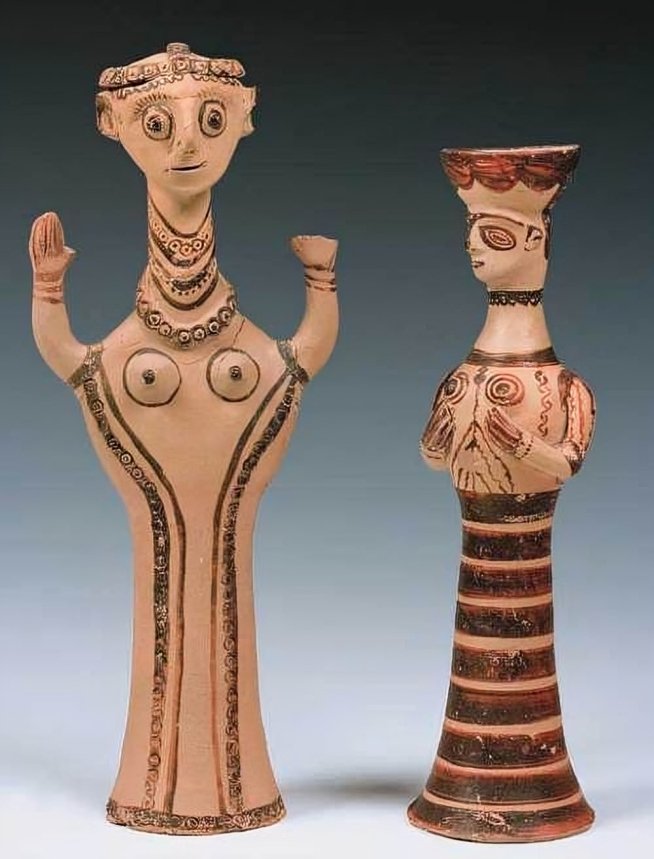
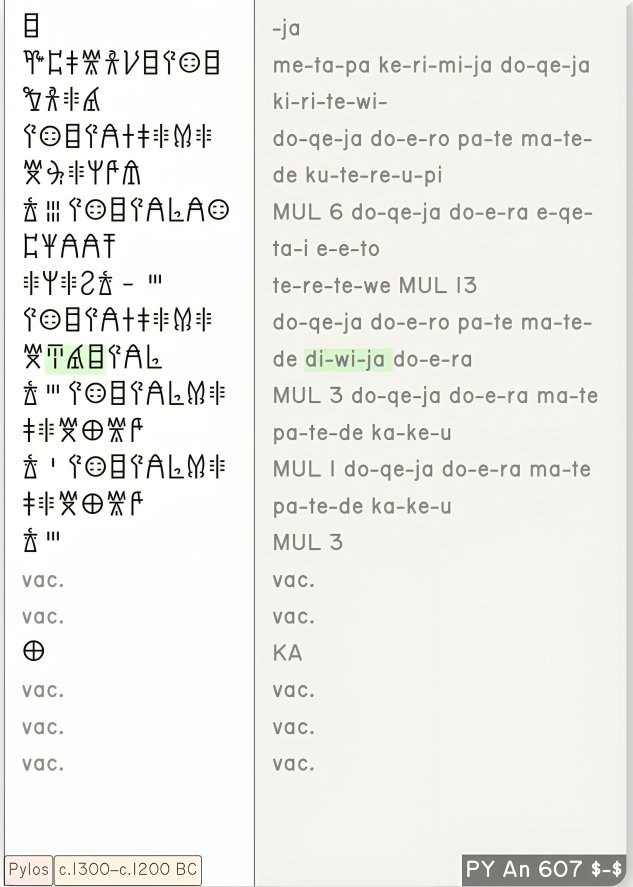
2/An interesting element of Myc religion is the presence of the female counterpart of the God Zeus, Di-wi-ja/Di-u-ja, whose cult seems to have had primordial origins. At Pylos she is mentioned in a cult context with a shrine dedicated to her, has male and female slaves, accepts👉
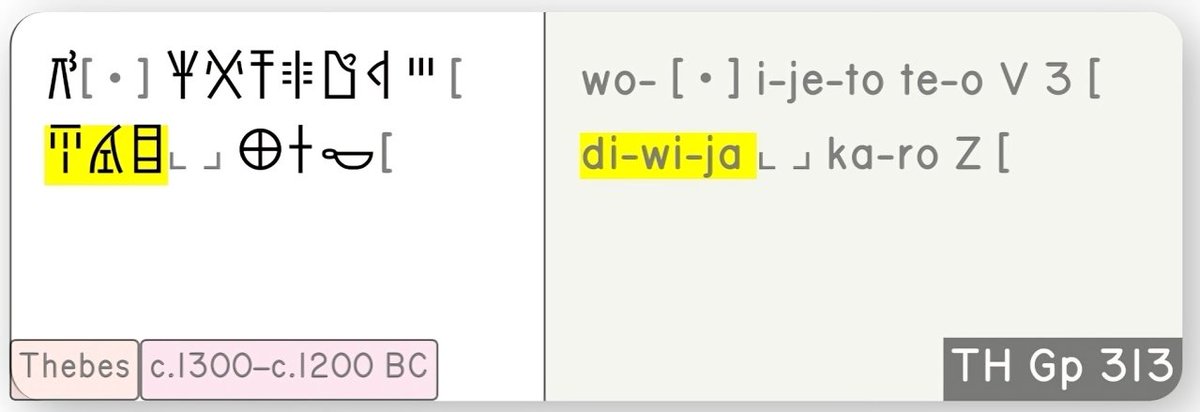
👉 offerings together with Potnia and Hera, while in another case she is always mentioned together with Potnia (Mistress of Horses). Her cult probably also appears in Thebes, where she appears to have had a shrine, while her cult is again associated with that of Potnia and Hera.
3/ The worship of Di-wi-ja in Knossos, although problematic, seems to have existed, as demonstrated by some early textual evidence from the Room of the Chariot Tablets, where again it is associated with Potnia in a common cult context, coming from the mainland.
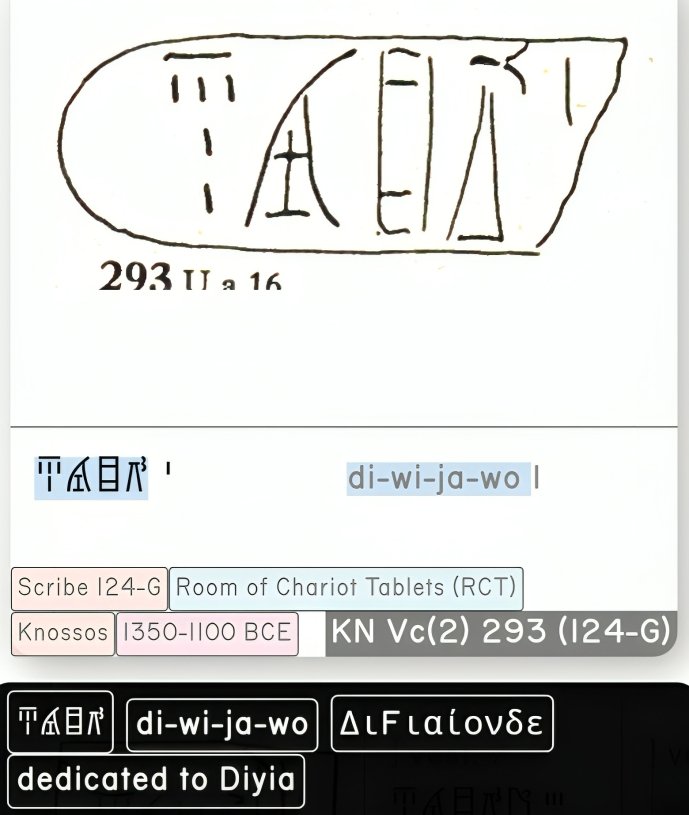
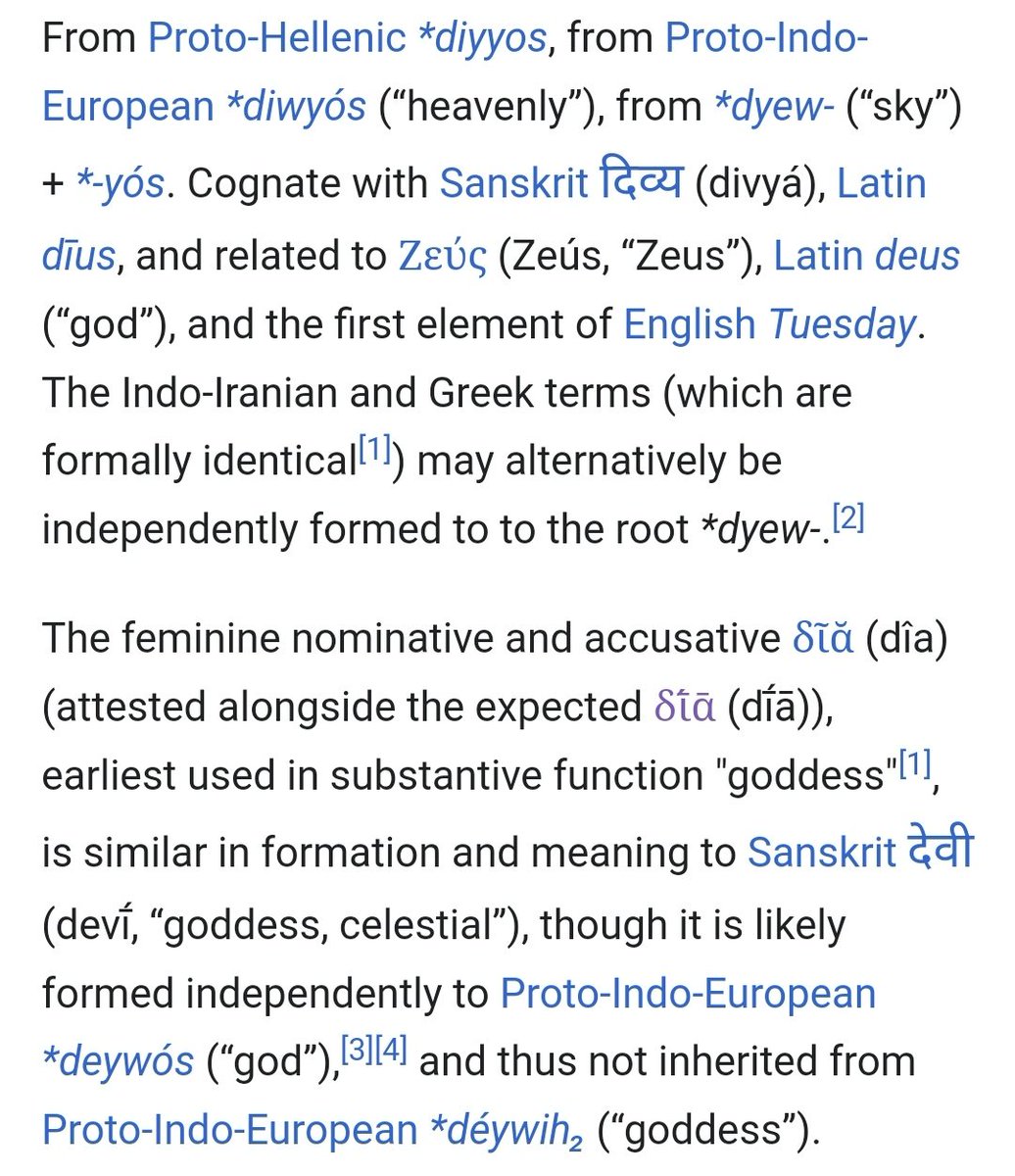
4/ In conclusion, Di-wi-ja was an important deity of Mycenaean religion, similar in nature to Poseidaeia, being the Indo-European evolution of some primitive Mediterranean deity, probably associated with the Sky (PIE *diwyós < *dyew- = δῖος "belonging to heaven, godlike").
5/ The cult of Di-wi-ja disappears with the fall of Mycenaean civilization and there is no mention of her in epic poetry. Her disappearance is perhaps related to the fact that during the Myc period there seem to have been strong influences from dominant female Aegean deities.
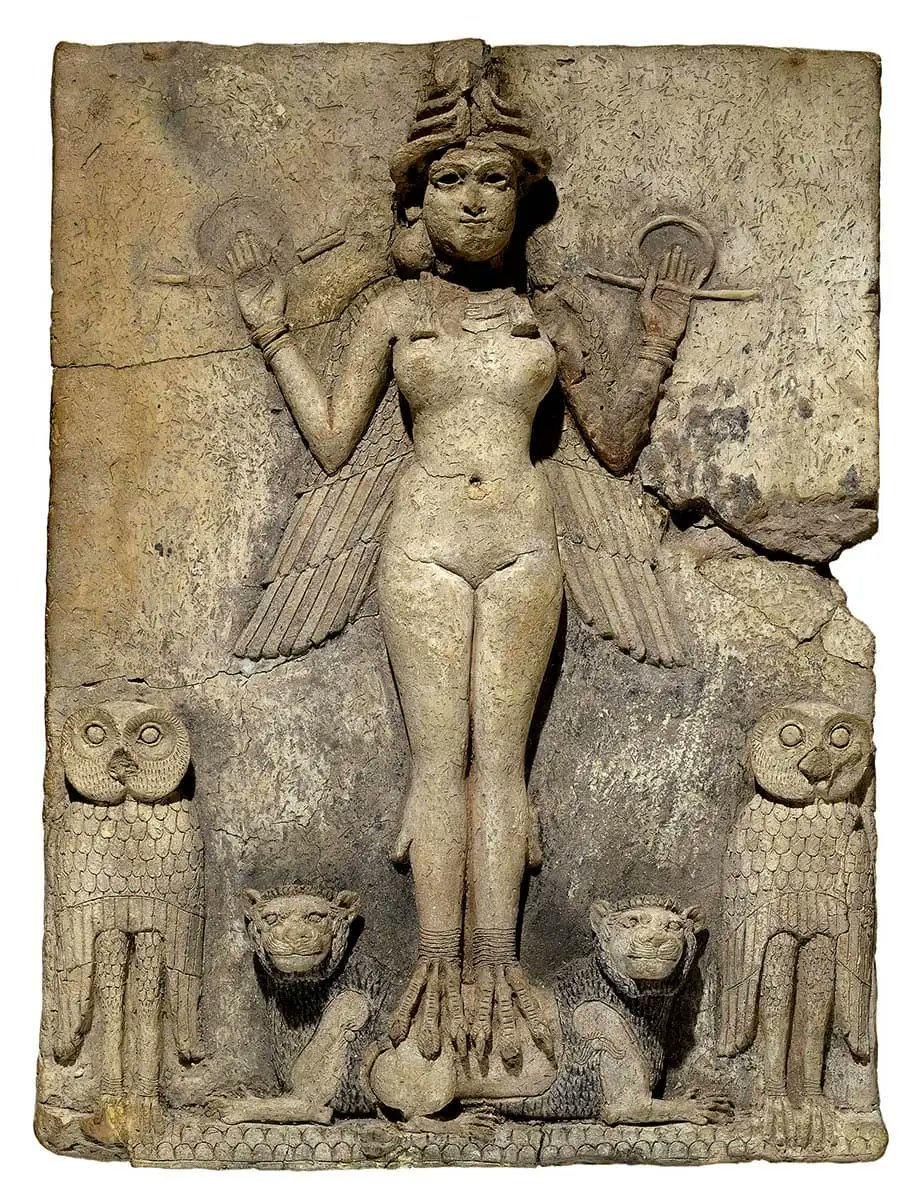
6/ Some scholars see in the historical deity Dione, lover of Zeus and mother of Aphrodite, the evolution of Di-wi-ja. In the Near East there is an analogous case: the Sky deities Anu and Antu are parents of Ishtar, who is the archetype of the origin of Venus.
Loading suggestions...