

1/ Today's 🧵 is about the #pacemaker basics.
The objective of this post is to clarify several doubts in a simple way. #CardioTwitter
I will explain it with simple steps and classic examples so you can understand better.
@ekgdx
The objective of this post is to clarify several doubts in a simple way. #CardioTwitter
I will explain it with simple steps and classic examples so you can understand better.
@ekgdx

2/ Step 1: Identify the chamber(s) paced.
Let's look at the classic examples.
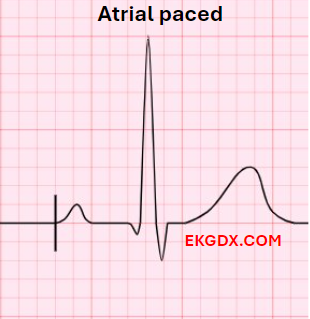
A spike occurring before the P wave usually indicates atrial pacing.
Let's look at the classic examples.
A spike occurring before the P wave usually indicates atrial pacing.
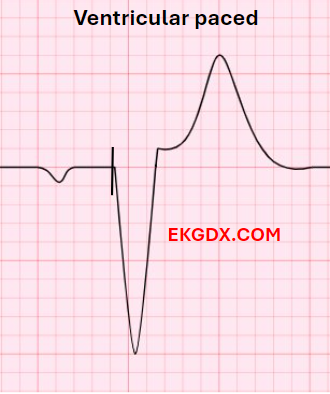
3/ A spike occurring before the QRS complex typically indicates ventricular pacing.
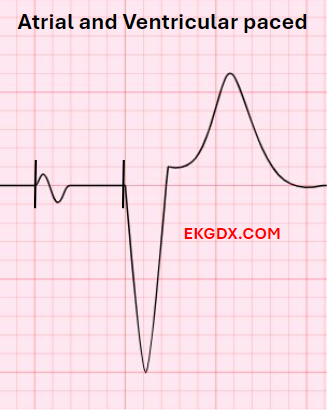
4/ Atrial and ventricular pacing can be seen on the ECG as a pacing stimulus (spike) followed by a P wave and QRS complex.
5/ Step 2: Identify the timing intervals from two consecutively paced beats.
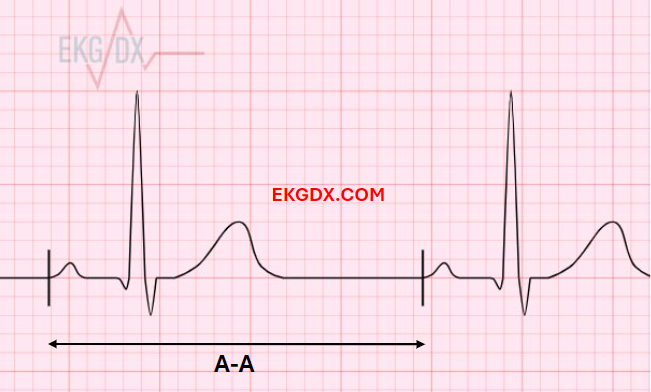
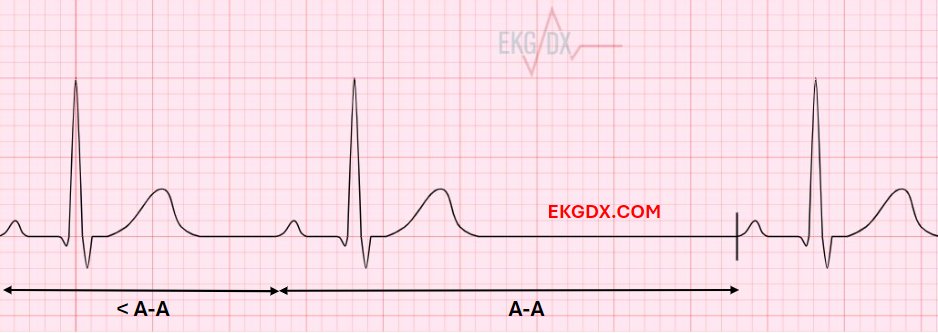
Here a sample of A-A interval in the setting of atrial pacing.
Here a sample of A-A interval in the setting of atrial pacing.
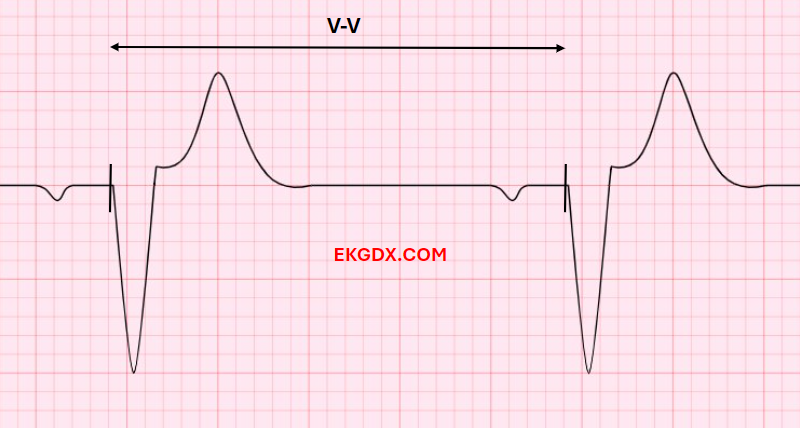
6/ Here a sample V-V interval in the setting of ventricular pacing.
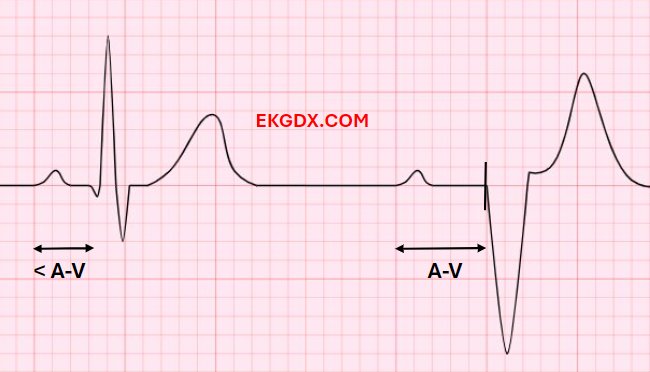
7/ Here a sample of A-V and V-A intervals in the setting of dual-chamber pacing.

8/ Step 3: Identify the chamber(s) sensed.
Atrial pacemaker: Adequate atrial sensing is confirmed when intrinsic atrial activation (native P wave) is followed by either (1) a native P wave occurring at an interval shorter than the A-A interval or (2) an atrial-paced beat that occurs after an interval equal to the A-A interval.
Atrial pacemaker: Adequate atrial sensing is confirmed when intrinsic atrial activation (native P wave) is followed by either (1) a native P wave occurring at an interval shorter than the A-A interval or (2) an atrial-paced beat that occurs after an interval equal to the A-A interval.
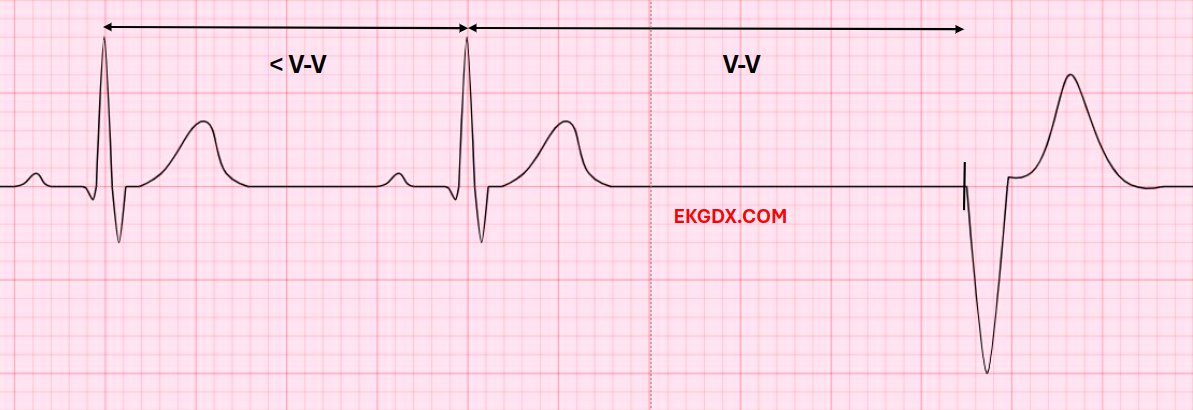
9/ Ventricular pacemaker: For proper ventricular sensing: It is confirmed when intrinsic ventricular activation (native QRS complex) is consistently followed by either (1) a native QRS complex occurring at an interval shorter than the V-V interval or (2) a ventricular-paced beat occurring after an interval equal to the V-V interval.
10/ Dual-chamber pacemaker: Atrial sensing is confirmed when intrinsic atrial activation (native P wave) is consistently followed by either (1) a native QRS complex occurring at an interval shorter than the A-V interval or (2) a ventricular-paced beat occurring at an interval equal to the A-V interval.
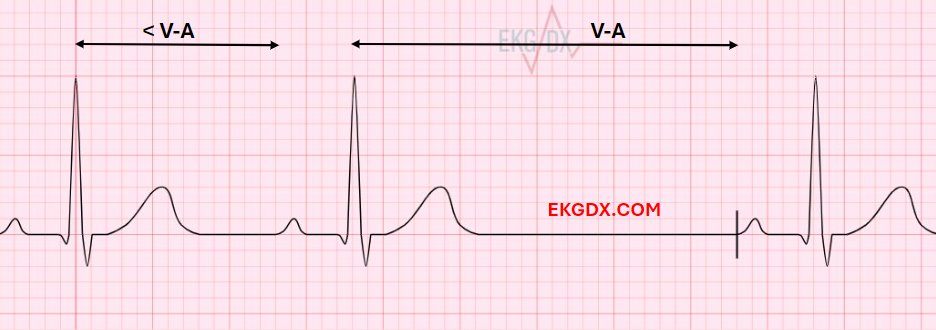
11/ Dual-chamber pacemaker: Ventricular sensing is confirmed when intrinsic ventricular activation (native QRS complex) is consistently followed by either (1) a native P wave occurring at an interval shorter than the V-A interval or (2) an atrial-paced beat occurring at an interval equal to the V-A interval.
12/ Step 4: Identify pacemaker malfunction.
Sensing abnormalities: Undersensing occurs when, based on timing intervals, pacing spikes that should have been inhibited by a native P wave or QRS complex were not. This leads to a paced beat that appears earlier than expected.
For ventricular pacing, undersensing is evident when a native QRS complex is followed by a ventricular-paced beat at an interval less than the V-V interval.
Sensing abnormalities: Undersensing occurs when, based on timing intervals, pacing spikes that should have been inhibited by a native P wave or QRS complex were not. This leads to a paced beat that appears earlier than expected.
For ventricular pacing, undersensing is evident when a native QRS complex is followed by a ventricular-paced beat at an interval less than the V-V interval.

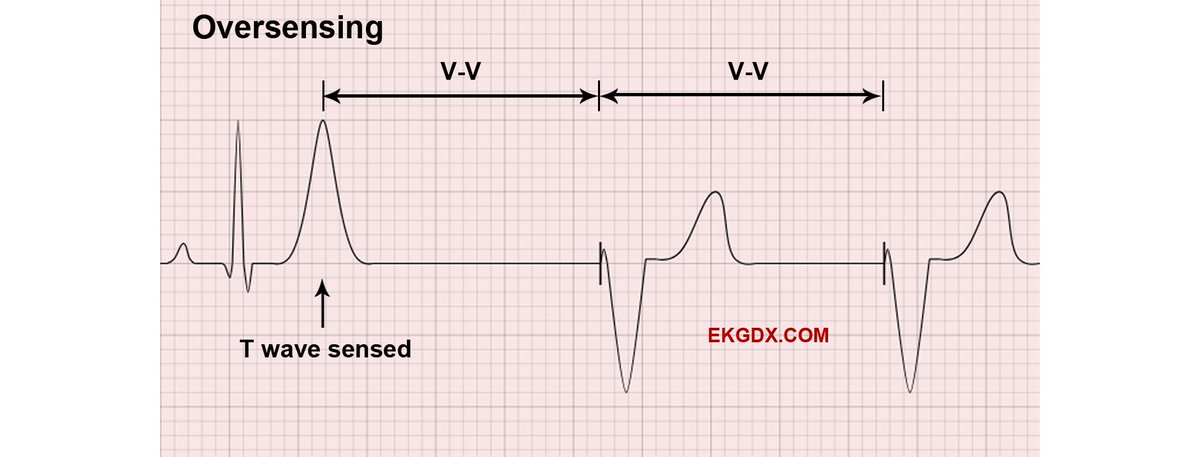
11/ Oversensing is identified when, according to timing intervals, pacing spikes that should have been initiated after a native P wave or QRS complex were not. This leads to a paced beat that appears later than expected. In the case of ventricular pacing, oversensing occurs when a native QRS is succeeded by a ventricular-paced beat at an interval significantly greater than the V-V interval.
Oversensing of the T wave may occur, wherein the T wave is mistakenly sensed as the QRS complex.
Oversensing of the T wave may occur, wherein the T wave is mistakenly sensed as the QRS complex.
12/ Failure to capture (Atrium or Ventricle) occurs when a pacing spike is released but fails to stumilate the atrium or ventricles. In other words, pacing spikes are not followed by a P wave or QRS complex.

13/ References
Here a link with several articles about pacemaker.
#Pacemaker_Basics" target="_blank" rel="noopener" onclick="event.stopPropagation()">ekgdx.com
Here a link with several articles about pacemaker.
#Pacemaker_Basics" target="_blank" rel="noopener" onclick="event.stopPropagation()">ekgdx.com

14/ About Sgarbossa Criteria, check this out
x.com
x.com
15/ Are you looking for EKG Challenges to practice?
x.com
x.com
16/ It's important to note that the appearance of ventricular-paced beats in a surface EKG does not necessarily rule out the presence of a dual-chamber pacemaker. Ventricular-paced beats could result from either a single-chamber ventricular pacemaker or a dual-chamber pacemaker in which ventricular spikes are timed to follow P waves (DDD pacemaker).
Remember: This article is focused on the basics. The world of pacemakers is as deep as the ocean, but this knowledge is necessary to understand the most complex scenarios.
Remember: This article is focused on the basics. The world of pacemakers is as deep as the ocean, but this knowledge is necessary to understand the most complex scenarios.
17/ End
Thanks for reading this 🧵.
If you find this content helpful, please:
1- Follow @doctor_roig and @ekgdx for more.
2- Repost the first tweet for support.
Thanks for reading this 🧵.
If you find this content helpful, please:
1- Follow @doctor_roig and @ekgdx for more.
2- Repost the first tweet for support.
More than 100,000 views in less than 24 hours 😳.
Loading suggestions...