

How is Bharat Ratna selected by Govt. Of India?
How did #UPSC asked in their recent PYQ about the constitutional Perspective of this Award?
Step-by-step explanation from the UPSC Prelims 2024 Perspective
PYQ and Sample Practise Question in the last.
A Thread 🧵
How did #UPSC asked in their recent PYQ about the constitutional Perspective of this Award?
Step-by-step explanation from the UPSC Prelims 2024 Perspective
PYQ and Sample Practise Question in the last.
A Thread 🧵
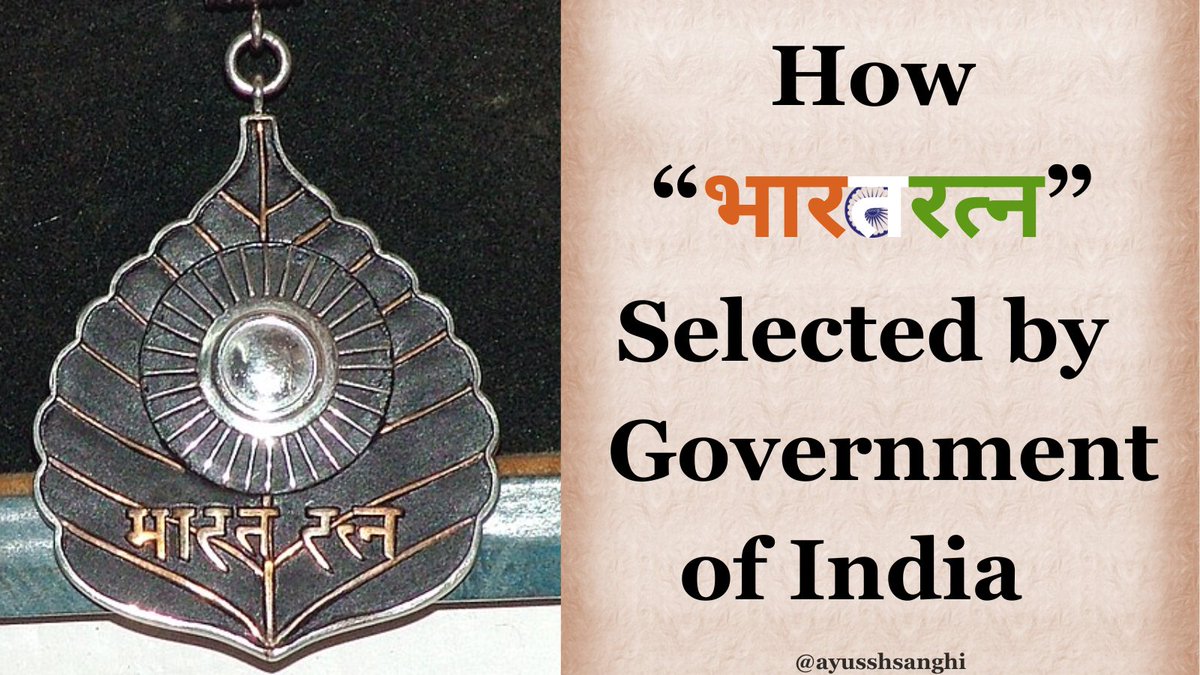
Introduction:
The Bharat Ratna is the highest civilian award in India, established on January 2nd, 1954, by former President Dr. Rajendra Prasad.
Criteria for Award:
- Conferred for exceptional service or performance of the highest order in any field of human endeavour
- Treated distinctly from the Padma Awards, emphasizing its paramount status
Recommendations and Process:
- Recommendations made by the Prime Minister to the President of India
- No formal recommendations are necessary for this prestigious award
The Bharat Ratna is the highest civilian award in India, established on January 2nd, 1954, by former President Dr. Rajendra Prasad.
Criteria for Award:
- Conferred for exceptional service or performance of the highest order in any field of human endeavour
- Treated distinctly from the Padma Awards, emphasizing its paramount status
Recommendations and Process:
- Recommendations made by the Prime Minister to the President of India
- No formal recommendations are necessary for this prestigious award
Historical Significance:
- The first person to get it was the scientist Chandrasekhara Venkata Raman
- The announcement of awards happens on Republic Day every year, but sometimes it didn't happen in certain years
Intermittent Suspensions:
- The awards faced interruptions in 1978, 1979, 1993-1997, 2020, and 2021, showcasing instances of suspension
- The award wasn't given in 1978, 1979, 1993-1997, 2020, and 2021
Limitations on Number:
- Restricted to a maximum of three awards in a particular year
- In 1999, a unique occurrence where four individuals received the Bharat Ratna in the same year.
International Recognition:
- Not limited to Indian citizens; non-Indians like Mother Teresa, Khan Abdul Ghaffar Khan, and Nelson Mandela have been honoured.
- The first person to get it was the scientist Chandrasekhara Venkata Raman
- The announcement of awards happens on Republic Day every year, but sometimes it didn't happen in certain years
Intermittent Suspensions:
- The awards faced interruptions in 1978, 1979, 1993-1997, 2020, and 2021, showcasing instances of suspension
- The award wasn't given in 1978, 1979, 1993-1997, 2020, and 2021
Limitations on Number:
- Restricted to a maximum of three awards in a particular year
- In 1999, a unique occurrence where four individuals received the Bharat Ratna in the same year.
International Recognition:
- Not limited to Indian citizens; non-Indians like Mother Teresa, Khan Abdul Ghaffar Khan, and Nelson Mandela have been honoured.
Constitutional Validity of National Awards:
Supreme Court judgment of 1996
- The Supreme Court delivered a landmark judgment in 1996 in the case of Balaji Raghavan vs Union of India, challenging the constitutional validity of the awards
- The court upheld the awards as valid but ruled that they cannot be used as titles by the recipients, as it would violate Article 18 of the Constitution, which prohibits the State from conferring any titles, except military and academic ones
- The court also directed the government to ensure that the awards are not used for any commercial or political purposes and to frame rules and regulations for the selection and conferment of the awards
Article 18 of the Constitution:
- Article 18 of the Constitution of India prohibits the State from conferring any titles, except military and academic ones, on its citizens or on any person who is not a citizen of India
- The purpose of this article is to uphold the principle of equality and dignity of all persons and to prevent the creation of any privileged class in the society
- The article also empowers the President of India to withdraw any such titles from any person who has been conferred with them
Clarification by Government:
- The government reiterates that these awards are conferred as a mark of respect and honour, not as a means to grant any special privileges or titles to the awardees
Preservation of Equality:
- The restriction on using these awards as titles aligns with the constitutional ethos of promoting equality among citizens, regardless of their achievements or contributions
Supreme Court judgment of 1996
- The Supreme Court delivered a landmark judgment in 1996 in the case of Balaji Raghavan vs Union of India, challenging the constitutional validity of the awards
- The court upheld the awards as valid but ruled that they cannot be used as titles by the recipients, as it would violate Article 18 of the Constitution, which prohibits the State from conferring any titles, except military and academic ones
- The court also directed the government to ensure that the awards are not used for any commercial or political purposes and to frame rules and regulations for the selection and conferment of the awards
Article 18 of the Constitution:
- Article 18 of the Constitution of India prohibits the State from conferring any titles, except military and academic ones, on its citizens or on any person who is not a citizen of India
- The purpose of this article is to uphold the principle of equality and dignity of all persons and to prevent the creation of any privileged class in the society
- The article also empowers the President of India to withdraw any such titles from any person who has been conferred with them
Clarification by Government:
- The government reiterates that these awards are conferred as a mark of respect and honour, not as a means to grant any special privileges or titles to the awardees
Preservation of Equality:
- The restriction on using these awards as titles aligns with the constitutional ethos of promoting equality among citizens, regardless of their achievements or contributions
Previous Year Question - UPSC CSE Prelims (2021)
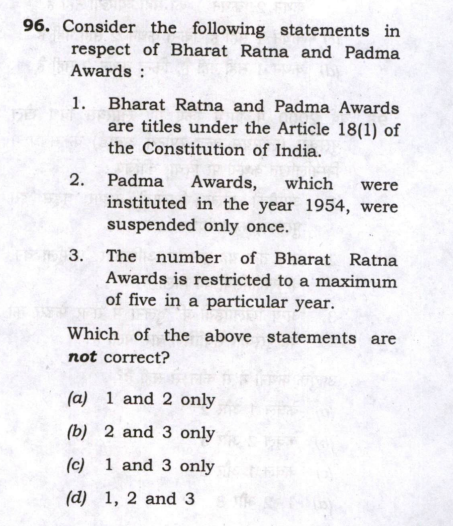
Sample Practise Question:
Q. Consider the following statements about the Bharat Ratna:
1. The Bharat Ratna is exclusively conferred upon Indian citizens and has never been awarded to non-Indians.
2. The awards have been consistently awarded every year since its inception in 1954.
3. The first non-Indian citizen to receive Bharat Ratna was Nelson Mandela.
Which of the above statements are not correct?
[A] 1 and 2 only
[B] 2 and 3 only
[C] 1 and 3 only
[D] 1, 2, and 3
Q. Consider the following statements about the Bharat Ratna:
1. The Bharat Ratna is exclusively conferred upon Indian citizens and has never been awarded to non-Indians.
2. The awards have been consistently awarded every year since its inception in 1954.
3. The first non-Indian citizen to receive Bharat Ratna was Nelson Mandela.
Which of the above statements are not correct?
[A] 1 and 2 only
[B] 2 and 3 only
[C] 1 and 3 only
[D] 1, 2, and 3
Like this thread? follow for such important information @ayusshsanghi
جاري تحميل الاقتراحات...