

SEIZURE SEMIOLOGY TWEETORIAL (UPDATE)
#Epilepsy #NeuroX #Seizure
What more have we learnt about clonic seizures?
neurology.org
#Epilepsy #NeuroX #Seizure
What more have we learnt about clonic seizures?
neurology.org


🧵1/ Definition: These are seizures characterized by "twitching" movements of a body part. "Clonus" is simply considered a repetitive form of "Myoclonus"
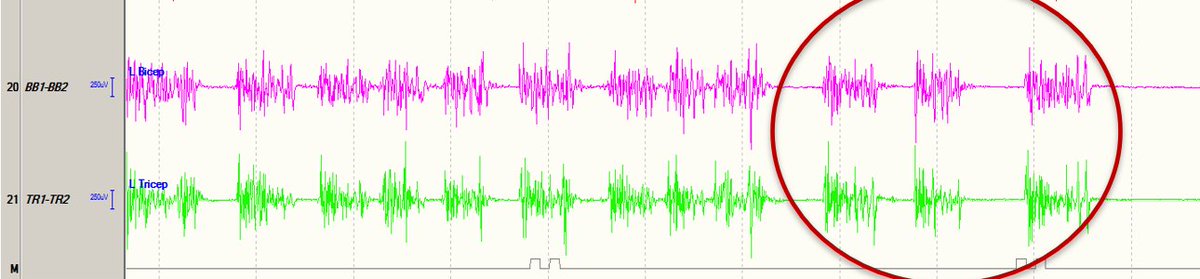
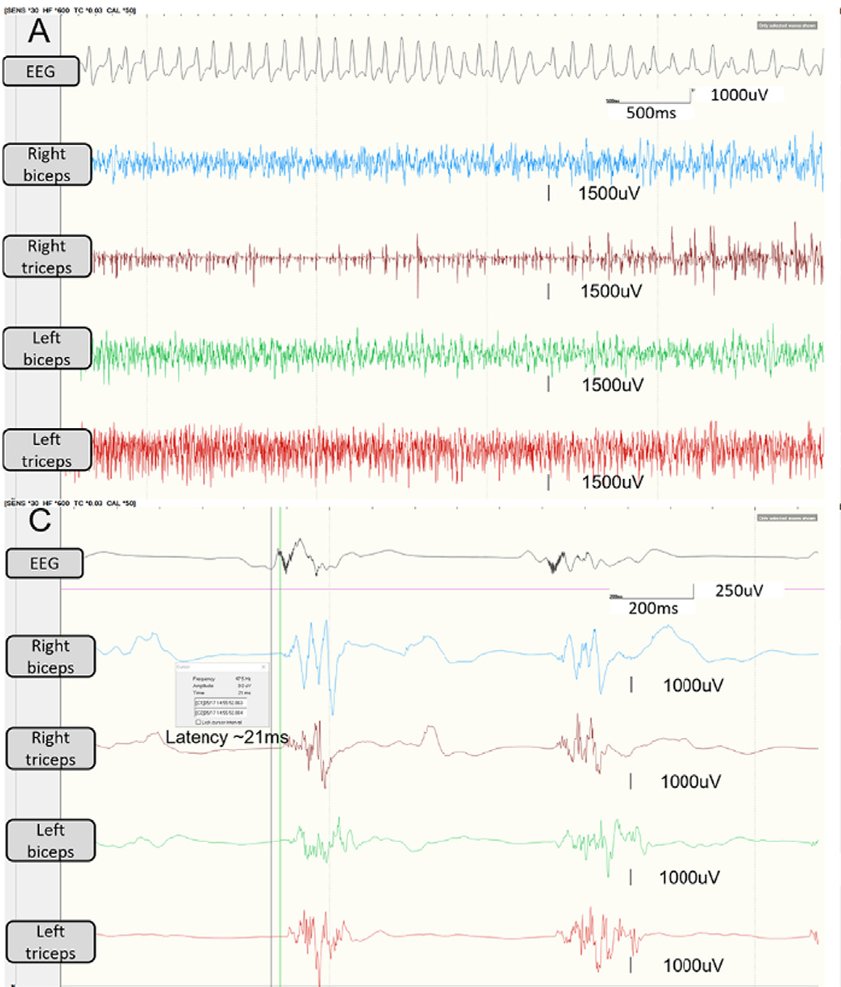
2/ The "twitch" is produced by a SYNCHRONIZED brief tetanic contraction of both agonist and antagonist muscle groups, followed by SYNCHRONIZED silent periods. This phenomenon is what causes the twitching or the jerking appearance.

3/ Clonic seizures can be 'rhythmic' or 'arrhythmic'. Rhythmic clonic seizures are associated with an EEG seizure pattern of "paroxysmal rhythmic monomorphic theta-delta activity".
4/ Rhythmic clonic seizures appear to build up in intensity in a crescendo. This is caused by increased sEMG burst amplitude & duration along with increased silent period (SP) duration as the seizure progresses, hence decreasing the twitch frequency. The offset is usually abrupt.

5/ Rhythmic clonic seizures are analogous to type II clonic responses obtained at high frequency (>=20Hz) cortical stimulation of primary motor area (M1). sEMG bursts are complex and made up of multiple motor unit potentials. SPs occur despite of continued stimulation.
6/ Link to the stimulation study sciencedirect.com
7/ The silent periods are likely due to summation of inhibitory post-synaptic potentials (IPSPs) mediated by recurrent GABAergic pyramidal collaterals. Similar to clonic seizures, type II clonic sEMG bursts ⬆️ in amp, duration & SP duration as the stimulation train continues.
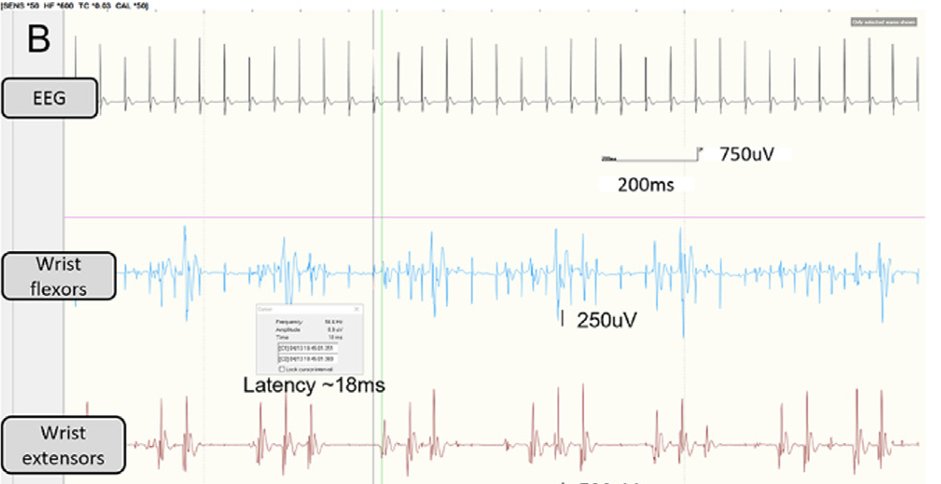
8/ Arrhythmic clonic seizures do not appear to 'evolve'. The sEMG burst amp, duration & SP duration are maintained throughout. The associated EEG pattern is "periodic epileptiform discharges" like LPDs.

9/ Arrhythmic clonic seizures are analogous to type I clonic responses, which are only elicited at low-freq stimulations (<20Hz). SPs occur because of lack of stimulation, just as SPs in arrhythmic clonic seizures correspond to inter-LPD attenuation.
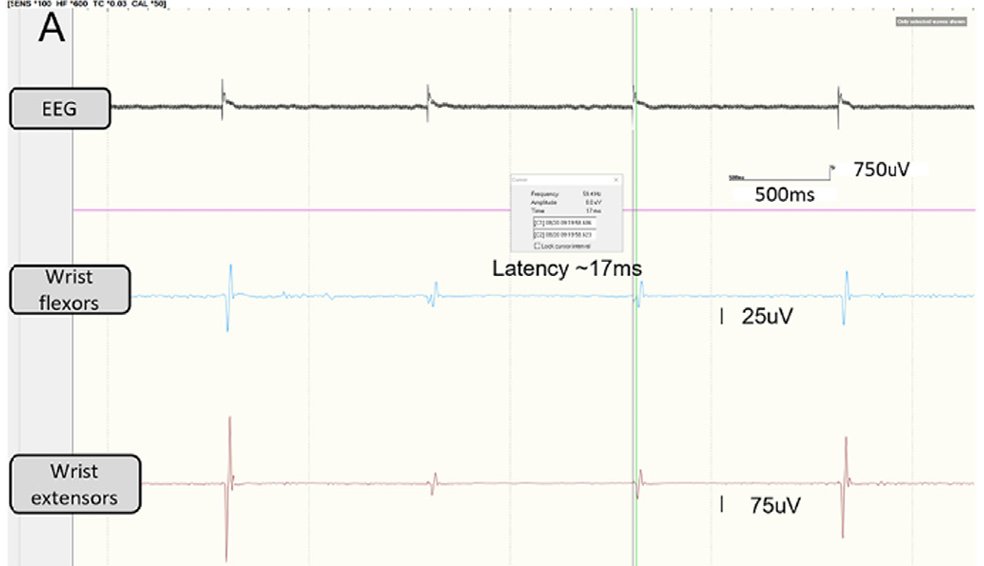
10/ A high-freq (>20Hz), high intensity stimulation of M1 can produce a sustained tetanic contraction, mimicking a tonic seizure, which eventually reverts into a type II clonic response as the stimulation continues.
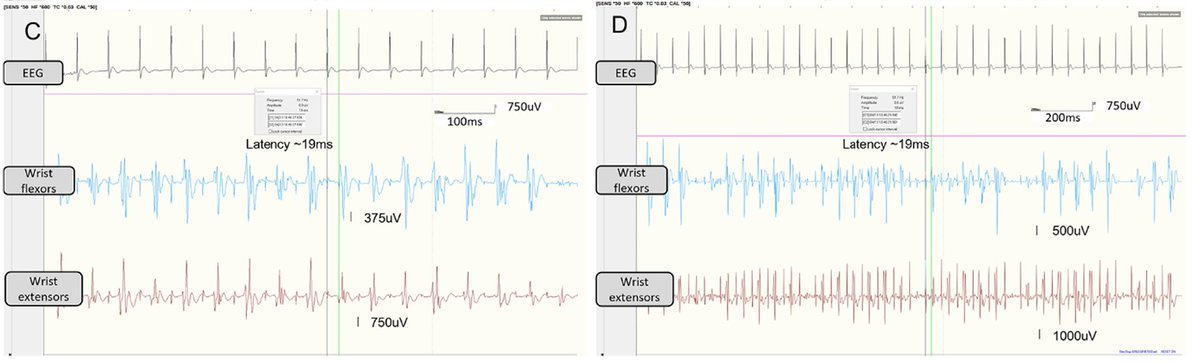
11/ This is analogous to the evolution of a "tonic-clonic" seizure. As the stimulation continues, IPSP summation builds up and produces the SPs. IPSP duration (~100ms) is longer than EPSP duration (~25ms), hence takes longer to summate.
12/ Similarly, the tonic phase of a generalized tonic-clonic seizure is associated with paroxysmal fast activity whereas the clonic phase is associated with a polyspike-slow wave pattern, the slow wave being a result of IPSP summation. neurology.org
13/ Clinically, the most commonly affected body parts are face and upper extremity, consistent with their large representation on the Penfield homunculus.
14/ The most common seizure-onset zone is the peri-rolandic region, consistent with M1 being the symptomatogenic zone. Unilateral clonic seizures have a 100% lateralizing value to the contralateral hemisphere.
15/ Sir Gordon Holmes had proposed that clonic twitching was a result of contraction of agonist muscle groups with simultaneous relaxation of the antagonistic muscle groups. Our studies argue against that.
16/ For more in-depth reading, refer to our recently published articles on this topic:
neurology.org
sciencedirect.com
neurology.org
sciencedirect.com

جاري تحميل الاقتراحات...