

📢Mark this post as important for #UPSCPrelims2024
🟠Our Prime Minister @PMOIndia @narendramodi visited 7 temples on the eve of the PranPratishtha of #RamMandir @Ayodhya #Ayodhya
🟠There is a every possibility that #upsc may ask questions on these #Tamples relating to either their #architecture or the Kings/dynasties associated with each of the said Temple or the historical/religious significance of the each thereof
🟠Though I have tweeted separately on each of the said Temple, but here I am sharing a list of all the 7 temples with the related facts, which may help #upscaspirants in the #GeneralStudies #Preliminary exam 2024
🟠Our Prime Minister @PMOIndia @narendramodi visited 7 temples on the eve of the PranPratishtha of #RamMandir @Ayodhya #Ayodhya
🟠There is a every possibility that #upsc may ask questions on these #Tamples relating to either their #architecture or the Kings/dynasties associated with each of the said Temple or the historical/religious significance of the each thereof
🟠Though I have tweeted separately on each of the said Temple, but here I am sharing a list of all the 7 temples with the related facts, which may help #upscaspirants in the #GeneralStudies #Preliminary exam 2024
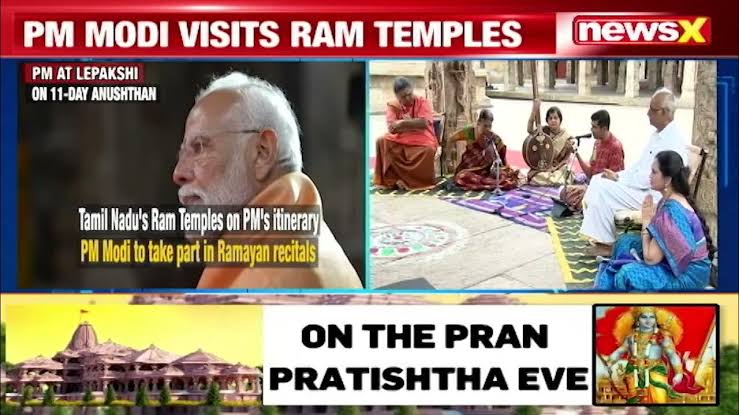
Prime Minister Narendra Modi's Temple Visits in January 2024:
1. Kalaram Temple, Panchavati, Maharashtra (January 11th)
Architectural Style: Nagara or Dravidian - The temple's style is debated, with some experts leaning towards Nagara due to its stepped pyramidal tower (shikhara) and others citing Dravidian elements like the gopurams (gateways) and mandapas (pavilions).
Significance: Associated with Lord Rama's exile, believed to be the place where Rama, Sita, and Lakshmana stayed during their 14-year exile.
2. Veerabhadra Temple, Lepakshi, Andhra Pradesh (January 16th)
Architectural Style: Vijayanagara - Characterized by ornate carvings, pillared halls, and intricately sculpted gopurams. The temple complex features a monolith Nandi bull, considered the largest in India.
Significance: Dedicated to Lord Veerabhadra, an avatar of Lord Shiva. Lepakshi holds a connection to the Ramayana, as the mythical bird Jatayu fought Ravana near this location.
3. Thriprayar Shree Ramaswami Temple, Thrissur, Kerala (January 17th)
Architectural Style: Kerala-style - Known for its sloping tiled roofs, raised platforms (chuttu), and intricate wood carvings. The temple complex also features a pond and a koothampalam (performance hall).
Significance: Dedicated to Lord Rama, the temple is believed to have been built by Lord Parasurama, an avatar of Lord Vishnu.
4. Sri Ranganathaswamy Temple, Srirangam, Tamil Nadu (January 20th)
Architectural Style: Dravidian - Famous for its concentric enclosures, towering gopurams, and intricately sculpted pillars. The temple complex houses several shrines and mandapas, including the Ranganathar sanctum with its 21-foot reclining Vishnu statue.
Significance: Dedicated to Lord Ranganatha (Vishnu), considered a family deity of Lord Rama. The temple is also known for its association with the Ramayana and the Tamil epic Ramavataram.
5. Ramanathaswamy Temple, Rameswaram, Tamil Nadu (January 20th)
Architectural Style: Dravidian - Similar to Sri Ranganathaswamy Temple, featuring gopurams, mandapas, and intricate carvings. The temple complex has long corridors lined with pillars and houses several shrines, including the Ramanathaswamy sanctum with its lingam (phallic symbol) representing Lord Shiva.
Significance: Dedicated to Lord Shiva, believed to have been built by Lord Rama and Hanuman during their quest to rescue Sita. The temple is also known for its long corridors and association with the Ramayana.
6. Kothandaramaswamy Temple, Dhanushkodi, Tamil Nadu (January 21st)
Architectural Style: Dravidian - The temple is believed to have been rebuilt after being destroyed by a cyclone in 1964, with the remaining structures showcasing traditional Dravidian elements.
Significance: Dedicated to Lord Rama, believed to mark the place where Rama built a bridge (Rama Setu) to Lanka to rescue Sita.
7. Arichal Munai, Dhanushkodi, Tamil Nadu (January 21st)
Not a temple in the traditional sense, but a holy site believed to be the starting point of the Rama Setu bridge construction.
Significance: It holds religious and cultural significance for Hindus, associated with the Ramayana and the story of Rama's rescue mission.
1. Kalaram Temple, Panchavati, Maharashtra (January 11th)
Architectural Style: Nagara or Dravidian - The temple's style is debated, with some experts leaning towards Nagara due to its stepped pyramidal tower (shikhara) and others citing Dravidian elements like the gopurams (gateways) and mandapas (pavilions).
Significance: Associated with Lord Rama's exile, believed to be the place where Rama, Sita, and Lakshmana stayed during their 14-year exile.
2. Veerabhadra Temple, Lepakshi, Andhra Pradesh (January 16th)
Architectural Style: Vijayanagara - Characterized by ornate carvings, pillared halls, and intricately sculpted gopurams. The temple complex features a monolith Nandi bull, considered the largest in India.
Significance: Dedicated to Lord Veerabhadra, an avatar of Lord Shiva. Lepakshi holds a connection to the Ramayana, as the mythical bird Jatayu fought Ravana near this location.
3. Thriprayar Shree Ramaswami Temple, Thrissur, Kerala (January 17th)
Architectural Style: Kerala-style - Known for its sloping tiled roofs, raised platforms (chuttu), and intricate wood carvings. The temple complex also features a pond and a koothampalam (performance hall).
Significance: Dedicated to Lord Rama, the temple is believed to have been built by Lord Parasurama, an avatar of Lord Vishnu.
4. Sri Ranganathaswamy Temple, Srirangam, Tamil Nadu (January 20th)
Architectural Style: Dravidian - Famous for its concentric enclosures, towering gopurams, and intricately sculpted pillars. The temple complex houses several shrines and mandapas, including the Ranganathar sanctum with its 21-foot reclining Vishnu statue.
Significance: Dedicated to Lord Ranganatha (Vishnu), considered a family deity of Lord Rama. The temple is also known for its association with the Ramayana and the Tamil epic Ramavataram.
5. Ramanathaswamy Temple, Rameswaram, Tamil Nadu (January 20th)
Architectural Style: Dravidian - Similar to Sri Ranganathaswamy Temple, featuring gopurams, mandapas, and intricate carvings. The temple complex has long corridors lined with pillars and houses several shrines, including the Ramanathaswamy sanctum with its lingam (phallic symbol) representing Lord Shiva.
Significance: Dedicated to Lord Shiva, believed to have been built by Lord Rama and Hanuman during their quest to rescue Sita. The temple is also known for its long corridors and association with the Ramayana.
6. Kothandaramaswamy Temple, Dhanushkodi, Tamil Nadu (January 21st)
Architectural Style: Dravidian - The temple is believed to have been rebuilt after being destroyed by a cyclone in 1964, with the remaining structures showcasing traditional Dravidian elements.
Significance: Dedicated to Lord Rama, believed to mark the place where Rama built a bridge (Rama Setu) to Lanka to rescue Sita.
7. Arichal Munai, Dhanushkodi, Tamil Nadu (January 21st)
Not a temple in the traditional sense, but a holy site believed to be the starting point of the Rama Setu bridge construction.
Significance: It holds religious and cultural significance for Hindus, associated with the Ramayana and the story of Rama's rescue mission.
Loading suggestions...