

The closer we get to 22 Jan, more stupid the detractors get. The latest is Patrick Olivelle, Professor Emeritus of Asian Studies, The University of Texas at Austin. He suggests temples & Vedic rituals are incompatible.
Let's examine.
#Thread
Let's examine.
#Thread

Prof Olivelle is what we know as BOWI. Brown Outside White Inside. A Sri Lankan, educated at Oxford, he likely self identifies as a white, liberal, atheist.
The essence of his opinion is that Vedas & temples are incompatible & hence the Ram Mandir is an anti Vedic project.
The essence of his opinion is that Vedas & temples are incompatible & hence the Ram Mandir is an anti Vedic project.
He begins by telling us there was no Sanskrit word for temple in ancient India & only after 3rd BCE we get terms like devalaya, devayatana, devagriha, & sometimes devakula & kostha. He says that the Hindu temples were essentially copy cats of Buddhist temples.
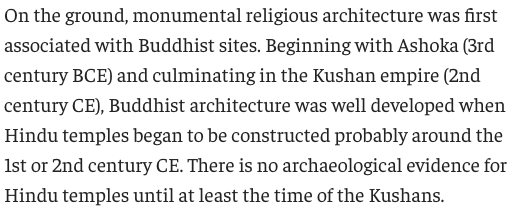
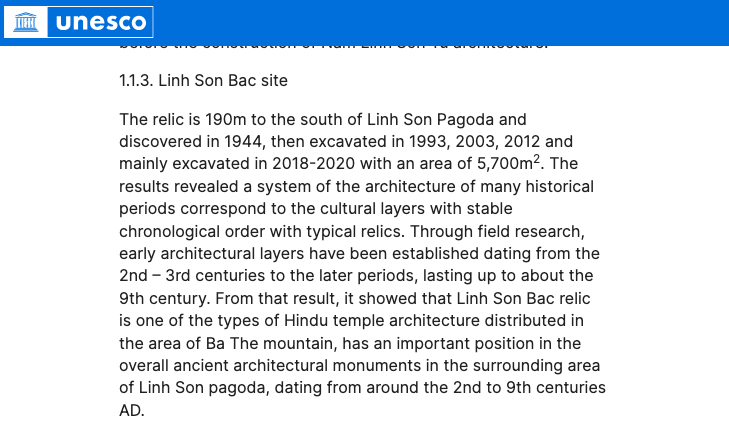
Hindu temples have been excavated in Vietnam dating back to 2nd CE. It is likely that India had developed the tradition of temple building way before that.
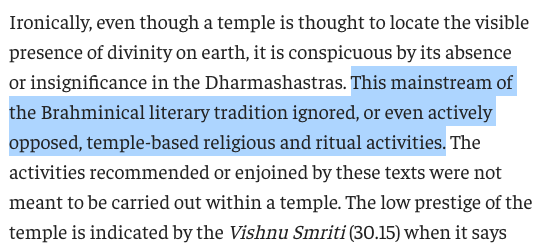
The Prof is trying hard to tell us that a temple is a relatively modern concept for Hindus & hence should not be made into a big deal. He even goes on to quote scriptures to tell us why temples are some inconsequential structures. The only thing is his quotes are out of context
His first quote is Vishnu Smriti 30:15. He says, 'that Vedic recitation should not be carried out “in a temple, in a cemetery, at a crossroads, or on a road.” Placing a temple next to a cemetery is telling.'
The quote is correct, but he hides the context in which it is said.
The quote is correct, but he hides the context in which it is said.
The quote is taken from section 30 which deals with the conduct of a student studying Veda. It is kind of an SoP, which gives out the dos & don'ts. Reading of the entire section tells us that the instructions are to ensure a conducive atmosphere for the studies.
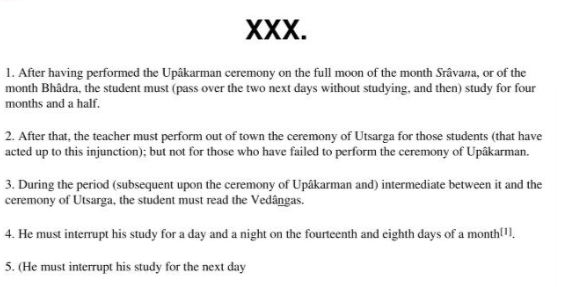
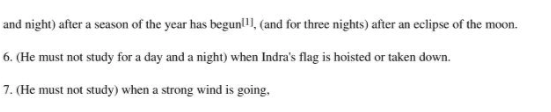
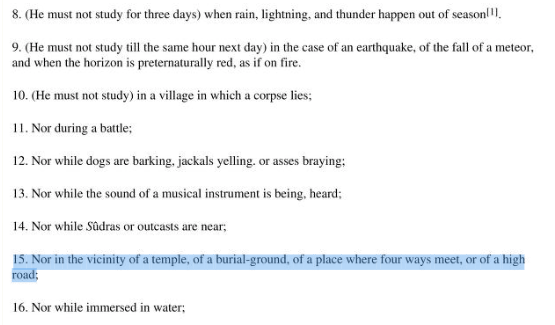
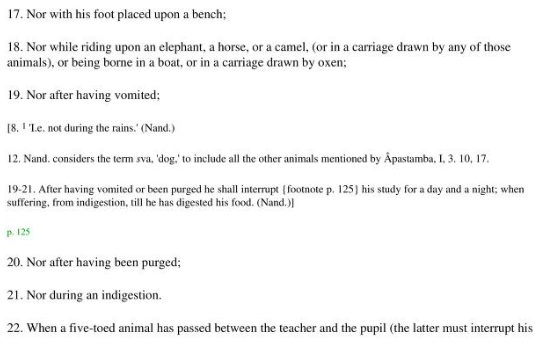
Nowhere does it suggest that a temple is an inferior place or not compatible with the Vedas. The Prof does what all white 'Indologists' do. Manipulate, hide & misrepresent facts to make a point.
Let's see his second reference for Devalakas.
Let's see his second reference for Devalakas.
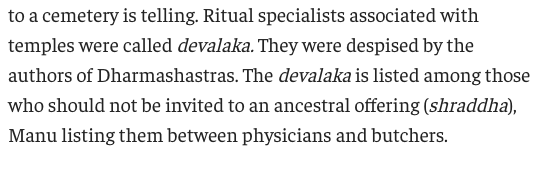
Who is a Devalaka? According to Manusmriti (3:152), anyone who makes a living (draws a salary, accepts money) for three years by worshipping gods, is called the Devalaka, despised at all offerings to Gods and Pitṛs; he is to be regarded as unfit for company at all functions.’
Here what Manu is saying is that God's worship should not be done in return for money. It should be unconditional. Whoever takes money for worship is unfit. It also means that anyone (a temple priest) who is doing the worship without taking money/salary is acceptable.
Just when one would think that the prof. will stop at one instance of manipulation, he comes up with another. Here he is quoting Vasishta Dharmasutra 10:3, telling us that temples were not so much for worshiping Gods but an OYO for wandering ascetics.
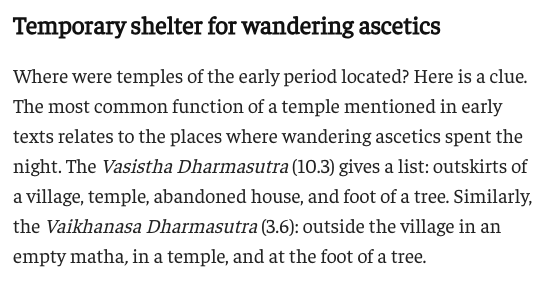
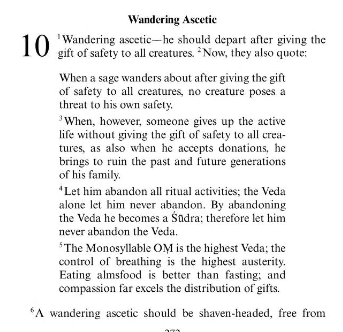
This has to be the stupidest way of making one's argument. Again the prof misquotes the Dharmasutra here. Section 10 of the VD deals with the conduct of a wandering ascetic. The do's & don'ts. It nowhere says that temples are foremost an inn or a resting place.
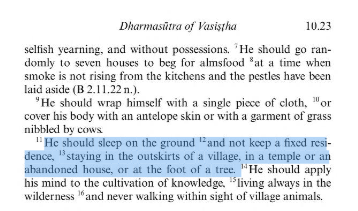
He then goes on to imagine (based on his own fabrication) that temples were some secluded structures located far away from habitation.
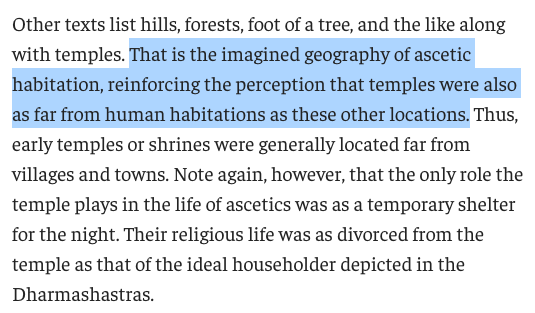
He ends his opinion with an observation that though temples have become an important part of Hinduism, it is not something that the Dharmashastras condone. What he means is that the fervour around RJB temple is not according to Dharmashastras & not even OG Hindu.
Now imagine the plight of Prof. Olivelle, when the same Dharmashastra that he quotes also tell us how important temples really are.
Here are some examples on what the Vishnu Smriti says about temples.
Here are some examples on what the Vishnu Smriti says about temples.
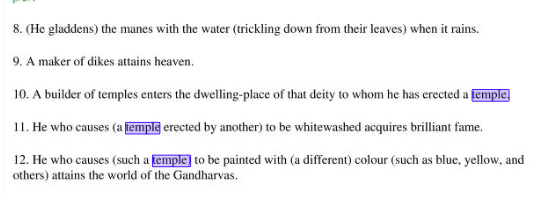
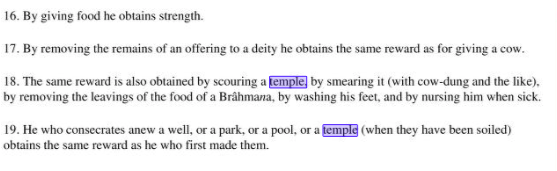
'He who consecrates anew a well, or a park, or a pool, or a temple (when they have been soiled) obtains the same reward as he who first made them.'
This verse is the nemesis of the Prof who wrote an entire opinion piece to discredit the RJB temple.
This verse is the nemesis of the Prof who wrote an entire opinion piece to discredit the RJB temple.
It is appalling how a prof is engaging in lies to prove his point. If academic dishonesty had a name, it would be Patrick Olivelle.
The full article can be read here.
theprint.in
The full article can be read here.
theprint.in

Loading suggestions...