
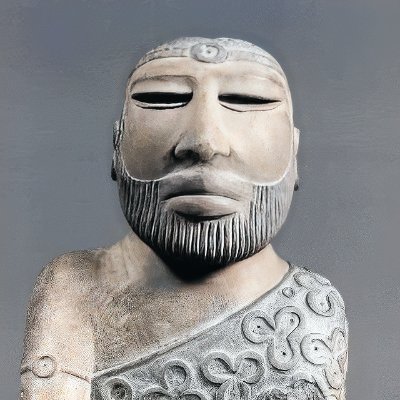
"#Dholavira: From Ruins to Marvelous Metrological excellence"
Previously known merely as ruins, #Dholavira - one of the earliest docks - has unveiled astonishingly refined metrology results that remain relevant today. Impressively, the city's metrology procedures persisted even through the Mauryan period.
**Protective Measures**
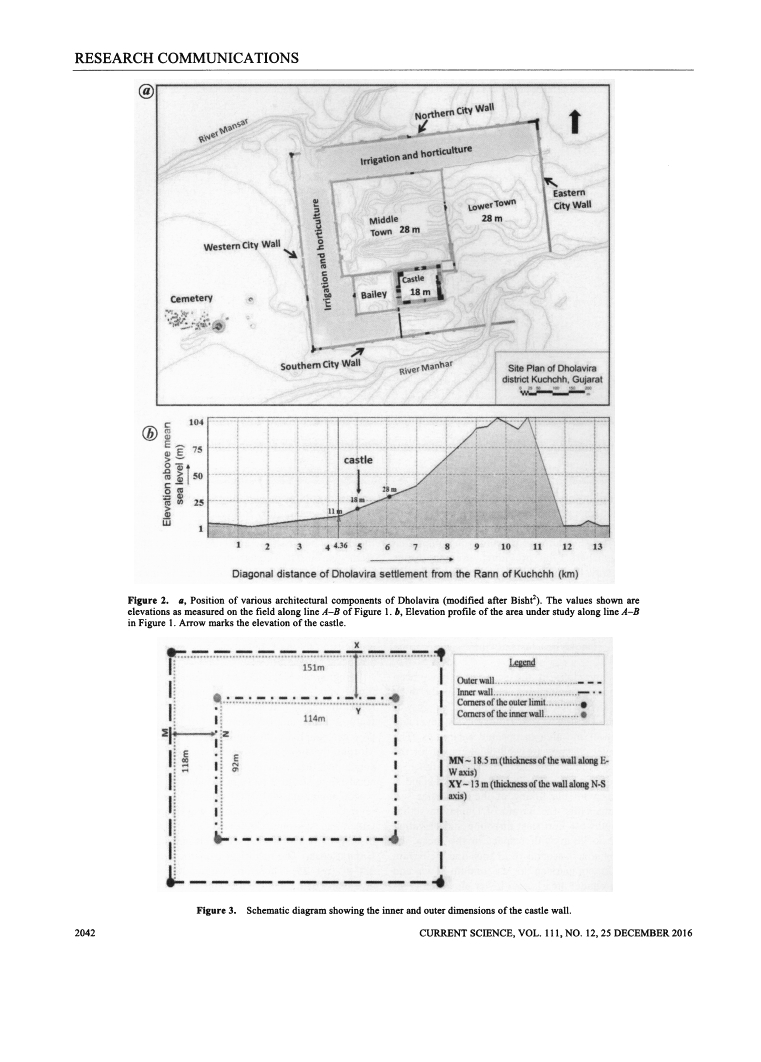
The city's architects foresaw the need for protective measures against tsunamis and storms. To this end, the internal city walls were built an incredible 13-18 meters thick, designed to resist the impact of a tsunami. In comparison, the Great Wall of China is only 4-5 meters thick.
**Architectural Symmetry**
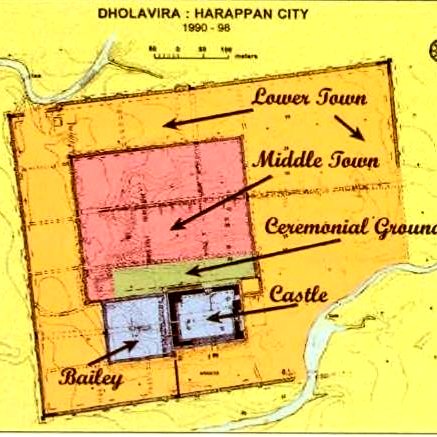
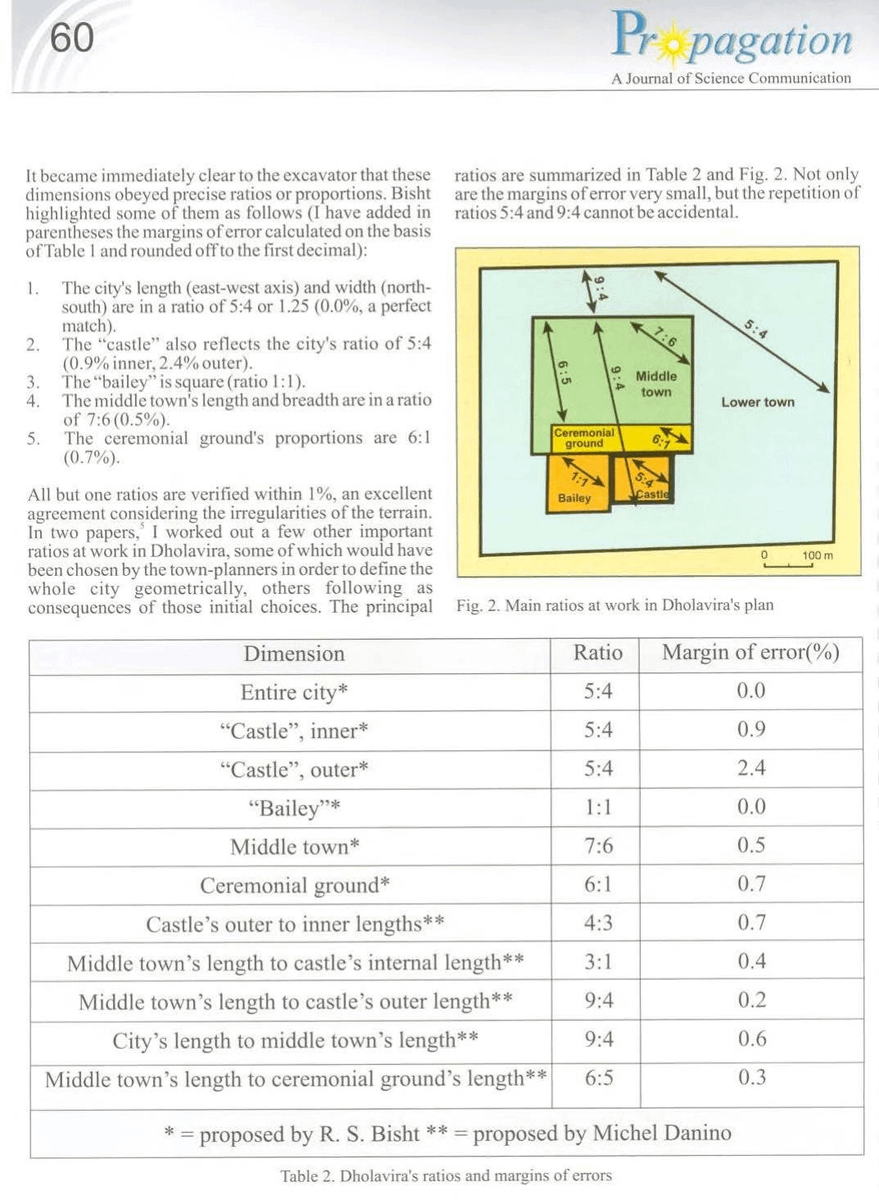
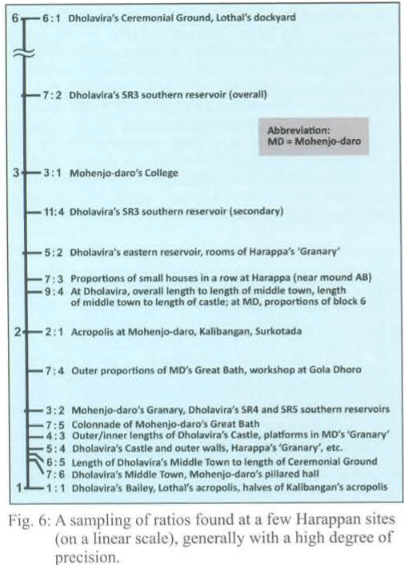
The city's layout exhibits strategic proportions.
- The length on the east-west axis and width on the north-south axis adhere to a 5:4 ratio.
- The Castle's design reflects this ratio. The Bailey, held to a perfect square, represents a ratio of 1:1.
- The middle town's length and breadth follow a ratio of 7:6, and
- The ceremonial ground aligns with proportions of 6:1.
#Thread #Archaeology on new insights. Continue.....
1/
Previously known merely as ruins, #Dholavira - one of the earliest docks - has unveiled astonishingly refined metrology results that remain relevant today. Impressively, the city's metrology procedures persisted even through the Mauryan period.
**Protective Measures**
The city's architects foresaw the need for protective measures against tsunamis and storms. To this end, the internal city walls were built an incredible 13-18 meters thick, designed to resist the impact of a tsunami. In comparison, the Great Wall of China is only 4-5 meters thick.
**Architectural Symmetry**
The city's layout exhibits strategic proportions.
- The length on the east-west axis and width on the north-south axis adhere to a 5:4 ratio.
- The Castle's design reflects this ratio. The Bailey, held to a perfect square, represents a ratio of 1:1.
- The middle town's length and breadth follow a ratio of 7:6, and
- The ceremonial ground aligns with proportions of 6:1.
#Thread #Archaeology on new insights. Continue.....
1/
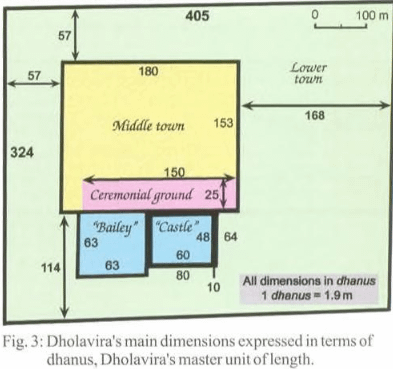
Dholavira's Master Unit of Length
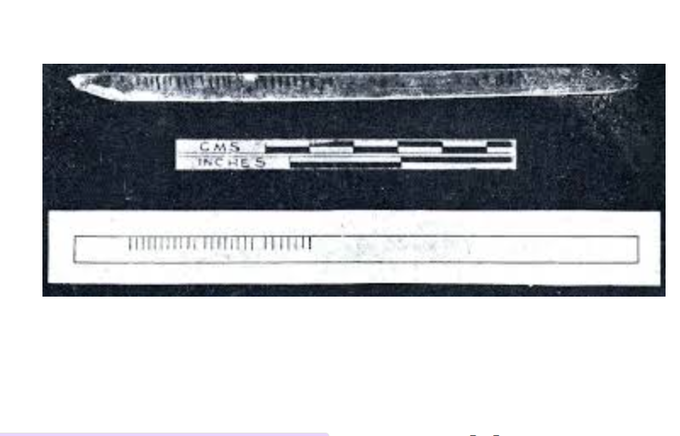
In this paper, the author utilized "Dhanus" as a unit of measurement equivalent to 1.9 meters to evaluate dimensions. The findings indicate that the Harappan civilization not only had a preference for ratios but also applied them consistently across settlements during that time period, with some margin of error (MOE).
The author deduced that '108' Angula equals 1 Dhanusha, which is equivalent to 1.9 meters.
2/
In this paper, the author utilized "Dhanus" as a unit of measurement equivalent to 1.9 meters to evaluate dimensions. The findings indicate that the Harappan civilization not only had a preference for ratios but also applied them consistently across settlements during that time period, with some margin of error (MOE).
The author deduced that '108' Angula equals 1 Dhanusha, which is equivalent to 1.9 meters.
2/
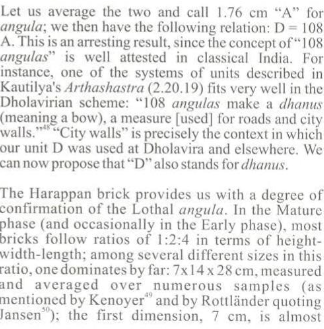
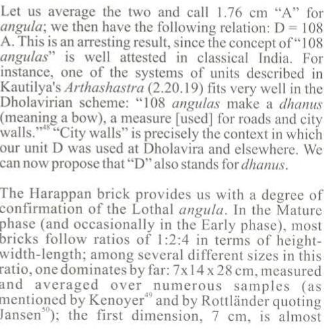
The new equation of 'Angula' aligns with references in Kautilya's Arthashastra (2.20.6, 2.20.19) and Varahamihira's Brihat Samhita (LVIII.2).
According to these sources, the #Harappan bricks were measured at 7:14:28.
Approximately, 7 is equivalent to 4 Angulas.
3/
According to these sources, the #Harappan bricks were measured at 7:14:28.
Approximately, 7 is equivalent to 4 Angulas.
3/
Continuity of the #Dholavira Scheme of Ratios and Units of 1+1/4 and 1+1/6, r equivalent to 5:4 and 7:6 respectively noted in Brihat Samhita (53.4 & 5)
- length of a king's palace is greater than its breadth by a 4
- the length of a commander's house exceeds its width by a 6
4/
- length of a king's palace is greater than its breadth by a 4
- the length of a commander's house exceeds its width by a 6
4/
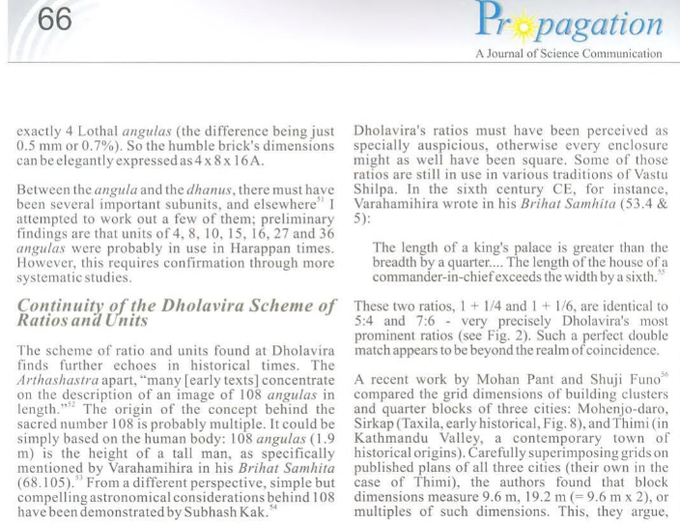
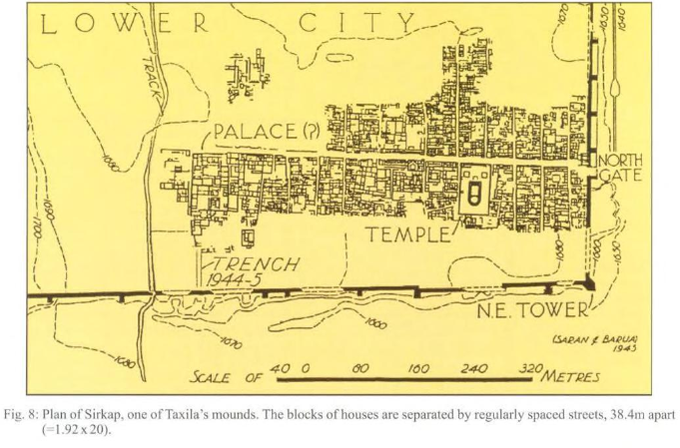
The dimensions of building clusters and quarter blocks were examined in three cities: Mohenjodaro, Sirkap, Taxila, & Thimi, located in the Kathmandu Valley.
The study found that block measured 9.6 m, 19.2 m (which is 9.6 m x 2)
This pattern persisted even after two millennia
5/
The study found that block measured 9.6 m, 19.2 m (which is 9.6 m x 2)
This pattern persisted even after two millennia
5/
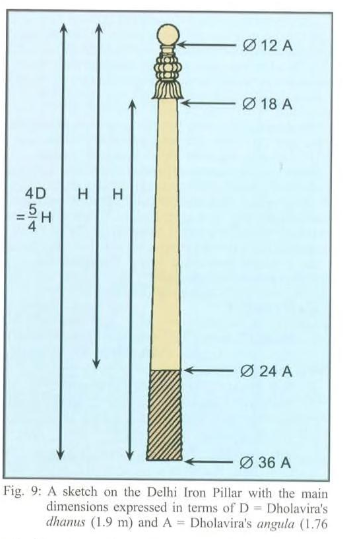
Nearly three millennia later, the #dholavira metrological ratios were discovered to be applied to the Iron Pillar in Delhi.
The ratio between the pillar's total length (7.67 m) and the portion above the ground (6.12 m) is 5:4.
6/
The ratio between the pillar's total length (7.67 m) and the portion above the ground (6.12 m) is 5:4.
6/
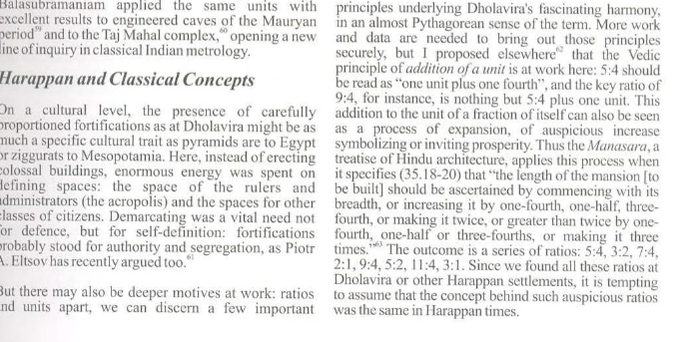
The metrological ratios of Dholavira and IVSC civilization, are comparable to the Vedic principle of 'Addition of one unit'. By applying this principle, Mansara (c.1000 CE) derived the most prominent ratios used in Dholavira: 5:4, 3:2, 7:4, 2:1, 9:4, 5:2, 11:4, and 3:1
7/
7/
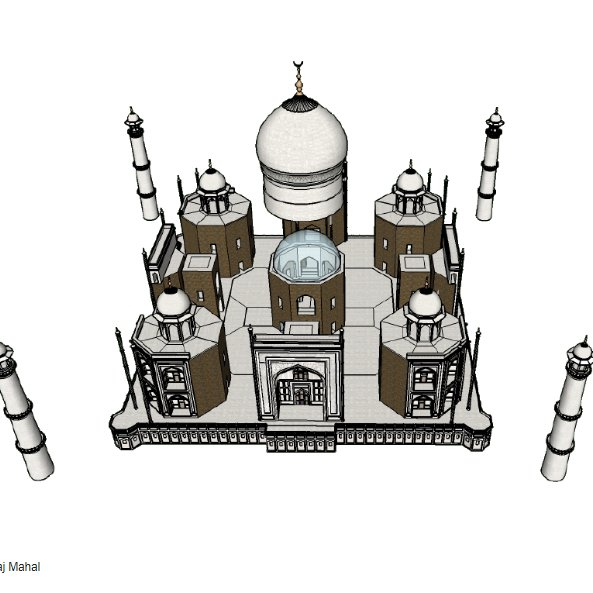
Through dimensional analysis, it has been discovered that the modular planning of the #TajMahal complex was carried out using traditional measurement units described in the #Arthasastra. Specifically, the vitasti unit, which measures 12 angulams equivalent to 1.763 cm.
8/
8/
jstor.org/stable/24911592
Ancient Indians (Harappan settlement) were aware of tsunami/storm protection measures: a new interpretation of thick walls at Dholavira, Gujarat, India on JSTOR
R. Nigam, R. Dubey, R. Saraswat, Sundaresh, A. S. Gaur, V. J. Loveson, Ancient Indians (Harappan set...
jstor.org/stable/24112081
New insights on the modular planning of the Taj Mahal on JSTOR
R. Balasubramaniam, New insights on the modular planning of the Taj Mahal, Current Science, Vol. 97,...
indianculture.gov.in/other-collecti…
The Metrology Behind Harappan Town-Planning
Includes bibliographical references.
I hope you are enjoying my contents.
Please subscribe my YouTube channel @gemsofindology" target="_blank" rel="noopener" onclick="event.stopPropagation()">youtube.com and t.me and support us.
Please subscribe my YouTube channel @gemsofindology" target="_blank" rel="noopener" onclick="event.stopPropagation()">youtube.com and t.me and support us.


Loading suggestions...