
I read "The Most Important Thing" by Howard Marks so you don't have to.
Here are some excerpts from the book I found interesting. I'll also share some personal takeways and how it applies to the crypto markets.
Here are some excerpts from the book I found interesting. I'll also share some personal takeways and how it applies to the crypto markets.

Marks' approach to value investing is centered around the concept of “second-level thinking,” which means that investors should think differently than the market and look for opportunities where others do not.
He runs Oaktree Capital Management which had an AUM of $164B in 2022.
He runs Oaktree Capital Management which had an AUM of $164B in 2022.

Though Marks comes from a non-crypto background, his lessons from surviving multiple cycles is still valuable for those trying to make it in crypto.
Good times create weak men, and weak men create bad times. Bad times creates strong men, and strong men create good times.
Good times create weak men, and weak men create bad times. Bad times creates strong men, and strong men create good times.

Marks explains his "20 Most Important Things" you must know if you want to become a successful investor.
I will summarize them all below and share some personal notes, as an active participant in the liquid crypto markets.
Let's get started!
I will summarize them all below and share some personal notes, as an active participant in the liquid crypto markets.
Let's get started!
The first most important thing is second-level thinking.
First-level thinkers say, "This is a good crypto/stock, let's buy." Second-level thinkers say, "It's a good project/company, but everyone thinks that. Therefore, it's overrated & overpriced."
First-level thinkers say, "This is a good crypto/stock, let's buy." Second-level thinkers say, "It's a good project/company, but everyone thinks that. Therefore, it's overrated & overpriced."
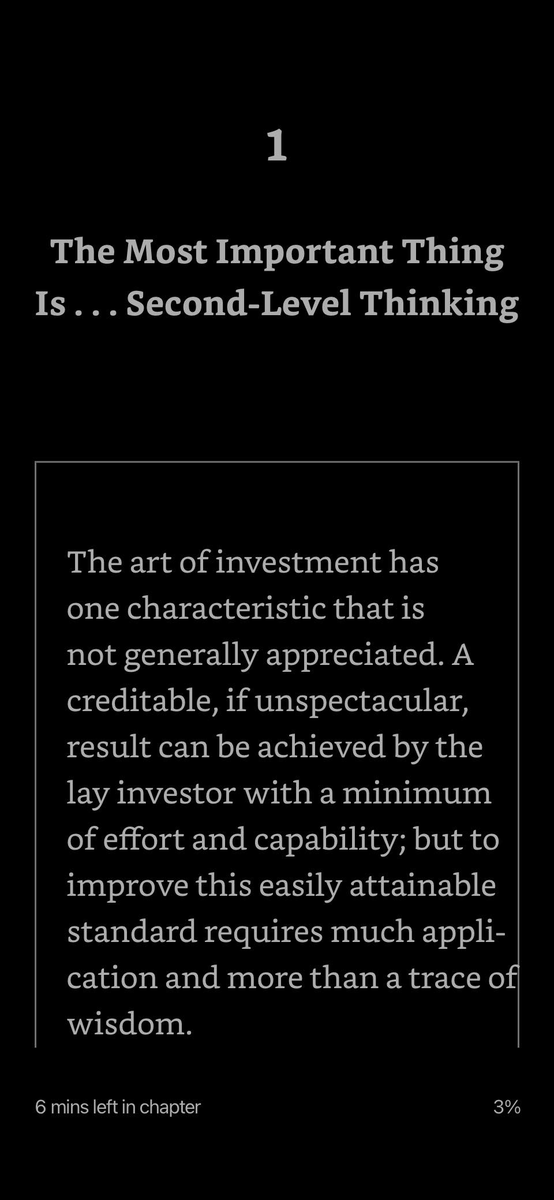
First-level thinkers generally agree with everyone else, and reach the same conclusions. But these people can't beat the market because they ARE the market.
The best investors are able to understand what first-level thinkers are thinking, and then go a step beyond.
The best investors are able to understand what first-level thinkers are thinking, and then go a step beyond.
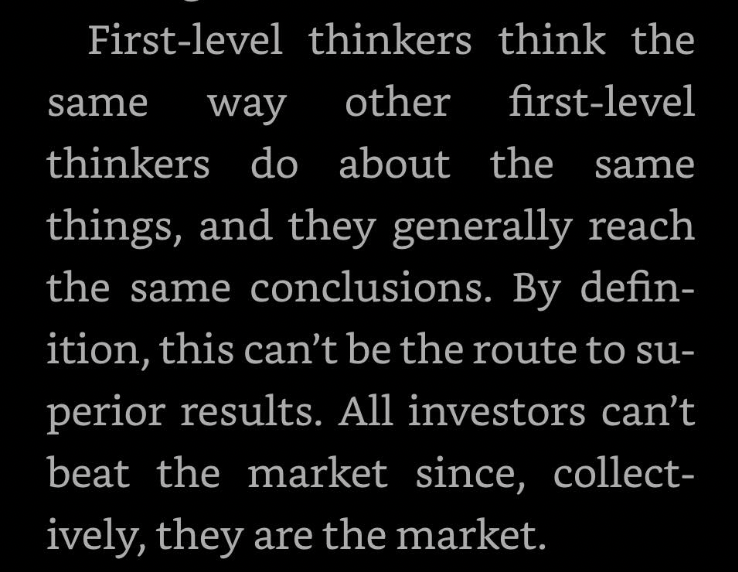
The second most important thing is understanding market efficiency (and its limitations).
Let's say a stock/crypto is appreciating because the fundamentals look amazing, and everyone's talking about it.
Before you buy, you have to ask yourself, "But who doesn't know that?"
Let's say a stock/crypto is appreciating because the fundamentals look amazing, and everyone's talking about it.
Before you buy, you have to ask yourself, "But who doesn't know that?"
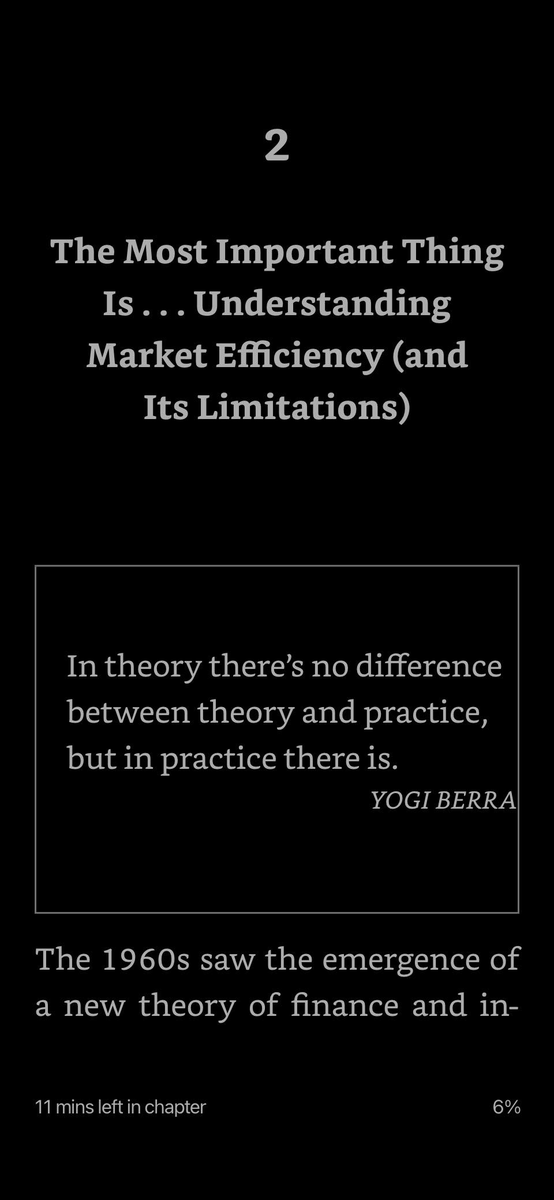
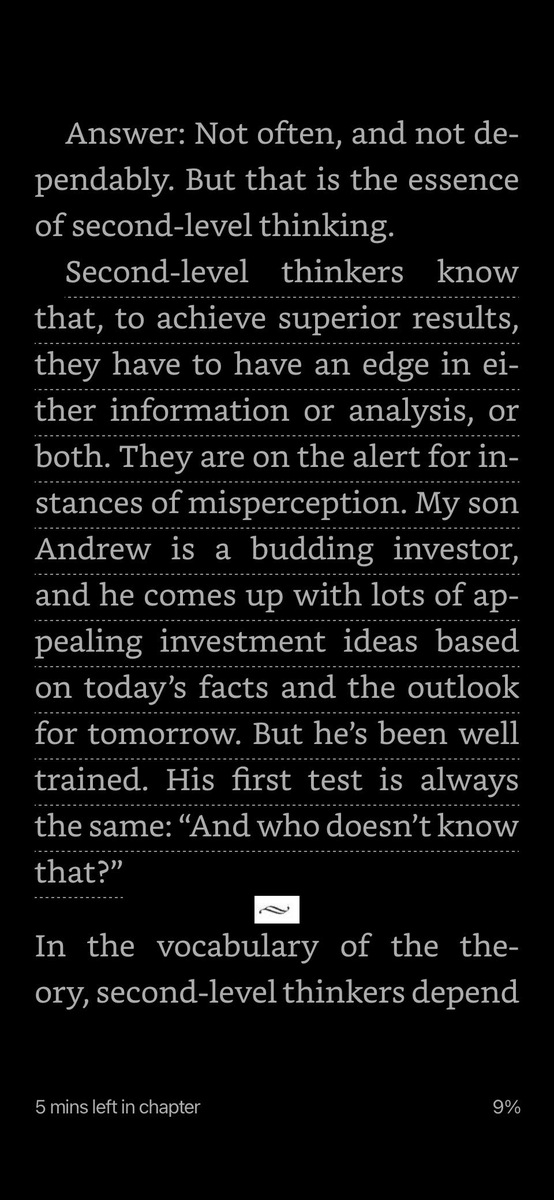
The stock market is hard to beat because it's very efficient.
Crypto is definitely an inefficient market, so there's more room for alpha/edge. But this doesn't make it easy. It just means there are market mispricings that someone can benefit or lose from.
Crypto is definitely an inefficient market, so there's more room for alpha/edge. But this doesn't make it easy. It just means there are market mispricings that someone can benefit or lose from.
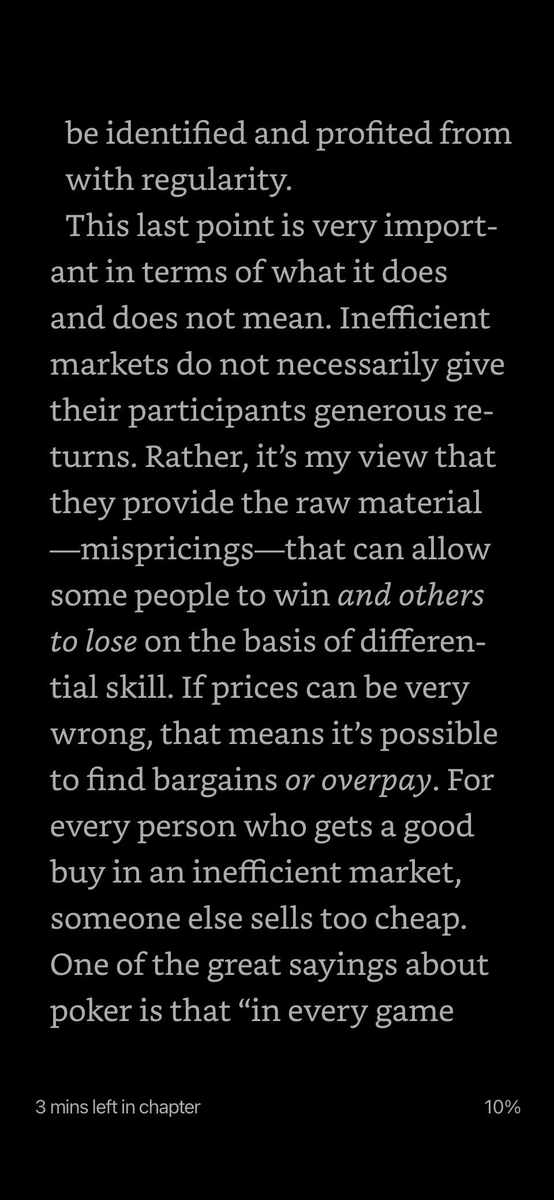
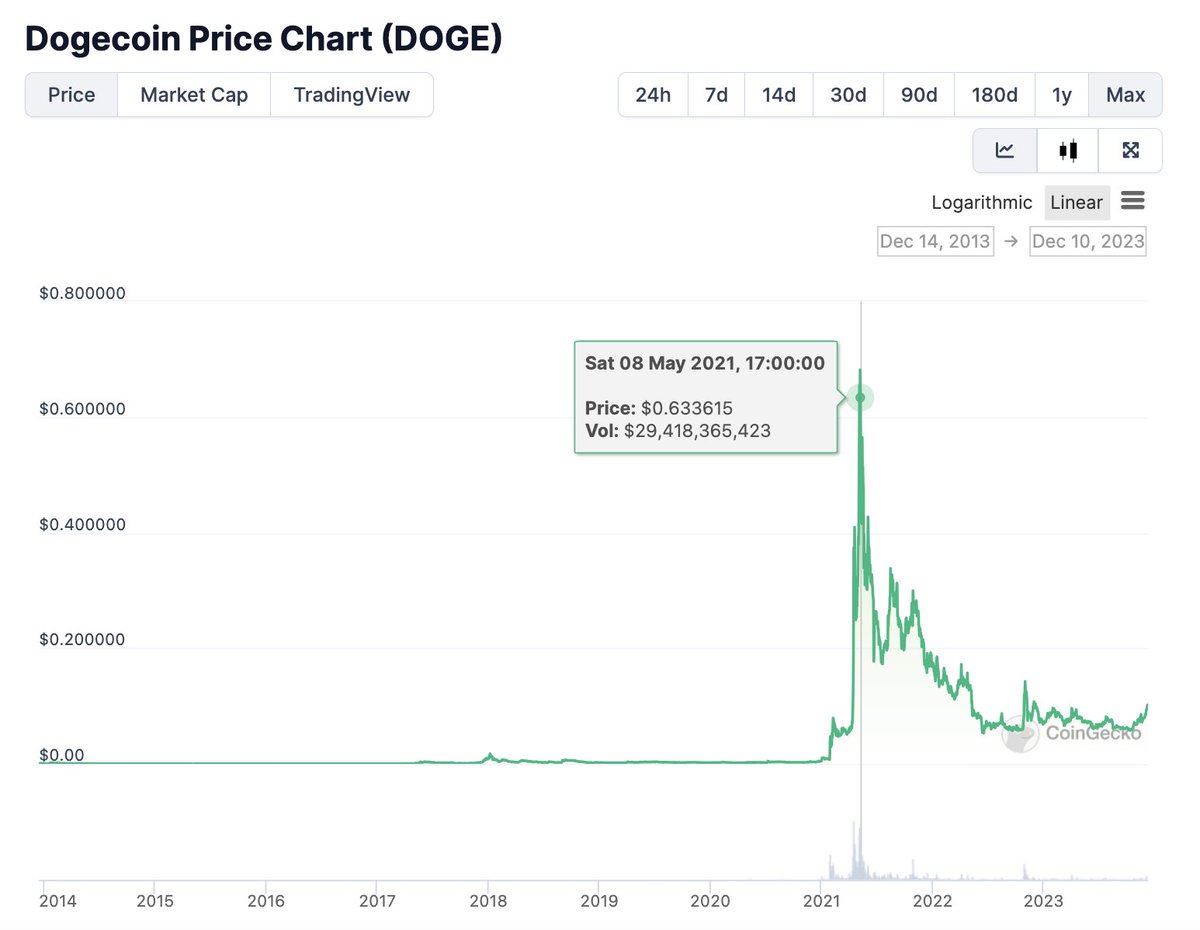
Take an extreme example, $DOGE.
People aped memecoins because they reach atmospheric heights. And if you were early, you make a significant return. But for the early players to benefit, there has to be people that buy at absurd valuations.
There are always winners & losers.
People aped memecoins because they reach atmospheric heights. And if you were early, you make a significant return. But for the early players to benefit, there has to be people that buy at absurd valuations.
There are always winners & losers.
So if you're in crypto, understand that the markets are inefficient so there are opportunities for massive gains.
But conversely, you can also overpay for things, which will lead to big losses (someone will benefit from you overpaying as they sell into your buys).
But conversely, you can also overpay for things, which will lead to big losses (someone will benefit from you overpaying as they sell into your buys).
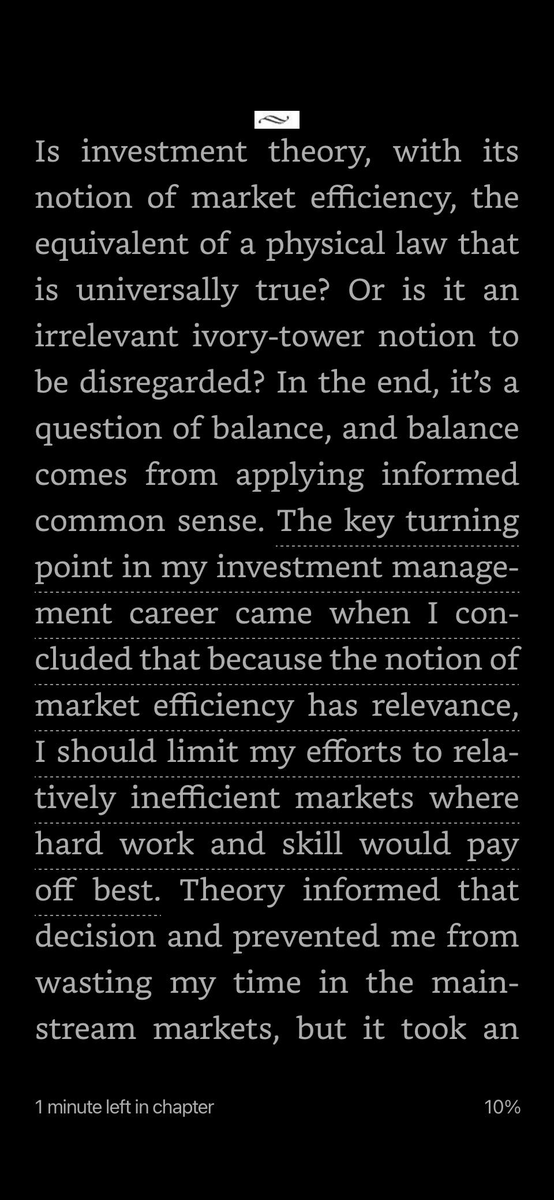
The third most important thing is value. He argues that it's important to think about the intrinsic value of assets so you know what's value and not value.
This way you can avoid "value traps" which are assets that are cheap, but cheap for a reason.
This way you can avoid "value traps" which are assets that are cheap, but cheap for a reason.
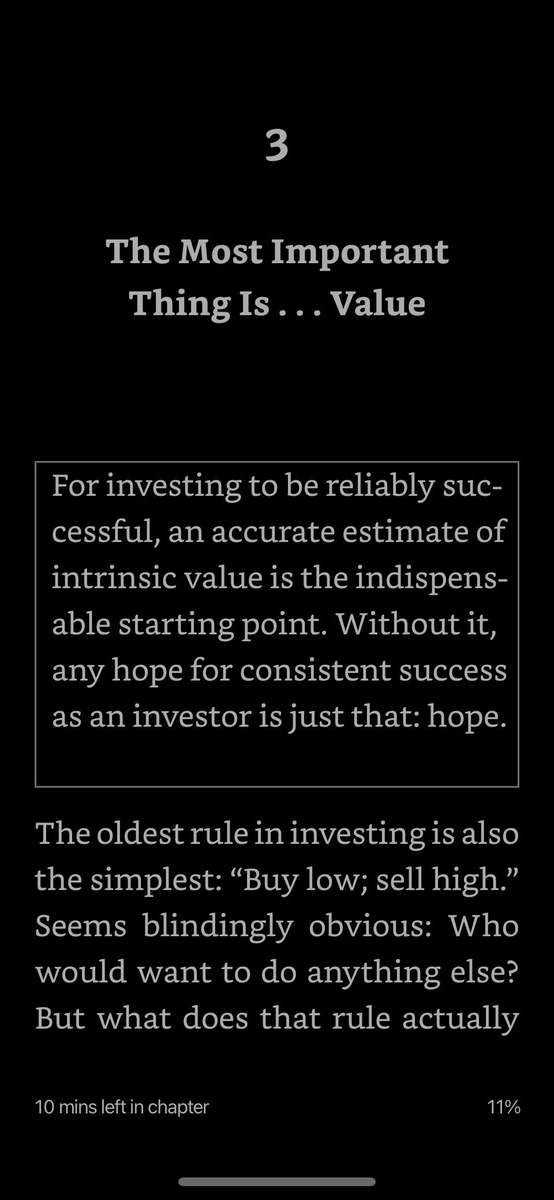
Without some baseline for valuation, you are just relying on hope that someone will buy after you to bail you out.
It also allows you to identify "home run" trades; if you have no concept of what something is worth, it might lead you to sell too early (or even too late).
It also allows you to identify "home run" trades; if you have no concept of what something is worth, it might lead you to sell too early (or even too late).
I believe $MKR is value. It's slightly underperformed recently but I believe the intrinsic cashflow that flows to tokenholders will eventually be appreciated by the markets.
Metrics can be seen at makerburn (dot) com
Metrics can be seen at makerburn (dot) com
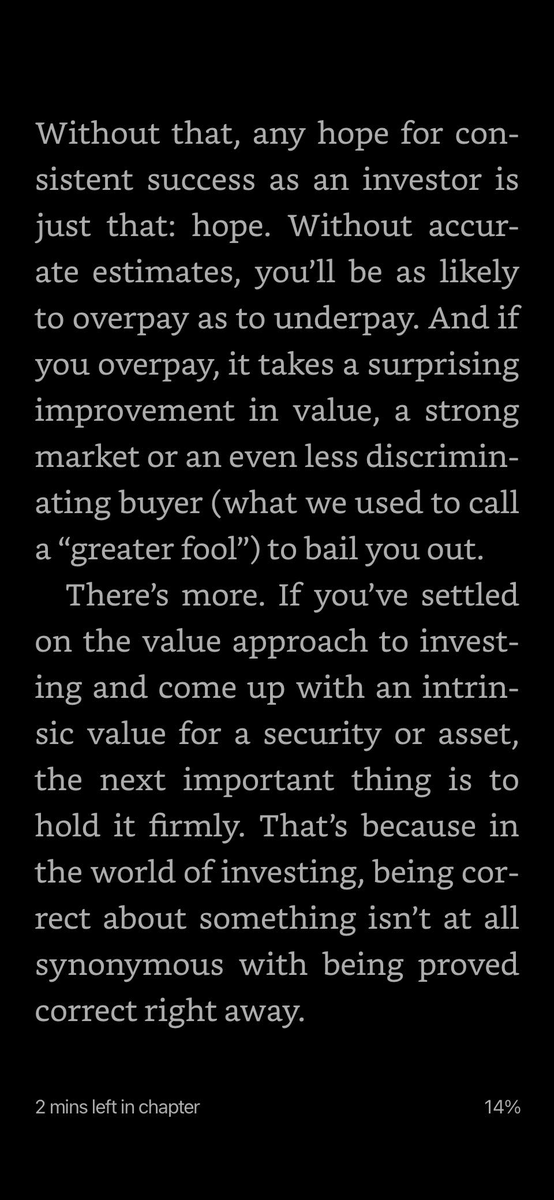
If I see value, I need to hold it firmly. Of course I could be wrong, but it's my job to identify that and take profits if the market tells me to.
The markets are hard because you can be right on something but not be rewarded right away.
The markets are hard because you can be right on something but not be rewarded right away.
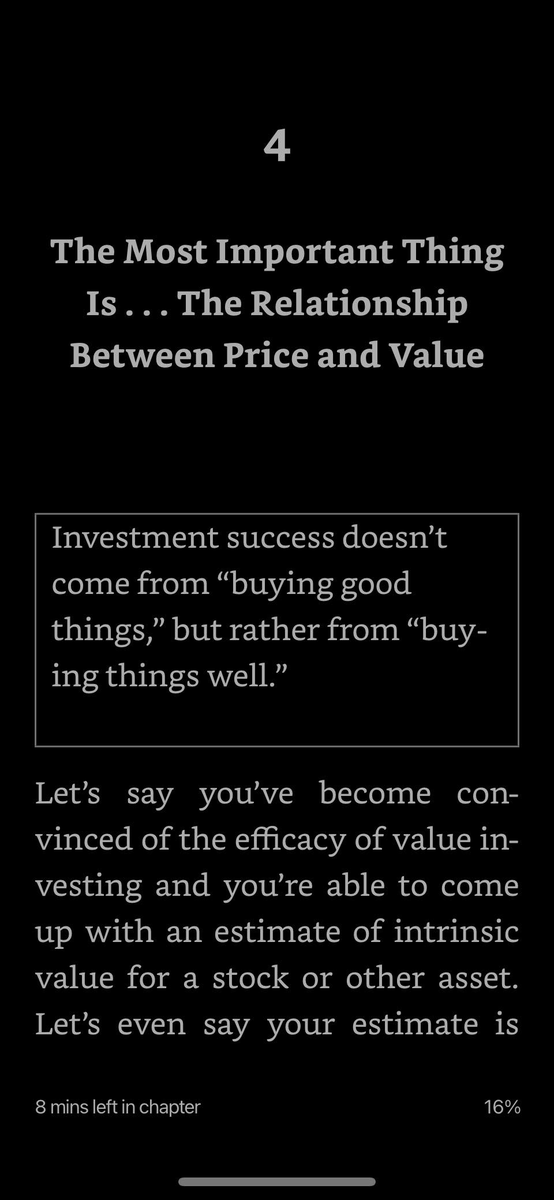
The fourth most important thing is understanding the relationsip between price and value.
Investing is a popularity contest, and the most dangerous thing to do is to buy something at the peak of their popularity.
At that point, there are no more incremental buyers.
Investing is a popularity contest, and the most dangerous thing to do is to buy something at the peak of their popularity.
At that point, there are no more incremental buyers.
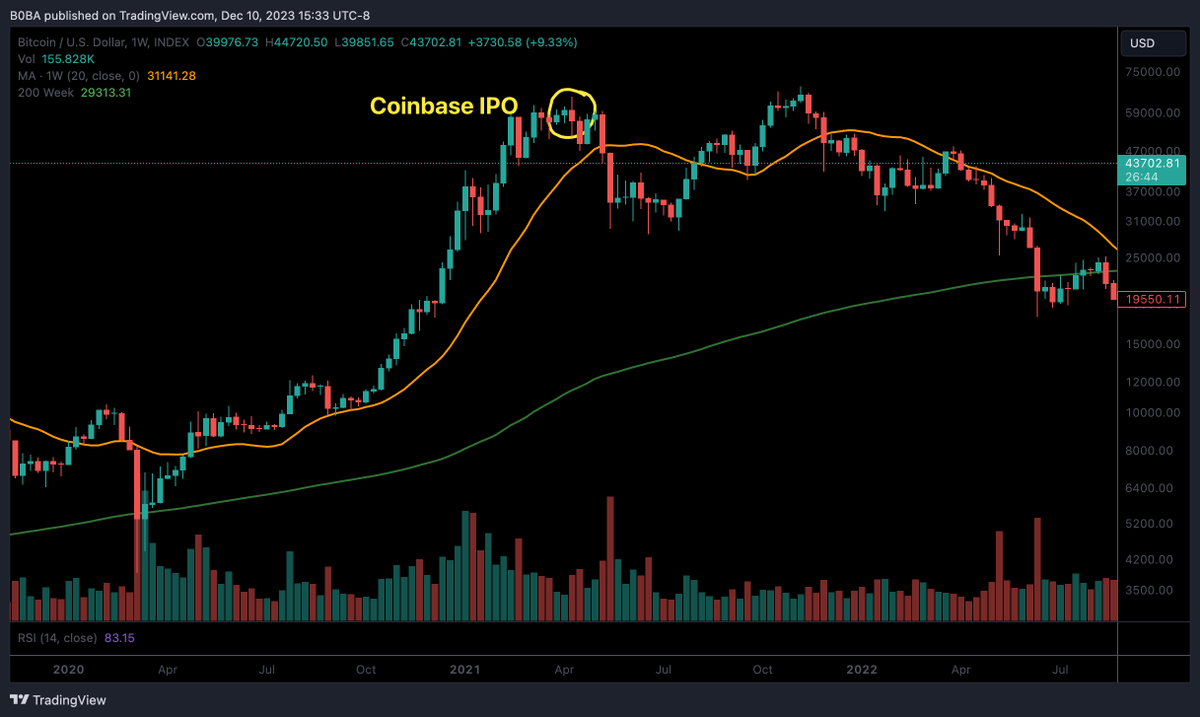
If good news doesn't lead to higher prices, that might be a sign of a potential top.
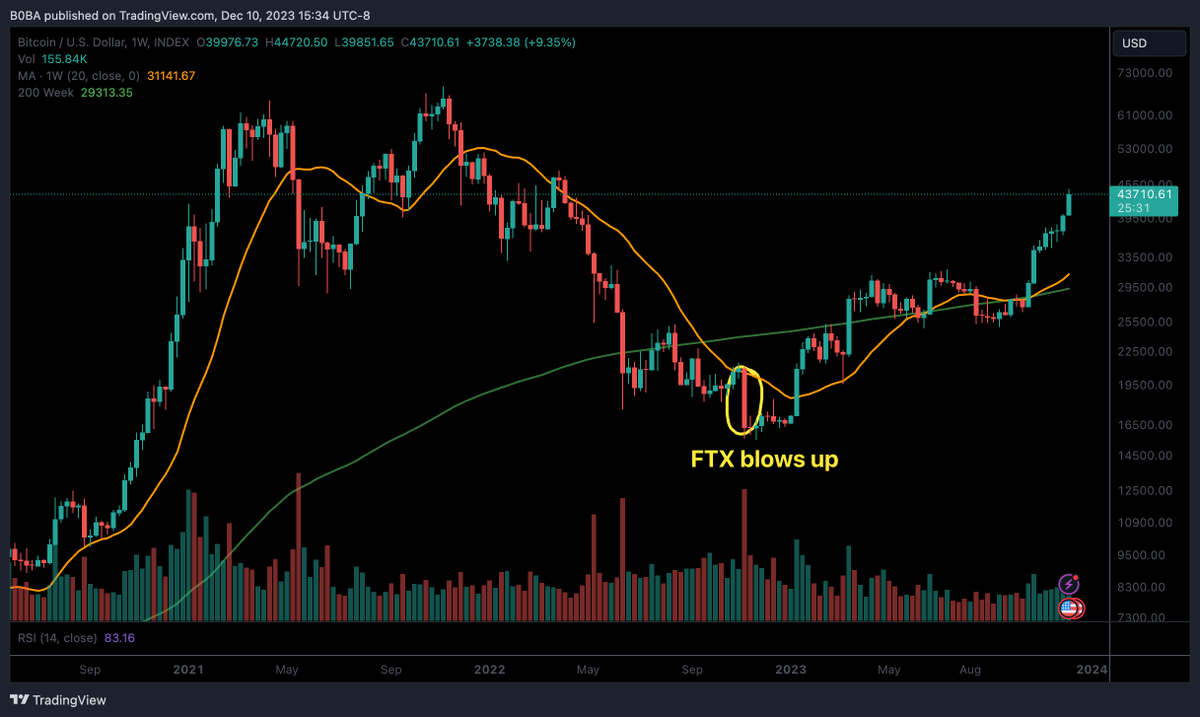
For example, $BTC topped at $64k in 2021 when Coinbase IPO'd in April 14, 2021.
For example, $BTC topped at $64k in 2021 when Coinbase IPO'd in April 14, 2021.
If bad news doesn't lead to lower prices, that might be a sign of a potential bottom.
For example, $BTC bottomed at $16k after FTX halted withdrawals. If price didn't go lower in the next couple weeks, then who's really left to sell?
For example, $BTC bottomed at $16k after FTX halted withdrawals. If price didn't go lower in the next couple weeks, then who's really left to sell?
The fifth most important thing is understanding risk.
Crypto is definitely a risky asset class, but we all know that. This is because it's a new asset class with many uncertainties.
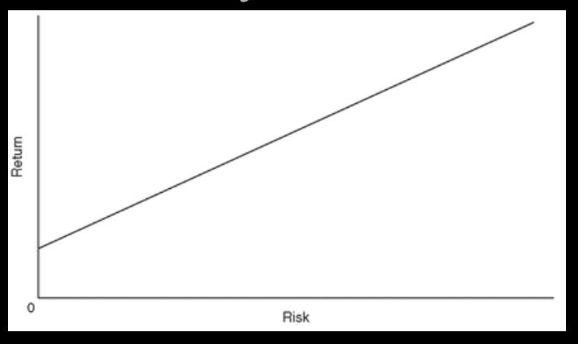
One common misconception I see from retail is that a riskier asset is likely to go up more.
Crypto is definitely a risky asset class, but we all know that. This is because it's a new asset class with many uncertainties.
One common misconception I see from retail is that a riskier asset is likely to go up more.
On the surface, this is true. Something that is risky may offer higher returns than something that is less risky.
This is because if something is safe and good, people will buy. This leads to lower returns. If something is risky and could go to zero, it can pump if you're right.
This is because if something is safe and good, people will buy. This leads to lower returns. If something is risky and could go to zero, it can pump if you're right.
But one thing people forget is variance.
Something risky can actually underperform safer bets, even if we are in a bull market. Risk and return can't be plotted on a line graph; there are many possible scenarios that can play out.
Something risky can actually underperform safer bets, even if we are in a bull market. Risk and return can't be plotted on a line graph; there are many possible scenarios that can play out.
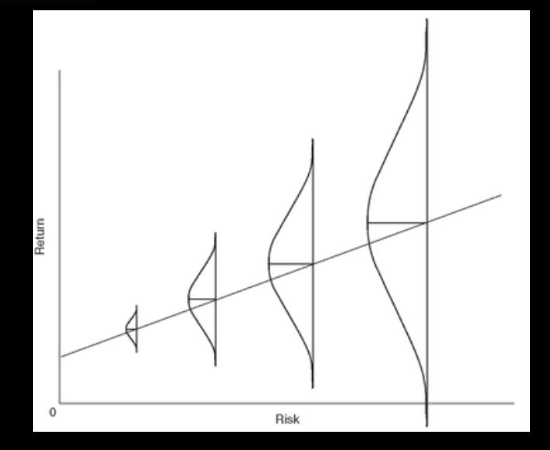
People tell me, "Why would I buy $BTC when I can buy a memecoin and 1000x if $BTC hits ATHs?"
I mean yea that could happen, but you're also opening yourself up to survivorship bias. For every memecoin that 1000x, there are likely hundreds/thousands that go to zero or rugged.
I mean yea that could happen, but you're also opening yourself up to survivorship bias. For every memecoin that 1000x, there are likely hundreds/thousands that go to zero or rugged.
So the sixth most important thing is to recognize risk.
Most investors aim to outperform the index in a bull market, and minimize losses in a bear market. This leads to various changes in investor psychology that you need to recognize.
Most investors aim to outperform the index in a bull market, and minimize losses in a bear market. This leads to various changes in investor psychology that you need to recognize.
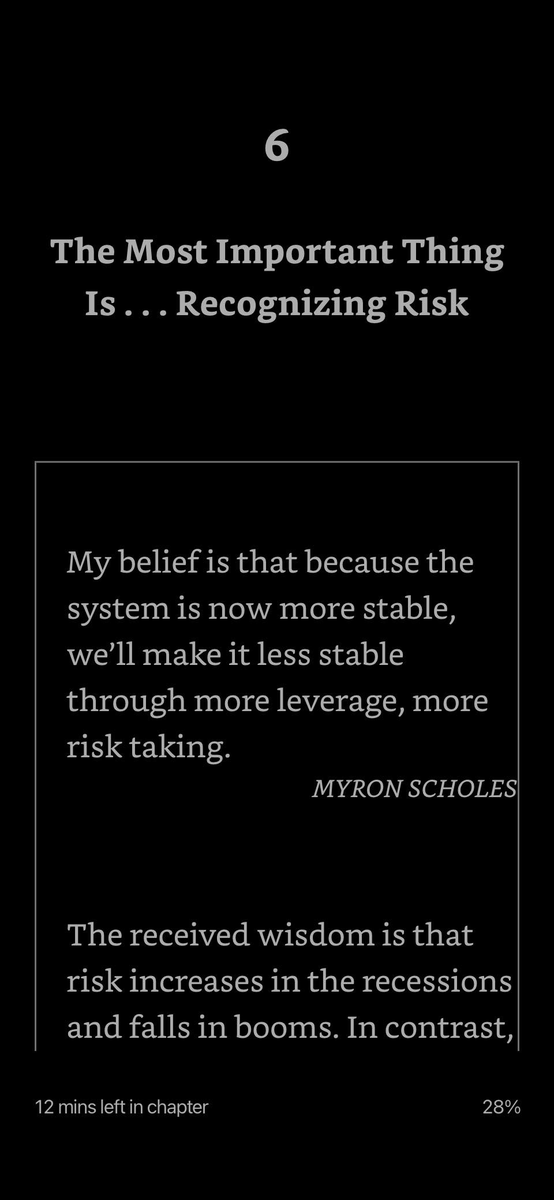
When times are good, people will take on more risks because they deem the environment as "safe."
This is a type of moral hazard risk. For example, if someone makes safer/better rock climbing gear, climbers will take more risks, which make the climbing with the gear less safe.
This is a type of moral hazard risk. For example, if someone makes safer/better rock climbing gear, climbers will take more risks, which make the climbing with the gear less safe.
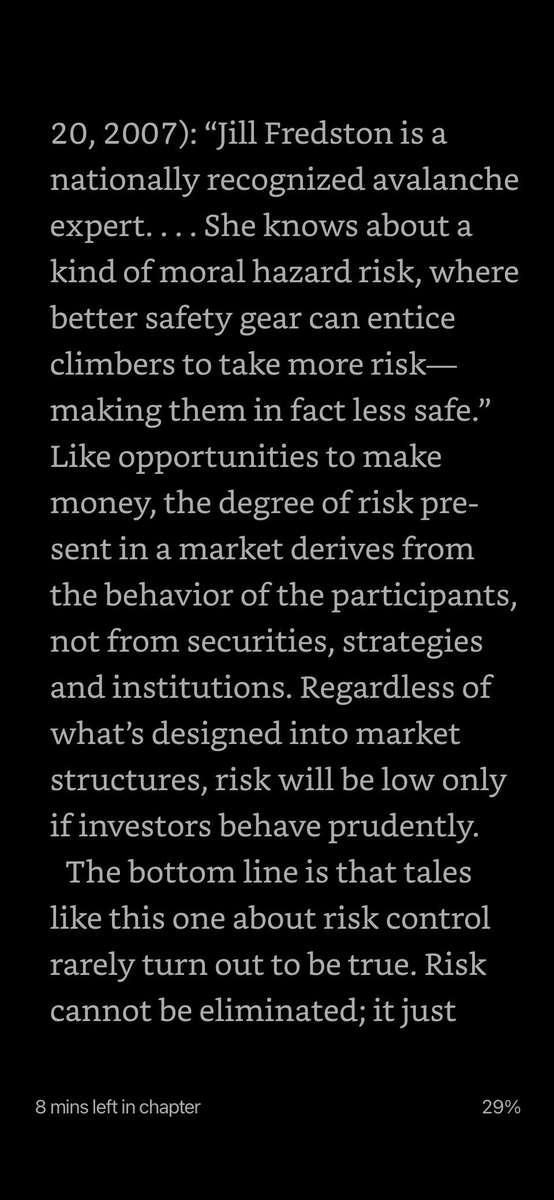
So in bull markets, people take on more risks which increase overall risk in the markets.
In bear markets, people take on less risk which increase the potential for return in the future.
We all remember the sentiment at market tops & bottoms and understand what Marks is saying.
In bear markets, people take on less risk which increase the potential for return in the future.
We all remember the sentiment at market tops & bottoms and understand what Marks is saying.
The seventh most important thing is controlling risk.
It's easy to think someone managed their risk because losses didn't occur. It just happened to work out.
To survive in crypto, you need to develop a portfolio that exposes you to upside, while minimizing downrise risk.
It's easy to think someone managed their risk because losses didn't occur. It just happened to work out.
To survive in crypto, you need to develop a portfolio that exposes you to upside, while minimizing downrise risk.

The eighth most important thing is being attentive to cycles. Marks is a believer that markets have cycles because of the herd mentality of market participants.
Everyone is optimistic at the top and pessimistic at the bottom. A great investor understands this.
Everyone is optimistic at the top and pessimistic at the bottom. A great investor understands this.
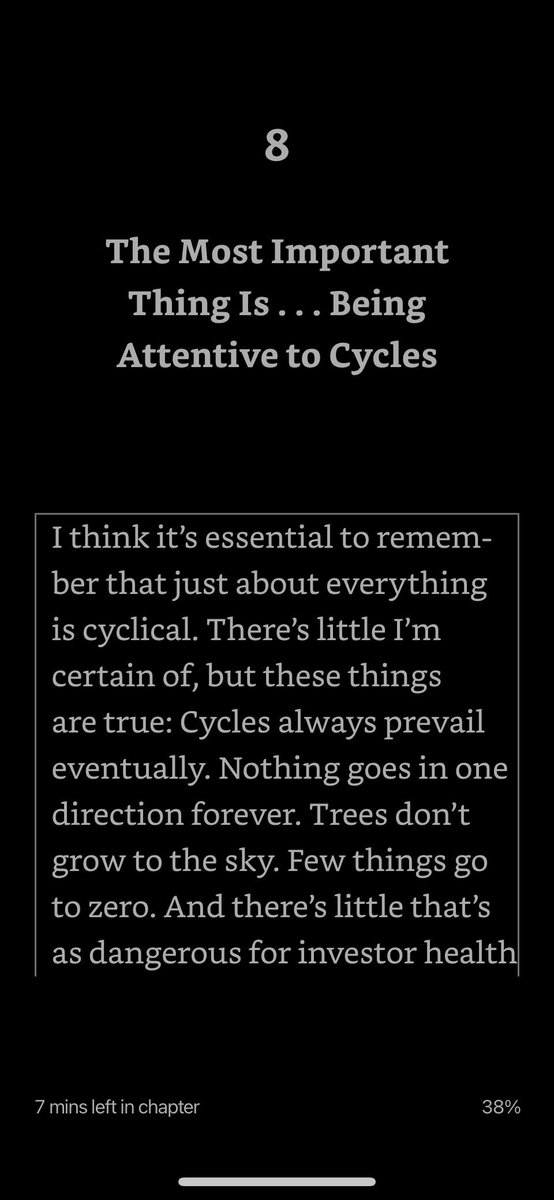
There are 3 stages to a bull market:
1) Few people begin to think things can get better in a bear
2) As prices rise, people come to the realization that improvement is taking place
3) Everyone thinks things will get better forever.
But in stage 3, everyone's already bought.
1) Few people begin to think things can get better in a bear
2) As prices rise, people come to the realization that improvement is taking place
3) Everyone thinks things will get better forever.
But in stage 3, everyone's already bought.
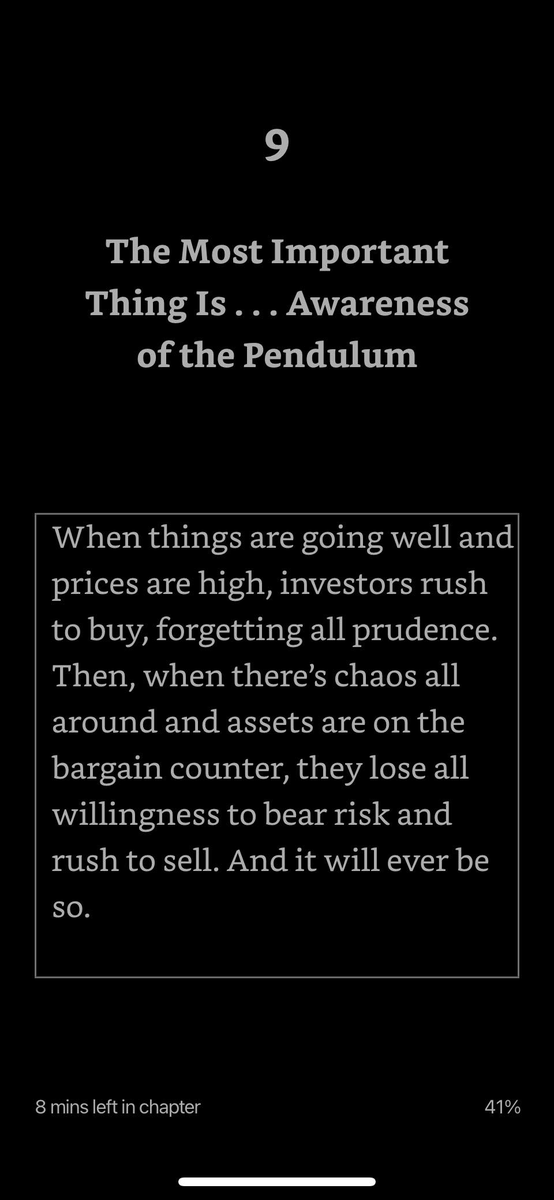
The converse happens in a bear market.
The markets are like a pendulum because people FOMO at tail ends of bull markets and capitulate at the end of bear markets.
The best investors can keep a cool head.
The markets are like a pendulum because people FOMO at tail ends of bull markets and capitulate at the end of bear markets.
The best investors can keep a cool head.

The tenth most important thing is combating negative influences. This is like comparing your portfolio to those on Twitter.
Twitter is the highlight reel for everyone where people share their wins but not their losses. It's dangerous to compare yourself to others.
Twitter is the highlight reel for everyone where people share their wins but not their losses. It's dangerous to compare yourself to others.
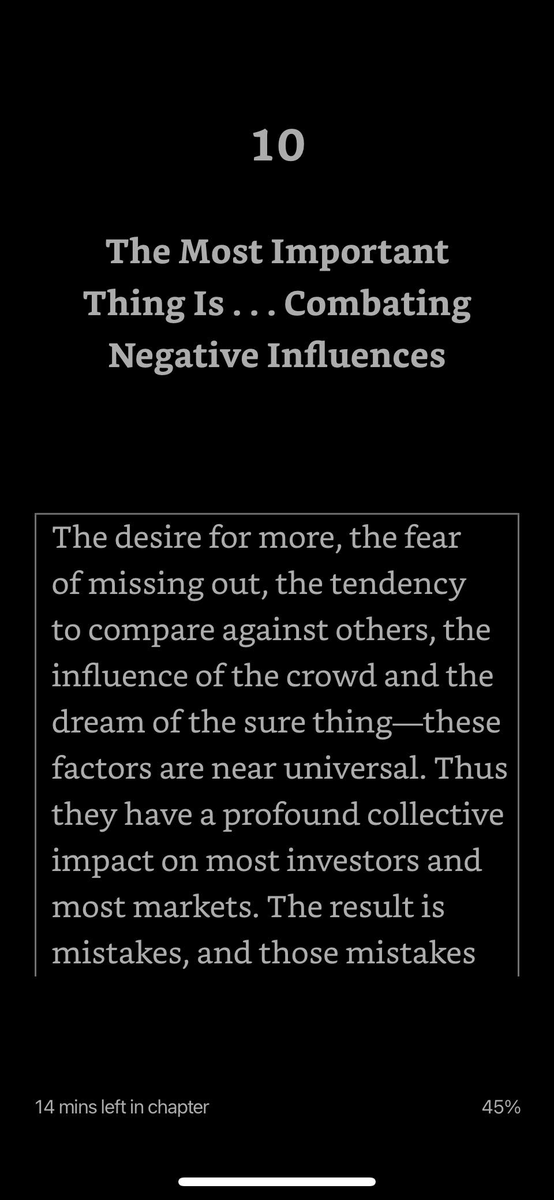
Ego is prevalent in crypto, especially since crypto is a male-dominated industry.
Ego can make you take excessive risk to prove something to anons on the internet.
It's important to be self aware and understand that we all have different risk tolerances and timelines.
Ego can make you take excessive risk to prove something to anons on the internet.
It's important to be self aware and understand that we all have different risk tolerances and timelines.
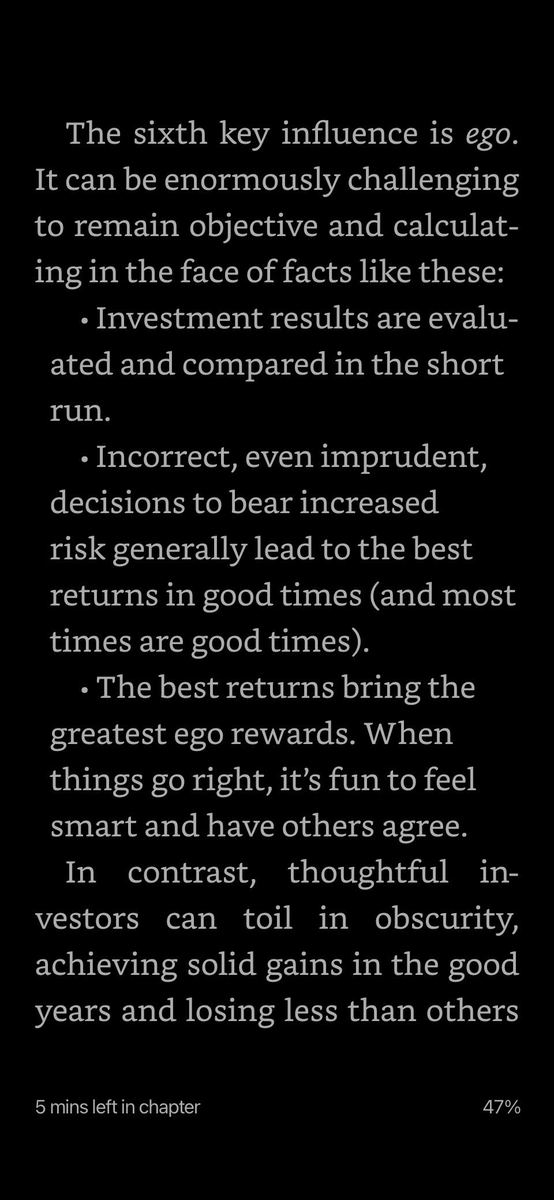
The 11th most important thing is contrarianism.
This is the hardest thing if your source of truth is what you read on the internet. By definition that makes you a part of the herd.
When things feel euphoric, it's important to ask ourselves, "Isn't this too good to be true?"
This is the hardest thing if your source of truth is what you read on the internet. By definition that makes you a part of the herd.
When things feel euphoric, it's important to ask ourselves, "Isn't this too good to be true?"
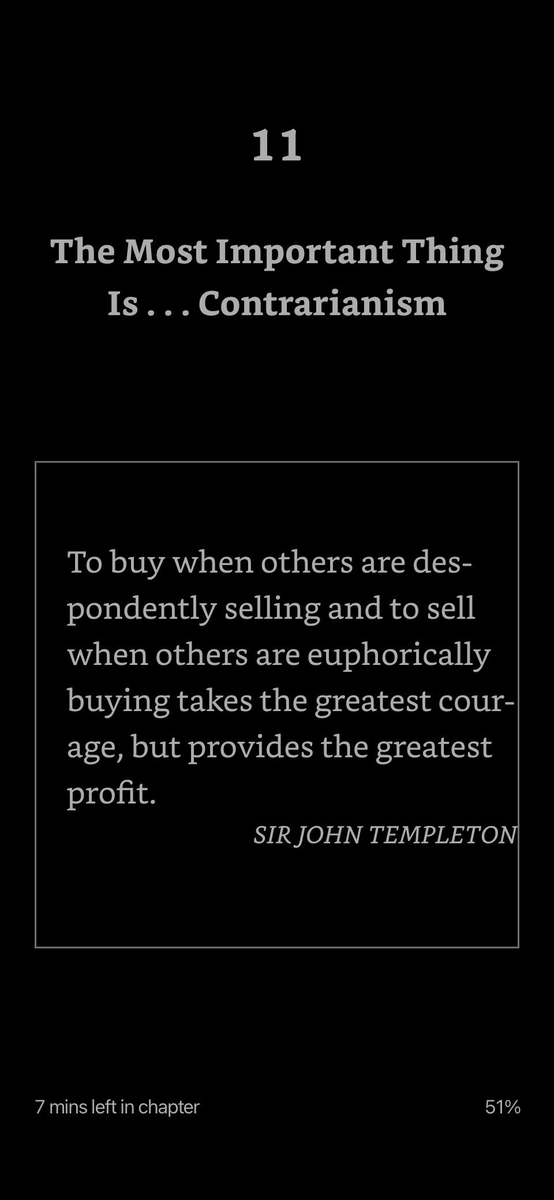
But if everyone is doom and gloom, you also have to ask yourself, "Isn't what everyone's saying too bad to be true?"
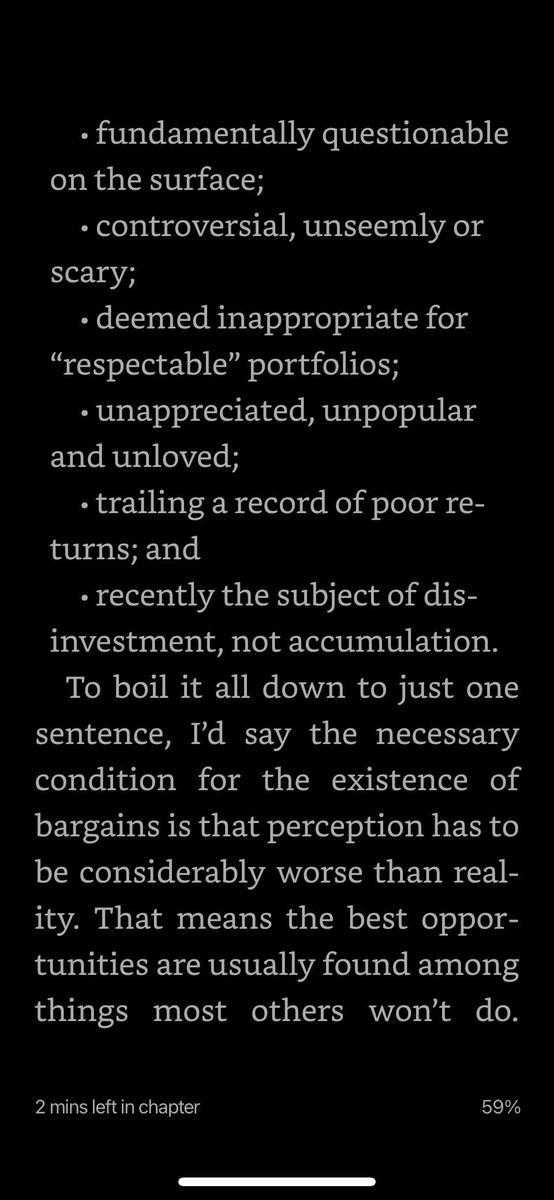
The best risk/reward opportunities are in assets that everyone writes off. If everyone wrote it off, then no one owns it, so the only direction is up.
The best risk/reward opportunities are in assets that everyone writes off. If everyone wrote it off, then no one owns it, so the only direction is up.

I'm reminded of $SOL's recent outperformance. Everyone wrote it off post-FTX, but it's come back with a vengeance in 2023.
Also, Crypto Twitter (CT) is mostly ruled by ETH heads, which may distort your views on the Solana eco if you only get your opinions from ETH maxis.
Also, Crypto Twitter (CT) is mostly ruled by ETH heads, which may distort your views on the Solana eco if you only get your opinions from ETH maxis.
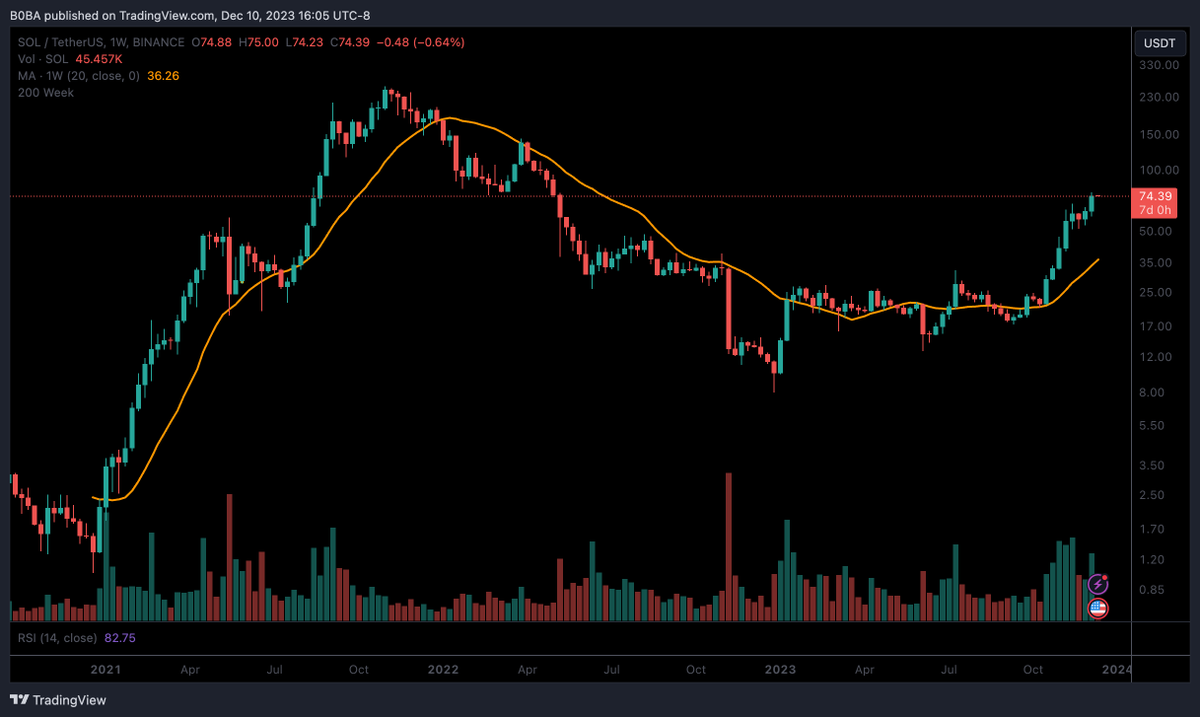
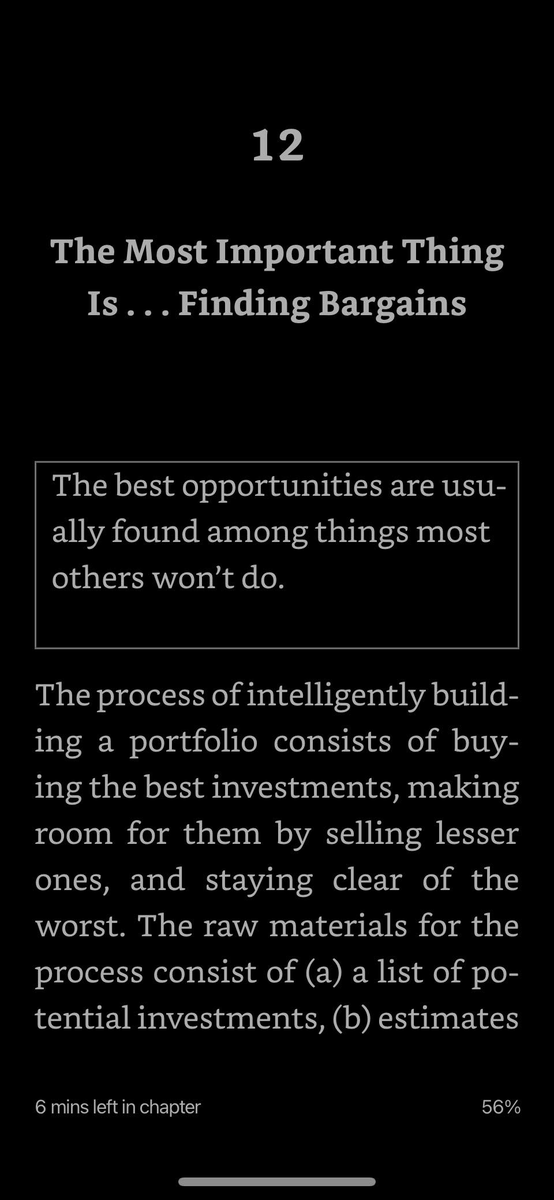
The necessary conditions for a bargain is that perception has to be considerately worse than reality.
To the outside world, crypto is a scam market. But despite much lower prices, teams have continued to ship and the actual tech/fundamentals are getting better.
Bullish.
To the outside world, crypto is a scam market. But despite much lower prices, teams have continued to ship and the actual tech/fundamentals are getting better.
Bullish.
The 13th most important thing is patient opportunism.
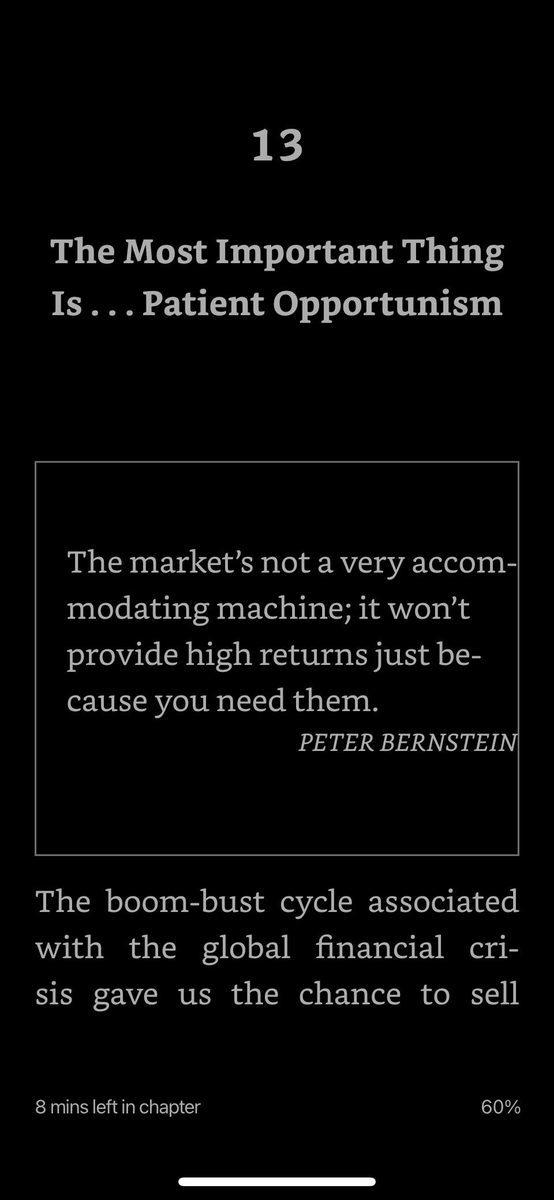
Marks says Oaktree doesn't chase investments, the investments come to them.
In the markets, no one is forcing you to buy/sell anything. The markets will always be here and you need to pick your spots.
Marks says Oaktree doesn't chase investments, the investments come to them.
In the markets, no one is forcing you to buy/sell anything. The markets will always be here and you need to pick your spots.
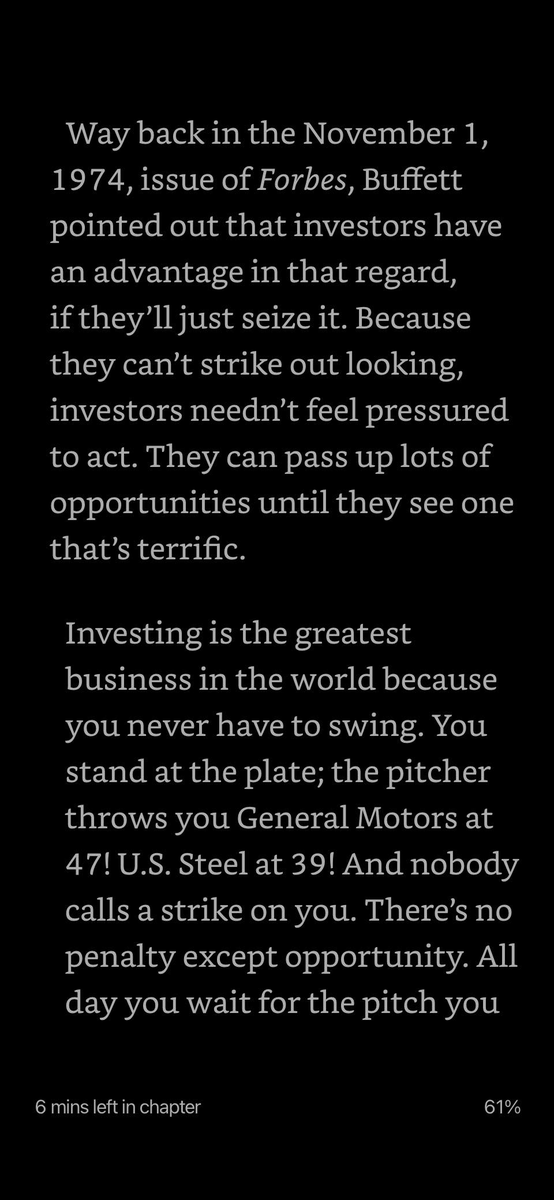
If you're an MLB hitter, you can't wait for the perfect pitch because you can strike out.
But there's no such thing in investing. You can watch 100 opportunities come and go but still be in a position of strength.
The only penalty in investing is by betting on losers.
But there's no such thing in investing. You can watch 100 opportunities come and go but still be in a position of strength.
The only penalty in investing is by betting on losers.
I think this idea is incredibly important in crypto.
Everyday people are shilling their coins and most of the time, influencers are being paid by projects to promote a coin to their audience.
Sure, you can make money if you're early, but was it really worth the risk?
Everyday people are shilling their coins and most of the time, influencers are being paid by projects to promote a coin to their audience.
Sure, you can make money if you're early, but was it really worth the risk?
Another example is when people try to trade events like unlocks. Sure, you might make money but what's your edge?
Unless you have asymmetric info, it's probably better to just sit and wait for opportunities to come to you.
Unless you have asymmetric info, it's probably better to just sit and wait for opportunities to come to you.
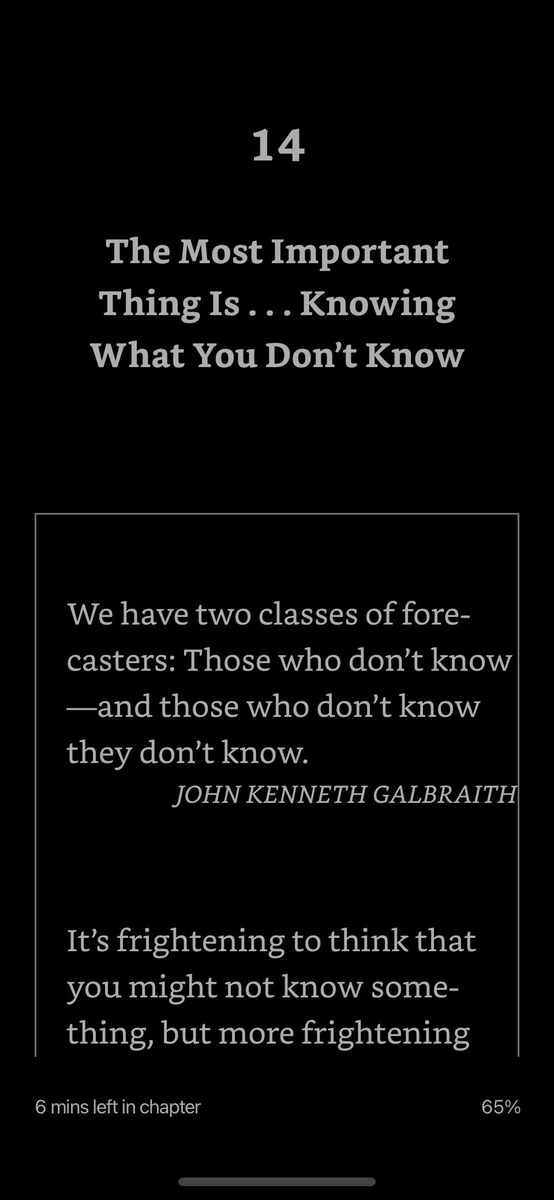
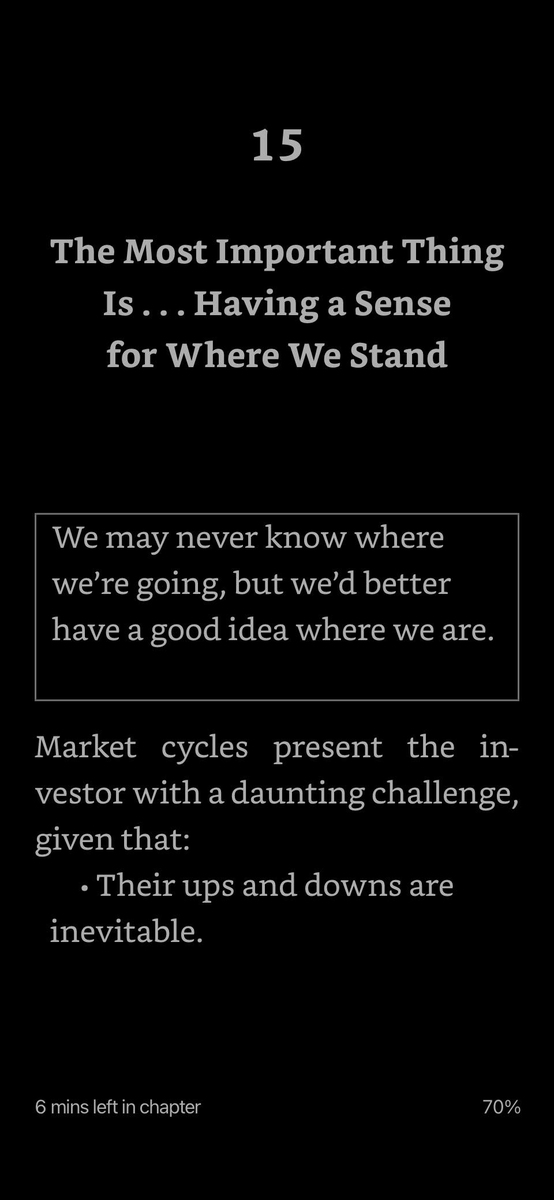
The 14th & 15th most important thing is knowing what you don't know and knowing where we stand in the markets.
A lot of people's market forecasts are deeply rooted in what's going on right now. Therefore Marks thinks that most market forecasts are worth ignoring.
A lot of people's market forecasts are deeply rooted in what's going on right now. Therefore Marks thinks that most market forecasts are worth ignoring.
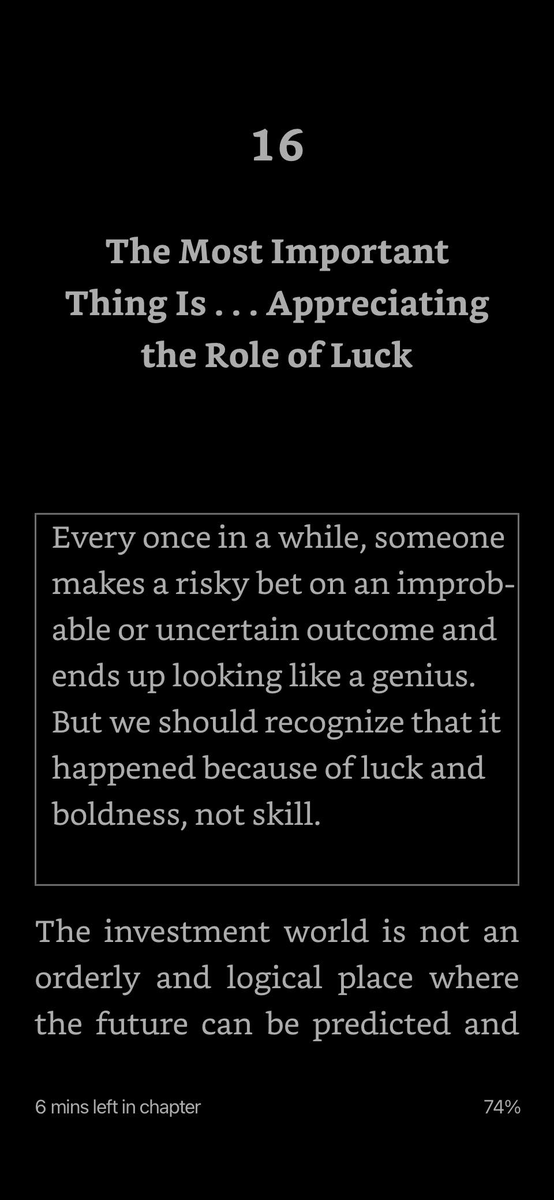
The 16th most important thing is appreciating the role of luck.
Some people become famous & wealthy because they are lucky, not skillful. But when we are living in the moment, we can't separate skill from luck.
The only way to assess a skillful investor is via longevity.
Some people become famous & wealthy because they are lucky, not skillful. But when we are living in the moment, we can't separate skill from luck.
The only way to assess a skillful investor is via longevity.
If 225M Americans starts with $1 and flips a coin; if they call it then they receive money from the other losers.
After 10 days, we have 215 people who's been right 20 times and won $1M. Then they write books like, "How I turned $1 into $1M by outplaying others."
lol
After 10 days, we have 215 people who's been right 20 times and won $1M. Then they write books like, "How I turned $1 into $1M by outplaying others."
lol

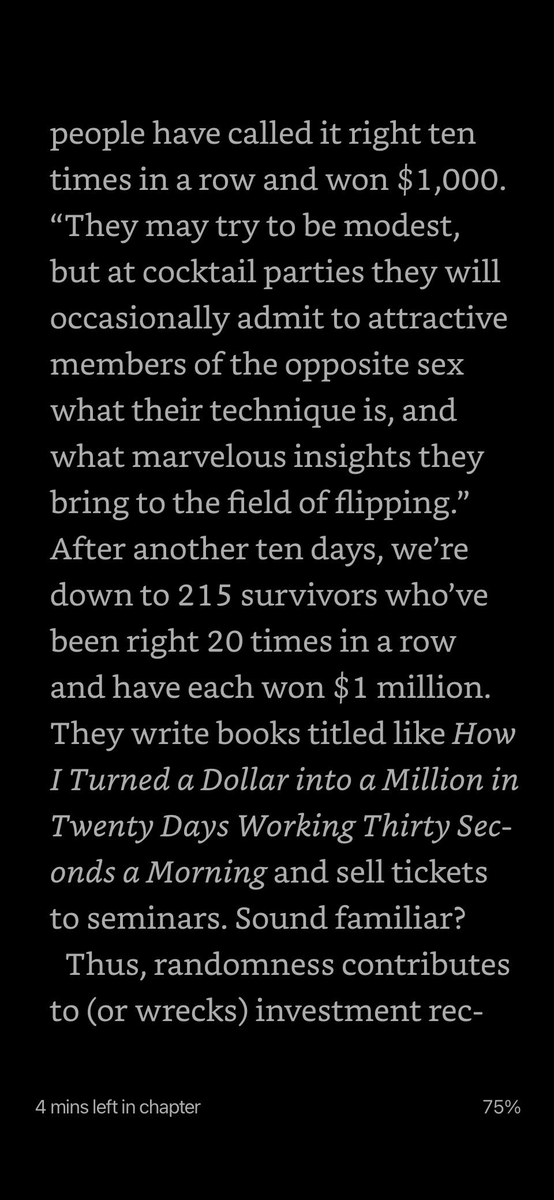
This concept is from Nassim Taleb's "Fooled by Randomness." Often times people are "right" for the wrong reasons and receive credit they don't deserve.
It's important to consider the "alternative histories" that could have happened.
It's important to consider the "alternative histories" that could have happened.


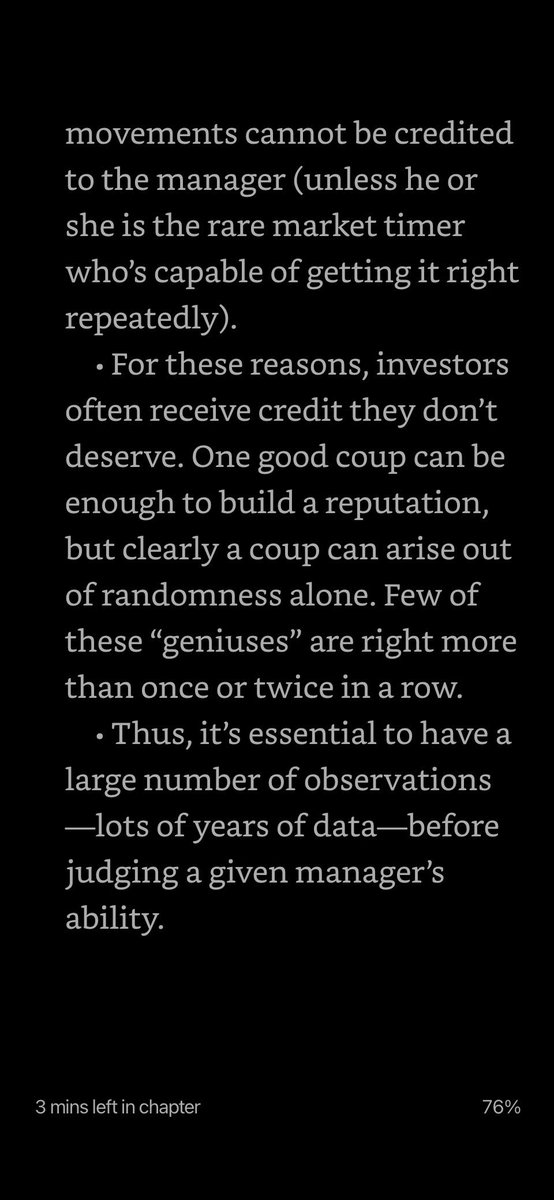
I think it's important to appreciate how luck plays a big part in all of our lives.
Taleb points out that the things that happened are only a small subsection of things that COULD have happened.
This is important to internalize to manage your ego and listen to others.
Taleb points out that the things that happened are only a small subsection of things that COULD have happened.
This is important to internalize to manage your ego and listen to others.
The 17th most important thing is investing defensively.
Investing is like soccer where managers have to determine the pros/cons of an attacking strategy versus a defensive strategy.
And just because a team loses doesn't mean the manager made a mistake.
Investing is like soccer where managers have to determine the pros/cons of an attacking strategy versus a defensive strategy.
And just because a team loses doesn't mean the manager made a mistake.
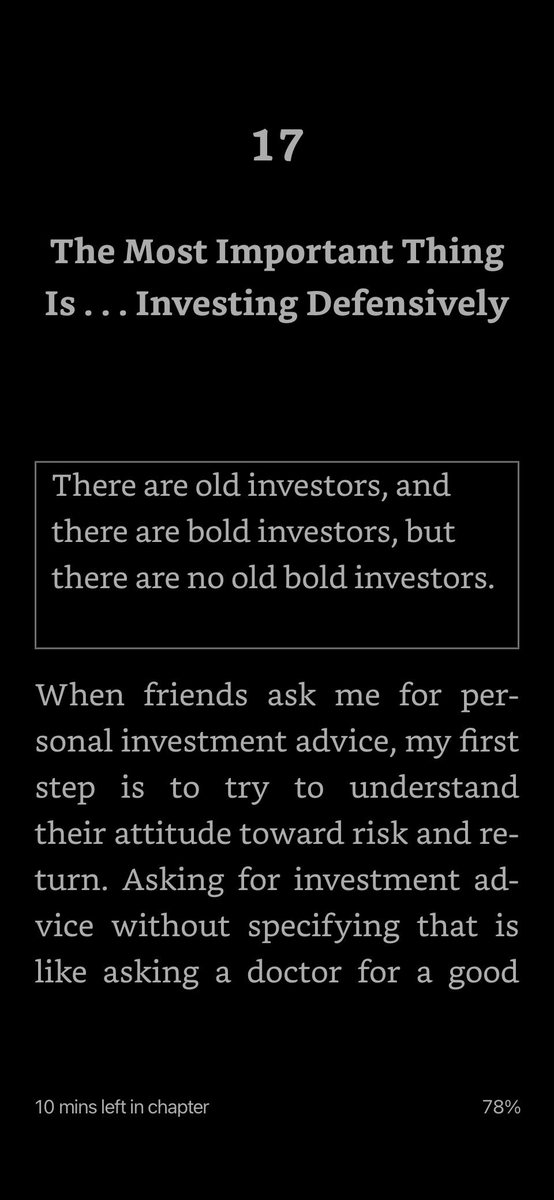
He also observes that none of his peers have failed in the industry because they failed to hit "home run" trades.
They failed because they blew up one way or another.
At Oaktree, they believe that, "If we avoid the losers, the winners will take care of themselves."
They failed because they blew up one way or another.
At Oaktree, they believe that, "If we avoid the losers, the winners will take care of themselves."
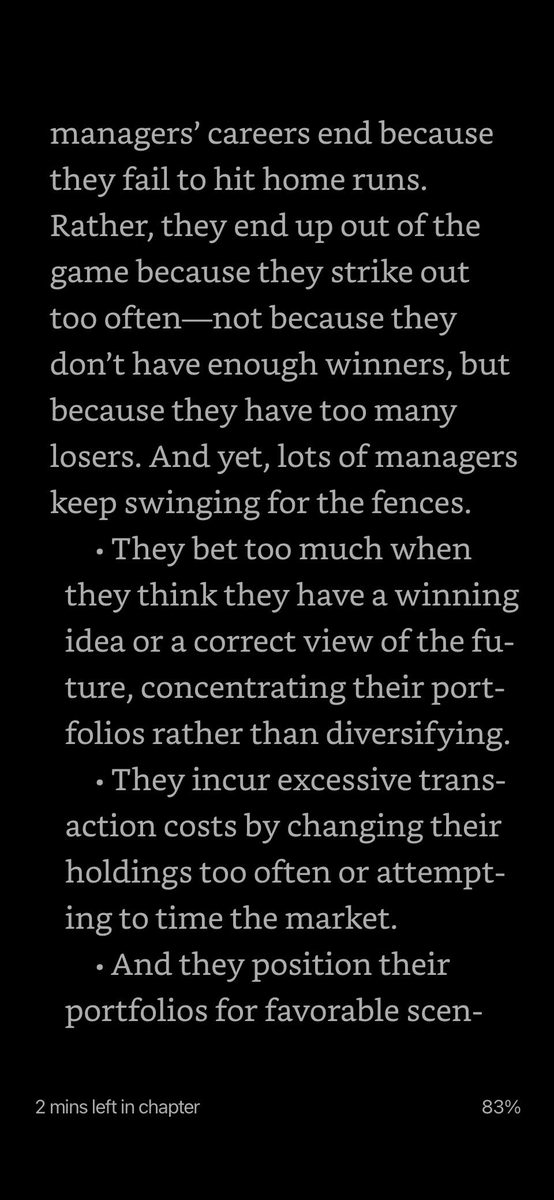
The 18th most important thing is avoiding pitfalls.
One of the most common pitfalls is people trying to trade their opinion. Just because you think XYZ "should happen" doesn't mean it will happen.
We have to think probabilistically and manage our expectations.
One of the most common pitfalls is people trying to trade their opinion. Just because you think XYZ "should happen" doesn't mean it will happen.
We have to think probabilistically and manage our expectations.
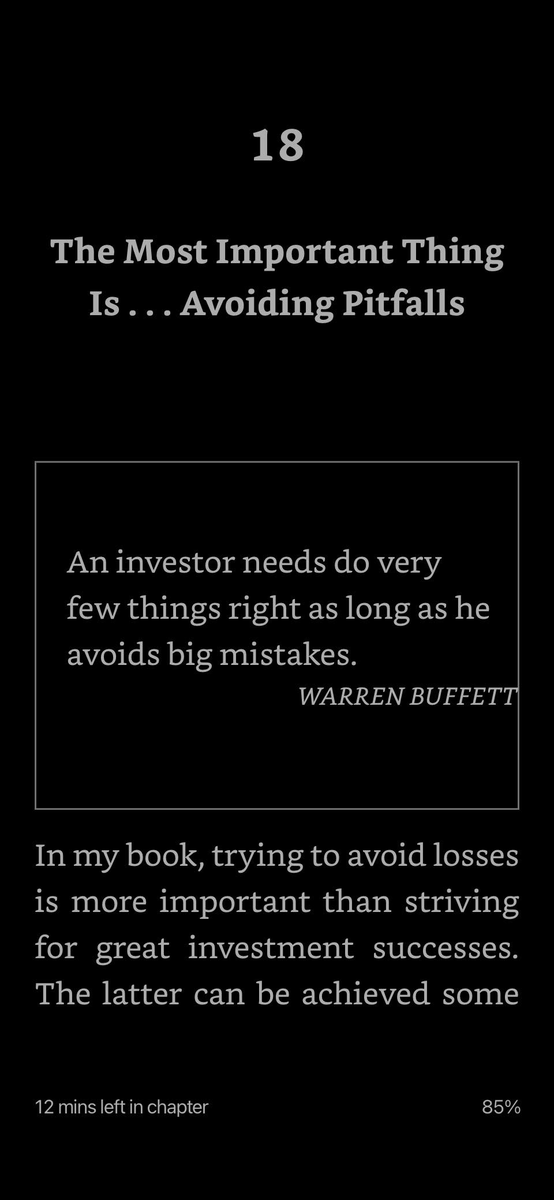
It's also worth noting that if everyone thinks something bad won't happen, they'll engage in risky behavior which will alter the environment.
So then the bad thing becomes more likely to happen, and take out a lot of people with it.
So then the bad thing becomes more likely to happen, and take out a lot of people with it.
When $OHM was up only with the (3,3) narrative, people decided they might as well lever their positions and (9,9).
Of course, eventually someone sold and created cascading liquidations which hurt a lot of people.
Good times create more risk in the markets.
Of course, eventually someone sold and created cascading liquidations which hurt a lot of people.
Good times create more risk in the markets.

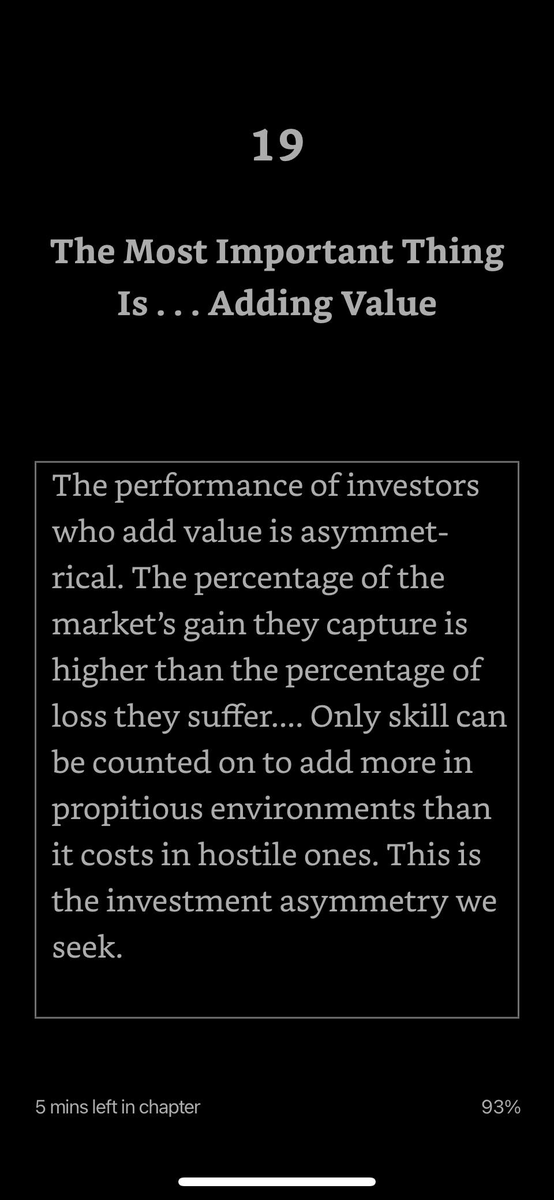
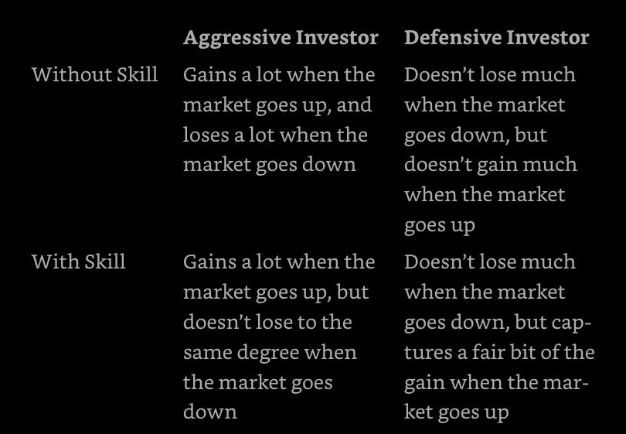
The 19th most important thing is adding value.
Marks shares that it's easy to add market beta to a portfolio by adding more risk. But that doesn't result in alpha, which is the ability to generate performance that is unrelated to movement of the markets.
Marks shares that it's easy to add market beta to a portfolio by adding more risk. But that doesn't result in alpha, which is the ability to generate performance that is unrelated to movement of the markets.
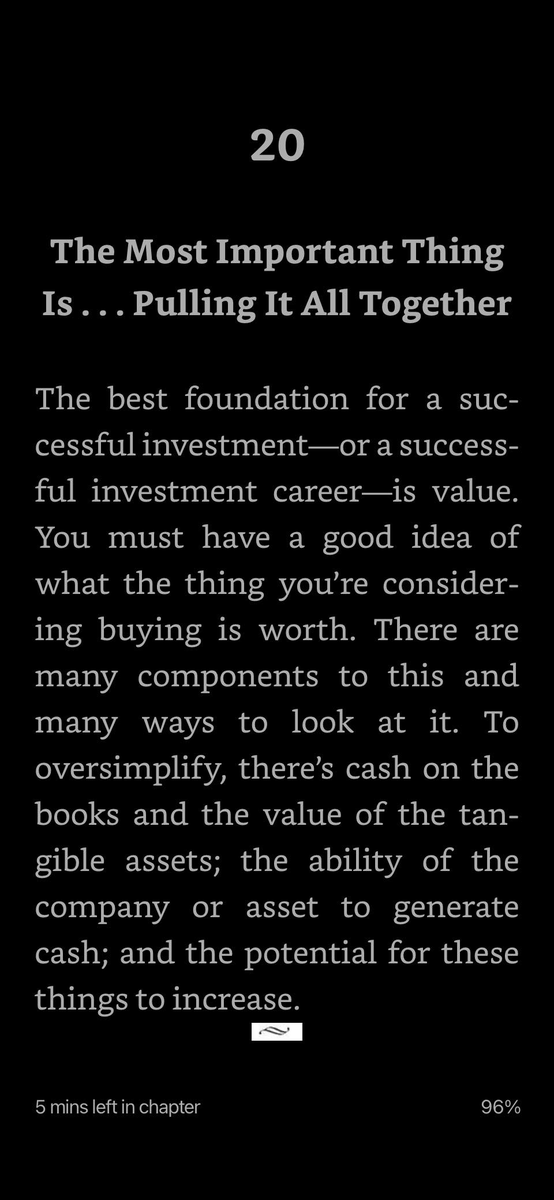
The last important thing it to put it all together.
Marks shares his views as a value investor that takes into market cycles that take form as a result of pendulum swings in sentiment.
Cycles are extreme in crypto because the markets are momentum and sentiment-driven.
Marks shares his views as a value investor that takes into market cycles that take form as a result of pendulum swings in sentiment.
Cycles are extreme in crypto because the markets are momentum and sentiment-driven.
My favorite section of the book was the baseball analogy of not needing to take unnecessary swings because there's no way to strike out in crypto.
The only way to strike out is by not managing risk and being penalized for it.
Crypto is volatile enough, so I won't use leverage.
The only way to strike out is by not managing risk and being penalized for it.
Crypto is volatile enough, so I won't use leverage.
A lot of people in crypto come for the quick gains and losses, but I think it's good to try to think about the market from a value investor's perspective.
I'm trying to take on more of this type of approach where I identify "value" and firmly hold onto it.
I'm trying to take on more of this type of approach where I identify "value" and firmly hold onto it.
The markets are especially tough because you can be right and have the market not move in your way.
You can also be wrong and have the market move in your way.
Luck and randomness plays a big role in our short-term performance.
You can also be wrong and have the market move in your way.
Luck and randomness plays a big role in our short-term performance.
Also, crypto sentiment is an interesting phenomenon because people's views on the markets are dictated by what's trending on social media.
This makes things more viral, but also can send the pendulum too far out on the risk curve, which eventually gets people rekt.
This makes things more viral, but also can send the pendulum too far out on the risk curve, which eventually gets people rekt.
I think patience is most important in crypto, because people overestimate what can happen in the short-term, but underestimate what can happen in the medium/long-term.
If you actually believe in crypto, a buy and hold approach for market winners is a good bet.
If you actually believe in crypto, a buy and hold approach for market winners is a good bet.
How do we find these winners? I have no idea.
But Marks believes that if you avoid the losers, the winners will eventually find you. So I will continue to research and provide free content so we can all try to improve ourselves in the markets.
Hope you enjoyed the summary!
But Marks believes that if you avoid the losers, the winners will eventually find you. So I will continue to research and provide free content so we can all try to improve ourselves in the markets.
Hope you enjoyed the summary!
If you want me to do more of this, please consider liking/retweeting the initial post. Otherwise I'll just keep these to myself.
Also check out my megathread of book summaries which I will update over time as I read more books.
Loading suggestions...