
511 years ago today the ceiling of the Sistine Chapel was shown to the public for the first time.
Is it the greatest achievement in the history of art, or is it overrated?
To help you decide, here are some things you probably didn't know about the world's most famous ceiling...
Is it the greatest achievement in the history of art, or is it overrated?
To help you decide, here are some things you probably didn't know about the world's most famous ceiling...

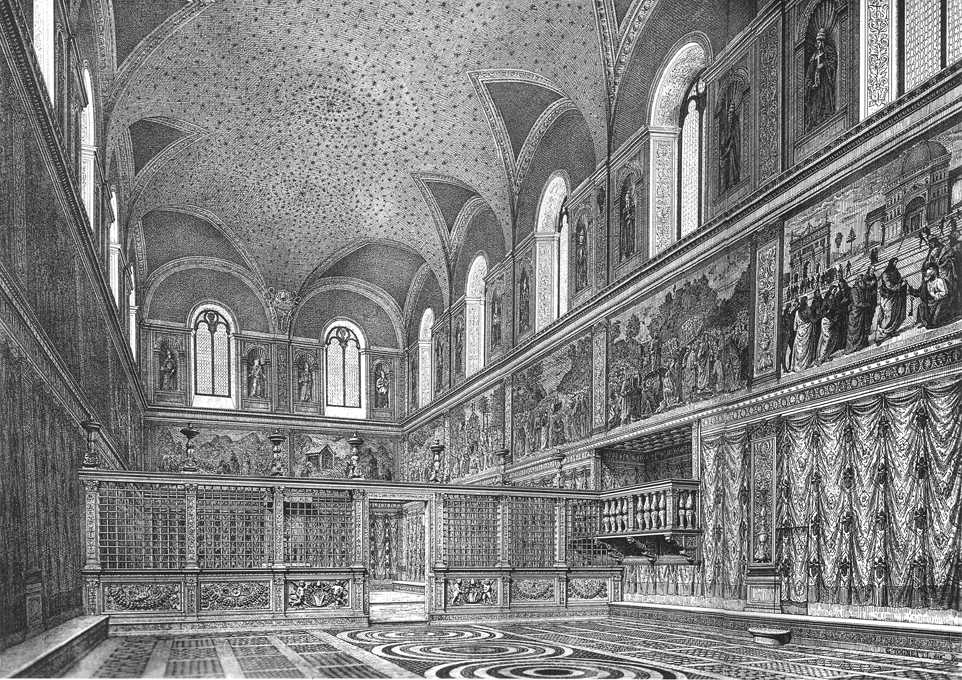
Where did the Sistine Chapel get its name?
It was commissioned in 1473 by Pope Sixtus IV and completed nine years later. His name in Italian was Sisto, hence... Sistine Chapel.
It was commissioned in 1473 by Pope Sixtus IV and completed nine years later. His name in Italian was Sisto, hence... Sistine Chapel.

Also, where is the Sistine Chapel?
It's within the Apostolic Palace, which is the Pope's official residence, in the Vatican City. But for such a famous building it isn't particularly noteworthy from the outside.
It's within the Apostolic Palace, which is the Pope's official residence, in the Vatican City. But for such a famous building it isn't particularly noteworthy from the outside.

After Sixtus' chapel was completed he had it decorated by the leading artists of the day, including Botticelli, Ghirlandaio, and Perugino.
Everybody looks up, but along the walls of the Sistine Chapel are some of the other great works of the Italian Renaissance.
Everybody looks up, but along the walls of the Sistine Chapel are some of the other great works of the Italian Renaissance.
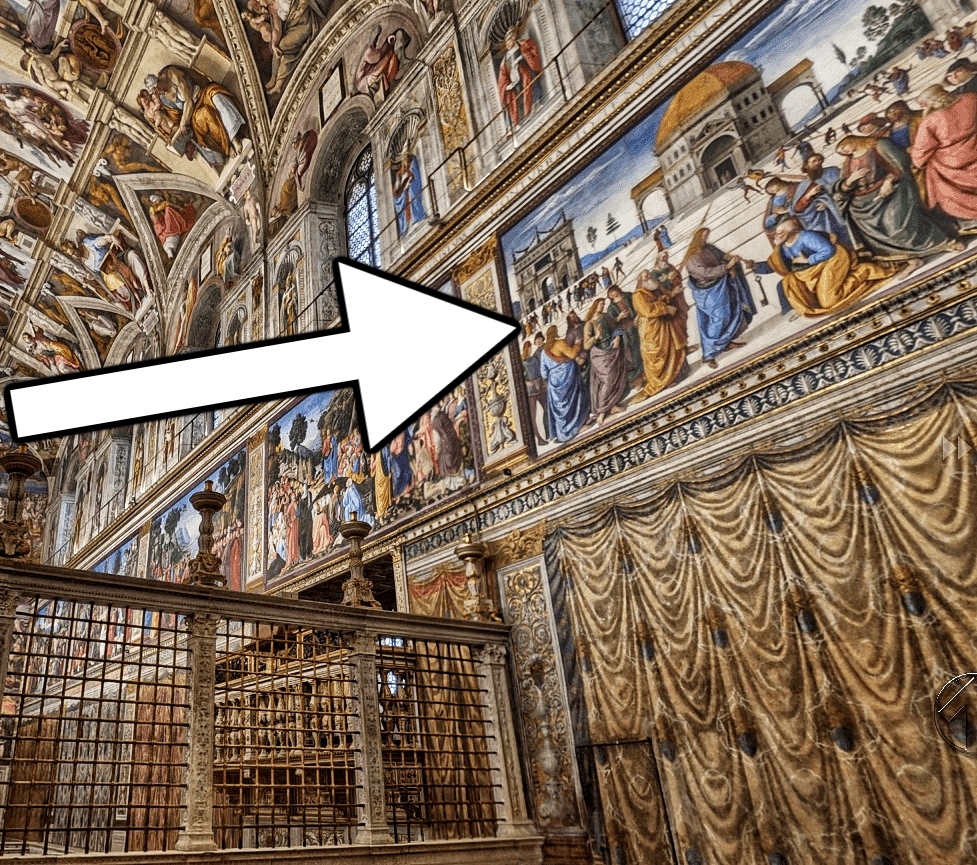
Alas, their fame has been eclipsed by a certain Michelangelo.
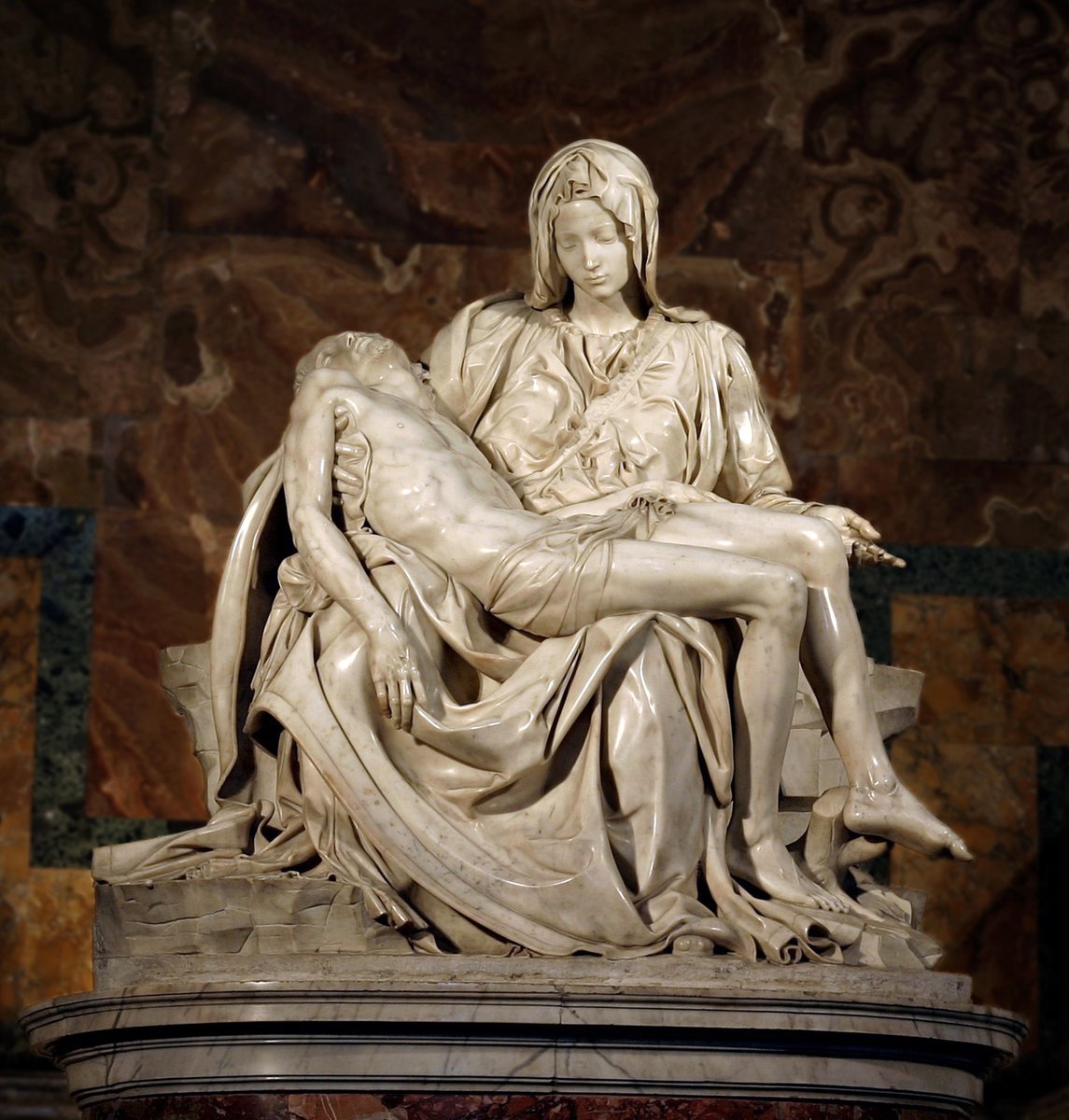
By his early thirties Michelangelo had become the foremost sculptor in Italy, having already made the Pieta and David.
But he wasn't much of a painter; it was marble that Michelangelo loved most.
By his early thirties Michelangelo had become the foremost sculptor in Italy, having already made the Pieta and David.
But he wasn't much of a painter; it was marble that Michelangelo loved most.
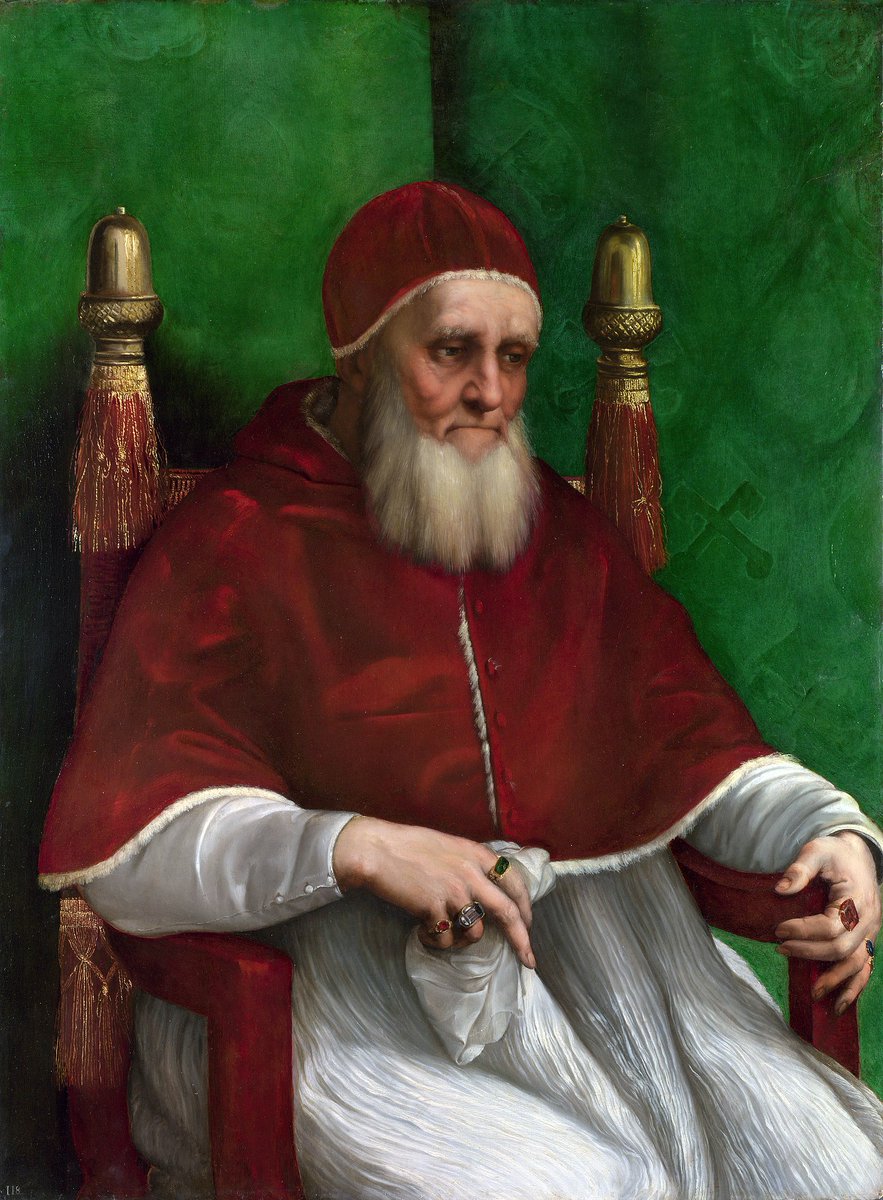
Enter Pope Julius II, nephew of Sixtus IV, known as the "warrior pope" — his papal name was inspired by Julius Caesar.
This portrait by Raphael seems to show a pious old man. But, in reality, it depicts Julius in mourning over the loss of Bologna in war.
This portrait by Raphael seems to show a pious old man. But, in reality, it depicts Julius in mourning over the loss of Bologna in war.
Julius may have cared more about war than helping the poor, but he was also a patron of the arts — although it seems to have been because he wanted his name to be remembered forever.
And in 1508 he commissioned Michelangelo, then 33, to paint the ceiling of the Sistine Chapel.
And in 1508 he commissioned Michelangelo, then 33, to paint the ceiling of the Sistine Chapel.
Michelangelo didn't want the job; he was a sculptor, not a painter, and the scale of the commission was colossal — it seemed like a ruse.
Alas, Julius (as usual) got his way, and in 1508 he convinced the greatest sculptor of the age to decorate the Sistine Chapel...
Alas, Julius (as usual) got his way, and in 1508 he convinced the greatest sculptor of the age to decorate the Sistine Chapel...
So Michelangelo got to work in 1508 — it would take him four years to finish.
The ceiling had originally been painted like the night sky, with stars over a blue background. This was removed for Michelangelo, who painted on freshly laid plaster each day.
The ceiling had originally been painted like the night sky, with stars over a blue background. This was removed for Michelangelo, who painted on freshly laid plaster each day.
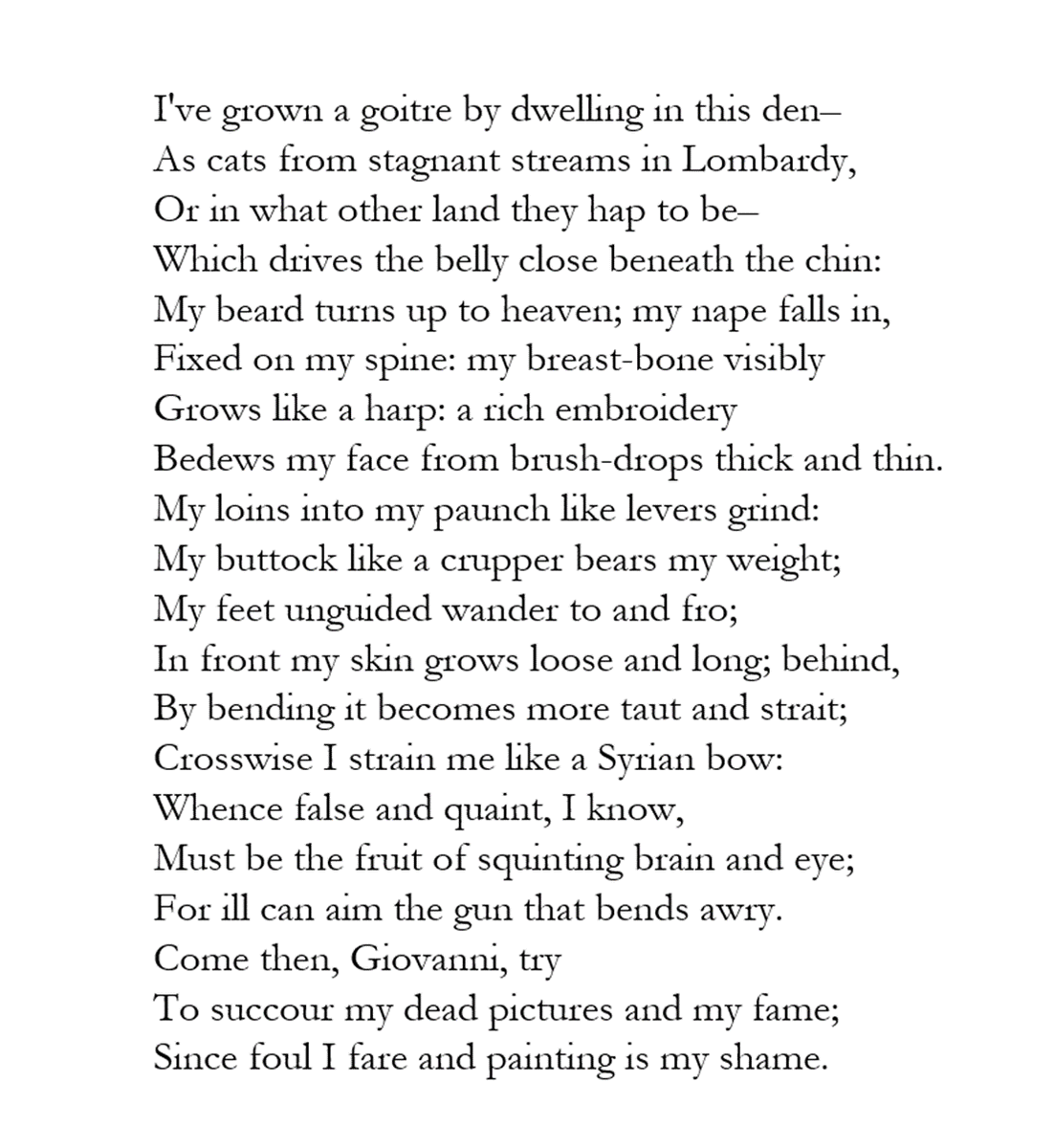
Popular belief says Michelangelo painted the ceiling of the Sistine Chapel while laying on his back, but the truth is that he painted it while standing, bent over backwards on a special scaffold.
He had back problems for the rest of his life, and he even wrote a poem about it:
He had back problems for the rest of his life, and he even wrote a poem about it:
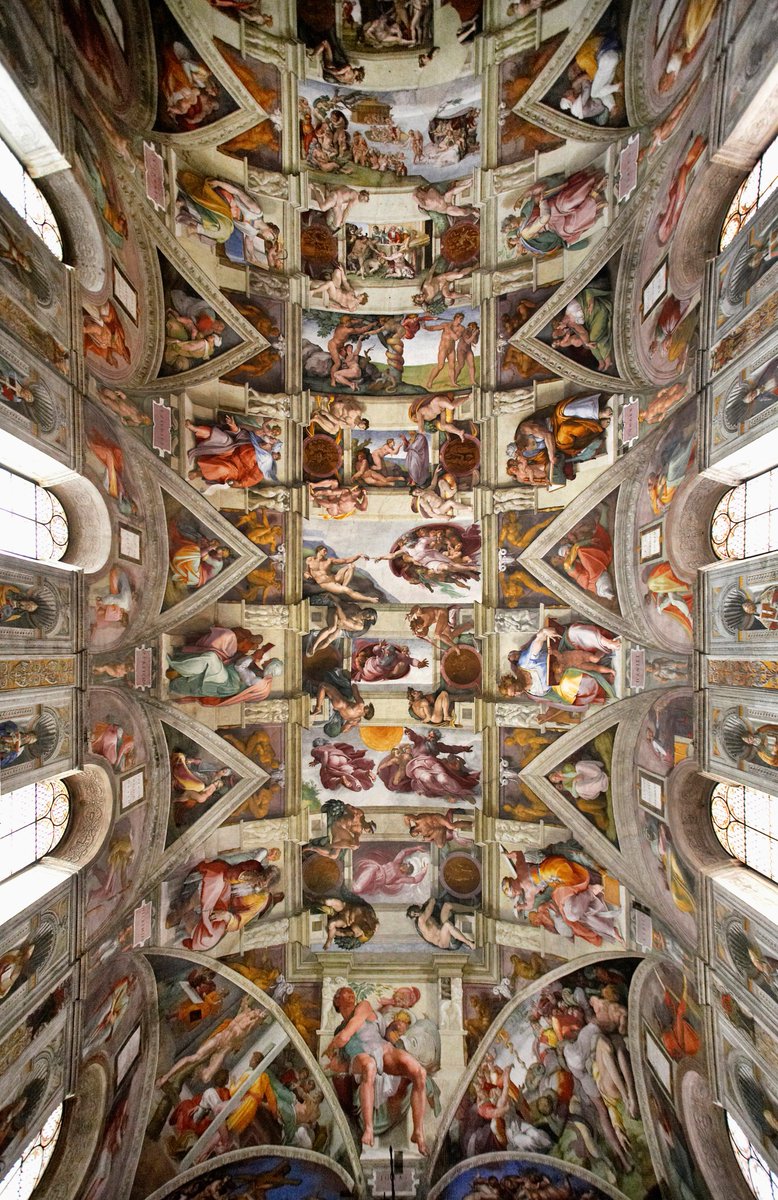
And this is the overall plan of the ceiling — an incredibly complex array of stories from the Old Testament, especially from Genesis, and of prophets and other biblical scenes, along with a motley crew of angels, cherubs, and more.
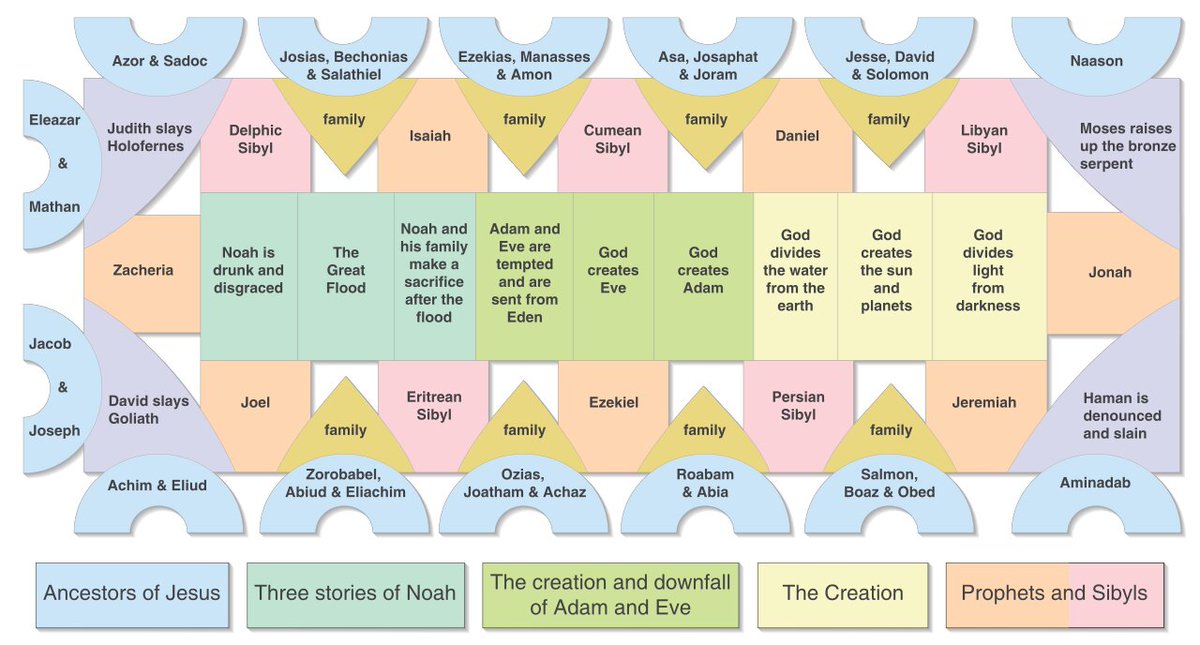
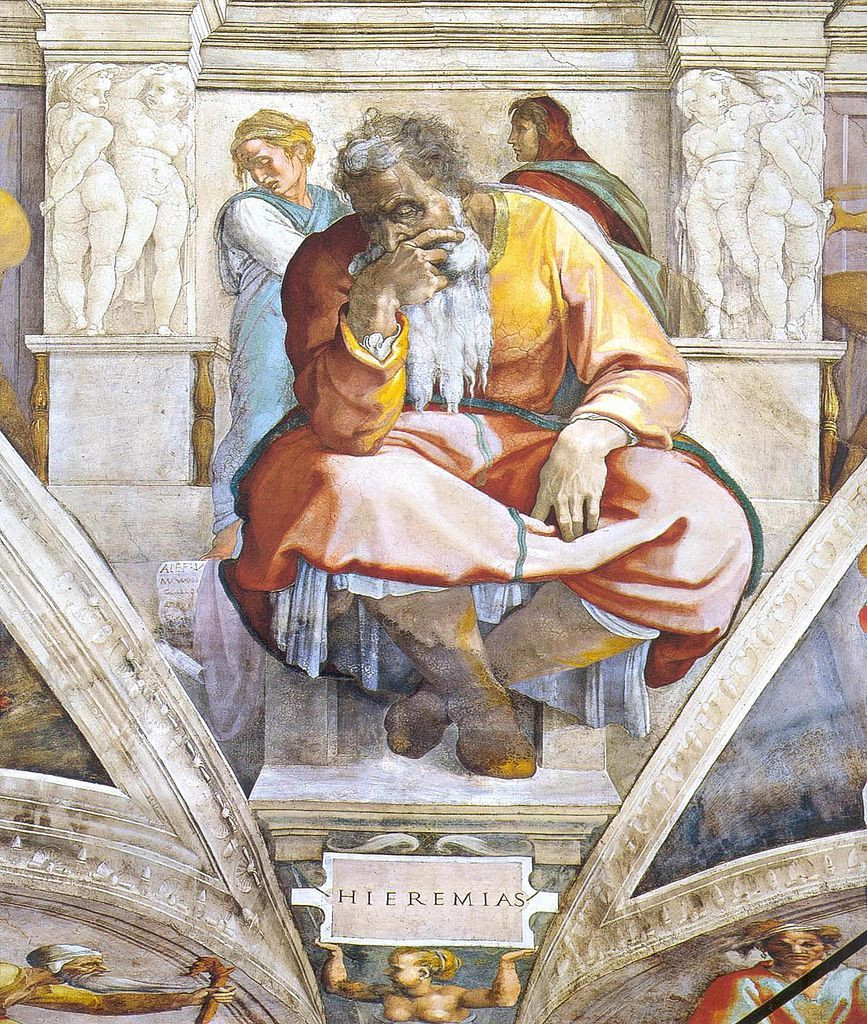
So there's a lot going on here — there are more than three hundred figures in total.
And it is a supreme example of illusionistic art; the surface of the ceiling is smooth, but Michelangelo organised his figures among architectural details to create a depth, texture, and order.
And it is a supreme example of illusionistic art; the surface of the ceiling is smooth, but Michelangelo organised his figures among architectural details to create a depth, texture, and order.
The most famous parts are those he painted last. He started with the minor scenes because he wanted to perfect his technique before attempting to paint God — it's easy to forget that Michelangelo was literally learning on the job.
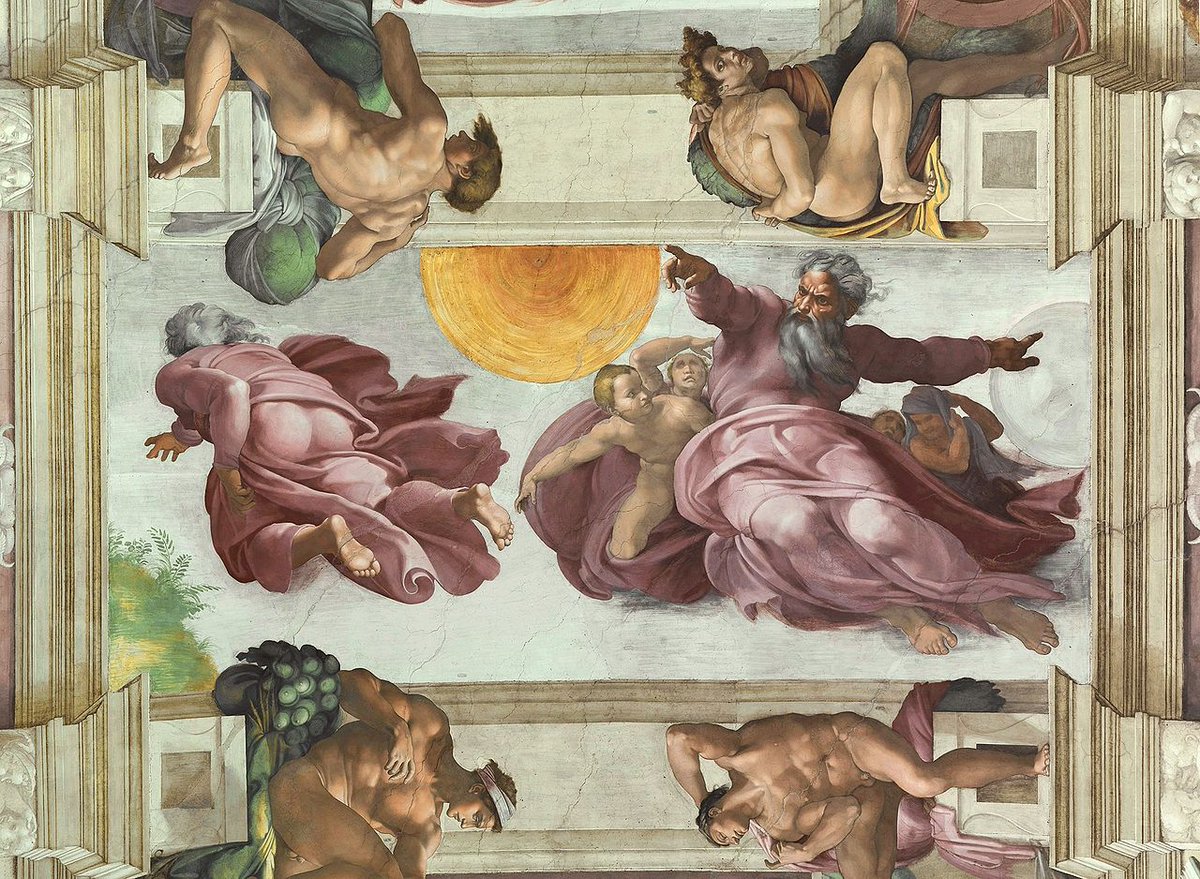
Here God divides the waters from the heavens.
Here God divides the waters from the heavens.
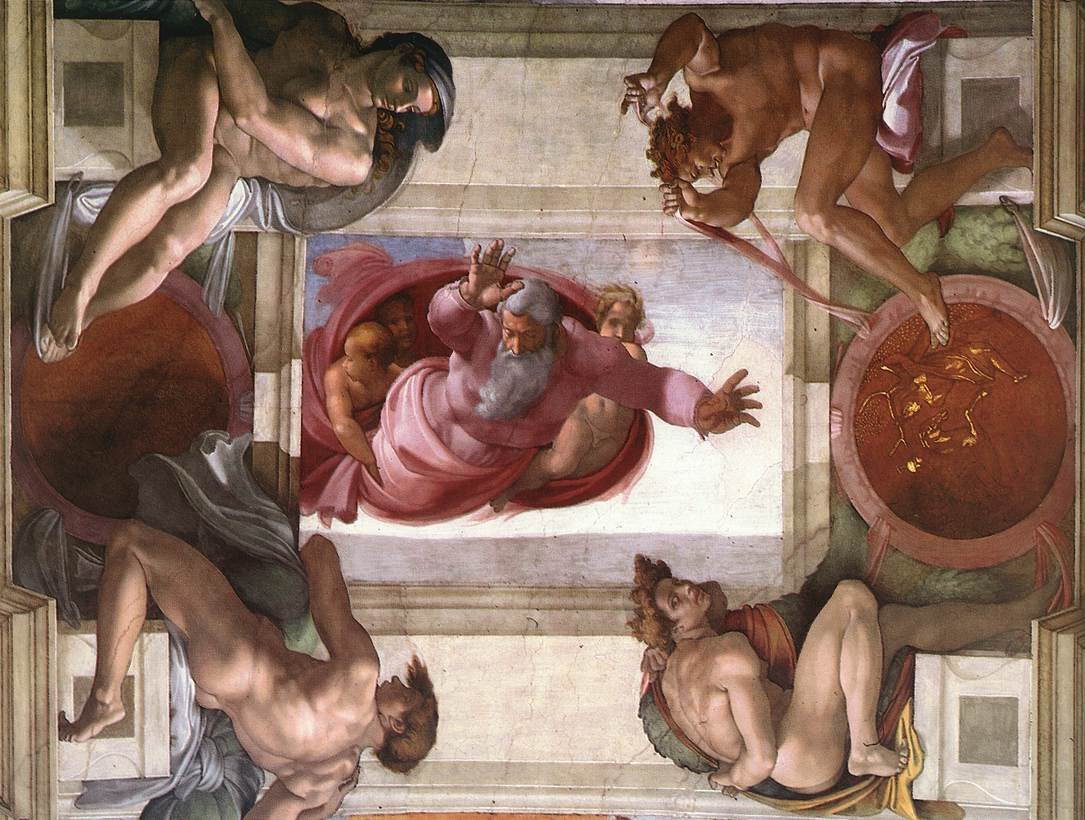
And here you can see the effect of Michelangelo's illusionistic architecture more clearly.
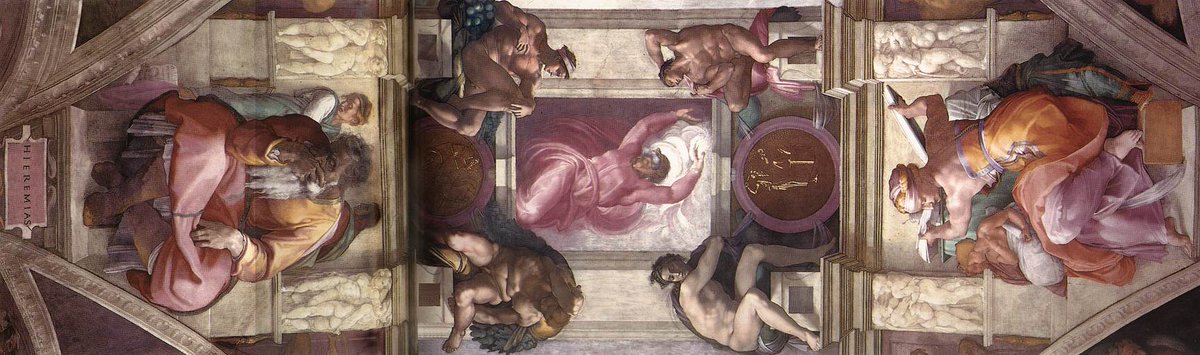
Some speculate that this is a self-portrait in which Michelangelo shows himself painting the ceiling as God dividing the light from the darkness.
This was the very last part he painted.
Some speculate that this is a self-portrait in which Michelangelo shows himself painting the ceiling as God dividing the light from the darkness.
This was the very last part he painted.
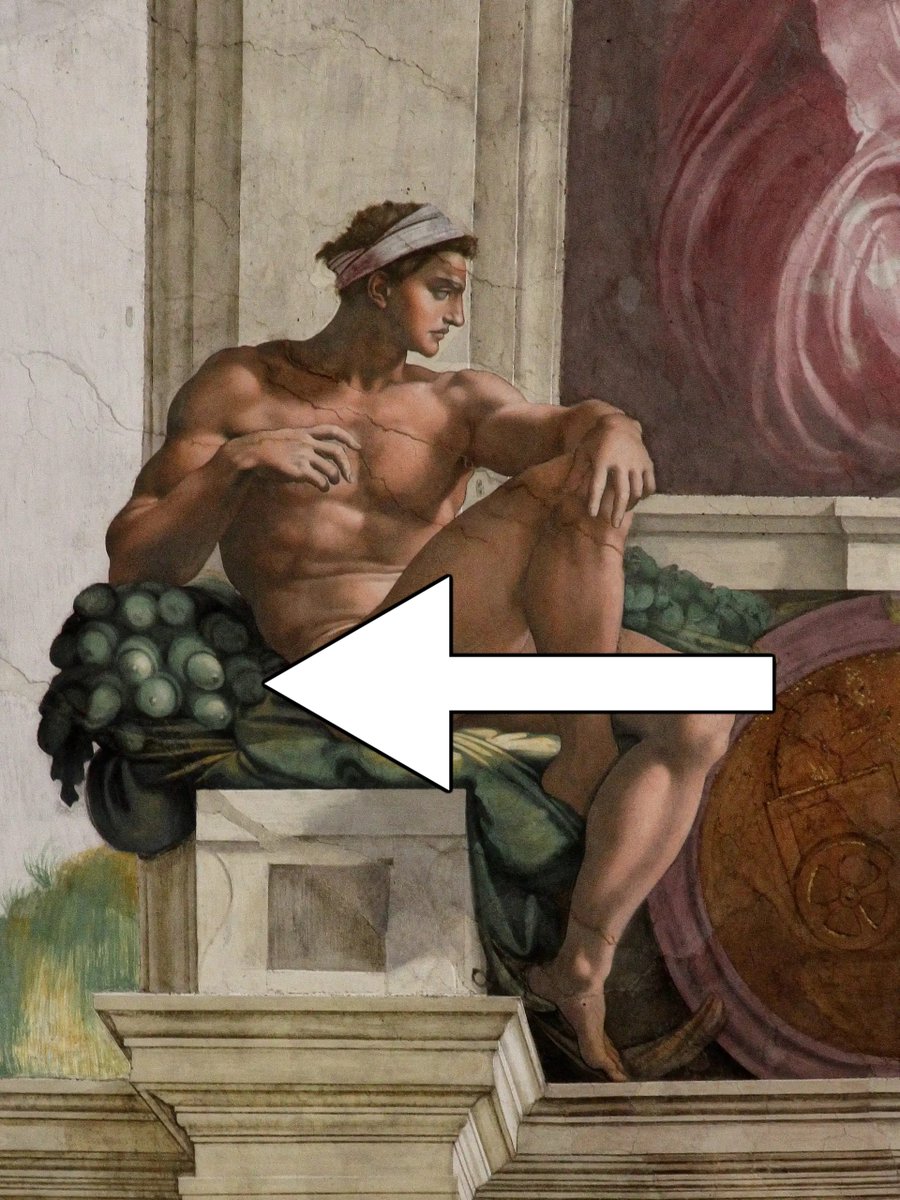
The ceiling of the Sistine Chapel is, rather curiously, filled with acorns.
Why? Julius II was born Giuliano della Rovere, and Rovere means oak in Italian. Hence his personal symbol was the acorn, and Michelangelo's inclusion of them was a not-so-subtle symbol of his patronage.
Why? Julius II was born Giuliano della Rovere, and Rovere means oak in Italian. Hence his personal symbol was the acorn, and Michelangelo's inclusion of them was a not-so-subtle symbol of his patronage.
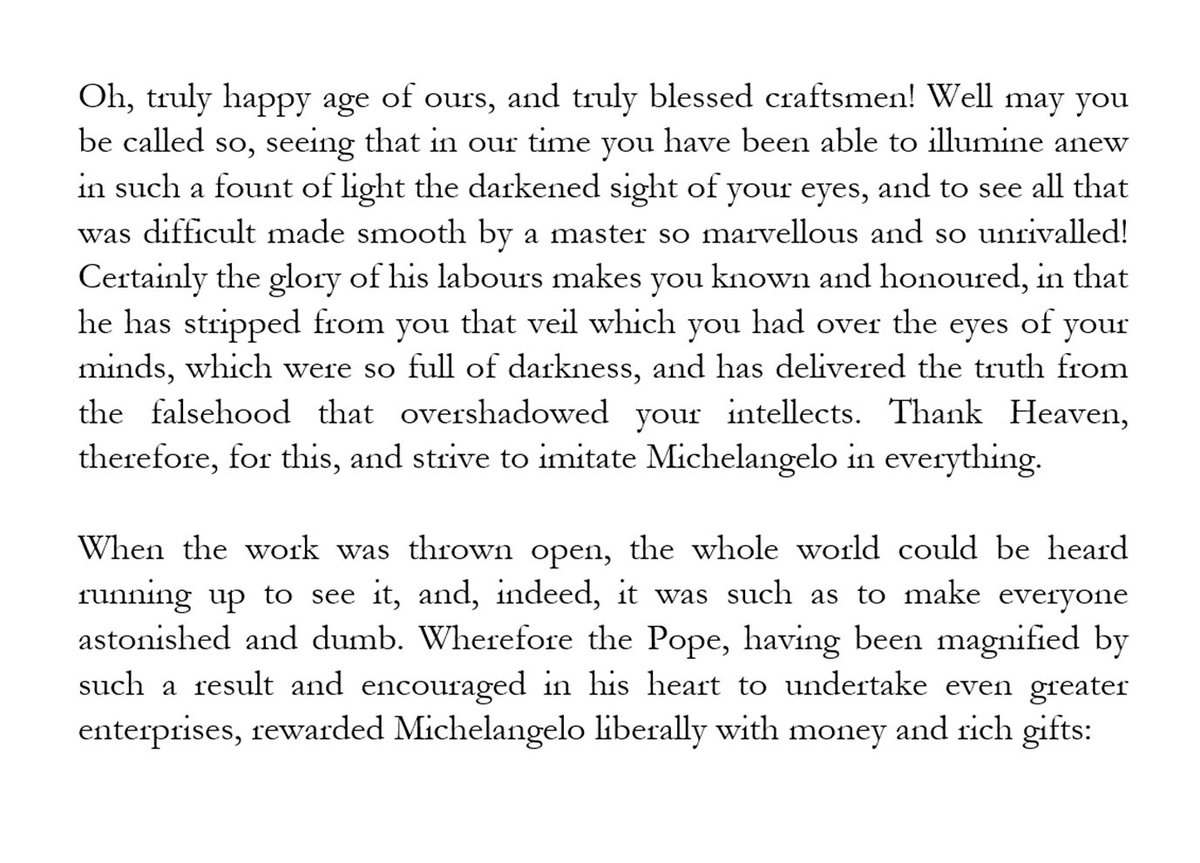
Four years passed, Michelangelo completed his project, and the ceiling was shown to the public on the 1st November 1512.
It was immediately hailed as a masterpiece and Michelangelo as the greatest artist of all time. As the biographer Giorgio Vasari said only a few years later:
It was immediately hailed as a masterpiece and Michelangelo as the greatest artist of all time. As the biographer Giorgio Vasari said only a few years later:
But Michelangelo was a controversial artist and his works inevitably divided people.
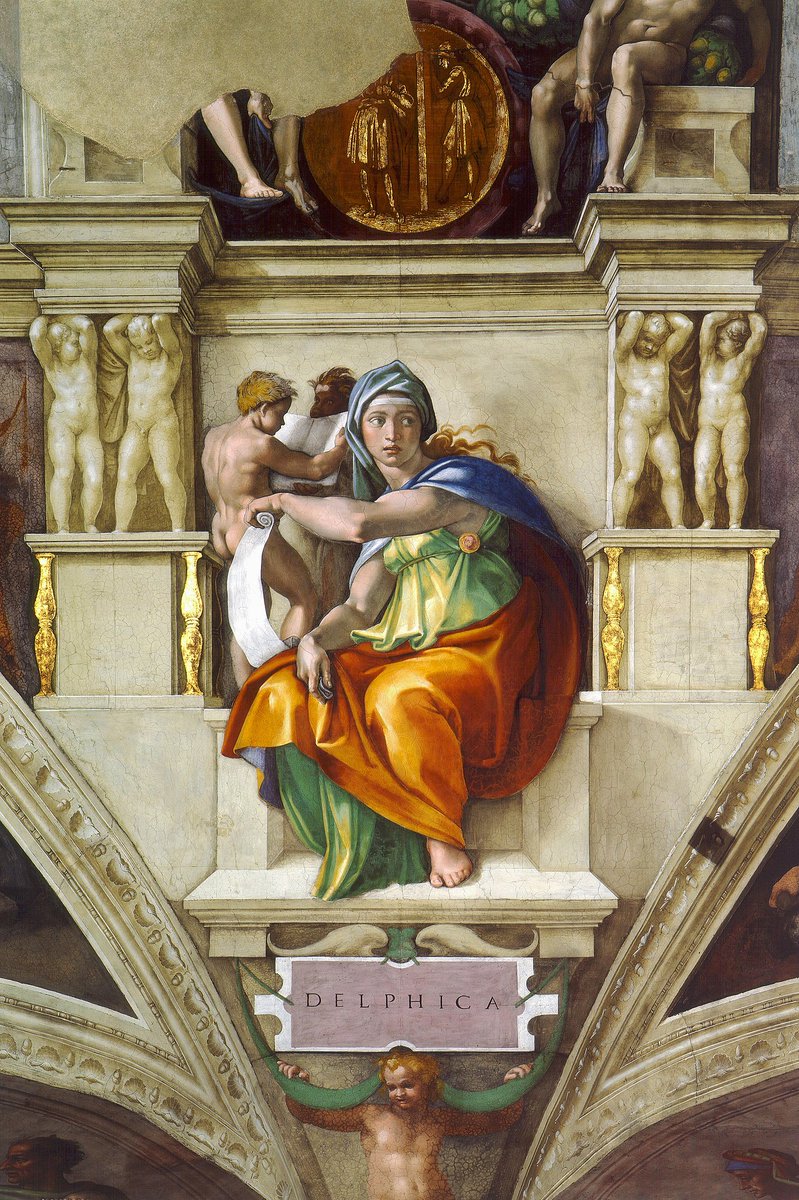
Most startling of all was his decision to include five "sibyls" — oracles from the ancient world of Greece, Rome, and Persia.
Mixing pagan and Christian figures was, at the time, shocking.
Most startling of all was his decision to include five "sibyls" — oracles from the ancient world of Greece, Rome, and Persia.
Mixing pagan and Christian figures was, at the time, shocking.
Others were appalled by the amount of nudity.
Michelangelo, true to the Renaissance, had been inspired by the heroic nude statues of Ancient Greece and Rome.
Hence the array of thick, muscular torsos and twisting bodies which defined both his painting and his sculpture.
Michelangelo, true to the Renaissance, had been inspired by the heroic nude statues of Ancient Greece and Rome.
Hence the array of thick, muscular torsos and twisting bodies which defined both his painting and his sculpture.
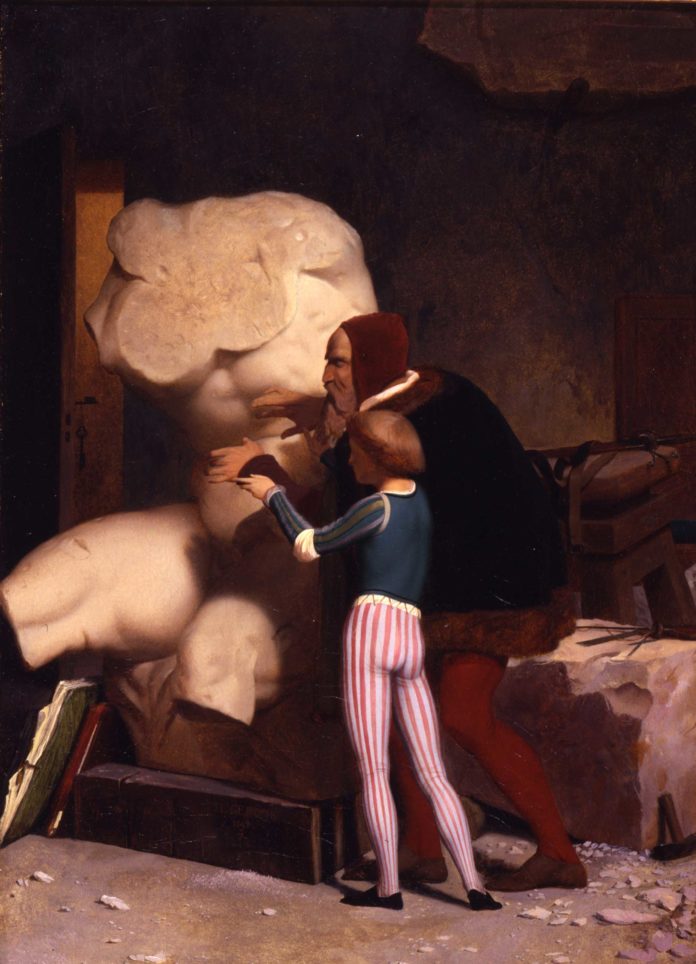
Parts of the ceiling were directly inspired by Michelangelo's favourite ancient statues: Laocoön and His Sons and the Belvedere Torso.
This 19th century painting by Jean-Léon Gérôme shows a young Michelangelo seeing the Belvedere Torso for the first time. Familiar...
This 19th century painting by Jean-Léon Gérôme shows a young Michelangelo seeing the Belvedere Torso for the first time. Familiar...
But a great many people thought this sort of art was simply inappropriate for such a sacred place.
There had been essentially no nudity in Medieval or Gothic art, and one of the defining features of the Italian Renaissance, led by Michelangelo, was reintroducing it.
There had been essentially no nudity in Medieval or Gothic art, and one of the defining features of the Italian Renaissance, led by Michelangelo, was reintroducing it.
The Sistine Chapel has been used continuously for five centuries, whether for religious services or for the conclave that gathers to elect the new pope.
And so by the 20th century its ceiling had deteriorated, with the paintings covered in candle smoke and muck.
And so by the 20th century its ceiling had deteriorated, with the paintings covered in candle smoke and muck.
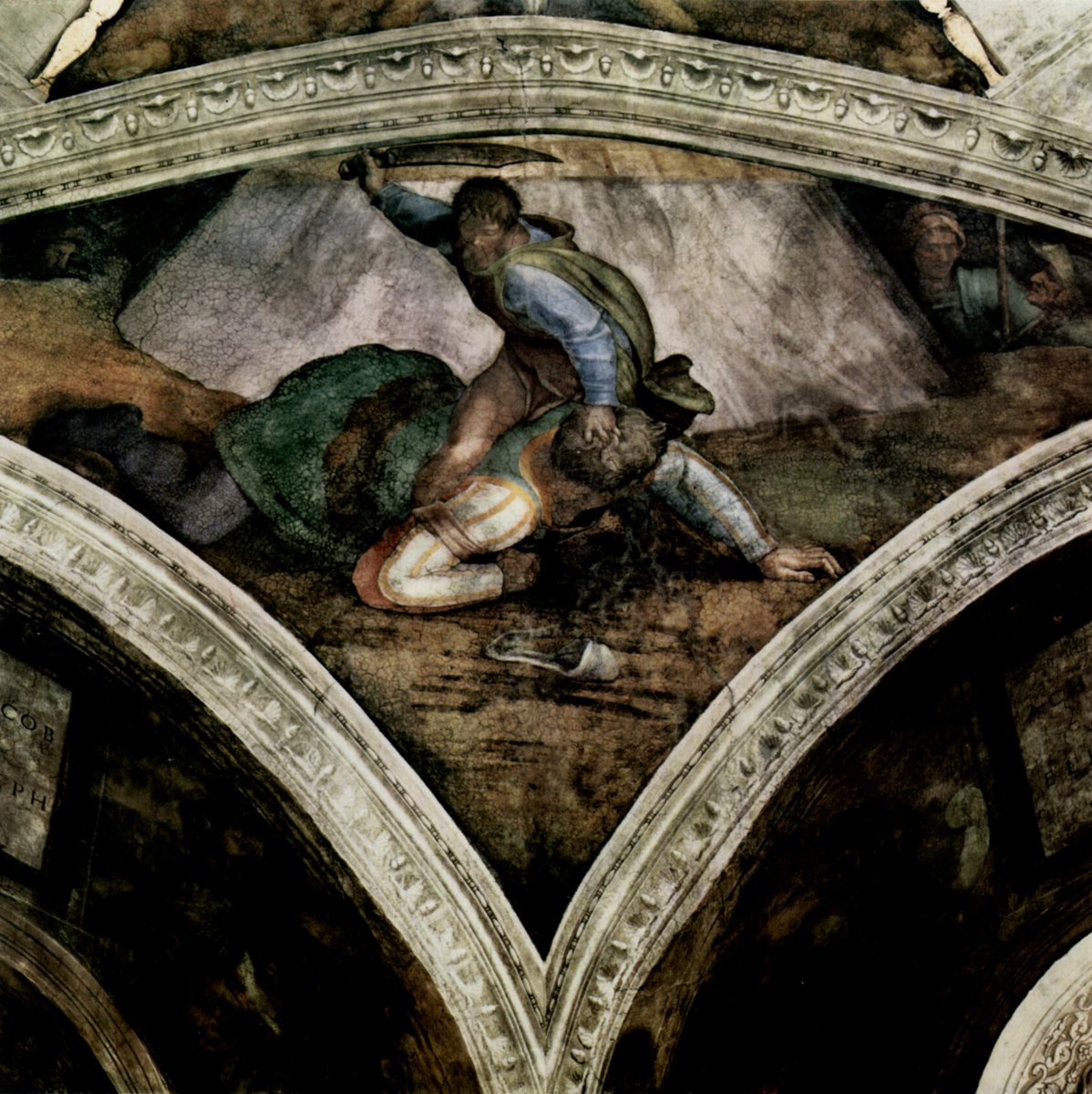
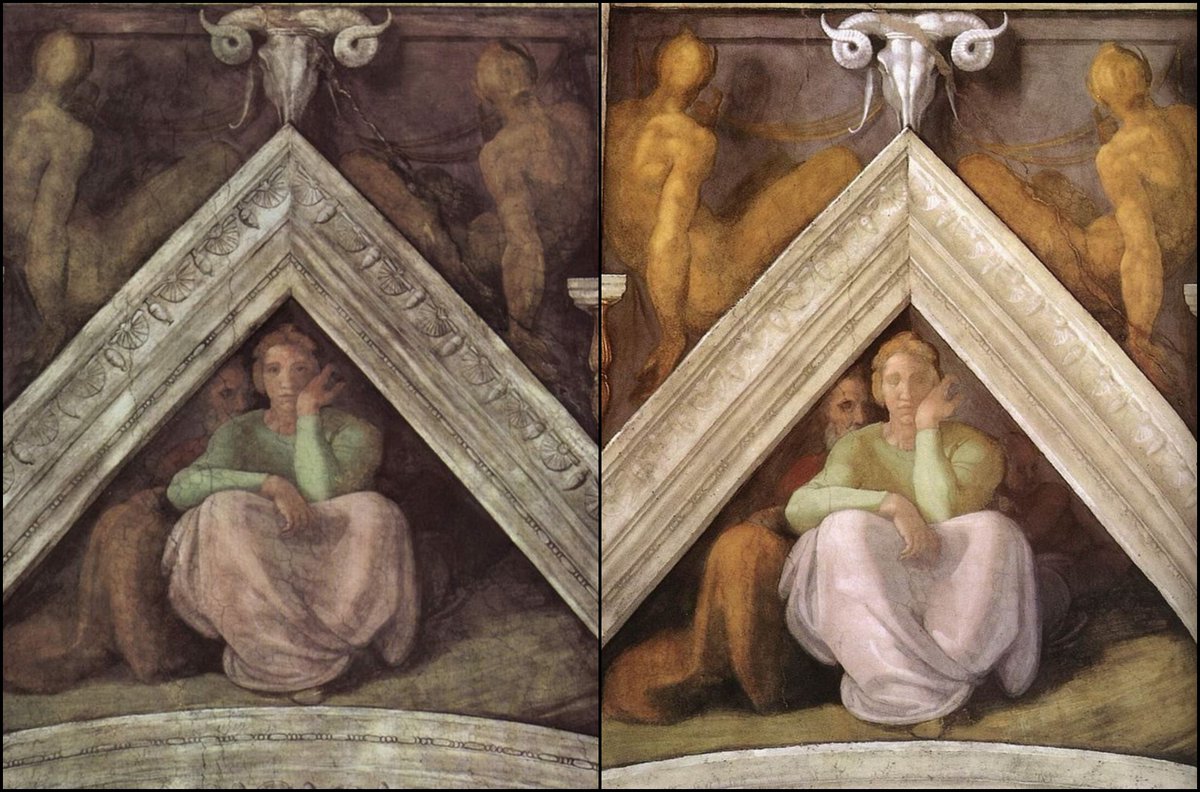
In the 1980s there was a major restoration. All filth and the remains of previous restorations were removed in an attempt to restore Michelangelo's original work.
From beneath the soot emerged a far brighter ceiling; but some argued that Michelangelo's subtleties had been lost.
From beneath the soot emerged a far brighter ceiling; but some argued that Michelangelo's subtleties had been lost.
You don't have to agree with the mindlessly restated opinion that this is "the greatest achievement in the history of art".
It's entirely reasonable to say, as the 19th century critic John Ruskin did, that "no work of Michelangelo has ever been worshipped except by accident."
It's entirely reasonable to say, as the 19th century critic John Ruskin did, that "no work of Michelangelo has ever been worshipped except by accident."
Still, what cannot be denied is that the ceiling of the Sistine Chapel represents a turning point in art history; nothing was ever the same again after 1st November 1512.
But is it good, is it great, is it unequalled? Or is it misunderstood? Or overrated?
Only you can decide...
But is it good, is it great, is it unequalled? Or is it misunderstood? Or overrated?
Only you can decide...
جاري تحميل الاقتراحات...