

Earlier this year, Tim Cook visited India to open India's 1st Apple store
But why fly 13000km for a store-opening? Because these are no ordinary stores
These are Steve Jobs' greatest invention, even bigger than iPhone!
THREAD: Why you'll never see shopping the same way again🧵
But why fly 13000km for a store-opening? Because these are no ordinary stores
These are Steve Jobs' greatest invention, even bigger than iPhone!
THREAD: Why you'll never see shopping the same way again🧵
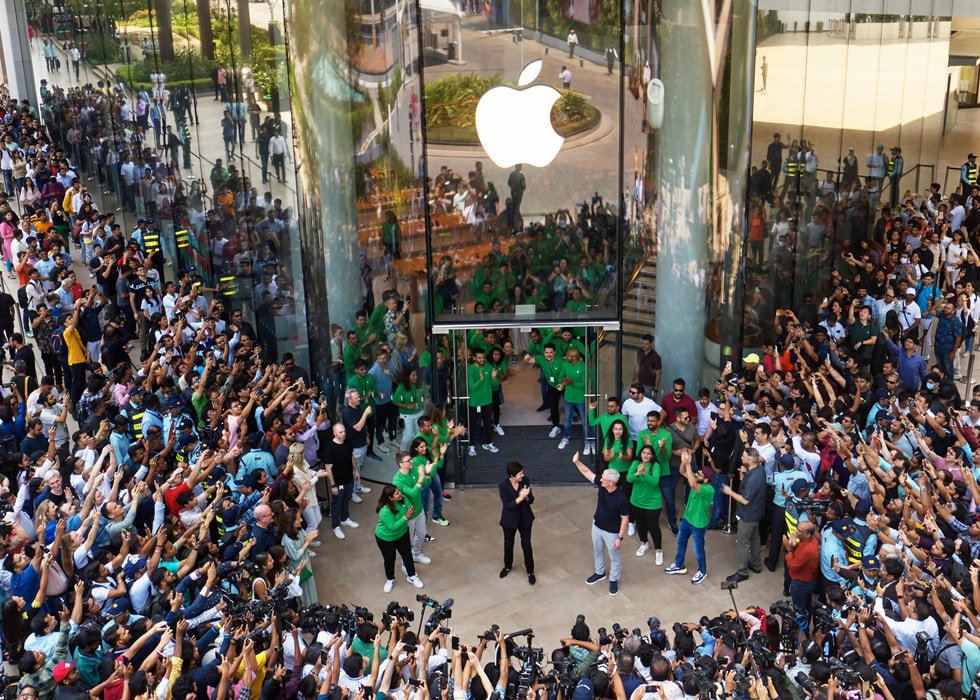
Apple — the world's most innovative and ingenious technology company is also the most successful retailer of our time!
It's a bold claim, we know. But it's not if it is true.
So without wasting time, let's see from the beginning:
It's a bold claim, we know. But it's not if it is true.
So without wasting time, let's see from the beginning:
What Apple and particularly Steve Jobs did with retail?
See, Steve Jobs wanted to build a unique brand image for Apple — serving as the foundation of the company.
In the process, he discovered a major problem in the retail market of personal computers.
See, Steve Jobs wanted to build a unique brand image for Apple — serving as the foundation of the company.
In the process, he discovered a major problem in the retail market of personal computers.
All the products were sharing shelves and competing with each other based on their use cases, prices, & overall appeal.
And this was just unacceptable for him. So to overcome this problem, Apple started selling computers online.
But their problem was still partly resolved.
And this was just unacceptable for him. So to overcome this problem, Apple started selling computers online.
But their problem was still partly resolved.
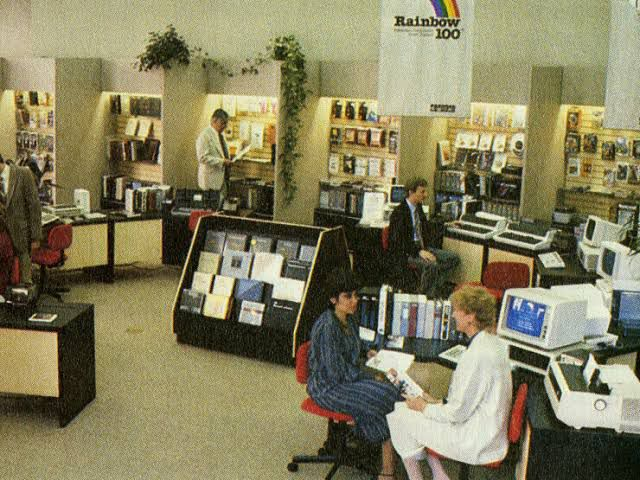
In online selling, customers were still not engaged in personal interaction.
He wanted his customers to learn and experience the things they can do with their computers, rather than just being informed about their megahertz and megabytes.
He wanted his customers to learn and experience the things they can do with their computers, rather than just being informed about their megahertz and megabytes.
So to overcome this major roadblock and to position Apple as the leader in personal computers
— he acknowledged the relevance of the 'Place of Product Distribution' as one of the core elements of the 4Ps of the marketing paradigm.
— he acknowledged the relevance of the 'Place of Product Distribution' as one of the core elements of the 4Ps of the marketing paradigm.
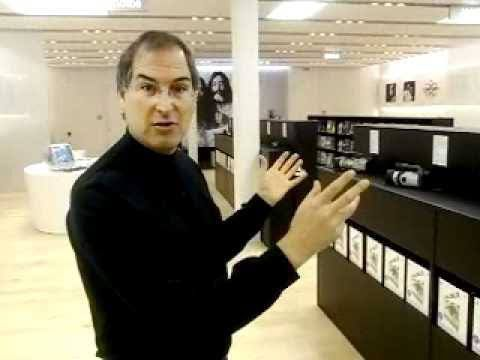
He realized that to enhance Apple's brand value by providing experiences, he needs to use 'Place' as the primary tool to promote the product.
So the company decided to open its brick-&-mortar stores because as Lancaster and Reynolds say:
So the company decided to open its brick-&-mortar stores because as Lancaster and Reynolds say:
"Stores, like people, possess 'personalities' which consumers readily perceive and often associate with the merchandise located in the stores."
For the first time, on 19 May 2001 Apple launched 2 stores:
1. "Tyson's Corner" in McLean, Virginia.
For the first time, on 19 May 2001 Apple launched 2 stores:
1. "Tyson's Corner" in McLean, Virginia.
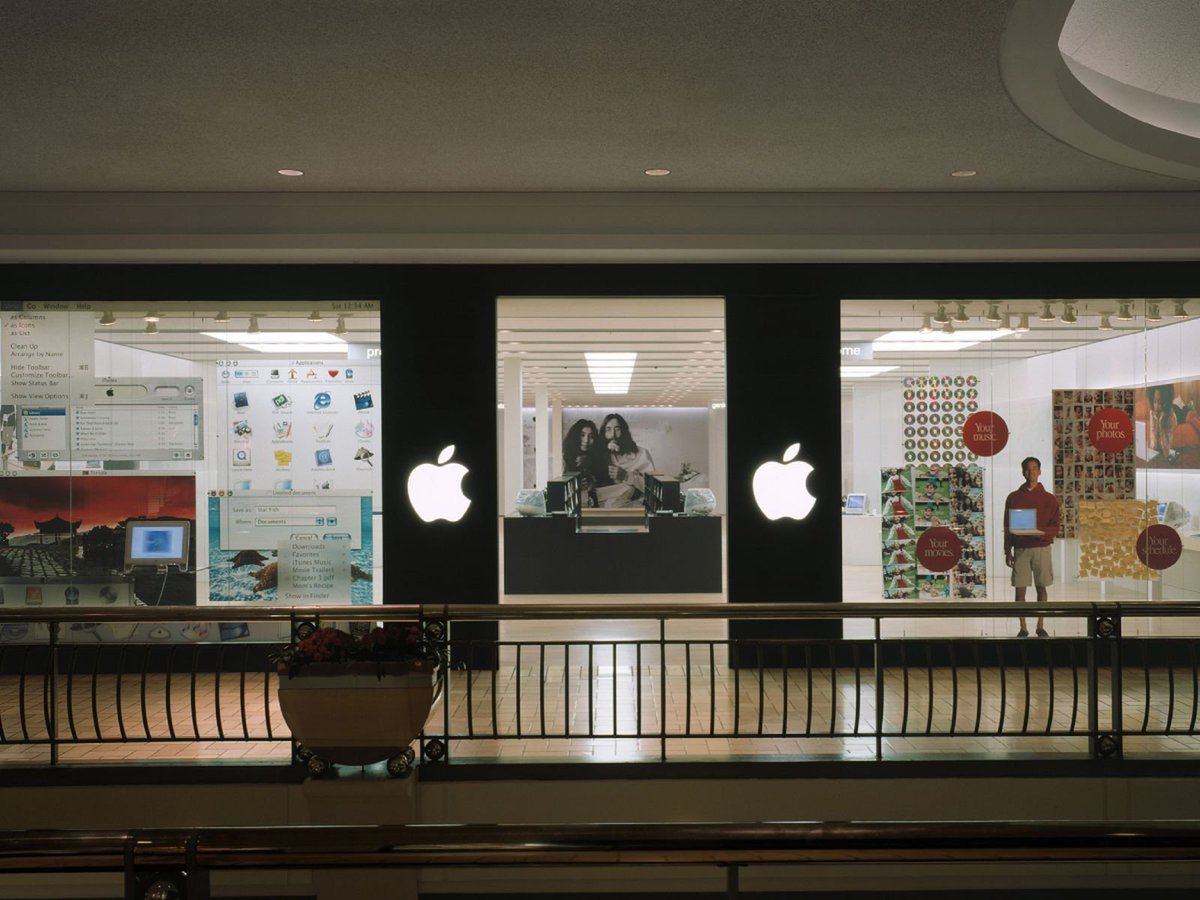
2. "Glendale Galleria" in Glendale, California.
Now it's well known that Jobs practiced Zen and it inspired his design philosophy.
He was moved by Japanese architecture and the way it infused Zen Buddhist ideals into elements of buildings.
Now it's well known that Jobs practiced Zen and it inspired his design philosophy.
He was moved by Japanese architecture and the way it infused Zen Buddhist ideals into elements of buildings.
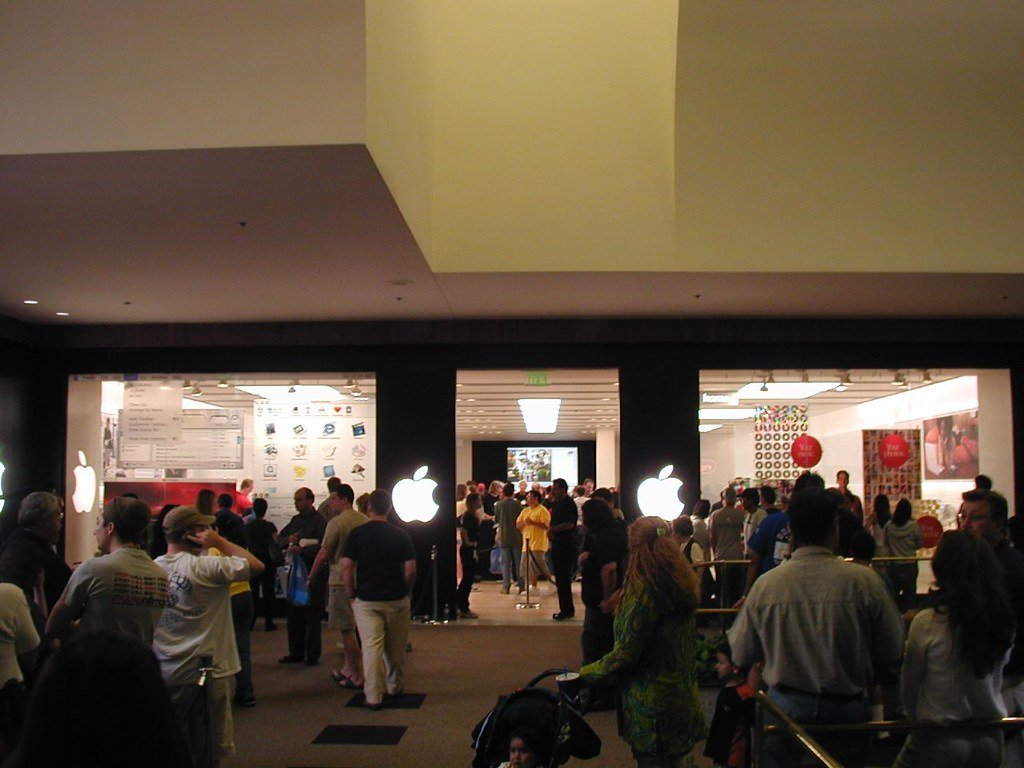
Minimalism is the cornerstone of Japanese architecture, which emphasizes simplicity, clarity, and functionality.
Jobs along with his team adapted minimalistic design philosophy and worked around it on their first store.
Jobs along with his team adapted minimalistic design philosophy and worked around it on their first store.

And since then Apple has been designing all of its stores — all around the world, based on the same fundamentals of minimalism.
1. Simplicity: Apple tends to keep its stores simple and uncluttered, with symmetry, clean lines, and a neutral color palette.
1. Simplicity: Apple tends to keep its stores simple and uncluttered, with symmetry, clean lines, and a neutral color palette.
This creates a backdrop for the products and it's one of the best ways to showcase the products clearly and compellingly.
These stores feature white oak tables and storage units which let Apple's products take center stage.
These stores feature white oak tables and storage units which let Apple's products take center stage.
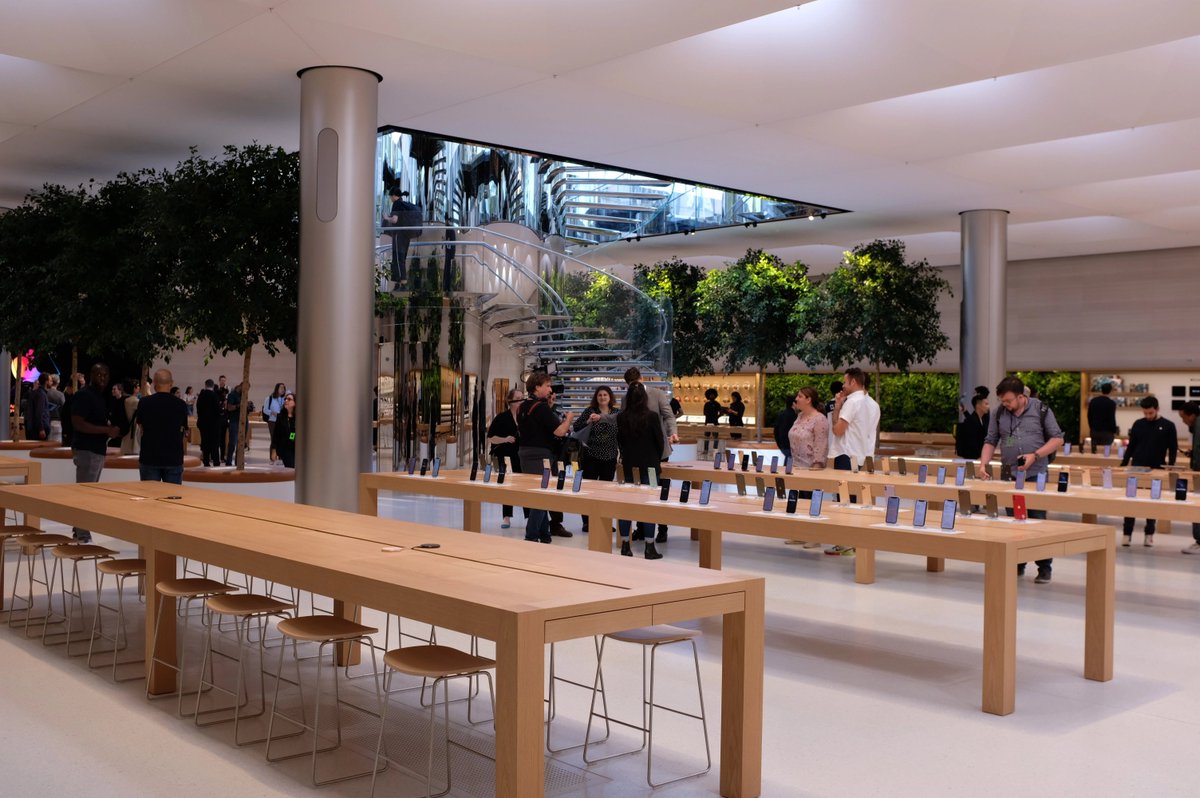
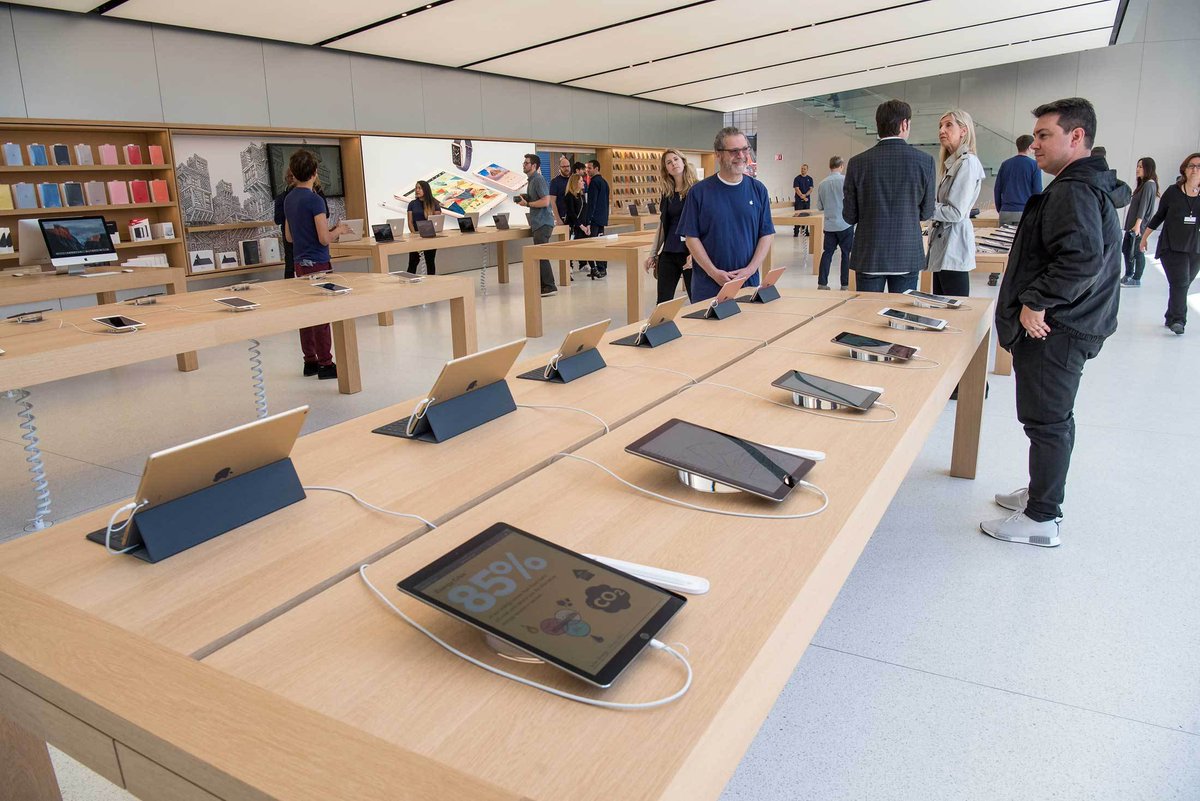
2. Calmness and Tranquillity: Apple creates a sense of calm and focuses in the store environment by reducing visual distractions and streamlining the design.
This allows customers to navigate the store and interact with the products easily without getting overwhelmed.
This allows customers to navigate the store and interact with the products easily without getting overwhelmed.
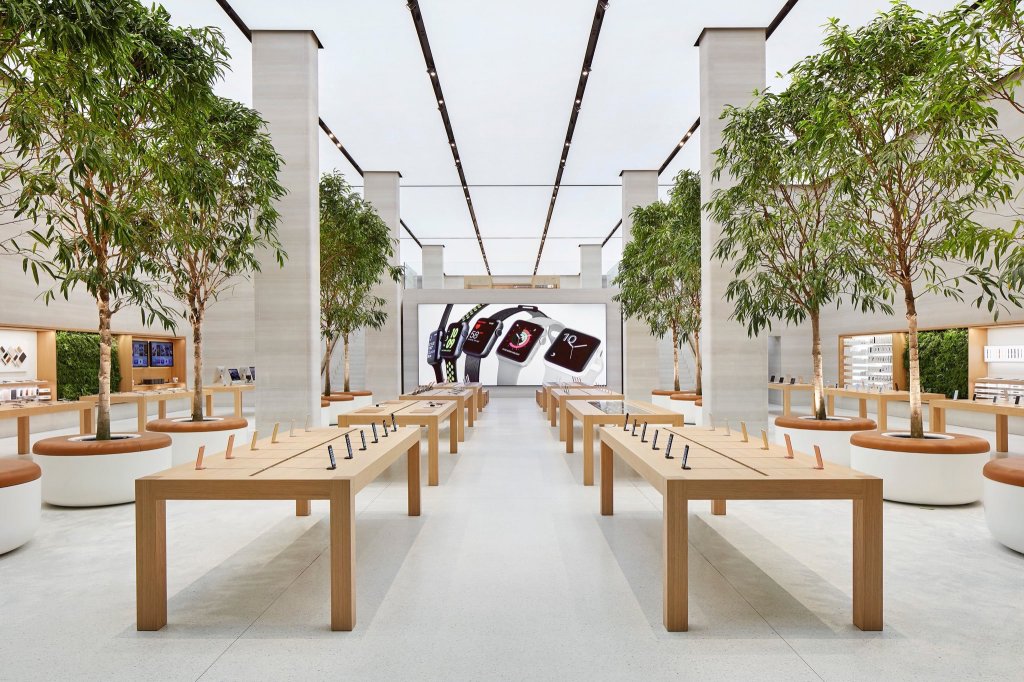
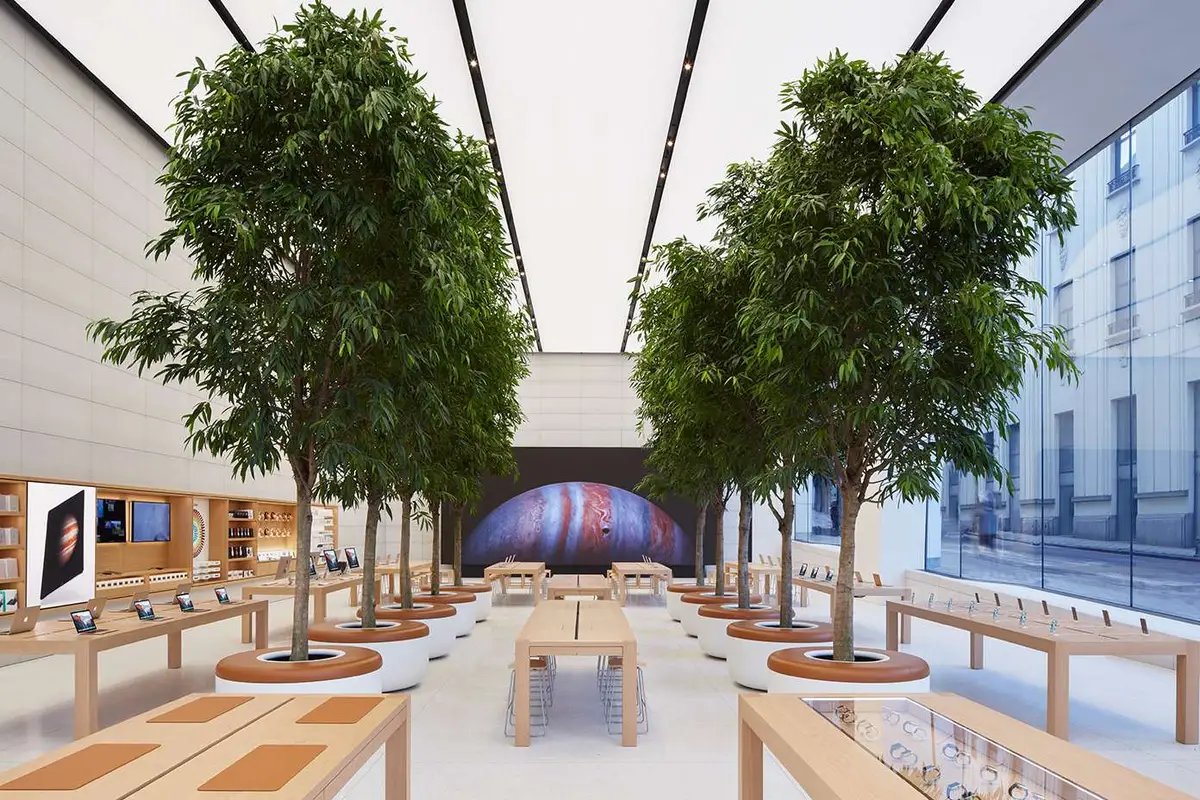
Moreover, Apple emphasizes more on natural elements like stone and large trees that bring life to its stores.
It creates a more inviting environment and also stresses upon the whole "less is more" thing.
3. Transparency: Apple often features large glass facades
It creates a more inviting environment and also stresses upon the whole "less is more" thing.
3. Transparency: Apple often features large glass facades
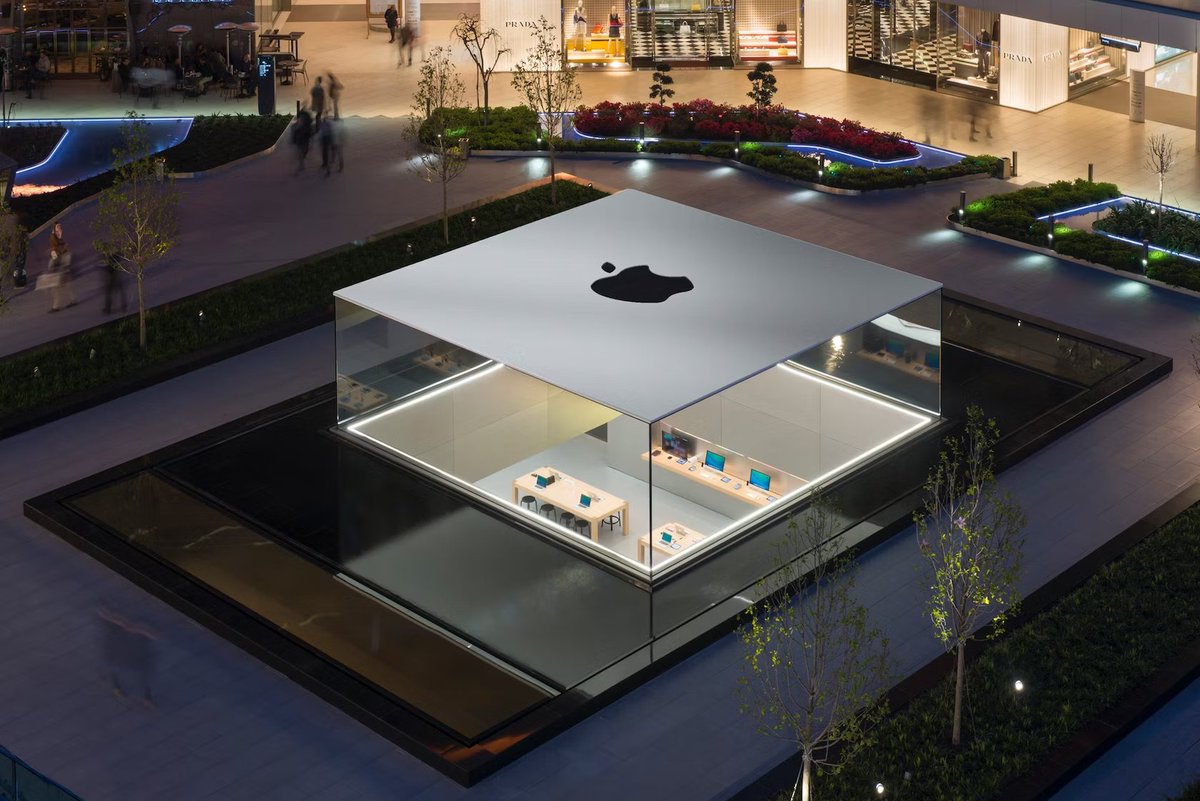
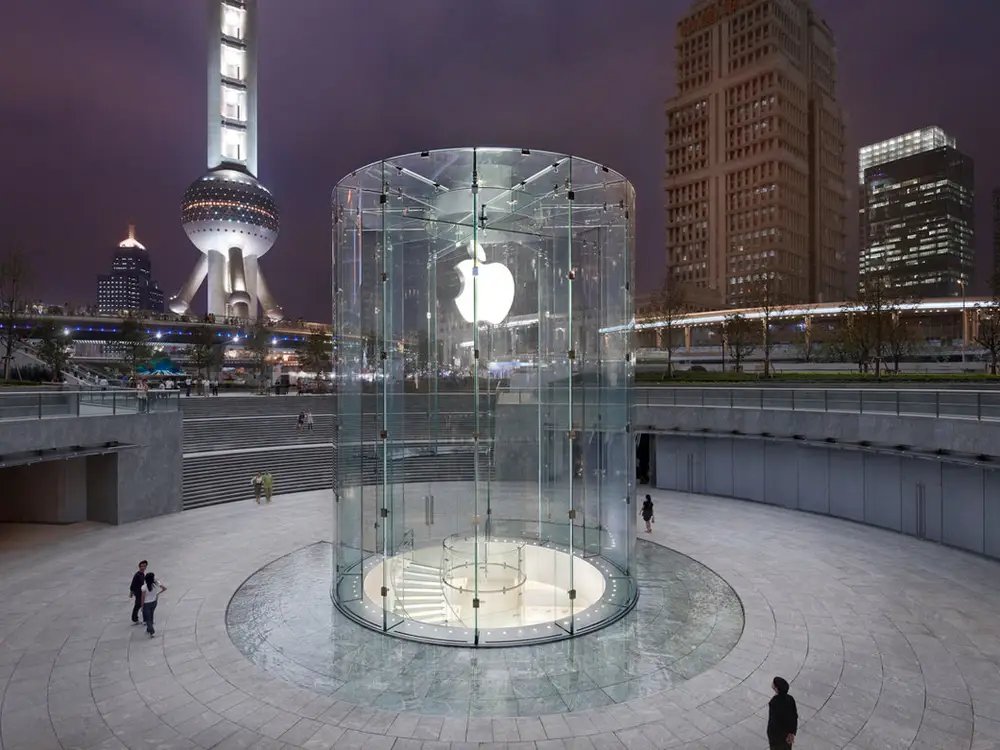
— to let natural light enter the stores.
Minimalist style obeys the great importance of natural light. And by extension- white colored artificial lighting.
Glass staircases and railings create a sense of transparency and openness.
Minimalist style obeys the great importance of natural light. And by extension- white colored artificial lighting.
Glass staircases and railings create a sense of transparency and openness.
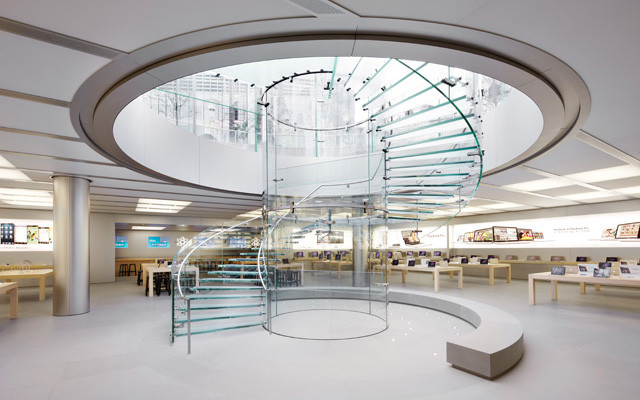
This promotes inclusivity and it encourages customers to explore Apple's products and services better.
4. Tech Integration: Being the most innovative co. on our planet, Apple deploys new and more efficient technology to make the entire place more sustainable.
4. Tech Integration: Being the most innovative co. on our planet, Apple deploys new and more efficient technology to make the entire place more sustainable.

Large video displays for theater-like experiences are common in all stores around the globe.
They are used to showcase Apple products, as well as highlight their features and capabilities.
They also use digital signage, and iPads for customer interactions.
They are used to showcase Apple products, as well as highlight their features and capabilities.
They also use digital signage, and iPads for customer interactions.
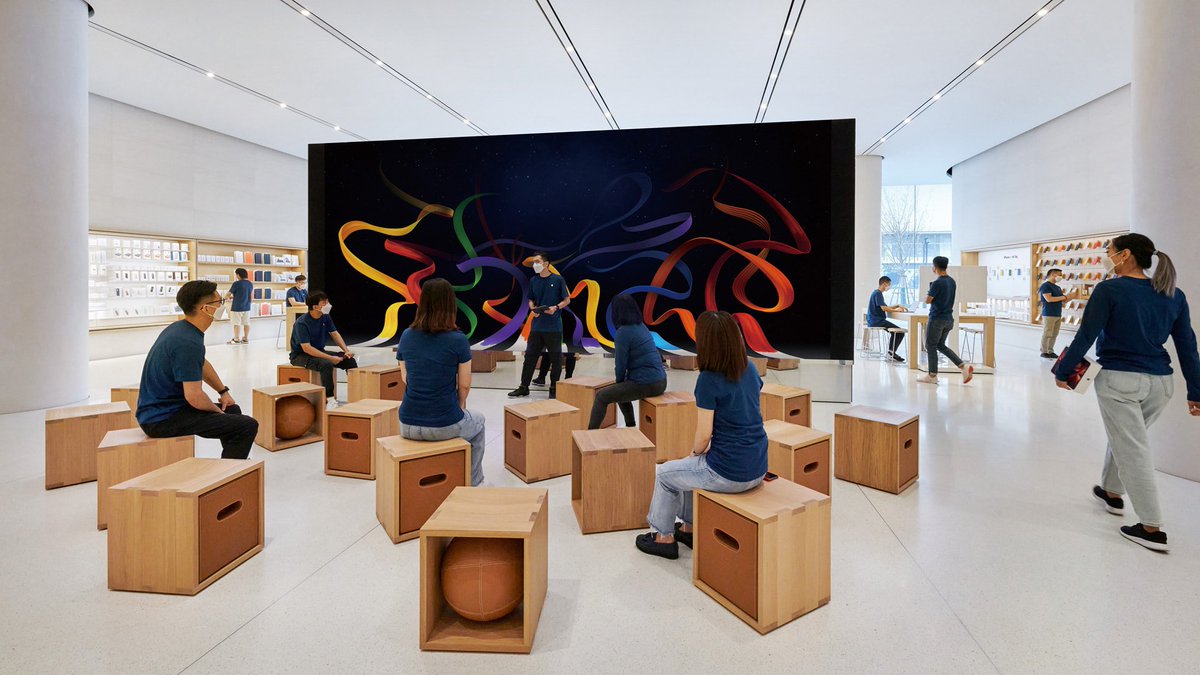
5. Sustainability: To reduce its overall environmental footprint and become operationally carbon neutral,
— Apple uses solar arrays, recycled wood, natural stone, and low-emitting materials.
They have zero reliance on fossil fuels for their store operations.
— Apple uses solar arrays, recycled wood, natural stone, and low-emitting materials.
They have zero reliance on fossil fuels for their store operations.
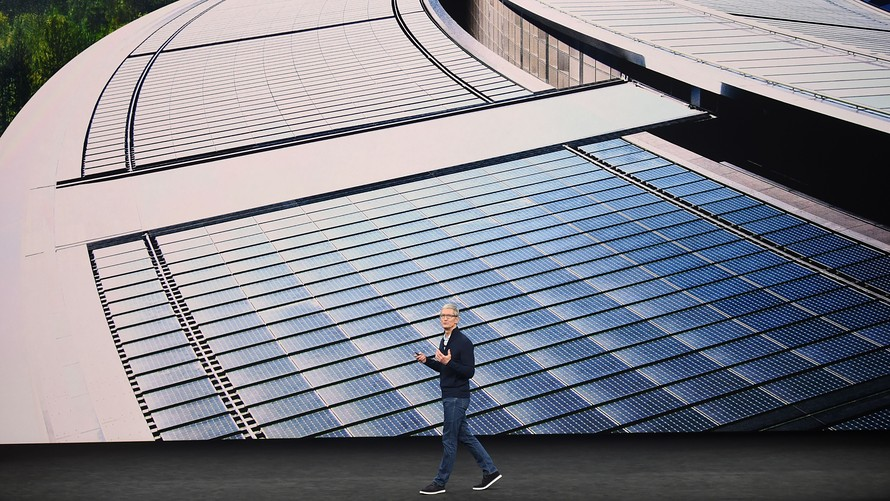
This commitment to being sustainable also minimizes its operational costs.
To take its designing expertise to new heights, Apple brought on board new representatives from
- brands like Burberry and
- famous architects like Foster & Partner and Bohlin Cywinski Jackson.
To take its designing expertise to new heights, Apple brought on board new representatives from
- brands like Burberry and
- famous architects like Foster & Partner and Bohlin Cywinski Jackson.
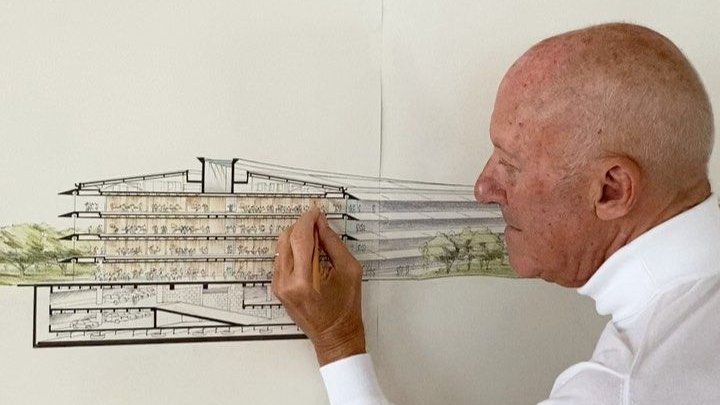
Now these new relationships lead Apple to the beginning of the "Town Square" principle.
Town what now? So basically, under the town square principle, Apple connect famous locations of different cities with their brand.
Town what now? So basically, under the town square principle, Apple connect famous locations of different cities with their brand.
The co. has already built its stores at places like- - the Piazza Liberty in Milan,
- New York’s Grand Central Station,
- the Covent Garden in London, and
- the Champs Elysees in Paris.
These places allow Apple to host more events and creative meetings.
- New York’s Grand Central Station,
- the Covent Garden in London, and
- the Champs Elysees in Paris.
These places allow Apple to host more events and creative meetings.
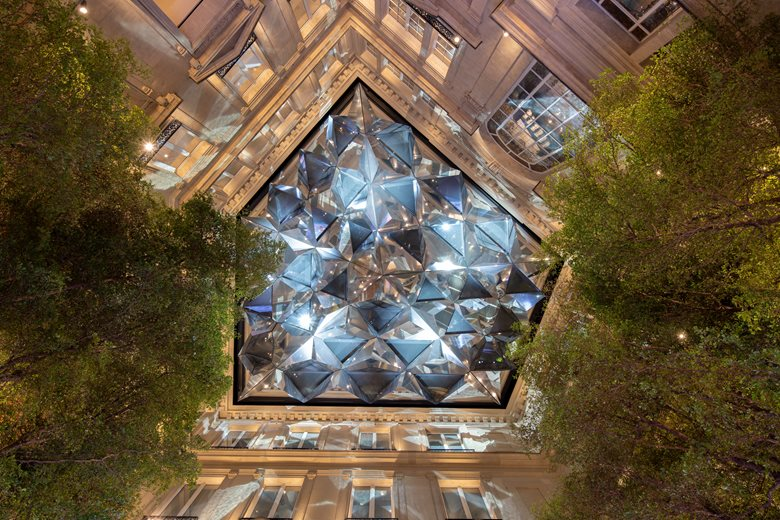
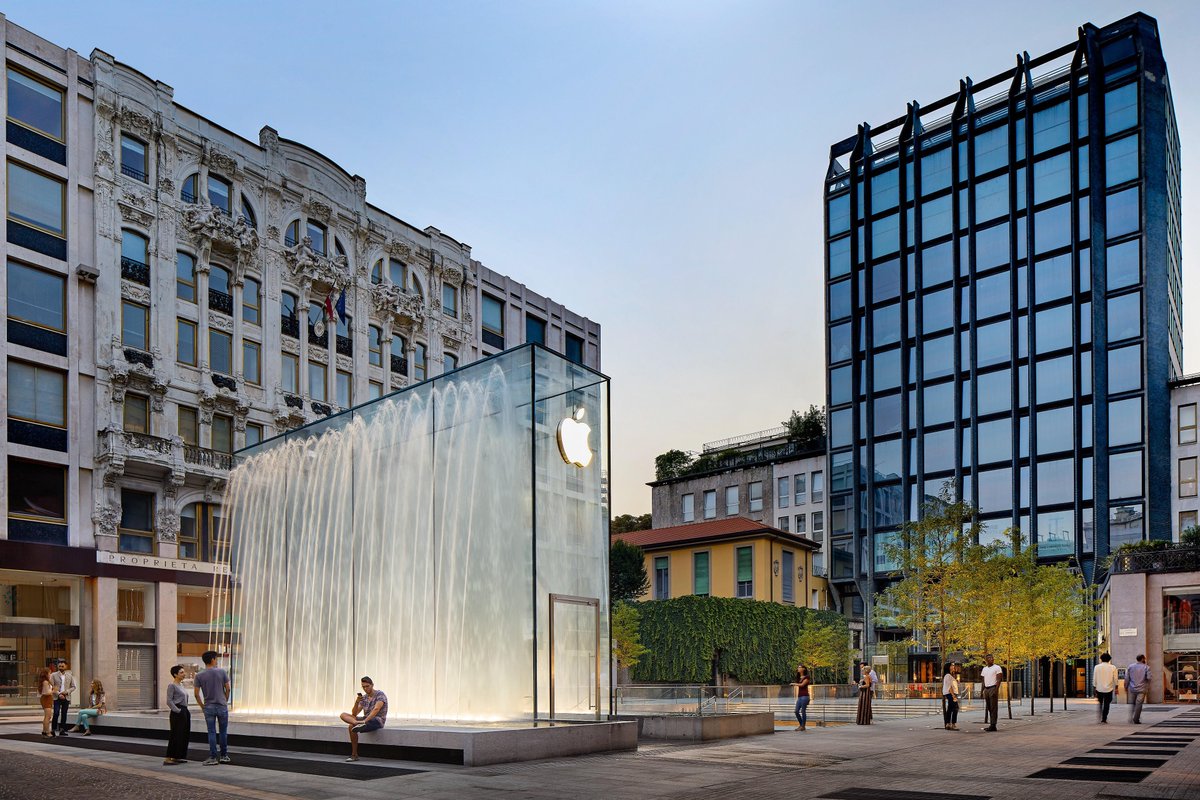
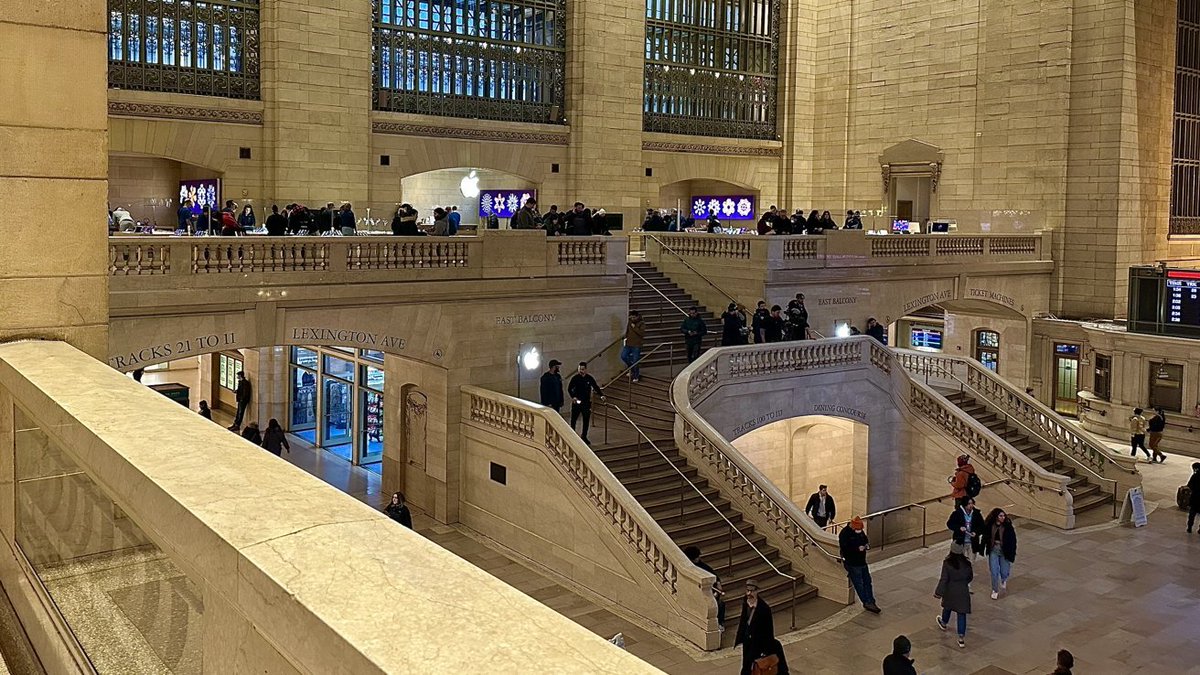
Moreover, Apple's involvement in these landmarks further enhanced its brand image and helped communities to restore these deplorable places.
Steve Jobs' vision fuelled with the extensive retail strategy has been proven to be very successful
Steve Jobs' vision fuelled with the extensive retail strategy has been proven to be very successful
— as it pushed the valuation of Apple to over $3 Trillion with the most loyal customers base on our planet earth!
If you liked this read do ReTweet🔄 the 1st tweet and follow us @FinFloww
for such reads every Monday, Wednesday, and Friday!
If you liked this read do ReTweet🔄 the 1st tweet and follow us @FinFloww
for such reads every Monday, Wednesday, and Friday!
Join the FinFloww channel on WhatsApp to receive such stories daily: whatsapp.com

Subscribe to WHAT THE FLOWW?, our weekly email newsletter where we dive deeper into such concepts:
finfloww.bio.link
finfloww.bio.link

Loading suggestions...