
What the British did in Kenya, a thread 🧵, source: Britain's Gulag : The Brutal End of Empire in Kenya by Caroline Elkins..
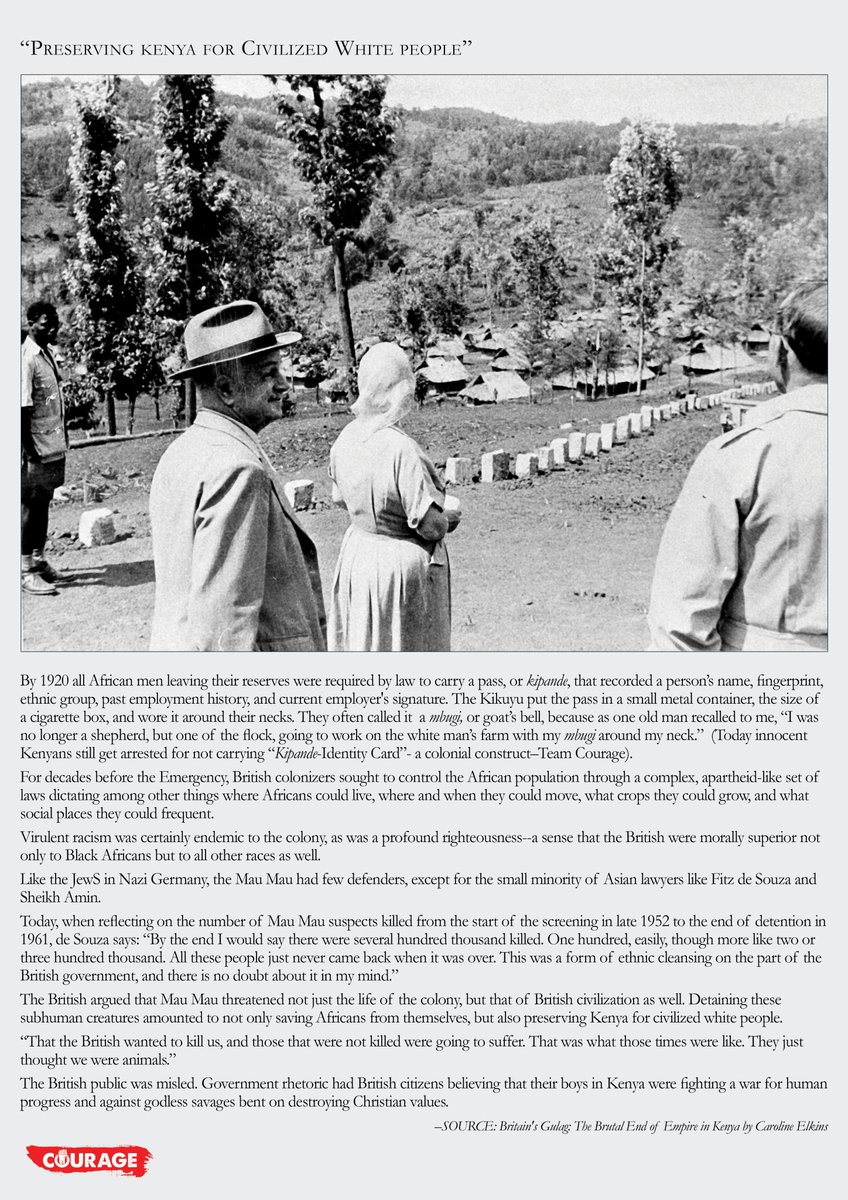
"PRESERVING KENYA FOR CIVILIZED WHITE PEOPLE"
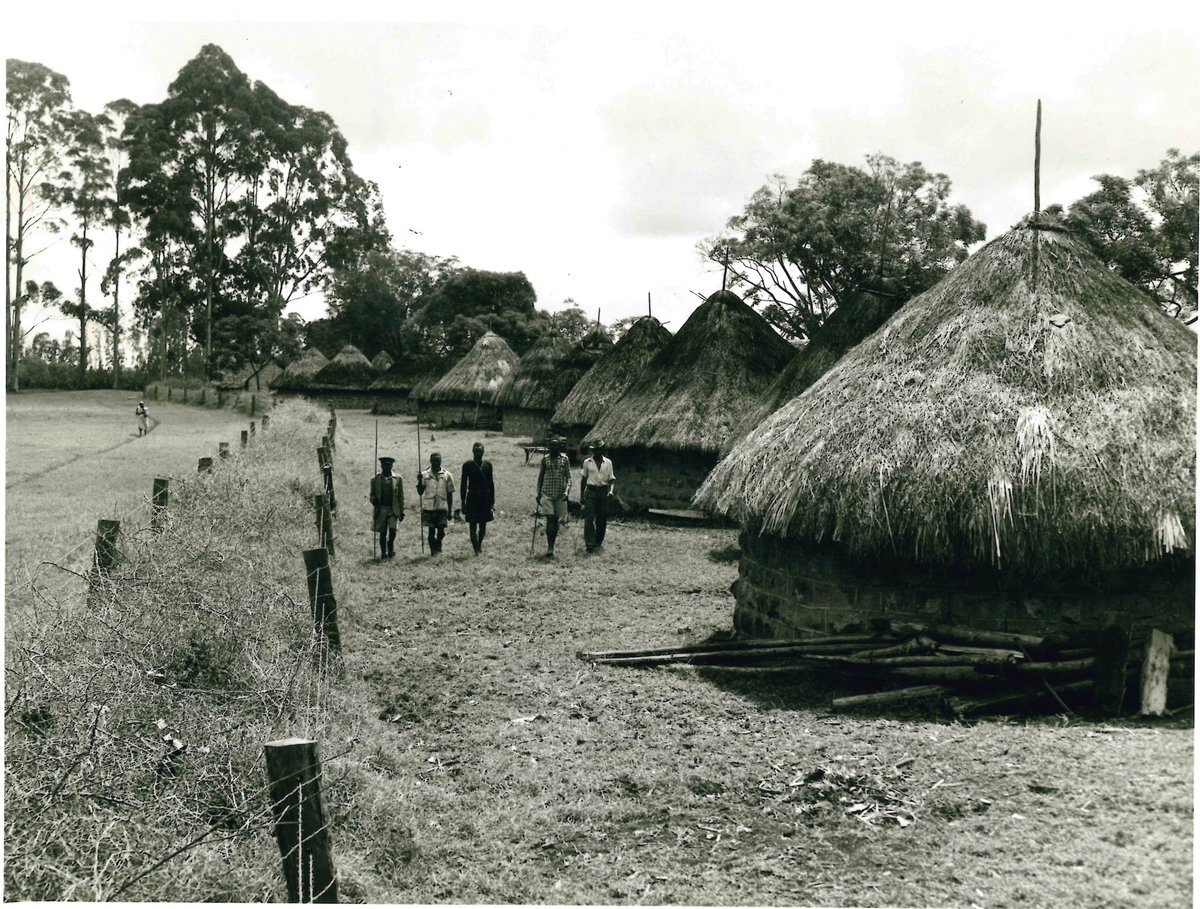
First, the colonial government established African reserves, which were defined rural areas, eventually with official boundaries, much like the homelands in South Africa or the Native American reserves in the United States, where each African ethnic group in the colony was expected to live separately. The Kikuyu had their own reserves in the Central Province district of Kiambu, Fort Hall, and Nyeri, the Maasai resided mostly in the colony’s Southern Province, the Luo lived in Nyanza Province, and so forth. This practice of divide and rule was also a cornerstone of the colonial government’s labor policy. With insufficient land in their reserves, many Africans had little choice but to migrate to the European farms in search of work, and survival.
But confining the African s was not enough to force them all into wage economy. As an additional tactic of control, the British colonial government taxed them. The second colonial regulation called for a hut tax and poll tax, together amounting to nearly twenty-five shillings, the equivalent of almost two months of African wages at the going local rate.
By 1920 all African men leaving their reserves were required by law to carry a pass, or kipande, that recorded a person’s name, fingerprint, ethnic group, past employment history, and current employer's signature. The Kikuyu put the pass in a small metal container, the size of a cigarette box, and wore it around their necks. They often called it a mbugi, or goat’s bell, because as one old man recalled to me, “I was no longer a shepherd, but one of the flock, going to work on the white man’s farm with my mbugi around my neck. The kipande became one of the most detested symbols of British colonial power, though the Africans had little recourse but to carry their identity cards at all times; failure to produce it on demand brought a hefty fine, imprisonment, or both. #SemaUkweli #RoyalVisitKenya
"PRESERVING KENYA FOR CIVILIZED WHITE PEOPLE"
First, the colonial government established African reserves, which were defined rural areas, eventually with official boundaries, much like the homelands in South Africa or the Native American reserves in the United States, where each African ethnic group in the colony was expected to live separately. The Kikuyu had their own reserves in the Central Province district of Kiambu, Fort Hall, and Nyeri, the Maasai resided mostly in the colony’s Southern Province, the Luo lived in Nyanza Province, and so forth. This practice of divide and rule was also a cornerstone of the colonial government’s labor policy. With insufficient land in their reserves, many Africans had little choice but to migrate to the European farms in search of work, and survival.
But confining the African s was not enough to force them all into wage economy. As an additional tactic of control, the British colonial government taxed them. The second colonial regulation called for a hut tax and poll tax, together amounting to nearly twenty-five shillings, the equivalent of almost two months of African wages at the going local rate.
By 1920 all African men leaving their reserves were required by law to carry a pass, or kipande, that recorded a person’s name, fingerprint, ethnic group, past employment history, and current employer's signature. The Kikuyu put the pass in a small metal container, the size of a cigarette box, and wore it around their necks. They often called it a mbugi, or goat’s bell, because as one old man recalled to me, “I was no longer a shepherd, but one of the flock, going to work on the white man’s farm with my mbugi around my neck. The kipande became one of the most detested symbols of British colonial power, though the Africans had little recourse but to carry their identity cards at all times; failure to produce it on demand brought a hefty fine, imprisonment, or both. #SemaUkweli #RoyalVisitKenya
The white officers had no shame. They would rape women in full view of everyone. They would take whomever they wanted at one corner and just do it there. Whenever the soldiers came into the village, I remember I used to sneak into our house and smear ashes all over my body so they would not fancy me.
Then, when they saw me, they would say “Now look at this one, what is wrong with her?” Many women were not so fortunate.
Mothers and daughters were sometimes raped together in the same hut by white and black members of the security forces. At gunpoint others were given the choice between death and rape. Margaret Nyaruai explained why many chose rape: “We felt that we would rather allow them to rape us then get killed, especially those who have small children depending on them.” Then when they were finished with us we had to go back to work, and if we didn't fill our quotas we would be beaten some more or sent to the Home Guard post where we would be beaten and raped again.
Regardless of who raped them, “we could not utter a word because that would meant instant death”, one woman from Mung’etho village in Ndeiya later recalled #SemaUkweli #RoyalVisitKenya
Then, when they saw me, they would say “Now look at this one, what is wrong with her?” Many women were not so fortunate.
Mothers and daughters were sometimes raped together in the same hut by white and black members of the security forces. At gunpoint others were given the choice between death and rape. Margaret Nyaruai explained why many chose rape: “We felt that we would rather allow them to rape us then get killed, especially those who have small children depending on them.” Then when they were finished with us we had to go back to work, and if we didn't fill our quotas we would be beaten some more or sent to the Home Guard post where we would be beaten and raped again.
Regardless of who raped them, “we could not utter a word because that would meant instant death”, one woman from Mung’etho village in Ndeiya later recalled #SemaUkweli #RoyalVisitKenya
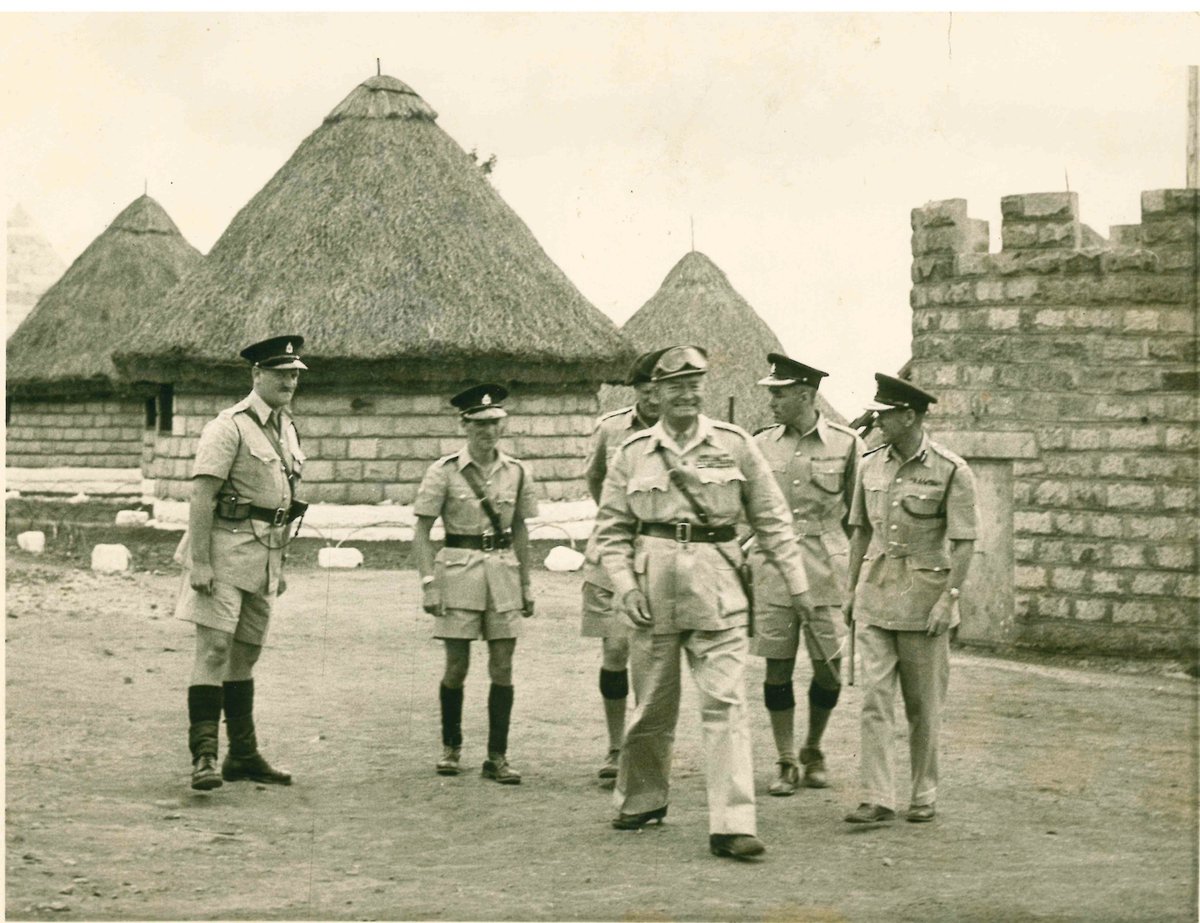
MAU MAU SCREENING
Scores of former Mau adherents whom I interviewed offered similar recollections. Teams made up of settlers, British district officers, members of the Kenya police force, African loyalists, and even soldiers from the British military forces demanded confessions and intelligence, and used torture to get them, If the screening team was dissatisfied with the suspect’s answers, it was accepted that the torture was a legitimate next resort
According to a number of the former detainees I interviewed, ,electric shock was widely used, as well as cigarettes and fire. Bottles (often broken), gun barrels, knives, snakes, vermin, and hot eggs were thrust up men’s rectums and women's vaginas. The screening teams whipped, shot, burned, and mutilated Mau Mau suspects, ostensibly to gather intelligence for military operations, and as court evidence.”
The use of sadistic screening techniques reported by numerous survivors and other eyewitnesses suggest that the loyalist Home Guards and their white superiors took perverse pleasure in their various physical assaults on MauMau suspects. #SemaUkweli #RoyalVisitKenya
Scores of former Mau adherents whom I interviewed offered similar recollections. Teams made up of settlers, British district officers, members of the Kenya police force, African loyalists, and even soldiers from the British military forces demanded confessions and intelligence, and used torture to get them, If the screening team was dissatisfied with the suspect’s answers, it was accepted that the torture was a legitimate next resort
According to a number of the former detainees I interviewed, ,electric shock was widely used, as well as cigarettes and fire. Bottles (often broken), gun barrels, knives, snakes, vermin, and hot eggs were thrust up men’s rectums and women's vaginas. The screening teams whipped, shot, burned, and mutilated Mau Mau suspects, ostensibly to gather intelligence for military operations, and as court evidence.”
The use of sadistic screening techniques reported by numerous survivors and other eyewitnesses suggest that the loyalist Home Guards and their white superiors took perverse pleasure in their various physical assaults on MauMau suspects. #SemaUkweli #RoyalVisitKenya
“At one point, all the villagers were ordered to remove every article of clothing and remain stark naked .You cannot start to imagine the shame and embarrassment we felt when, without any consideration for the small children, we were told to arrange ourselves into rows, one for the men and the other for the women, old and young alike. To everyone's fear we were ordered at gunpoint to embrace each other, man with a woman, regardless of whether the man happened to be your father, father in law, or brother.
It was all so humiliating that one woman hanged herself later, and she felt that she could not continue to live with the humiliating experience of having been forced to embrace her son in law while both of them were naked. In our custom that is a curse.” #SemaUkweli #RoyalVisitKenya
It was all so humiliating that one woman hanged herself later, and she felt that she could not continue to live with the humiliating experience of having been forced to embrace her son in law while both of them were naked. In our custom that is a curse.” #SemaUkweli #RoyalVisitKenya
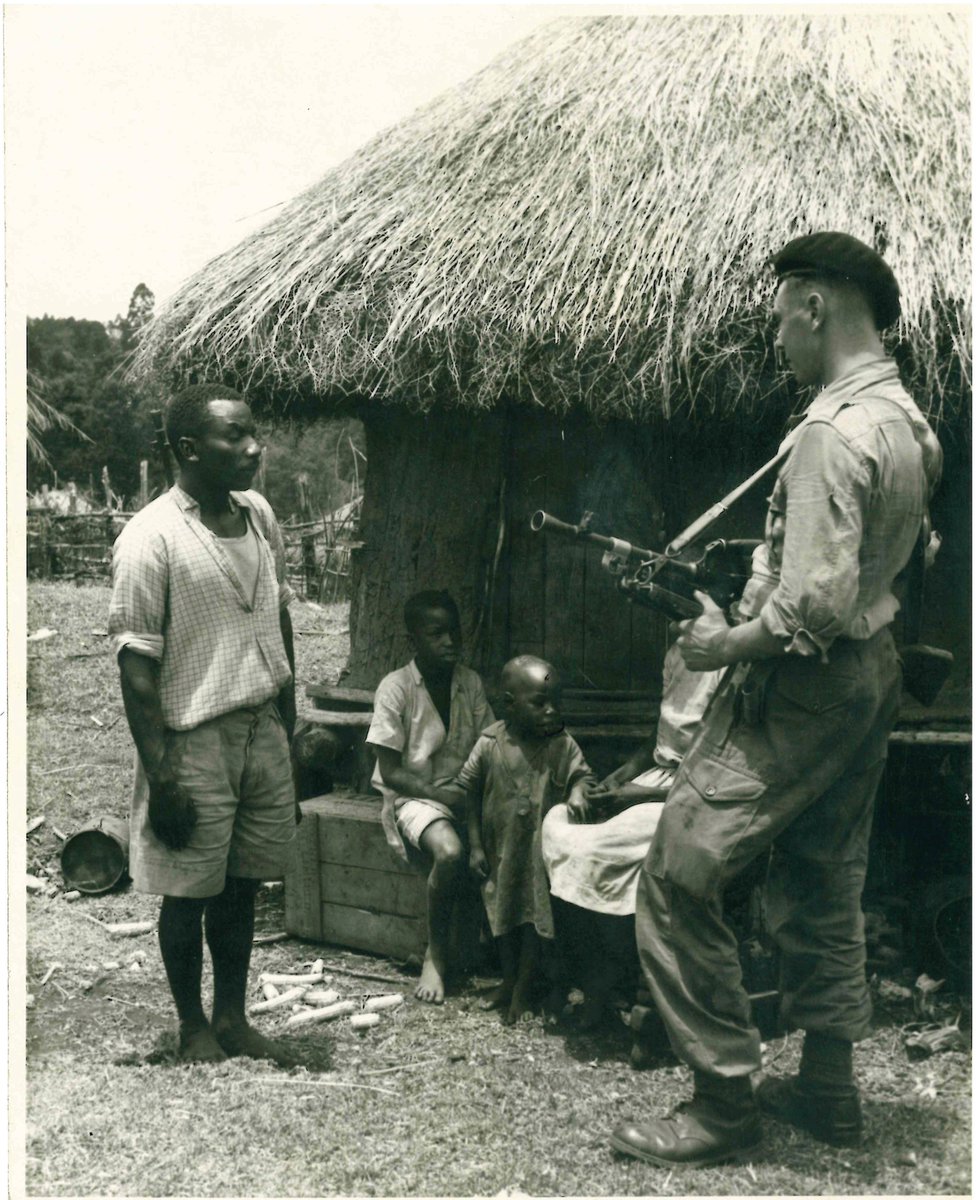
RAPE AND CASTRATION
That night all the women including myself were divided amongst the Home Guards and raped. Even this lady who was 8 months pregnant was not spared. We were raped throughout the night. The following morning we were anxious to know the state of the men. I remember asking the same pregnant woman what happened to our men after they were castrated.
She pointed to a vehicle which was a short distance away. The bodies of our men lay inside. They had already been killed.Young women, pregnant women, and old women were raped, often repeatedly, during raids. The Johnny's would generally rape them first, then leave the women for the Home Guards, who also took their turns. Other times women were divided up, the Johnny's and locals like Kiboroboro getting first pick-preferring the adolescent girls whom they called “unplucked chickens.” #SemaUkweli #RoyalVisitKenya
That night all the women including myself were divided amongst the Home Guards and raped. Even this lady who was 8 months pregnant was not spared. We were raped throughout the night. The following morning we were anxious to know the state of the men. I remember asking the same pregnant woman what happened to our men after they were castrated.
She pointed to a vehicle which was a short distance away. The bodies of our men lay inside. They had already been killed.Young women, pregnant women, and old women were raped, often repeatedly, during raids. The Johnny's would generally rape them first, then leave the women for the Home Guards, who also took their turns. Other times women were divided up, the Johnny's and locals like Kiboroboro getting first pick-preferring the adolescent girls whom they called “unplucked chickens.” #SemaUkweli #RoyalVisitKenya
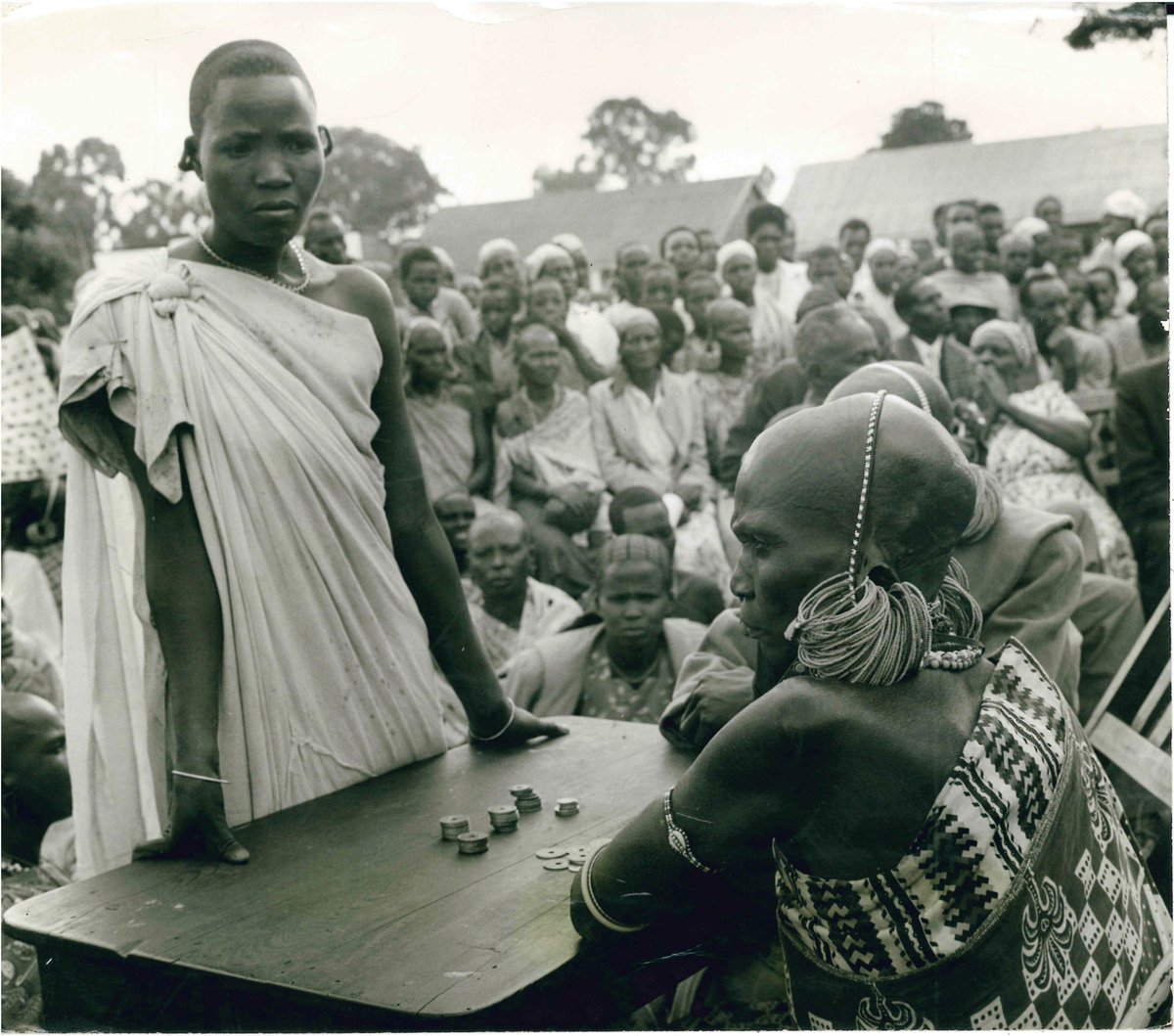
Suspects were whipped, beaten, sodomized, burned, forced to eat feces and drink urine--all at the hands of the screening teams. “I was bent over the screening table at Manyani with my hands on my head,” recalled one man who today lives in the Kariokor section of Nairobi. “I had lost sensation in my legs because of the beating with the rubberhose, and I was very weak. They were demanding that I tell them about MauMau activities in my home area in Kandara.
I still refused, and the Ngombe [i.e nickname for European settlers enlisted in the Kenya Regiment] ordered an African askari to take scorpions which were everywhere in the camp and force them into my back private part. I was soon writhing from the pain. I began telling them everything; I made up stories naming people. If I didn’t, I was going to die.” #SemaUkweli #RoyalVisitKenya
I still refused, and the Ngombe [i.e nickname for European settlers enlisted in the Kenya Regiment] ordered an African askari to take scorpions which were everywhere in the camp and force them into my back private part. I was soon writhing from the pain. I began telling them everything; I made up stories naming people. If I didn’t, I was going to die.” #SemaUkweli #RoyalVisitKenya
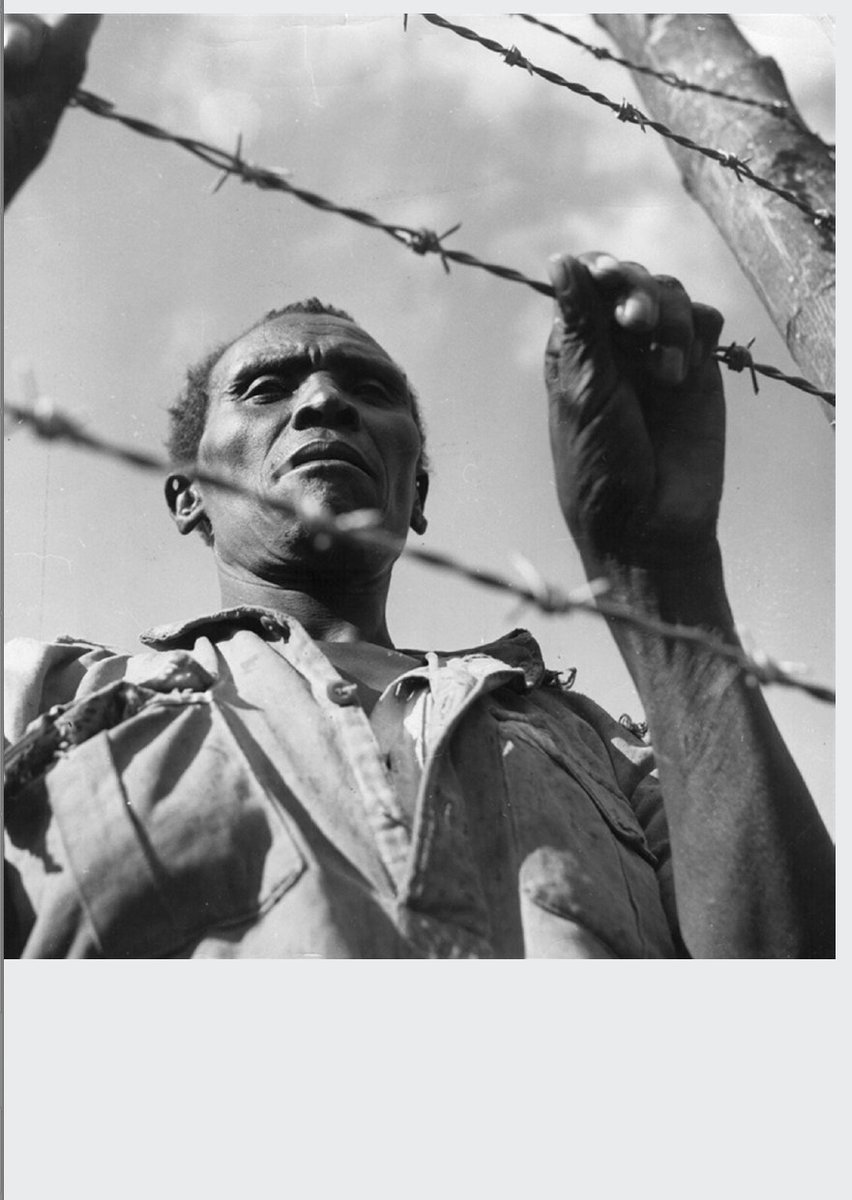
There were many variations on this form of public terror. In the village near Othaya British security forces often brought in the bodies of the dead forest fighters and forced the women to carry them around the village square while chanting, “This is independence.”
Other times, the same women repeated the drill carrying the bodies of dead villagers’ of all ages, including children. British officers burned women with cigarette butts and ordered them to walk barefoot on beds of hot coal. Home Guards pulled the villagers hair out in fistfuls, while screaming at them to confess their MauMau sins. #SemaUkweli #RoyalVisitKenya
Other times, the same women repeated the drill carrying the bodies of dead villagers’ of all ages, including children. British officers burned women with cigarette butts and ordered them to walk barefoot on beds of hot coal. Home Guards pulled the villagers hair out in fistfuls, while screaming at them to confess their MauMau sins. #SemaUkweli #RoyalVisitKenya
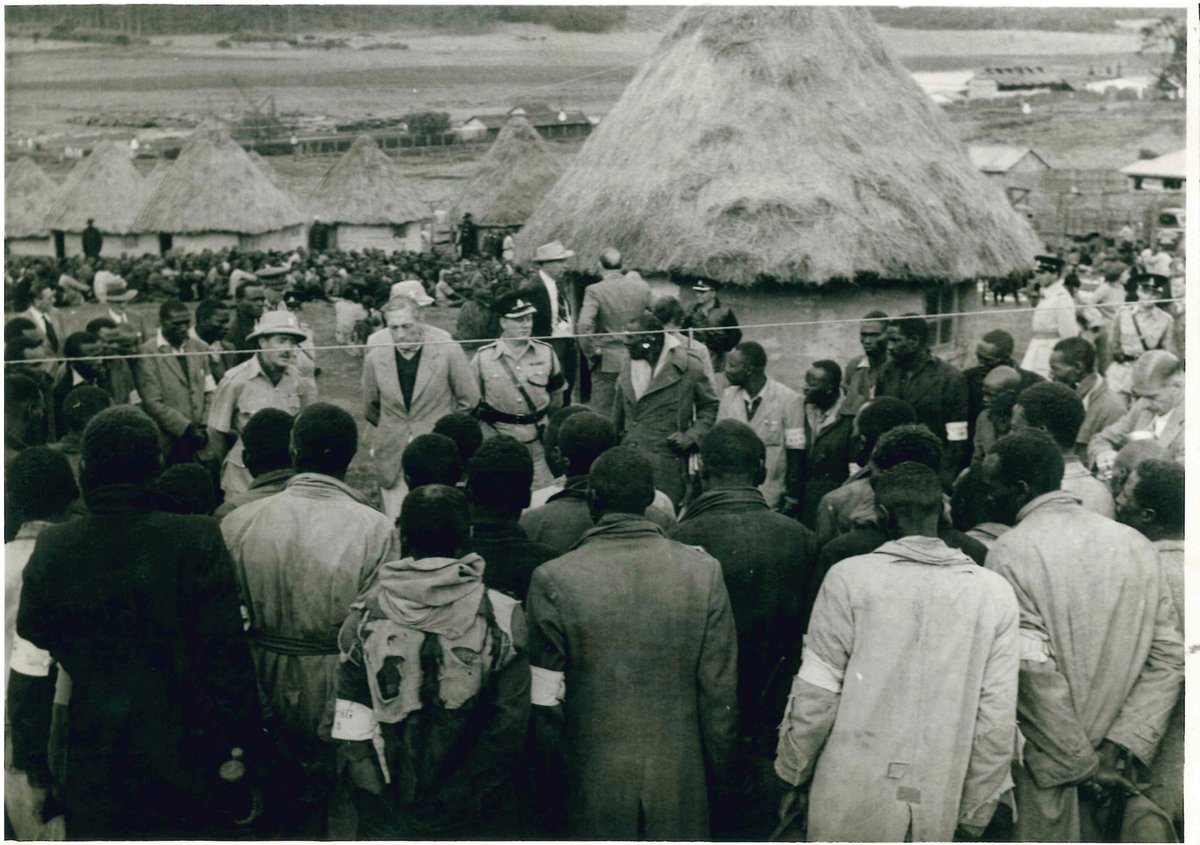
YY The Notorious Killer.
By far the most notorious of these men in Nyeri district was YY. As a member of the Kenya Police Reserve, this young British settlers and Napoleonic-like figure had acted with particularly cruel abandon during the early days of the war, screening my mouth suspect with a perverse enthusiasm.
“No amount of pleading would arouse the sympathy of the head man and his Home Guards to agree to allow the poor woman to go to the farm. Even if her failure might have been occasioned by illness, as was often the case, she would have to wait until the set day on the following week. Even if it was a child who had been very sick and could not be left alone, they still would not understand. Sometimes the other women, if they knew of her problem before going to the farm, would contribute some food East to the woman, and she would be able to survive the week.”
Some women took their chances and snuck out of the villages and into the special areas. It was then that YY, lying in wait, would shoot them dead. The no man's land was his personal domain. Often he would patrol the area on food collection day, and when the whistle blew for the villagers to return, he would start shooting.
If someone was shot and killed, we just left them there. If you stopped to help them or grieve, you ran the risk of being shot yourself. YY also ventured inside the villages and Home Guard posts. He tortured countless women without provocation, squeezing their breasts with pliers, beating them with his riding whip, with plugs, or the butt of one of several pistols that hung from his waist. It was not unusual for villagers to die during such episodes, their bodies later strapped to YY’s Land Rover and driven around for all to see. In several villages YY travelled with another British district officer officer, known by the locals as the One with a Crooked Nose
Like YY, this man was young, so he was not a settler but a member of the administration. Together, they were a physical study of contrast - YY, a diminutive figure, and the one with The Crooked Nose, and extremely tall muscular man. Sometimes with his confrere, other times alone, YY would single out women, men, and some of the older children from the village square and take them to Kwa Wood-the name of the execution site not far from YY’s police post at Gaikuyu. There, those selected would dig their own graves and line up in front of them, YY or his accomplice would shoot them dead, and their bodies would be covered up by the Home Guards.
As we dug, YY and the other white man just stood there talking casually, though I could not understand them. We finished digging, and YY shot the others and kicked the ones into their graves who did not fall in. Then he came to me, and he paused.
“I was a young woman at the time, and he decided to rape me instead. He took me back to the village, and until my husband returned from detention he raped me whenever he had the chance.” As did other members of the security forces, YY raped women in their huts, during forced labor, and in the Home Guard posts. In a gesture of bravado, he also had the habit of removing his shirt while perpetrating acts of sexual violence, earning him another nickname, Gathiiutheri , or the One Who Walked Naked. He also appeared more than willing to help out his fellow officers. On one occasion, “YY stood there holding a gun to a woman's head,” recalled a former Hombe villager. “I then saw her being made to do something that I had not imagined possible. She was made to put the penis of the other white man who was with YY in her mouth and ordered to suck it. This lady only died recently as an old woman.” #SemaUkweli #RoyalVisitKenya
By far the most notorious of these men in Nyeri district was YY. As a member of the Kenya Police Reserve, this young British settlers and Napoleonic-like figure had acted with particularly cruel abandon during the early days of the war, screening my mouth suspect with a perverse enthusiasm.
“No amount of pleading would arouse the sympathy of the head man and his Home Guards to agree to allow the poor woman to go to the farm. Even if her failure might have been occasioned by illness, as was often the case, she would have to wait until the set day on the following week. Even if it was a child who had been very sick and could not be left alone, they still would not understand. Sometimes the other women, if they knew of her problem before going to the farm, would contribute some food East to the woman, and she would be able to survive the week.”
Some women took their chances and snuck out of the villages and into the special areas. It was then that YY, lying in wait, would shoot them dead. The no man's land was his personal domain. Often he would patrol the area on food collection day, and when the whistle blew for the villagers to return, he would start shooting.
If someone was shot and killed, we just left them there. If you stopped to help them or grieve, you ran the risk of being shot yourself. YY also ventured inside the villages and Home Guard posts. He tortured countless women without provocation, squeezing their breasts with pliers, beating them with his riding whip, with plugs, or the butt of one of several pistols that hung from his waist. It was not unusual for villagers to die during such episodes, their bodies later strapped to YY’s Land Rover and driven around for all to see. In several villages YY travelled with another British district officer officer, known by the locals as the One with a Crooked Nose
Like YY, this man was young, so he was not a settler but a member of the administration. Together, they were a physical study of contrast - YY, a diminutive figure, and the one with The Crooked Nose, and extremely tall muscular man. Sometimes with his confrere, other times alone, YY would single out women, men, and some of the older children from the village square and take them to Kwa Wood-the name of the execution site not far from YY’s police post at Gaikuyu. There, those selected would dig their own graves and line up in front of them, YY or his accomplice would shoot them dead, and their bodies would be covered up by the Home Guards.
As we dug, YY and the other white man just stood there talking casually, though I could not understand them. We finished digging, and YY shot the others and kicked the ones into their graves who did not fall in. Then he came to me, and he paused.
“I was a young woman at the time, and he decided to rape me instead. He took me back to the village, and until my husband returned from detention he raped me whenever he had the chance.” As did other members of the security forces, YY raped women in their huts, during forced labor, and in the Home Guard posts. In a gesture of bravado, he also had the habit of removing his shirt while perpetrating acts of sexual violence, earning him another nickname, Gathiiutheri , or the One Who Walked Naked. He also appeared more than willing to help out his fellow officers. On one occasion, “YY stood there holding a gun to a woman's head,” recalled a former Hombe villager. “I then saw her being made to do something that I had not imagined possible. She was made to put the penis of the other white man who was with YY in her mouth and ordered to suck it. This lady only died recently as an old woman.” #SemaUkweli #RoyalVisitKenya
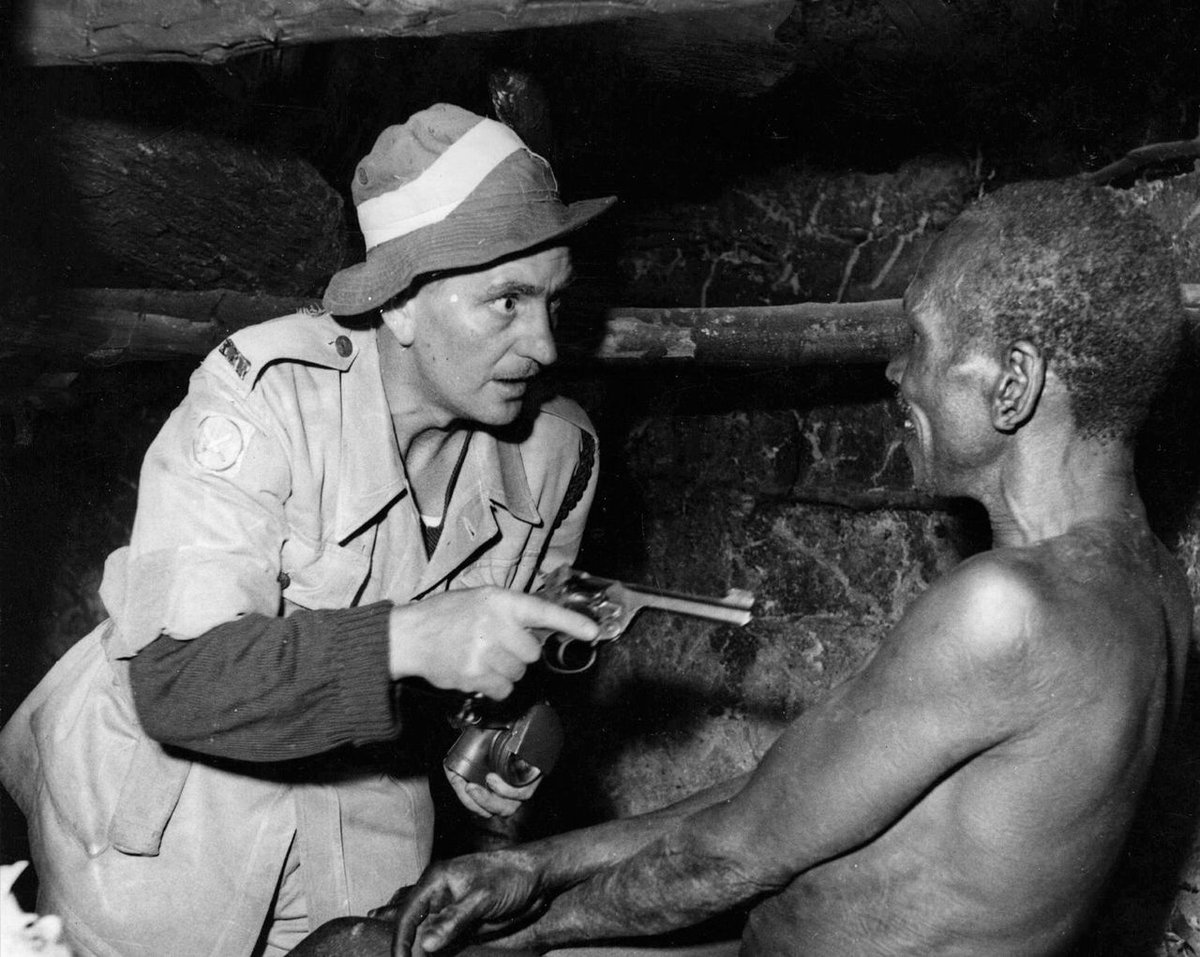
There is however, one point of consensus: without exception,
ex-detainees pointed to the Kikuyu loyalists as the most brutal. They were often as cruel as their former captors, brutalizing detainees, demanding their confessions, and often informing on their Mau Mau activities both before and during detention.
The most famous example of this was Peter Muigai Kenyatta--Jomo Kenyatta’s own son--who after his confession joined the ranks of the
screening team in Athi River Camp and eventually travelled throughout the
Pipeline interrogating other detainees. #SemaUkweli #RoyalVisitKenya
ex-detainees pointed to the Kikuyu loyalists as the most brutal. They were often as cruel as their former captors, brutalizing detainees, demanding their confessions, and often informing on their Mau Mau activities both before and during detention.
The most famous example of this was Peter Muigai Kenyatta--Jomo Kenyatta’s own son--who after his confession joined the ranks of the
screening team in Athi River Camp and eventually travelled throughout the
Pipeline interrogating other detainees. #SemaUkweli #RoyalVisitKenya
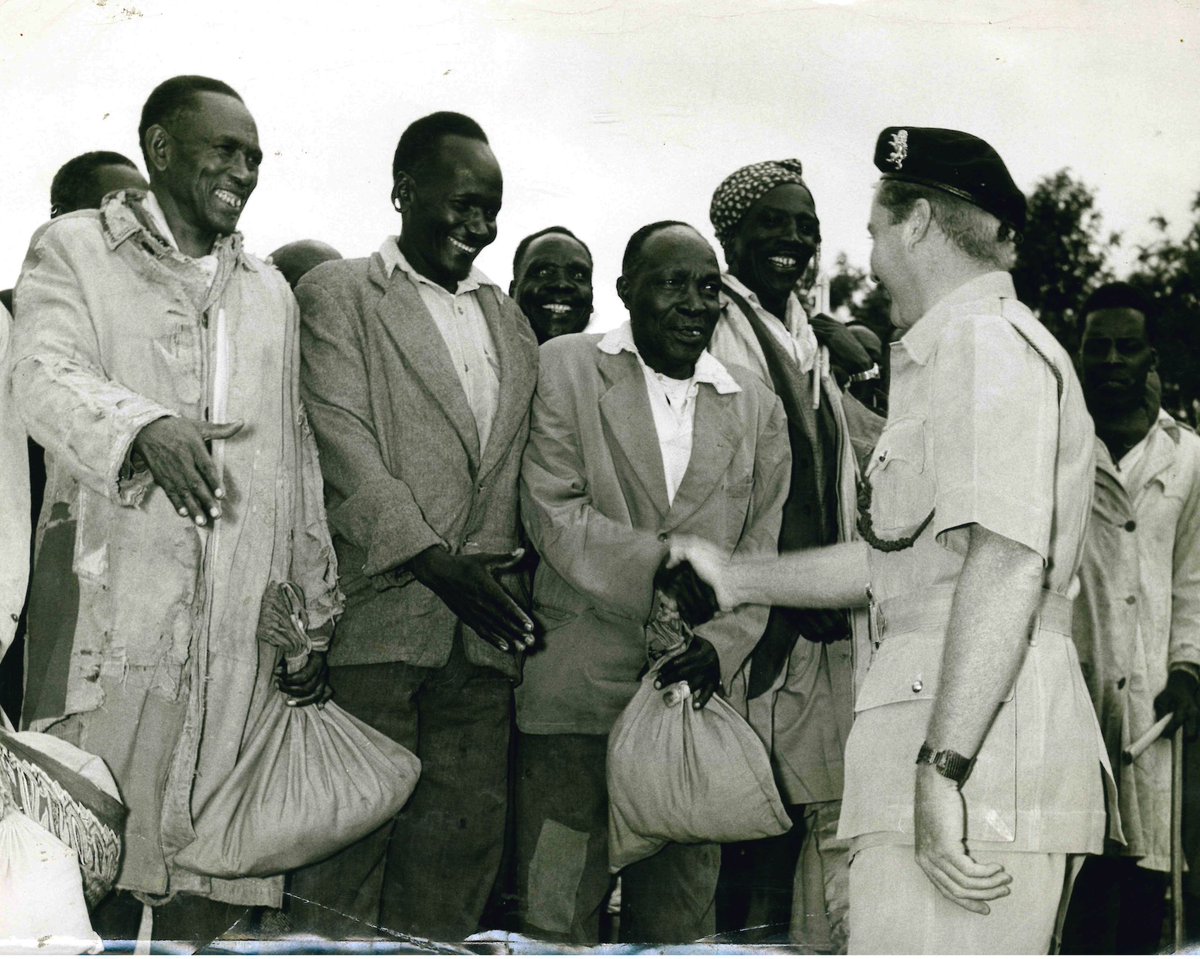
The British colonial government’s agenda for Kenya had two faces: the one it presented to the world and the sinister one that it tried to conceal from the public. From the very start of the Emergency colonial officials planned to
detain permanently thousands of alleged Mau Mau leaders and intellectuals, people of influence whose presence threatened to expose the illegitimacy of colonial rule and potentially incite the anger of the much needed loyalists.
detain permanently thousands of alleged Mau Mau leaders and intellectuals, people of influence whose presence threatened to expose the illegitimacy of colonial rule and potentially incite the anger of the much needed loyalists.
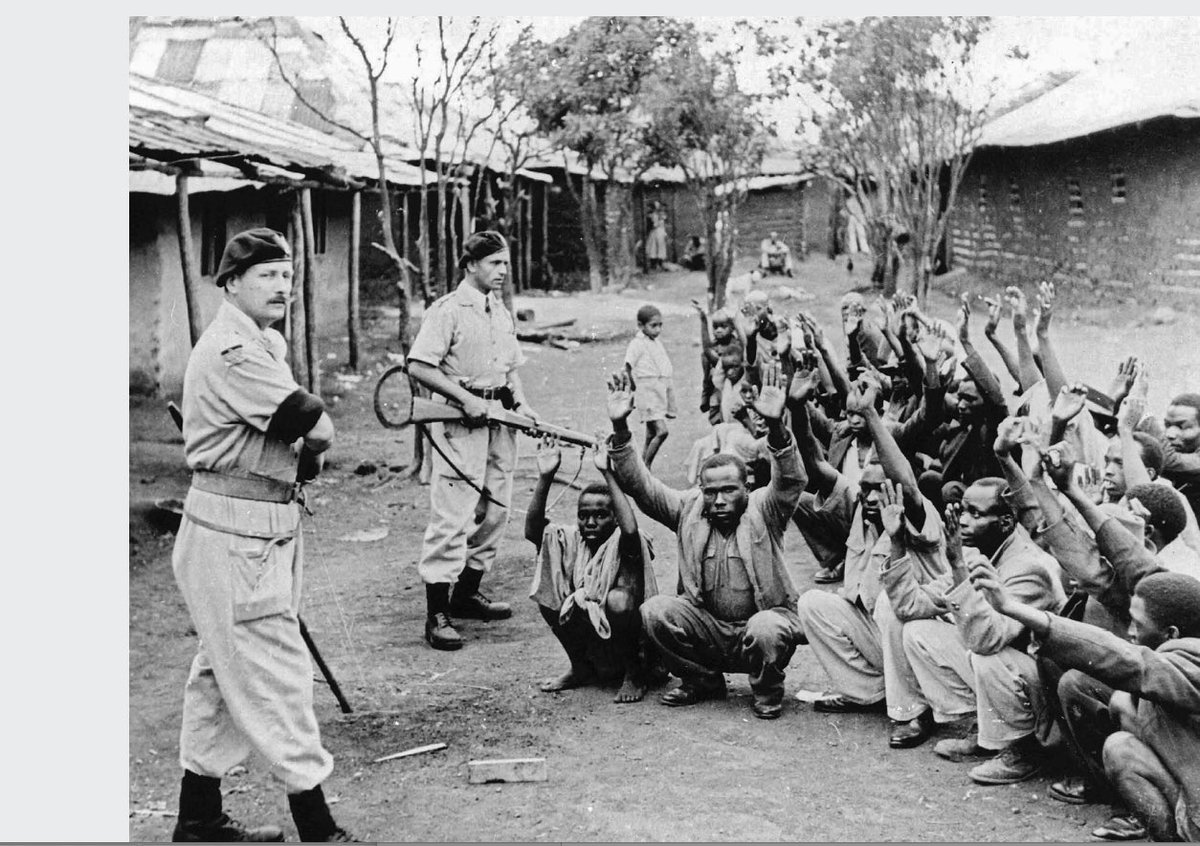
While our men were detained, we had to learn to live like widows. A lot of things had happened during the time they had been detained, but we never even once gave up hope that they would come home one day. Even after we were raped, we still kept hoping that life would one day be normal again. When the men came back, we picked up life where we had left. Even those men who found their wives with children born while they were away did not blame them, just accepted the children as their own.
But there were many instances where men and women could not simply go on, or could not accept the circumstances in which they were living. Throughout
Central Province former villagers recall men who spent years in the Pipeline,
only to commit suicide when they returned, after finding their families dead or their wives raising half-caste children.”
But some women having given birth to
children during their detention in the villages, reluctantly welcomed their
husbands. Sometimes called nusu-nusu or chotara, meaning half-caste, these
children were physical reminders of the repeated rapes they had endured. Some
were clearly fathered by men from other African ethnic groups; others were
definitely mixed race. “A lot of half-white children were born at that time,”
Lucy Ngima later recalled.
There were countless women for whom infertility would be a lifelong problem,
the damage caused by sexual violence, contraction of venereal disease, or both,
irreparable. #SemaUkweli #RoyalVisitKenya
But there were many instances where men and women could not simply go on, or could not accept the circumstances in which they were living. Throughout
Central Province former villagers recall men who spent years in the Pipeline,
only to commit suicide when they returned, after finding their families dead or their wives raising half-caste children.”
But some women having given birth to
children during their detention in the villages, reluctantly welcomed their
husbands. Sometimes called nusu-nusu or chotara, meaning half-caste, these
children were physical reminders of the repeated rapes they had endured. Some
were clearly fathered by men from other African ethnic groups; others were
definitely mixed race. “A lot of half-white children were born at that time,”
Lucy Ngima later recalled.
There were countless women for whom infertility would be a lifelong problem,
the damage caused by sexual violence, contraction of venereal disease, or both,
irreparable. #SemaUkweli #RoyalVisitKenya
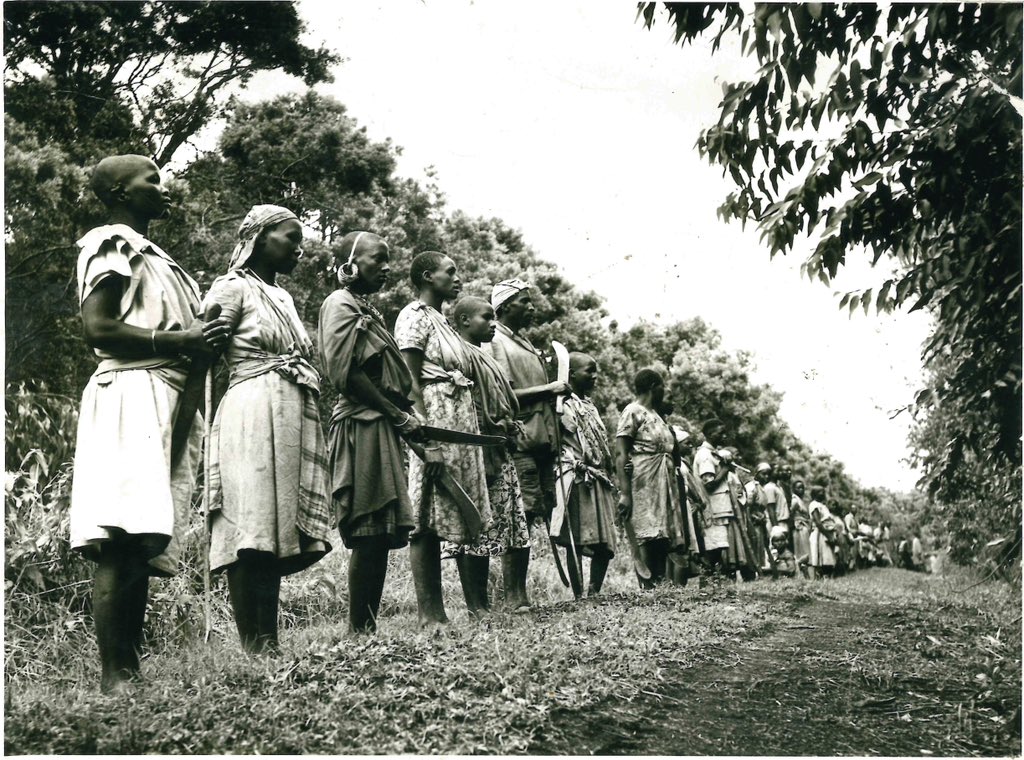
It’s hardly shocking, then, that within the context of Mau Mau British colonial
agents targeted the symbols of Kikuyu manhood: their land, their women, their
children, and their bodies. “Hunger was the worst problem; that's what was killing the most people. They were starving us on purpose, hoping we would give in.” #SemaUkweli #RoyalVisitKenya
agents targeted the symbols of Kikuyu manhood: their land, their women, their
children, and their bodies. “Hunger was the worst problem; that's what was killing the most people. They were starving us on purpose, hoping we would give in.” #SemaUkweli #RoyalVisitKenya

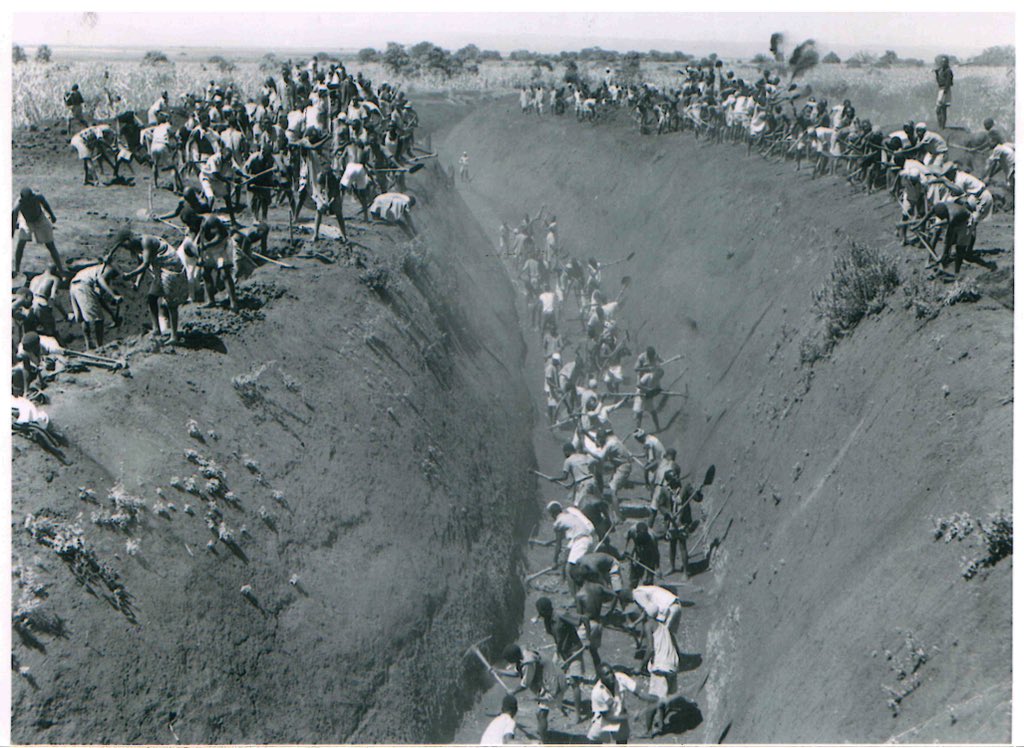
“Even before the Emergency villages,” Marion Wambui Mwai later recalled
at her home in Nyeri District, “we went out nearly everyday to build the
terrace. The loyalists just whipped you and whipped you. Even if you dug
faster, they whipped you. They treated us just like animals-- and the white
officer who oversaw the project would just march about, grinning at our
suffering.” #SemaUkweli #RoyalVisitKenya
at her home in Nyeri District, “we went out nearly everyday to build the
terrace. The loyalists just whipped you and whipped you. Even if you dug
faster, they whipped you. They treated us just like animals-- and the white
officer who oversaw the project would just march about, grinning at our
suffering.” #SemaUkweli #RoyalVisitKenya
Whenever the headman desired a woman, and she refused him, he would take a beer bottle, then order an askari to hold one of the woman’s legs, and another to hold the other, wide apart. Then he would insert the bottle into the woman’s private parts and punch it up to the stomach. Many women died after having been treated that way. First he beat them with stick and kicks, but if they still resisted his advances he used the beer bottle...Nobody cared about them, the village men would be told to go and bury them in the village [when they died]....so many people died.
“I was beaten until I was confused and didn’t care anymore if they killed me. My
two-year old son, who had been woken up by the noise and my screams, ran to me, passing between the legs of the soldiers. As I was being thrown by the blows, from one soldier to the next, my son was trying to hide himself between my legs. They were then shouting at me, telling me they were giving me the independence my husband had gone to get for me. They did not seem to care that there was a small child, scared to death and screaming his head off. As I was being thrown from one soldier to the next, my son fell down and was trampled by the frenzied soldiers….I was beaten so much that my body had grown numb, until I could no longer feel the pain. They then took me outside and the last thing I saw was my son’s [dead] body lying won the floor of my house.” #SemaUkweli #RoyalVisitKenya
“I was beaten until I was confused and didn’t care anymore if they killed me. My
two-year old son, who had been woken up by the noise and my screams, ran to me, passing between the legs of the soldiers. As I was being thrown by the blows, from one soldier to the next, my son was trying to hide himself between my legs. They were then shouting at me, telling me they were giving me the independence my husband had gone to get for me. They did not seem to care that there was a small child, scared to death and screaming his head off. As I was being thrown from one soldier to the next, my son fell down and was trampled by the frenzied soldiers….I was beaten so much that my body had grown numb, until I could no longer feel the pain. They then took me outside and the last thing I saw was my son’s [dead] body lying won the floor of my house.” #SemaUkweli #RoyalVisitKenya
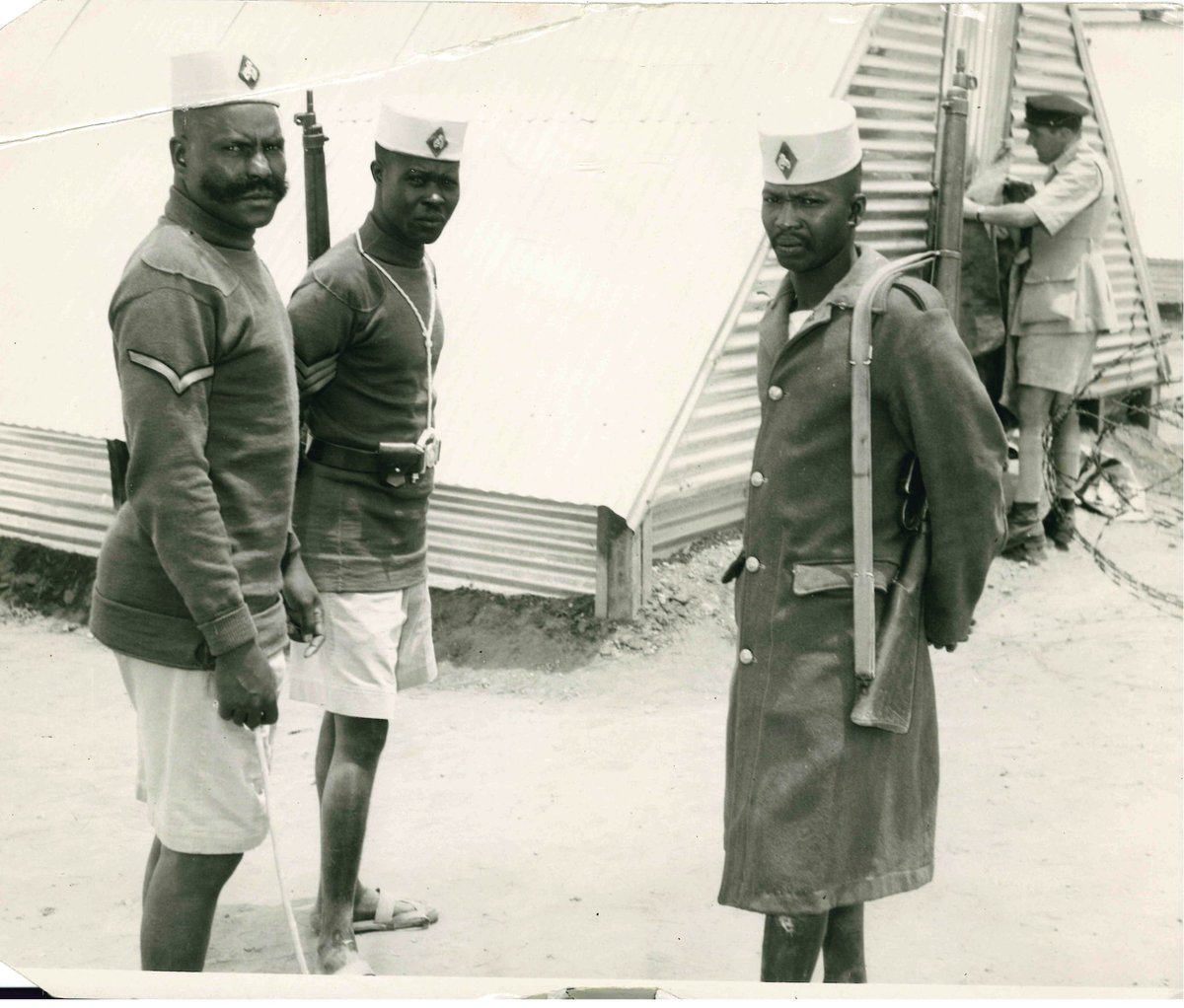
“The Home Guards behaved with such hatred and cruelty because they were being paid by the government to do it,” she explained. “They had agreed to become sellouts of their people, and the government was rewarding them for it. They had put money and personal gain before anything else. That couples with the fact that they did not believe that Kenya would never be free, that we would ever be independent. So they thought they chose the winner’s side by supporting the colonialists.”
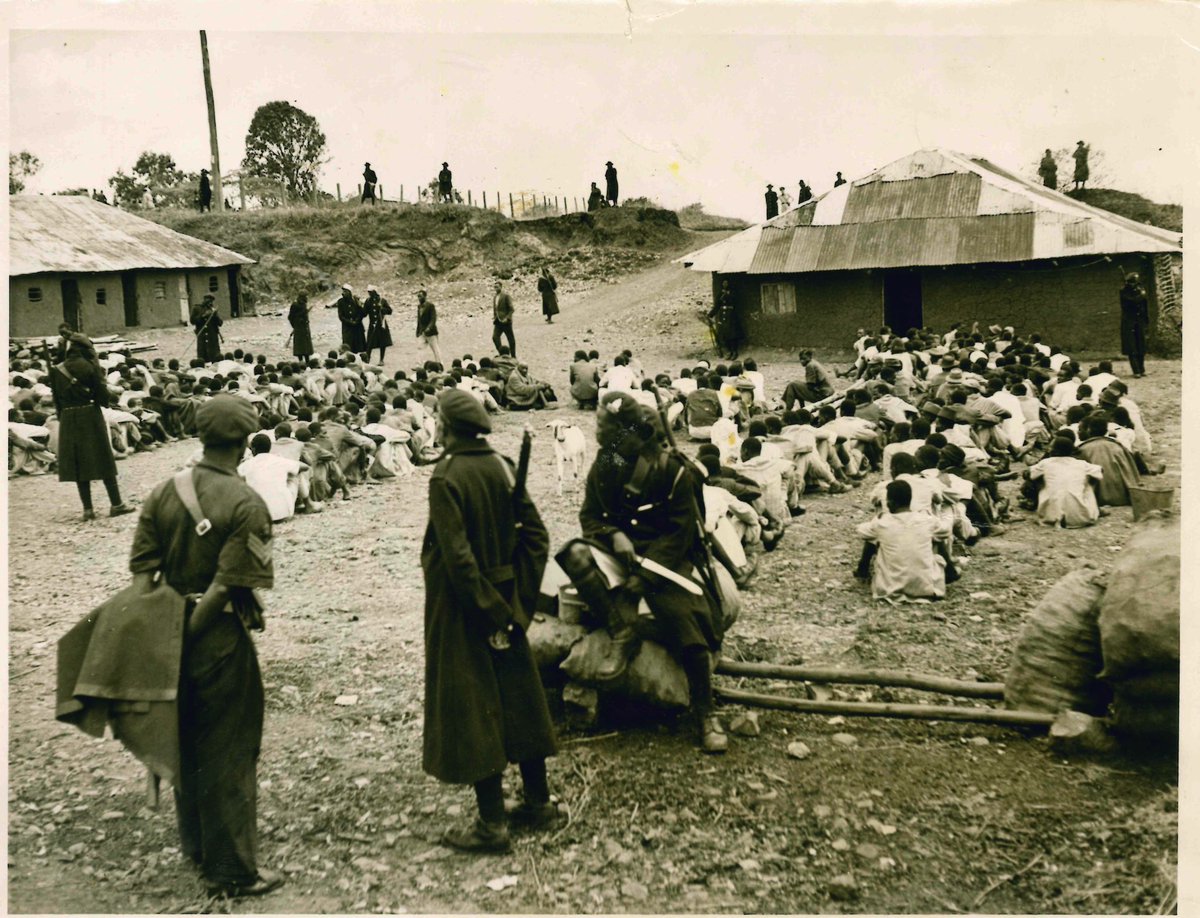
They would be everywhere within a short period, turning houses inside out,
burning houses and raping women.
Women suspected of continuing to feed the Mau Mau guerrillas were sometimes
brought into the Village Square and shot or hang as an example to the rest.
Sometimes they were beaten first with clubs and rifle butts, and sometimes raped.
On other occasions members of the security forces would take captured Mau Mau fighters, rope them to the back of Land Rovers, and drive them around the villages, leaving bits of body parts in their wake. Young children were slaughtered and their remains skewered on spears and paraded around the village squares by the Home Guards. #SemaUkweli #RoyalVisitKenya
They would be everywhere within a short period, turning houses inside out,
burning houses and raping women.
Women suspected of continuing to feed the Mau Mau guerrillas were sometimes
brought into the Village Square and shot or hang as an example to the rest.
Sometimes they were beaten first with clubs and rifle butts, and sometimes raped.
On other occasions members of the security forces would take captured Mau Mau fighters, rope them to the back of Land Rovers, and drive them around the villages, leaving bits of body parts in their wake. Young children were slaughtered and their remains skewered on spears and paraded around the village squares by the Home Guards. #SemaUkweli #RoyalVisitKenya
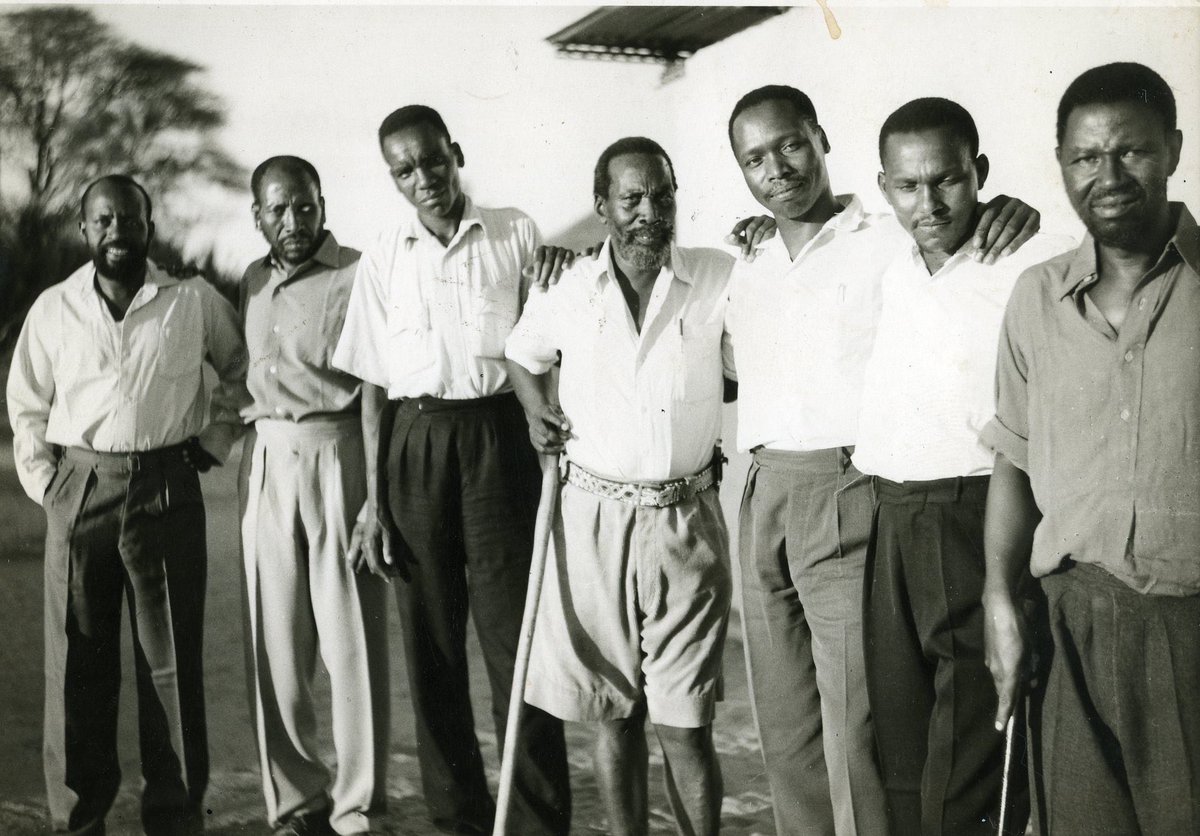
“Kenyatta was not one of us in prison. He had married a woman whose
father was a chief, and because of that when he went to prison, he was often on the side of the conservatives and the government. I became the leader of the group in his place, though we were all disappointed…. The camp commandant later separated him from us because of our arguments. One day he and Chotara got into a fistfight, allegedly because Kenyatta was selling some of our food to the askaris, but it was also because we didn’t agree with his politics.” –Bildad Kaggia
“Kenyatta was not a militant, and the other Mau Mau leaders knew this…It just took government some time to come to terms with this when circumstances forced the governor and others, like myself, to radically alter their views of this man.”
At the top of the list was Peter Muigai Kenyatta, Jomo Kenyatta’s son, who
became an enthusiastic colonial supporter, joining forces with the screening team and undergoing a transformation similar to that of other surrenders at Manyani, Mageta, Mara River, and elsewhere. It was not until years after the Emergency that former detainees would realize how grossly they had miscalculated both father and son. #SemaUkweli #RoyalVisitKenya
father was a chief, and because of that when he went to prison, he was often on the side of the conservatives and the government. I became the leader of the group in his place, though we were all disappointed…. The camp commandant later separated him from us because of our arguments. One day he and Chotara got into a fistfight, allegedly because Kenyatta was selling some of our food to the askaris, but it was also because we didn’t agree with his politics.” –Bildad Kaggia
“Kenyatta was not a militant, and the other Mau Mau leaders knew this…It just took government some time to come to terms with this when circumstances forced the governor and others, like myself, to radically alter their views of this man.”
At the top of the list was Peter Muigai Kenyatta, Jomo Kenyatta’s son, who
became an enthusiastic colonial supporter, joining forces with the screening team and undergoing a transformation similar to that of other surrenders at Manyani, Mageta, Mara River, and elsewhere. It was not until years after the Emergency that former detainees would realize how grossly they had miscalculated both father and son. #SemaUkweli #RoyalVisitKenya
On any given day too, 5, 10, or several dozen unsuspecting villagers would be
mowed down. Some were picked up and tossed into the back of Kiboroboro’s Land Rover by the local Home Guards; others were picked up later in a kind of flatbed truck - described by one villager as a bus whose body has been cut off, leaving only the cab and back without sides. Like Kiboroboro’s vehicle, this one also had a nickname it was called Warurungana, or the Gatherer. Bodies were sometimes picked up immediately; other times they were left for several days decomposing and attracting wild animals and dogs, who fed on the rotting flesh.
There were also other forms of post mortem humiliation. “This lady and her
father were shot by Kiboroboro one morning,” Rahab Wakibunja recalled. “They were both shot right there by the roadside. But what shocked and infuriated the locals the most was that after the shooting the killers laid the ladies body facing upwards while they laid the father on top of the lady, in a manner suggestive of copulation. The two bodies were then left lying like that, by the roadside, to be collected later.”
He would select villagers out of random, line them up in the post, and then shoot
them in the back. Presumably, if ever questioned, he could claim they were shot while trying to escape. Others were killed after they were told to leave the post - a few steps outside the gate, and they were shot dead. #SemaUkweli #RoyalVisitKenya
mowed down. Some were picked up and tossed into the back of Kiboroboro’s Land Rover by the local Home Guards; others were picked up later in a kind of flatbed truck - described by one villager as a bus whose body has been cut off, leaving only the cab and back without sides. Like Kiboroboro’s vehicle, this one also had a nickname it was called Warurungana, or the Gatherer. Bodies were sometimes picked up immediately; other times they were left for several days decomposing and attracting wild animals and dogs, who fed on the rotting flesh.
There were also other forms of post mortem humiliation. “This lady and her
father were shot by Kiboroboro one morning,” Rahab Wakibunja recalled. “They were both shot right there by the roadside. But what shocked and infuriated the locals the most was that after the shooting the killers laid the ladies body facing upwards while they laid the father on top of the lady, in a manner suggestive of copulation. The two bodies were then left lying like that, by the roadside, to be collected later.”
He would select villagers out of random, line them up in the post, and then shoot
them in the back. Presumably, if ever questioned, he could claim they were shot while trying to escape. Others were killed after they were told to leave the post - a few steps outside the gate, and they were shot dead. #SemaUkweli #RoyalVisitKenya
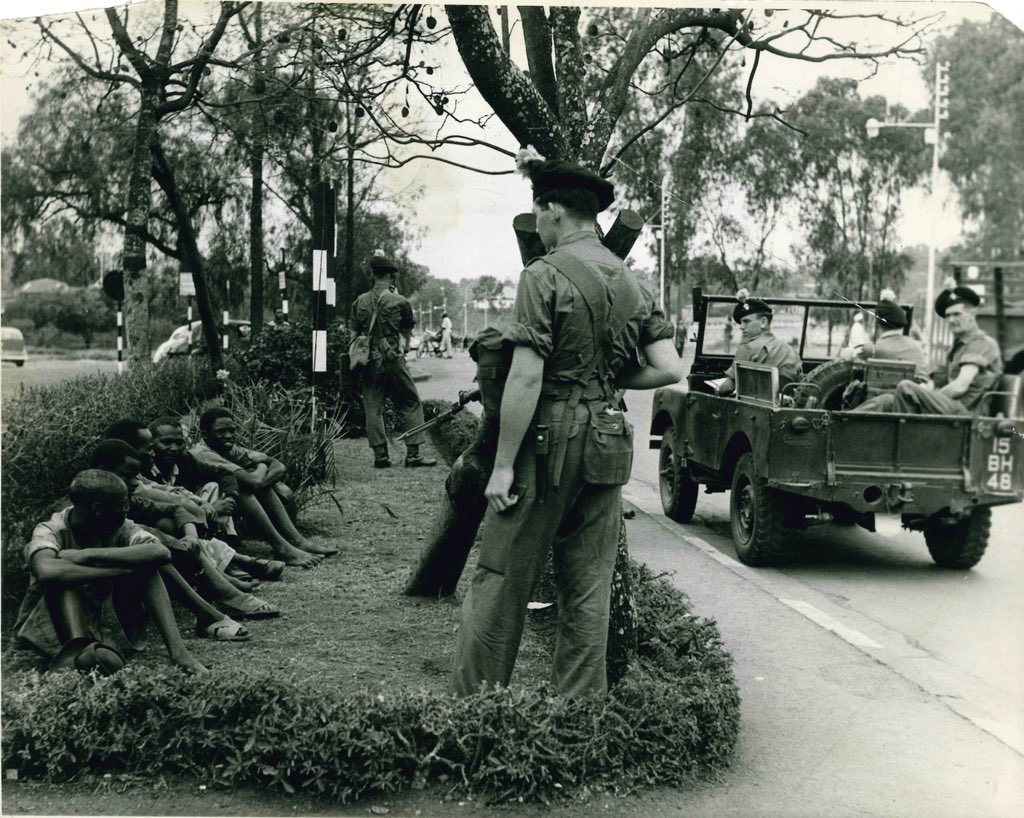
The Kenya National Archives in Nairobi contains hundreds of letters written by
detainees, their contents ranging from indignation over detention without trial,
to absolute desperation when chronicling camp conditions, forced labor, torture, starvation, and murder.
Letter from detention;
The record shows that many of our detainees who were physically fit by the time of arrest have already been maimed for life by both prison and rehabilitation officers. To induce self-incrimination, the ministry of defence and ministry of community development resort to,
(a) Hanging detainees head downwards and vice versa and inflicting pain of any nature ranges from putting soap later, snuff, salt, D.D.T and soil in the eyes.
(b) To scare detainees completely some
detainees are hanged and killed…
(c) Incessant pouring of the water on the face thus preventing a person from breathing in and out, e.g. the recent case of Kariuki s/o Mutithi who was killed in the process in the night of the 17th July 1957 by confused detainees under instructions of camp commandant and rehabilitation officers.
(d) Medical treatment is hardly given unless one confesses,
(e) Starving and giving insufficient meal one time daily.
(f) Organise riot squad to make unreasonable onslaught of detainees. 9g) Forcing detainees to
co-operate and work under duress.
(h) Trials of ordeal.
(i) Running gauntlet.
(j)Regular letting detainees survive without food or water for a complete
fortnight.”
A letter writer was paraded in front of the other detainees and his fingers cut off by the askaris with a panga before he was taken to the makeshift gallows in the middle of the camp and hang.
#SemaUkweli #RoyalVisitKenya
detainees, their contents ranging from indignation over detention without trial,
to absolute desperation when chronicling camp conditions, forced labor, torture, starvation, and murder.
Letter from detention;
The record shows that many of our detainees who were physically fit by the time of arrest have already been maimed for life by both prison and rehabilitation officers. To induce self-incrimination, the ministry of defence and ministry of community development resort to,
(a) Hanging detainees head downwards and vice versa and inflicting pain of any nature ranges from putting soap later, snuff, salt, D.D.T and soil in the eyes.
(b) To scare detainees completely some
detainees are hanged and killed…
(c) Incessant pouring of the water on the face thus preventing a person from breathing in and out, e.g. the recent case of Kariuki s/o Mutithi who was killed in the process in the night of the 17th July 1957 by confused detainees under instructions of camp commandant and rehabilitation officers.
(d) Medical treatment is hardly given unless one confesses,
(e) Starving and giving insufficient meal one time daily.
(f) Organise riot squad to make unreasonable onslaught of detainees. 9g) Forcing detainees to
co-operate and work under duress.
(h) Trials of ordeal.
(i) Running gauntlet.
(j)Regular letting detainees survive without food or water for a complete
fortnight.”
A letter writer was paraded in front of the other detainees and his fingers cut off by the askaris with a panga before he was taken to the makeshift gallows in the middle of the camp and hang.
#SemaUkweli #RoyalVisitKenya
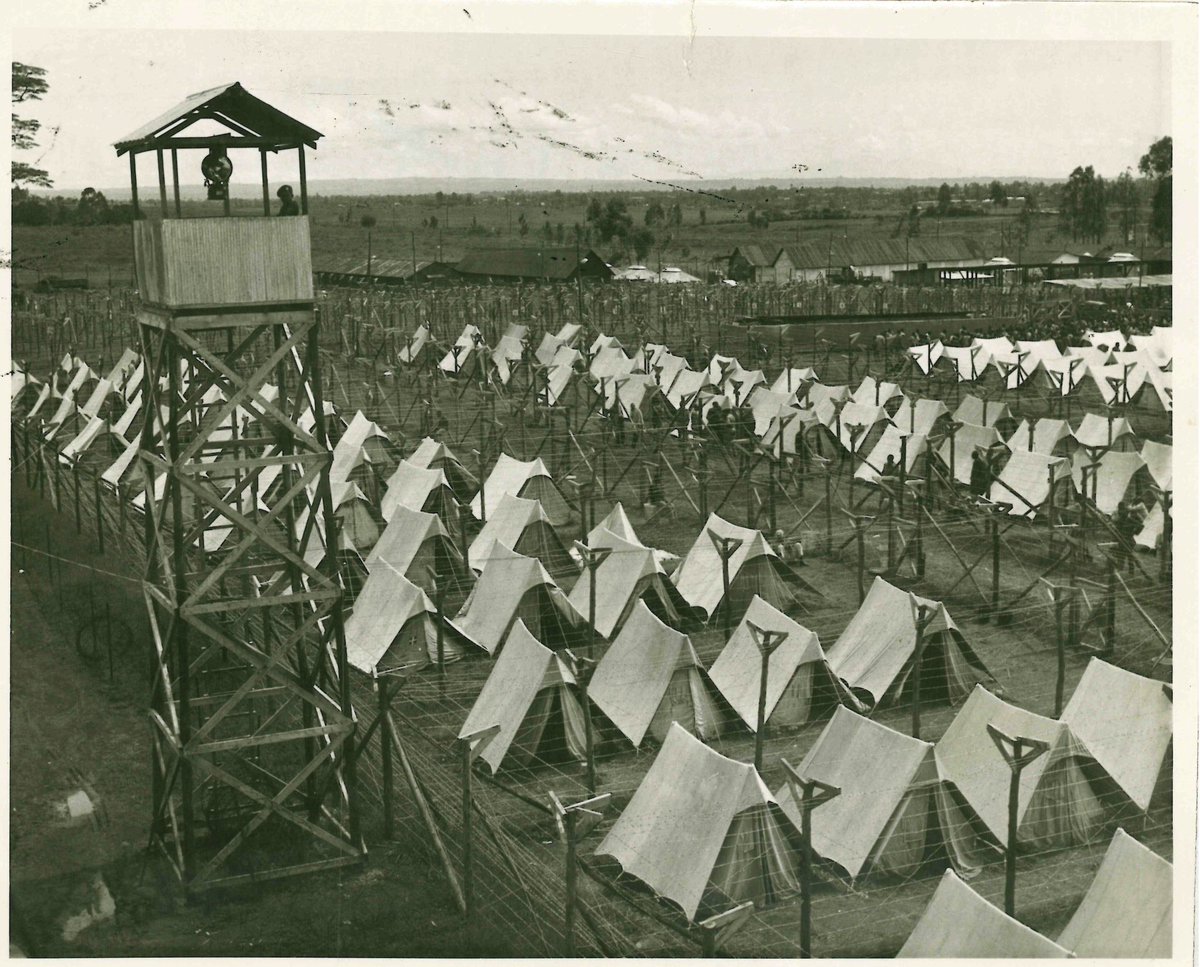
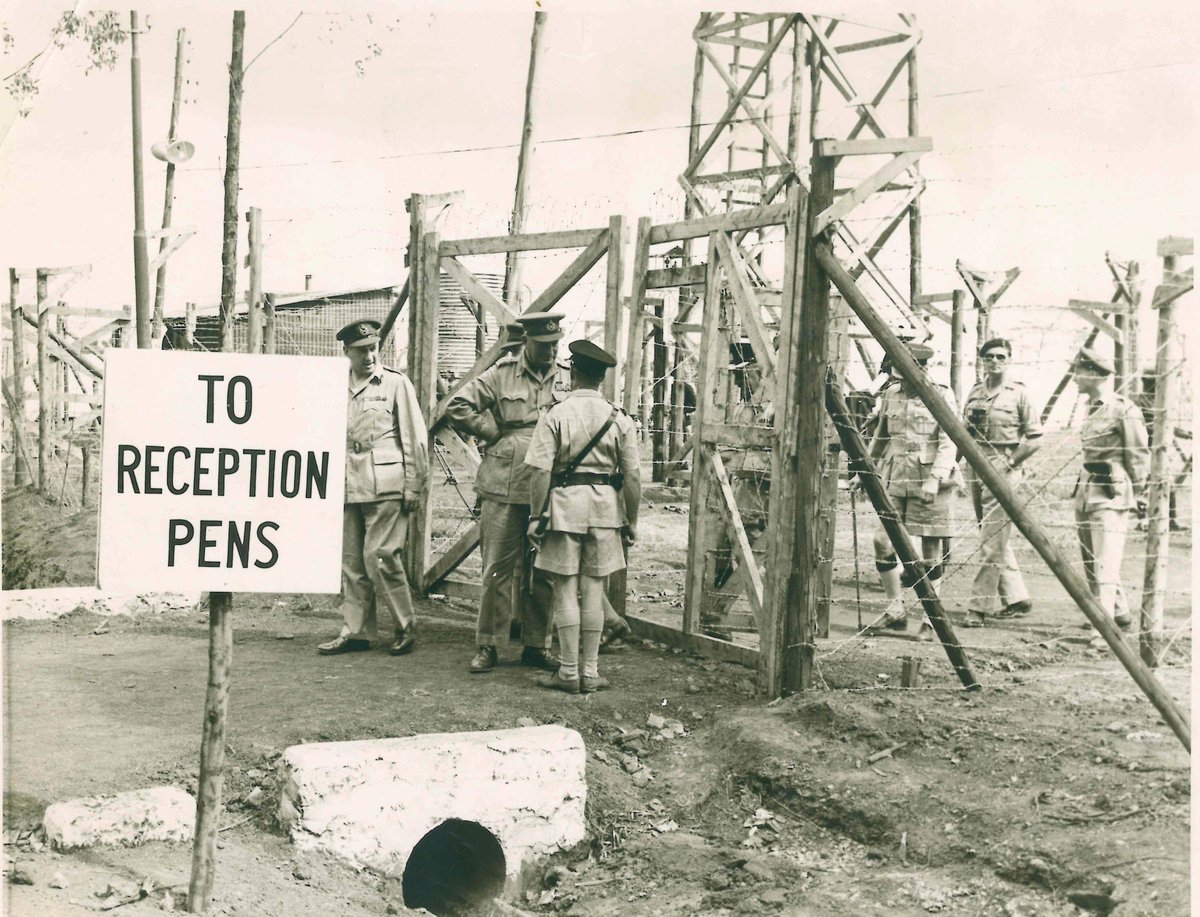
Thousands upon thousands of Mau Mau suspects were deprived of their rights, sent to slave labor camps, stripped of every shred of human dignity, worked sometimes to death, beaten senseless, torture, and murdered. Still, many refused to confess.
Detainees slept on the ground, often one on top of the other. They often slept and ate in the same room where toilet buckets overflowed with urine and feces. #SemaUkweli #RoyalVisitKenya
Detainees slept on the ground, often one on top of the other. They often slept and ate in the same room where toilet buckets overflowed with urine and feces. #SemaUkweli #RoyalVisitKenya
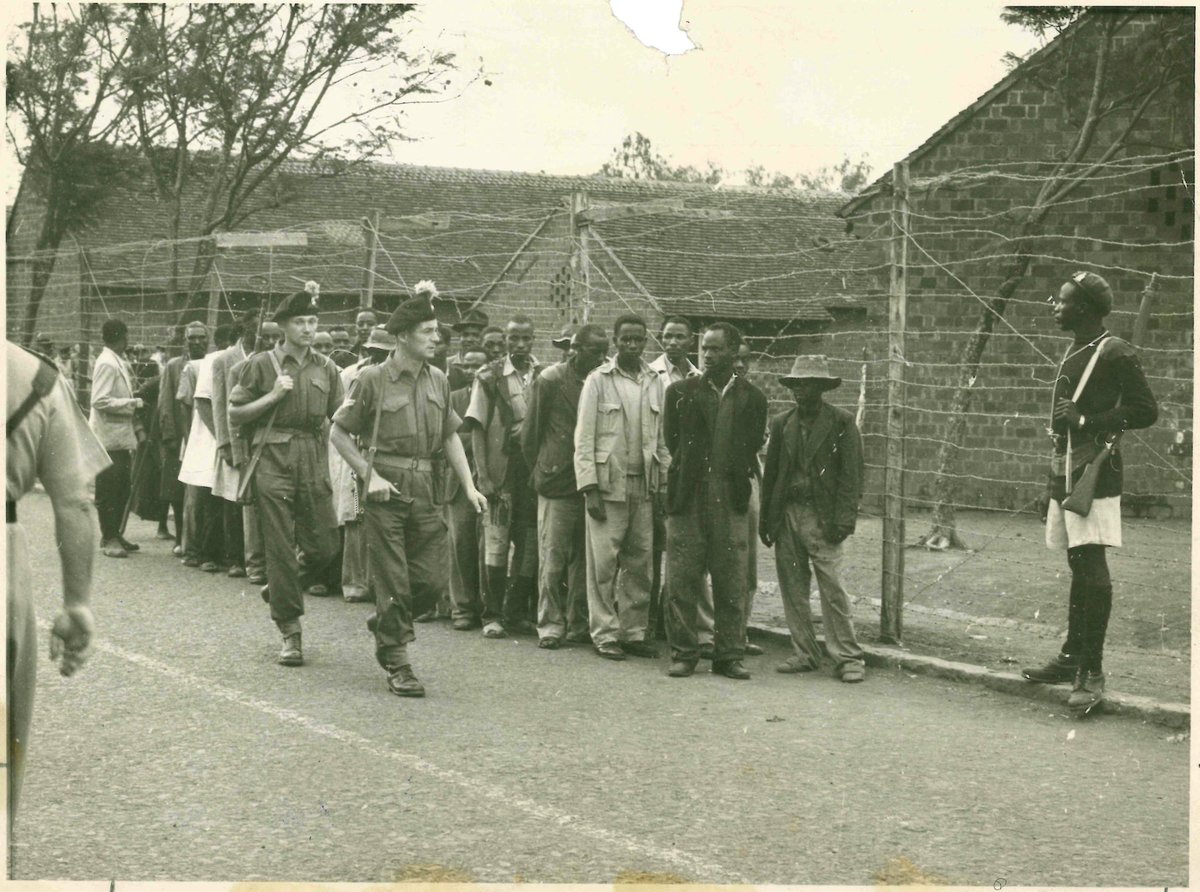
Scores of former Mau adherents whom I interviewed offered similar recollections. Teams made up of settlers, British district officers, members of the Kenya police force, African loyalists, and even soldiers from the British military forces demanded confessions and intelligence, and used
torture to get them, If the screening team was dissatisfied with the
suspect’s answers, it was accepted that the torture was a legitimate next
resort According to a number of the former detainees I interviewed, electric shock was widely used, as well as cigarettes and fire. Bottles (often
broken), gun barrells, knives, snakes, vermin, and hot egs were thrust up
men’s rectums and women's vaginas. The screening teams whipped, shot,
burned, and mutilated Mau Mau suspects, ostensibly to gather intelligence for military operations, and as court evidence.”
The use of sadistic screening techniques reported by numerous survivors and other eyewitnesses suggest that the loyalist Home Guards and their white superiors took perverse pleasure in their various physical assaults on Mau Mau suspects. #SemaUkweli #RoyalVisitKenya
torture to get them, If the screening team was dissatisfied with the
suspect’s answers, it was accepted that the torture was a legitimate next
resort According to a number of the former detainees I interviewed, electric shock was widely used, as well as cigarettes and fire. Bottles (often
broken), gun barrells, knives, snakes, vermin, and hot egs were thrust up
men’s rectums and women's vaginas. The screening teams whipped, shot,
burned, and mutilated Mau Mau suspects, ostensibly to gather intelligence for military operations, and as court evidence.”
The use of sadistic screening techniques reported by numerous survivors and other eyewitnesses suggest that the loyalist Home Guards and their white superiors took perverse pleasure in their various physical assaults on Mau Mau suspects. #SemaUkweli #RoyalVisitKenya
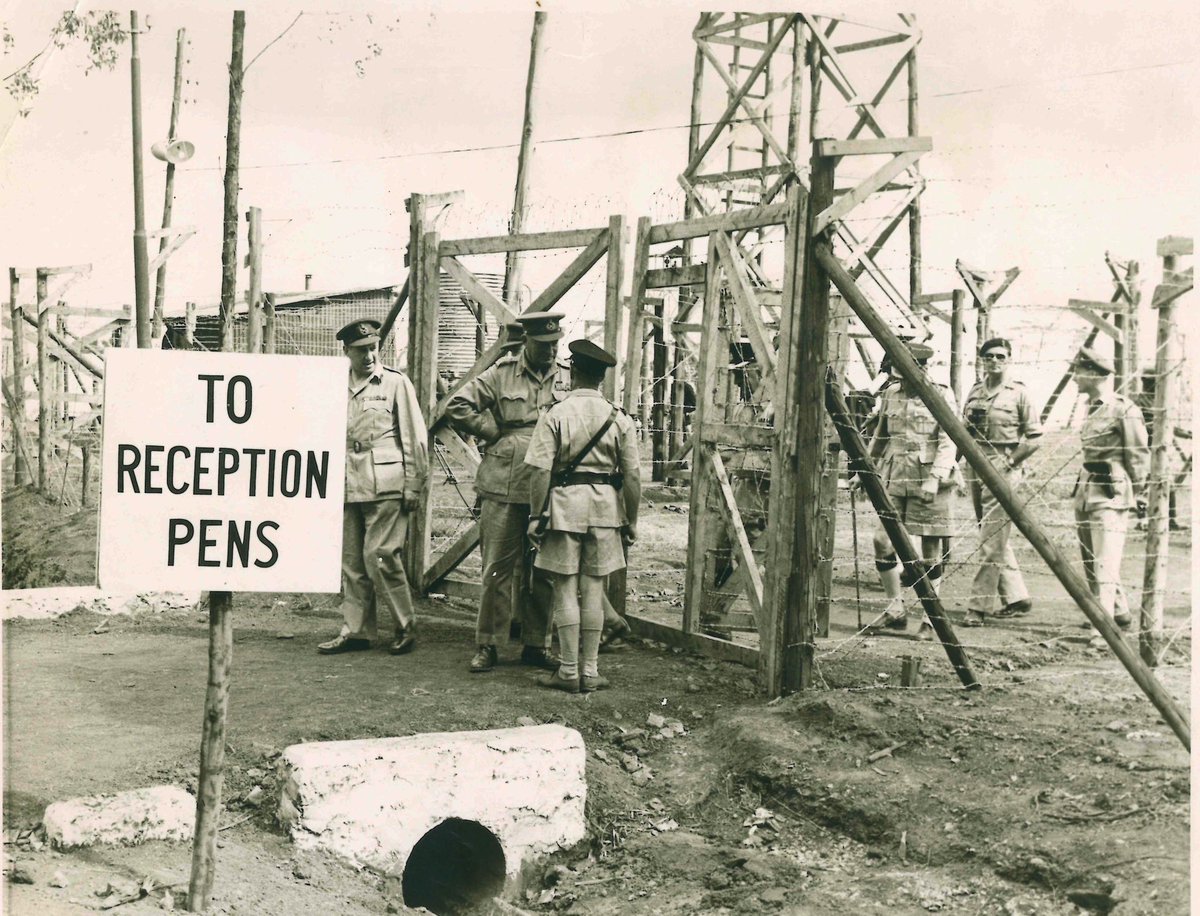
It was not unusual for former detainees to return to the reserves to find that
loyalist kinsmen or neighbors had expropriated their land. In light of ongoing reward policies in the reserves, it would have been surprising to find that such land theft had not taken place.
“When I returned,” another man from Nyeri stated, “I learned those who had
been killed were being buried in random spots outside the village…..No one can
be able to say for certain where his father, mother, wife, or children were
buried. They were all large, unmarked graves.” Those they did find alive lived in
horrendous conditions, leading many detainees to conclude that life in the
villages had, infact, been worse than the Pipeline.
Few loyalists were enthusiastic about the detainees’ returning. There was the fear of revenge, although with the Emergency Regulations still in place, and support from the colonial government continuing, the loyalists were still empowered. Their
greatest weapon was their right to determine whether an individual was ultimately released from the Pipeline or exiled.
With the introduction of the Loyalty Certificate the colonial government created a legal distinction between loyalist supporters and former Mau Mau adherents...No Mau Mau adherents regardless of how much he confessed and cooperates, was ever to be issued one of these crucial, and coveted, certificates.
Ex-detainees did not emerge from the Pipeline as rehabilitated citizens with equal rights. #SemaUkweli #RoyalVisitKenya
loyalist kinsmen or neighbors had expropriated their land. In light of ongoing reward policies in the reserves, it would have been surprising to find that such land theft had not taken place.
“When I returned,” another man from Nyeri stated, “I learned those who had
been killed were being buried in random spots outside the village…..No one can
be able to say for certain where his father, mother, wife, or children were
buried. They were all large, unmarked graves.” Those they did find alive lived in
horrendous conditions, leading many detainees to conclude that life in the
villages had, infact, been worse than the Pipeline.
Few loyalists were enthusiastic about the detainees’ returning. There was the fear of revenge, although with the Emergency Regulations still in place, and support from the colonial government continuing, the loyalists were still empowered. Their
greatest weapon was their right to determine whether an individual was ultimately released from the Pipeline or exiled.
With the introduction of the Loyalty Certificate the colonial government created a legal distinction between loyalist supporters and former Mau Mau adherents...No Mau Mau adherents regardless of how much he confessed and cooperates, was ever to be issued one of these crucial, and coveted, certificates.
Ex-detainees did not emerge from the Pipeline as rehabilitated citizens with equal rights. #SemaUkweli #RoyalVisitKenya
Loading suggestions...