
#Thread
1⃣
Many of my relatives n friends have stopped performing the rituals of 'shraadh 'during #PitruPaksha.
Many say, “ what's the point of making offerings n doing elaborate rituals for the dead. Just treat them well while they are alive. Why do something mainly out of fear once they are gone?” while I agree that we have to treat the older generations well while they are alive, do these rituals-deep rooted in our culture🕉️ are of no significance❓
In my parents' what's app groups, there are messages being circulated that these post death rituals have become just a way to make money by a particular section of people. In today’s era of space n science continuing with these age-old rituals is a mere waste of time n energy.
Is it really so? do Our ancestors hold any significance in our lives even after they are dead❓
Lets dive deeper into it.....
The new moon day known as the beginning of Dussehra. It is a special day dedicated to making an offering to express our gratitude to all the previous generations of people who have contributed to our life.
During this time, in the Indian subcontinent, new crops would have just begun to bear yield. So, their first produce is offered to the ancestors as a mark of respect and thankfulness, by way of 'pinda', before the whole population breaks into celebration in the form of other festivals like Navratri, Vijayadashami and Diwali.
#ShraddhKarma
#DayForAncestors
1⃣
Many of my relatives n friends have stopped performing the rituals of 'shraadh 'during #PitruPaksha.
Many say, “ what's the point of making offerings n doing elaborate rituals for the dead. Just treat them well while they are alive. Why do something mainly out of fear once they are gone?” while I agree that we have to treat the older generations well while they are alive, do these rituals-deep rooted in our culture🕉️ are of no significance❓
In my parents' what's app groups, there are messages being circulated that these post death rituals have become just a way to make money by a particular section of people. In today’s era of space n science continuing with these age-old rituals is a mere waste of time n energy.
Is it really so? do Our ancestors hold any significance in our lives even after they are dead❓
Lets dive deeper into it.....
The new moon day known as the beginning of Dussehra. It is a special day dedicated to making an offering to express our gratitude to all the previous generations of people who have contributed to our life.
During this time, in the Indian subcontinent, new crops would have just begun to bear yield. So, their first produce is offered to the ancestors as a mark of respect and thankfulness, by way of 'pinda', before the whole population breaks into celebration in the form of other festivals like Navratri, Vijayadashami and Diwali.
#ShraddhKarma
#DayForAncestors

2⃣
This is the time of the year close to the Autumnal equinox (the day when Earth is perfectly angled sideways to the sun and so day and night are of equal length.),
many cultures worldwide celebrate this day n the start of new season drawing upon its spiritual n symbolic meaning.
Different Types of Ancestor Worship from Around the World:🌎
▪️Sraddha from India. ...
▪️Vodun from Ghana. ...
▪️Día de Los Muertos from Mexico. ...
▪️Venerated Saints from Rome. ...
▪️Shi Ceremony from China. ...
▪️Megalithic Tombs from Europe. ...
▪️Pchum Ben from Cambodia. ...
▪️Samhain from Scotland.
This is the time of the year close to the Autumnal equinox (the day when Earth is perfectly angled sideways to the sun and so day and night are of equal length.),
many cultures worldwide celebrate this day n the start of new season drawing upon its spiritual n symbolic meaning.
Different Types of Ancestor Worship from Around the World:🌎
▪️Sraddha from India. ...
▪️Vodun from Ghana. ...
▪️Día de Los Muertos from Mexico. ...
▪️Venerated Saints from Rome. ...
▪️Shi Ceremony from China. ...
▪️Megalithic Tombs from Europe. ...
▪️Pchum Ben from Cambodia. ...
▪️Samhain from Scotland.

3⃣
Well, people who are constantly on google for every proof n answer may think they are delivered by the google lady.😅
Scientists say that human beings and their ancestors have existed on this planet for 20 million years. That is a lot of time. All these hundreds of thousands of generations that lived on this planet before us have given us something or the other. The language that we speak, the way we sit, our clothes, our buildings – almost everything that we know today has come to us from generations before us.
The people that we refer to as your ancestors, they may not necessarily be wandering around, hanging on to the trees, but they’re living within us., on one level, it enriches our life, on another level, it enslaves our life.
We are who we are only because of our forefathers. What they learnt, what they knew, their skills, their technologies, their sense of life, we have imbibed all of it, knowingly or unknowingly, every one of us. At the same time, if we let them live too strong within us, we won’t have a life of our own.
Well, people who are constantly on google for every proof n answer may think they are delivered by the google lady.😅
Scientists say that human beings and their ancestors have existed on this planet for 20 million years. That is a lot of time. All these hundreds of thousands of generations that lived on this planet before us have given us something or the other. The language that we speak, the way we sit, our clothes, our buildings – almost everything that we know today has come to us from generations before us.
The people that we refer to as your ancestors, they may not necessarily be wandering around, hanging on to the trees, but they’re living within us., on one level, it enriches our life, on another level, it enslaves our life.
We are who we are only because of our forefathers. What they learnt, what they knew, their skills, their technologies, their sense of life, we have imbibed all of it, knowingly or unknowingly, every one of us. At the same time, if we let them live too strong within us, we won’t have a life of our own.

4⃣
This is why so much care was taken, not in any one culture, across cultures everywhere in the world, certain things were done when people died, Because, if they live through us too strongly, our life is wasted. That is, we will not be a fresh life. we will be sort of a carbon copy of an old life – the very way we sit and stand. we may not understand this in the beginning of our life.
When we’re eighteen-twenty we thought, we’re definitely not going to be like our father or our mother, that’s the last thing we want to be. You know, I’m talking about the free spirits👼. But by the time we’re forty-five, we sit like them, we stand like them, we talk like them, you know? Unknowingly, even our body moves like them.
So, every culture always took care to distance themselves from the dead in so many different ways. In India, we developed elaborate methodologies, chose times when we can do maximum in this direction, so that year-on-year we create more and more distance. So, this is a time of the year, which was called, which is referred to as the Pitru Paksha – that means, this is the time to attend to our ancestors. we may know them, we may not know them. Up to twelve generations of people are usually attended to, so that they don’t try to live through us.
"we distance ourself genetically from them, so that this life operates and organizes itself as a fresh life, as a new possibility, that it doesn’t become a repetition of the past."
This is why so much care was taken, not in any one culture, across cultures everywhere in the world, certain things were done when people died, Because, if they live through us too strongly, our life is wasted. That is, we will not be a fresh life. we will be sort of a carbon copy of an old life – the very way we sit and stand. we may not understand this in the beginning of our life.
When we’re eighteen-twenty we thought, we’re definitely not going to be like our father or our mother, that’s the last thing we want to be. You know, I’m talking about the free spirits👼. But by the time we’re forty-five, we sit like them, we stand like them, we talk like them, you know? Unknowingly, even our body moves like them.
So, every culture always took care to distance themselves from the dead in so many different ways. In India, we developed elaborate methodologies, chose times when we can do maximum in this direction, so that year-on-year we create more and more distance. So, this is a time of the year, which was called, which is referred to as the Pitru Paksha – that means, this is the time to attend to our ancestors. we may know them, we may not know them. Up to twelve generations of people are usually attended to, so that they don’t try to live through us.
"we distance ourself genetically from them, so that this life operates and organizes itself as a fresh life, as a new possibility, that it doesn’t become a repetition of the past."
5⃣
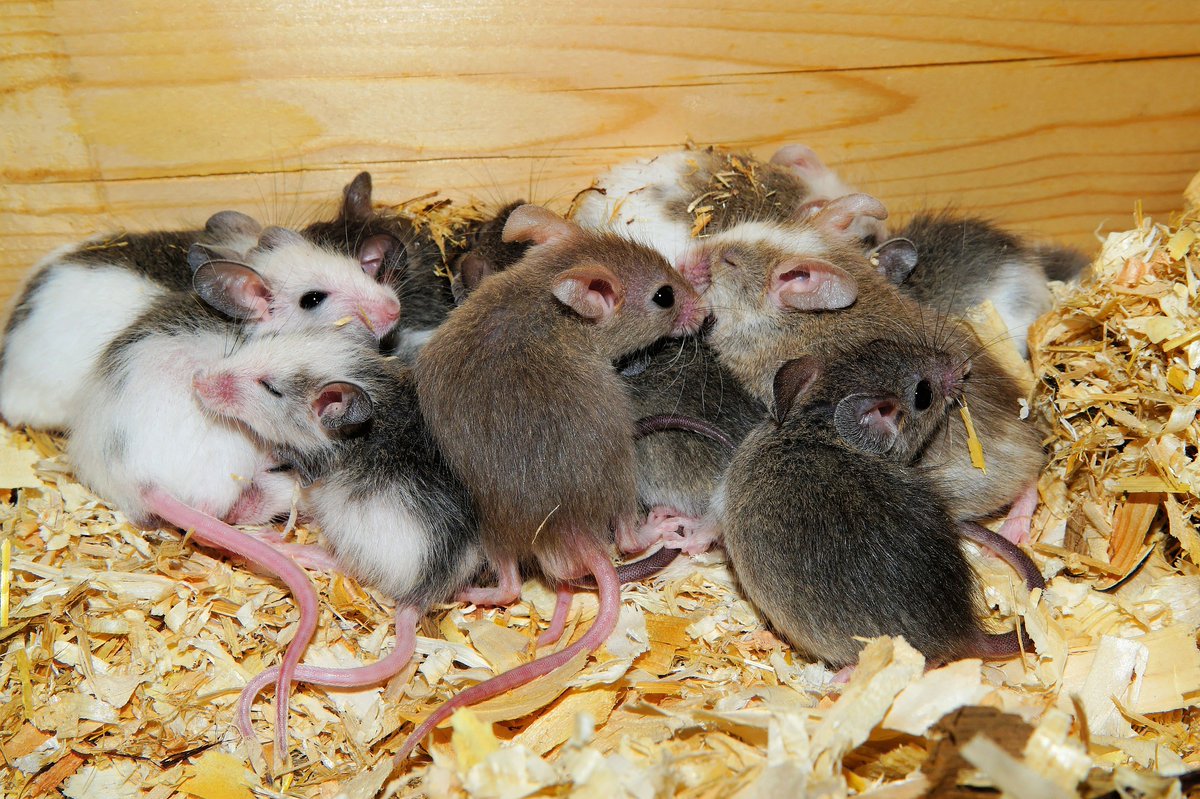
American University made this small experiment where a bunch of rats were given nice cherry blossom smelling cheese. They lapped it up one day. Next day when they came to eat, when they bit into the cheese, they got an electric shock. And again and again, a few days they did this, that whenever they bit into this cherry blossom smelling cheese, they got a shock.
Seven generations of rats would not go anywhere near cherry blossom smell. They learned their lesson, And these generations did not live together. They were separated. So wherever they were, for seven generations, their learning remained. It’s only in the eighth generation, it started dissipating. So if it is true with rats, it must be true with us as well.
the most rigorous and convincing set of studies published to date demonstrating acquired transgenerational epigenetic effects in a laboratory model".
scientificamerican.com
societies which don’t handle their dead properly, in those societies, the most vulnerable population will be adolescents.
From zero to eight years of age, children generally have a kind of a protection, an immunity from their ancestors. They be their own thing.
But, between eight and eighteen, the influence of unattended ancestral –– their spirit, or their memory, plays havoc with adolescents.
Adolescents and pregnant women are most vulnerable for these forces. It is very important if there are such people in your homes, you must attend to this. So Mahalaya Amavasya is that day…
American University made this small experiment where a bunch of rats were given nice cherry blossom smelling cheese. They lapped it up one day. Next day when they came to eat, when they bit into the cheese, they got an electric shock. And again and again, a few days they did this, that whenever they bit into this cherry blossom smelling cheese, they got a shock.
Seven generations of rats would not go anywhere near cherry blossom smell. They learned their lesson, And these generations did not live together. They were separated. So wherever they were, for seven generations, their learning remained. It’s only in the eighth generation, it started dissipating. So if it is true with rats, it must be true with us as well.
the most rigorous and convincing set of studies published to date demonstrating acquired transgenerational epigenetic effects in a laboratory model".
scientificamerican.com
societies which don’t handle their dead properly, in those societies, the most vulnerable population will be adolescents.
From zero to eight years of age, children generally have a kind of a protection, an immunity from their ancestors. They be their own thing.
But, between eight and eighteen, the influence of unattended ancestral –– their spirit, or their memory, plays havoc with adolescents.
Adolescents and pregnant women are most vulnerable for these forces. It is very important if there are such people in your homes, you must attend to this. So Mahalaya Amavasya is that day…
6⃣
A society where adolescents suffer most, adolescence is the best part of our life in many ways, but they suffer most – that society you must know, has not attended to its dead properly.
So, this is the time of the year where, even if we have not done something in the past, everybody makes an attempt to deal with the ancestral dead, so that their influence is limited in our lives. We appreciate who they were, we appreciate their contributions.
We have this kind of body, this kind of brain, this kind of learning, this kind of whatever – in all that they have a role, we appreciate that. At the same time, we want them to stand little away from us, so that we can live our own lives.
A society where adolescents suffer most, adolescence is the best part of our life in many ways, but they suffer most – that society you must know, has not attended to its dead properly.
So, this is the time of the year where, even if we have not done something in the past, everybody makes an attempt to deal with the ancestral dead, so that their influence is limited in our lives. We appreciate who they were, we appreciate their contributions.
We have this kind of body, this kind of brain, this kind of learning, this kind of whatever – in all that they have a role, we appreciate that. At the same time, we want them to stand little away from us, so that we can live our own lives.

7⃣
Once a person is dead, in Indian culture, we always want to wipe out the Runanubandha because we know yesterday has a power of its own.
If you do not liberate yourself from it, yesterday will rule your tomorrow. Yesterday ruling your tomorrow means tomorrow never comes.
Someone said this very forcefully Leave the dead to the dead.' Leaving the dead to the dead does not mean ignoring those who died. It just means whatever happened yesterday, whatever happened in the previous moment, you must always be conscious it is dead.
After a person dies, maybe they have attained mukti or they have gone somewhere else, we don't know, but either because we were born to them or we were in touch with them in some way or the other, their memory imprints are on us.
These imprints are not just in our mind but also in our body and energies as well. So, one important aspect of death rituals is that we must become free of this, it is very important.
for more details read the book: Death, an inside story by #Sadhguru
Once a person is dead, in Indian culture, we always want to wipe out the Runanubandha because we know yesterday has a power of its own.
If you do not liberate yourself from it, yesterday will rule your tomorrow. Yesterday ruling your tomorrow means tomorrow never comes.
Someone said this very forcefully Leave the dead to the dead.' Leaving the dead to the dead does not mean ignoring those who died. It just means whatever happened yesterday, whatever happened in the previous moment, you must always be conscious it is dead.
After a person dies, maybe they have attained mukti or they have gone somewhere else, we don't know, but either because we were born to them or we were in touch with them in some way or the other, their memory imprints are on us.
These imprints are not just in our mind but also in our body and energies as well. So, one important aspect of death rituals is that we must become free of this, it is very important.
for more details read the book: Death, an inside story by #Sadhguru
Loading suggestions...