

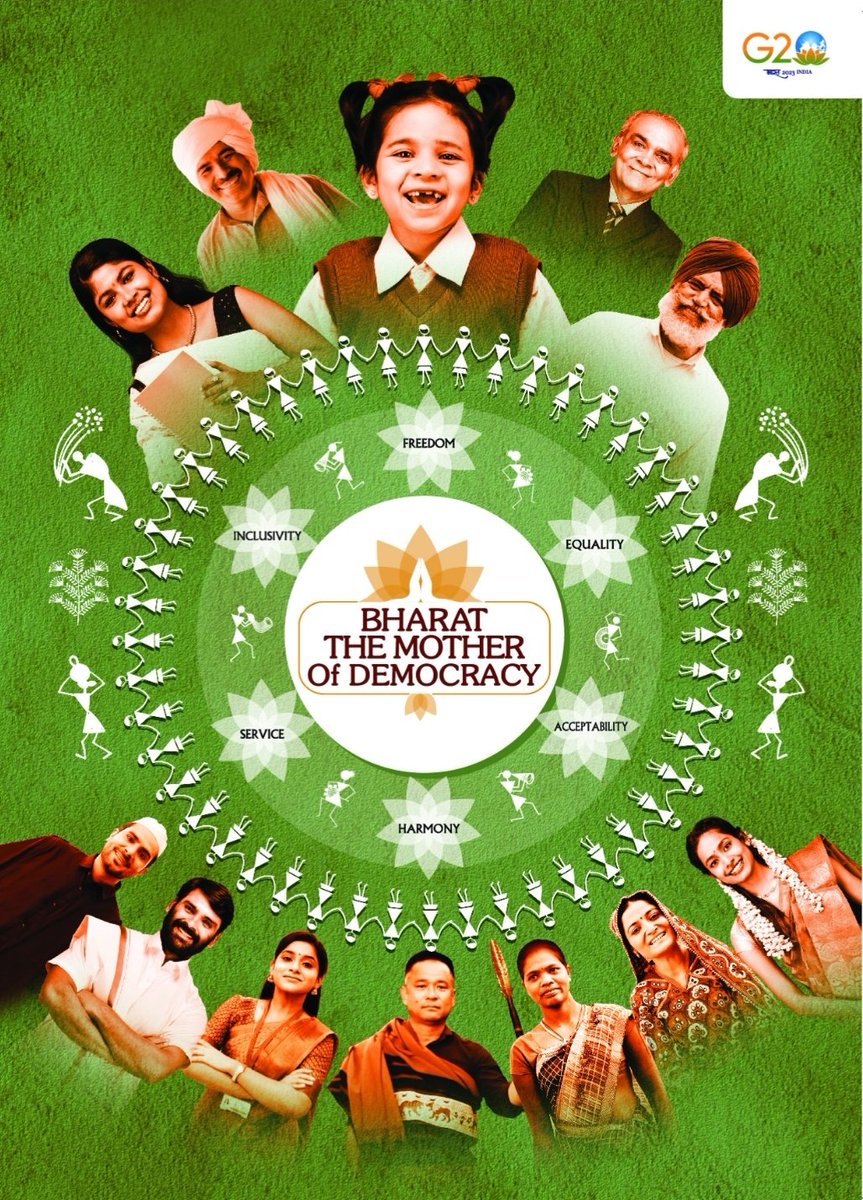
Why is Bharat/India the Mother of Democracy ?
Democracy means people rule themselves through their elected representatives. And this rule is nothing new to India.
Let's Look at the concepts of Democracy through History. Part 1👇
Democracy means people rule themselves through their elected representatives. And this rule is nothing new to India.
Let's Look at the concepts of Democracy through History. Part 1👇
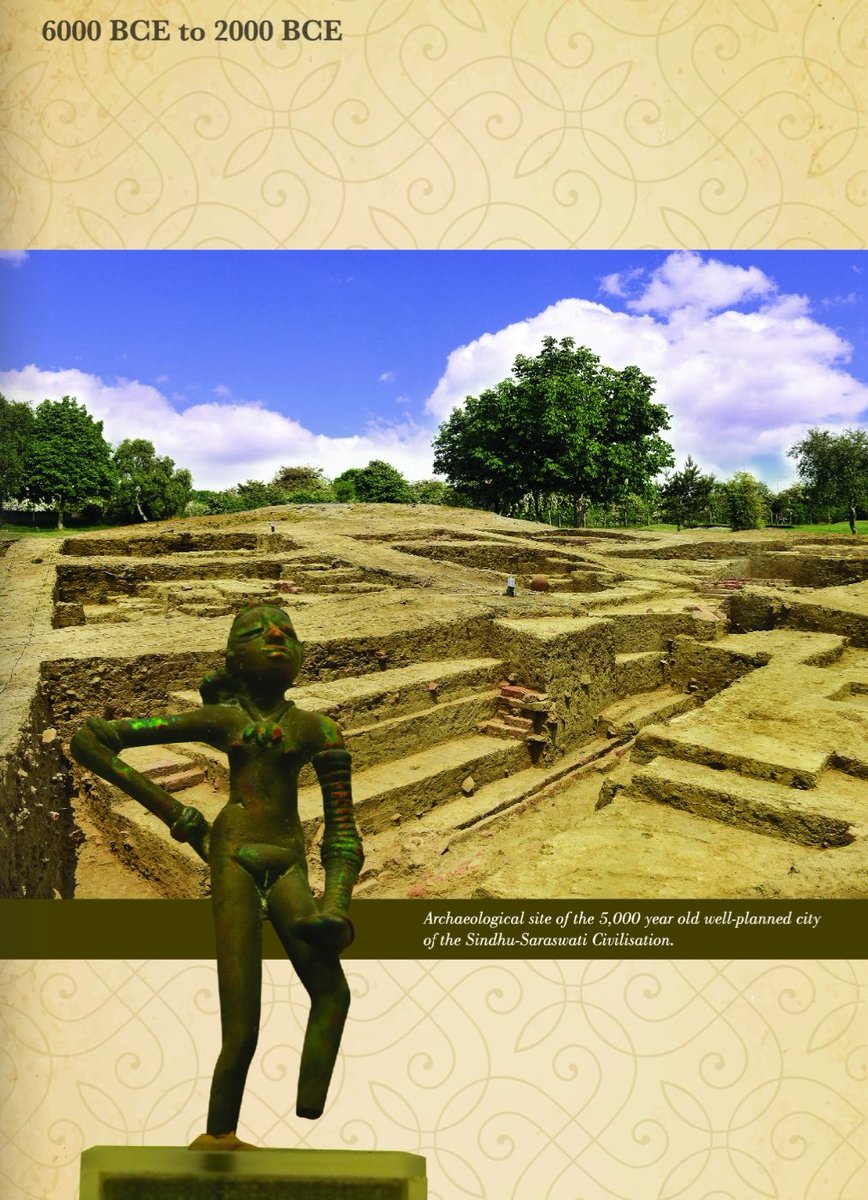
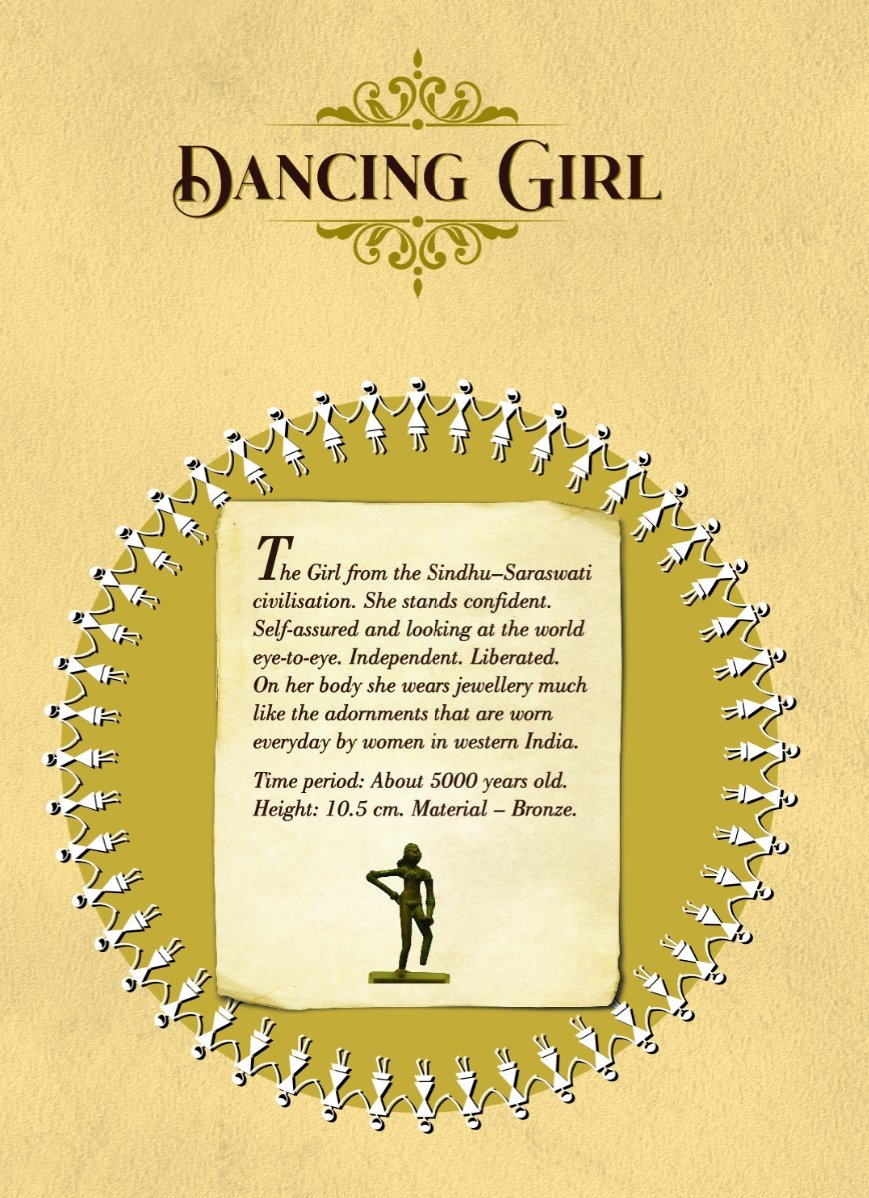
During Sindhu-Saraswati Civilization (Indus Valley Civilization). The girl stands confident, self assured and looking at the world eye-to-eye.
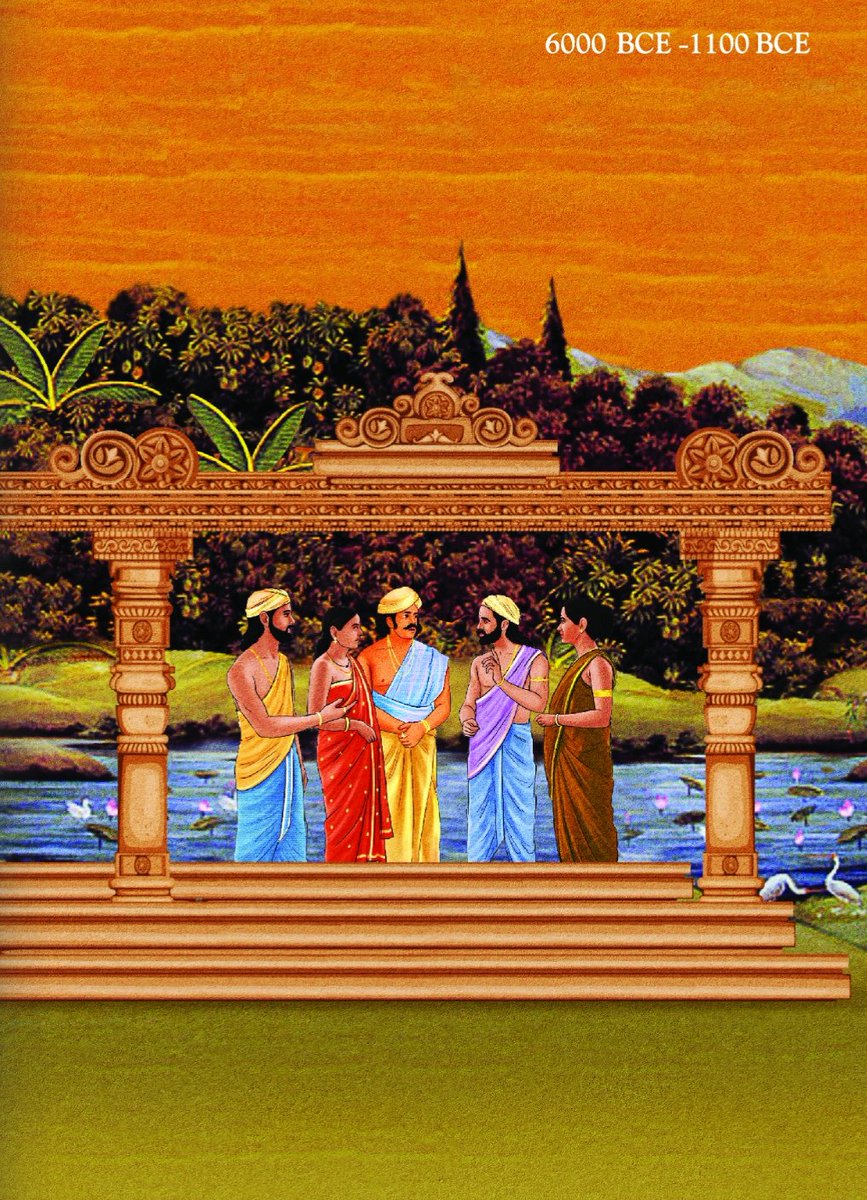
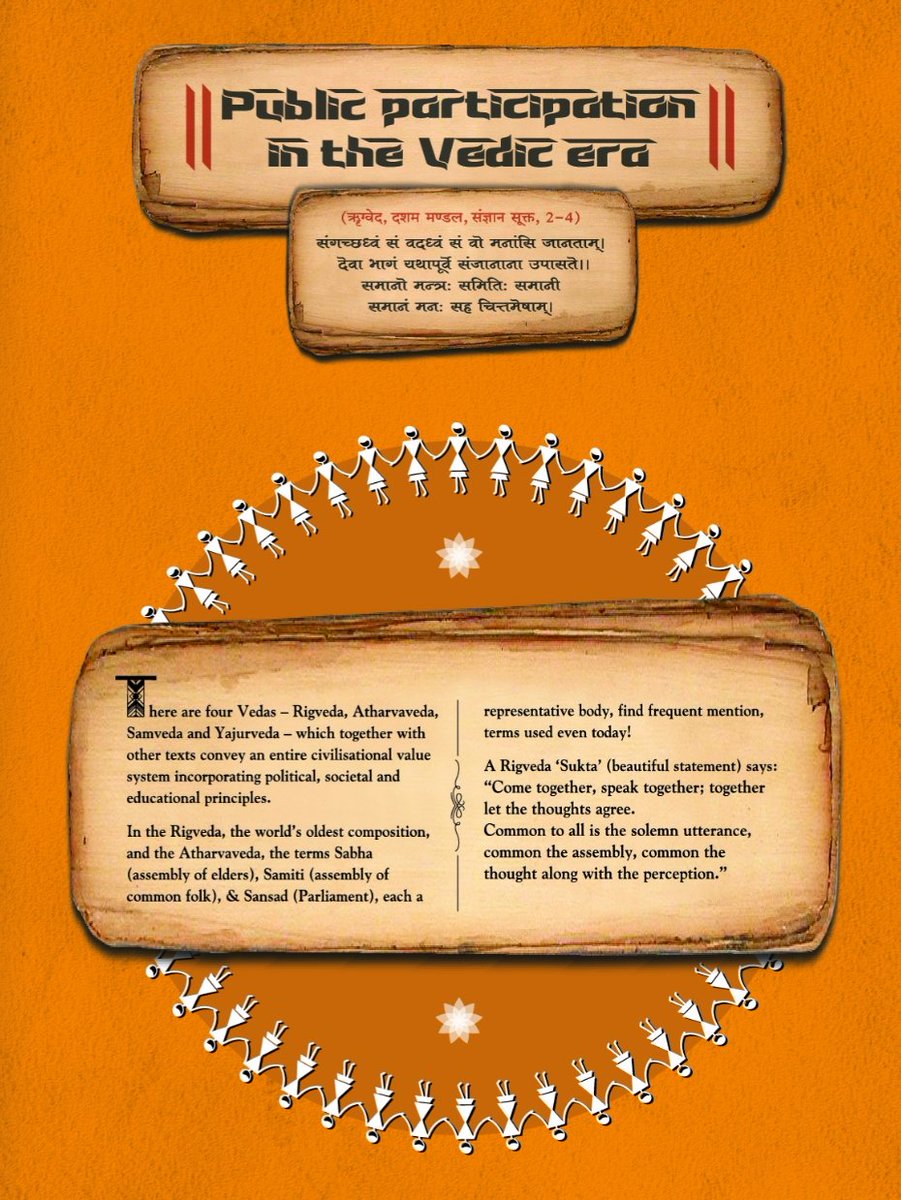
Public Participation during the Vedic Times. ( 6000BCE to 1100BCE)
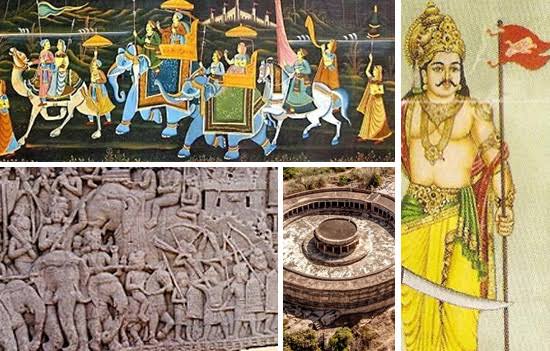
Sabha: Assembly of Elders
Samithi: Assembly of Common folk.
Sansad: Parliament.
Our Rigveda sukta says: "Come together, Speak together, together let's the thoughts agree".
Sabha: Assembly of Elders
Samithi: Assembly of Common folk.
Sansad: Parliament.
Our Rigveda sukta says: "Come together, Speak together, together let's the thoughts agree".
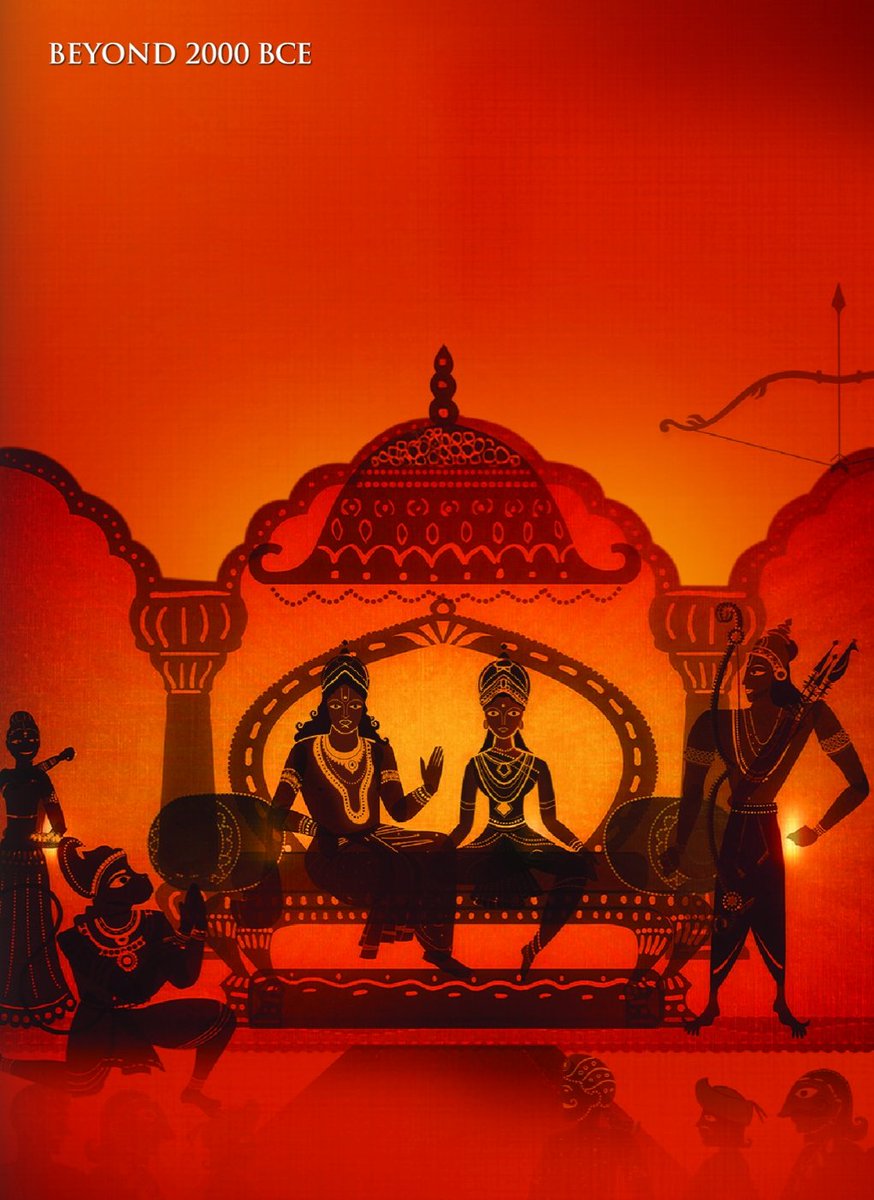
When the ancient Kingdom of Ayodhya needed a new King, the old king Dasharatha sought the approval of his council of ministers and people's representatives.
They ultimately confirmed Rama as the people's choice after detailed consultations with all sections of Society.
They ultimately confirmed Rama as the people's choice after detailed consultations with all sections of Society.
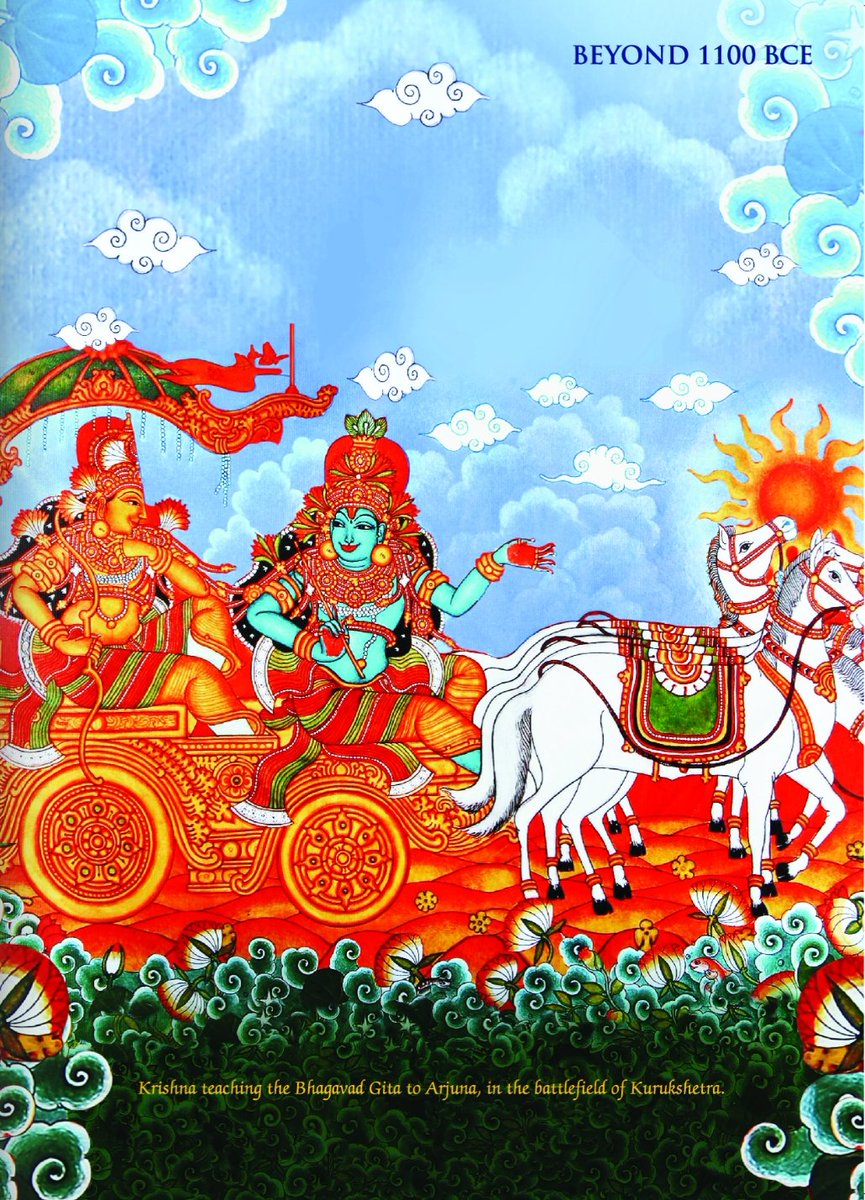
Democracy is doing things Right for the people, this is brought to life in Mahabharata.
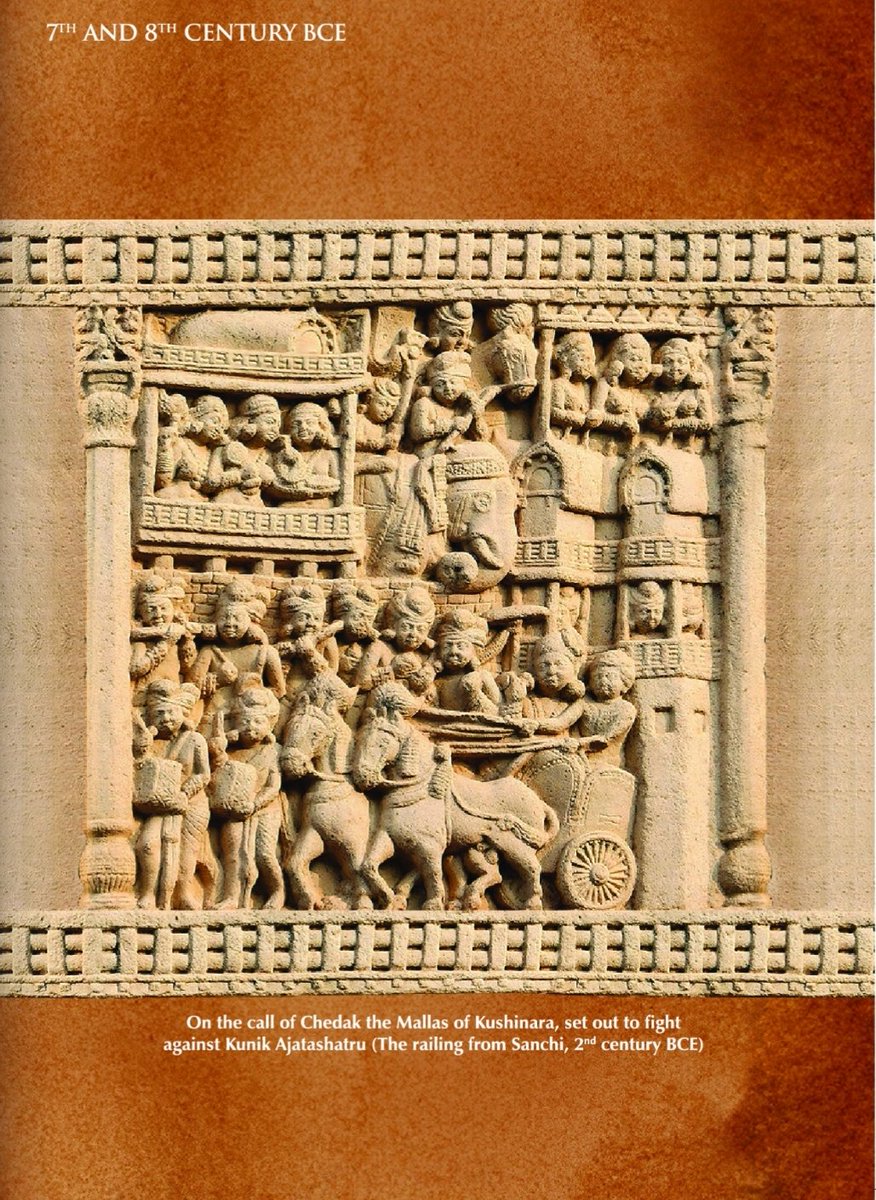
#Democracy in the 7th & 8th century in India.
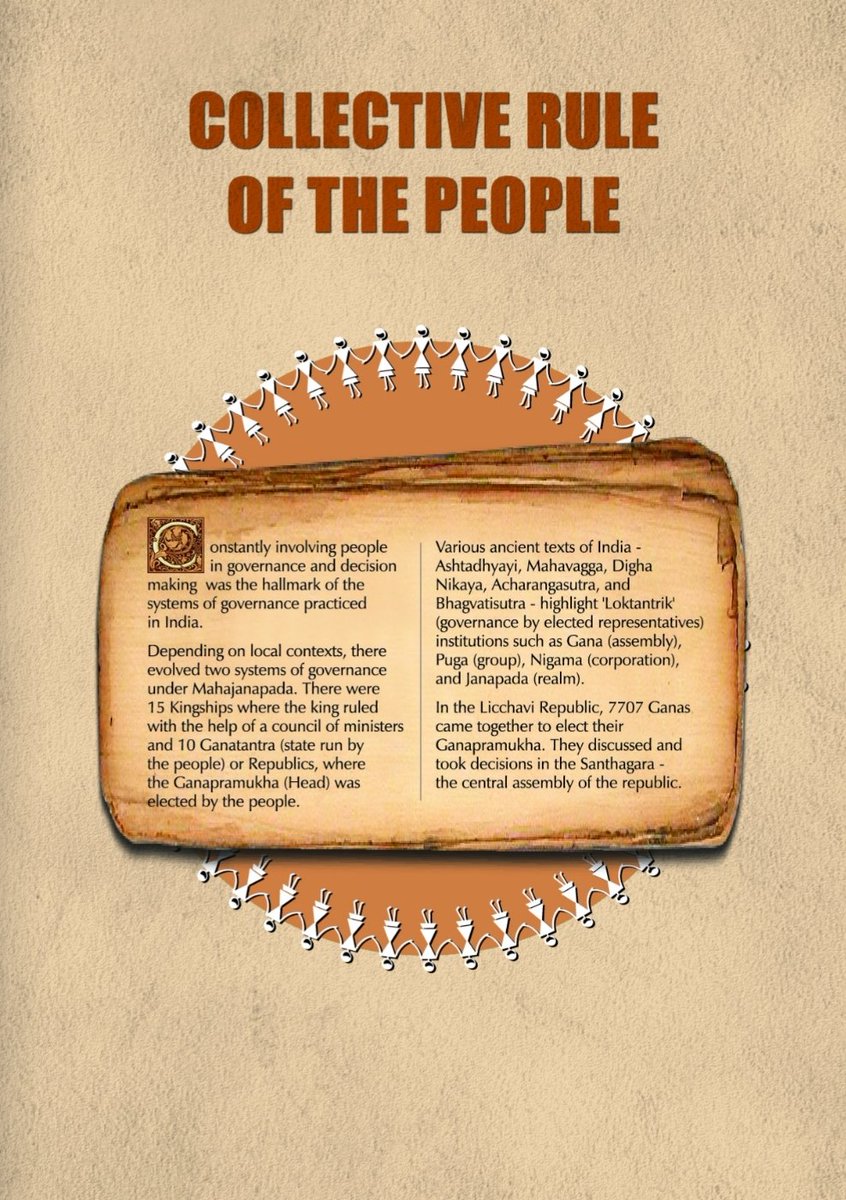
There were 15 Kingships where the King ruled with the help of a council of ministers and 10 Ganatantra (state run by the People) or republics, where the Ganapramukha ( Head) was elected by the people.
There were 15 Kingships where the King ruled with the help of a council of ministers and 10 Ganatantra (state run by the People) or republics, where the Ganapramukha ( Head) was elected by the people.
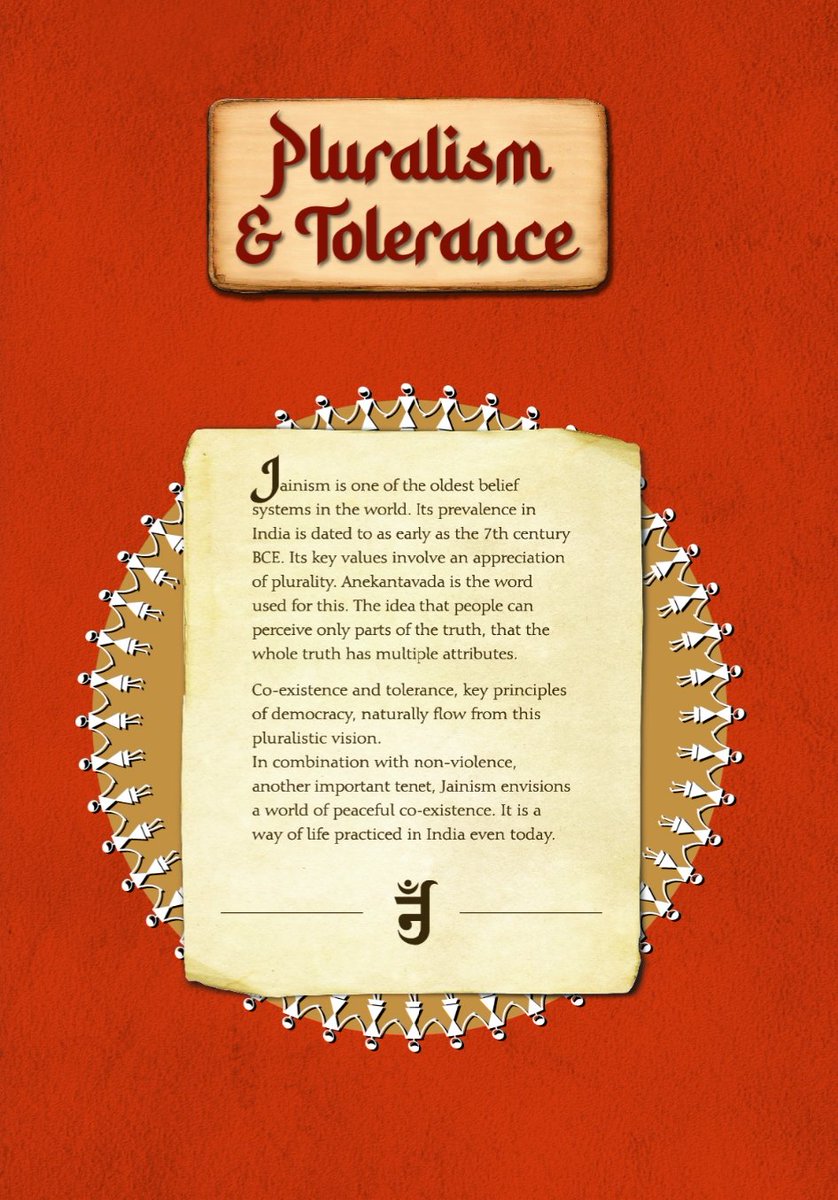
Pluralism and Tolerance
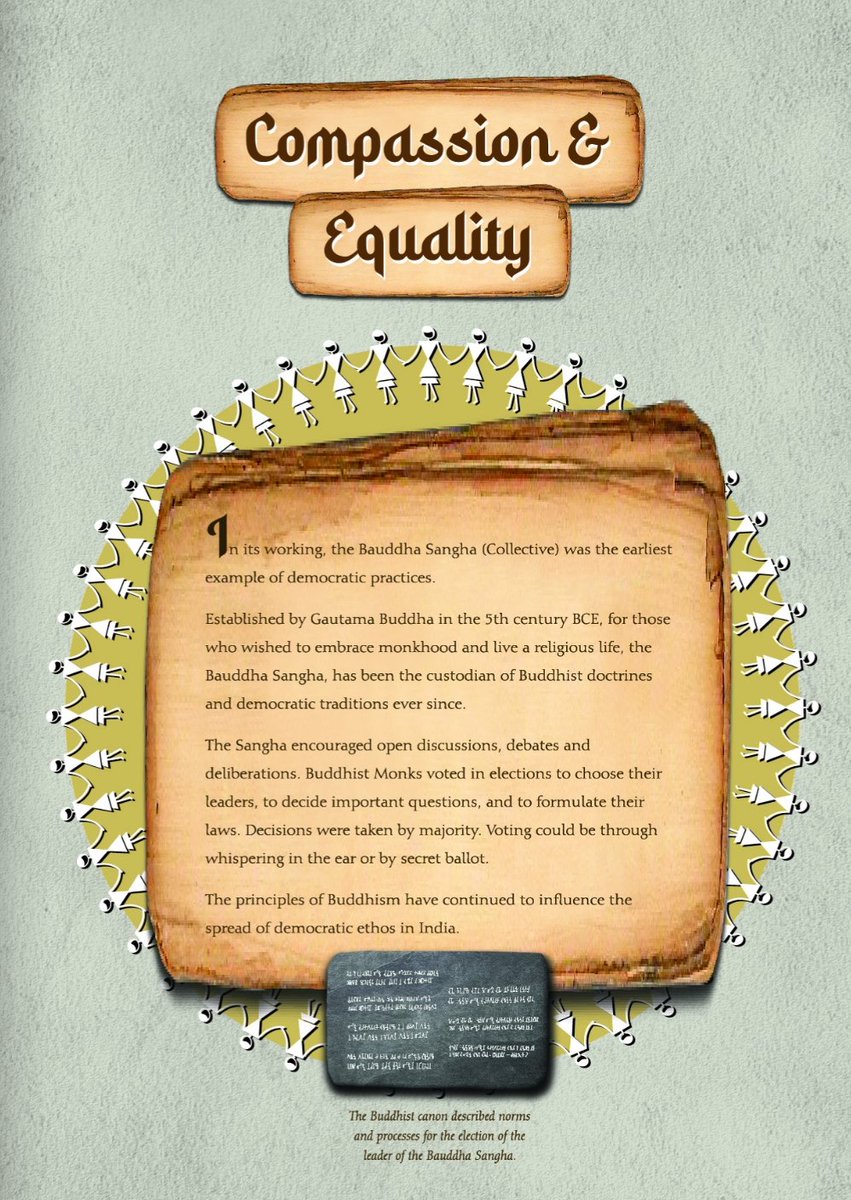
Compassion and Equality.
The Buddhist sanga encouraged discussions, debates, and deliberations. The monks voted to elect their leader. The voting was through a secret ballot or through whispering.
The Buddhist sanga encouraged discussions, debates, and deliberations. The monks voted to elect their leader. The voting was through a secret ballot or through whispering.
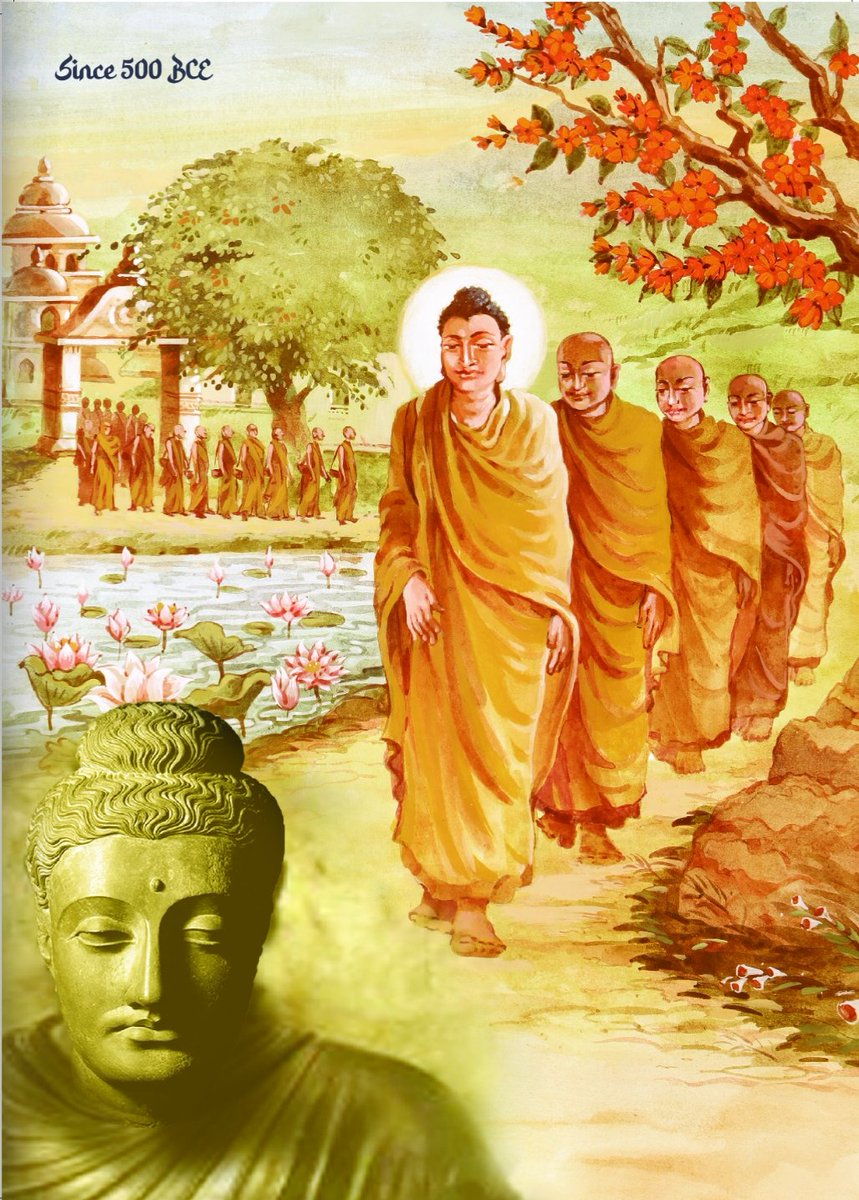
Since 500 BC we see The People's Leaders.
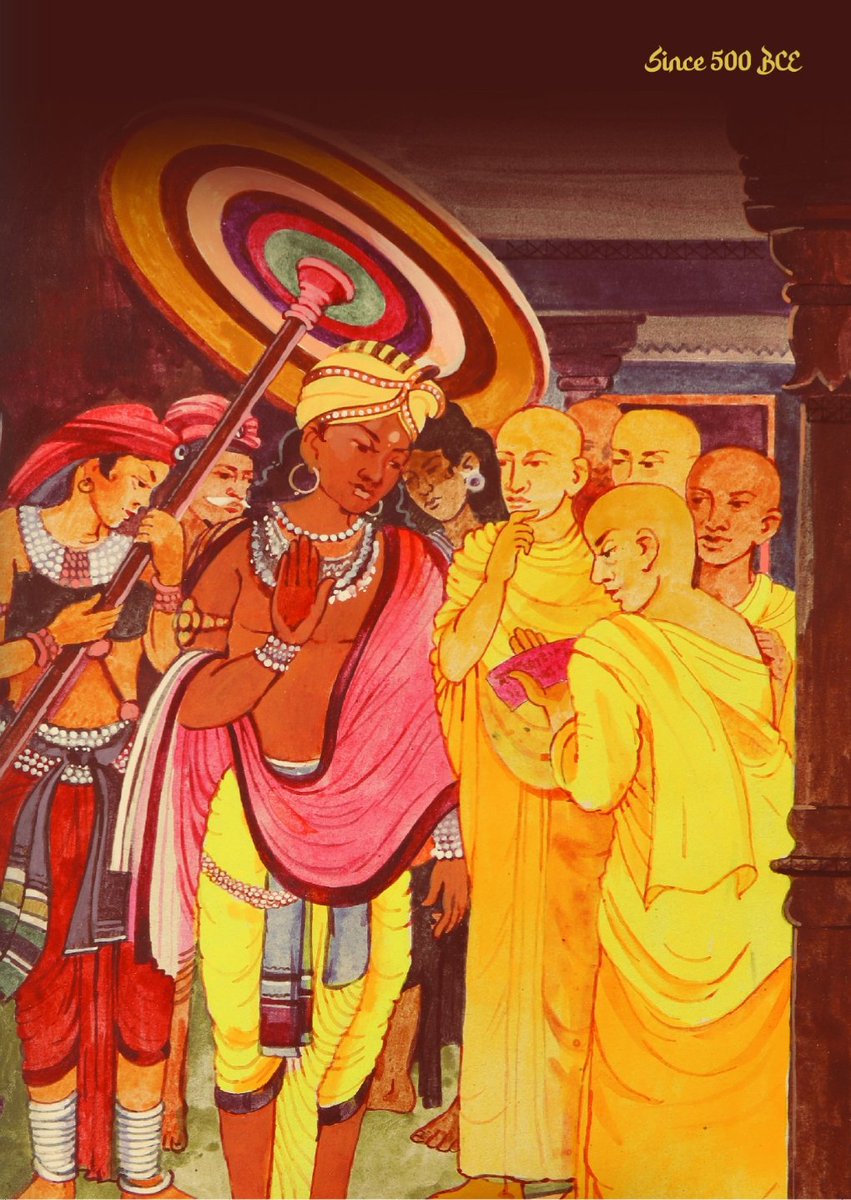
When threatened by anarchy, an election was called to choose their leader ( Mahasammata= Great Election).
The King was chosen by the whole people. The King ruled in peoples name. The state was called Ganarajya ( People's state).
When threatened by anarchy, an election was called to choose their leader ( Mahasammata= Great Election).
The King was chosen by the whole people. The King ruled in peoples name. The state was called Ganarajya ( People's state).
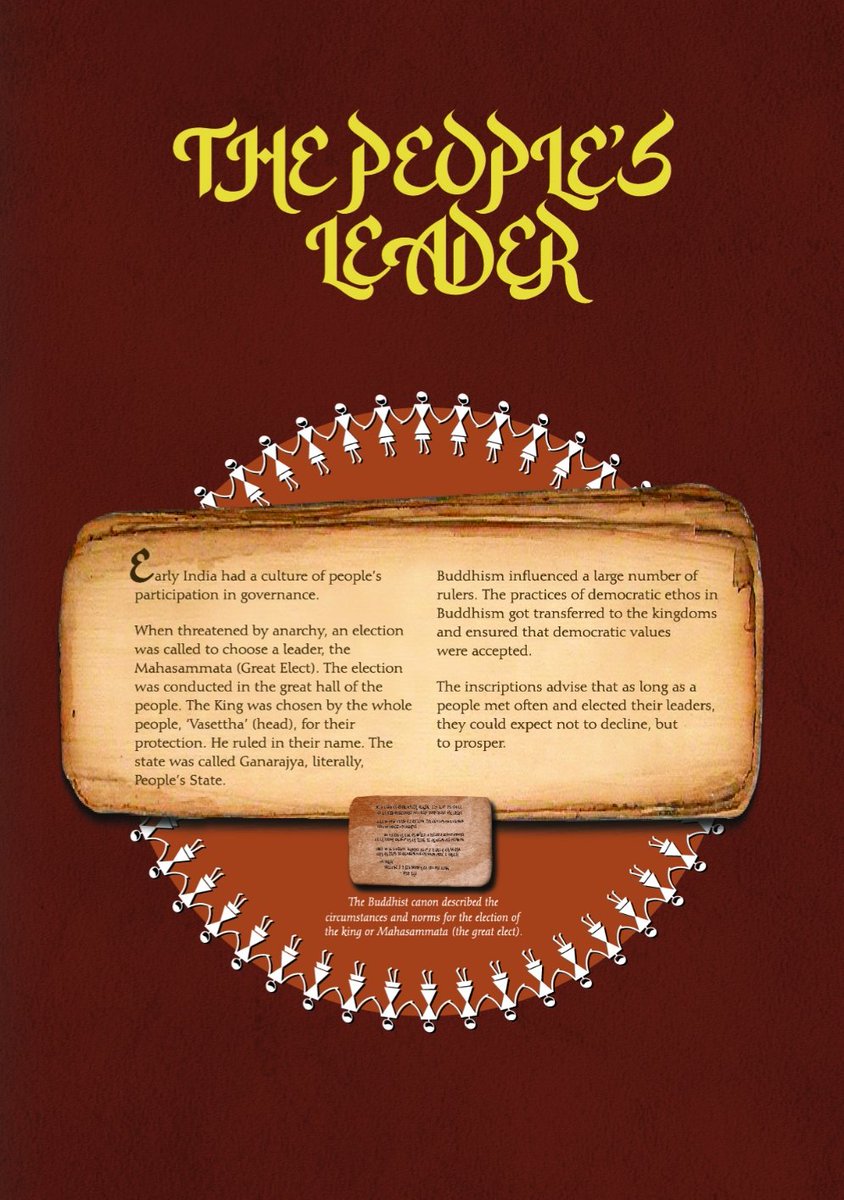
Arthashastra says: In the happiness of the people lies the happiness of the Ruler and in the welfare of the people lies the welfare of the Ruler.
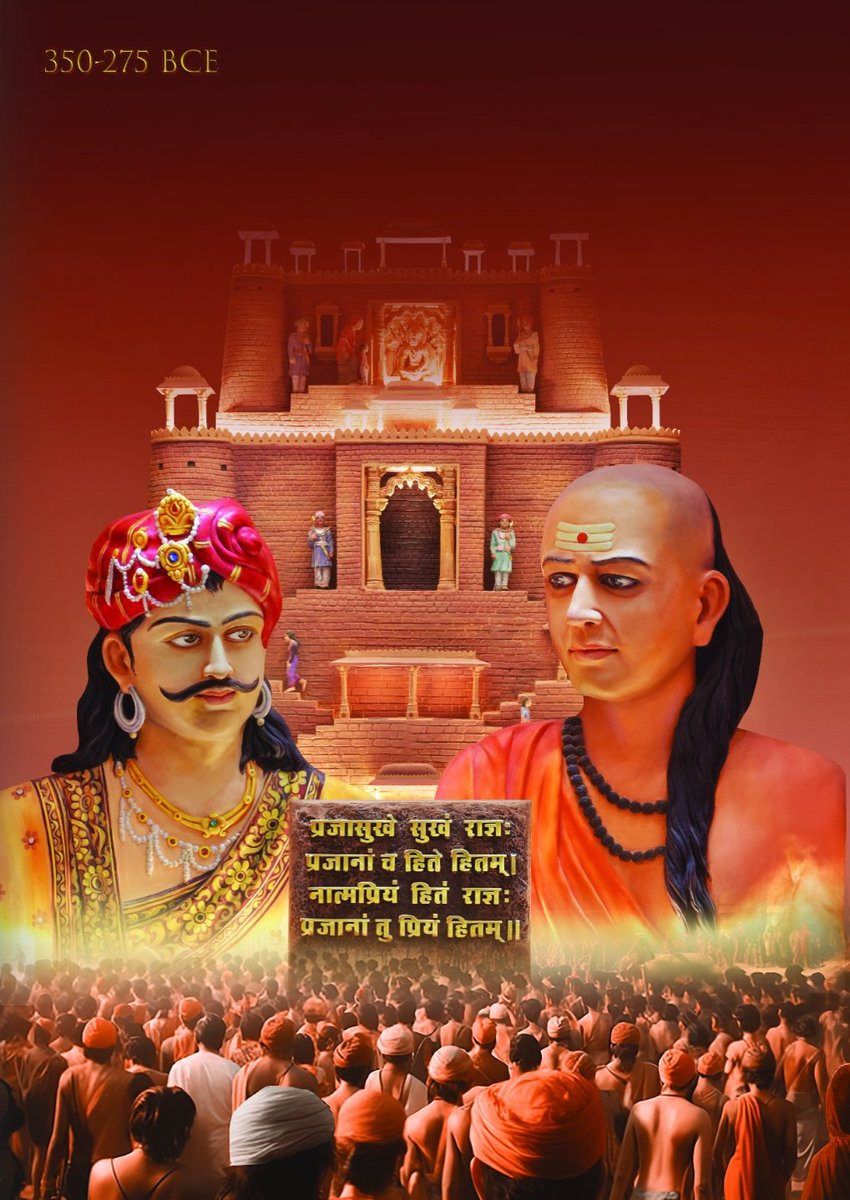
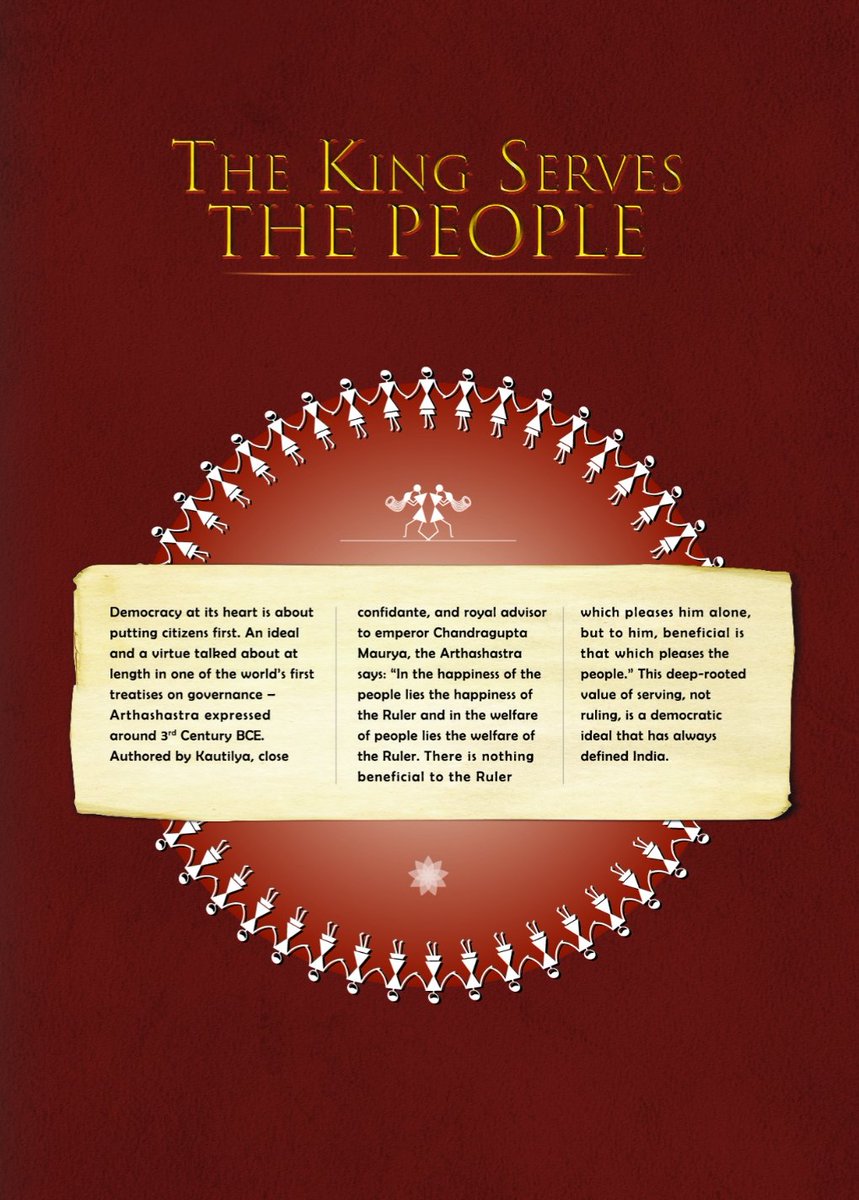
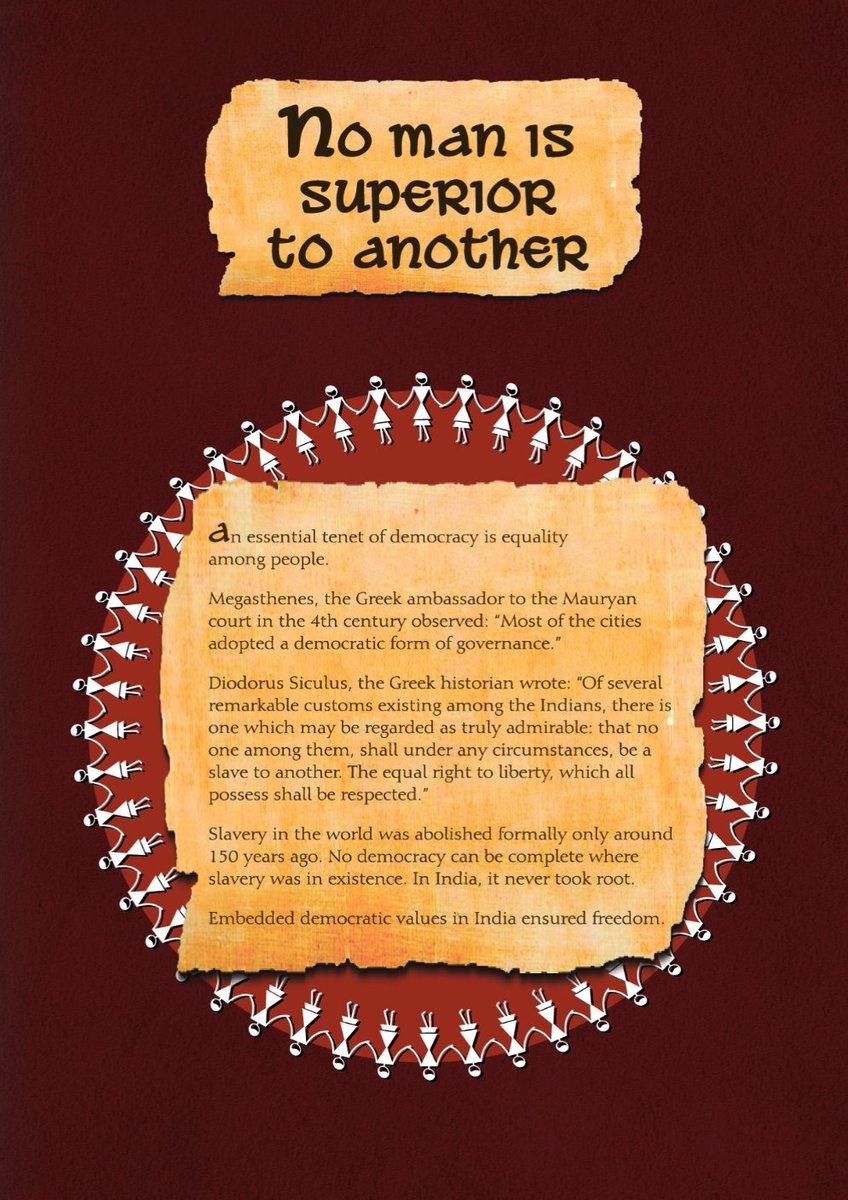
No man is Superior to Another.
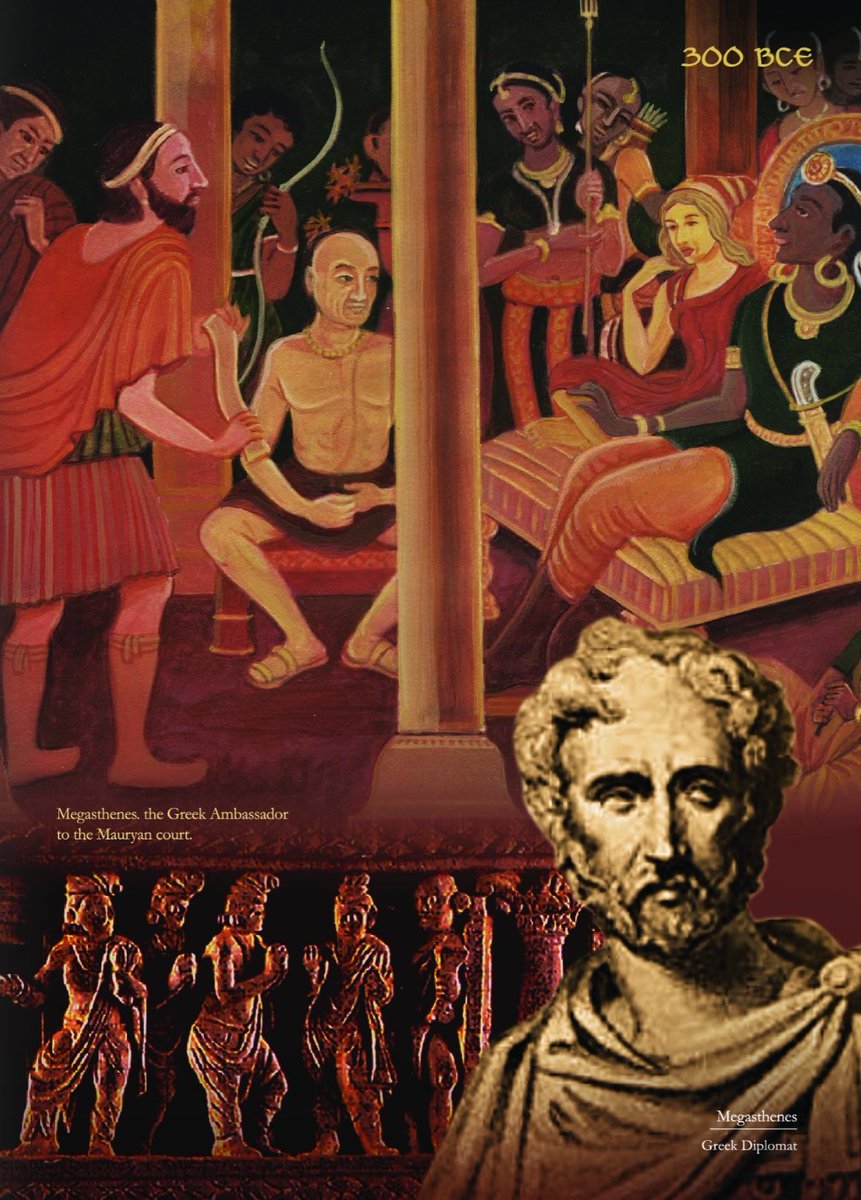
Megasthenes says most cities adopted a democratic form of governance.
Slavery in the world was abolished formally around 150 years ago. No democracy can be complete where slavery was in existence. In India, it never took root.
Megasthenes says most cities adopted a democratic form of governance.
Slavery in the world was abolished formally around 150 years ago. No democracy can be complete where slavery was in existence. In India, it never took root.
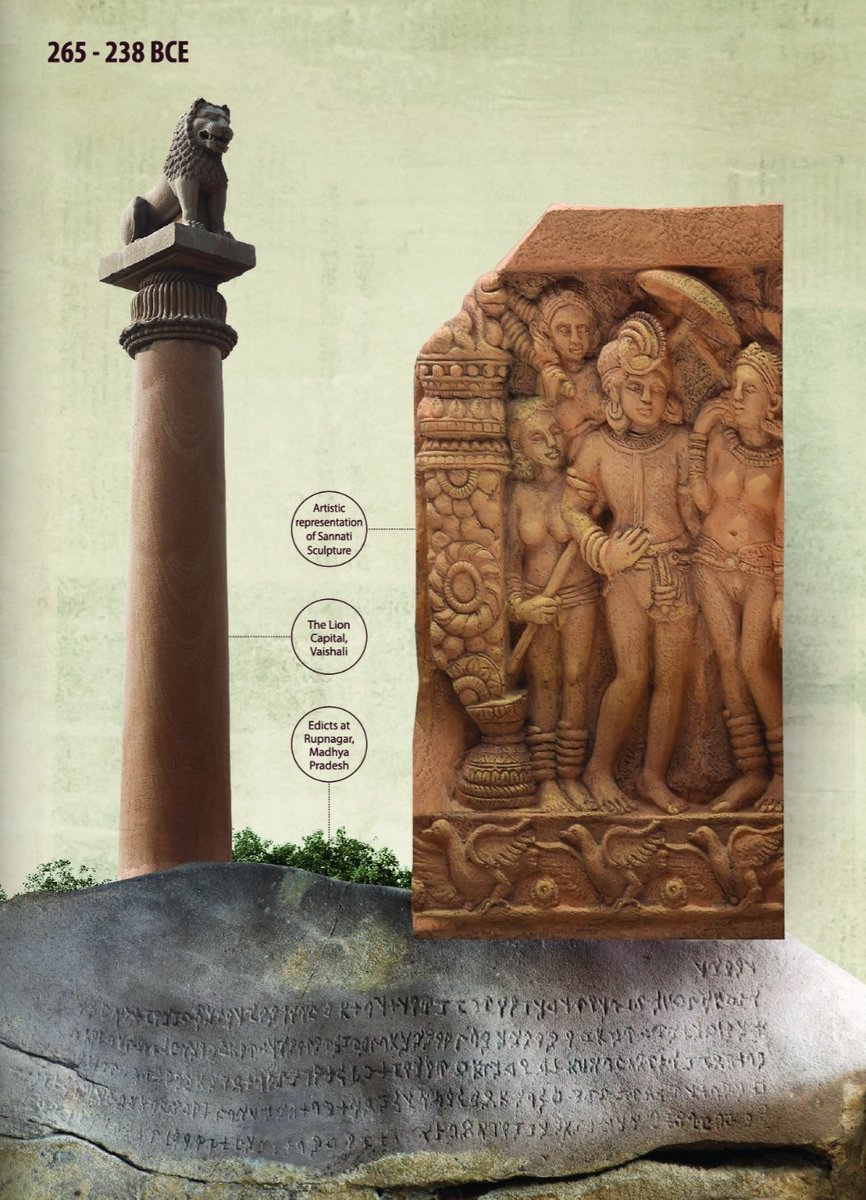
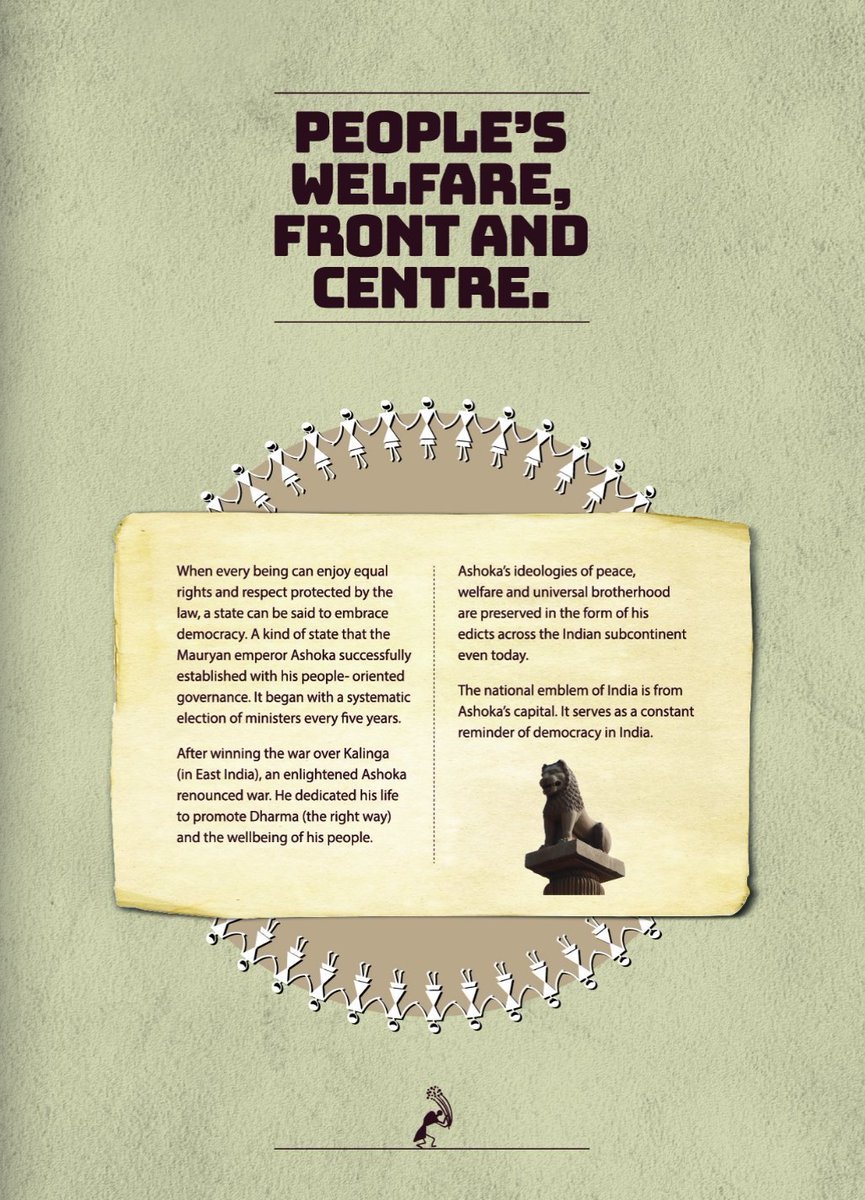
Ashoka put the people's welfare Front and Centre.
After winning the war in Kalinga, #Ashoka renounced the war. He dedicated his life to promote Dharma and the well being of his people.
His values and thoughts are preserved in the form of Rock edicts.
After winning the war in Kalinga, #Ashoka renounced the war. He dedicated his life to promote Dharma and the well being of his people.
His values and thoughts are preserved in the form of Rock edicts.
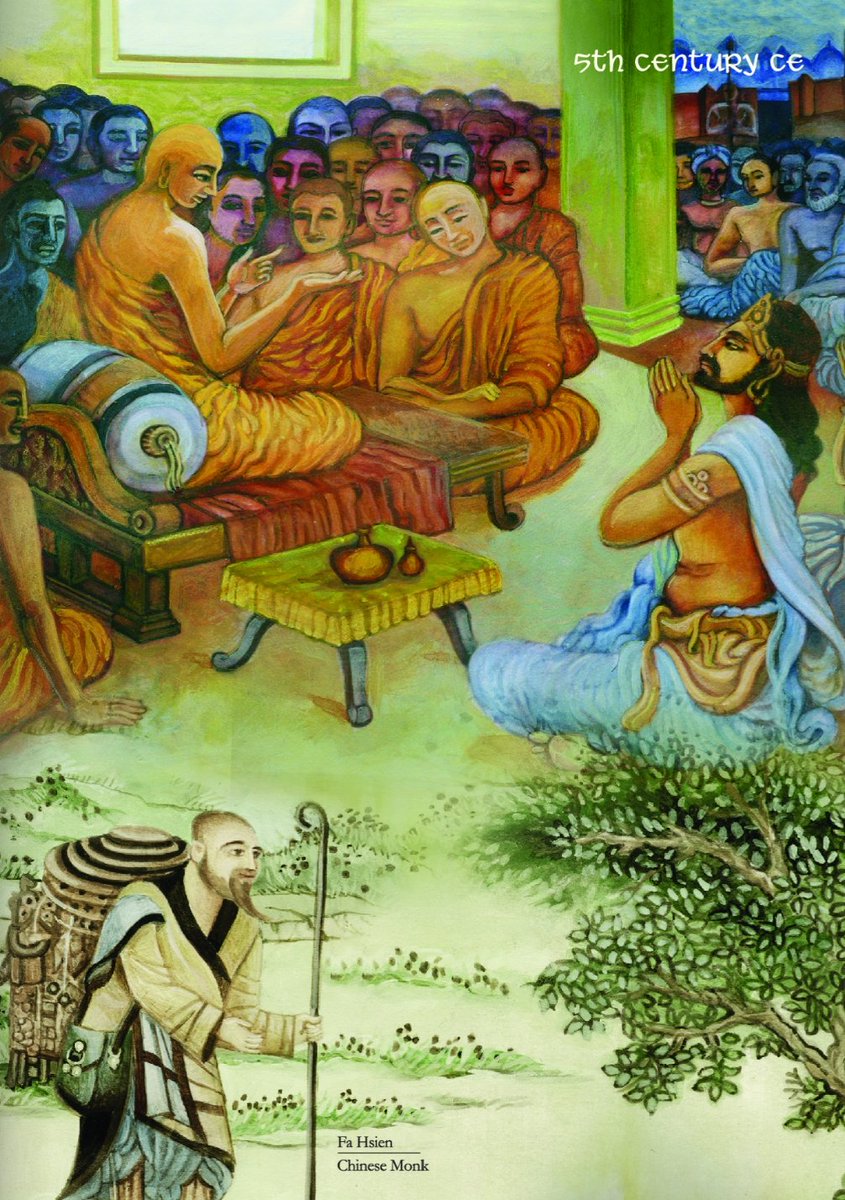
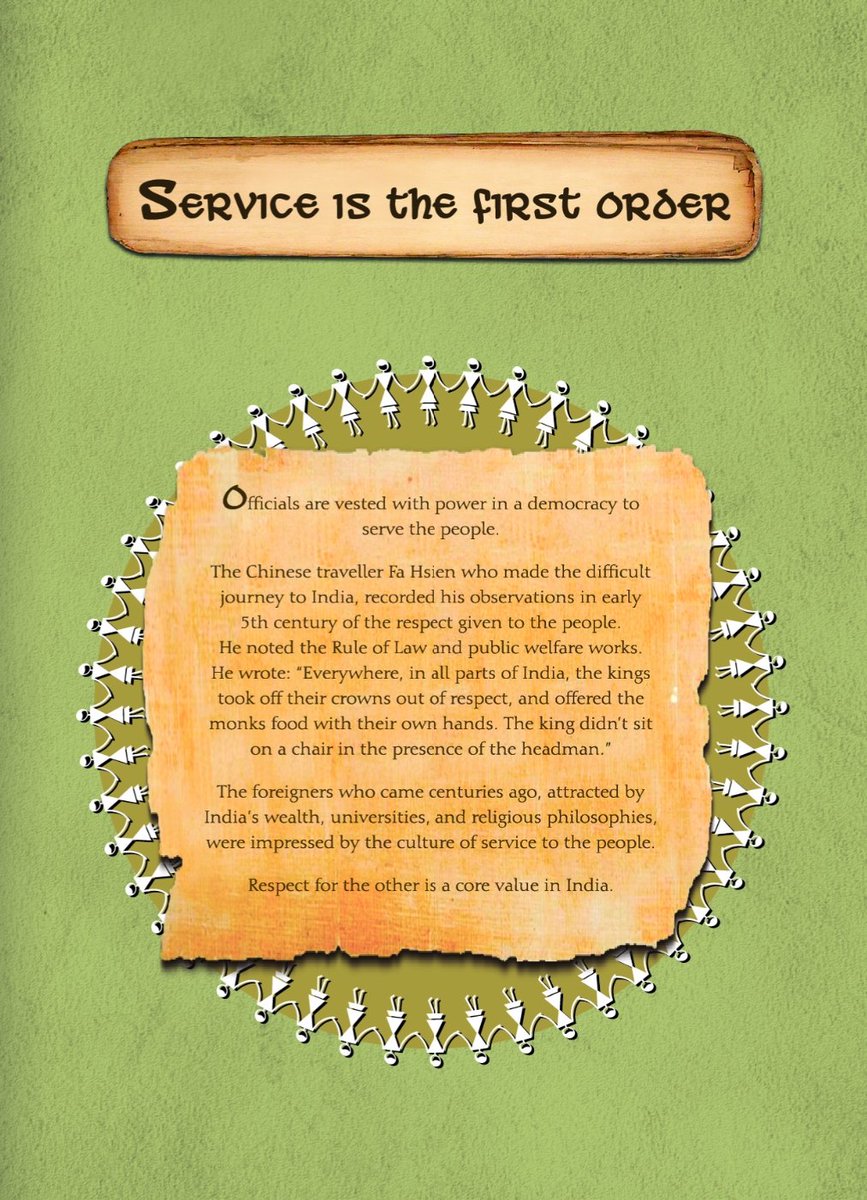
The Chinese traveller Fa Hsien says:
The Rule of Law and Public welfare works.
"In India the kings took off their crowns out of respect, and offered the monks food with their own hands. The King didn't sit on🪑 in the presence of headman."
The Rule of Law and Public welfare works.
"In India the kings took off their crowns out of respect, and offered the monks food with their own hands. The King didn't sit on🪑 in the presence of headman."
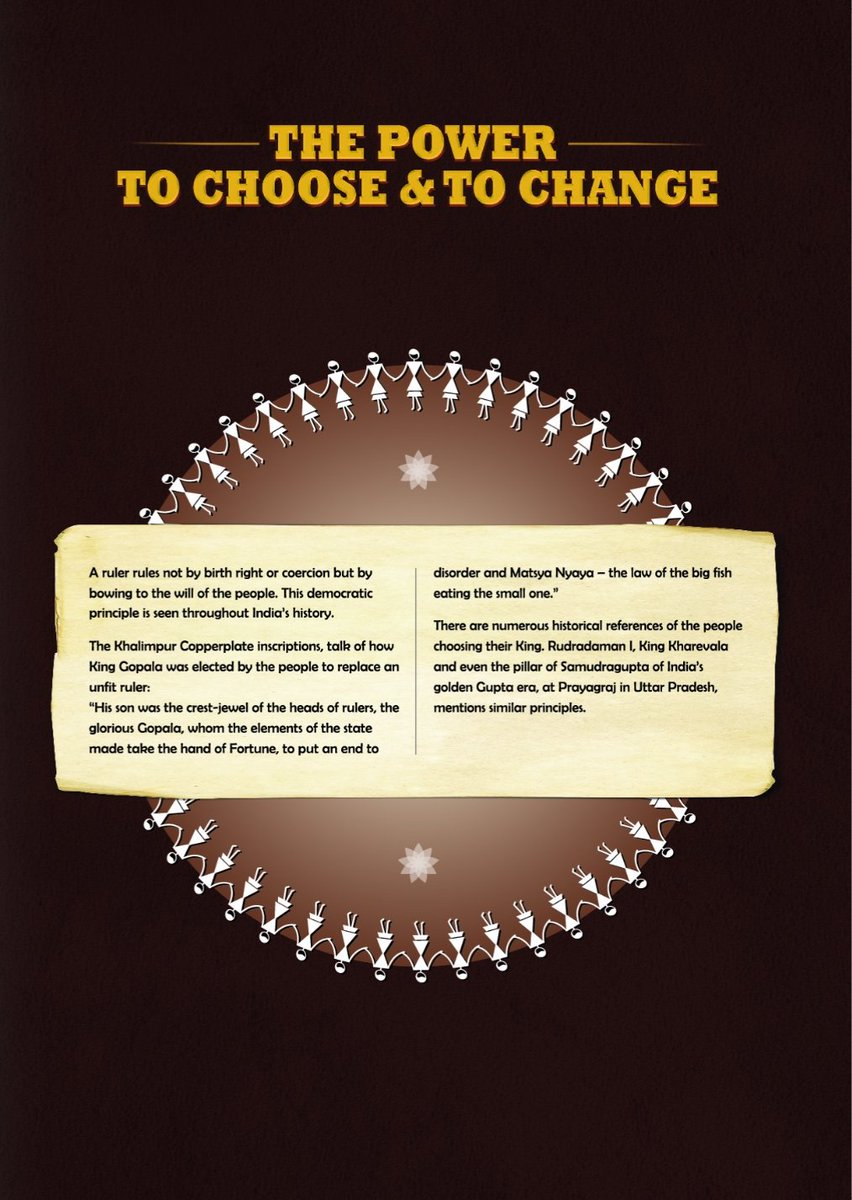
9th Century: The power to choose and change.
A Ruler rules not by birth right but by bowing to the will of the people. This democratic principle is seen in India.
The Khalimpur copperplate inscriptions, talk of King Gopala's election by the people to replace an unfit ruler.
A Ruler rules not by birth right but by bowing to the will of the people. This democratic principle is seen in India.
The Khalimpur copperplate inscriptions, talk of King Gopala's election by the people to replace an unfit ruler.
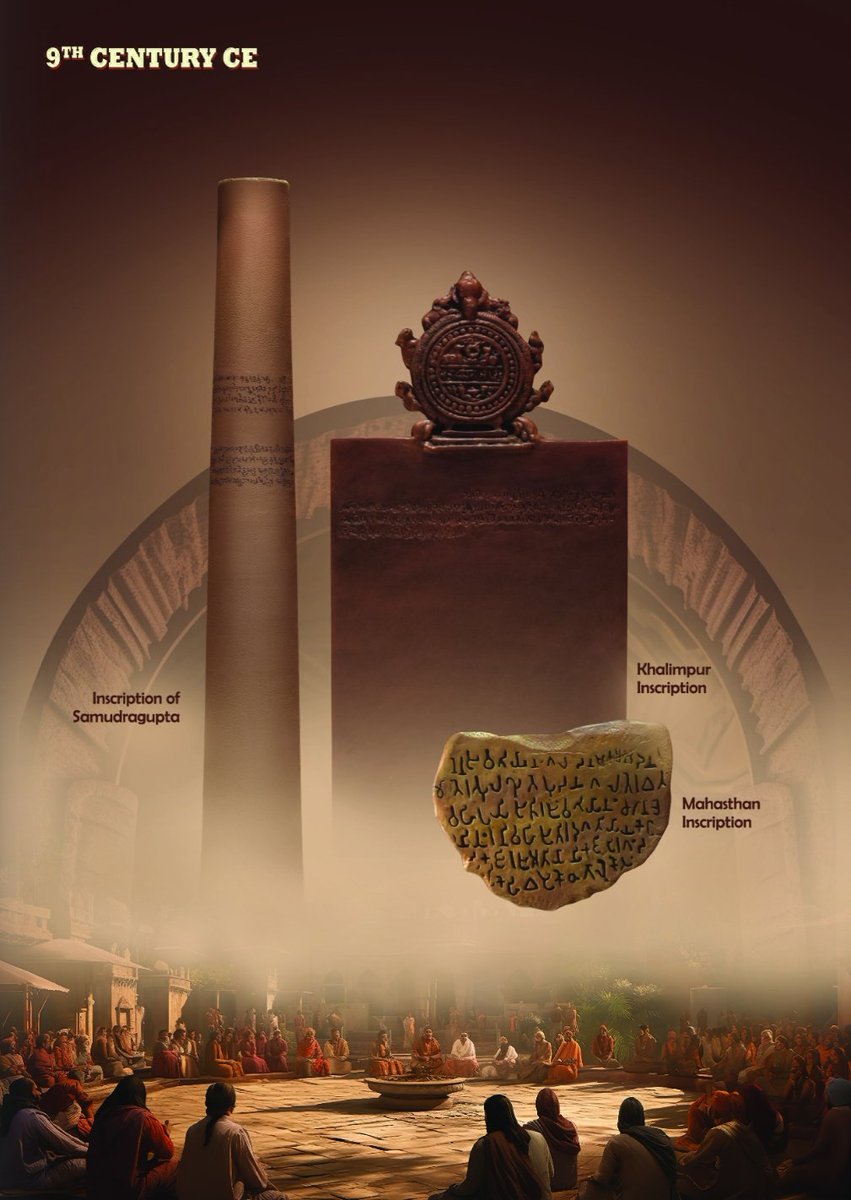
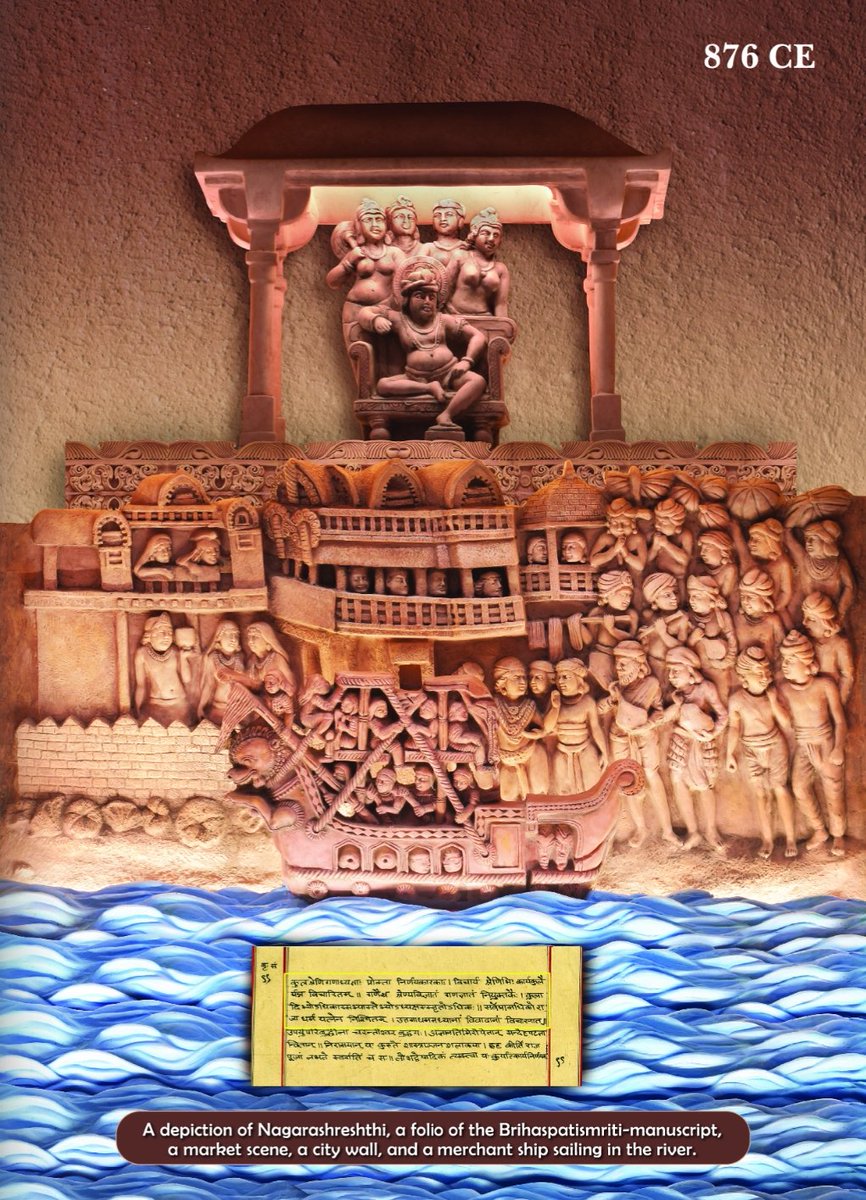
Democratic Administration. 876 CE.
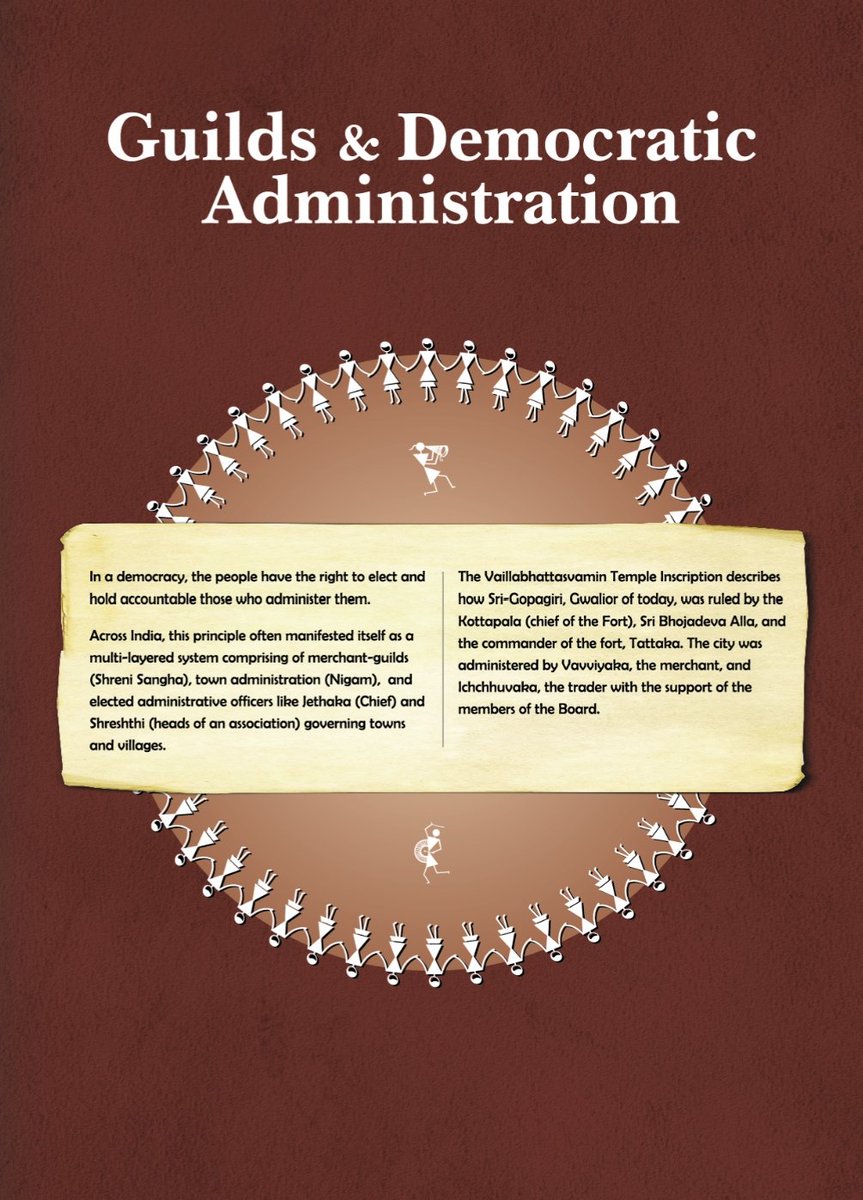
Across India there was Multilayerd system consisting of Merchant-guilds( Shreni Sangha), Town Administration (Nigam), and elected administrative officer like Jethaka (Chief) and Shreshthi(Heads if an Association) governing towns and villages.
Across India there was Multilayerd system consisting of Merchant-guilds( Shreni Sangha), Town Administration (Nigam), and elected administrative officer like Jethaka (Chief) and Shreshthi(Heads if an Association) governing towns and villages.
Loading suggestions...