

A recent case we had that reiterates an important exception to the rule : Acute is usually Acquired
A 24 year old gentleman comes with loss of vision. He says a month back he noticed it in the right eye, within a week in the left eye and at present it has unfortunately progressed to just perception of light in both eyes 😓
A 24 year old gentleman comes with loss of vision. He says a month back he noticed it in the right eye, within a week in the left eye and at present it has unfortunately progressed to just perception of light in both eyes 😓
He isn’t able to recall the precise pattern of vision loss (central vs altitudinal), neither is he able to recall any particular colour impairment.
He denies pain, and has no other neurological or systemic symptoms at present.
He denies pain, and has no other neurological or systemic symptoms at present.
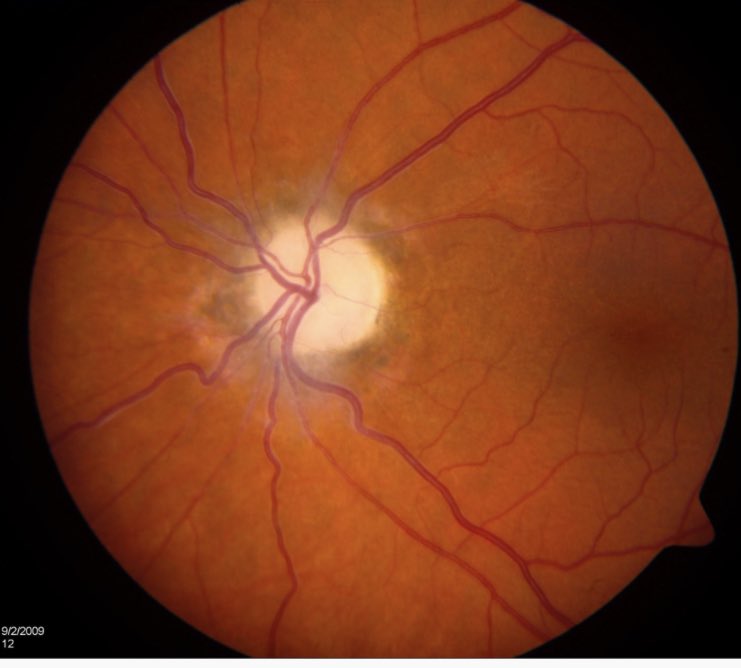
An examination reveals non-reacting pupils with only light perception in both eyes. The optic disc shows optic atrophy bilaterally
At this stage, you may think of an optic neuritis. But it’s very severe, hasn’t improved. Maybe atypical, like NMO? It’s worth evaluating since it’s amenable to treatment. The MRI showed no demyelination, NMO came negative
You think of the common toxins that can cause this, but he doesn’t chew tobacco, doesn’t drink alcohol (spurious : methanol) and isn’t taking any chronic medication like amiodarone, ethambutol or isoniazid
He seems fairly healthy otherwise and nutritional deficiency is unlikely
He seems fairly healthy otherwise and nutritional deficiency is unlikely
He was referred to neurology from the ophthalmology department so we can be assured that this isn’t primarily an ocular issue like glaucoma
Cortical blindness isn’t likely considering the clinical scenario and the MRI has ruled that out
Cortical blindness isn’t likely considering the clinical scenario and the MRI has ruled that out
Oddly, we have a young gentleman with a painless sequential vision loss that has abruptly resulted in disc atrophy in a month.
He vehemently denies a family history.
He vehemently denies a family history.
At this stage, we were fairly convinced we were likely dealing with something rarer. This clinical prototype is fairly consistent with Leber Hereditary Optic Neuropathy, and we sent for it
A few days later his results were back ! LHON is is!

Leber Hereditary Optic Neuropathy was described by Leber way back in 1871
-It usually presents between the ages of 18 - 24 in Males
-Though hereditary, it presents acutely or subacutely
-It usually presents between the ages of 18 - 24 in Males
-Though hereditary, it presents acutely or subacutely
- often presents bilaterally of sequentially (as in our case). Even if monocular to begin with, the second eye is usually affected within a few months
- Vision loss is central, with a tendency to affect blue/yellow vision (cf optic neuritis which is red)
- Vision loss is central, with a tendency to affect blue/yellow vision (cf optic neuritis which is red)
The classical fundus findings are
- mild disc swelling (retinal nerve fibre swelling )
- optic disc hyperemia
-peripapillary telangectasia
Eventually disc atrophy sets in like in our patient
- mild disc swelling (retinal nerve fibre swelling )
- optic disc hyperemia
-peripapillary telangectasia
Eventually disc atrophy sets in like in our patient

LHON is a mitochondrial illness (with maternal inheritance) , most commonly caused by point mutations in genes related to Complex 1.
In fact it is the first human disease to be associated with mitochondrial point mutations
Common mutations include
11778 (probably most common, seen in our patient )
14484
3460
In fact it is the first human disease to be associated with mitochondrial point mutations
Common mutations include
11778 (probably most common, seen in our patient )
14484
3460
Treatment remains supportive
- Idebenone / Co-Q
- avoid alcohol and smoking (as that can worsen the symptoms)
- genetic counselling
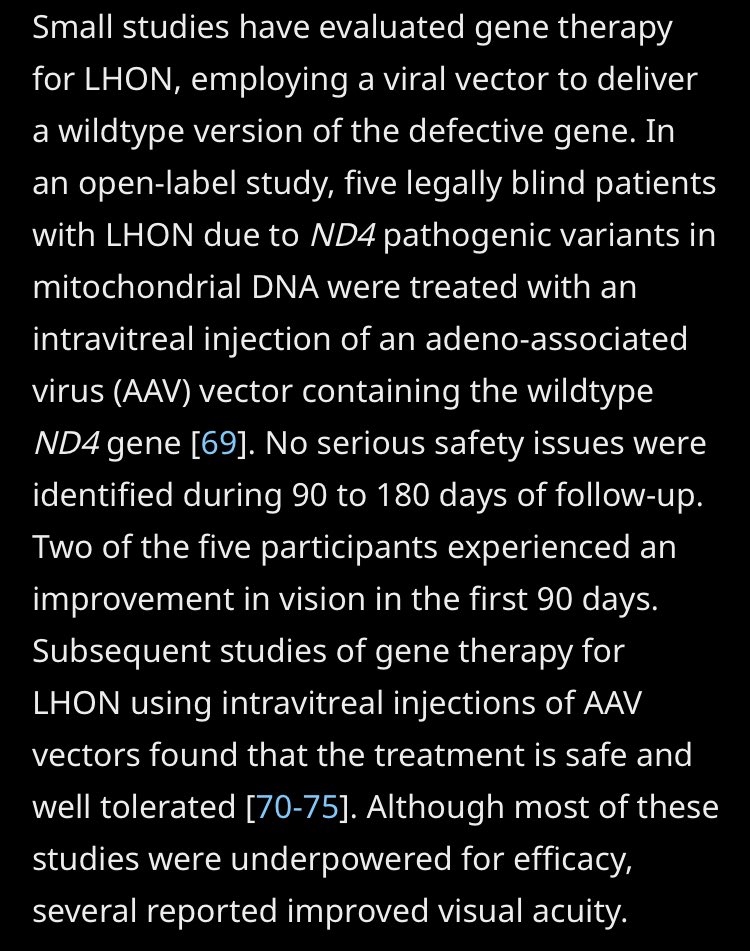
There is a lot of research especially in the common variety (which our patient has) and some promising early results ! I do hope more breakthroughs come soon!
- Idebenone / Co-Q
- avoid alcohol and smoking (as that can worsen the symptoms)
- genetic counselling
There is a lot of research especially in the common variety (which our patient has) and some promising early results ! I do hope more breakthroughs come soon!
The important point I would like to reiterate here is
Rarely ACUTE can be degenerative
Think of LHON in your patients who are young males with acute sequential vision loss!
#MedX #MedTwitter #NeuroTwitter
Rarely ACUTE can be degenerative
Think of LHON in your patients who are young males with acute sequential vision loss!
#MedX #MedTwitter #NeuroTwitter
Fundus photos from eyewiki.aao.org
Recent advances from UpToDate
Recent advances from UpToDate
Loading suggestions...