

VSSC director S Unnikrishnan Nair told me with this, Isro has entered the last leg of launch prep. “The launch vehicle and spacecraft have been integrated. Now, we are in the process of carrying out some tests after which the PSLV will be moved to the launchpad,” Nair said. 3/n
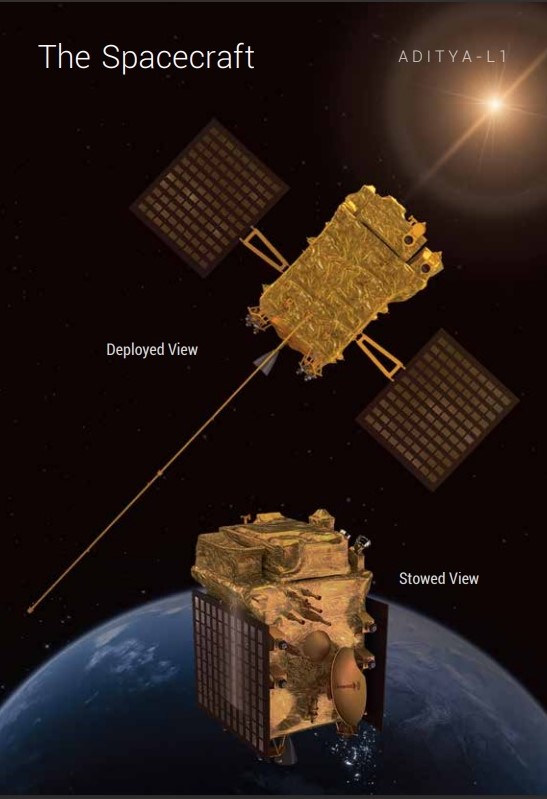
The spacecraft, realised at the UR Rao Satellite Centre (URSC), Bengaluru, had reached the spaceport in Sriharikota on August 14. 4/n
#AdityaL1 is the first space-based observatory-class Indian solar mission to study the Sun. It is planned to be placed in a halo orbit around the Lagrangian point1 (L1) of the Sun-Earth system, which is about 1.5-million-km from Earth. 5/n
A satellite placed in L1 point has the major advantage of continuously viewing the Sun without any occultation/eclipse. This will provide a greater advantage of observing the solar activities continuously. 6/n
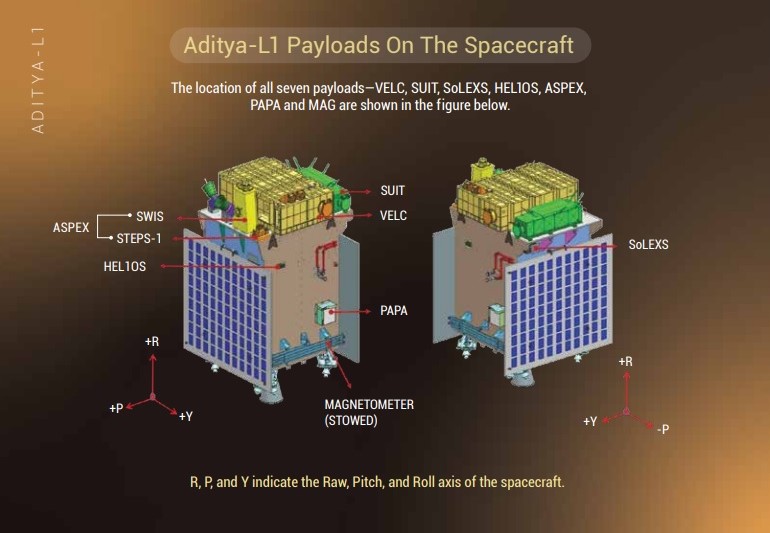
The spacecraft will carry seven payloads to observe the photosphere, chromosphere, and the outermost layers of the Sun (the corona) using electromagnetic and particle detectors. 7/n
Using the special vantage point of L1, four payloads will directly view the Sun and the remaining three payloads will carry out in-situ studies of particles and fields at the Lagrange point L1. 8/n
According to Isro: “The suit of Aditya-L1 payloads are expected to provide most crucial information to understand the problems of coronal heating, coronal mass ejection, pre-flare… 9/n
…and flare activities, and their characteristics, dynamics of space weather, study of the propagation of particles, fields in the interplanetary medium, etc.” 10/n
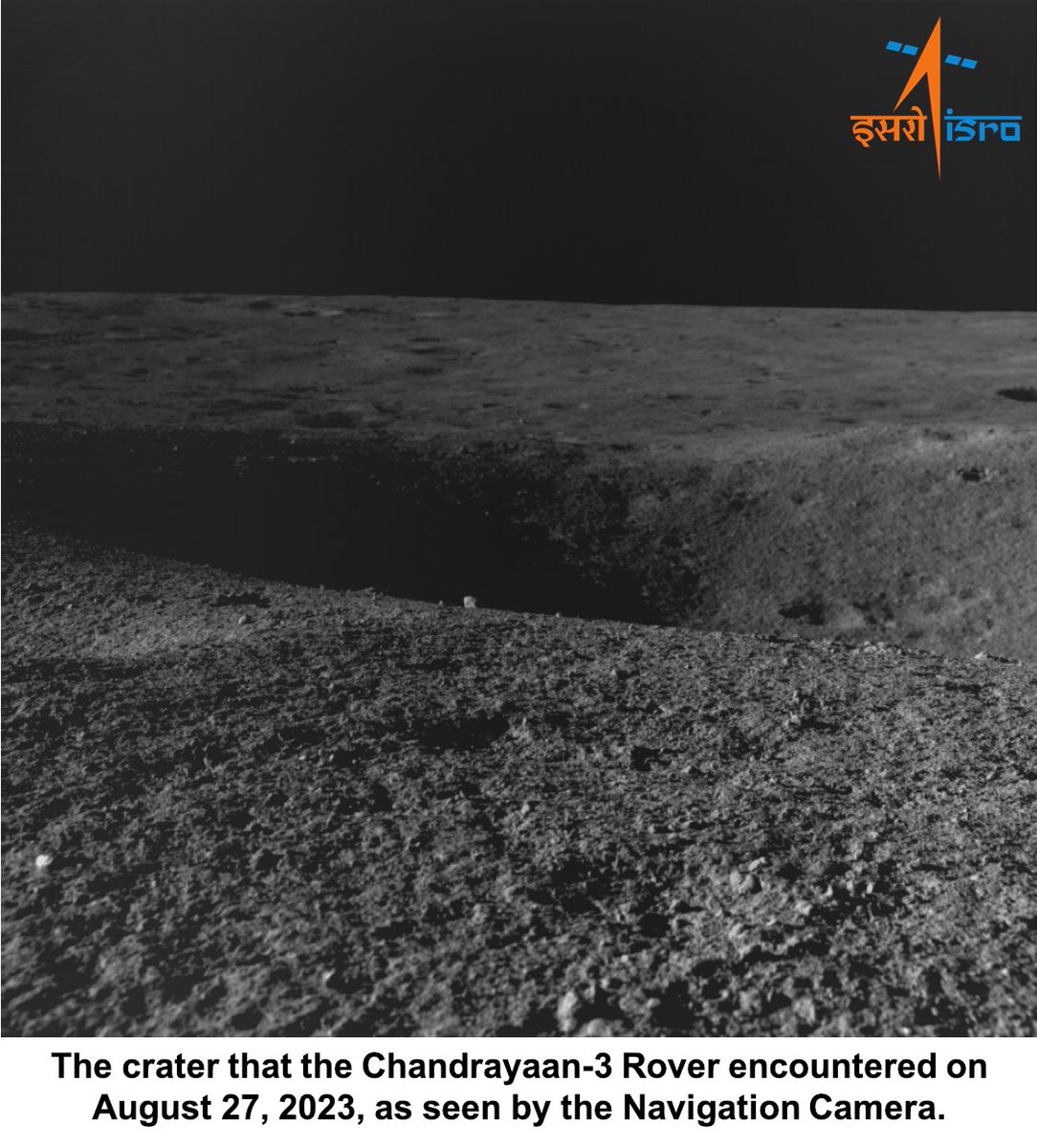
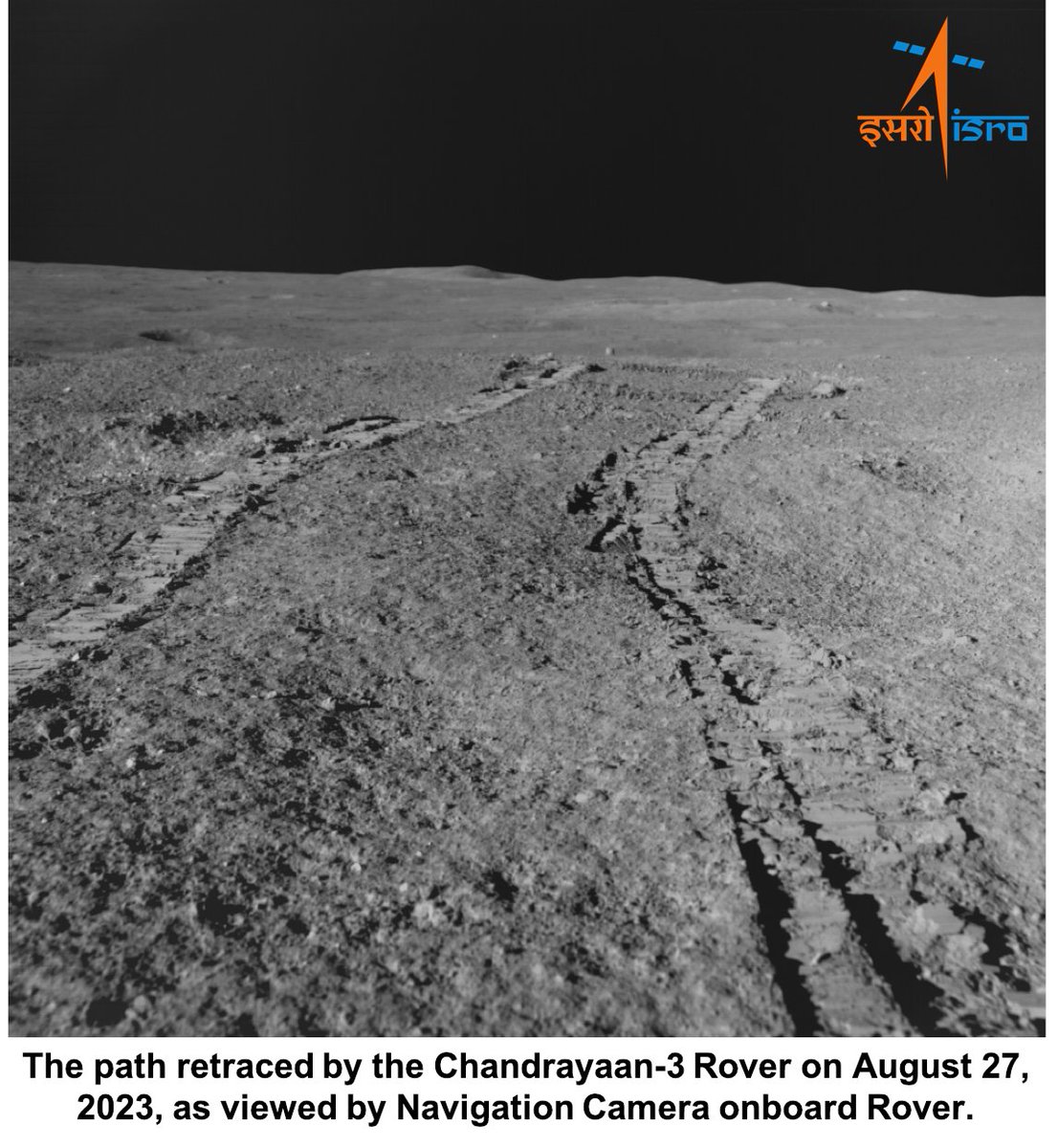
“The Rover was commanded to retrace the path. It’s now safely heading on a new path,” Isro said. This is the 2nd crater #Pragyan has encountered — it successfully negotiated a small crater with a depth of approximately 100mm earlier, as I'd first reported. 12/n
One senior scientist said: “The crater that was first negotiated was a small one. This is a much bigger crater and a decision was made to avoid it and choose a safe path.” 13/n
As reported by TOI earlier, rover operations on the Moon are semi-autonomous and ground stations need to uplink commands for its mobility. 14/n
For every path planning, rover’s onboard nav cam data is downloaded for generation of digital elevation model (DEM), then ground & mechanisms teams decide which path to take and uplink command. On Aug 27 too, a similar op was carried out to ensure the rover avoids new crater. n/n
جاري تحميل الاقتراحات...