

“I think I could make you 50% a year on $1 million. No, I know I could. I guarantee that."
In his beginnings, Buffett achieved annual returns of over 50% frequently.
His strategy was very different from today’s.
I studied Buffett’s Letters from 1956-1966. Here's his strategy:
In his beginnings, Buffett achieved annual returns of over 50% frequently.
His strategy was very different from today’s.
I studied Buffett’s Letters from 1956-1966. Here's his strategy:
1. Categories of Investing
Buffett used to distinguish between 3 categories of Investments.
In 1964 he decided to add a fourth one:
- Generals - Private Owner Basis
- Work-Outs
- Control Situations
- Generals - Relatively Undervalued (added in 1964)
Buffett used to distinguish between 3 categories of Investments.
In 1964 he decided to add a fourth one:
- Generals - Private Owner Basis
- Work-Outs
- Control Situations
- Generals - Relatively Undervalued (added in 1964)
1.1. Generals
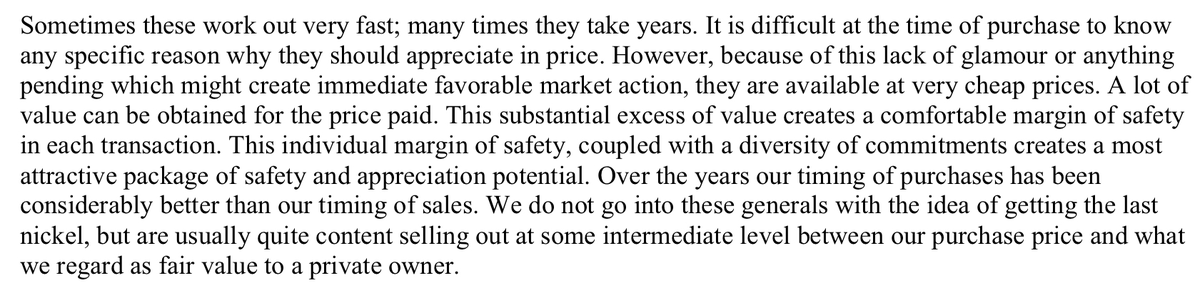
Generals were undervalued securities.
They had no visible catalysts and thus could take years before they played out.
This was the largest category of the portfolio and mainly consisted of five to six positions, each weighted at 5-10% of total assets.
Generals were undervalued securities.
They had no visible catalysts and thus could take years before they played out.
This was the largest category of the portfolio and mainly consisted of five to six positions, each weighted at 5-10% of total assets.
1.2. Work-Outs
Work-Outs are better known as “Special Situations” today.
The price of these situations doesn’t depend on supply and demand created by buyers and sellers but on corporate action.
This makes them more predictable and less correlated to the market.
Work-Outs are better known as “Special Situations” today.
The price of these situations doesn’t depend on supply and demand created by buyers and sellers but on corporate action.
This makes them more predictable and less correlated to the market.
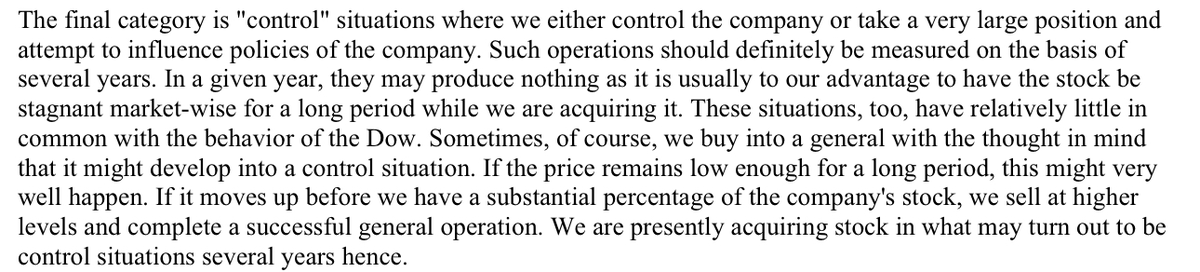
1.3. Control Situations
In these investments, Buffett bought enough stake to actively influence the policies of a company.
They often took several years before they played out.
As with the work-outs, there’s little correlation with the general market.
In these investments, Buffett bought enough stake to actively influence the policies of a company.
They often took several years before they played out.
As with the work-outs, there’s little correlation with the general market.
1.4. Generals - Relatively Undervalued
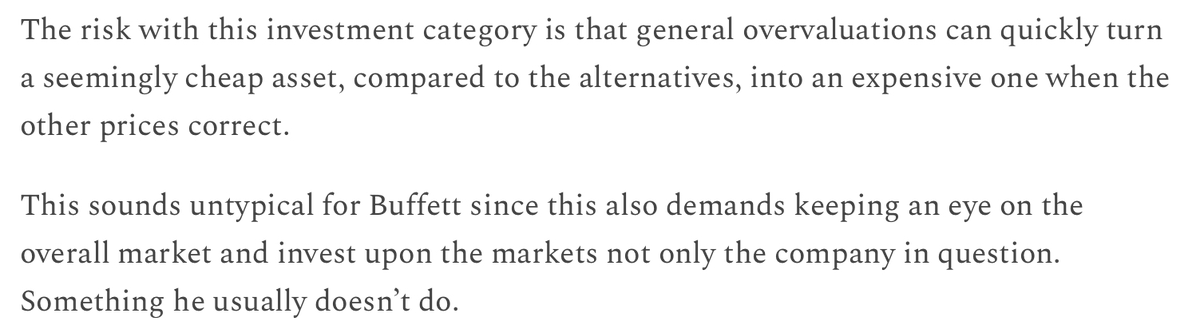
This category was added in 1964.
It consists of companies undervalued compared to companies with the same characteristics.
It’s essential you compare apples to apples here.
And demand an extra discount.
This category was added in 1964.
It consists of companies undervalued compared to companies with the same characteristics.
It’s essential you compare apples to apples here.
And demand an extra discount.
2. Conservatism and Diversification
“True conservatism is only possible through knowledge and reason.”
Buffett disagrees with the conventional definition of conservatism.
Buying government bonds, blue chip stocks, and being (over)diversified.
“True conservatism is only possible through knowledge and reason.”
Buffett disagrees with the conventional definition of conservatism.
Buying government bonds, blue chip stocks, and being (over)diversified.
He calls over-diversification the “Noah School of Investing - Two of Everything.”
There are no conservative assets by default.
And being right isn’t measured by how many people hold that opinion.
It’s measured by the facts.
There are no conservative assets by default.
And being right isn’t measured by how many people hold that opinion.
It’s measured by the facts.
3. The Right Yardstick
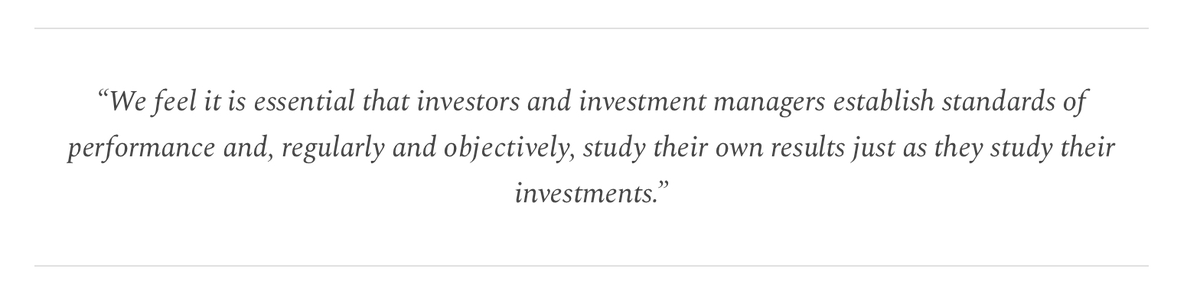
Before deploying any capital, you need to have a yardstick in place.
Something you can measure your success and methods with.
If not, opportunity costs by underperforming can cost you enormous amounts of money in the long run.
Before deploying any capital, you need to have a yardstick in place.
Something you can measure your success and methods with.
If not, opportunity costs by underperforming can cost you enormous amounts of money in the long run.
That's it for today!
If you enjoyed it, please Like and Retweet this Thread so more people can see it!
Follow me @MnkeDaniel to learn more about Investing.
Have a great day!
If you enjoyed it, please Like and Retweet this Thread so more people can see it!
Follow me @MnkeDaniel to learn more about Investing.
Have a great day!
Here's a more detailed article on Buffett’s Strategy:
danielmnke.com
danielmnke.com

جاري تحميل الاقتراحات...