

ICICI Pru Balanced Advantage is bigger than any actively-managed equity fund.
AUM = ~Rs 48,000 crore.
What makes it so popular?
It can defend like Dravid & hit big like Ganguly (if not Sehwag).
So, less risk & “good” returns.
We review its performance & strategy.
A 🧵
AUM = ~Rs 48,000 crore.
What makes it so popular?
It can defend like Dravid & hit big like Ganguly (if not Sehwag).
So, less risk & “good” returns.
We review its performance & strategy.
A 🧵
First, let’s understand the Balanced Advantage Fund (BAF) category.
Another cricket reference would help.
These schemes don’t try to hit fours and sixes every over.
Instead, they try to score singles & doubles on every ball.
Here’s what this means 👇
Another cricket reference would help.
These schemes don’t try to hit fours and sixes every over.
Instead, they try to score singles & doubles on every ball.
Here’s what this means 👇
Balanced Advantage Funds (BAF) focus on falling less when markets correct.
And when markets rally, they try to catch some upside.
That’s how they make “good” returns over the long term.
And when markets rally, they try to catch some upside.
That’s how they make “good” returns over the long term.
Now, let’s talk about ICICI Pru BAF.
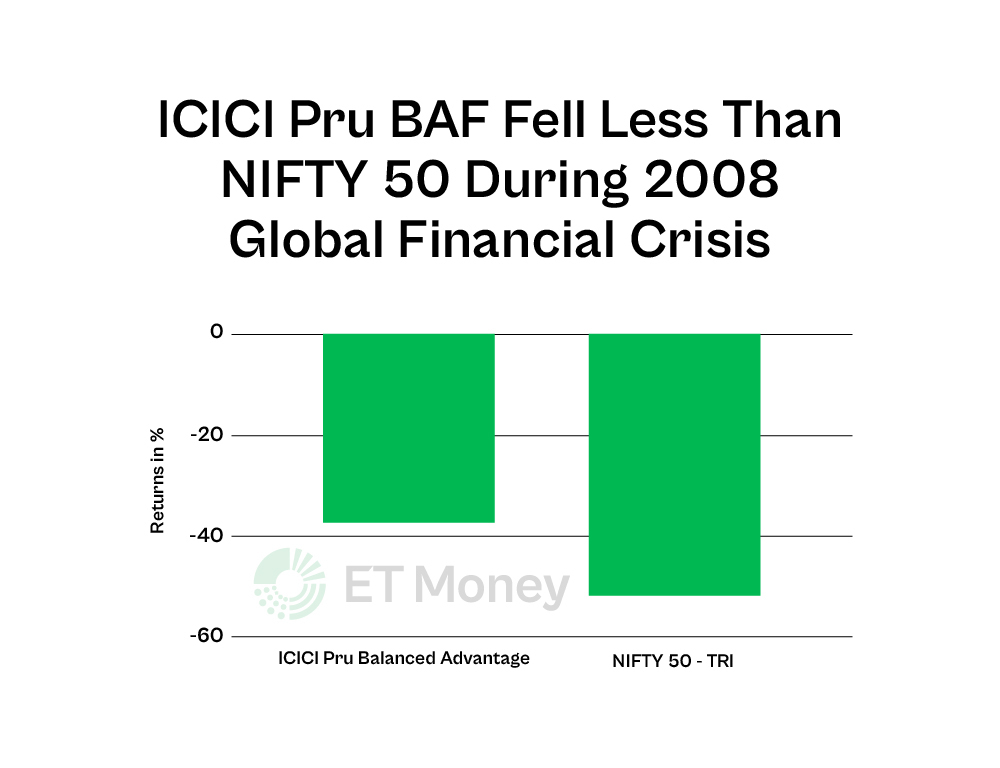
Launched in Dec 2006, it came into the limelight in 2008 after the Global Financial Crisis.
Why?
It fell less than broader indices amid market mayhem. (See Table)
So, what’s the strategy of this fund & other schemes in its category?
Launched in Dec 2006, it came into the limelight in 2008 after the Global Financial Crisis.
Why?
It fell less than broader indices amid market mayhem. (See Table)
So, what’s the strategy of this fund & other schemes in its category?
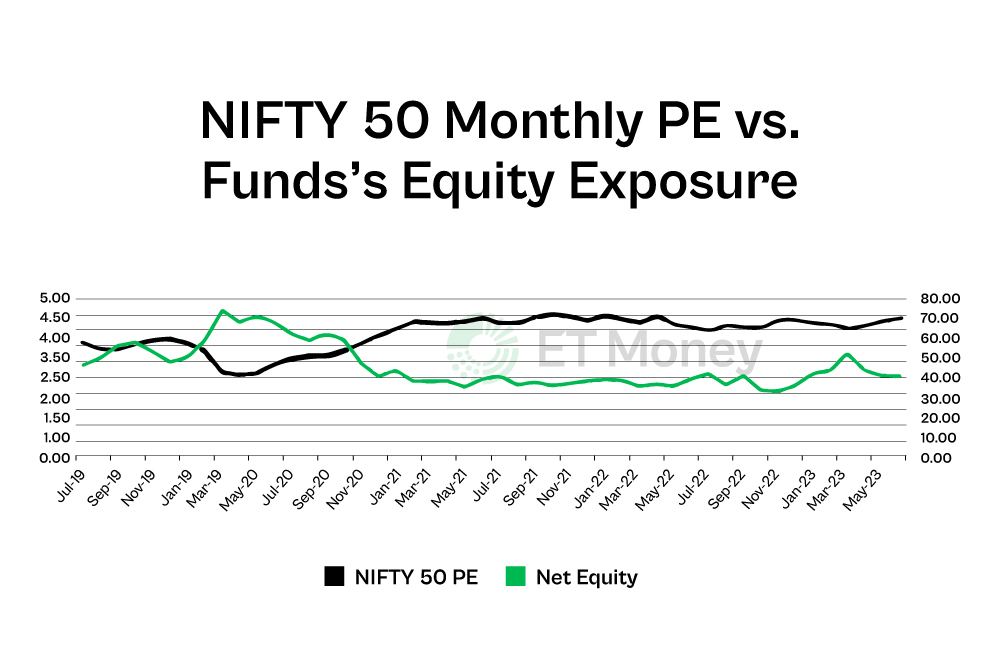
BAFs change their equity and debt allocation based on market conditions.
When valuations are rich, they reduce equity exposure.
When they are attractive, they increase equity allocation.
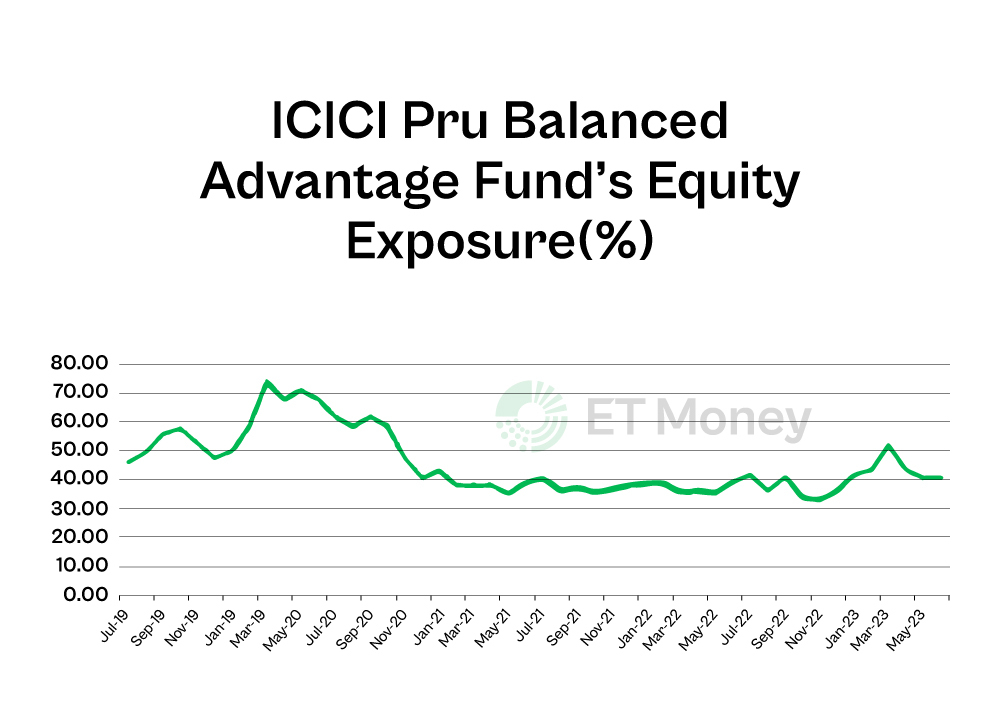
The graphic below shows how equity allocation changed in ICICI Pru BAF over the years.
When valuations are rich, they reduce equity exposure.
When they are attractive, they increase equity allocation.
The graphic below shows how equity allocation changed in ICICI Pru BAF over the years.
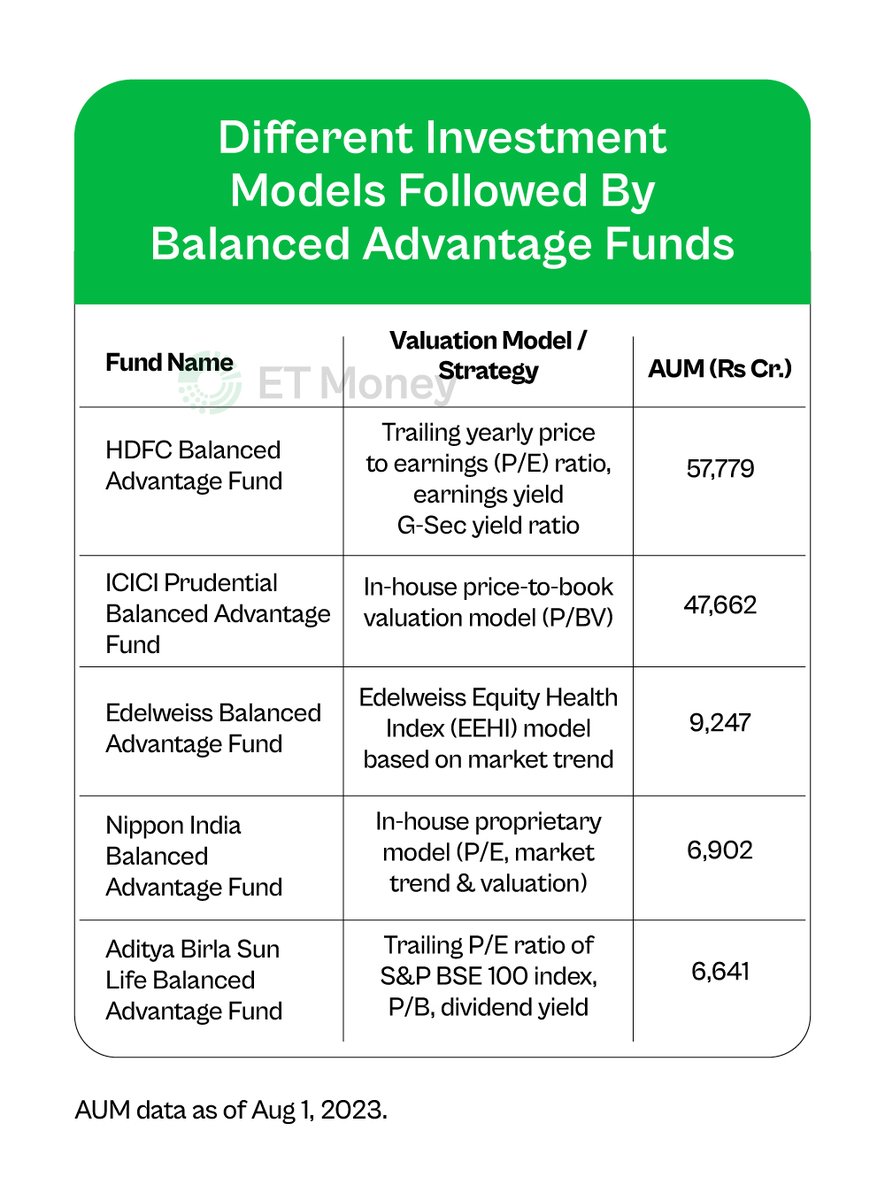
Each fund in the BAF category has its in-house model to determine the allocation to equity & debt. (Check examples in table)
ICICI Pru Balanced Advantage’s model is based on Price-to-Book Value (P/BV) ratio.
ICICI Pru Balanced Advantage’s model is based on Price-to-Book Value (P/BV) ratio.
Now, at no point does the total equity exposure of ICICI Pru BAF goes below 65%.
This gives it the tax advantage that equity funds enjoy over non-equity funds.
But what if equity valuations are expensive?
Will the fund managers still invest 65% corpus in equities?
Not really.
This gives it the tax advantage that equity funds enjoy over non-equity funds.
But what if equity valuations are expensive?
Will the fund managers still invest 65% corpus in equities?
Not really.
If the equity valuations aren’t favourable, the fund uses equity derivatives to match the 65%-allocation criteria.
So, while the fund continues to enjoy equity taxation, it doesn’t remain vulnerable to a sudden market crash.
So, while the fund continues to enjoy equity taxation, it doesn’t remain vulnerable to a sudden market crash.
Now, let’s dive into portfolio construction.
This scheme follows a conservative approach.
Even though it can go up to 80% in equities, typically, only ~40% of the fund's corpus is in stocks.
When this happens, derivatives exposure is at least ~25%.
This scheme follows a conservative approach.
Even though it can go up to 80% in equities, typically, only ~40% of the fund's corpus is in stocks.
When this happens, derivatives exposure is at least ~25%.
The fund has more than 70 stocks even though it has around 40% allocation to equities.
This is probably a move to avoid concentrated bets.
There are a few mid-cap stocks, but the fund largely tilts towards large caps - again, a classic approach to play safe.
This is probably a move to avoid concentrated bets.
There are a few mid-cap stocks, but the fund largely tilts towards large caps - again, a classic approach to play safe.
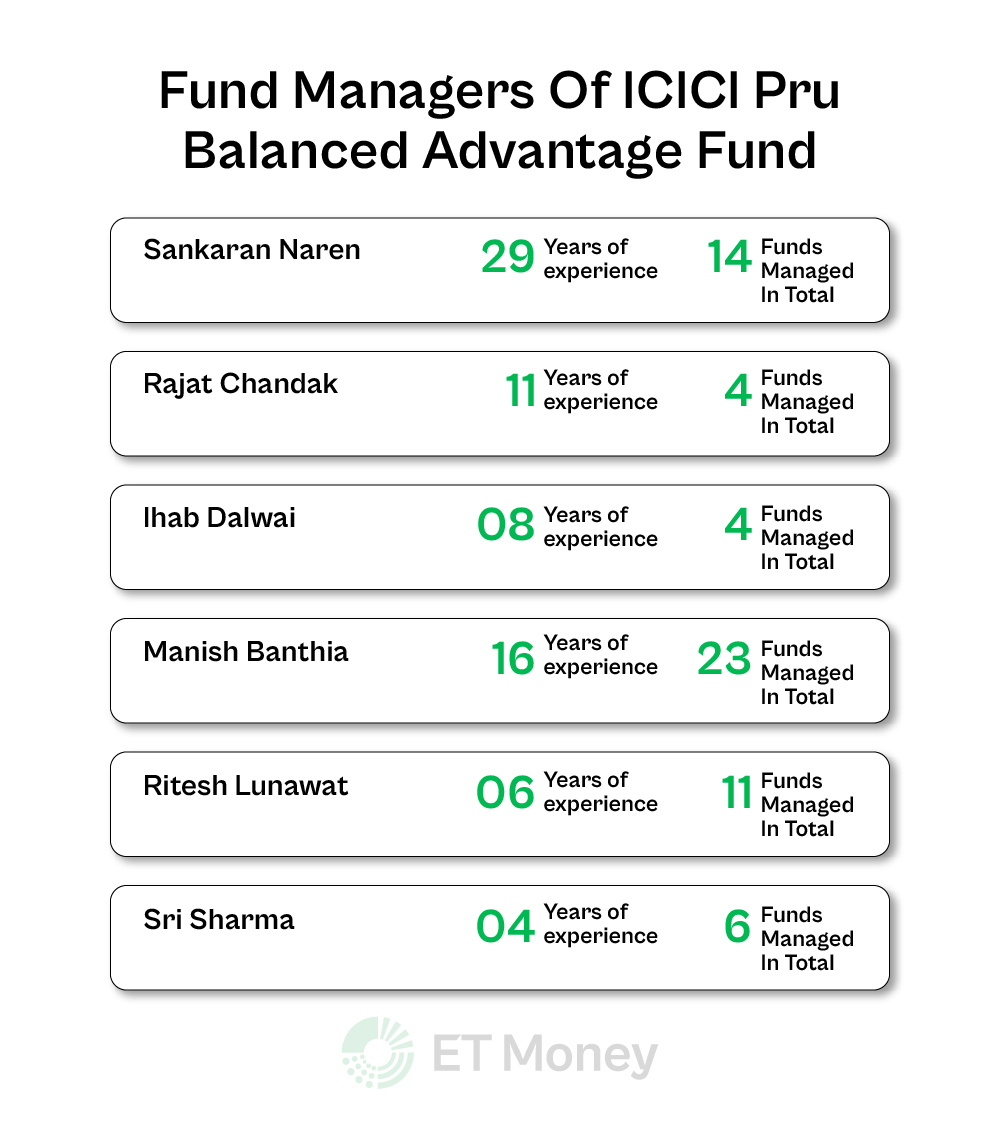
The fund lists 6 fund managers.
S Naren is the seniormost among them.
And he is known for his value investing approach.
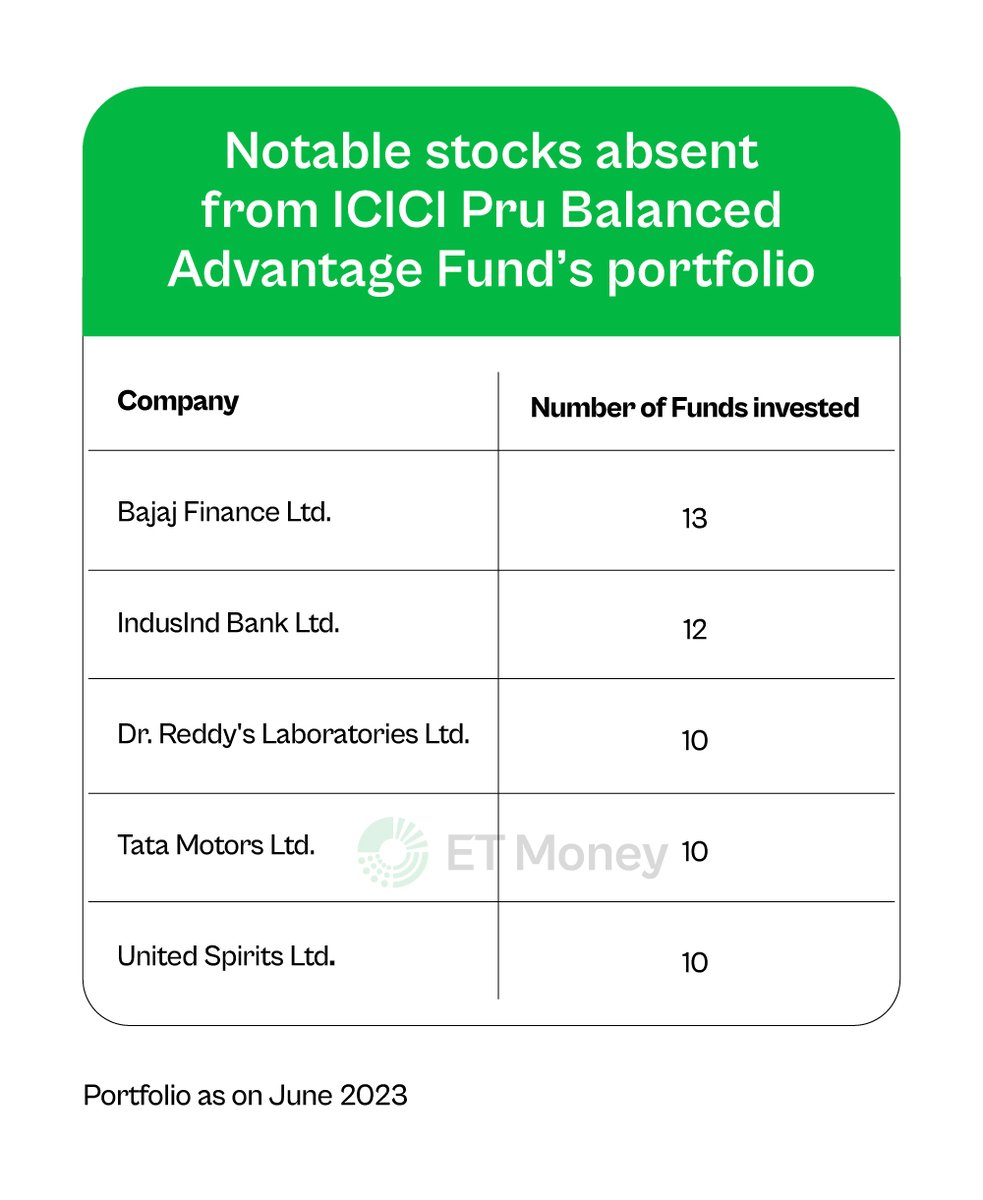
So, you may see the scheme avoids stocks that are popular among its peers. (Check image)
S Naren is the seniormost among them.
And he is known for his value investing approach.
So, you may see the scheme avoids stocks that are popular among its peers. (Check image)
Even on the debt side, fund manager Manish Banthia doesn’t compromise on quality.
He largely invests in either govt. debt papers or highly creditworthy corporate bonds.
But while he doesn’t take a lot of credit risk, he takes tactical bets to benefit from interest rate changes.
He largely invests in either govt. debt papers or highly creditworthy corporate bonds.
But while he doesn’t take a lot of credit risk, he takes tactical bets to benefit from interest rate changes.
Does this fund’s strategies work?
So far, they have.
Since the fund’s inception, NIFTY 50 has witnessed negative returns in 22 quarters.
This fund has outdone NIFTY 50 in all 22 quarters.
Against peers, it has fallen less in 20/22 quarters.
What about overall returns?
So far, they have.
Since the fund’s inception, NIFTY 50 has witnessed negative returns in 22 quarters.
This fund has outdone NIFTY 50 in all 22 quarters.
Against peers, it has fallen less in 20/22 quarters.
What about overall returns?
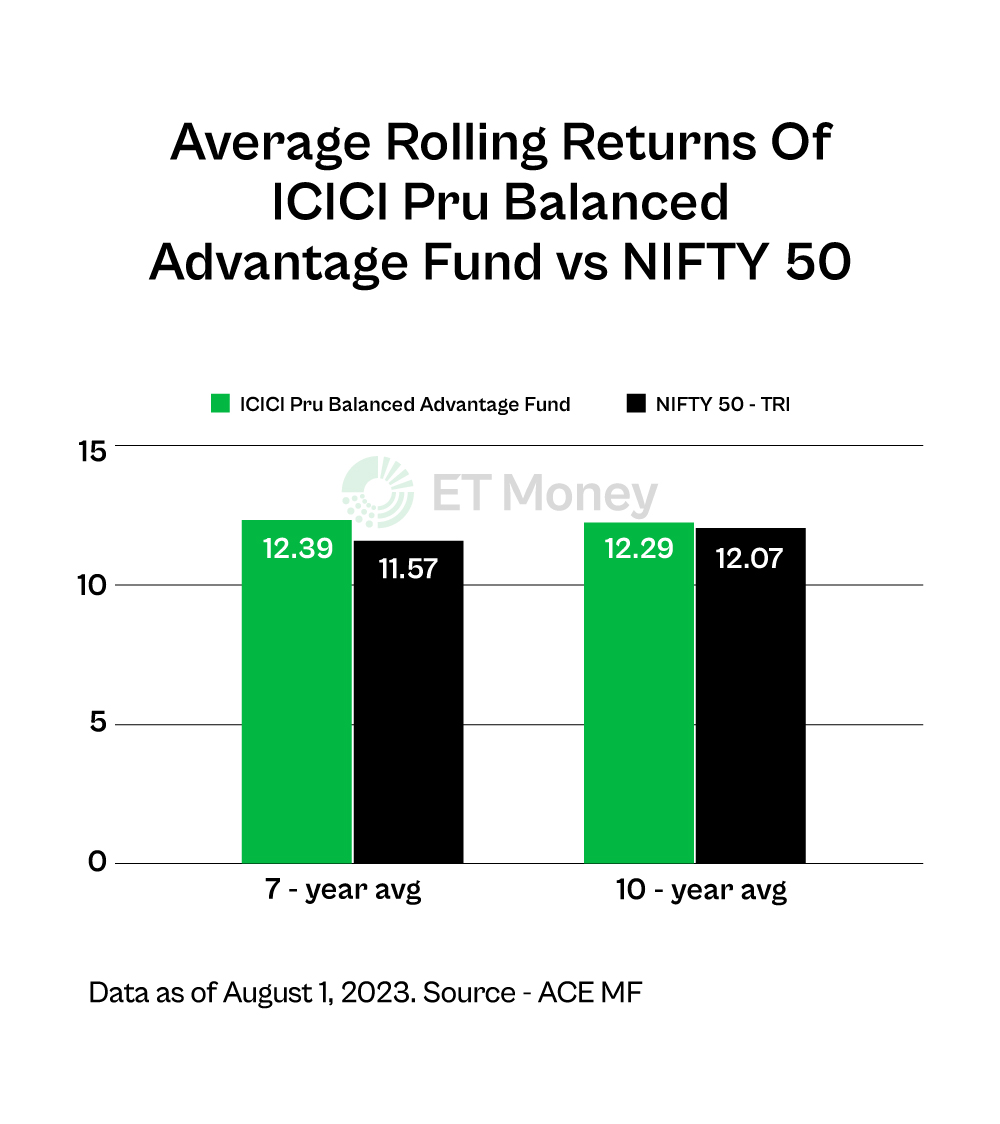
The overall returns are also quite impressive.
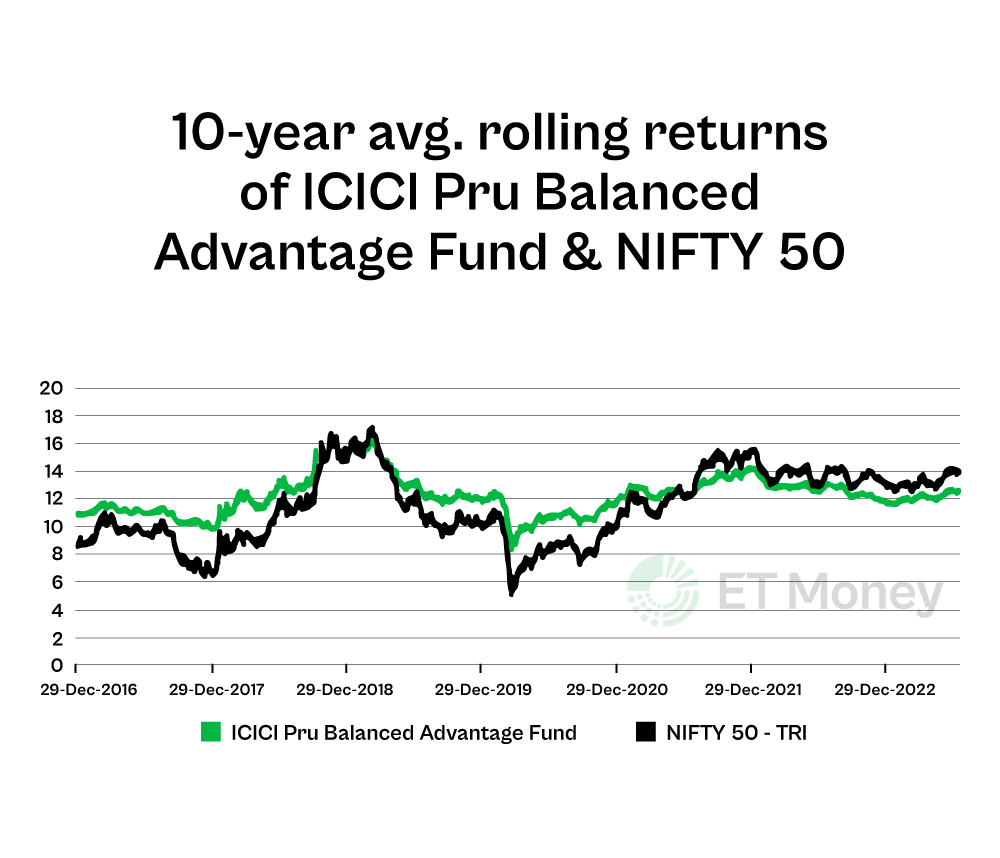
The fund has matched NIFTY 50’s returns in the long run.
In fact, when it comes to 10-year returns, the fund has beaten NIFTY 50 nearly 65% times since its inception.
So, less risk & “good” returns.
The fund has matched NIFTY 50’s returns in the long run.
In fact, when it comes to 10-year returns, the fund has beaten NIFTY 50 nearly 65% times since its inception.
So, less risk & “good” returns.
The fund does manage to capture some upside when markets do well.
But it could disappoint some investors if they compare the returns to other funds during rallies.
In quarters when NIFTY 50 delivered above 15% returns, the fund lagged behind in all of them (See table)
But it could disappoint some investors if they compare the returns to other funds during rallies.
In quarters when NIFTY 50 delivered above 15% returns, the fund lagged behind in all of them (See table)
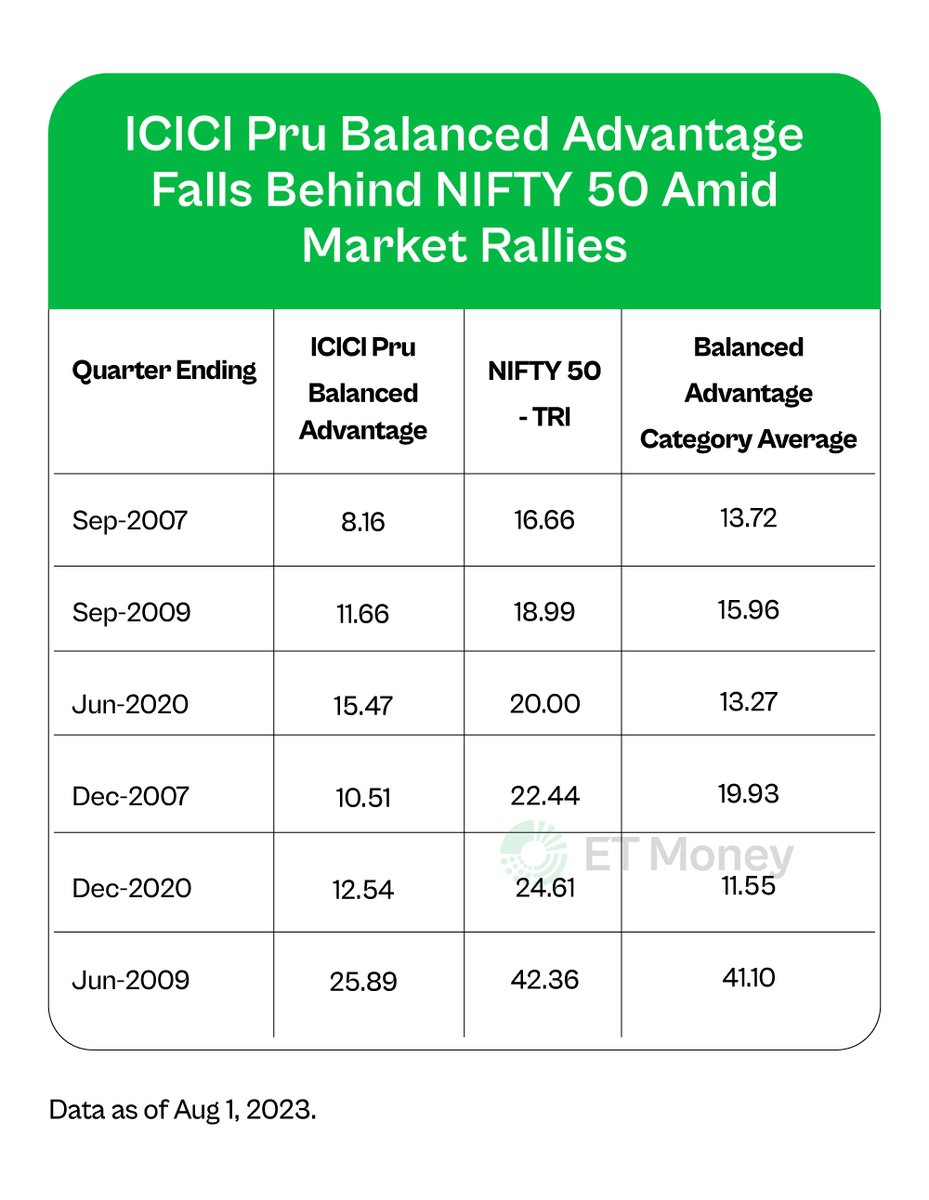
Why does it behave this way?
Because the fund invests a sizable amount in debt and derivatives.
So, if there’s a rally in the market, it’s likely to fall short.
But in the long run, it catches up with broader indices like NIFTY 50 by falling less during corrections.
Because the fund invests a sizable amount in debt and derivatives.
So, if there’s a rally in the market, it’s likely to fall short.
But in the long run, it catches up with broader indices like NIFTY 50 by falling less during corrections.
What to expect from this fund?
The core strategy of this fund is to protect the downside and generate equity-like returns.
So, you can see bouts of underperformance during market rallies.
But when it comes to tough times, it can be your true friend.
The core strategy of this fund is to protect the downside and generate equity-like returns.
So, you can see bouts of underperformance during market rallies.
But when it comes to tough times, it can be your true friend.
We put a lot of effort into creating such informative threads.
So, if you find this useful, show some love. ❤️
Please like, share, and retweet the FIRST tweet.
So, if you find this useful, show some love. ❤️
Please like, share, and retweet the FIRST tweet.
Let's know your thoughts on @ICICIPruMF Balanced Advantage Fund and the category.
#mutualfunds #NIFTY50 #markets
#mutualfunds #NIFTY50 #markets
Correction: In the chart, it's NIFTY 50 PB, not PE.
Loading suggestions...