

![Retro Analysis: Borussia Dortmund’s counterpressing under Jürgen Klopp [THREAD]
This thread analyse...](https://pbs.twimg.com/media/F2SlGPLWwAEfVis.png)
![Retro Analysis: Borussia Dortmund’s counterpressing under Jürgen Klopp [THREAD]
This thread analyse...](https://pbs.twimg.com/media/F2SlGPLWUAITGEI.jpg)
![Retro Analysis: Borussia Dortmund’s counterpressing under Jürgen Klopp [THREAD]
This thread analyse...](https://pbs.twimg.com/media/F2SlGPQXAAEmFLS.jpg)
![Retro Analysis: Borussia Dortmund’s counterpressing under Jürgen Klopp [THREAD]
This thread analyse...](https://pbs.twimg.com/media/F2SlGPJW8AEEwNv.jpg)
To begin with, BVB’s ball-oriented 4-2-3-1 structure in possession with the players being positioned in short distances was vital to execute a successful counterpressing. Moreover, this setup also enabled them to perform quick vertical combinations with the ball.
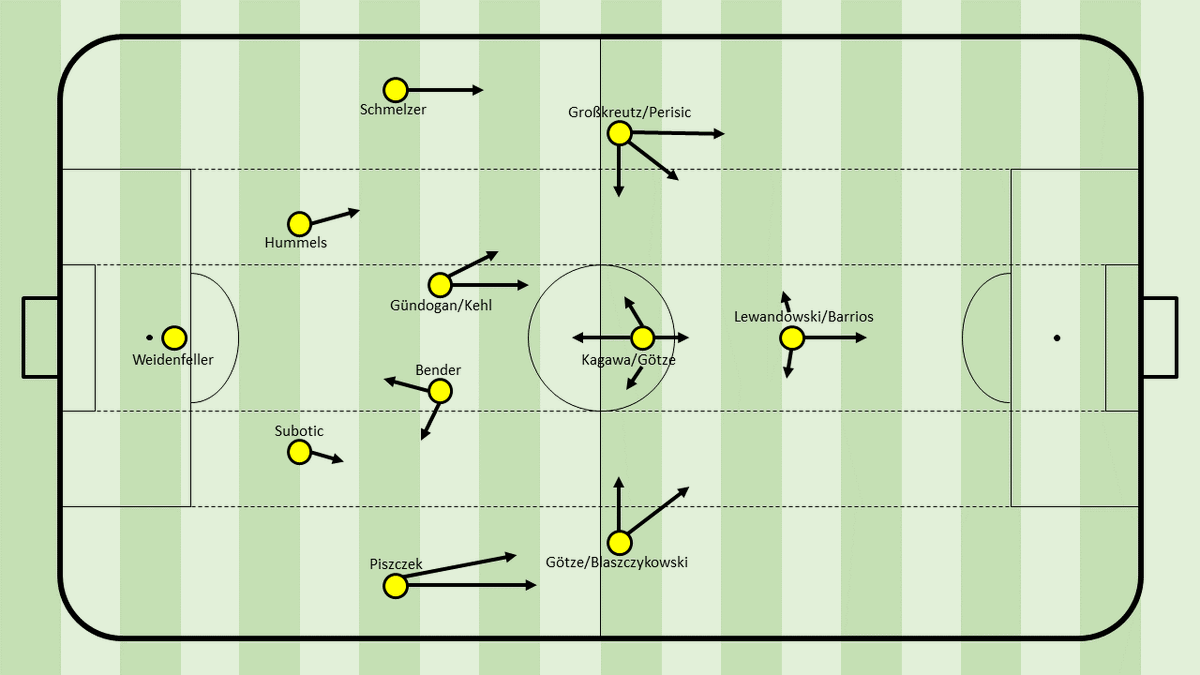
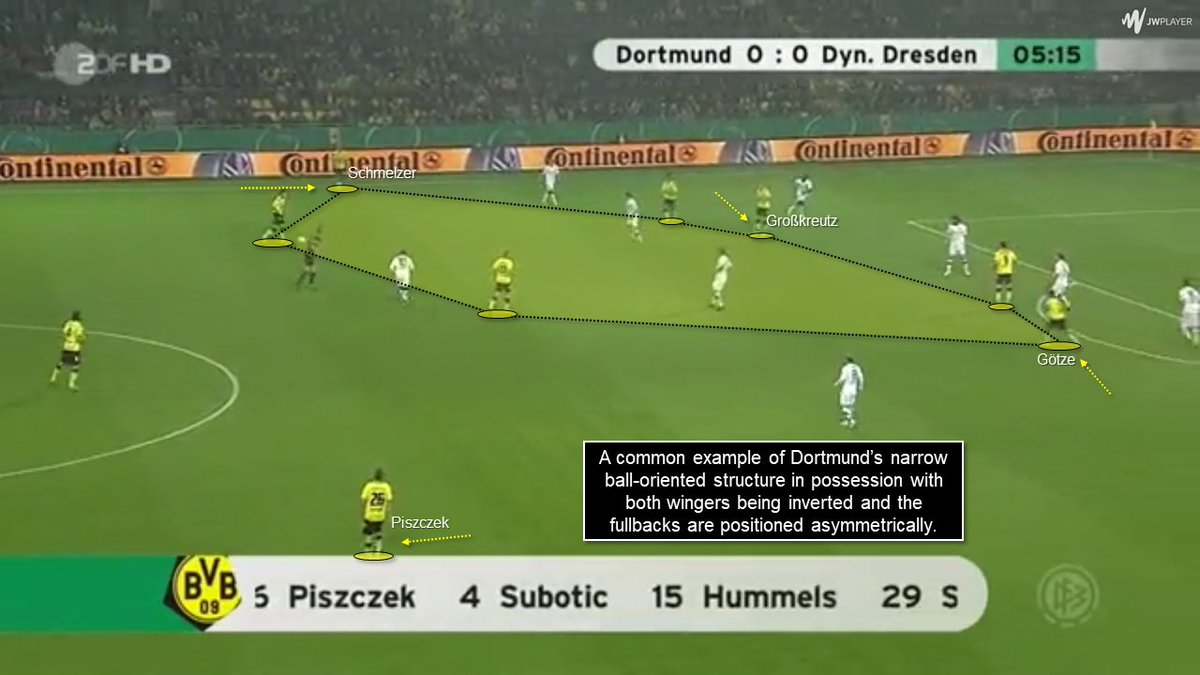
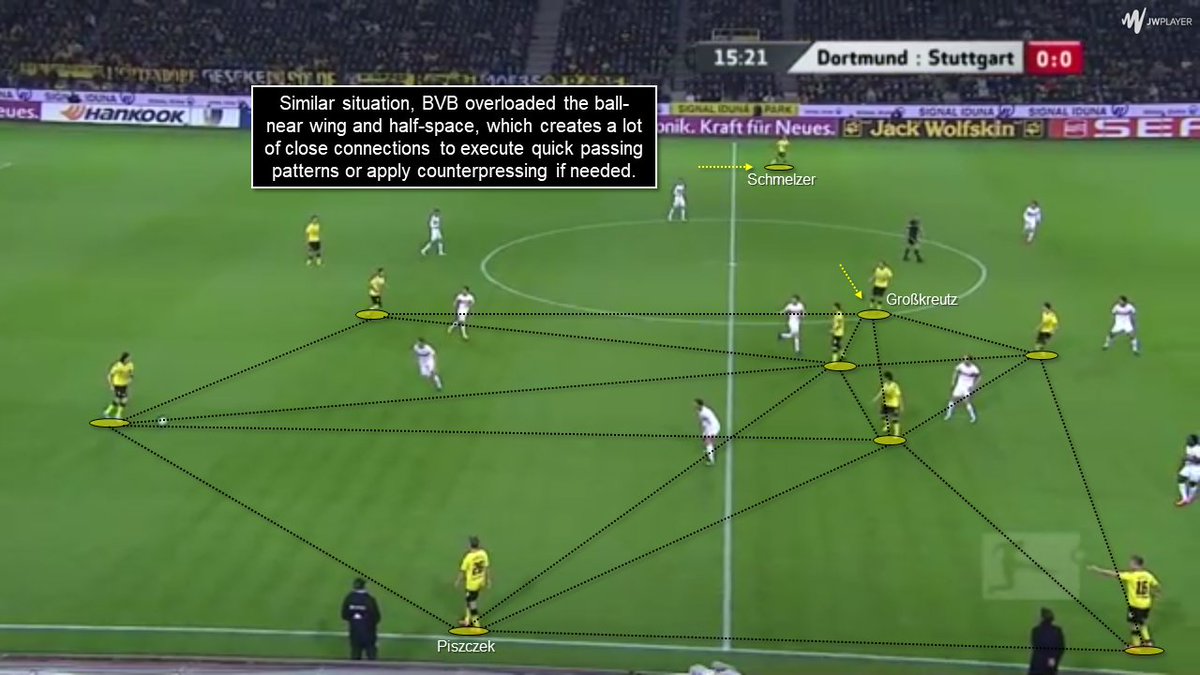
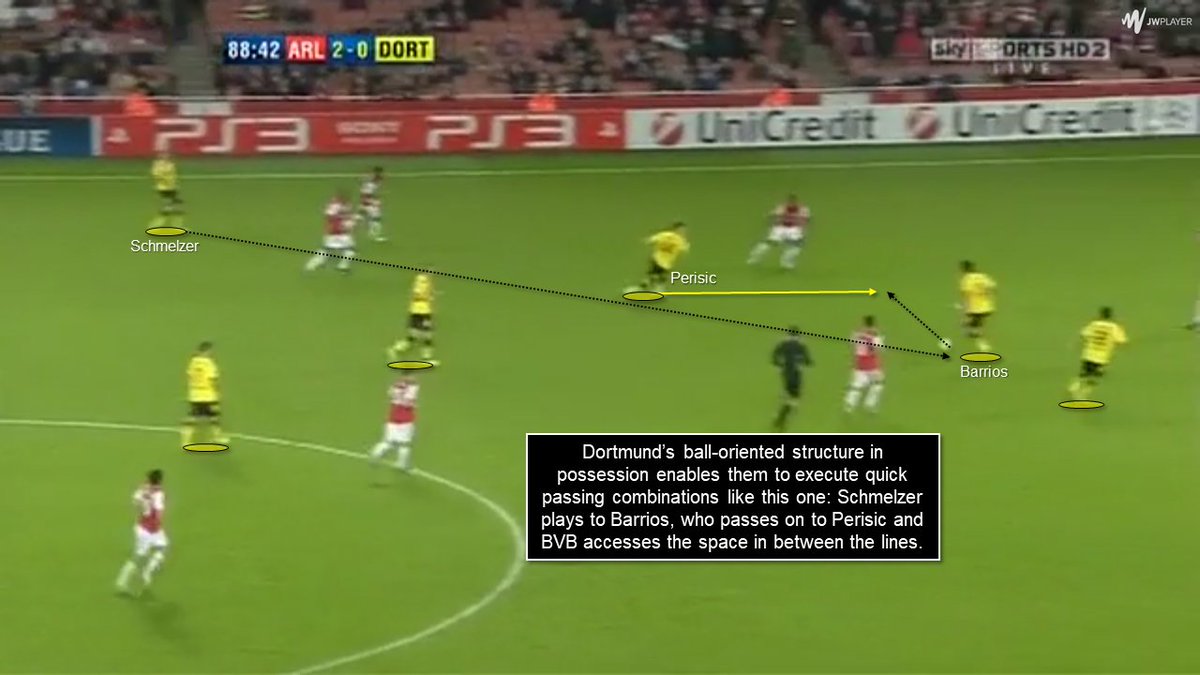
Typical situations to counterpress were inaccurate short passes (initial passer and/or receiver could ideally immediately counterpress), overhit through balls, lost dribbles (initial dribbler would turn around to press, if possible), blocked shots/crosses and at times long balls.
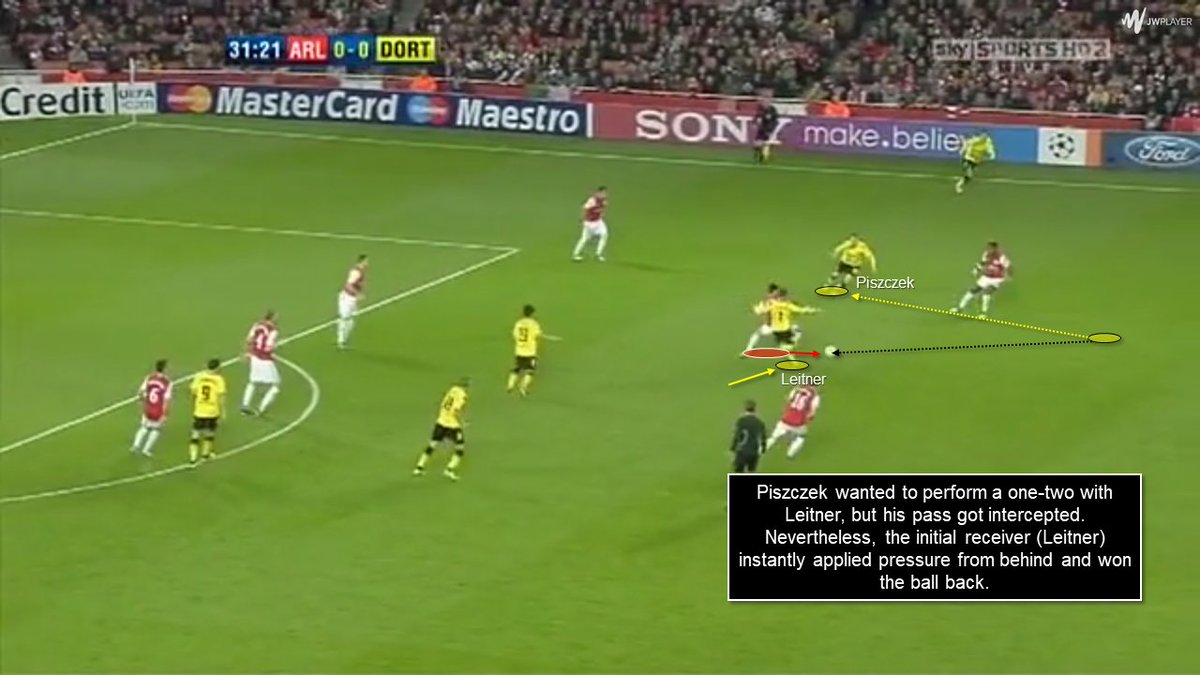
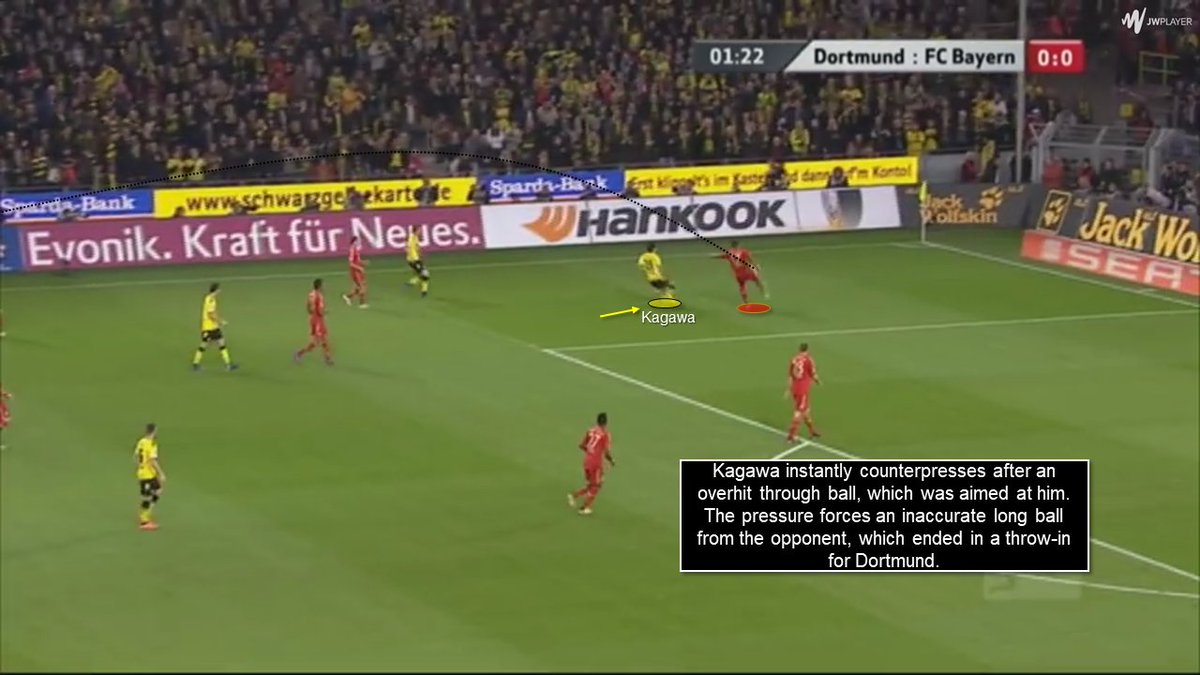
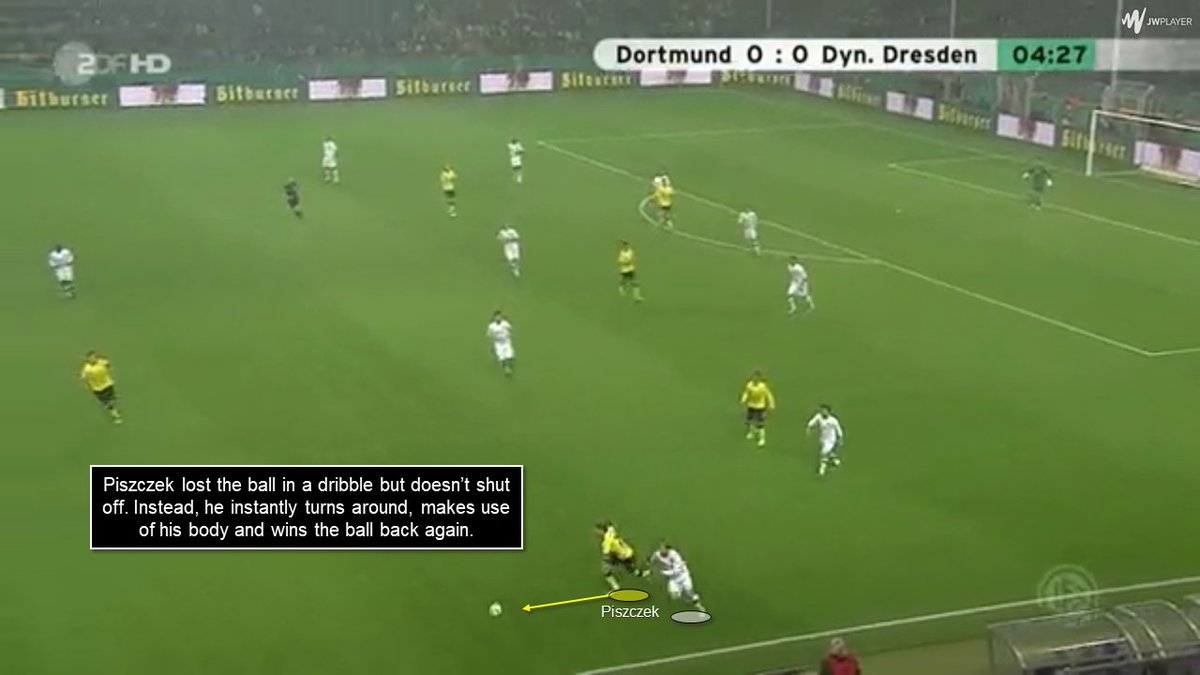
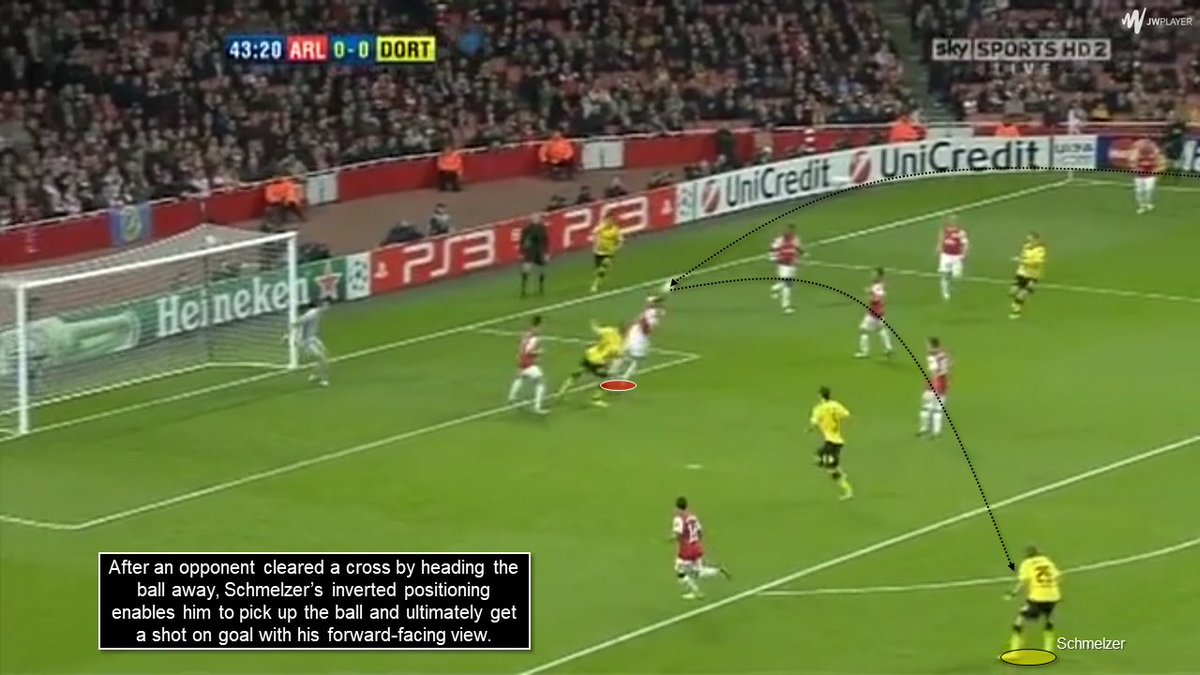
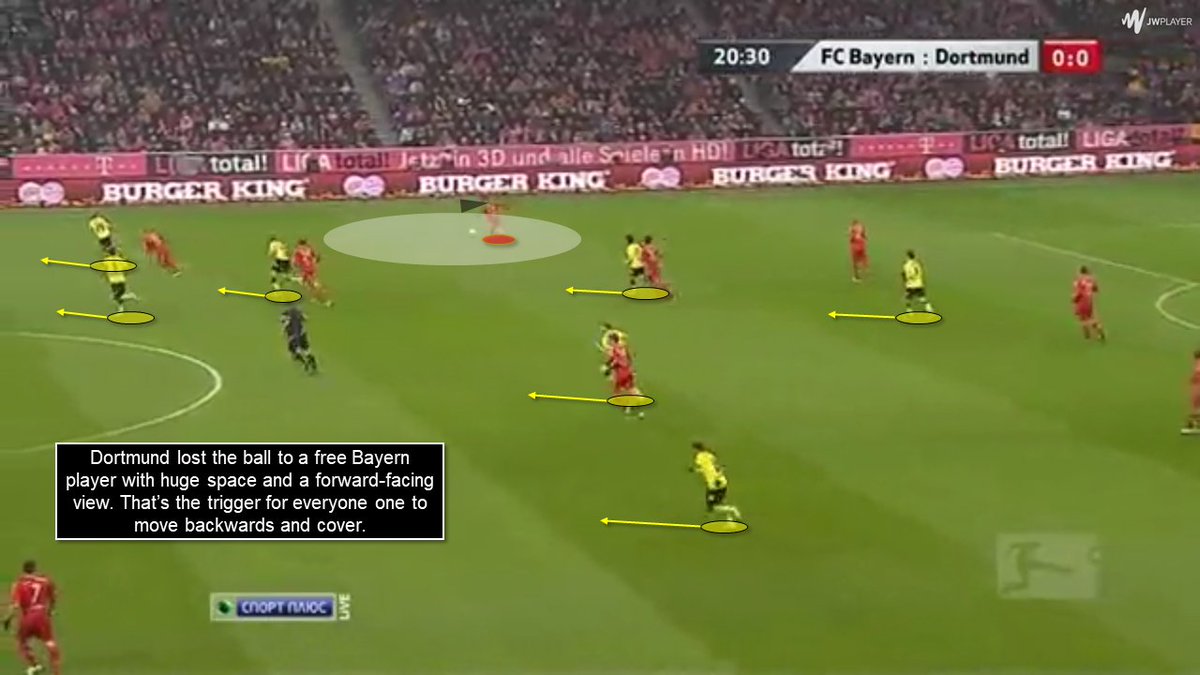
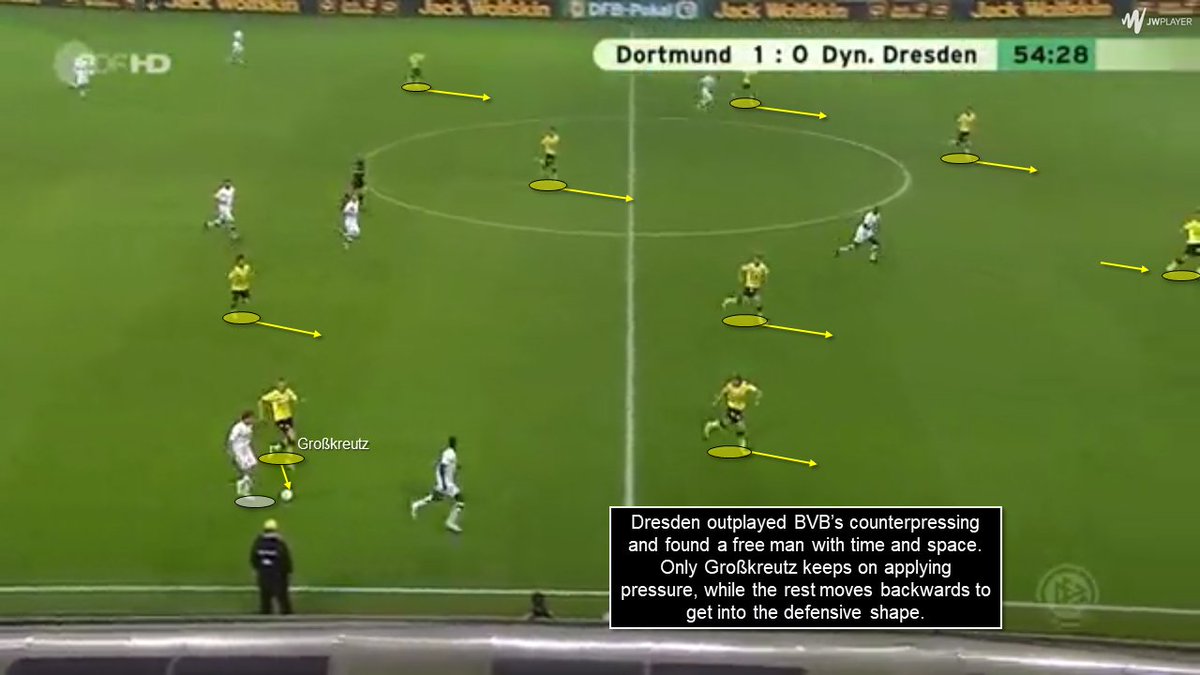
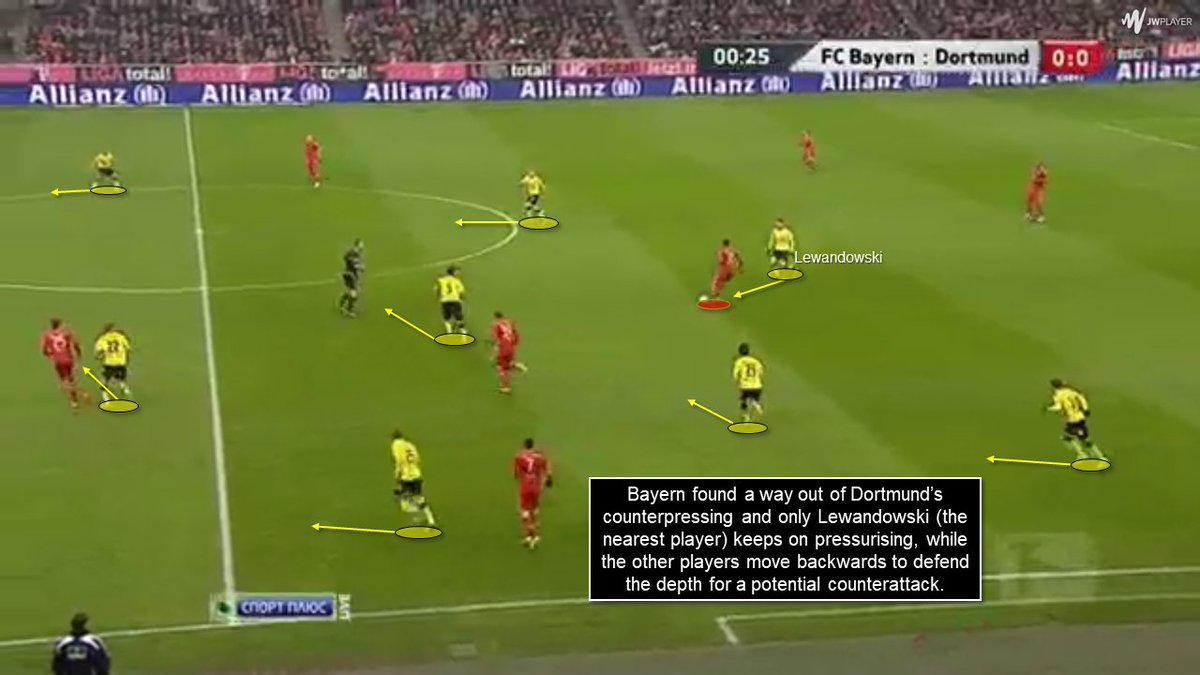
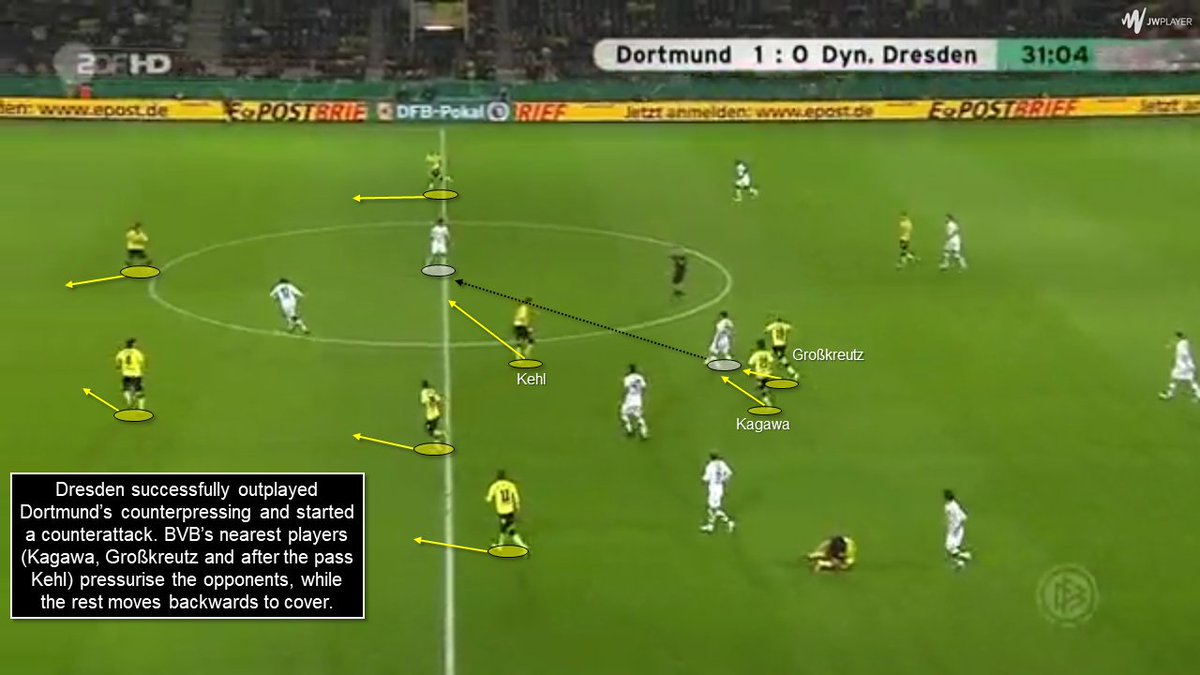
There were obviously also situations when dropping into the defensive shape was the better option (than gegenpressing). This usually occurred when an opponent received the ball freely with a forward-facing view or BVB couldn’t keep the pressure high after getting outplayed.
Nevertheless, usually one or two Dortmund players kept on applying pressure (if possible), while the other ones would move backwards to defend the depth, cover for a potential counterattack and get back into their defensive structure.
Let’s get back to when they actually executed gegenpressing.
The 1st action upon losing the ball was key. Instead of turning off, it was vital that the nearest player(s) instantly pressed to guide the opponent, restrict him from turning, force a decision or ideally win the ball.
The 1st action upon losing the ball was key. Instead of turning off, it was vital that the nearest player(s) instantly pressed to guide the opponent, restrict him from turning, force a decision or ideally win the ball.
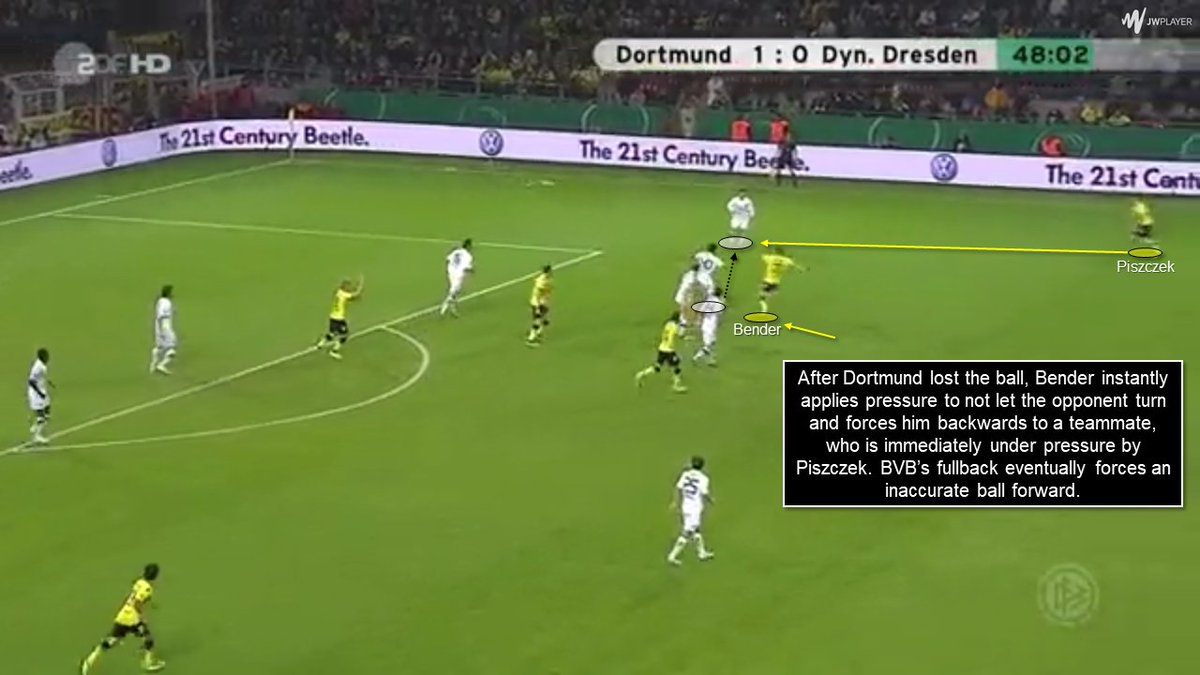
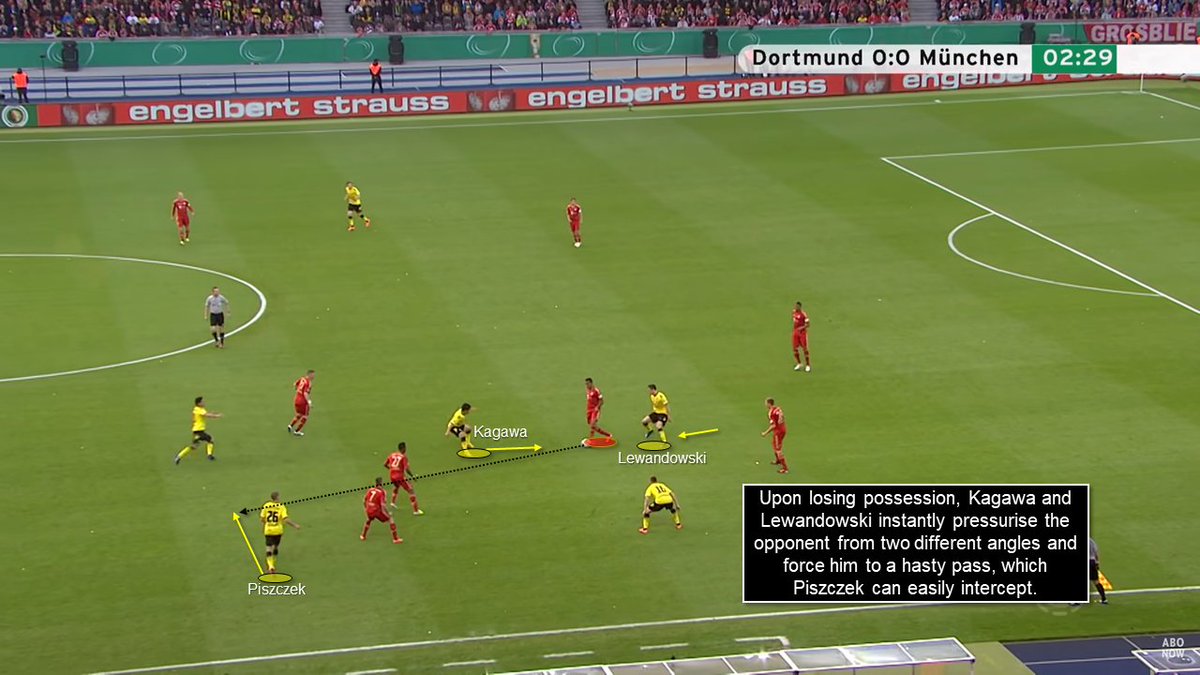
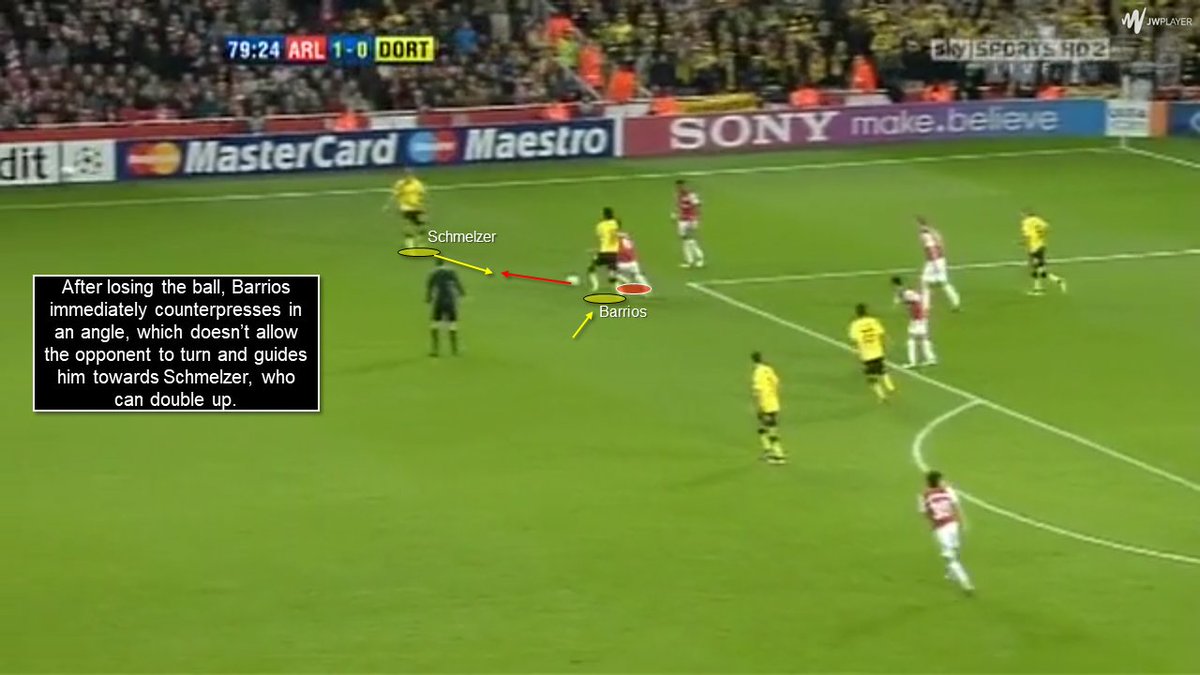
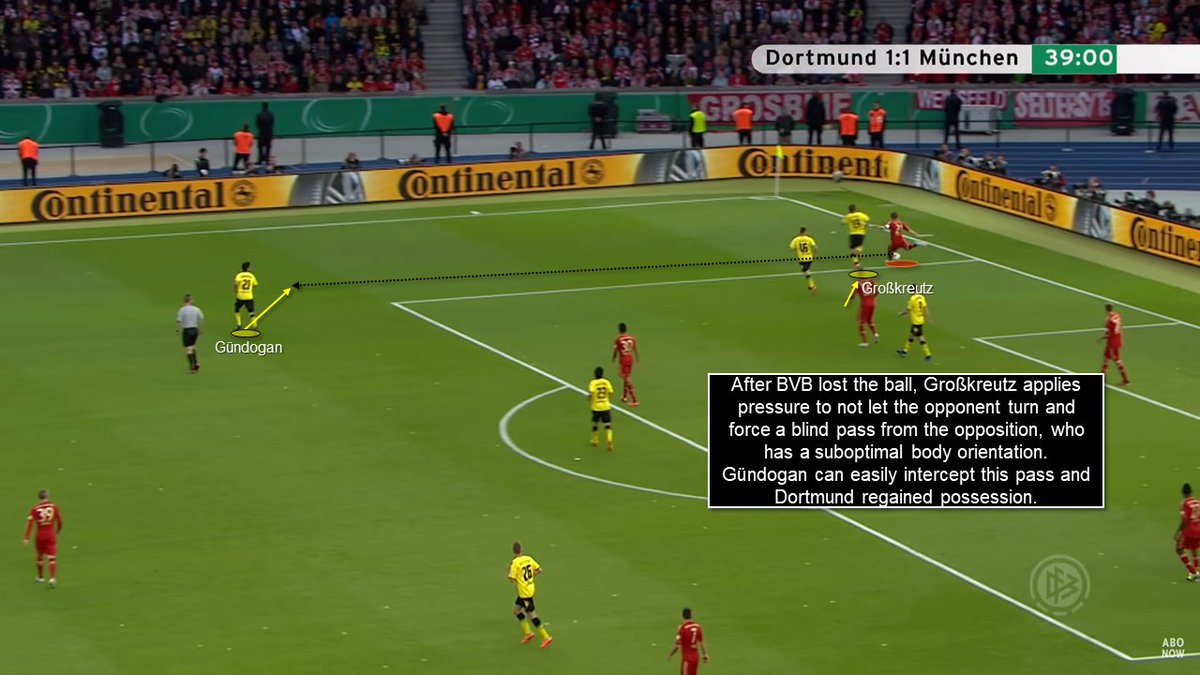
While the one or two nearest players usually pressurised the opposing ball-carrier, the other near players looked to move closer to the ball, control the space around it or temporarily man-mark. Moreover, the furthest BVB players moved backwards diagonally to defend the depth.
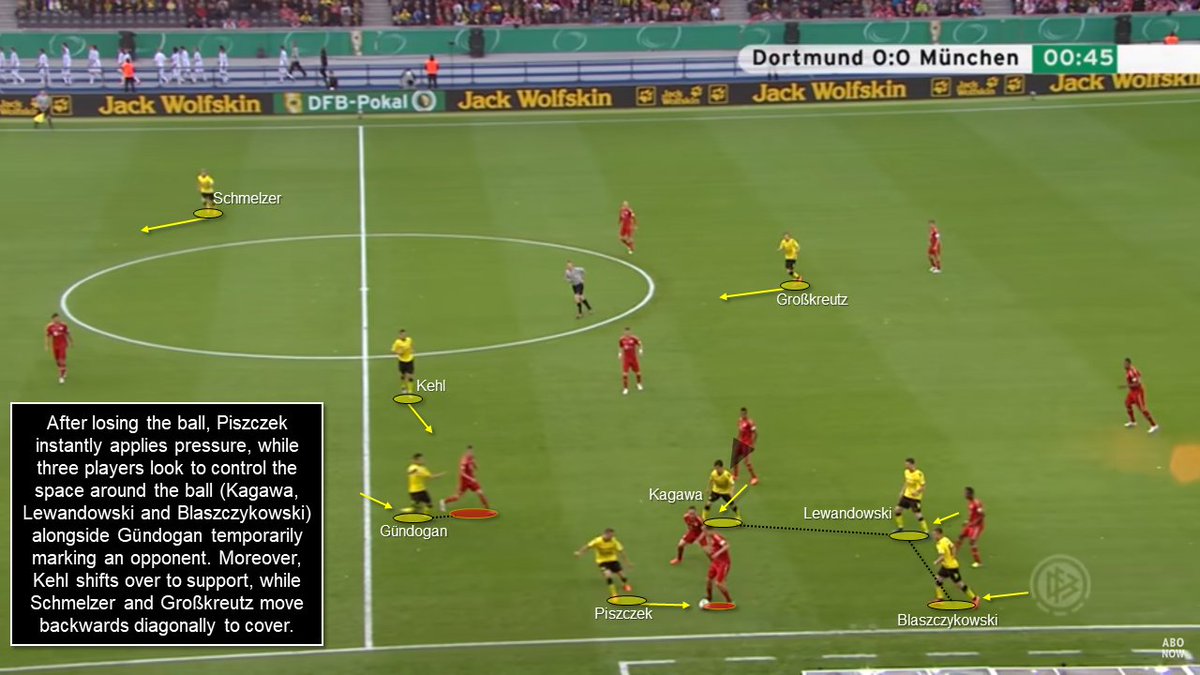
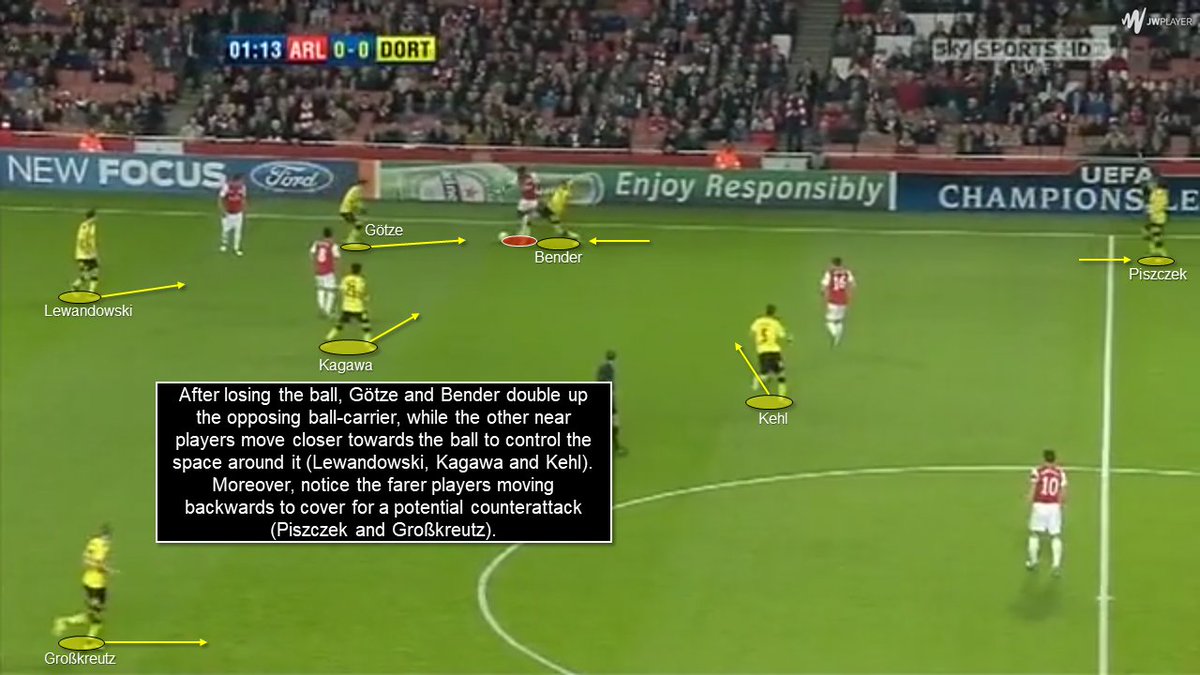
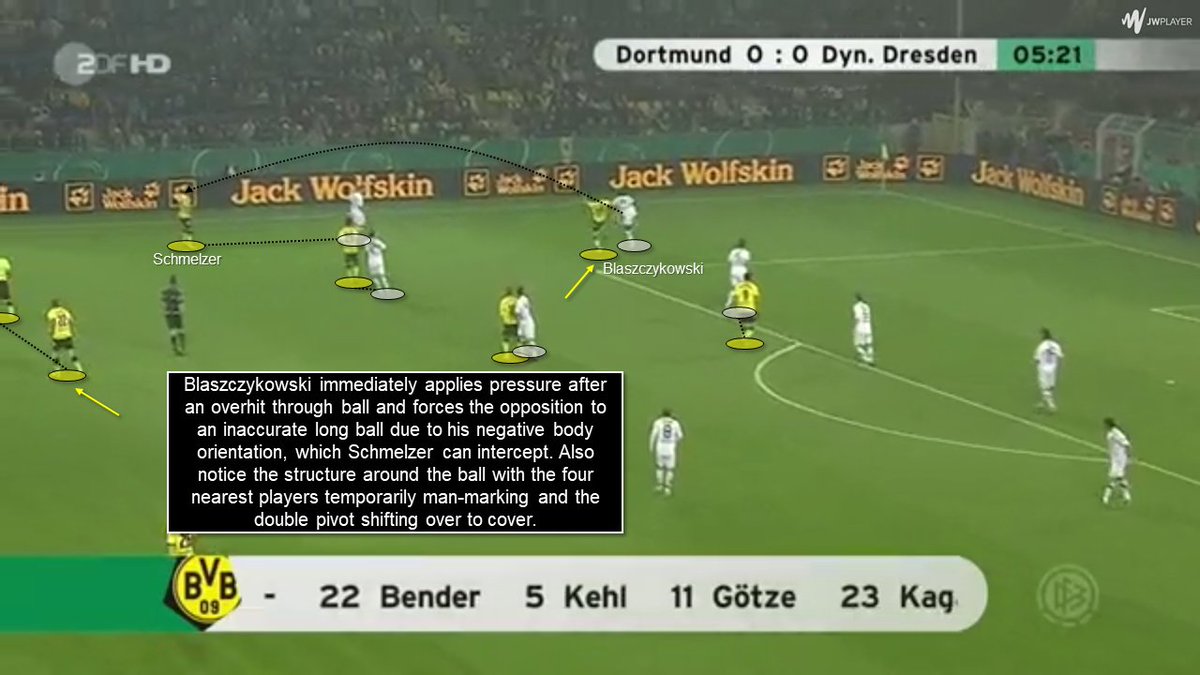
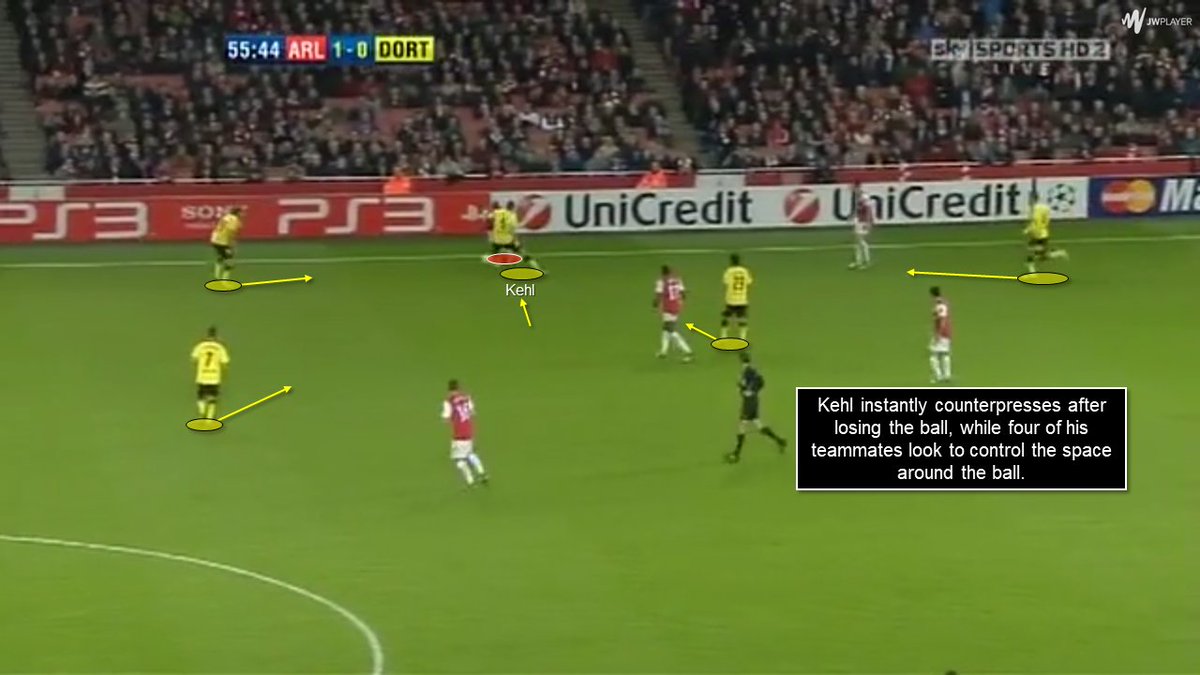
As seen in the examples above, BVB’s coverage style during counterpressing situations could vary. Even though they normally applied gegenpressing in a more space-oriented manner, temporarily man-marking wasn’t uncommon either.
That’s because these situations only last few seconds and it’s more about not turning off after losing the ball. Often, "just" applying pressure is enough to unsettle the opponent and win the ball back, as he also needs time to orient himself after winning the ball.
After Dortmund won the ball back again from a counterpressing situation, they would usually try to exploit the disorganized defence of the opposition and get in behind quickly by using fast-paced passing combinations alongside clever movements.
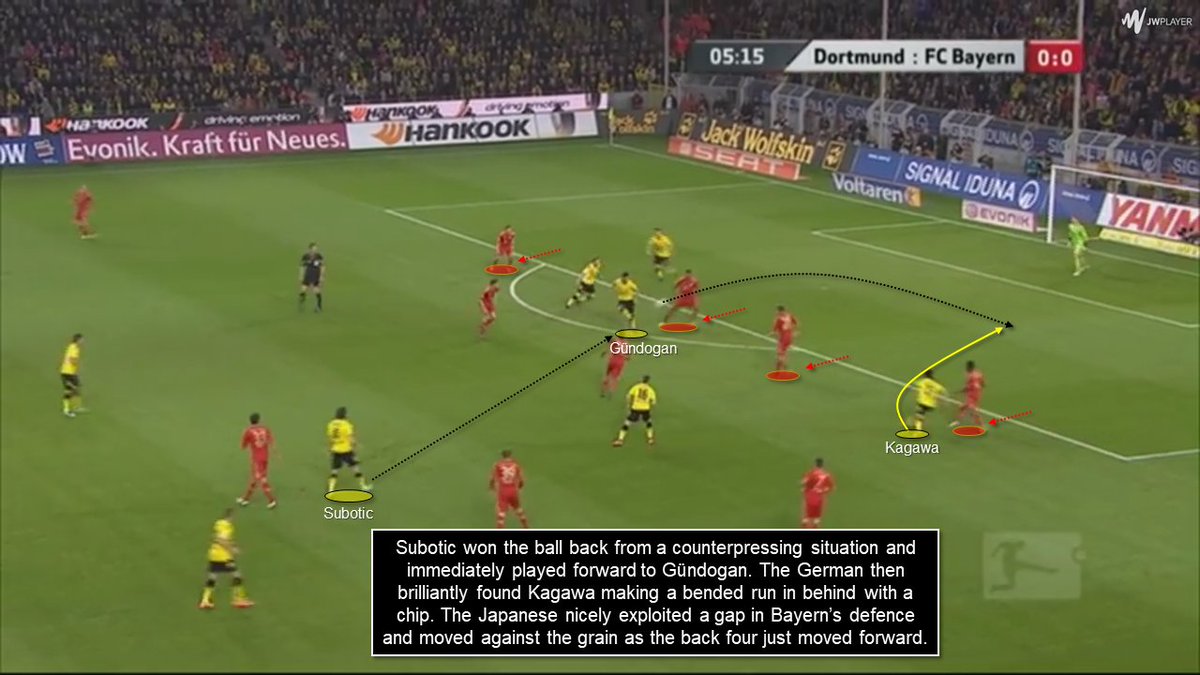
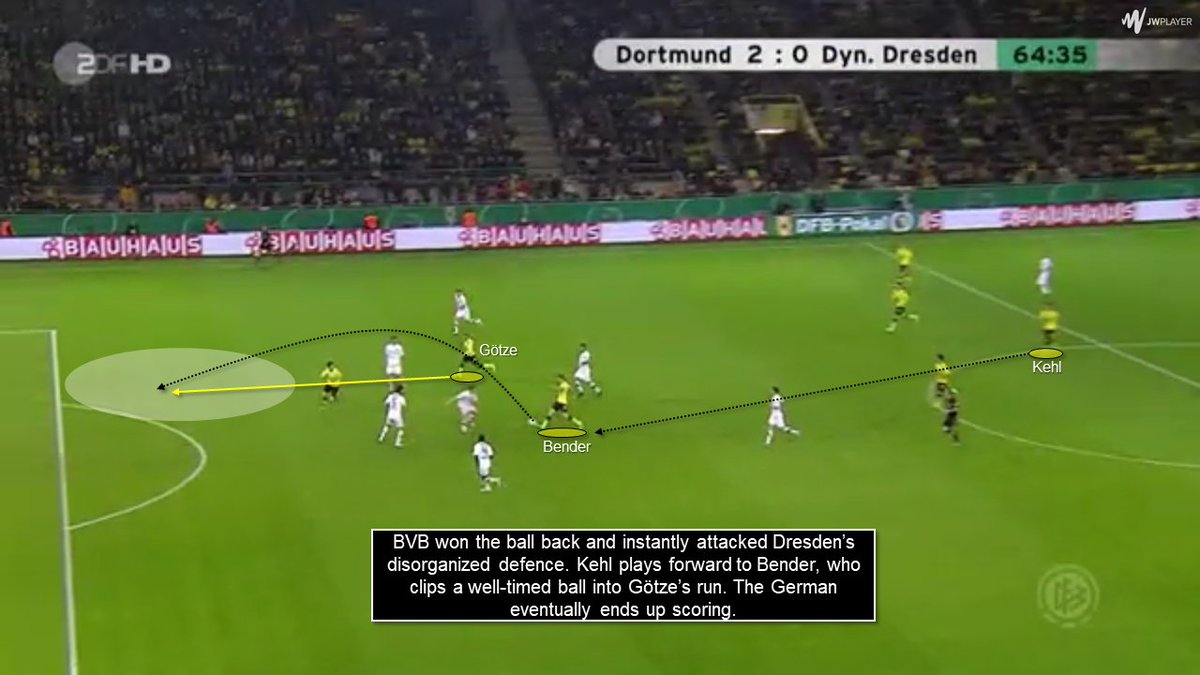
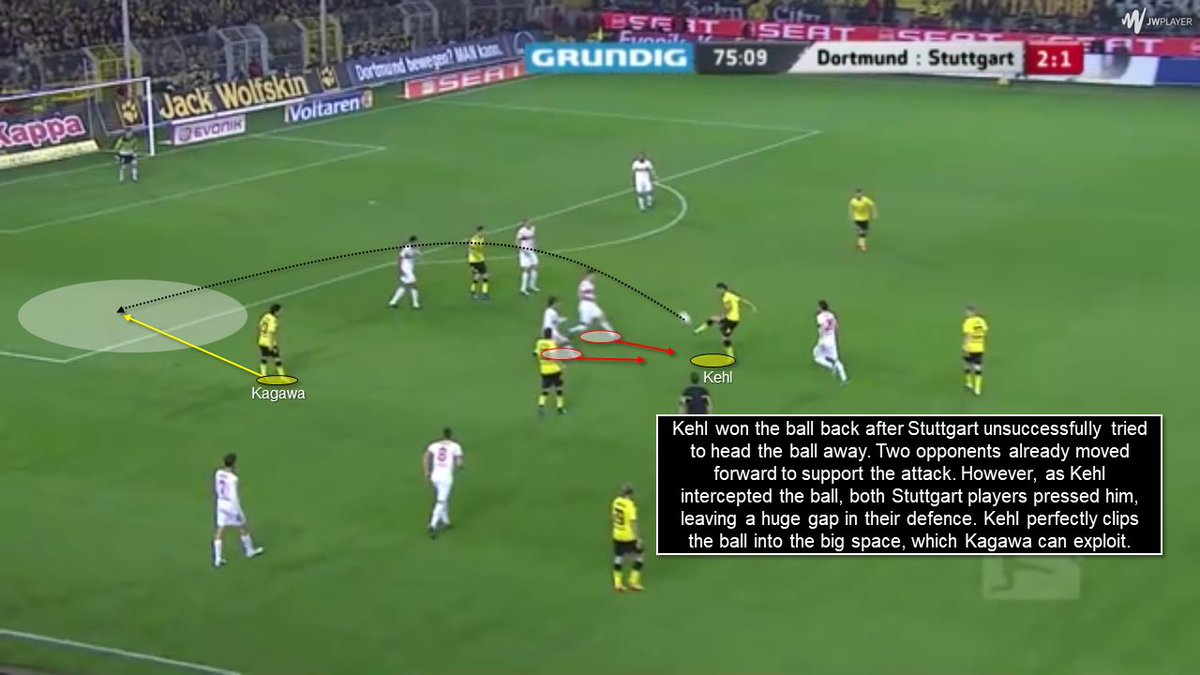
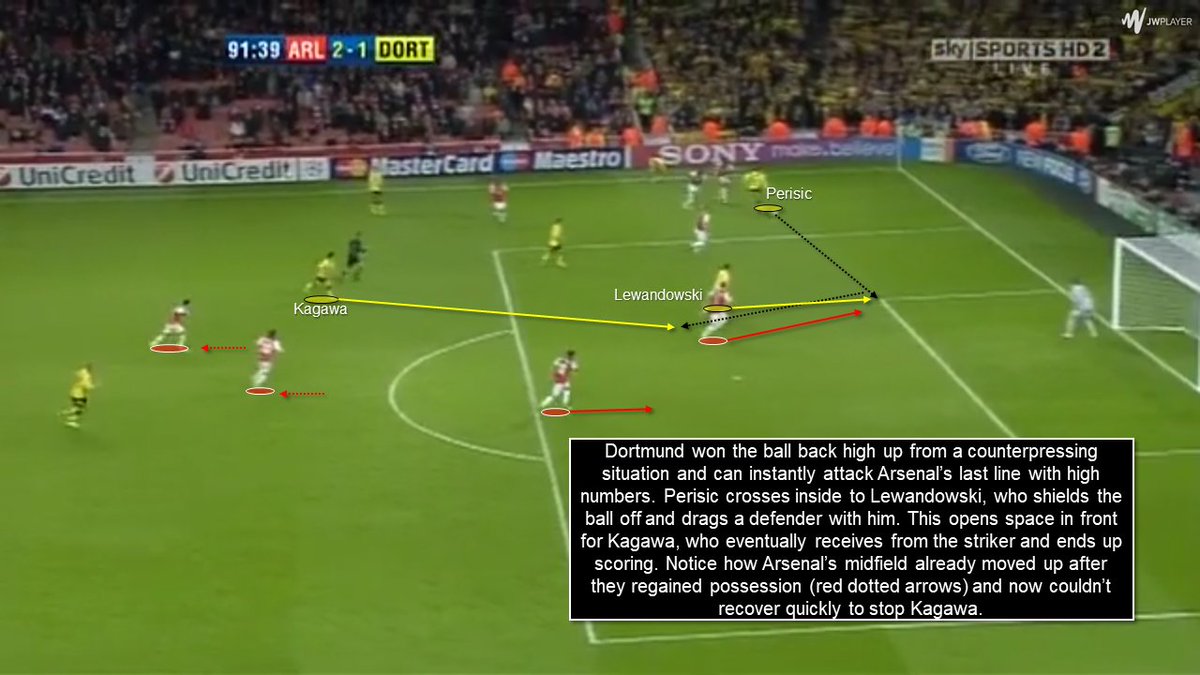
As @ReneMaric pointed out in his brilliant piece on @spielvercom, winning the ball back from a gegenpressing situation can have a lot of advantages for the in-possession side to threaten the opposition. spielverlagerung.com

Conclusion:
Even though, most teams ideally always wanted to win the ball back quickly after losing it, Klopp's Borussia Dortmund were one of the first to execute this intentionally with a clear plan behind it and started somewhat of a revolution not just in German football.
Even though, most teams ideally always wanted to win the ball back quickly after losing it, Klopp's Borussia Dortmund were one of the first to execute this intentionally with a clear plan behind it and started somewhat of a revolution not just in German football.
Loading suggestions...