

How Peter Lynch selects stocks:
- Trailing PE < 25
- Forward PE < 15
- Debt/Equity < 35%
- EPS Growth > 15%
- PEG Ratio < 1.2
- Market cap < $5 billion
I'll give you concrete examples here:
- Trailing PE < 25
- Forward PE < 15
- Debt/Equity < 35%
- EPS Growth > 15%
- PEG Ratio < 1.2
- Market cap < $5 billion
I'll give you concrete examples here:
- Trailing PE < 25 & Forward PE < 15
You don't want to overpay for stocks.
The lower the valuation, the higher your margin of safety.
You don't want to overpay for stocks.
The lower the valuation, the higher your margin of safety.
- Debt/Equity < 35%
You want to invest in companies which are in good financial shape.
Debt is very dangerous. If you're smart you don't need it and if you aren't smart you shouldn't use it.
You want to invest in companies which are in good financial shape.
Debt is very dangerous. If you're smart you don't need it and if you aren't smart you shouldn't use it.
- EPS Growth > 15%
In the long term, earnings growth is the main driver for stock prices.
Invest in companies active in a secular trend.
Great examples are obesity, digital payments and urbanization.
In the long term, earnings growth is the main driver for stock prices.
Invest in companies active in a secular trend.
Great examples are obesity, digital payments and urbanization.
- PEG Ratio < 1.2
This ratio combines the valuation and the growth rate of the company.
You can calculate this ratio yourself:
PEG Ratio = PE ratio / earnings growth
This ratio combines the valuation and the growth rate of the company.
You can calculate this ratio yourself:
PEG Ratio = PE ratio / earnings growth
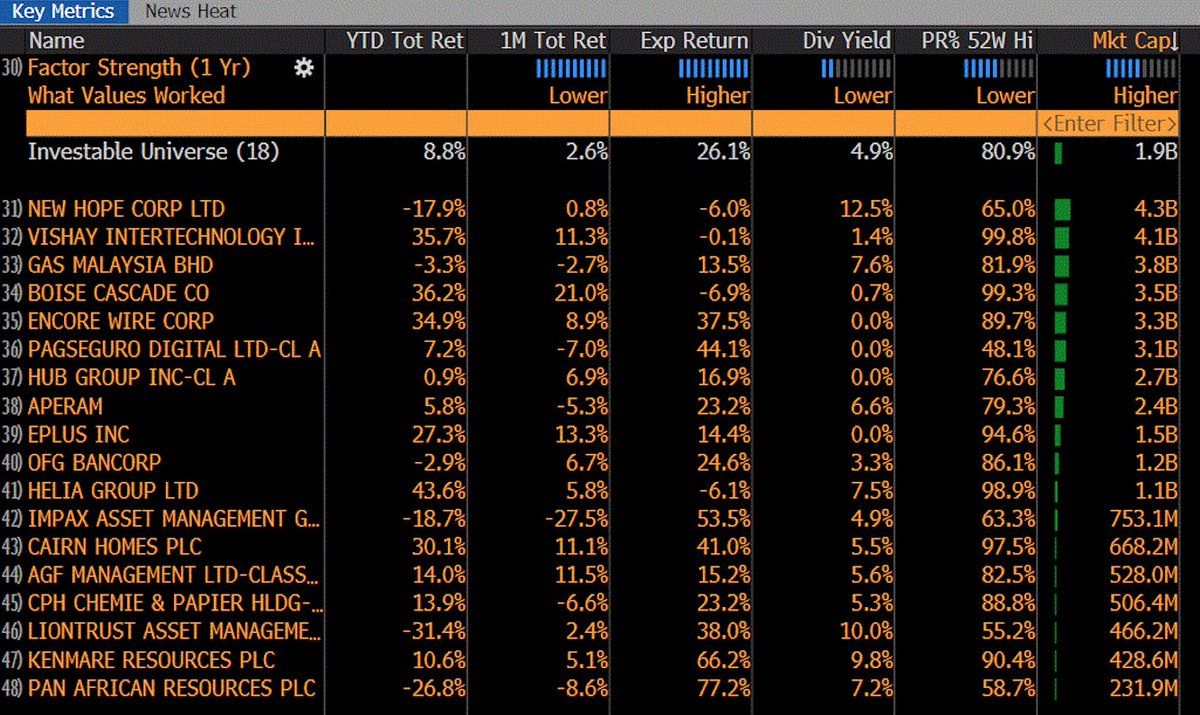
Here are a few companies which match these criteria:
That's it for today.
If you are looking for more investment inspiration, you'll love my FREE course with more than 100 (!) examples of Quality Companies.
Grab it for free here: eepurl.com
If you are looking for more investment inspiration, you'll love my FREE course with more than 100 (!) examples of Quality Companies.
Grab it for free here: eepurl.com

Loading suggestions...