

📍100+ great scholars of Islām on Tawassul, Istishfāʿ and Istighāthah through the Ḥabīb ﷺ

﷽
All praise belongs to Allāh ﷻ, who blessed us with the noble opportunity of seeking help and intercession through the best of creation, Sayyidnā Muḥammad ﷺ.
May the peace, blessings and mercy of Allāh ﷻ be upon him for as long as the world remains.
All praise belongs to Allāh ﷻ, who blessed us with the noble opportunity of seeking help and intercession through the best of creation, Sayyidnā Muḥammad ﷺ.
May the peace, blessings and mercy of Allāh ﷻ be upon him for as long as the world remains.
As to what follows;
I have started making a thread in which I shall gather, by the permission of Allāh ﷻ, as many statements of the scholars of Islām as I can, regarding Tawassul, Istishfāʿ and Istighāthah through the Ḥabīb ﷺ.
I have started making a thread in which I shall gather, by the permission of Allāh ﷻ, as many statements of the scholars of Islām as I can, regarding Tawassul, Istishfāʿ and Istighāthah through the Ḥabīb ﷺ.
I shall not mention multiple statements from one scholar, and I shall try to include scholars from all generations.
I hope this thread gives and end to the nonsense of the Khawārij accusing the Muslimīn of Shirk for doing what is agreed upon its permissibility.
I hope this thread gives and end to the nonsense of the Khawārij accusing the Muslimīn of Shirk for doing what is agreed upon its permissibility.
It may take many weeks to complete this thread, so please be patient.
Terminologies
• Whenever I say “the story of ʿUmar”, I mean what Ibn Abī Shaybah (d. 235), Ibn Abī Khaythamah (d. 279), and tens of other later scholars narrated that the people were struck by a drought in the Khilāfah of ʿUmar, then someone went to the grave of the Messenger...
• Whenever I say “the story of ʿUmar”, I mean what Ibn Abī Shaybah (d. 235), Ibn Abī Khaythamah (d. 279), and tens of other later scholars narrated that the people were struck by a drought in the Khilāfah of ʿUmar, then someone went to the grave of the Messenger...
...ﷺ and said, “O Messenger of Allāh! Ask for rain for your Ummah!” Then the Messenger ﷺ came to the man in his dream and told him, “Go to ʿUmar and tell him that water shall be granted to you.” And the narration goes on. From those who authenticated it: Ibn Ḥajar...
...al-Haytamī, Ibn Ḥajar al-ʿAsqalānī, Ibn al-Ramlī, Ibn Kathīr, and others. Others who narrated it and found no issue with it include Ibn ʿAbd al-Barr (d. 463), Muḥibb al-Dīn al-Ṭabarī (d. 694), al-Qasṭallānī (d. 923), Ibn ʿAsākir (d. 571), al-Suyūṭī (d. 911),...
...al-Bayhaqī (d. 458), al-Dhahabī (d. 748), al-Samhūdī (d. 911), al-Zarqānī (d. 1122), Abū Yaʿlā al-Khalīlī (d. 446), Ibn Mandhūr (d. 711), Ibn ʿAllān (d. 1057) and others.
• Whenever I say “the story of al-ʿUtbī”, I mean what the scholars of Manāsik from all Madhāhib narrated, even if it is weak, accepting of its content, that al-ʿUtbī said: “A man came to the grave of the Prophet ﷺ, sent Salām upon him and his two companions,...
...then returned back, facing the Prophet ﷺ, then said: ‘O Messenger of Allāh! I have heard the statement of Allāh ﷻ {And if only, when they wronged themselves, they came to you, sought forgiveness from Allāh, and the Messenger sought forgiveness for them, they would have...
...found Allāh Accepting of Repentance and Merciful}, so I have come to you, seeking forgiveness from my sin and seeing intercession from you to my Lord.’” And the narration goes on. It was narrated by most scholars mentioned previously and more as you shall see in the thread.
These are the two main narrations that I shall allude to by using a short form.
Moving on to the actual topic of the thread— the statements of the scholars of Islām on Tawassul, Istishfāʿ and Istighāthah through the Messenger ﷺ:
Moving on to the actual topic of the thread— the statements of the scholars of Islām on Tawassul, Istishfāʿ and Istighāthah through the Messenger ﷺ:
1) al-Māwardī (d. 450), an important Imām in the Shāfiʿī Madhhab, says in his huge Fiqh encyclopedia titled “al-Ḥāwī” that visiting the grave of the Messenger ﷺ is recommended, then mentions the narration of al-ʿUtbī in which a man sought intercession from the Messenger ﷺ


2) al-Rūyānī (d. 502), Fakhr of Islām, in his “Baḥr al-Madhhab” (which is a very important reference book in the Shāfiʿī Madhhab), mentions the narration of al-ʿUtbī in which a man sought intercession from the Messenger ﷺ, and calls it a “beautiful incident”

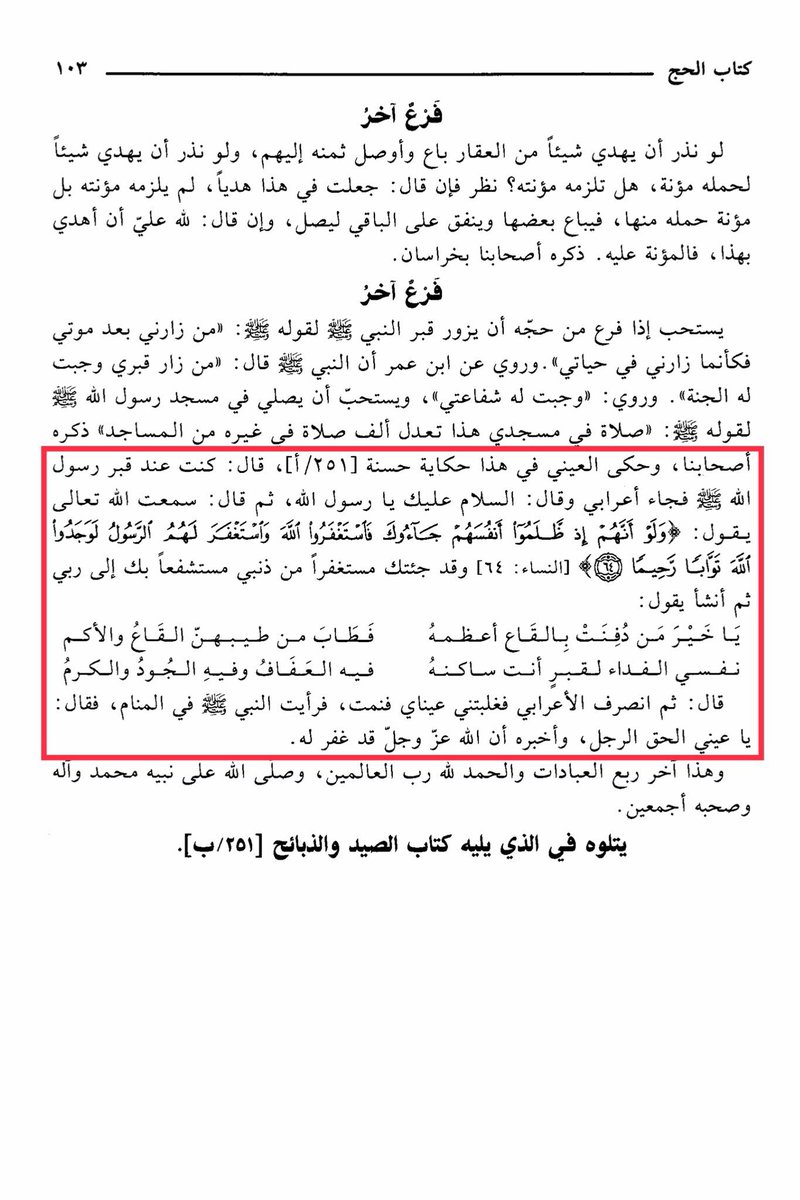
3) al-Ghazālī (d. 505), the second Imām al-Shāfiʿī, says in his great book “al-Iḥyāʾ” that it is recommended to say in Ziyārah: “O Allāh! We have obeyed your command, and have intended to seek intercession through your Messenger to You, .... so grant him permission to intercede”


4) al-ʿImrānī (d. 558), Shaykh of the Shāfiʿiyyah in Yemen, in his “al-Bayān” (another very important reference book in the Madhhab) mentions the narration of al-ʿUtbī and the man who did Tashaffuʿ, approving of it


5) al-Nawawī (d. 676), the ultimate authority in the Shāfiʿī Madhhab, says in “al-Īḍāḥ” that our Aṣḥāb cited the story of al-ʿUtbī, approving of it, and that it is the best thing to say in Ziyārah, and that it is desirable to do Tawassul and Tashaffuʿ through the Prophet ﷺ
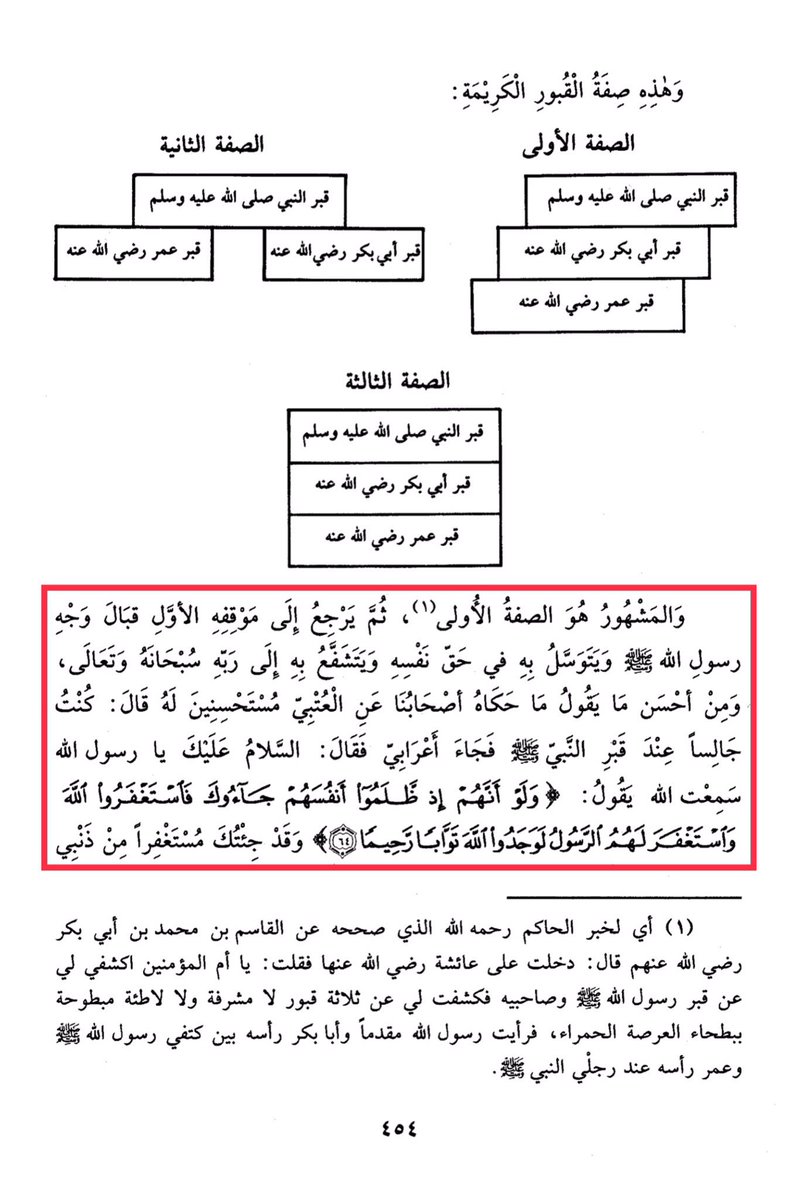
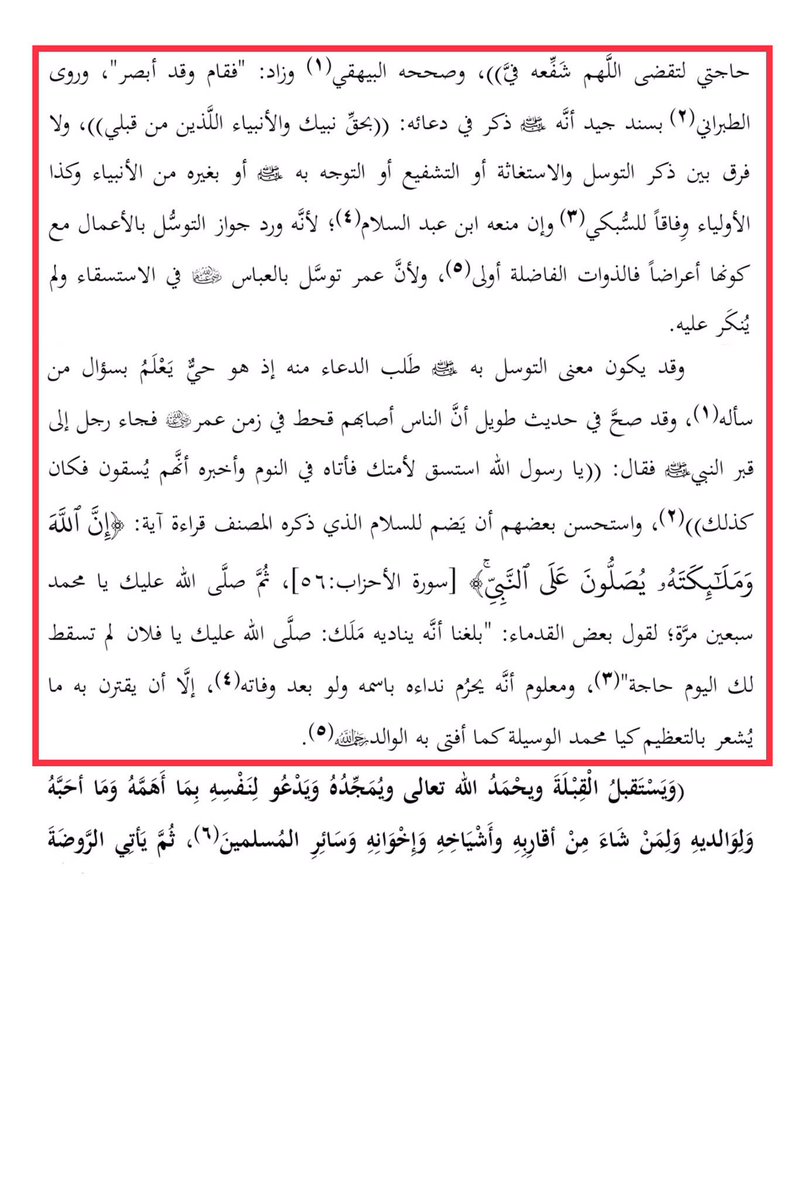
6) Ibn Ḥajar al-Haytamī (d. 974), the greatest Imām of the late Shāfiʿiyyah, says in his footnotes of the above that there is no difference in permissibility between Tashaffuʿ, Tawassul or Istighāthah through any of the Messengers or Awliyāʾ, and authenticates the story of ʿUmar


7) Ibn al-Ramlī (d. 1004), the greatest Imām of the late Shāfiʿiyyah beside al-Haytamī, says the exact same thing- there is no difference in permissibility between Tashaffuʿ, Tawassul or Istighāthah through any of the Messengers or Awliyāʾ, and authenticates the story of ʿUmar

8) al-Khaṭīb al-Shirbīnī (d. 977), another great Shāfiʿī Muḥaqqiq, says in his Sharḥ of “al-Minhāj” that it is recommended to do Tawassul and Tashaffuʿ through the Messenger ﷺ during Ziyārah, and cites the narration of al-Ḥākim about the Tawassul of Ādam ﷺ

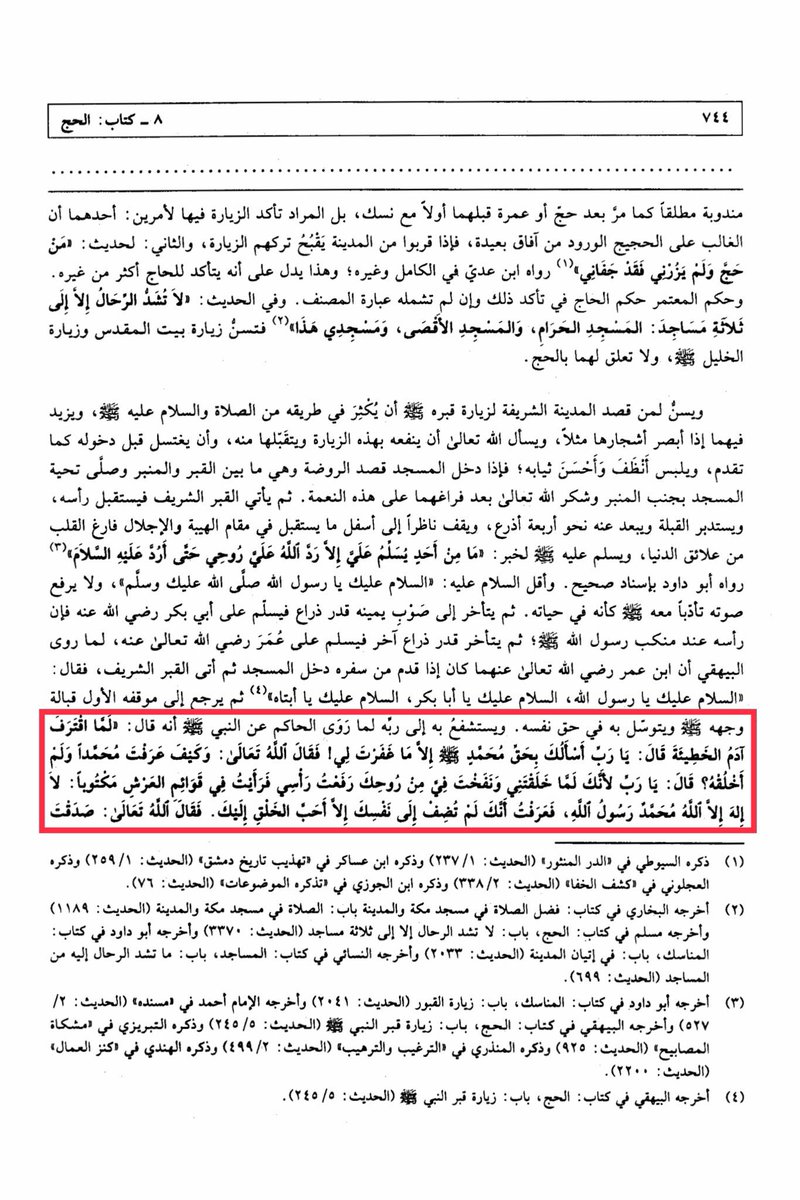
9) al-Ramlī al-Kabīr (d. 957), in his “Fatḥ al-Raḥmān”, quotes al-Nawawī's statement in “al-Majmūʿ”and states that it is recommended to do Tawassul and Tashaffuʿ through the Messenger ﷺ during Ziyārah


10) Zakariyyā al-Anṣārī (d. 926), the Mujaddid of the 9th century and the teacher of al-Ramlī al-Kabīr, al-Shirbīnī and al-Haytamī mentioned above, says in “Fatḥ al-Wahhāb” that it is recommended to do Tawassul and Tashaffuʿ through the Messenger ﷺ during Ziyārah


11) Ibn al-Rifʿah (d. 710), the Shāfiʿī Faqīh of his time, says in his Sharḥ of “al-Tanbīh” that it is desirable to perform Tashaffuʿ through the Prophet ﷺ in Ziyārah, and that our Aṣḥāb cited the narration of al-ʿUtbī, approving of it, and that it's of the best things to say


12) al-Maḥallī (d. 864), one of the authors of Tafsīr al-Jalālayn, quotes al-Nawawī in “Kanz al-Rāghibīn”, stating that it is recommended to perform Tawassul and Tashaffuʿ through the Messenger ﷺ during Ziyārah


جاري تحميل الاقتراحات...