
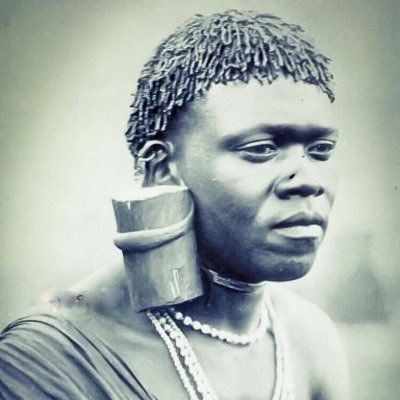
#HistoryKeThread: Sultan Fumo Bakari and The Witu Resistance
——-
In 1890 a group of Germans set up camp near Witu, Lamu, and started chopping down the forests that surrounded the town.
——-
In 1890 a group of Germans set up camp near Witu, Lamu, and started chopping down the forests that surrounded the town.
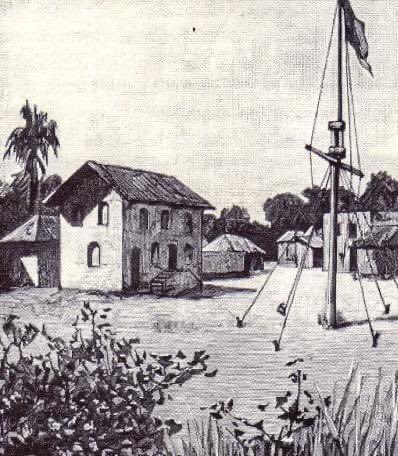
The fact that they were heavily armed and spent much of their spare time engaged in military exercises led the Witu Sultan, Fumo Bakari, to fear that the foreign force was about to stage a coup.
So he stole their weapons.
So he stole their weapons.

This obviously upset the Germans, so they marched on Witu and, with their remaining guns, opened fire.
In the battle that ensued between 15th and 17th September 1890, two Swahili and ten Germans lost their lives.
In the battle that ensued between 15th and 17th September 1890, two Swahili and ten Germans lost their lives.
It is reported that following the deaths, there was an uproar in Germany, whose administrators asked the British to help in avenging the deaths of the Germans.
Because the IBEA Company did not possess the military resources for this task the British Government took action. The Royal Navy was now ordered to dispatch a punitive expedition to Witu.
This is a photo of a detachment of Indian servicemen of the British military posing for a photo outside the Witu photo in the 1890s.

Facing 3000 armed Swahili, the British mobilised no less than 13 ships. A squadron of nine Royal Navy ships, one hired transport and two IBEA Company vessels were prepared.
Vice-Admiral Sir Edmund Fremantle, Commander of The East India Station, sailed the squadron from Zanzibar to Lamu, accompanied by the British Consul-General, and sent a letter to Fumo Bakari requesting that he appear at Lamu with those responsible for the killing of the Germans.
A fair trial would then take place, Sir Fremantle assured.
The Sultan however declined to accede to the request.
The Sultan however declined to accede to the request.
The Vice-Admiral then declared Martial Law and on 23rd October 1890, ordered two of his Captains to undertake separate punitive missions against villages lying about 15 miles inland from Lamu on tidal creeks.

Captain the Honourable A.G. Curzon-Howe received his orders:
“You are to proceed tomorrow morning with the boats of H.M.S. Boadicea, manned and armed, to attack Mkunumbi, the object being to punish the inhabitants for the murder of the German subject Karl Horn.”
“You are to proceed tomorrow morning with the boats of H.M.S. Boadicea, manned and armed, to attack Mkunumbi, the object being to punish the inhabitants for the murder of the German subject Karl Horn.”
Another Captain, John N. McQuhae, was this ordered:
“Proceed tomorrow morning with the boats of the Cossack and Brisk, if the latter ship has arrived in time, to Baltia, to take such steps as may seem to you advisable to punish natives for the murder of Mr. Behnke, a German.”
“Proceed tomorrow morning with the boats of the Cossack and Brisk, if the latter ship has arrived in time, to Baltia, to take such steps as may seem to you advisable to punish natives for the murder of Mr. Behnke, a German.”
In the course of October, the British so ransacked Witu and the adjoining towns, burning everything including the Sultan's palace, that even the ancient court chronicles of Pate were destroyed.
In the same month, one Commander R.A.J. Montgomerie put up a small garrison at Kipini and put up a zareba (defensive fence primarily made up of thorn bushes).
On the night of 25th October 1890, Sultan Bakari's troops, who comprised of 500 riflemen and about 1,500 extras armed with spears and bows and arrows, descended on the zareba.

Montgomerie had 350 sailors and four machine guns, which exacted a heavy toll on the Sultan's men. After 30 minutes of action, Bakari's men withdrew, leaving behind bloody trails of the bodies they dragged away.
Unrest in Witu continued for another four years until Fumo Bakari's successor was arrested by the British.
Sadly, Fumo Bakari and his troops are scarcely remembered by history. So we chose to post this story to immortalize them.

Outside the Witu fort*
Loading suggestions...