

1/ “Now listen carefully!”
Does the word “tbone” make you think of a tough guy nickname before ear anatomy?
Do you know the CT ice cream cone & then nada? Then you need this #tweetorial on tbone anatomy!
#medtwitter #FOAMed #FOAMrad #neurorad #radres #meded #radtwitter
Does the word “tbone” make you think of a tough guy nickname before ear anatomy?
Do you know the CT ice cream cone & then nada? Then you need this #tweetorial on tbone anatomy!
#medtwitter #FOAMed #FOAMrad #neurorad #radres #meded #radtwitter
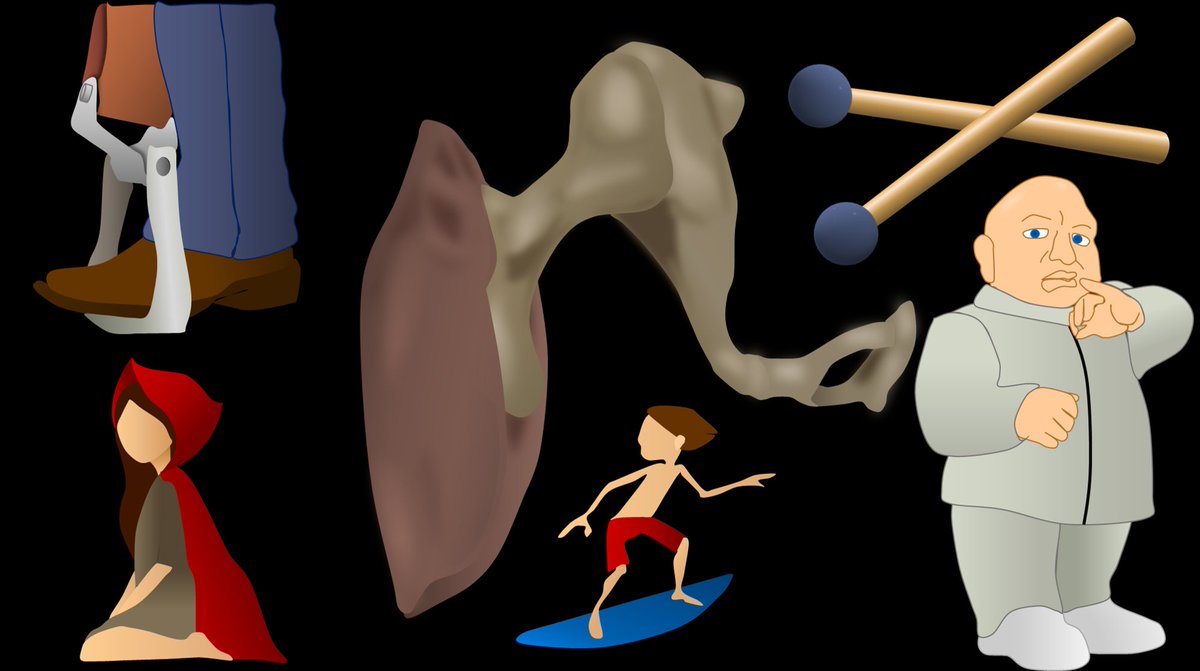
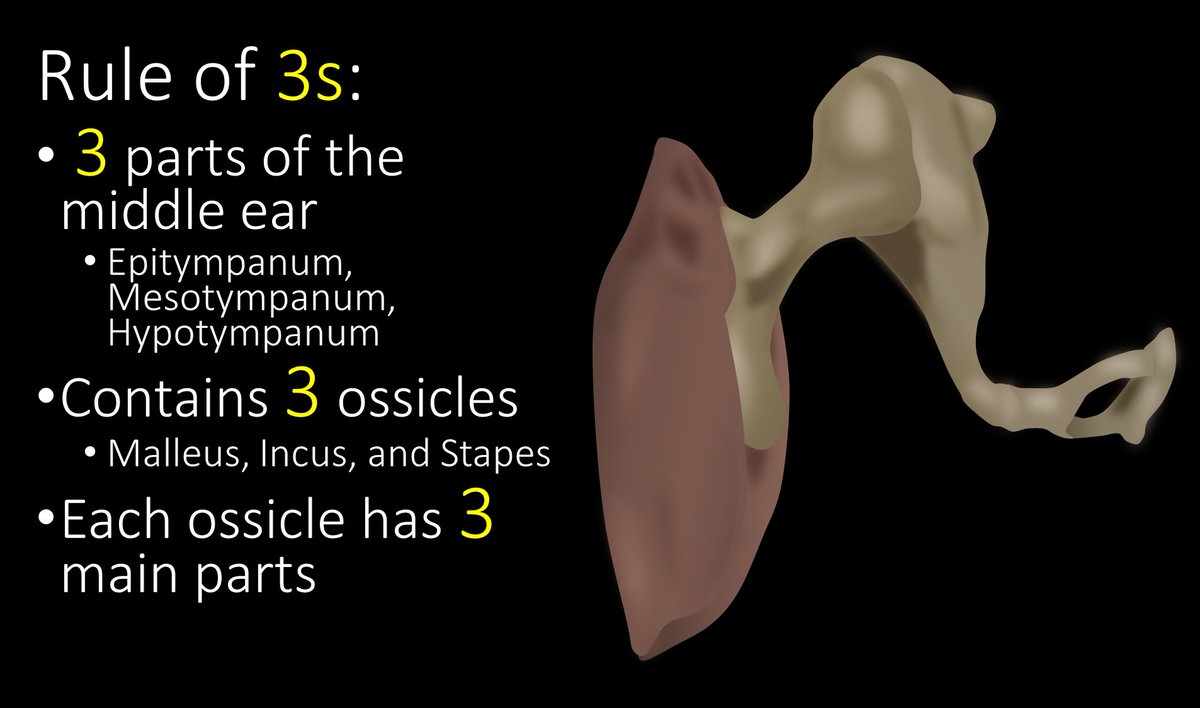
2/For the middle ear, I have a rule of 3s.
The middle ear is divided into 3 parts and it contains three ossicles.
Today we will focus on the ossicles—each of which has 3 parts!
The middle ear is divided into 3 parts and it contains three ossicles.
Today we will focus on the ossicles—each of which has 3 parts!
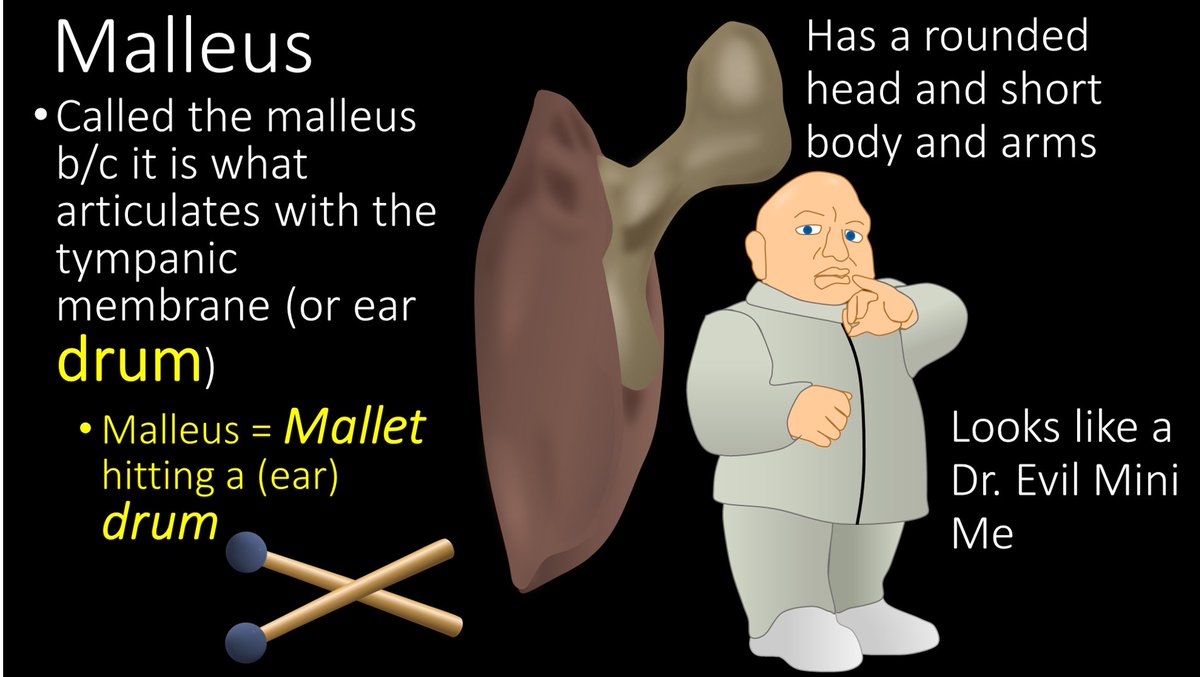
3/The first ossicle you meet when you enter the middle ear is the malleus. It is called the malleus because it acts like a mallet that hits a drum—literally—the ear drum!
I think it looks like Dr. Evil’s mini me, with its short body and round bald head
I think it looks like Dr. Evil’s mini me, with its short body and round bald head
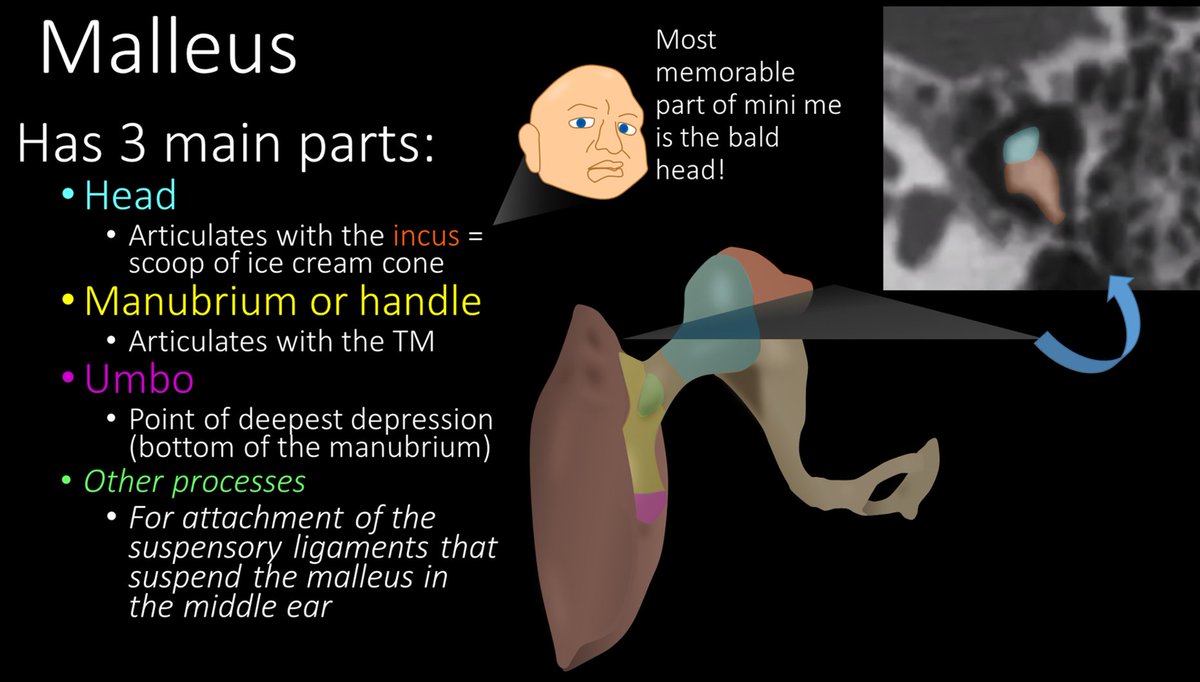
4/Malleus has 3 main parts. The part we most commonly see on imaging is the head—I remember this bc the biggest and most memorable part of mini me is his bald head!
The head articulates with the incus and forms the scoop of the ice cream cone we see on imaging.
The head articulates with the incus and forms the scoop of the ice cream cone we see on imaging.
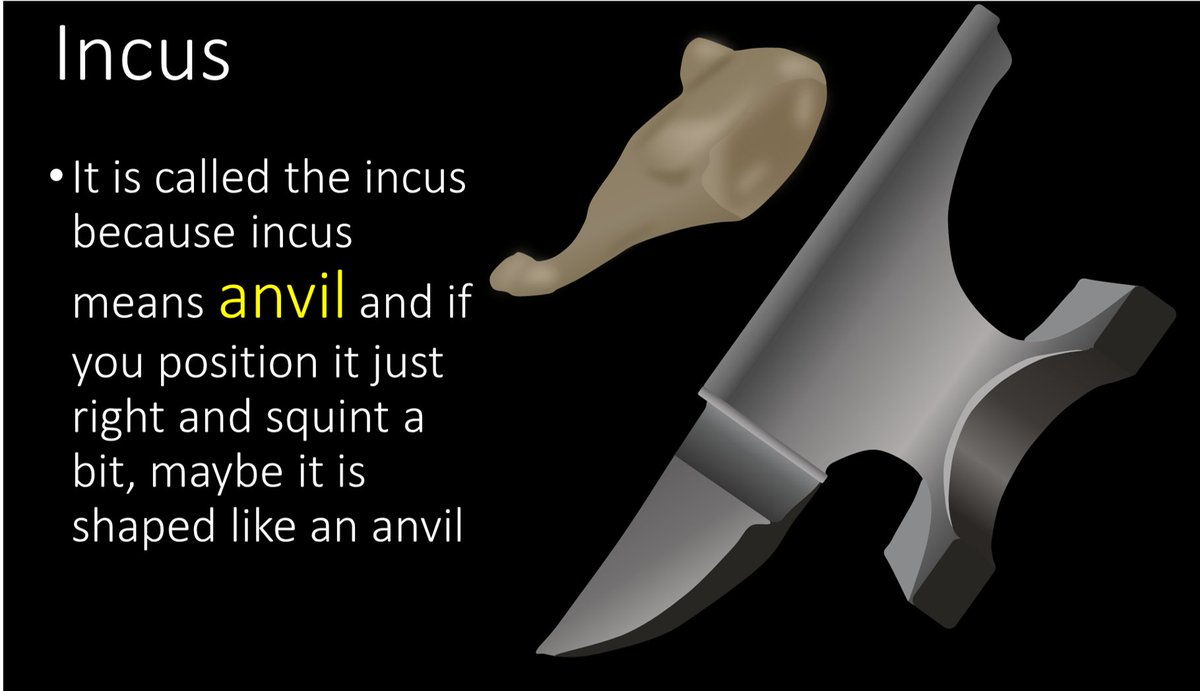
5/After the malleus comes the incus. It is called the incus bc incus means anvil in latin and some person looked at it and thought it looked like an anvil—maybe if you rotate it right and squint a little, you can kind of imagine what he was seeing
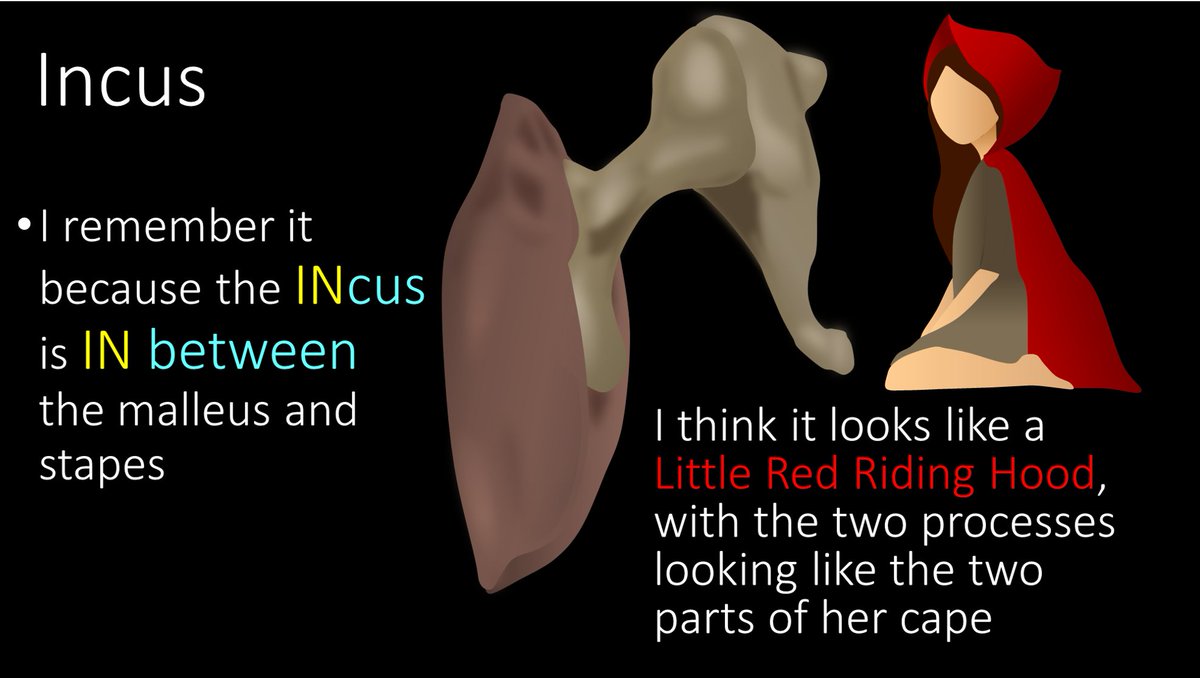
6/I remember its name because the INcus is the IN between ossicle. It is in between the malleus and stapes.
I don’t see an anvil—I see Little Red Riding Hood—with her hood pointed out and her cape draping down
I don’t see an anvil—I see Little Red Riding Hood—with her hood pointed out and her cape draping down
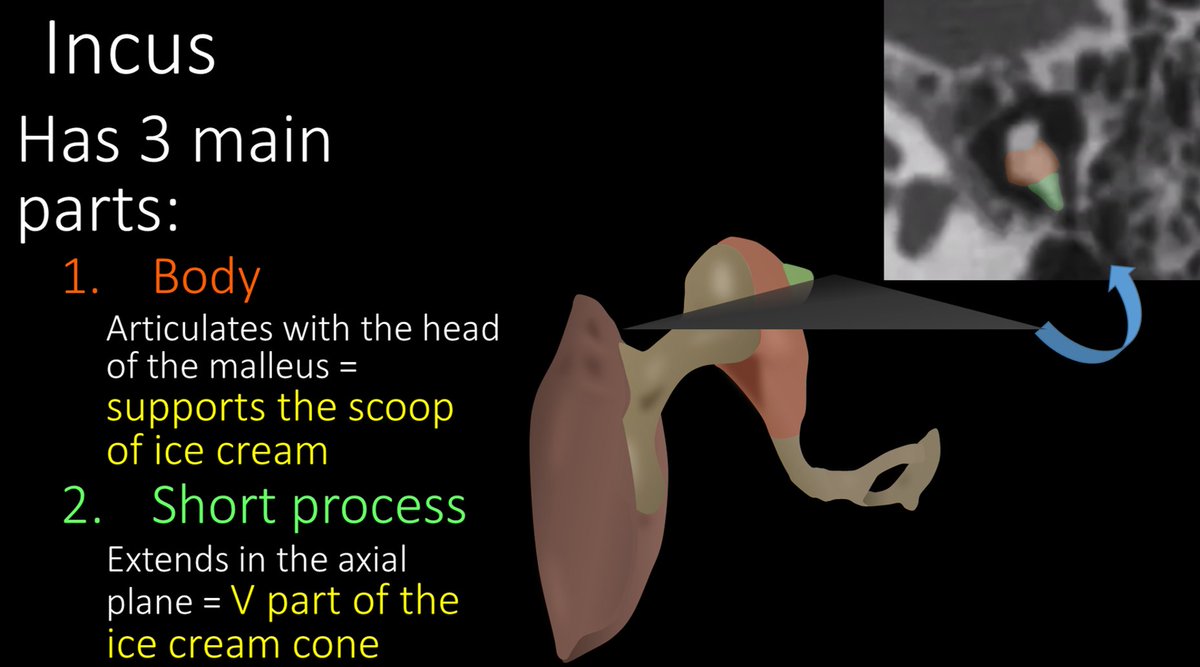
7/Incus also has three main parts. The body is what articulates with the head of the malleus and so it forms the wide part of the ice cream cone.
The short process is the Little Red Riding Hood hood, and it forms the V part of the ice cream cone
The short process is the Little Red Riding Hood hood, and it forms the V part of the ice cream cone
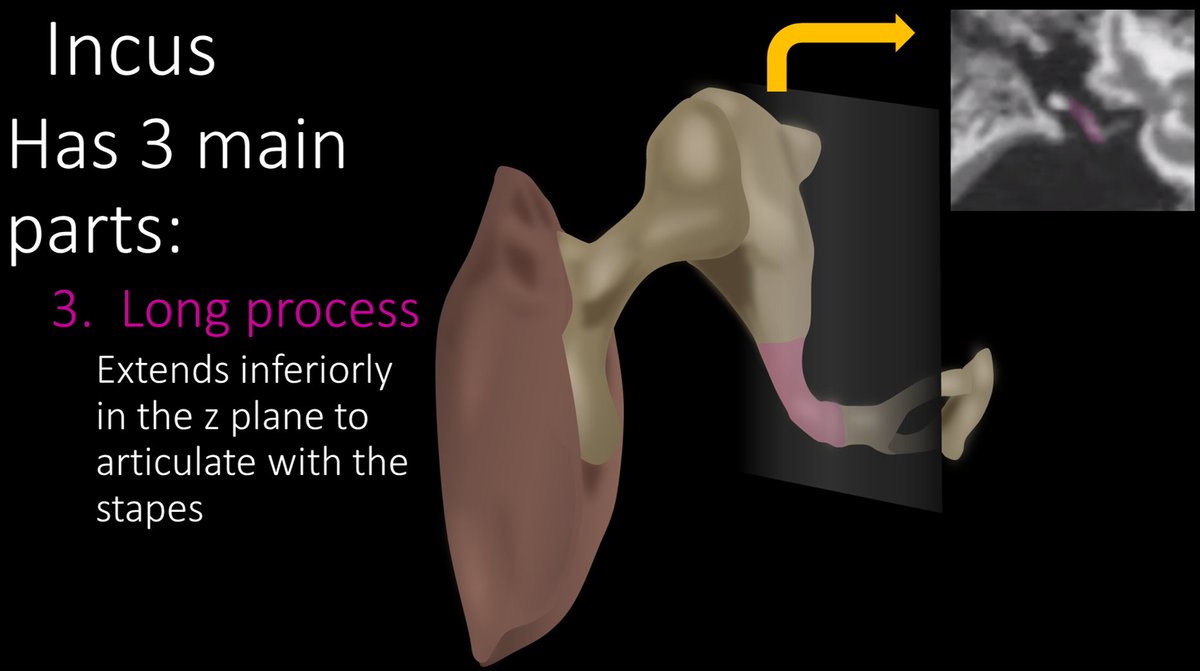
8/The long process of the incus is the cape of Little Red Riding Hood, and like a cape, it flows down in the z plane.
Its job is to articulate with the stapes. Because it flows down like a cape, it is best seen in the coronal plane rather than the axial plane.
Its job is to articulate with the stapes. Because it flows down like a cape, it is best seen in the coronal plane rather than the axial plane.
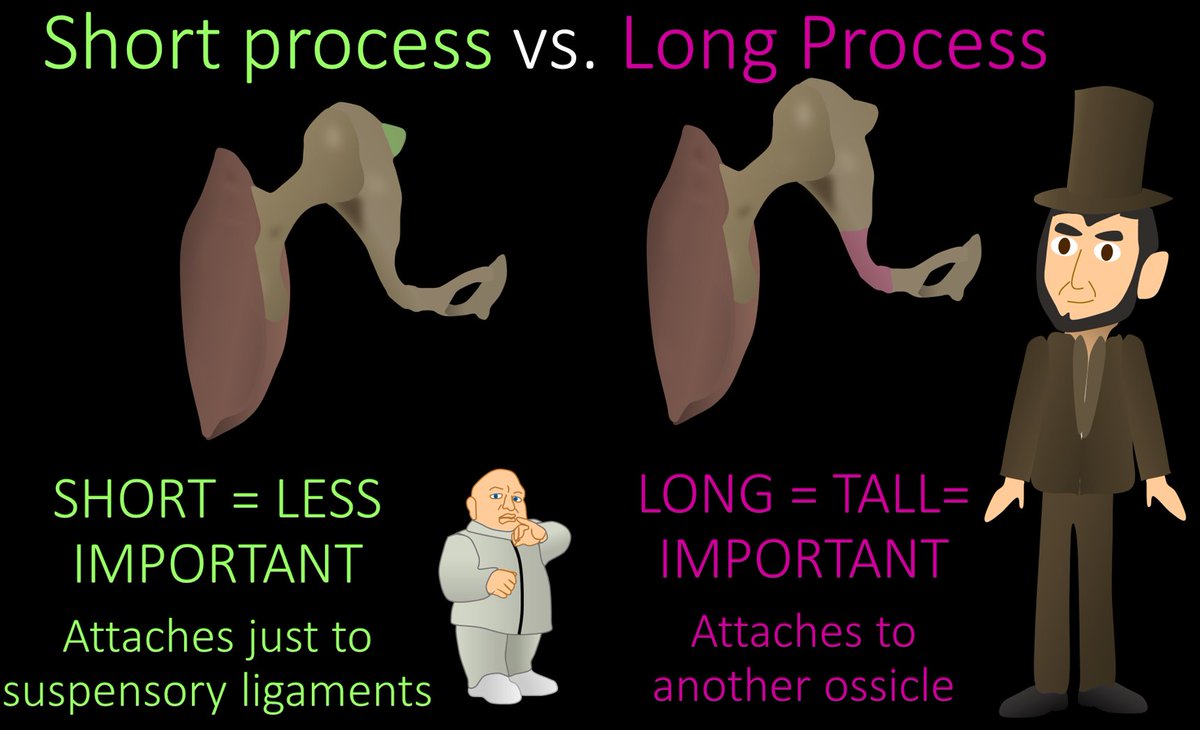
9/The 2 processes are the hood & cape.
How do you remember which is which?
As a short person myself, I know short is never as valued as tall. So short process—not as valuable, just for suspensory ligaments. Long process is tall & is important—articulates w/another ossicle
How do you remember which is which?
As a short person myself, I know short is never as valued as tall. So short process—not as valuable, just for suspensory ligaments. Long process is tall & is important—articulates w/another ossicle
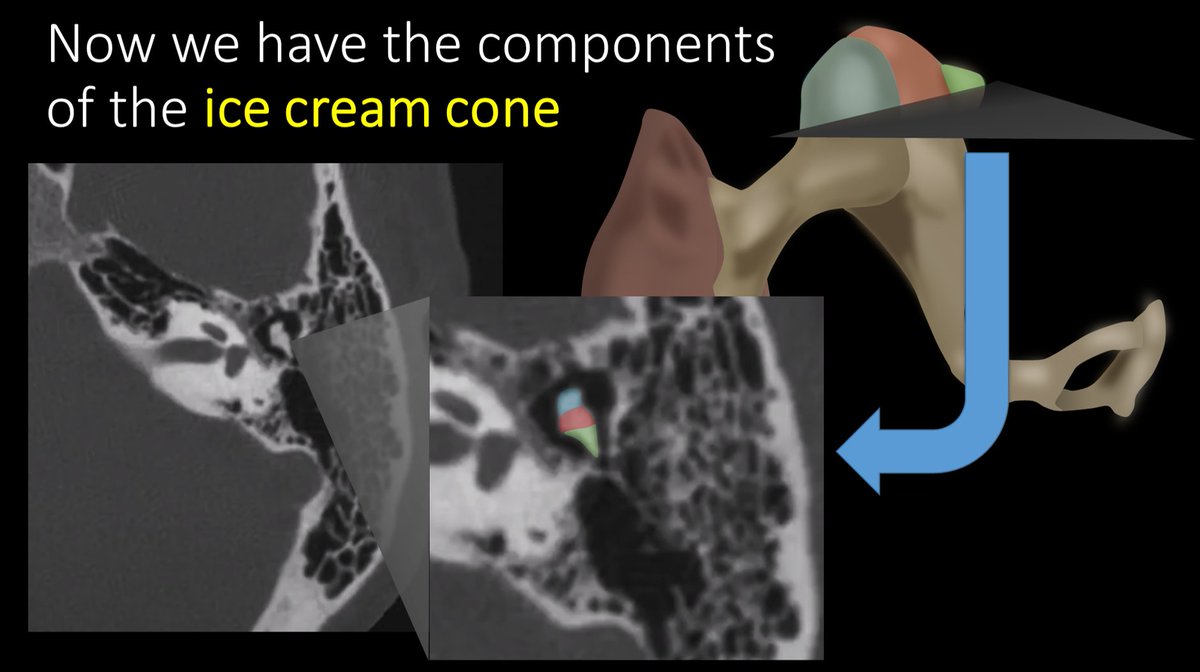
10/The malleus and the incus are what make the famous ice cream cone on imaging.
Scoop is the head of the malleus, wide part of the cone is the incus body, and the tip of the cone is the short process of the incus
Scoop is the head of the malleus, wide part of the cone is the incus body, and the tip of the cone is the short process of the incus
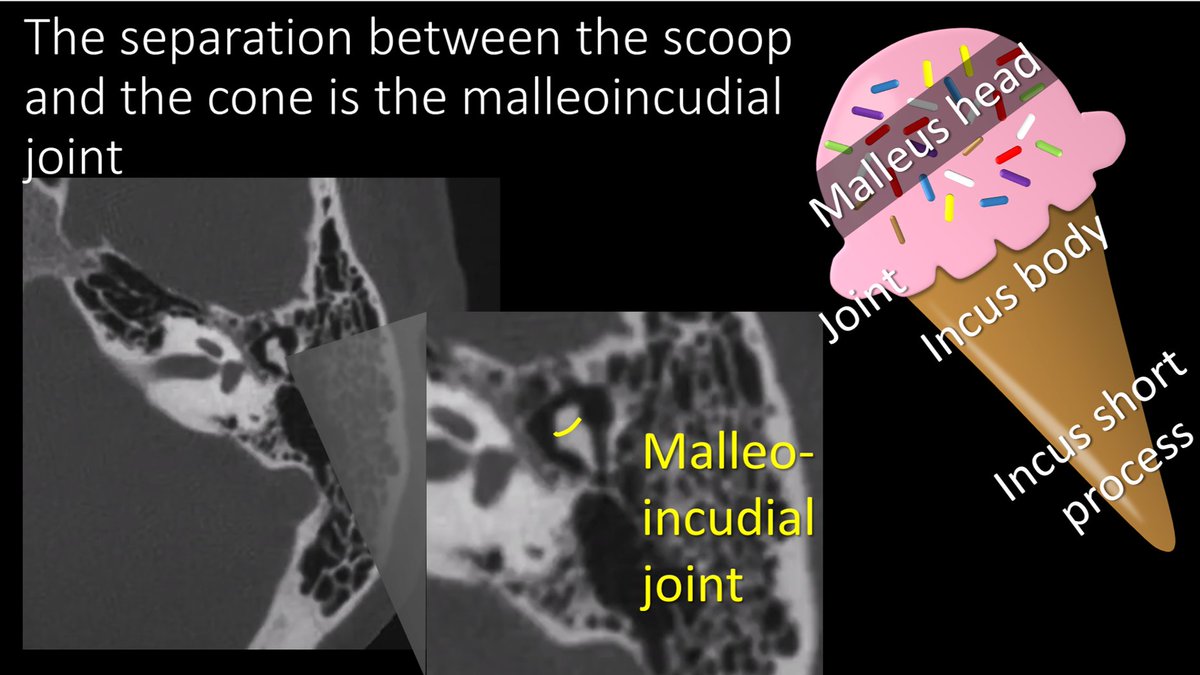
11/Just as the scoop is separate from the cone, the malleus head scoop is separated from the incus cone by the malleoincudial joint. This articulation is important to look at, as it may get disrupted in trauma
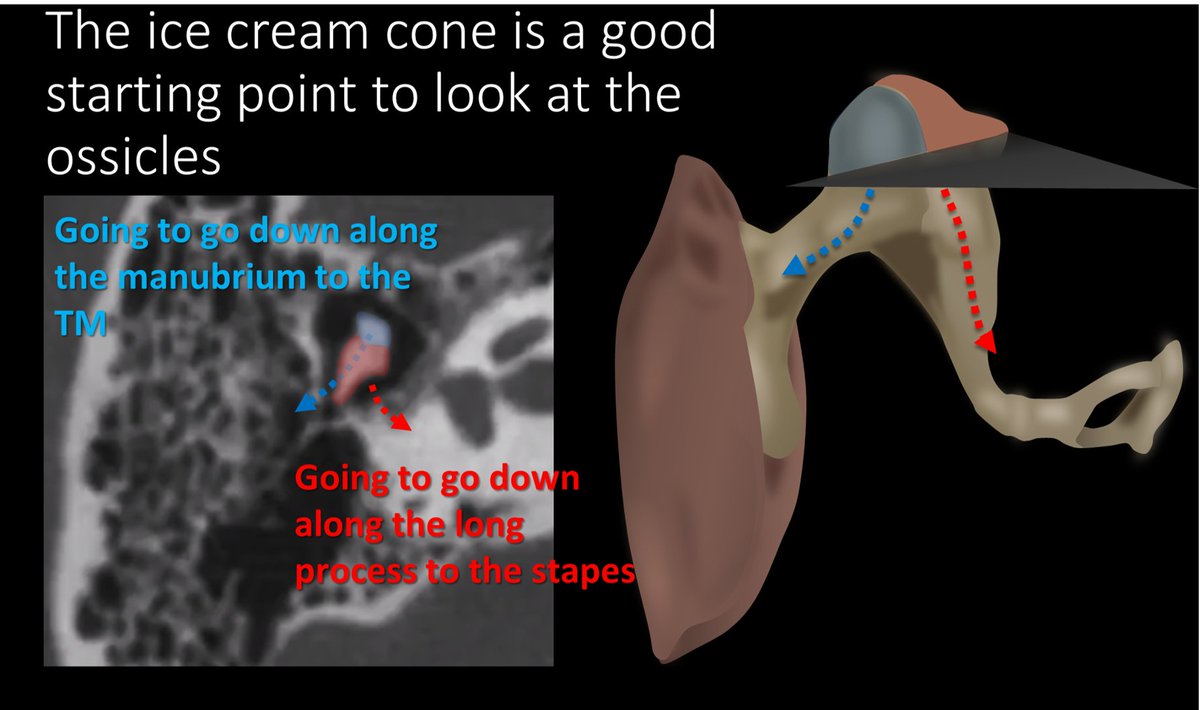
12/The ice cream cone is always good to orient yourself. From there you can look at each of the two ossicles that make it (malleus and incus)—as you go down from the ice cream cone, the malleus will go lateral to the tympanic membrane and the incus will go medial to the stapes
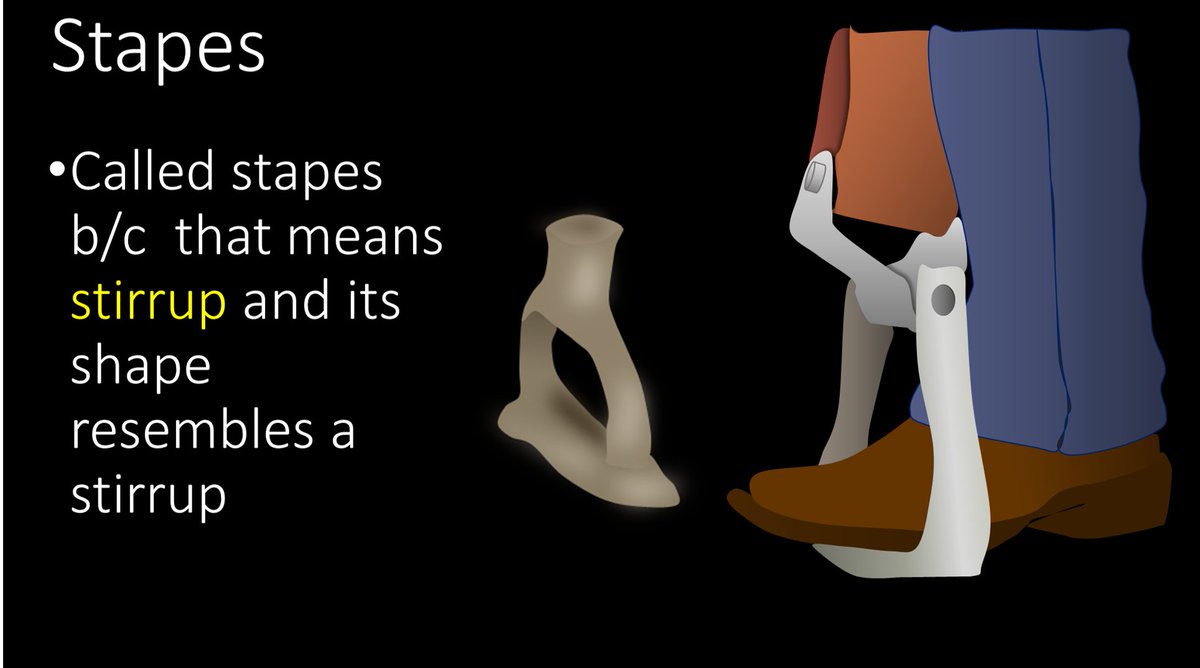
13/So let’s talk about the stapes. It is called the stapes bc that means stirrup. Now I’m originally from Texas, so this is actually an analogy I can get behind—it really does look like a stirrup.
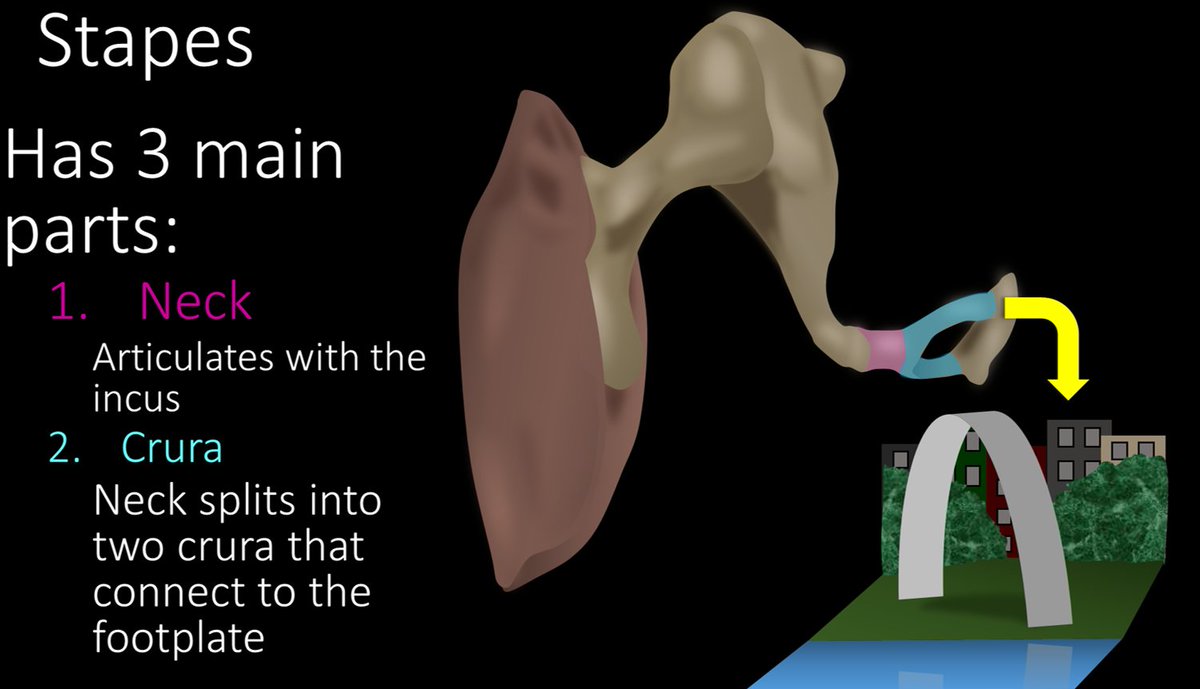
14/Like all the ossicles, the stapes has 3 main parts. The neck articulates with the incus. The neck then splits into two and makes an arch, that looks like St Louis Gateway arch. Each leg of this arch is called a crura.
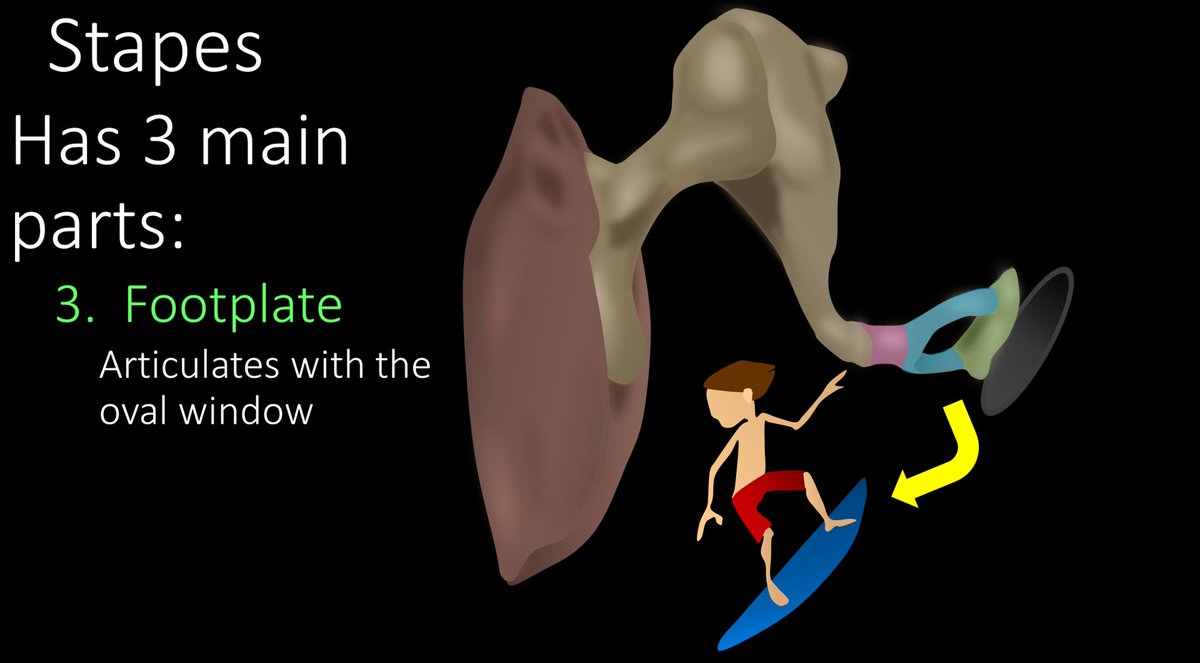
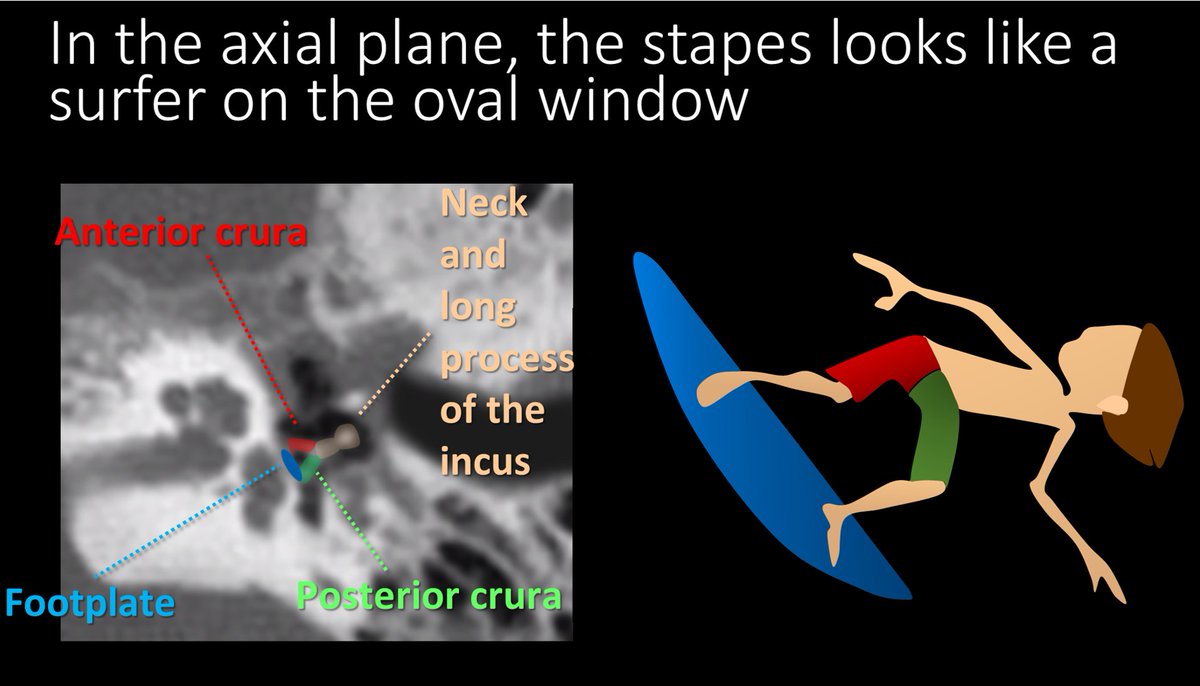
15/These crura land on the stapes footplate. The crura look like two legs on top of the footplate surf board. The foot plate then articulates with the oval window—it is here that the sound waves get transmitted to the inner ear!
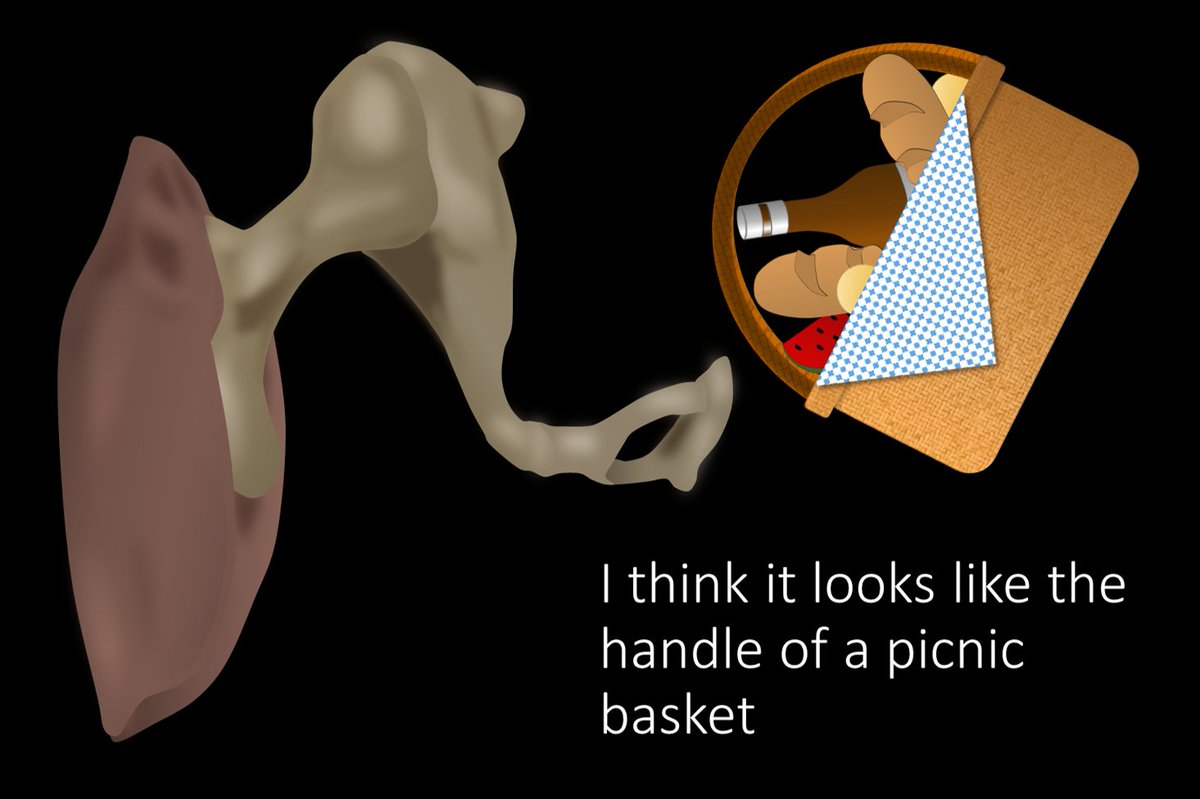
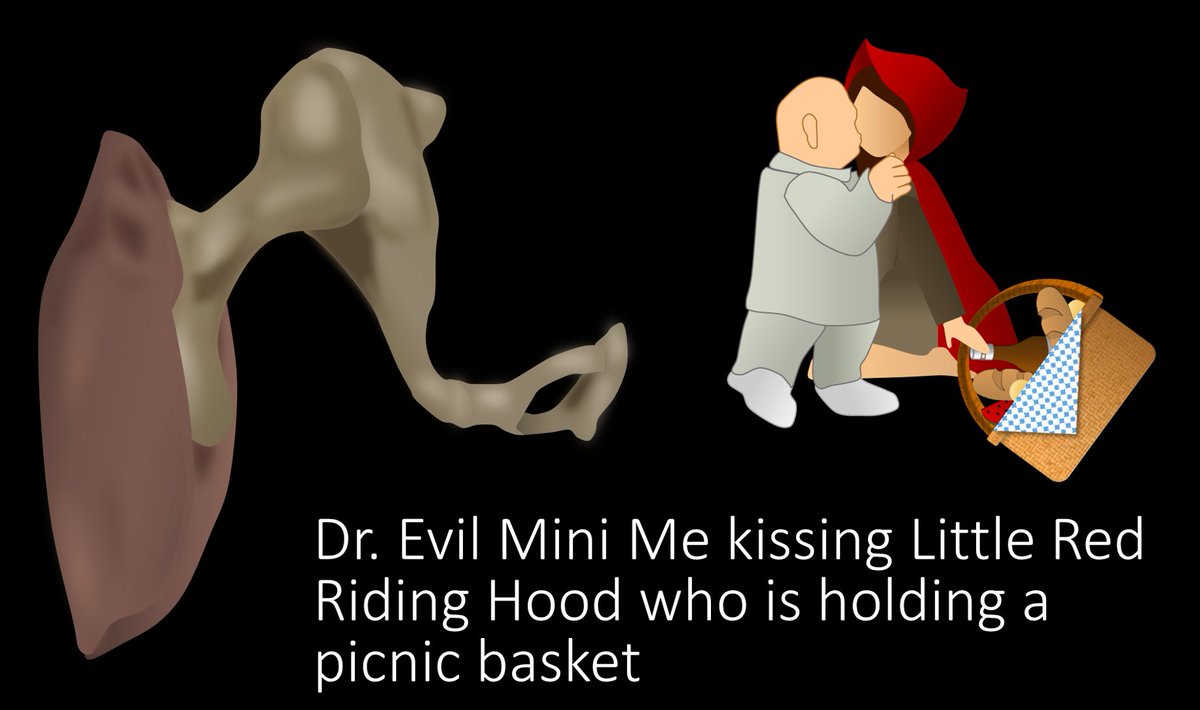
16/Although the stapes does look like a stirrup if you rotate right—when it is part of the ossicular chain, I think it looks like a picnic basket that Little Red Riding Hood is carrying to grandma’s house
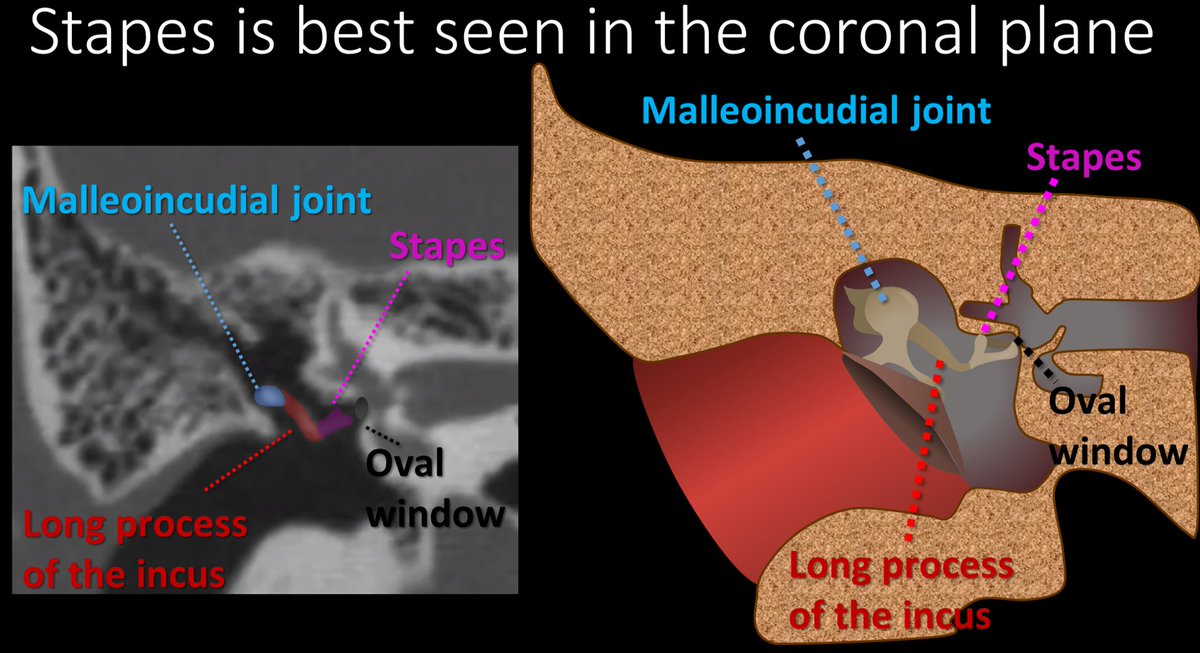
17/The stapes is best seen in the coronal plane.
You can follow the very important long process of the incus down from the malleoincudial joint to the stapes and see it articulate with the oval window on coronal images
You can follow the very important long process of the incus down from the malleoincudial joint to the stapes and see it articulate with the oval window on coronal images
18/You can see it on axials as well.
Here it really looks like a surfer—with the two crura legs standing on the footplate surfboard. The head/body of the surfer is made up of the neck of the stapes and its articulate with the long process of the incus
Here it really looks like a surfer—with the two crura legs standing on the footplate surfboard. The head/body of the surfer is made up of the neck of the stapes and its articulate with the long process of the incus
19/So to recap the ossicles—you have Dr. Evil Mini Me making out with Little Red Riding Hood who is carrying a picnic basket to take to grandma. Try unseeing that!
And if you can’t unsee it, you can’t forget it, and that’s what these tweetorials are all about!
And if you can’t unsee it, you can’t forget it, and that’s what these tweetorials are all about!
Loading suggestions...