

Tantra Shastra - Ancient India's science of mysticism and spiritual Liberation
Tantra - The Body
Mantra - The Mind
Yantra - The Object
Is it an Occult Science / Black magic?
Answer: No?
Let's explore the true meaning of Tantra:
#Thread
#SanatanDharma #Hinduism #India
Tantra - The Body
Mantra - The Mind
Yantra - The Object
Is it an Occult Science / Black magic?
Answer: No?
Let's explore the true meaning of Tantra:
#Thread
#SanatanDharma #Hinduism #India
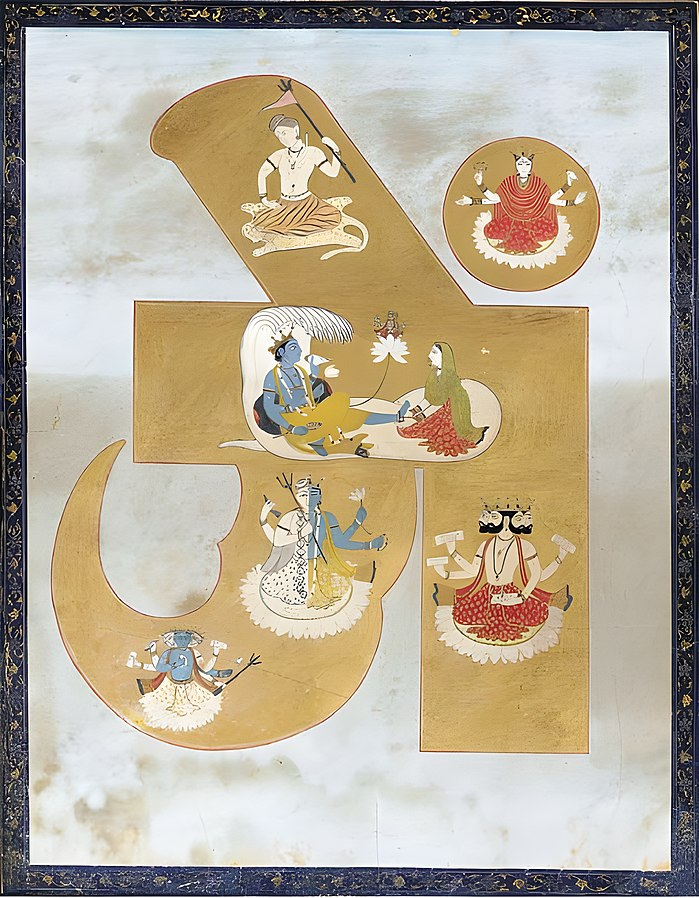
1. What is the meaning of Tantra?
The word tantra is made up of the joining (sandhi in Sanskrit) of two Sanskrit words: tanoti (expansion) and trayati (liberation). Tantra means liberation of energy and expansion of consciousness from its gross form. It is a method to expand the mind and liberate the dormant potential energy, and its principles form the basis of all yogic practices. Hence, the Hindu Tantra scriptures refer to techniques for achieving a result.
#SanatanDharma #Hinduism #India
The word tantra is made up of the joining (sandhi in Sanskrit) of two Sanskrit words: tanoti (expansion) and trayati (liberation). Tantra means liberation of energy and expansion of consciousness from its gross form. It is a method to expand the mind and liberate the dormant potential energy, and its principles form the basis of all yogic practices. Hence, the Hindu Tantra scriptures refer to techniques for achieving a result.
#SanatanDharma #Hinduism #India
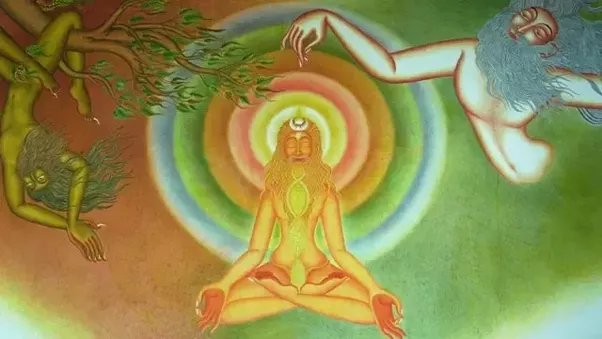
3. Tantra Shastra and its Scriptures
The Hindu Tantras has total 92 scriptures; of these, 64 are purely Abheda (literally "without differentiation", or monistic), known as the Bhairava Tantras or Kashmir Śaivite Tantras, 18 are Bhedābheda (literally "with differentiation and without differentiation" monistic or dualistic), known as the Rudra Tantras), and 10 are completely Bheda (literally "differentiated" or dualistic), known as the Śiva Tantras. The latter two (Rudra Tantras and Śiva Tantras) are used by the Śaiva Siddhāntins and thus are sometimes referred to as Shaiva Siddhanta Tantras, or Śaiva Siddhānta Āgamas.
#SanatanDharma #Hinduism #India #Tantra
The Hindu Tantras has total 92 scriptures; of these, 64 are purely Abheda (literally "without differentiation", or monistic), known as the Bhairava Tantras or Kashmir Śaivite Tantras, 18 are Bhedābheda (literally "with differentiation and without differentiation" monistic or dualistic), known as the Rudra Tantras), and 10 are completely Bheda (literally "differentiated" or dualistic), known as the Śiva Tantras. The latter two (Rudra Tantras and Śiva Tantras) are used by the Śaiva Siddhāntins and thus are sometimes referred to as Shaiva Siddhanta Tantras, or Śaiva Siddhānta Āgamas.
#SanatanDharma #Hinduism #India #Tantra
4. Types of Tantra Shastra
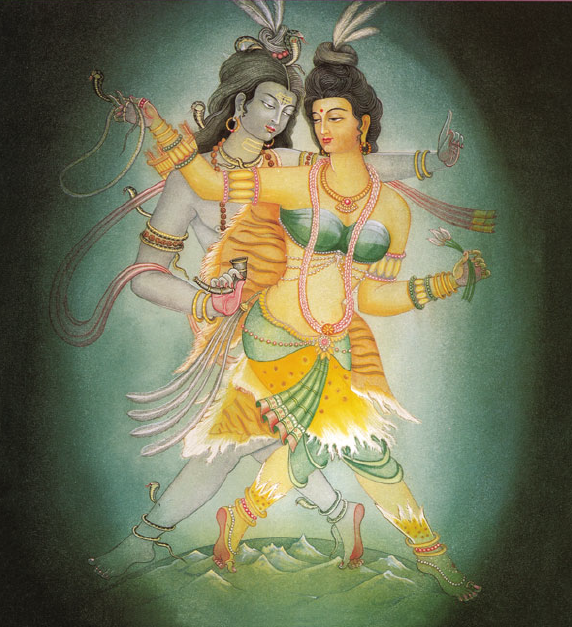
Tantra is mainly of two types: Agama and Nigama. Agamas are those texts in which Goddess asked questions and the God replied. In Nigama texts, God asked questions and Goddess replied. This dialogue between God and Goddess is a special feature of Hinduism Tantra.
When Shiva is acting as a teacher, he revealed his knowledge to Shakti, which is called ‘Agama’, but when Shakti took the role of a teacher, the knowledge that she revealed to Shiva, is called ‘Nigama’, which is also referred to as ‘Tantra’. Shruti texts of Vedic scriptures include both Agamas and Nigamas.
#SanatanDharma #Hinduism #India #Tantra
Tantra is mainly of two types: Agama and Nigama. Agamas are those texts in which Goddess asked questions and the God replied. In Nigama texts, God asked questions and Goddess replied. This dialogue between God and Goddess is a special feature of Hinduism Tantra.
When Shiva is acting as a teacher, he revealed his knowledge to Shakti, which is called ‘Agama’, but when Shakti took the role of a teacher, the knowledge that she revealed to Shiva, is called ‘Nigama’, which is also referred to as ‘Tantra’. Shruti texts of Vedic scriptures include both Agamas and Nigamas.
#SanatanDharma #Hinduism #India #Tantra
5. What is the true meaning of Tantra?
Tantra studies the tree of life itself instead of limiting itself to any single branch of the tree. This tree, this macrocosm, is a great organization of diverse
elements, linked together by a unifying law (dharma) that is inherent in their very nature. Tantra seeks to understand this law, which has organized the diverse phenomena into the world of relative existence (maya), and to use it to promote the evolution of individual consciousness. As stated in the Kashika Vritti, “Tantra is that knowledge which expands mind, body, and consciousness.” The aim of Tantra, then, is to expand awareness whether waking state, dream state, or deep sleep. We need a kind to “deconstruct” and “reconstruct” our mind and mental universe.
#SanatanDharma #Hinduism #India
Tantra studies the tree of life itself instead of limiting itself to any single branch of the tree. This tree, this macrocosm, is a great organization of diverse
elements, linked together by a unifying law (dharma) that is inherent in their very nature. Tantra seeks to understand this law, which has organized the diverse phenomena into the world of relative existence (maya), and to use it to promote the evolution of individual consciousness. As stated in the Kashika Vritti, “Tantra is that knowledge which expands mind, body, and consciousness.” The aim of Tantra, then, is to expand awareness whether waking state, dream state, or deep sleep. We need a kind to “deconstruct” and “reconstruct” our mind and mental universe.
#SanatanDharma #Hinduism #India
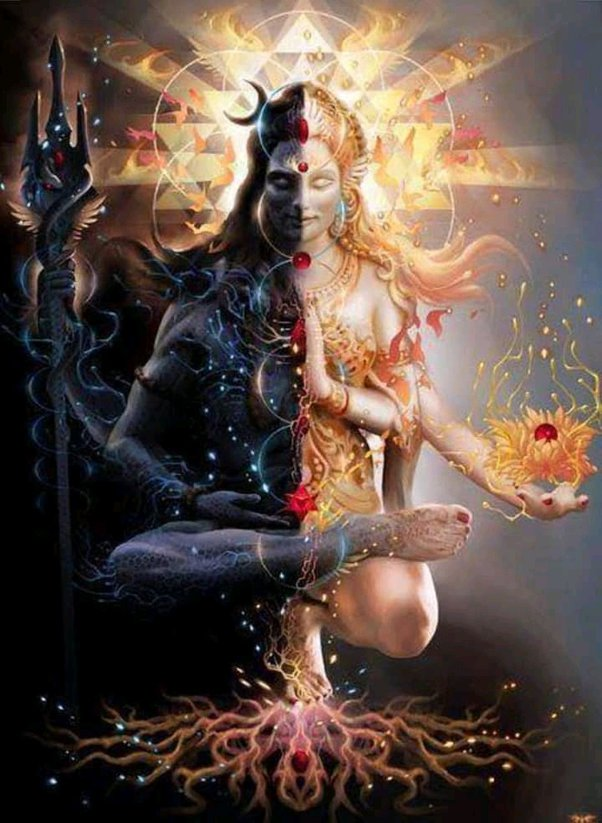
6. Maa Shakti and Bhagavan Shiva as a cosmic representation of Tantra Energy
People often think of Tantra as a “mother-worshiping” cult. Although Tantra might be called a Shakti-worshiping cult, this is not strictly accurate. Shakti is the universal principle of energy, power, or creativity. This energy is personified as feminine, as Shakti, the Universal Mother. She is inseparable from the one who beholds her "The shaktimaan" (“powerholder”), the masculine principle or Universal Father. Shaktiman is called Brahman by the writers of the Upanishads. In the Tantric tradition, he is called Shiva.
#SanatanDharma #Hinduism #India #Tantra
People often think of Tantra as a “mother-worshiping” cult. Although Tantra might be called a Shakti-worshiping cult, this is not strictly accurate. Shakti is the universal principle of energy, power, or creativity. This energy is personified as feminine, as Shakti, the Universal Mother. She is inseparable from the one who beholds her "The shaktimaan" (“powerholder”), the masculine principle or Universal Father. Shaktiman is called Brahman by the writers of the Upanishads. In the Tantric tradition, he is called Shiva.
#SanatanDharma #Hinduism #India #Tantra
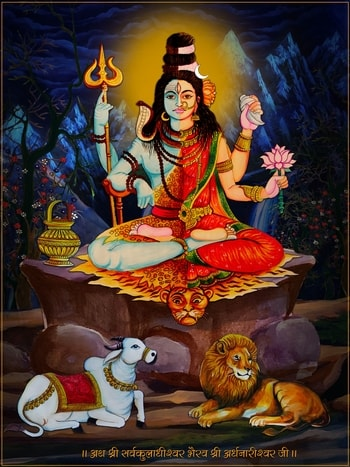
7. The Cosmic play of Tantra energy - The Shakti and The Shaktimaan
The universe is in fact a product of this pair of opposites:
one static (Shaktimaan) and the other dynamic (Shakti Maa). The external part of everything is the creative aspect of the dynamic force, and inside every dynamic creation is the static force, which is the nucleus of phenomenal existence. The play of Shakti has no beginning or end. Although it is restless, the energy does move in an orderly cycle, alternating periods of motion and rest. During the period of motion, through permutations and various combinations, the energy undergoes many changes ( Vikriti) and gets distorted. It reorganizes itself during the period of rest, and thus a continuous process of creation, preservation, and destruction, reorganization and recreation, goes on forever. Tantra believes that as long as the phenomenal world exists, it is the Universal Mother who is the creator, preserver, and destroyer. Thus she should be worshiped as an aspect of the Divine.
#SanatanDharma #Hinduism #India #Tantra
The universe is in fact a product of this pair of opposites:
one static (Shaktimaan) and the other dynamic (Shakti Maa). The external part of everything is the creative aspect of the dynamic force, and inside every dynamic creation is the static force, which is the nucleus of phenomenal existence. The play of Shakti has no beginning or end. Although it is restless, the energy does move in an orderly cycle, alternating periods of motion and rest. During the period of motion, through permutations and various combinations, the energy undergoes many changes ( Vikriti) and gets distorted. It reorganizes itself during the period of rest, and thus a continuous process of creation, preservation, and destruction, reorganization and recreation, goes on forever. Tantra believes that as long as the phenomenal world exists, it is the Universal Mother who is the creator, preserver, and destroyer. Thus she should be worshiped as an aspect of the Divine.
#SanatanDharma #Hinduism #India #Tantra
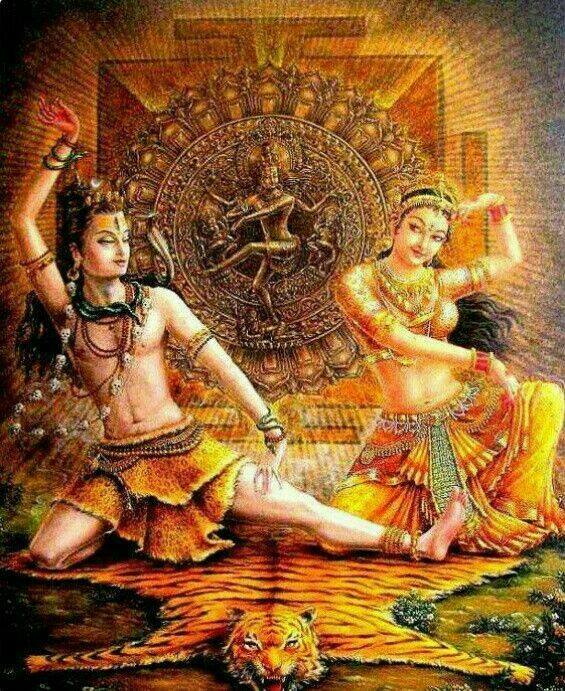
8. Ichhashakti (Worldly Desires) and Chakra of Human Body - The problem of worldly existence solved by the Tantra
What is the motivating force behind this eternal play that creates the illusory world of phenomena? It is the power of desire (Ichchashakti). This desire is present in the one who is without attributes, the nameless and formless aspect of the divine (Brahman or Nishkal Brahman). Tantra performs the unique work of studying this principle of desire.
#SanatanDharma #Hinduism #India
What is the motivating force behind this eternal play that creates the illusory world of phenomena? It is the power of desire (Ichchashakti). This desire is present in the one who is without attributes, the nameless and formless aspect of the divine (Brahman or Nishkal Brahman). Tantra performs the unique work of studying this principle of desire.
#SanatanDharma #Hinduism #India
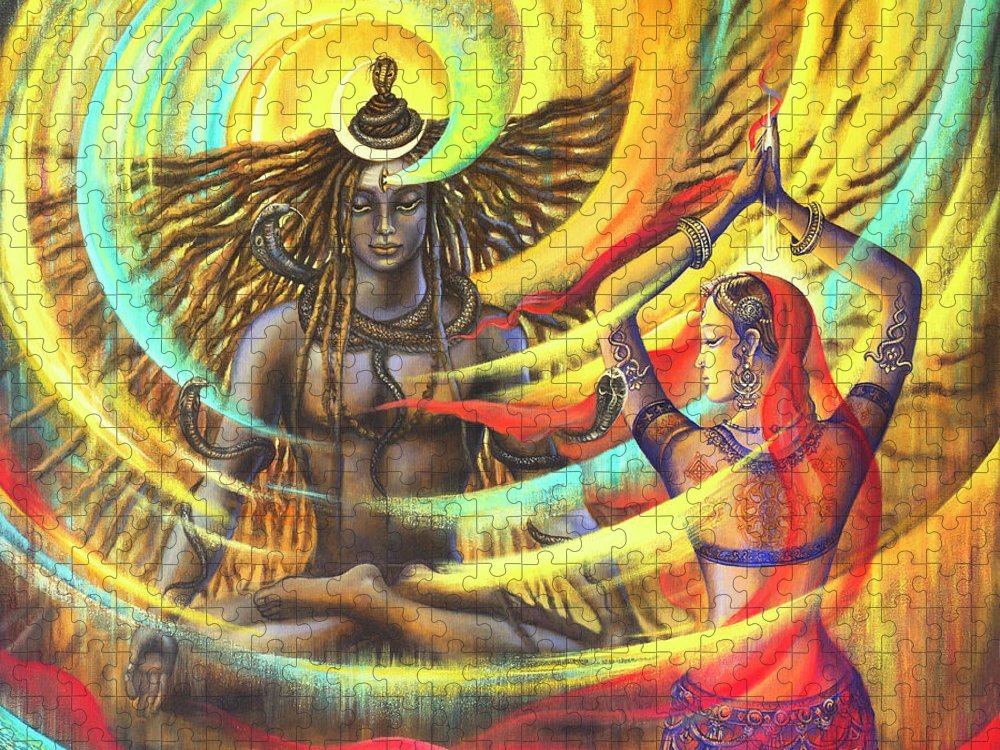
9. How Tantra uses the energy of Ichhashakti (Worldy Desires) to propel the human being to a higher consciousness?
Since Tantra accepts desire as the prime motivating force of the universe, it does not ask its aspirants to renounce desire. Other spiritual sciences advise the avoidance of desire, which they claim leads to bondage and is an obstacle to achieving higher consciousness. They try to overcome desire through asceticism or by roasting the seed of desire in the fire of knowledge so that it cannot sprout. But Tantra's philosophy says that to achieve desirelessness, one must have a strong desire to be desireless!
#SanatanaDharma #Hinduism #India #Tantra
Since Tantra accepts desire as the prime motivating force of the universe, it does not ask its aspirants to renounce desire. Other spiritual sciences advise the avoidance of desire, which they claim leads to bondage and is an obstacle to achieving higher consciousness. They try to overcome desire through asceticism or by roasting the seed of desire in the fire of knowledge so that it cannot sprout. But Tantra's philosophy says that to achieve desirelessness, one must have a strong desire to be desireless!
#SanatanaDharma #Hinduism #India #Tantra
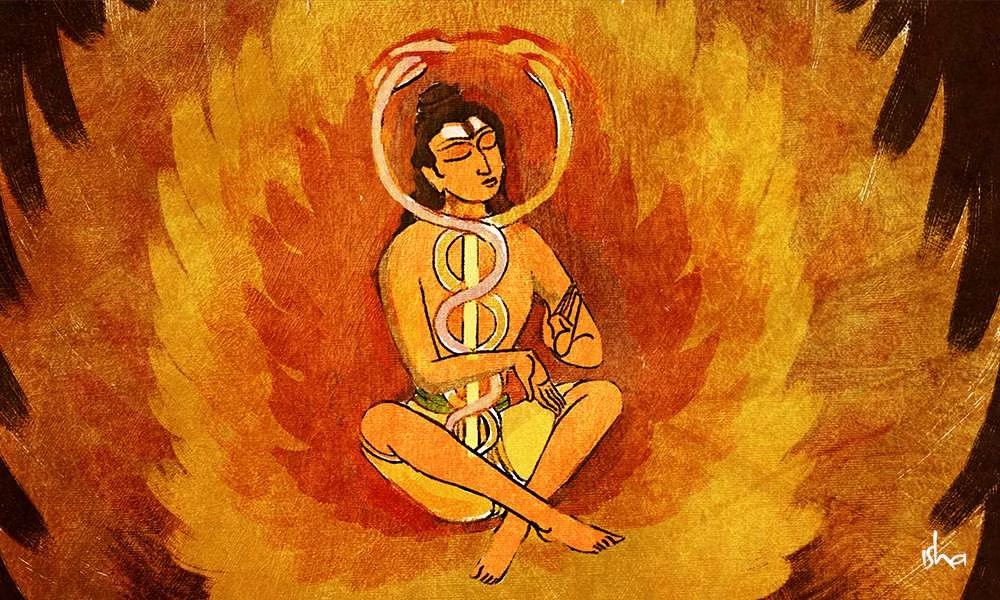
10. Scientific aspect of Tantra
Tantra asserts that desires are natural and that as long as we are embodied, we will have them. Our sense organs serve as windows through which desires enter. That is, desires are created out of our attachment to sensory input. All desires have a physical basis in innumerable bodily impulses. The more we try to suppress them, the stronger they become. Desires activate the secretion of hormones from the endocrine glands. The concentration of these substances in the blood, arising from the suppression of desire, appears as a chemical disturbance or disease.
#SanatanDharma #Hinduism #India
Tantra asserts that desires are natural and that as long as we are embodied, we will have them. Our sense organs serve as windows through which desires enter. That is, desires are created out of our attachment to sensory input. All desires have a physical basis in innumerable bodily impulses. The more we try to suppress them, the stronger they become. Desires activate the secretion of hormones from the endocrine glands. The concentration of these substances in the blood, arising from the suppression of desire, appears as a chemical disturbance or disease.
#SanatanDharma #Hinduism #India
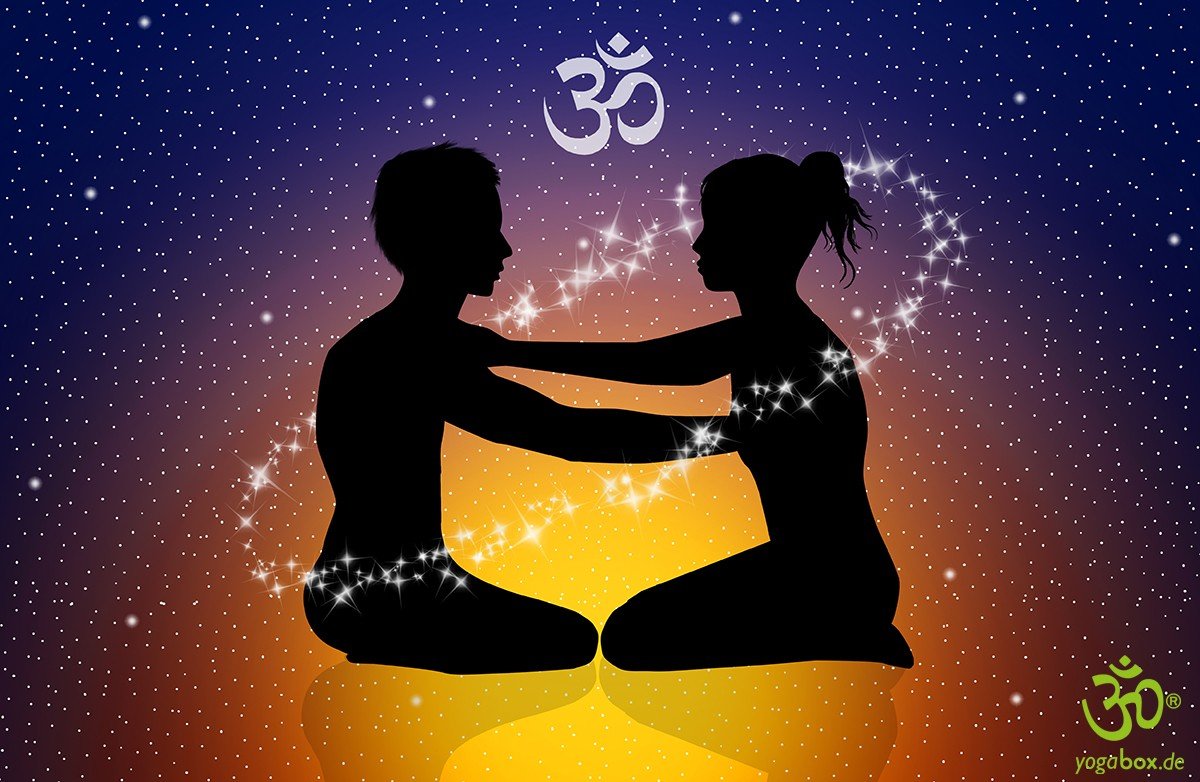
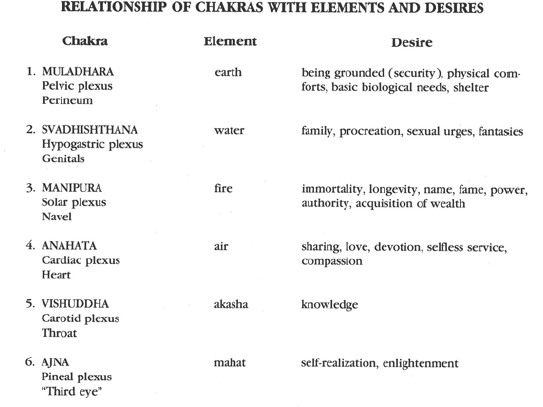
11. Six Human Body Chakra and Ichhashakti (Worldy Desires) - The start of Tantra Manifestation
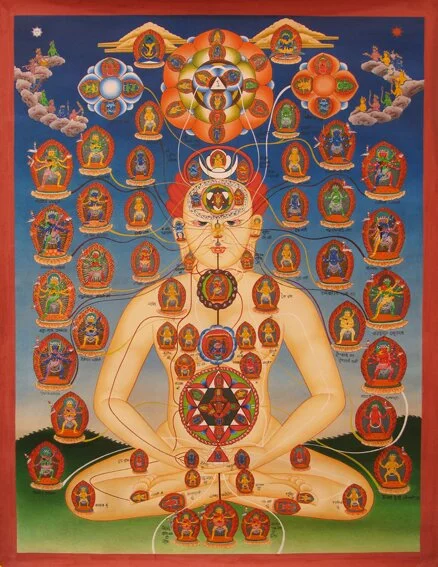
Desires are directly related to the six psychic centers
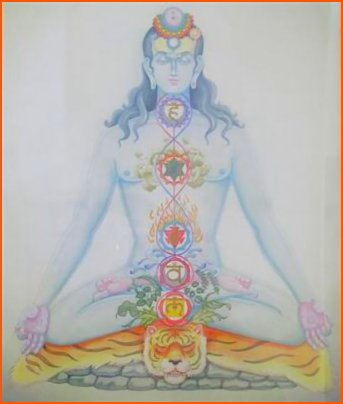
known as the chakras. As the energy in its natural course moves through the different chakras, in concert with the movement of the Earth in the heavens, it energizes the latent desires of those chakras. This makes a person move from one desire to another during the twenty-four-hour cycle of a day. Our physical reality is directly influenced by the force of gravity of the Earth and by the environment created by the celestial bodies and the electromagnetic currents flowing within the planet. The consciousness of desires is related to six of the chakras, and all desires can be classified according to these chakras. The chakras are the playground of the five gross elements akasha (ether or space), air, fire, water, and earth, and their source, the subtle element called MAHAT. To transcend desires, we have to transcend the elements, and this is possible only through raising the dormant energy (Kundalini) that lies at the base of the spine.
#SanatanaDharma #Hinduism #India #Tantra
Desires are directly related to the six psychic centers
known as the chakras. As the energy in its natural course moves through the different chakras, in concert with the movement of the Earth in the heavens, it energizes the latent desires of those chakras. This makes a person move from one desire to another during the twenty-four-hour cycle of a day. Our physical reality is directly influenced by the force of gravity of the Earth and by the environment created by the celestial bodies and the electromagnetic currents flowing within the planet. The consciousness of desires is related to six of the chakras, and all desires can be classified according to these chakras. The chakras are the playground of the five gross elements akasha (ether or space), air, fire, water, and earth, and their source, the subtle element called MAHAT. To transcend desires, we have to transcend the elements, and this is possible only through raising the dormant energy (Kundalini) that lies at the base of the spine.
#SanatanaDharma #Hinduism #India #Tantra
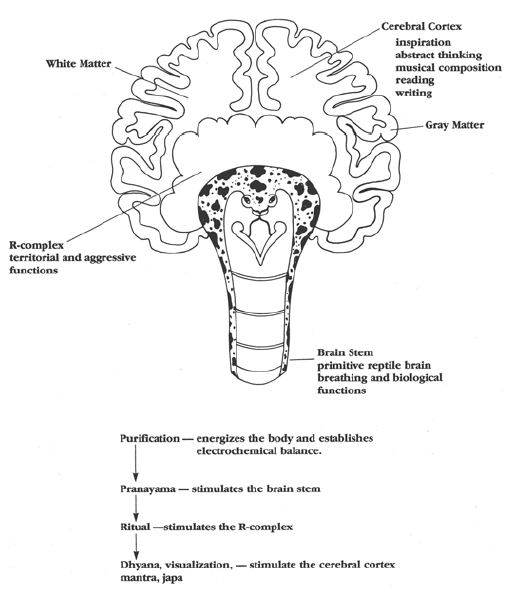
12. A complete understanding of the human brain as the basis of the practice of the Tantra
The brain evolved from the inside out. Deep inside is
the oldest part, the brainstem, which conducts the
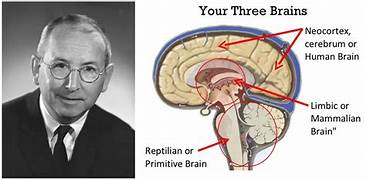
basic biological functions, including the rhythms of life heartbeat, and respiration. According to the TRIUNE BRAIN MODEL by Paul Mac-Lean, the higher functions of the brain evolved in three successive stages. Capping the brainstem is the R-complex, the seat of aggression, ritual, territoriality, and social hierarchy, which evolved hundreds of millions of years ago in our reptilian ancestors. Deep inside the skull of every one of us, there is something like the brain of a crocodile. Surrounding the R-complex is the limbic system or mammalian brain, which evolved tens of millions of years ago in ancestors who were mammals but not yet Primates. It is a major source of our moods and emotions, of our concern and care for the young.
And on the outside, is the cerebral cortex, which evolved millions of years ago in our Primate ancestors. The cerebral cortex, where matter is
transformed into consciousness, is the point of
embarkation of all our cosmic voyages. Comprising
more than two-thirds of the brain mass, it is the realm of both intuition and critical analysis. It is here that we have ideas and inspirations, here that we read and write, here that we do mathematics and compose
music.
#SanatanaDharma #Hinduism #India #Tantra
The brain evolved from the inside out. Deep inside is
the oldest part, the brainstem, which conducts the
basic biological functions, including the rhythms of life heartbeat, and respiration. According to the TRIUNE BRAIN MODEL by Paul Mac-Lean, the higher functions of the brain evolved in three successive stages. Capping the brainstem is the R-complex, the seat of aggression, ritual, territoriality, and social hierarchy, which evolved hundreds of millions of years ago in our reptilian ancestors. Deep inside the skull of every one of us, there is something like the brain of a crocodile. Surrounding the R-complex is the limbic system or mammalian brain, which evolved tens of millions of years ago in ancestors who were mammals but not yet Primates. It is a major source of our moods and emotions, of our concern and care for the young.
And on the outside, is the cerebral cortex, which evolved millions of years ago in our Primate ancestors. The cerebral cortex, where matter is
transformed into consciousness, is the point of
embarkation of all our cosmic voyages. Comprising
more than two-thirds of the brain mass, it is the realm of both intuition and critical analysis. It is here that we have ideas and inspirations, here that we read and write, here that we do mathematics and compose
music.
#SanatanaDharma #Hinduism #India #Tantra
13. TRIUNE BRAIN MODEL by Paul D. MacLean resembling Tantra's understanding of the Human Brain
The triune brain is a model of the evolution of the vertebrate forebrain and behavior, proposed by the American physician and neuroscientist Paul D. MacLean in the 1960s. It is one of the few modern brain models of the human brain which could align with the Tantra explanation of the human brain and the human behavior it manifests.
#SanatanDharma #Hindutva #India #Tantra
The triune brain is a model of the evolution of the vertebrate forebrain and behavior, proposed by the American physician and neuroscientist Paul D. MacLean in the 1960s. It is one of the few modern brain models of the human brain which could align with the Tantra explanation of the human brain and the human behavior it manifests.
#SanatanDharma #Hindutva #India #Tantra
14. The Science of Tantra Practice
Tantra is a practical way of “reengineering” the
brain stem, R-complex, and cerebral cortex. Tantric worship always begins with purification (physical and ritual cleansing), followed by pranayama (breathing exercises). Pranayama affects the brain stem, which controls respiratory function. The aspirant performs certain rituals to energize the area of the R-complex so as to subdue aggression, territoriality, and the sense of social hierarchy. Next comes the exercise of abstract thinking (contemplation), visualization, and mantra japa (repetition of a sound, such as the name of the Maa Shakti and Bhagavan Shaktimaan) in sustained tones to influence the cerebral cortex, which is the seat of inspiration. Tantra prescribes all these practices in a systematic order, which happens to be the same order as the evolution of the brain: it begins with the deep inner part (the brain stem) and finds it connected with the psychic centers in the spine.
#SanatanDharma #Hinduism #India #Tantra
Tantra is a practical way of “reengineering” the
brain stem, R-complex, and cerebral cortex. Tantric worship always begins with purification (physical and ritual cleansing), followed by pranayama (breathing exercises). Pranayama affects the brain stem, which controls respiratory function. The aspirant performs certain rituals to energize the area of the R-complex so as to subdue aggression, territoriality, and the sense of social hierarchy. Next comes the exercise of abstract thinking (contemplation), visualization, and mantra japa (repetition of a sound, such as the name of the Maa Shakti and Bhagavan Shaktimaan) in sustained tones to influence the cerebral cortex, which is the seat of inspiration. Tantra prescribes all these practices in a systematic order, which happens to be the same order as the evolution of the brain: it begins with the deep inner part (the brain stem) and finds it connected with the psychic centers in the spine.
#SanatanDharma #Hinduism #India #Tantra
15. Tantra and Energy channels of the Human Body: The concept of Nadis
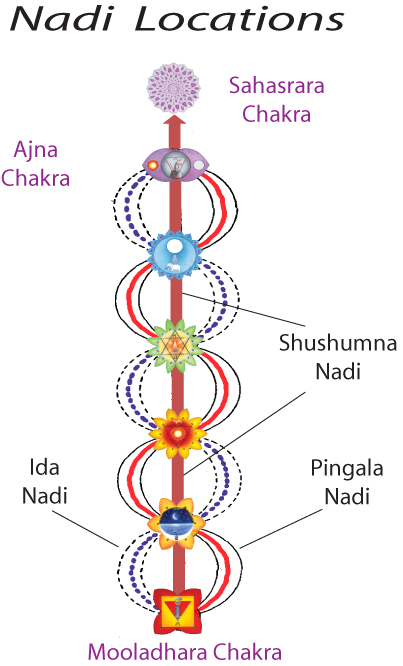
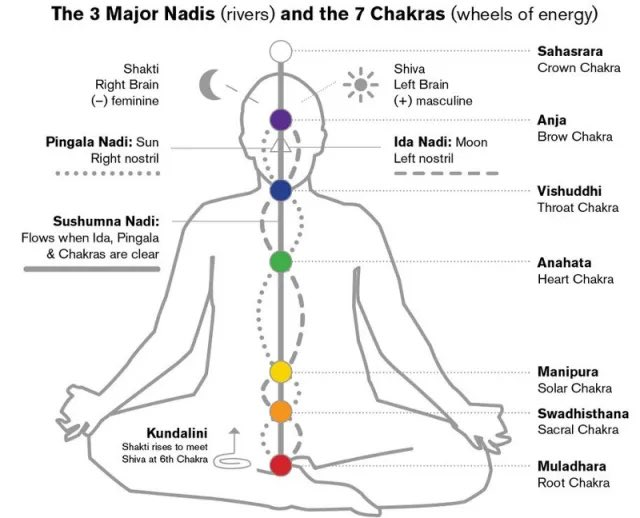
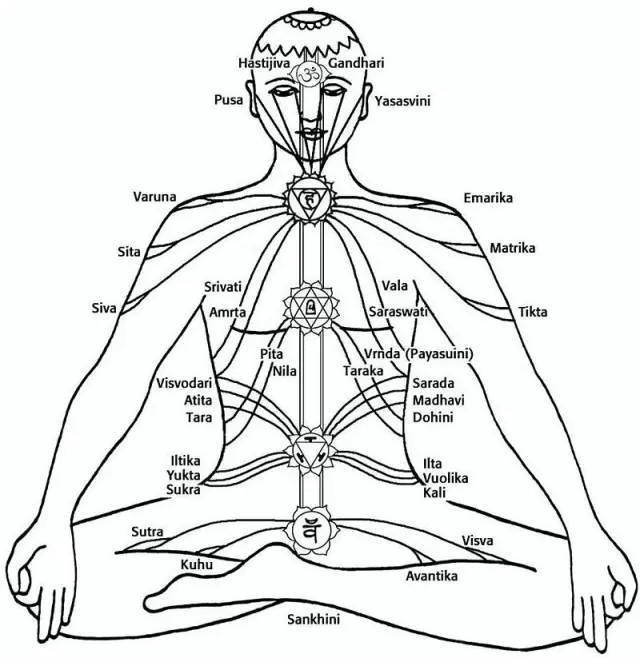
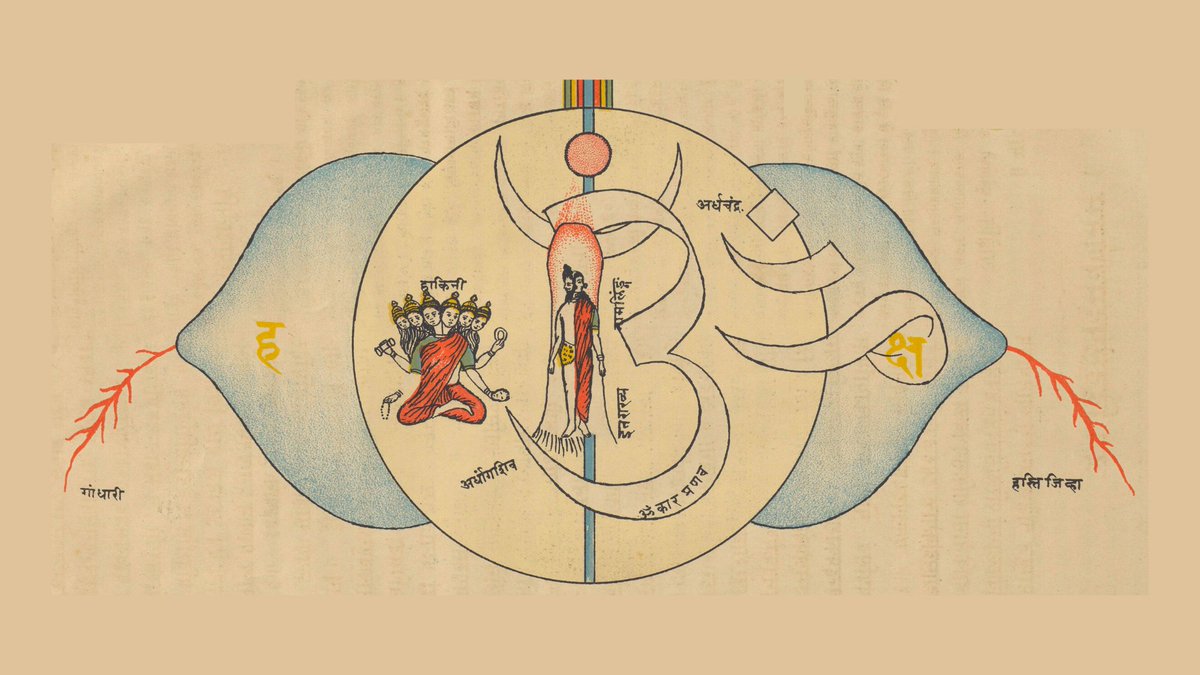
There are fourteen subtle Nadis (channels) connecting the psychic centers with the brain stem, of which ten are the most important. The ten Nadis are divided into three types of currents: solar, lunar, and fire. The solar Nadis are situated on the right side of the spine, the lunar Nadis on the left side of the spine, and the fire in the central canal inside the spine. Besides the subtle Nadis, there is a network of fine nerves of the sympathetic and parasympathetic nervous systems connecting the entire body and its internal organs with the brain stem. These three currents flow through three principal nadis: pingala, ida, and Sushumna.
There are fourteen subtle Nadis (channels) connecting the psychic centers with the brain stem, of which ten are the most important. The ten Nadis are divided into three types of currents: solar, lunar, and fire. The solar Nadis are situated on the right side of the spine, the lunar Nadis on the left side of the spine, and the fire in the central canal inside the spine. Besides the subtle Nadis, there is a network of fine nerves of the sympathetic and parasympathetic nervous systems connecting the entire body and its internal organs with the brain stem. These three currents flow through three principal nadis: pingala, ida, and Sushumna.
16. Nadi system and Tantra Yoga
Ayurved mentions 72000 Nadis. Tantra Yoga identifies 14 principles of Nadis, each relating to the traditional organs of the body. Out of these three of these are considered the major Nadis:
a) IDA NADI:
Ida is a Sanskrit word that means “comfort”. It starts and ends to the left of the Susumna, terminating in the left nostril, but is also connected to the left testicle in males. Ida Nadi is feminine energy with a cooling effect. It is introverted and is associated with the right side of the brain and the left side of the body. It is also called “Chandra” or “moon” Nadi since it is associated with lunar energy. Ida Nadi controls all of the mental processes. It carries pranic energy and nourishes and purifies the body and the mind.
b) PINGALA NADI:
Pingala is a Sanskrit word that means “tawny”. It starts and ends to the right of the Susumna and courses from the right testicle in males and culminates in the right nostril. Pingala Nadi is masculine energy and has a heating temperature, adding vitality, physical strength, and efficiency. It governs the right side of the body and the left side of the brain. It is also called “Surya” or “sun” nadi since it is related to solar energy. It controls all of the vital processes. Pingala is extroverted.
c) SUSUMNA NADI:
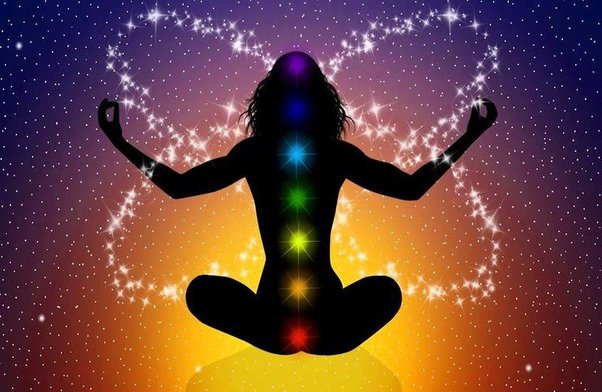
This is the central nerve (spinal cord) and means “penetrating conduit”. It is “Sattva”, the rhythm beyond duality. Susumna connects the base chakra to the crown chakra. The movement of Susumna indicates the flow of “Prana” (vital air) through Ida and Pingala down the base of the spine where Kundalini lies coiled.This Susumna is the trunk of which many nadis ramify in all directions, just as the branches of a tree shoot out variously.
Image Credit: @yajnshri
Ayurved mentions 72000 Nadis. Tantra Yoga identifies 14 principles of Nadis, each relating to the traditional organs of the body. Out of these three of these are considered the major Nadis:
a) IDA NADI:
Ida is a Sanskrit word that means “comfort”. It starts and ends to the left of the Susumna, terminating in the left nostril, but is also connected to the left testicle in males. Ida Nadi is feminine energy with a cooling effect. It is introverted and is associated with the right side of the brain and the left side of the body. It is also called “Chandra” or “moon” Nadi since it is associated with lunar energy. Ida Nadi controls all of the mental processes. It carries pranic energy and nourishes and purifies the body and the mind.
b) PINGALA NADI:
Pingala is a Sanskrit word that means “tawny”. It starts and ends to the right of the Susumna and courses from the right testicle in males and culminates in the right nostril. Pingala Nadi is masculine energy and has a heating temperature, adding vitality, physical strength, and efficiency. It governs the right side of the body and the left side of the brain. It is also called “Surya” or “sun” nadi since it is related to solar energy. It controls all of the vital processes. Pingala is extroverted.
c) SUSUMNA NADI:
This is the central nerve (spinal cord) and means “penetrating conduit”. It is “Sattva”, the rhythm beyond duality. Susumna connects the base chakra to the crown chakra. The movement of Susumna indicates the flow of “Prana” (vital air) through Ida and Pingala down the base of the spine where Kundalini lies coiled.This Susumna is the trunk of which many nadis ramify in all directions, just as the branches of a tree shoot out variously.
Image Credit: @yajnshri
17. Tantra Yoga and 14 parts of 3 Major Nadis
The 14 Important Nadis consist of:
1. Alambusha Nadi
This Nadi helps to bring energy to the organs and parts of the body that eliminate toxins and waste. It goes all the way up the body to the mouth.
2. Gandhari Nadi
The Gandhari Nadi begins at the Muladhara Chakra, at the base of the spine, and ends up at the Anja, or third eye, chakra. This provides energy to your left eye!
3. Hasti Jeeva Nadi
This Nadi provides energy to our arms and legs, and begins again at the Muladhara chakra and the end of the spine, and ends at the Manipura Chakra, which is behind the navel.
4. Ida Nadi
The Ida Nadi begins at the Muladhara Chakra and then, ends at the left nostril, and is said to activate the left brain. This can promote feelings of emotion and love, as it brings lunar and cooling energy to the brain.
5. Kuhu Nadi
This Nadi begins at the throat and ends at the genitals, and brings energy to this area.
6. Payaswini Nadi
The Payaswini Nadi begins at the right side, and flows up the body to end at the right ear.
7. Pingala Nadi
Said to promote perception and analysis, the Pingala Nadi begins on the right side and ends at the right nostril. It’s also known as solar, or heating energy.
8. Pusha Nadi
Beginning at your Muladhara Chakra, and ending at the third eye Chakra, this Nadi provides energy to your right eye.
9. Saraswati Nadi
This Nadi powers your mouth, tongue and throat. It begins at the Muladhara Chakra and ends at the Vishuddhi Chakra, which is located at the base of the throat.
10. Sankhini Nadi
Bringing energy to your left ear, this Nadi begins at the Muladhara chakra and ends at the Ajna chakra.
11. Sushumna Nadi
Again, beginning at the Muladhara Chakra, this Nadi ends at the crown of the head at the Sahasrara Chakra, this Nadi is the central Nadi that flows prana to the other Nadis around the body.
12. Varuna Nadi
This Nadi brings energy to the whole body through the nervous system. It begins at the Muladhara chakra and ends at the Anahata chakra.
13. Vishwadhara Nadi
Providing energy to the digestive system, this Nadi begins at the Muladhara chakra and ends at the Manipura chakra.
14. Yashaswini Nadi
Finally, the Yashaswini Nadi brings energy to the right limbs, through the Muladhara chakra and ends at the Manipura chakra.
The 14 Important Nadis consist of:
1. Alambusha Nadi
This Nadi helps to bring energy to the organs and parts of the body that eliminate toxins and waste. It goes all the way up the body to the mouth.
2. Gandhari Nadi
The Gandhari Nadi begins at the Muladhara Chakra, at the base of the spine, and ends up at the Anja, or third eye, chakra. This provides energy to your left eye!
3. Hasti Jeeva Nadi
This Nadi provides energy to our arms and legs, and begins again at the Muladhara chakra and the end of the spine, and ends at the Manipura Chakra, which is behind the navel.
4. Ida Nadi
The Ida Nadi begins at the Muladhara Chakra and then, ends at the left nostril, and is said to activate the left brain. This can promote feelings of emotion and love, as it brings lunar and cooling energy to the brain.
5. Kuhu Nadi
This Nadi begins at the throat and ends at the genitals, and brings energy to this area.
6. Payaswini Nadi
The Payaswini Nadi begins at the right side, and flows up the body to end at the right ear.
7. Pingala Nadi
Said to promote perception and analysis, the Pingala Nadi begins on the right side and ends at the right nostril. It’s also known as solar, or heating energy.
8. Pusha Nadi
Beginning at your Muladhara Chakra, and ending at the third eye Chakra, this Nadi provides energy to your right eye.
9. Saraswati Nadi
This Nadi powers your mouth, tongue and throat. It begins at the Muladhara Chakra and ends at the Vishuddhi Chakra, which is located at the base of the throat.
10. Sankhini Nadi
Bringing energy to your left ear, this Nadi begins at the Muladhara chakra and ends at the Ajna chakra.
11. Sushumna Nadi
Again, beginning at the Muladhara Chakra, this Nadi ends at the crown of the head at the Sahasrara Chakra, this Nadi is the central Nadi that flows prana to the other Nadis around the body.
12. Varuna Nadi
This Nadi brings energy to the whole body through the nervous system. It begins at the Muladhara chakra and ends at the Anahata chakra.
13. Vishwadhara Nadi
Providing energy to the digestive system, this Nadi begins at the Muladhara chakra and ends at the Manipura chakra.
14. Yashaswini Nadi
Finally, the Yashaswini Nadi brings energy to the right limbs, through the Muladhara chakra and ends at the Manipura chakra.
18. Tantra Yoga and Concept of Yogic Awareness
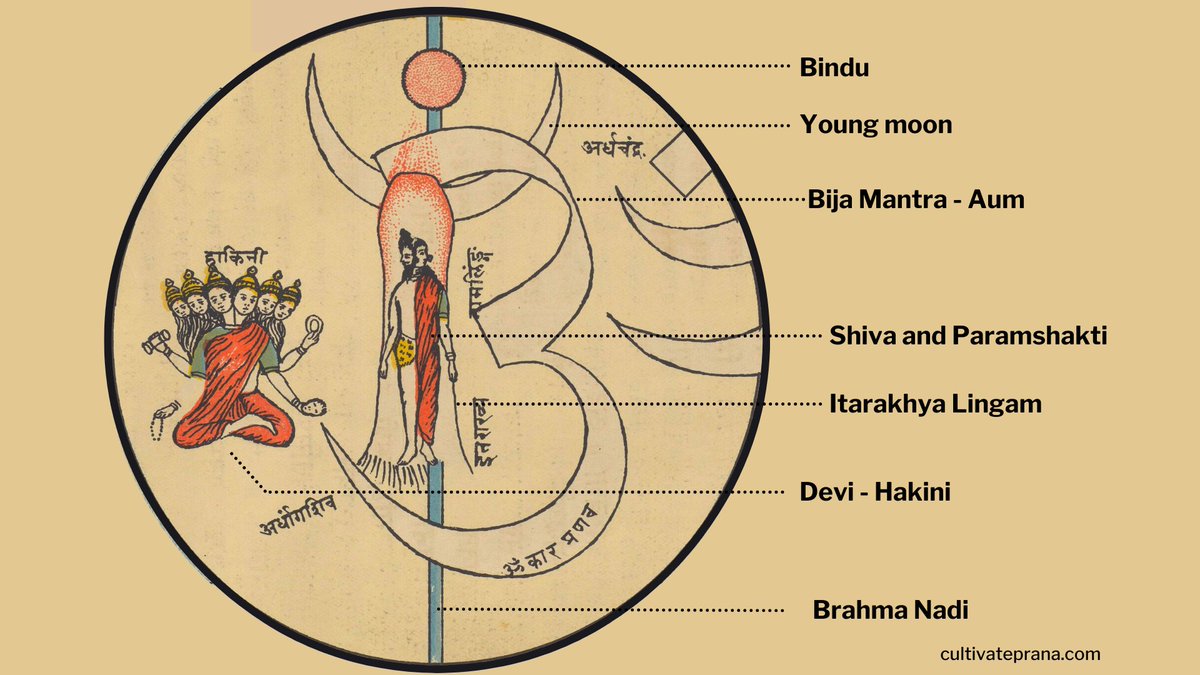
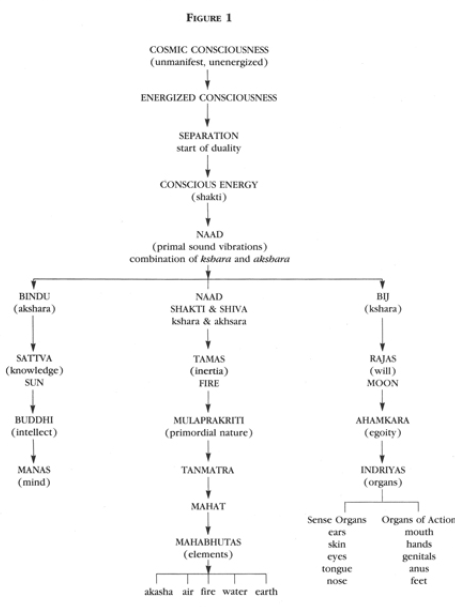
The science of yogic energy chakras is a unique discovery of Tantra, that creates a bridge between matter and mind, body and spirit, the individual and the universal, and presents a holistic system that utilizes the physical for the attainment of spiritual aims. Tantra assumes that this transformation would not be possible if consciousness were not inherent in the matter itself. In the beginning, there is only consciousness. This consciousness is neither male nor female; it is simply pure consciousness, unenergized. Thenexists are a product of conscious energy (Para Shakti). Modern scientific investigations confirm that it is in the cerebral cortex that matter is converted into consciousness. That is, “matter,” in the form of electromagnetic signals transmitted when the sense organs are stimulated, is registered in the brain as emotions, which influences consciousness. the principle of desire enters the picture, energizing the consciousness and separating it into two parts: a static principle and a dynamic principle. The first pair of opposites are interwoven, as illustrated by the Chinese symbol of yin and yang. And here begins the game of creation, or Maya.
The science of yogic energy chakras is a unique discovery of Tantra, that creates a bridge between matter and mind, body and spirit, the individual and the universal, and presents a holistic system that utilizes the physical for the attainment of spiritual aims. Tantra assumes that this transformation would not be possible if consciousness were not inherent in the matter itself. In the beginning, there is only consciousness. This consciousness is neither male nor female; it is simply pure consciousness, unenergized. Thenexists are a product of conscious energy (Para Shakti). Modern scientific investigations confirm that it is in the cerebral cortex that matter is converted into consciousness. That is, “matter,” in the form of electromagnetic signals transmitted when the sense organs are stimulated, is registered in the brain as emotions, which influences consciousness. the principle of desire enters the picture, energizing the consciousness and separating it into two parts: a static principle and a dynamic principle. The first pair of opposites are interwoven, as illustrated by the Chinese symbol of yin and yang. And here begins the game of creation, or Maya.
19. Tantra Yoga and Spiritual Discourse
Tantra understands that bad company, love of power, and desire for worldly pleasures and comforts are our greatest enemies in the journey of unfoldment of our divine nature. Worldly desires agitate the mind, and a mind tossed by desire cannot find inspiration and happiness. One has to overcome lassitude, imaginings, fantasies, and egoity. As long as any of these remain unconquered, the higher states of meditation are hard to obtain. A person is what he or she deeply desires; as you think, so you are. Tantra is perfectly monistic and believes in one supreme Entity who is inseparable from his Shakti and is always her nucleus. Tantra believes in unity in diversity and in the continuity of energy, which undergoes many transformations while ever remaining the same. This principle of continuity is the basic concept of the Tantric view of life. It extends in both space and time, as each continuous process interacts with innumerable simultaneously existing processes. This is the warp and woof of reality, the infinite interrelationship of everything that exists in the external universe, reflected on a smaller scale in each living organism. This is the great discovery of Tantra that cuts across all religious dogma and formulation. It represents a spiritual science independent of belief or opinion, ever verifiable by experience because it is based on the exact methodology of psychological observation and meditational practices. It creates an atmosphere of certainty and confidence that enables the individual to establish a meaningful relationship with his own inner world and the world around him or her.
Tantra understands that bad company, love of power, and desire for worldly pleasures and comforts are our greatest enemies in the journey of unfoldment of our divine nature. Worldly desires agitate the mind, and a mind tossed by desire cannot find inspiration and happiness. One has to overcome lassitude, imaginings, fantasies, and egoity. As long as any of these remain unconquered, the higher states of meditation are hard to obtain. A person is what he or she deeply desires; as you think, so you are. Tantra is perfectly monistic and believes in one supreme Entity who is inseparable from his Shakti and is always her nucleus. Tantra believes in unity in diversity and in the continuity of energy, which undergoes many transformations while ever remaining the same. This principle of continuity is the basic concept of the Tantric view of life. It extends in both space and time, as each continuous process interacts with innumerable simultaneously existing processes. This is the warp and woof of reality, the infinite interrelationship of everything that exists in the external universe, reflected on a smaller scale in each living organism. This is the great discovery of Tantra that cuts across all religious dogma and formulation. It represents a spiritual science independent of belief or opinion, ever verifiable by experience because it is based on the exact methodology of psychological observation and meditational practices. It creates an atmosphere of certainty and confidence that enables the individual to establish a meaningful relationship with his own inner world and the world around him or her.

20. Tantra Yoga and 6 Steps of Self Awareness
One can achieve a state of total awareness through the
following six practices:
1. Sama: Mental quietude and subduing of the passions
2. Dama: Self-restraint and the subjugation of the five
sense organs:
ears (hearing)
skin (touch)
eyes (sight)
tongue (taste)
nose (smell)
and the five organs of action:
mouth (speech)
hands (grasping)
feet (locomotion)
anus (evacuation)
genitals (generation)
and the four internal organs:
ahamkara (egoity)
Chitta (memory)
Buddhi (understanding)
manas (cognition)
3. Uparati: Complete cessation of the perceiving and
acting sense faculty
4. Titiksha: Endurance, patience (the power to endure,
without the slightest discomposure, extremes of heat
and cold, joy and sorrow, honor and abuse, loss and
gain, and all other pairs of opposites)
5. Samadhan: Constant concentration of mind
6. Shraddha: True faith, conviction, and devotion
One can achieve a state of total awareness through the
following six practices:
1. Sama: Mental quietude and subduing of the passions
2. Dama: Self-restraint and the subjugation of the five
sense organs:
ears (hearing)
skin (touch)
eyes (sight)
tongue (taste)
nose (smell)
and the five organs of action:
mouth (speech)
hands (grasping)
feet (locomotion)
anus (evacuation)
genitals (generation)
and the four internal organs:
ahamkara (egoity)
Chitta (memory)
Buddhi (understanding)
manas (cognition)
3. Uparati: Complete cessation of the perceiving and
acting sense faculty
4. Titiksha: Endurance, patience (the power to endure,
without the slightest discomposure, extremes of heat
and cold, joy and sorrow, honor and abuse, loss and
gain, and all other pairs of opposites)
5. Samadhan: Constant concentration of mind
6. Shraddha: True faith, conviction, and devotion
21. Tantra Yoga and six qualifications to Practice Tantra
1. Daksha: Intelligence
2. Jitendriya: Control over the senses
3. Sarva hinsa vinirmukta: Abstention from violence of all kinds
4. Sarva prani hitrata: Concern for universal welfare
5. Shuchi: Purity
6. Astik: Belief in truth, which is vidya (knowledge), Veda (body of knowledge), and God.
These six gives one control over one’s animal nature and make one a yogi. The six practices of sama and dama produce coordination between the upper and lower brain during all three states of consciousness the waking, dream, and deep sleep states and lead one toward the fourth state the state of extended consciousness known as turiya.
Pic credit: @AshtangaYogaLA
1. Daksha: Intelligence
2. Jitendriya: Control over the senses
3. Sarva hinsa vinirmukta: Abstention from violence of all kinds
4. Sarva prani hitrata: Concern for universal welfare
5. Shuchi: Purity
6. Astik: Belief in truth, which is vidya (knowledge), Veda (body of knowledge), and God.
These six gives one control over one’s animal nature and make one a yogi. The six practices of sama and dama produce coordination between the upper and lower brain during all three states of consciousness the waking, dream, and deep sleep states and lead one toward the fourth state the state of extended consciousness known as turiya.
Pic credit: @AshtangaYogaLA
22. End of part 1
Part 2 will explore - Mantra Part of the Tantra Shastra
Part 3 will explore - the Yantra Part of the Tantra Shastra
PS - Please feel proud that your lineage is a culture which is "Sanatan" and its roots are older than 10,000 Years. Please share with all and spread the beauty and divinity of the Sanatan Dharma.
Tantra is not some black magic or occult practice as is popular belief. It is a perfect way and most scientific way of attaining spiritual freedom and atonement which in unparalleled in the history of mankind and its literary and theological works.
Radhe Radhe
Blessings from Shri Krishna
Part 2 will explore - Mantra Part of the Tantra Shastra
Part 3 will explore - the Yantra Part of the Tantra Shastra
PS - Please feel proud that your lineage is a culture which is "Sanatan" and its roots are older than 10,000 Years. Please share with all and spread the beauty and divinity of the Sanatan Dharma.
Tantra is not some black magic or occult practice as is popular belief. It is a perfect way and most scientific way of attaining spiritual freedom and atonement which in unparalleled in the history of mankind and its literary and theological works.
Radhe Radhe
Blessings from Shri Krishna
23. Santana is divine, seek it like a seeker
and
it will enlighten you like a beacon.
and
it will enlighten you like a beacon.
Loading suggestions...