
#Thread
#HinduSamrajyaDivas #Shivrajyabhishek
The Coronation ceremony of Shivaji Maharaj is one of the most important events in the entire history of BharatVarsh. Let's read about the events that led to the coronation on Jyesth Shuddha Trayodashi, 1674
Shivaji Maharaj was the only ruler who had challenged the ISLAMIC forces in a span of about 300 years, his coronation marked the beginning of a new era and thus revived the lost Hindu spirit!
From various documents that we get, one thing is clear Shivaji Maharaj, from the beginning of his career, considered himself an Independent ruler thus challenging the different 'Shahis and Sultanates'.
There was not a shade of doubt in his mind that the ISLAMIC forces were waging a religious war against the Hindus and that someone needed to step up and crush the spirit of these tyrannical rulers.
Shivaji Maharaj was a staunch Hindu and it can be seen clearly from the official records and contemporary sources that the entire coronation ceremony was conducted in the Vedic manner.
(1/4)
#HinduSamrajyaDivas #Shivrajyabhishek
The Coronation ceremony of Shivaji Maharaj is one of the most important events in the entire history of BharatVarsh. Let's read about the events that led to the coronation on Jyesth Shuddha Trayodashi, 1674
Shivaji Maharaj was the only ruler who had challenged the ISLAMIC forces in a span of about 300 years, his coronation marked the beginning of a new era and thus revived the lost Hindu spirit!
From various documents that we get, one thing is clear Shivaji Maharaj, from the beginning of his career, considered himself an Independent ruler thus challenging the different 'Shahis and Sultanates'.
There was not a shade of doubt in his mind that the ISLAMIC forces were waging a religious war against the Hindus and that someone needed to step up and crush the spirit of these tyrannical rulers.
Shivaji Maharaj was a staunch Hindu and it can be seen clearly from the official records and contemporary sources that the entire coronation ceremony was conducted in the Vedic manner.
(1/4)
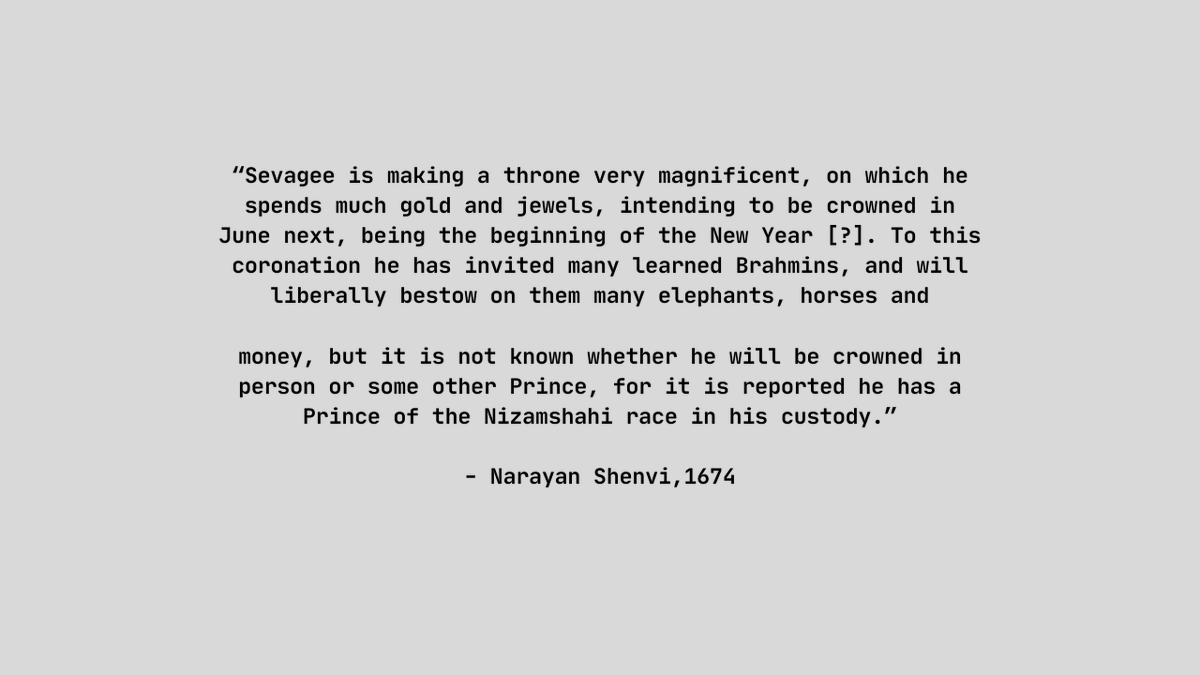
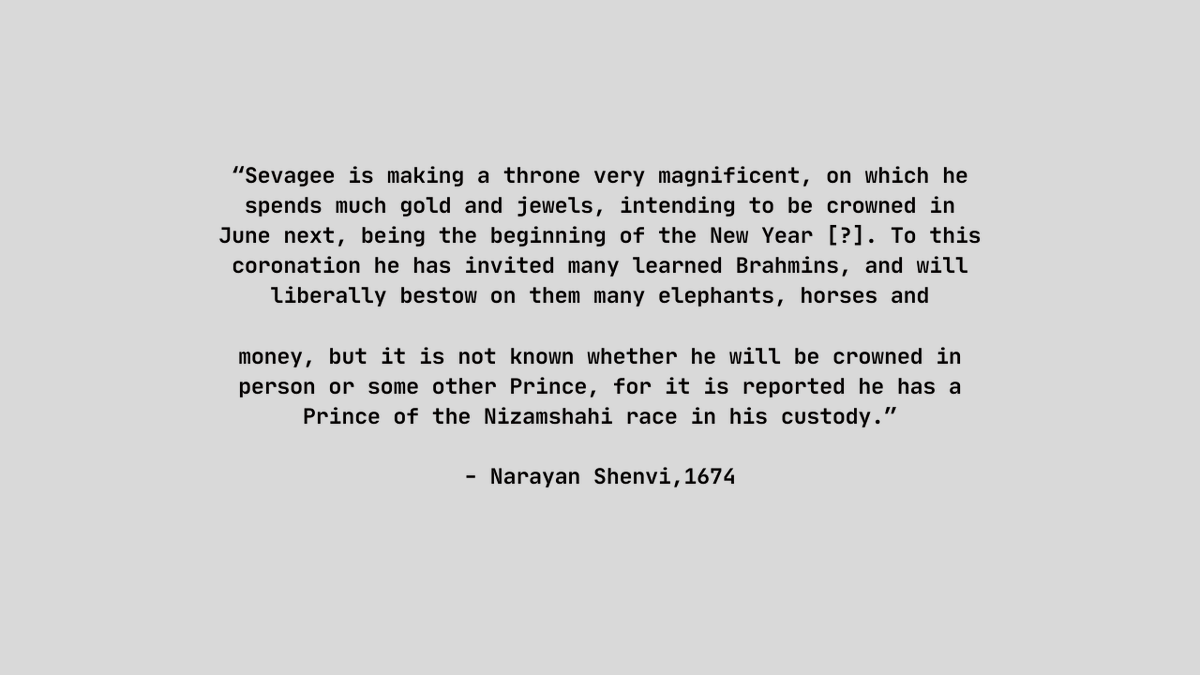
The first official record of the events leading to the Coronation ceremony can be found in the letter by Narayan Shenvi ( A representative of East India Company) to the Deputy Governor of Bombay.
He was there on the behest of the company to speak with Shivaji Maharaj regarding the ongoing negotiations between Maharaj and the British, regarding the Maratha Loot of the British Factory in Rajapur.
Narayan Shenvi reached Pachad on 24th March 1674, he was taken to the Raigad fort on 28th March and he was granted an audience on 3rd April 1674. At this time, the preparations for the Coronation ceremony had started and seen the scale with which the preps were going,
Narayan Shenvi wrote a letter regarding the event that was going to take place and thus asked the company to send their representatives to Raigad. The date of the letter is 4th April 1674
He was there on the behest of the company to speak with Shivaji Maharaj regarding the ongoing negotiations between Maharaj and the British, regarding the Maratha Loot of the British Factory in Rajapur.
Narayan Shenvi reached Pachad on 24th March 1674, he was taken to the Raigad fort on 28th March and he was granted an audience on 3rd April 1674. At this time, the preparations for the Coronation ceremony had started and seen the scale with which the preps were going,
Narayan Shenvi wrote a letter regarding the event that was going to take place and thus asked the company to send their representatives to Raigad. The date of the letter is 4th April 1674
Gagabhatta was one of the most respected Brahmins in the entire Bharat at that time, he was known for his books and commentaries on Dharmashastra and was considered the only person who knew how to conduct "RAJYABHISHEK" in a proper Vedic manner.
Gagabhatta and Shivaji Maharaj knew about each other accomplishments a decade before the coronation ceremony. In a document and also in the 'SHIVPRASHASTI', it is mentioned that Gagabhatta knew about Shivaji Maharaj and his work and vice versa.
Now, to all those who think, that Gagabhatta was UTTAR BHARTIYA and no Brahmin from Maharashtra was ready to conduct the ceremony should note that the family of Gagabhatta hailed from the Paithan region of Maharashtra
and had settled in Banaras to gain knowledge about 'Dharmashastra' and second thing, No Brahmin in the entire Bharat was qualified enough to conduct the Coronation ceremony in the proper Vedic manner.
Gagabhatta and Shivaji Maharaj knew about each other accomplishments a decade before the coronation ceremony. In a document and also in the 'SHIVPRASHASTI', it is mentioned that Gagabhatta knew about Shivaji Maharaj and his work and vice versa.
Now, to all those who think, that Gagabhatta was UTTAR BHARTIYA and no Brahmin from Maharashtra was ready to conduct the ceremony should note that the family of Gagabhatta hailed from the Paithan region of Maharashtra
and had settled in Banaras to gain knowledge about 'Dharmashastra' and second thing, No Brahmin in the entire Bharat was qualified enough to conduct the Coronation ceremony in the proper Vedic manner.
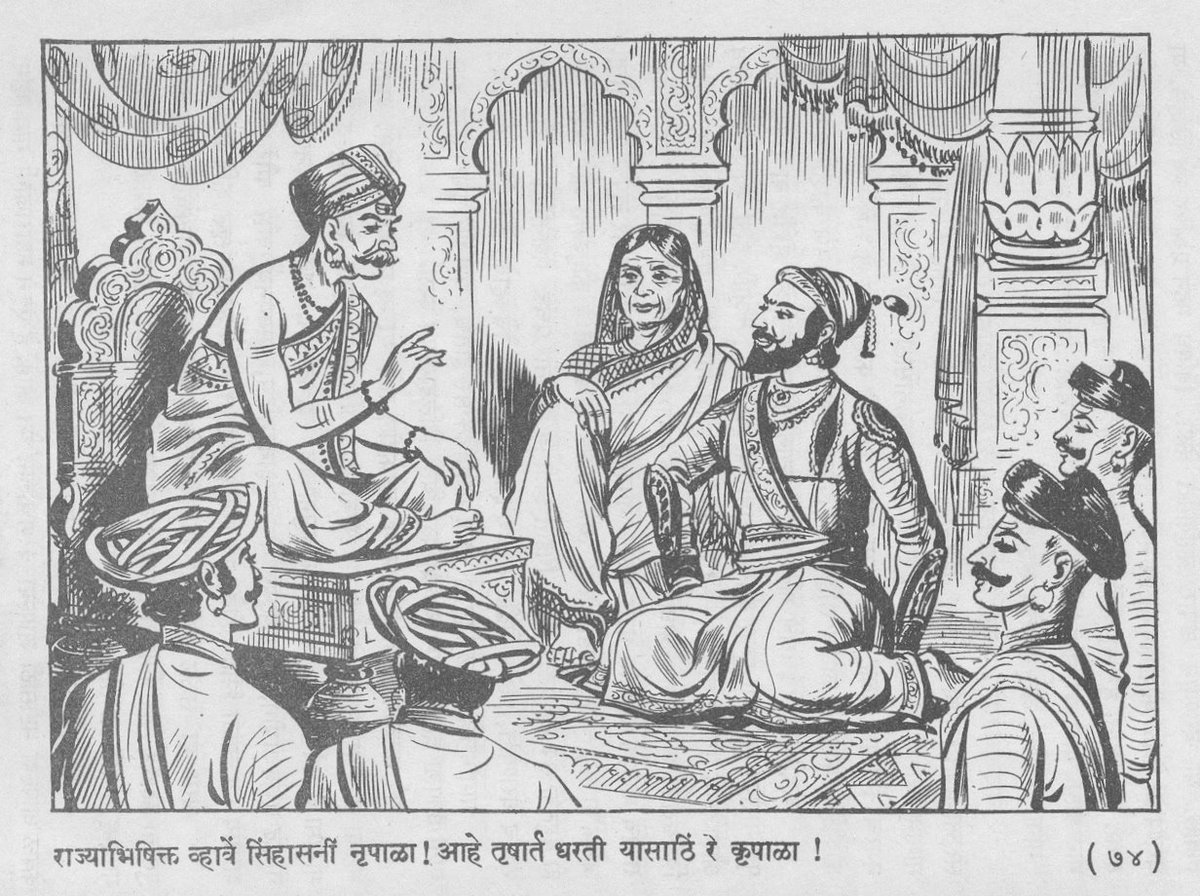
The Coronation Ceremony begins: Officer Herny Oxenden along with two of his colleagues reached Raigad on 22nd May and left it on 13th June. During his stay at Raigad, Henry Oxenden maintained a diary and noted all the events that led to the coronation ceremony.
The events : 29th May 1674: Maunjibandhan and Suvarna Tula took place on this day and Shivaji Maharaj was weighed against gold, silver, gold, silver, copper, iron, cloth, spices, butter, sugar, fruits and many other commodities.
30th May 1674: The Cheif wife had to act as Rajnee in this ceremony, hence Gagabhatta decided to perform the Samantrak Marriage of Shivaji Raje with all four surviving wives according to the Vedic rites.
This resulted in allowing the queens to take part in the ceremony freely. On the same day, rituals like Ganesh Pujan and Punyavachan were performed.
31st May 1674: On this day Shivaji Maharaj was told to observe fast to perform Aindrishantividhi, after this Vidhi, Chatushkumbha and Balidan were performed.
1st June 1674: Grahyajna and Naksatrahoma were performed on this day. Ghee, cows and Conch Shells ( शंख) were distributed to Brahmins.
2nd June 1674: As there was a Navami on this day, no rites were performed. Navami is considered to be inauspicious to perform any ceremony. 3rd June 1674: Nakshatra Yajna and Uttarpujan rites were conducted on this day.
4th June 1674: Nivrittiyag was performed on this day. All things including the anointing material to be worshiped were to be black, even the person performing this Vidhi had to clothe himself with black clothes.
The events : 29th May 1674: Maunjibandhan and Suvarna Tula took place on this day and Shivaji Maharaj was weighed against gold, silver, gold, silver, copper, iron, cloth, spices, butter, sugar, fruits and many other commodities.
30th May 1674: The Cheif wife had to act as Rajnee in this ceremony, hence Gagabhatta decided to perform the Samantrak Marriage of Shivaji Raje with all four surviving wives according to the Vedic rites.
This resulted in allowing the queens to take part in the ceremony freely. On the same day, rituals like Ganesh Pujan and Punyavachan were performed.
31st May 1674: On this day Shivaji Maharaj was told to observe fast to perform Aindrishantividhi, after this Vidhi, Chatushkumbha and Balidan were performed.
1st June 1674: Grahyajna and Naksatrahoma were performed on this day. Ghee, cows and Conch Shells ( शंख) were distributed to Brahmins.
2nd June 1674: As there was a Navami on this day, no rites were performed. Navami is considered to be inauspicious to perform any ceremony. 3rd June 1674: Nakshatra Yajna and Uttarpujan rites were conducted on this day.
4th June 1674: Nivrittiyag was performed on this day. All things including the anointing material to be worshiped were to be black, even the person performing this Vidhi had to clothe himself with black clothes.

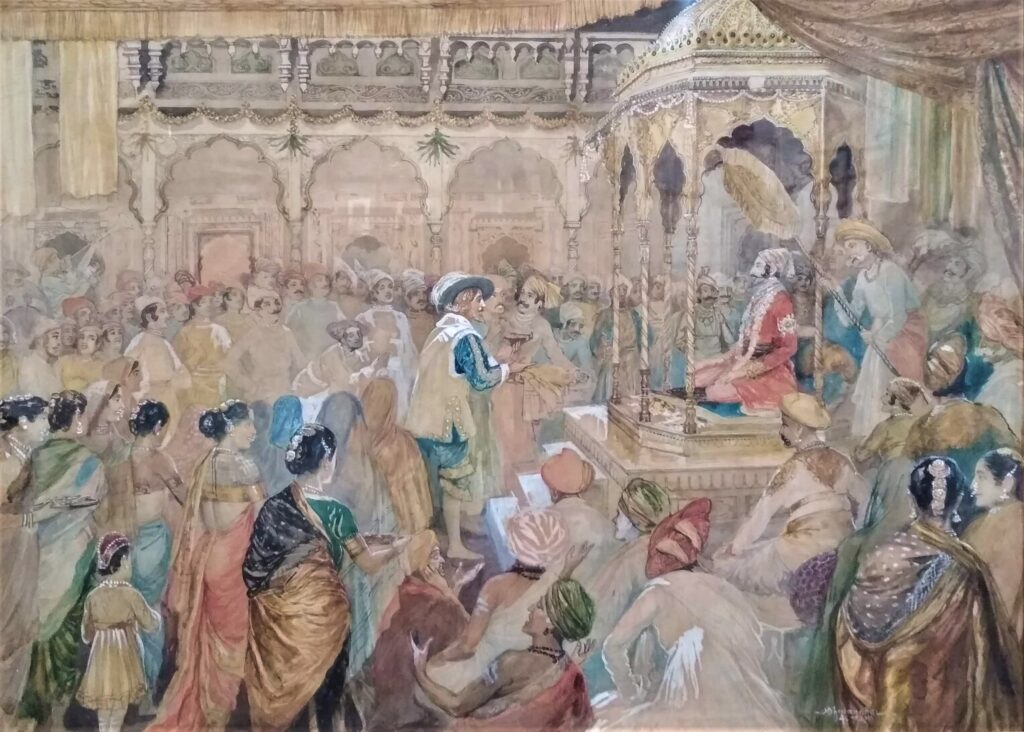
The day of Coronation 5th and the 6th June 1674 : All the rites leading to the CORONATION ceremony concluded on 5th June 1674. In the evening of the 5th June began the Maharajabhisheka.
The Muhurta for Shivaji Maharaj to ascend the throne had been set as the 13th day of the Jestha Month. The ceremonies performed during the night were Rajabhishek, SimhasanRohana and Rajdarshan.
The ceremonies were being conducted the entire night and auspicious time determined for Shivaji Maharaj to formally and actually ascend the throne was, three Ghatikas (72 minutes) before sunrise (i.e. a few minutes before 5 a.m.)
on Jyeshtha Shuddha Trayodashi (the thirteenth day of the bright lunar fortnight) Shaka 1596. We consider 6th June 1674 as the date of Coronation according to the western understanding as the dates change after 12.00 am according to their system,
but according to the Hindu system, it was Jyestha Shuddha Trayodashi. Shivaji Maharaj ascended the throne formally which was witnessed by thousands of men,women and children and the grand event of a Hindu ascending the throne marked the beginning of a new era.
The Muhurta for Shivaji Maharaj to ascend the throne had been set as the 13th day of the Jestha Month. The ceremonies performed during the night were Rajabhishek, SimhasanRohana and Rajdarshan.
The ceremonies were being conducted the entire night and auspicious time determined for Shivaji Maharaj to formally and actually ascend the throne was, three Ghatikas (72 minutes) before sunrise (i.e. a few minutes before 5 a.m.)
on Jyeshtha Shuddha Trayodashi (the thirteenth day of the bright lunar fortnight) Shaka 1596. We consider 6th June 1674 as the date of Coronation according to the western understanding as the dates change after 12.00 am according to their system,
but according to the Hindu system, it was Jyestha Shuddha Trayodashi. Shivaji Maharaj ascended the throne formally which was witnessed by thousands of men,women and children and the grand event of a Hindu ascending the throne marked the beginning of a new era.
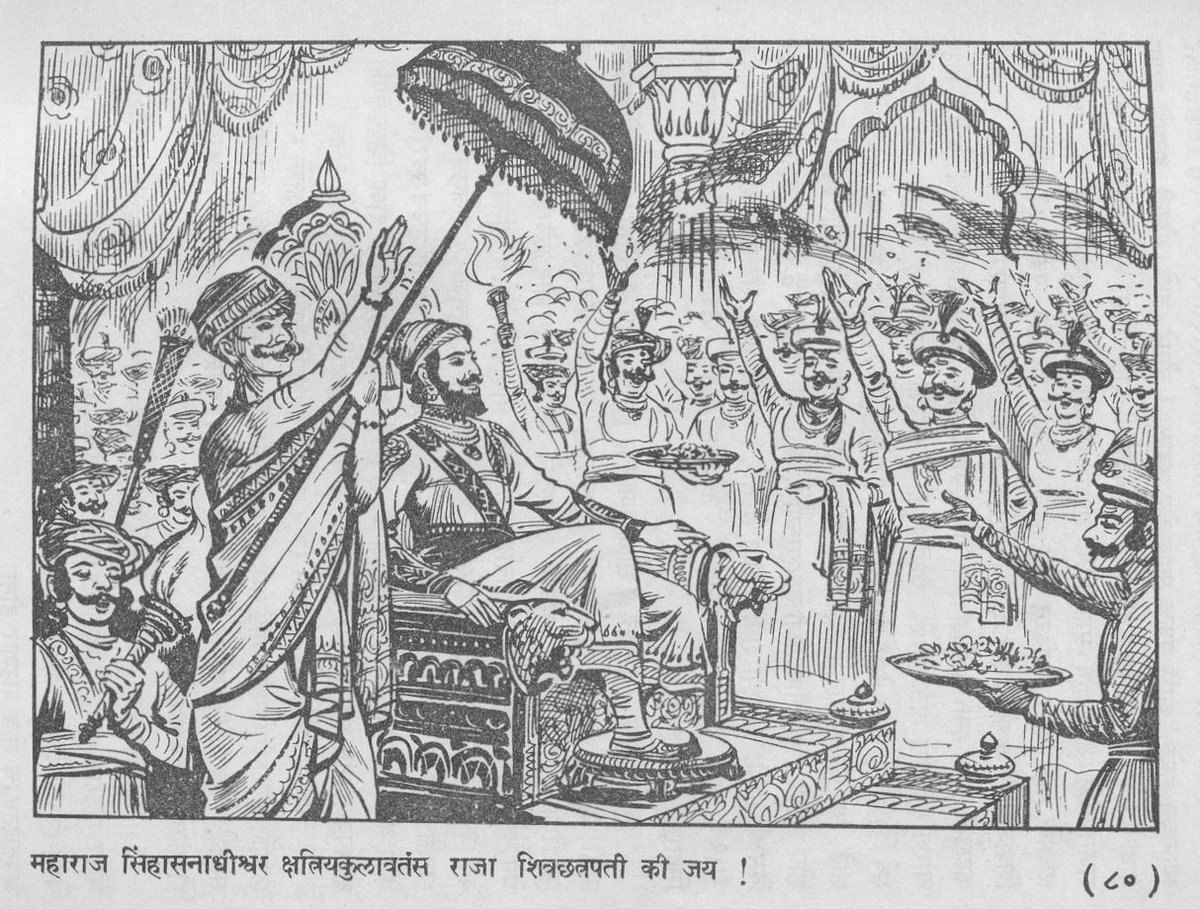
"RAJA SHIVCHATRAPATI" was the official title assumed by Shivaji Maharaj after the coronation ceremony. The story that Brahmins opposed the Rajabhishek cannot be considered to be true, because there are no contemporary sources to support this theory.
Shivrajyabhishek Divas is a day to be celebrated by one and all as it proved to be a turning point for the Hindus and The ISLAMIC forces were challenged openly for the first time in many centuries.
In years to come, many warriors taking inspiration from the founder of the Maratha Empire, challenged Delhi and overthrew their tyrannical rule and unfurled the Bhagwa Dhwaj on the Lal Kila!
References used : 1. Shri Shivrajyabhishek Prayog Gagabhatta 2.The life of Shivaji Maharaj, founder of the Maratha empire: by Takakhav, Nilkanth Sadashiv 3. Shivaji His Life & Time - Gajanan Mehendale 4. Shivaji The Founder Of Maratha Swaraj : C. V. Vaidya
Shivrajyabhishek Divas is a day to be celebrated by one and all as it proved to be a turning point for the Hindus and The ISLAMIC forces were challenged openly for the first time in many centuries.
In years to come, many warriors taking inspiration from the founder of the Maratha Empire, challenged Delhi and overthrew their tyrannical rule and unfurled the Bhagwa Dhwaj on the Lal Kila!
References used : 1. Shri Shivrajyabhishek Prayog Gagabhatta 2.The life of Shivaji Maharaj, founder of the Maratha empire: by Takakhav, Nilkanth Sadashiv 3. Shivaji His Life & Time - Gajanan Mehendale 4. Shivaji The Founder Of Maratha Swaraj : C. V. Vaidya

Loading suggestions...