

An abundance of energy, either circulating in your blood as sugars or triglycerides, or stored as fat, puts you in ‘abundance mode’ (not ‘adversity mode’) so your body doesn’t bother fighting for survival, and this increases inflammation & accelerates aging… 1/10

In the early 2000s, after studying how yeast cells respond to adversity, we realized “that CR is not simply a passive effect but an active, highly conserved stress response that evolved early in life's history to increase an organism's chance of surviving adversity 💪 3/10
The Hormesis Hypothesis of Aging, borne out of our work in the early 2000s, was popularized in the book Lifespan 4/10

Our theory states that “CR [calorie restriction] is a mild stress that provokes a survival response in the organism, which boosts resistance to stress and counteracts the causes of aging.” Plants also make molecules when they are stressed and we benefit by eating them, aka…

Our Hormesis Hypothesis of Aging united previously disparate observations about ROS defenses, apoptosis, metabolic changes, stress resistance, and hormonal changes and rapidly became accepted as the best explanation for the beneficial effects of CR, fasting, exercise and a…
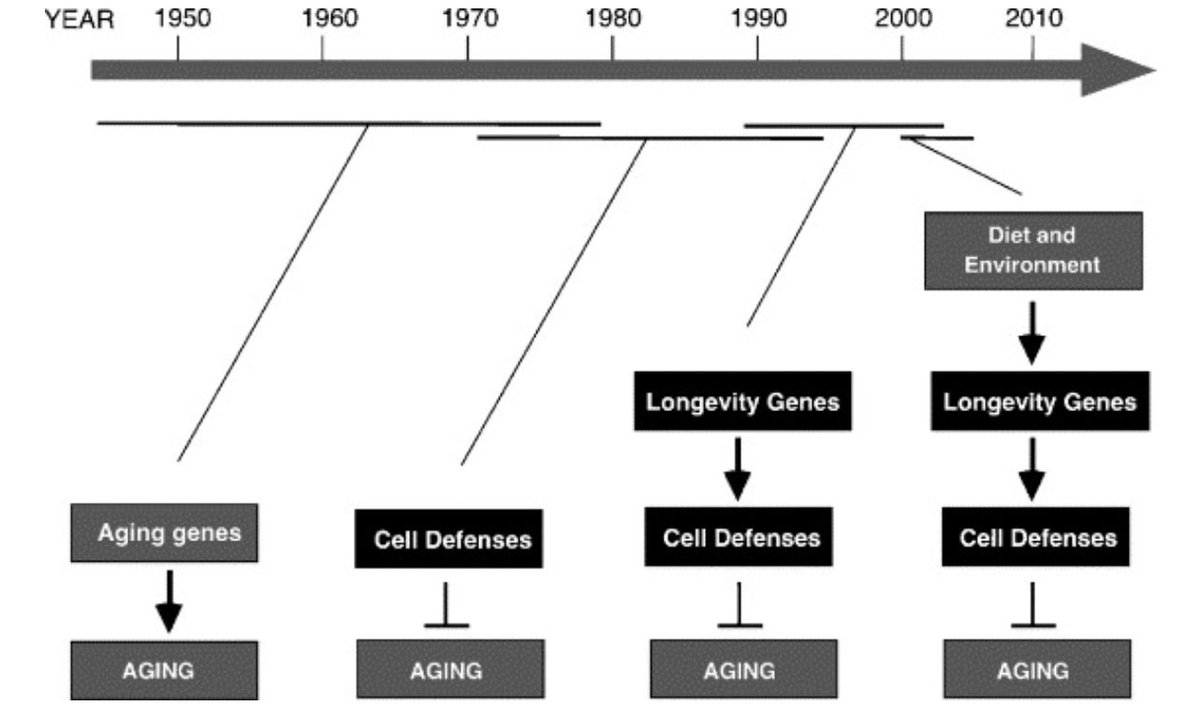
Before the 1970s, the predominant view was that aging is caused by “death” genes that directed the process as if it were an extension of development. Evolutionary biologists argued that aging is not adaptive for most species, and this idea was laid to rest.…7/10
After that, the focus was on the causes of aging and the mechanisms that defend cells against them. During the late 80s - 90s, genetic screens in simple organisms such as yeast, worms, and flies identified single gene mutations that could dramatically extend lifespan… 8/10
Then, in 2003, it was shown that these genes are activated by fasting & other mild biological stresses, consistent with the idea that they evolved to protect organisms during times of adversity, and their activation leads to increased lifespan 9/10
nature.com
nature.com
Changing views about aging, 1980-2006. 10/10.
Loading suggestions...