

Tata Starbucks is trying to create a monopoly in India
But UK's Pret A Manger just arrived to stop them in their tracks!
The crazy part? Pret has joined hands with Mukesh Ambani to destroy them
Here's how Pret is planning to make it big in India:
But UK's Pret A Manger just arrived to stop them in their tracks!
The crazy part? Pret has joined hands with Mukesh Ambani to destroy them
Here's how Pret is planning to make it big in India:
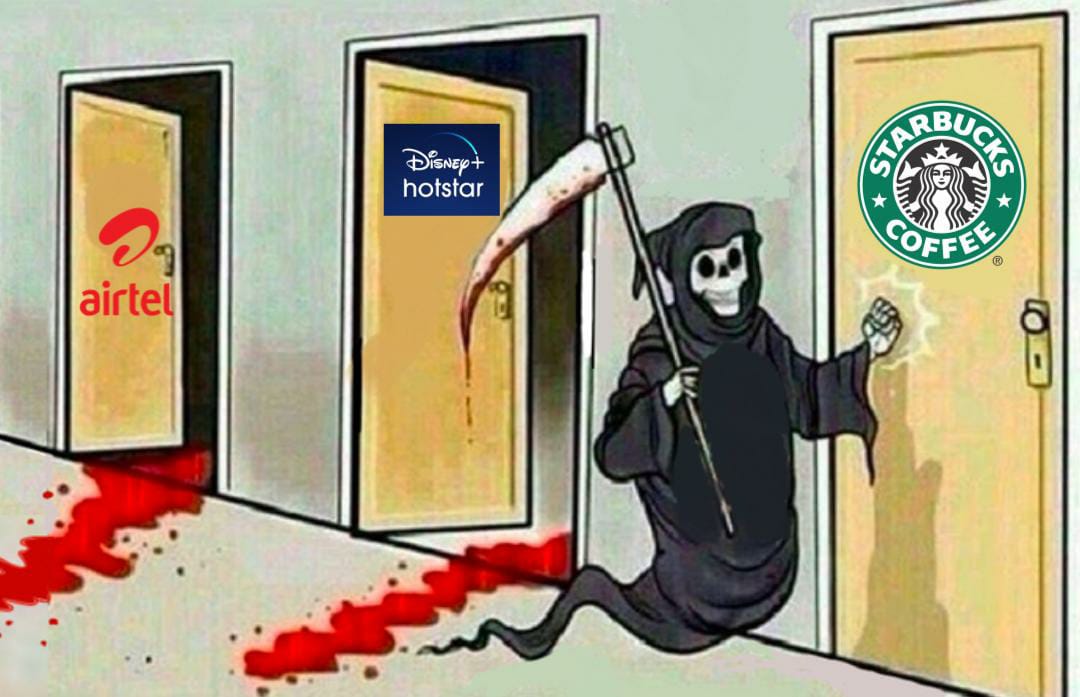
In 2022, Reliance Brands announced its plans to foray into the F&B industry with the UK-based sandwich & coffee chain — Pret A Manger.
With this master franchise partnership, RBL will open shops across India starting with busy urban locations like malls, high streets & airports.
With this master franchise partnership, RBL will open shops across India starting with busy urban locations like malls, high streets & airports.
In fact, just last month, India’s first Pret shop was opened in the BKC area of Mumbai and they plan to open 100 shops in the next 5 years.
Pret started in 1983 with a mission to create handmade food—freshly prepared each day using natural ingredients and avoiding preservatives.
Pret started in 1983 with a mission to create handmade food—freshly prepared each day using natural ingredients and avoiding preservatives.
Oftentimes, people complain that portion sizes are too big which is unhealthy.
But at Pret, the portion sizes are generally smaller. There is also a good balance of protein, bread, and flavors.
But at Pret, the portion sizes are generally smaller. There is also a good balance of protein, bread, and flavors.
“Correct Sizing means Pret makes the decision for the customer VS the high degree of flexibility in menu selection at other chains.”
Better-for-you products can be a good proposition in India as consumers are increasingly looking for options that are healthy, nutritious & tasty.
Better-for-you products can be a good proposition in India as consumers are increasingly looking for options that are healthy, nutritious & tasty.
When executed properly, this could breed trust & loyalty which will give Pret an edge over conventional fast-food joints that are well-established & crowding the market.
Pret has over 500 stores in 10 countries and is known for its delicious sandwiches, salads, & organic coffee.
Pret has over 500 stores in 10 countries and is known for its delicious sandwiches, salads, & organic coffee.
A majority of these shops are in locations with high footfall, where people are likely to be in a rush & looking for a quick & convenient meal.
Even Starbucks operates in similar locations, but has a much larger global presence than Pret, with over 32000 locations in 83 nations.
Even Starbucks operates in similar locations, but has a much larger global presence than Pret, with over 32000 locations in 83 nations.
Tata Starbucks arrived in India in October 2012, as a joint venture between Starbucks and Tata Consumer Products.
In the 10 years since inception, the India joint venture achieved operational profit — or broke even by EBITDA — in the fiscal ended March 2022.
In the 10 years since inception, the India joint venture achieved operational profit — or broke even by EBITDA — in the fiscal ended March 2022.
“India continues to remain one of the fastest-growing markets for Starbucks corporation. It is in the top-5 growth markets,” said Sushant Dash, CEO of TATA Starbucks.
Now, we need to understand that Pret's core offering is sandwiches, salads, and other food items,
Now, we need to understand that Pret's core offering is sandwiches, salads, and other food items,
while Starbucks' core offering is coffee, tea, and related beverages.
Which means that Pret is a food-led, while Starbucks is a beverage-led business.
Then how can Pret become a threat to Starbucks?
For that let’s understand the Indian F&B industry in more detail:
Which means that Pret is a food-led, while Starbucks is a beverage-led business.
Then how can Pret become a threat to Starbucks?
For that let’s understand the Indian F&B industry in more detail:
According to IMARC, in the FY 2022-2027, the Indian F&B industry would grow at a CAGR of 12.5%, contributing 3% of India’s GDP in the retail market!
It is mainly divided into 2 segments – the unorganized segment that has 65% market share and the fast-growing organized sector.
It is mainly divided into 2 segments – the unorganized segment that has 65% market share and the fast-growing organized sector.
And there are 3 main restaurant formats in India:
1️⃣Quick-Service Restaurants (QSRs),
2️⃣Full-Service Restaurants (FSRs), and
3️⃣Fast-Casual Restaurants (FCRs) which are a hybrid between QSRs and FSRs.
1️⃣Quick-Service Restaurants (QSRs),
2️⃣Full-Service Restaurants (FSRs), and
3️⃣Fast-Casual Restaurants (FCRs) which are a hybrid between QSRs and FSRs.
Pret and Starbucks can be categorized as FCRs and Starbucks has started experimenting with the QCR format in India.
However, if we look around the world, Pret inclines more towards the QCR format due to their focus on faster service and affordability in comparison to Starbucks.
However, if we look around the world, Pret inclines more towards the QCR format due to their focus on faster service and affordability in comparison to Starbucks.
And according to the Food, Service and Restaurant Business Report 22-23, QSR chain market will be the highest-growing sub-segment in the F&B industry over the next 5 years.
So, yes. Pret will enjoy a larger market size compared to Starbucks, but these are just industry jargons.
So, yes. Pret will enjoy a larger market size compared to Starbucks, but these are just industry jargons.
When you think of going out to eat, do you say 'let's go to a fast-casual' or 'QSR'?
No. You say, 'let's go to Subway or Costa.’
Both these brands want to appeal to a more affluent customer base and create a perception of exclusivity.
And this makes them INDIRECT COMPETITORS.
No. You say, 'let's go to Subway or Costa.’
Both these brands want to appeal to a more affluent customer base and create a perception of exclusivity.
And this makes them INDIRECT COMPETITORS.
They have positioned their brands as luxury brands in India which is the best market for aspirational products.
Which is why Starbucks is currently the largest player in the coffee business in India, even when it sells such expensive coffee.
Which is why Starbucks is currently the largest player in the coffee business in India, even when it sells such expensive coffee.
But Starbucks is targeting the premium customers only (Mono Segment Positioning).
However, arrival of Pret could put its high pricing strategy at risk.
Indian consumers might be willing to pay for premium offerings, but they are generally more value-conscious & price-sensitive.
However, arrival of Pret could put its high pricing strategy at risk.
Indian consumers might be willing to pay for premium offerings, but they are generally more value-conscious & price-sensitive.
And Pret is capable of differentiating itself by offering more affordable prices compared to Starbucks while maintaining the same or even better quality standards.
Additionally, Pret stores are simple and functional whereas Starbucks stores have more of an upscale feel.
Additionally, Pret stores are simple and functional whereas Starbucks stores have more of an upscale feel.
So, Pret stores could resonate more with the Indian mid-premium and mid-market segments.
And this will be advantageous for Pret in future because, though at a nascent stage, these segments will surely blossom and become the most demanding segments in the years to come.
And this will be advantageous for Pret in future because, though at a nascent stage, these segments will surely blossom and become the most demanding segments in the years to come.
Suppose you're a loyal customer of a restaurant and over time, as your disposable income rises, your lifestyle becomes better.
There is no guarantee that you will continue to frequent that restaurant.
There is no guarantee that you will continue to frequent that restaurant.
But if you start with something aspirational like Pret because you can manage to afford it, and then you'll remain with Pret forever because it remains relevant for longer and you have developed a taste for the food that they serve.
Democratization of a brand doesn’t always kill its relevance as a population grows in living standards.
The ones that have a relevant premium aspirational feel, with a brand that means more than just food or coffee, win in the long run & have a higher Life Time Value (LTV).
The ones that have a relevant premium aspirational feel, with a brand that means more than just food or coffee, win in the long run & have a higher Life Time Value (LTV).
If you liked this read do ReTweet🔄 the 1st tweet and follow us @FinFloww
for such threads every Monday, Wednesday and Friday!
for such threads every Monday, Wednesday and Friday!
Join 13378 people who receive such stories daily on their WhatsApp:
chat.whatsapp.com
chat.whatsapp.com
Join the 5303 people who read our email newsletter every Sunday:
FinFloww.substack.com
FinFloww.substack.com

Loading suggestions...